wayground logo

Free Printable Worksheets

Font size

S
M
L
XL
Worksheets

Cells - Human Reproduction Part #1

Total questions: 118

Worksheet time: 1hrs 27mins

Name
Class
Date
1.
Robert Hooke, Anton van Leeuwenhoek, Theodor Schwann, Rudolf Virchow, and Matthias Schliden were all responsible for what theory?
a)
The Theory of Gravity
b)
The Theory of Relativity
c)
The Cell Theory
d)
The Theory of Continental Drift
2.
What tool do you use to view the cells?
a)
metric ruler
b)
centrifuge
c)
microscope
d)
telescope
3.
Which of the following is NOT a cell theory.
a)
All non-living things are made of cells
b)
All cells come from pre-existing cells
c)
Cells are the basic unit of structure and function of all living things
4.
All living things are made up of...
a)
cells
b)
cell tissues
c)
organ
d)
organ systems
5.
All cells come from___________ cells.
a)
pregnant
b)
pre-existing
c)
paternal
d)
pin size
6.
What is the basic structural and functional unit of all living things? 
a)
atom
b)
cell
c)
molecule
d)
human
7.
Which of the following statements is not part of the cell theory?
a)
Cells are the basic unit of structure and function in all living things.
b)
All cells are produced from other cells.
c)
Only animal cells are composed of cells.
d)
All living things are composed of cells.
8.
Which of the following scientists was the first to observe bacteria under a microscope?
a)
Anton van Leuwenhoek
b)
Matthais Schleiden
c)
Robert Hooke
d)
Theodor Schwann
9.
what is a cell classified as?
a)
a basic unit of structure and function of all living organisms
b)
a unit based on only plants and animals that are living
10.
When would you use the diaphragm?
a)
When you wanted to move the stage
b)
When you wanted to adjust the light
c)
When you wanted to put the microscope away
d)
When you sneeze
11.
You can find total magnification by which of the following methods?
a)
ocular PLUS objective
b)
ocular TIMES objective
c)
ocular MINUS objective
d)
ocular DIVIDED BY objective
12.
Find the total magnification: 
Eyepiece = 10X 
Objective lens = 55X
 
a)
10x
b)
55x
c)
65x
d)
550x
13.
What is number 14?
a)
stage clips
b)
stage
c)
diaphragm
d)
light source
14.
What is number 15?
a)
light source
b)
base
c)
coarse adjustment
d)
fine adjustment
15.
What is number 17?
a)
body tube
b)
arm/neck
c)
stage
d)
base
16.
You should always carry the microscope by the
a)
arm and base
b)
arm and body tube
c)
arm only
d)
the objectives
17.
When looking at a specimen on your slide, you should always start with the
a)
low objective lens
b)
medium objective lens
c)
high objective lens
d)
super extra high power lens
18.
When looking through your microscope, you move your slide to the right- It appears
a)
to move to the right
b)
to stay the same
c)
to move to the left
d)
vanish
19.
The _______focuses the image under low power.
a)
revolving nosepiece
b)
fine adjustment knob
c)
coarse adjustment knob
d)
arm/neck
20.
The__________ sharpens the image under high magnification.
a)
the diaphragm
b)
fine adjustment knob
c)
coarse adjustment knob
d)
the ocular
21.
The lens you look through, closest to the top of the microscope, is called the
a)
objective lens
b)
ocular lens
c)
diaphragm
d)
light source
22.
The ________ of the microscope would show you the MOST zoomed in image, or the SMALLEST field of view.
a)
low power objective
b)
medium power objective
c)
high power objective
d)
stage
23.
What power do you start with when using a microscope?
a)
High power
b)
Medium power
c)
Low power
d)
Extra high power
24.
Never use this when on high power.
a)
Fine adjustment
b)
Diaphragm
c)
Course adjustment
d)
Stage clips
25.
What is the function of stage clips?
a)
To move the objectives
b)
To keep the slide secure
c)
To adjust the focus
d)
To look through
26.
Which organelle belongs in plant cells only?
a)
Cell Membrane
b)
Mitochondrion
c)
Chloroplast
d)
Nucleus
27.
Which organelle belongs in plant cells only?
a)
Cytoplasm
b)
Mitochondrion
c)
Cell Wall
d)
Nucleus
28.
Which organelle belongs in plant cells only?
a)
Cytoplasm
b)
Mitochondrion
c)
Large Central Vacuole
d)
Cell Membrane
29.
Which organelle belongs in both plant and animal cells?
a)
Cytoplasm
b)
Chloroplast
c)
Large Central Vacuole
d)
Cell Wall
30.
Which organelle belongs in both plant and animal cells?
a)
Chloroplast
b)
Mitochondrion
c)
Large Central Vacuole
d)
Cell Wall
31.
Which organelle belongs in both plant and animal cells?
a)
Chloroplast
b)
Cell Wall
c)
Large Central Vacuole
d)
Cell Membrane
32.
Which organelle belongs in both plant and animal cells?
a)
Chloroplast
b)
Cell Wall
c)
Large Central Vacuole
d)

Nucleus

33.
What organelle is called the "powerhouse" of a cell?

a)
Endoplasmic Reticulum
b)
Nucleus
c)
Mitochondria
d)
Nucleolus
34.
The ___________ is the basic unit of life
a)
organ
b)
cell
c)
atom
d)
tissue
35.
A rigid layer that lies outside the cell's  membrane is...
a)
Cytoskeleton
b)
Cilia
c)
Cell Wall
d)
Flagella
36.
What type of cell has a defined nucleus and membrane bound organelles.
a)
Bacteria
b)
Prokaryote
c)
Eukaryote
d)
Archaeabacteria
37.
What type of cell does not have a defined nucleus or membrane bound organelles.
a)

Animal Cell

b)
Prokaryote
c)
Eukaryote
d)

Plant Cell

38.
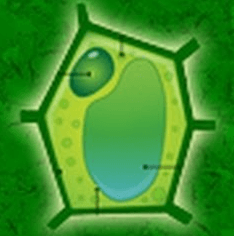
What part of the plant cell represents the cytoplasm?
a)
2
b)
3
c)
6
d)
5
39.

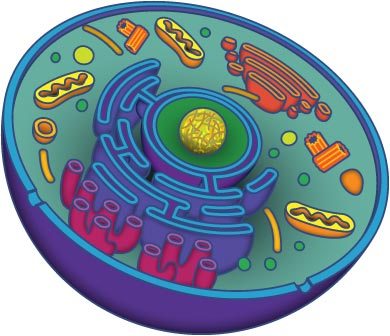
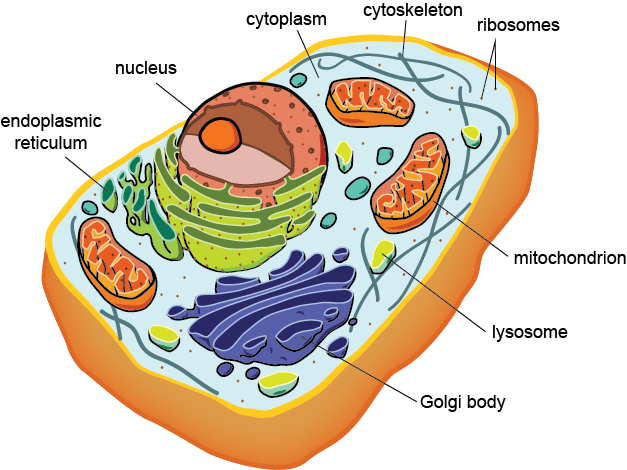
What part of the animal cell represents the cell membrane?

a)

5

b)

1

c)

2

d)

4

40.

What part of the plant cell represents the cell wall?

a)

5

b)

3

c)

6

d)

4

41.
What process does a multi-cellular organism use to replace its damaged body cells?
a)
mitosis
b)
meiosis
c)
replication
d)
transcription
42.
Which of these lists presents the stages of the cell cycle in the correct order?
a)
interphase, mitosis, cytokinesis
b)
cytokinesis, mitosis, interphase
c)
mitosis, interphase, cytokinesis
d)
interphase, cytokinesis, mitosis
43.
Which of these phases of mitosis take place first?
a)
anaphase
b)
telophase
c)
prophase
d)
metaphase
44.
Matt uses a microscope to look at slides of plant cells.  He sees a cell with two nuclei that have visible chromosomes. In which stage of cell division is this cell?
a)
anaphase
b)
prophase
c)
telophase
d)
interphase
45.
During interphase, the DNA is in the form of
a)
chromatin
b)
chromosomes
c)
chromatids
d)
centromeres
46.
Identify the stage.
a)
interphase
b)
metaphase
c)
anaphase
d)
telophase
47.
Identify the stage of mitosis.
a)
interphase
b)
prophase
c)
metaphase
d)
anaphase
48.
Identify the stage of mitosis.
a)
interphase
b)
prophase
c)
anaphase
d)
cytokinesis
49.
Identify the stage of mitosis. 
a)
interphase
b)
prophase
c)
anaphase
d)
cytokinesis
50.
What phase of mitosis is shown in the picture?
a)
Prophase
b)
Anaphase
c)
Telophase
d)
Metaphase
51.
Chromatid pairs line up in the middle of the cell.
a)
Metaphase
b)
Telophase
c)
Anaphase
d)
Interphase
52.
What phase of mitosis is shown in the picture?
a)
Prophase
b)
Anaphase
c)
Telophase
d)
Metaphase
53.
A new organism is produced from one parent organism.
a)
Sexual Reproduction
b)
Asexual Reproduction
54.
Mitosis is a type of ________________ reproduction.
a)
Sexual
b)
Asexual
55.
What phase of mitosis is shown in the picture?
a)
Prophase
b)
Anaphase
c)
Telophase
d)
Metaphase
56.
Chromatid pairs separate and move to opposite ends of the cell
a)
Metaphase
b)
Telophase
c)
Interphase
d)
Anaphase
57.
Chromosomes duplicate, the cell grows and develops
a)
Metaphase
b)
Telophase
c)
Interphase
d)
Anaphase
58.
What phase of mitosis is shown in the picture?
a)
Prophase
b)
Anaphase
c)
Telophase
d)
Metaphase
59.
Results of cell division or mitosis include all of the following EXCEPT?
a)
growth
b)
repair damaged cells
c)
replace damaged cells
d)
dead cells
60.
Chromatid pairs can be seen, spindle fibers form and nuclear membrane disappears
a)
Metaphase
b)
Telophase
c)
Anaphase
d)
Prophase
61.
Two new nuclei form and the cytoplasm splits
a)
Metaphase 
b)
Telophase
c)
Anaphase
d)
Prophase
62.
How many chromosomes does a human cell have?
a)
42
b)
46
c)
24
d)
64
63.
Which of the following lists, in order, the phases of mitosis?
a)
interphase, metaphase, anaphase, telophase
b)
prophase, metaphase, anaphase, telophase
c)
prophase, metaphase, anaphase, interphase
d)
prophase, anaphase, metaphase, telophase
64.
How many daughter cells are produced in mitosis?
a)
1
b)
2
c)
4
d)
6
65.
In asexual reproduction, all of the offspring are:
a)
Physically Identical
b)
Genetically Identical
c)
Physically and Genetically Identical
d)
Not Identical
66.
Which statement best describes the process of asexual reproduction?
a)
new organisms are usually genetically identical to the parent
b)
the reproductive cycle involves the production of games
c)
nuclei of sex cells fuse to form a zygote
d)
it involves the production of genetic copies 
67.
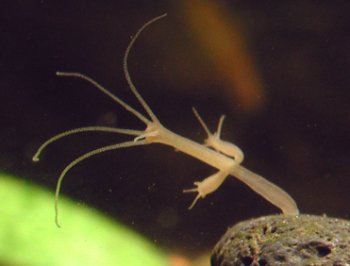
A hydra reproduces when an outgrowth, or bud, forms and continues to develop until if falls off of the parent. This is an example of:
a)
Binary Fission
b)
Sporulation
c)
Budding
d)
Vegetative Propagation
68.
a)
budding
b)
sporulation
c)
vegetative propagation
d)
binary fission
69.
This is when a new organism grows by cell division on the body of its parent. The bud, or offspring is identical to the parent. The bud, when large enough, can break off of the parent and live on its own.  Examples of this include yeast, hydra and potatoes.
 
a)
Regeneration
b)
Vegetative propagation
c)
Fission
d)
Budding
70.
a)
budding
b)
binary fission
c)
sporulation
d)
regeneration
71.
How many parent(s)are needed for asexual?
a)
4
b)
1
c)
9
d)
100
72.
When a starfish grows a new body off a broken arm, what kind of reproduction is this?
a)
Sexual
b)
Differentiation
c)
Asexual 
d)
Specialization
73.
What are some of the facts about asexual reproduction?
a)
Takes only one mate to reproduce and takes a longer time to reproduce
b)
Takes a shorter amount of time to reproduce and it takes two mates to reproduce
c)
Reproduces diverse offspring and takes a longer time to reproduce
d)
Takes only one mate to reproduce and takes a shorter time to reproduce
74.
This produces 2 identical cells.
a)
mitosis
b)
meiosis
75.
What is organized DNA called?
a)
Genes
b)
Deoxyribonucleic Acid
c)
Chromosomes
d)
Nucleus
76.
What parts of the chromosomes code for traits?
a)
Genes
b)
Deoxyribonucleic Acid
c)
Chromosomes
d)
Nucleus
77.
What is organized DNA called?
a)
Genes
b)
Deoxyribonucleic Acid
c)
Chromosomes
d)
Nucleus
78.
What parts of the chromosomes code for traits?
a)
Genes
b)
Deoxyribonucleic Acid
c)
Chromosomes
d)
Nucleus
79.
What does heredity mean?
a)
DNA being passed down from one generation to the next.
b)
Passing down acquired characteristics to your offspring.
c)
Leaving money in a will to your children
d)
all DNA is kept in the nucleus
80.
Where is all the genetic material inside a cell?
a)
nucleus
b)
vacuole
c)
cell membrane
d)
ribosome
81.

Pairs of thread-like molecules, which live in the cell's nucleus, and carries heredity information are called

a)

chromosomes

b)

genes

c)

DNA

d)

mitosis

82.

Fully grown parent cells split into two halves resulting in two daughter cells with the exact DNA as the parent.

a)

Binary Fission

b)

Budding

c)

Fragmentation

d)

Vegetative Reproductions

83.

A parent cell breaks into pieces and each piece becomes a new offspring.

a)

Binary Fission

b)

Budding

c)

Fragmentation

d)

Vegetative Reproductions

84.

Which is not an advantage for asexual reproduction?

a)

Less genetic variation

b)

No need for a mate

c)

Quick

d)

Produces more offspring

85.

Which female organ is responsible for producing the ova in sexual reproduction?

a)

Gametes

b)

Ovaries

c)

Testes

d)

Uterus

86.

What type of asexual reproduction is taking place?

a)

Binary Fission

b)

Budding

c)

Fragmentation

d)

Regeneration

e)

Vegetative Reproduction

87.

What type of asexual reproduction is taking place?

a)

Binary Fission

b)

Budding

c)

Fragmentation

d)

Regeneration

e)

Vegetative Reproduction

88.

What type of asexual reproduction is taking place?

a)

Binary Fission

b)

Budding

c)

Fragmentation

d)

Regeneration

e)

Vegetative Reproduction

89.

What type of asexual reproduction is taking place?

a)

Binary Fission

b)

Budding

c)

Fragmentation

d)

Regeneration

e)

Vegetative Reproduction

90.

Happens when a single parent cell divides into two daughter cells.

a)

mitosis

b)

meiosis

91.

Happens when the parent's chromosomes are halved.

a)

mitosis

b)

meiosis

92.

Gives an outcome of varied or diverse offspring.

a)

mitosis

b)

meiosis

93.

The offspring genetic information is exactly like the parents.

a)

mitosis

b)

meiosis

94.
How many parents does asexual reproduction involve?
a)
one 
b)
two
c)
three
d)
four
95.
If two organisms reproduce sexually, then their offspring will exhibit a genetic makeup that is -
a)
identical to only one parent
b)
identical to all of its siblings
c)
a unique combination of traits
d)
the recessive traits of each parent
96.
When comparing the offspring of sexually and asexually reproducing organisms, we would expect the genetic material (DNA) of the sexually reproducing organism to -
a)
contain fewer mutations
b)
be lesser in quantity
c)
be simpler overall
d)
show more variation
97.
What causes genetic variation in meiosis?
a)
chromosomes lining up
b)
crossing over of chromosomes
c)
separation of chromosomes
d)
chromosomes pulling apart
98.
What kind of cells are made in MEIOSIS?
a)
Haploid cells
b)
Diploid Cells
c)
Skin Cells
d)
Liver Cells
99.
If the Diploid number of Carrots is 18, the haploid number is
a)
18
b)
9
c)
27
d)
36
100.
The process of crossing over occurs in what phase of meiosis?
a)
anaphase 1
b)
prophase 1
c)
prophase 2
d)
telophase 1
101.
The chromosomes that pair up during meiosis, are called __________ chromosomes.  
a)
homozygous 
b)
asexual
c)
homologous
d)
genes
102.
Crossing over creates
a)
male genotype
b)
genetic variation (differences)
c)
DNA replication
d)
mitosis
103.
Which cellular process is shown?
a)
meiosis
b)
endocytosis
c)
mitosis
d)
phagocytosis
104.
What phase is represented?
a)
metaphase 1
b)
metaphase 2
c)
anaphase 1
d)
anaphase 2
105.
What phase is  shown in the picture?
a)
metaphase 2
b)
anaphase 2
c)
metaphase 1
d)
telophase 1
106.
products of meiosis are genetically
a)
different
b)
identical
107.
A human zygote should have _____ chromosomes inside.
a)
46
b)
23
c)
92
d)
64
108.
Meiosis makes sperm and egg cells. In humans, sperm and egg cells each have _____ chromosomes. Therefore a fertilized human egg cell (sperm and egg cell combined) would create a cell with _____ chromosomes.
a)
23, 46
b)
46, 23
c)
2, 4
d)
50, 100
109.
How many daughter cells does Meiosis create?
a)
2
b)
4
c)
8
d)
1
110.

Which part produces pollen?

a)

3

b)

4

c)

6

d)

7

111.

Which part produces ovules?

a)

3

b)

4

c)

5

d)

7

112.

Which number is the male reproductive part of the flower?

a)

1

b)

6

c)

8

d)

9

113.

Which part is number 3?

a)

stigma

b)

anther

c)

filament

d)

style

114.

Which part is number 8?

a)

Stamen

b)

Stigma

c)

Pistil

d)

Anther

115.

Which part is number 9?

a)

Stamen

b)

Stigma

c)

Pistil

d)

Anther

116.

The tip of the style that has sticky hairs to trap pollen is the ____________.

a)

Stamen

b)

Stigma

c)

Anther

d)

Style

117.

__________________________ is the process of transporting the male gamete from the male flower parts to the female flower parts.

a)

Asexual reproduction

b)

Pollination

c)

Photosynthesis

d)

Vasculation

118.

After fertilization, what does the ovule develop into?

a)

Seed

b)

Fruit

c)

Bud

d)

Flower