wayground logo

Free Printable Worksheets

Font size

S
M
L
XL
Worksheets

Review for final part 2 biology

Total questions: 120

Worksheet time: 2hrs 17mins
Name
Class
Date
1.
Which of the following best describes a DNA molecule?
a)
double helix
b)
contains ribose
c)
made of amino acids
d)
contains Uracil
2.
In a molecule of double-stranded DNA, the amount of Adenine present is always equal to the amount of
a)
cytosine
b)
guanine
c)
thymine
d)
uracil
3.
Adenine bonds with ______________.
a)
Guanine
b)
Thymine
c)
Cytosine
d)
Adenine
4.
Guanine bonds with ______________.
a)
Adenine
b)
Guanine
c)
Cytosine
d)
Thymine
5.
Which 2 molecules form the sides (backbone) of the DNA ladder?
a)
deoxyribose sugar and adenine
b)
deoxyribose sugar and a hydrogen bond
c)
deoxyribose sugar and the nucleus
d)
deoxyribose sugar and phosphate
6.
Which organelle is DNA usually found in?
a)
cell membrane
b)
vacuole
c)
chloroplast
d)
nucleus
7.
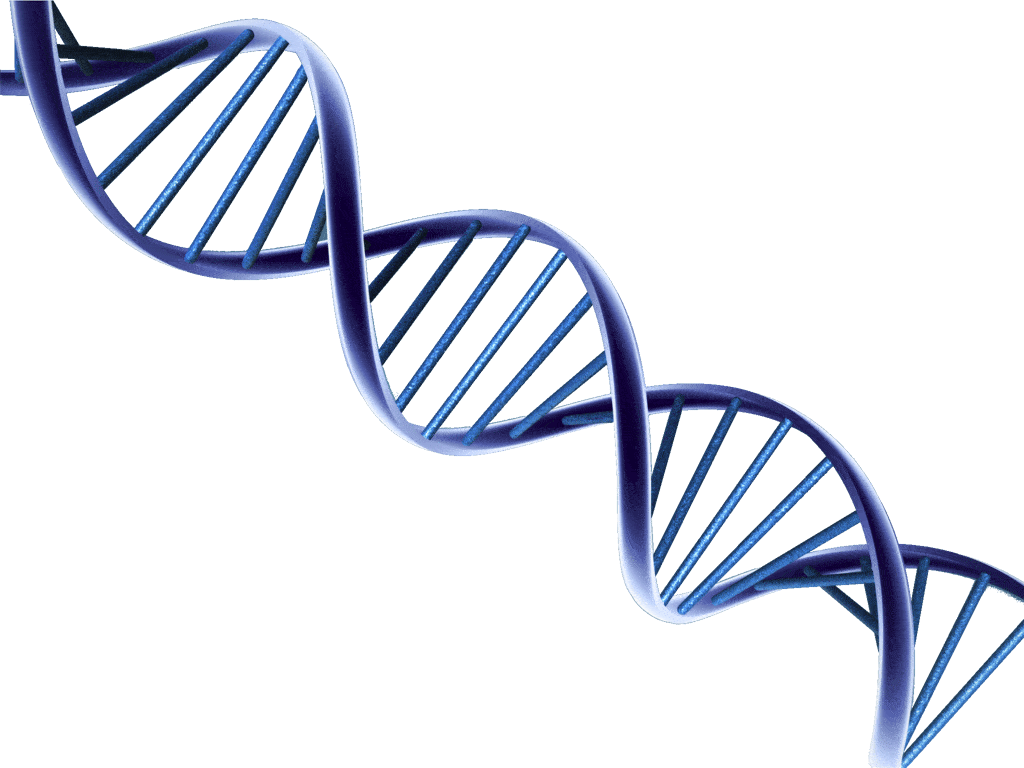
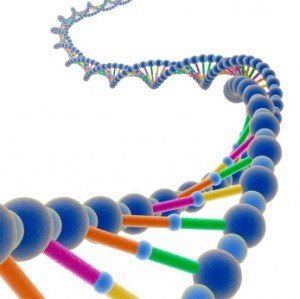
The drawing shows the structure of what molecule?
a)
A DNA molecule
b)
A lipid molecule
c)
A carbohydrate molecule
d)
A protein molecule
8.
In what phase of the cell cycle does DNA replication take place?
a)
G1
b)
S
c)
G2
d)
M
9.
What are the three components of a nucleotide?
a)
sugar, hydrogen, nitrogen base
b)
sugar, oxygen, nitrogen base
c)
sugar, phosphate, nitrogen base
d)
sugar, phosphate, protein
10.
What are the 4 nitrogen bases?
a)
adenine, thymine, cytoplasm, and guanine
b)
adenine, thymine cytosine, and guanine
c)
adenine, thymine, cytosine, and gylcerol
d)
adenine, thymine, cytosine, and glucose
11.
Tightly wound DNA is known as 
a)
DNA Replication
b)
Chromosomes
c)
Chromatin
d)
Genes
12.
What kind of information does DNA carry?
a)
genetic
b)
nuclear
c)
cell structure
d)
it doesn't carry any info
13.
If green is dominant over purple, then what is the genotype for this individual?
a)
Purple
b)
Green
c)
GG
d)
gg
14.
What is the genotype for this organism?
(E= 3 eyes, e= 1 eye)
a)
EE
b)
Ee
c)
ee
d)
EE or Ee
15.
Which of the following terms refers to the different possibilities of a gene?
a)
chromosome
b)
DNA
c)
Punnett Squares
d)
allele
16.
If something is heterozygous, it is also...
a)
purebred
b)
hybrid
c)
dominant
d)
recessive
17.
True/False: Different genotypes can code for the same phenotype.
a)
True
b)
False
18.
This image shows a...
a)
Punnett Square
b)
Phenotype
c)
Genotype
d)
Dominant allele
19.
A phenotype is the...
a)
letter combination
b)
dominant gene
c)
recessive gene
d)
physical appearance
20.
Another word for homozygous is...
a)
purebred
b)
hybrid
c)
heterozygous
d)
dominant
21.
 Dominant alleles are-
a)
capital
b)
lowercase
c)
both
d)
neither
22.
 Recessive alleles are-
a)
capital
b)
lowercase
c)
both
d)
neither
23.
Tt is-
a)
homozygous dominant
b)
homozygous recessive
c)
heterozygous
d)
none of these
24.
One reason for Mendel's success with genetic studies of peas was that he
a)
used only hybrid pea plants
b)
used peas with large chromosomes
c)
studied large numbers of offspring
d)
discovered the sources of variation in peas
25.
If an organism with a homozygous dominant trait was mated in a test cross, all the F1 offspring would be
a)
homozygous dominant
b)
homozygous recessive
c)
heterozygous
d)
50% homozygous;50% heterozygous
26.
Brown (B) is dominant over white (b). Which genotype is a purebred for brown fur?
a)
BB
b)
Bb
c)
bb
d)
All of the above
27.
bb crossed with BB, what is the probability of Bb?
a)
0%
b)
25%
c)
50%
d)
100%
28.
The genetic information inside an individual.
a)
Homozygous
b)
Heterozygous
c)
Genotype
d)
Phenotype
29.
This type of inheritance pattern is a MIXTURE of both traits.
a)
incomplete dominance
b)
co-dominance
c)
complete dominance
d)
recessive pattern
30.
Snap dragon color is a incomplete dominant trait.  A red flower (RR) is crossed with white flower (WW)? What color are flowers that are RW?
a)
Red
b)
Red and White
c)
White
d)
Pink
31.
This is an example of ___________?
a)
Incomplete dominance
b)
Co-Dominance
32.
When different traits are crossed and both are expressed in an organism
a)
Co-Dominance
b)
Gene expression
c)
Intermediate Inheritance
d)
Incomplete Dominance
33.
This shows...
a)
Incomplete dominance
b)
Codominance
c)
Sex linked traits
d)
Dominant inheritance
34.
Which of the characteristics is a lion least likely to pass on to its offspring?
a)
fur color
b)
length of tail
c)
scars on leg
d)
body size
35.
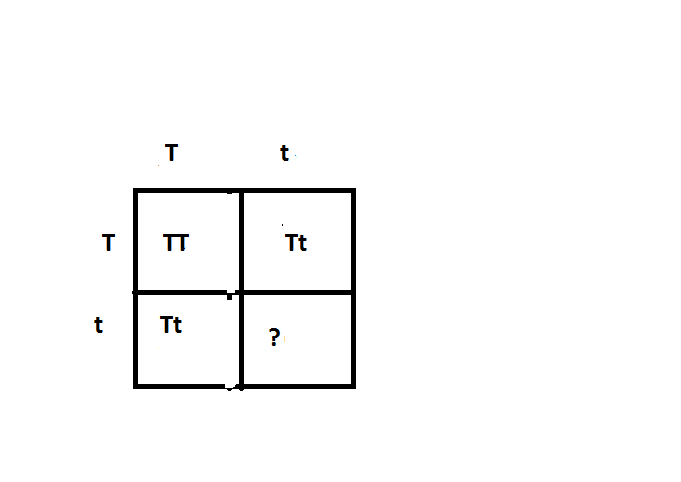
T - tall and t = short
In the punnett square below, what belongs in the missing square
a)
tt
b)
Tt
c)
Bb
d)
TT
36.
Who created the theory of evolution?
a)
Charles Darwin
b)
Charles Derwin
c)
Charlie Darwin
d)
Chris Darwin
37.
What was the name of the ship Charles Darwin sailed on?
a)
Boaty McBoaty Face
b)
HMS Beagle
c)
HMS Britannia
d)
HMS Bulldog
38.
Where did Charles Darwin travel to?
a)
Australia
b)
Barbados
c)
Galapagos 
d)
Trinidad
39.
What does evolution mean?
a)
To change something
b)
To change and adapt over time
c)
To lose some original features
d)
To improve ssomething over time
40.
What animals did Charles Darwin study when at the Galapagos Islands?
a)
Giraffes
b)
Seagulls
c)
Seals
d)
Finches
41.
How did Darwin think life started?
a)
We evolved from apes
b)
We evolved from fish
c)
We evolved from each other
d)
We evolved from a simple cell
42.
When was Charles Darwin's famous book published?
a)
1759
b)
1829
c)
1859
d)
1879
43.
What is the title of Charles Darwin's famous book?
a)
The origin of species
b)
Origin of species
c)
On the origin of species
d)
Species. The origin
44.
For Darwin, how have animals and plants survived?
a)
Through luck
b)
Through natural selection
c)
Through careful management
d)
Through choice
45.
What is natural selection?
a)
Your natural fate is decided from birth
b)
Nature actively chooses who surivives
c)
Those best suited to demands of environment surivie
d)
The weakest of a species surivie
46.
Have human beings evolved from apes?
a)
Yes and we evolved through natural selection
b)
Yes and we evolved through survival of the fittest
c)
No but we share a common ancestor
d)
Yes  and we evolved through adapting to the environment
47.
a trait that helps an organism survive and reproduce
a)
variation
b)
adaptation
c)
species
d)
evlolution
48.
the gradual (slow) change in a species over time
a)
scientific theory
b)
Galapagos Islands
c)
adaptation
d)
evolution
49.
who is Charles darwin
a)
starbucks owner
b)
a bird
c)
a christian
d)
a naturalist
50.

This occurs when humans breed plants/animals so the most useful traits appear in offspring:

a)

Coevolution

b)

Adaptive radiation

c)

Convergent evolution

d)

Artificial selection

51.

The smallest unit that can evolve is called a(n):

a)

Organism


b)

Population

c)

Species

d)

Organelle

52.

Which of the following is/are needed for natural selection?

a)

Variation in characteristics


b)

Differences in fitness

c)

Characteristics that are inherited

d)

All of the above

53.

Which of the following is an example of a species?

a)

A donkey and a horse produce a sterile mule

b)

Frog 1 mates in April and frog 2 mates in June

c)

A coyote and wolf mate when they are housed together at the zoo

d)

Two birds mate to produce fertile offspring

54.

Structures with similar functions; they evolved to do the same job, but the organisms did not evolve from a common ancestor:

a)

Homologous structures

b)

Analogous structures

c)

Vestigial structures

55.

Structures reduced in size because they are non-functional and no longer used:

a)

Homologous structures

b)

Analogous structures

c)

Vestigial structures

56.

Structures that are similar in related organism because they were inherited from a common ancestor:

a)

Homologous structures

b)

Analogous structures

c)

Vestigial structures

57.

Which of the following organisms are good examples of artificial selection?

a)

Bacteria and viruses

b)

Pigeons, cows and dogs

c)

Elephants and blue whales

d)

Whooping cranes and sand cranes

58.

An explanation of observations that have a lot of supporting evidence is called a(n):

a)

Hypothesis

b)

Idea

c)

Conclusion

d)

Theory

59.

Human DNA is __________% identical to a chimpanzee.

a)

15%


b)

25%

c)

50%

d)

75%

e)

99%

60.

Human DNA is __________% identical to a banana.

a)

15%

b)

25%

c)

50%

d)

75%

e)

99%

61.

The preserved remains of organisms:

a)

Fossils

b)

Comparative biochemistry

c)

Comparative anatomy

d)

Comparative embryology

e)

Biogeography

62.
Darwin's job on the HMS Beagle was to observe and collect animals, plants and rocks true or false
a)
FALSE
b)
TRUE
63.
what did Charles Darwin observe in finch populations of the Galapagos Islands off the coast of South America?
a)
different species on different islands
b)
all species on one of the islands
c)
identical species on all the islands
d)
the same species as North America
64.
Darwin proposed that species change in all the following was except
a)
over time
b)
globally
c)
locally
d)
with pressure from weather
65.
Whose theory included "acquired traits" such as a giraffe needing a long neck so they stretch it over time?
a)
Darwin
b)
Lamarck
66.
The goal of every species on earth is 
a)
to survive and reproduce 
b)
divide and conquer 
c)
survive and conquer 
d)
reproduce and die 
67.
This image shows that 
a)
These animals have no simliarities in their structures. 
b)
two different species may have evolved from a common ancestor. 
c)
These animals are from the same species. 
d)
These animals likely evolved from different ancestors due to their differences. 
68.
The disappearance of a species.
a)
Evolution
b)
Extinction
c)
Migration
d)
Mutation
69.
Two organisms that are closely related would have
a)
very similar DNA sequence
b)
exactly the same DNA sequences
c)
no proteins in common
d)
completely different DNA sequence
70.
All of these finches have different shaped beaks, they are an adaptation to gain access of 
a)
Water
b)
Food
c)
Shelter
71.
According to this cladogram, birds are LEAST related to -
a)
Amphibians
b)
Sharks
c)
Ray Finned Fish
d)
Crocodiles
72.
The system of classification for organisms is called -
a)
taxonomy
b)
classification
c)
terraformy
d)
cladogram
73.
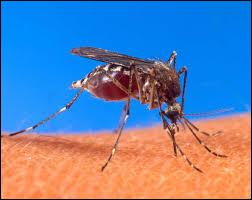
Mosquito  belongs to what kingdom?
a)
Animal Kingdom
b)
Plant Kingdom
c)
Fungi Kingdom
d)
Protista Kingdom
74.
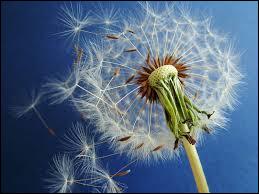
Dandelion, What kingdom does it belongs to?
a)
Plant Kingdom
b)
Animal Kingdom
c)
Fungi Kingdom
d)
Protista Kingdom
75.
The scientific name for an organism is made from the:
a)
class and family name
b)
genus and species name
c)
domain and kingdom name
d)
kingdom and phylum name
76.
The 8 levels of classification, broadest to most specific.
a)
Domain, Genus, Family, Order, Class, Phylum, Kingdom, Species
b)
Domain, Species, Kingdom, Genus, Phylum, Family, Class, Order
c)
Domain, Kingdom, Phylum, Class, Order, Family, Genus, Species
d)
Order, Kingdom, Species, Domain, Phylum, Family, Class, Genus
77.
An organism made up of more than one cell would be called:
a)
multicellular
b)
unicellular
c)
heterotroph
d)
autotroph
78.
An example of an unicellular organism would be:
a)
monkey
b)
bacteria
c)
spider
d)
human
79.
Cells that have a true nucleus are called....
a)
eukaryotes
b)
prokaryotes
c)
unicellular
d)
multicellular
80.
Which of the following organisms are LEAST closely related?
a)
organisms that share a domain
b)
organisms that share a family 
c)
organisms that share a genus 
d)
organisms that share a species 
81.
What did Erwin Chargaff conclude from his experiments?
a)
Nitrogen bases are held together by peptide bonds
b)
A and T, C and G always occur in equal amounts
c)
Proteins are the carriers of genetic information
d)
C and G rarely occur in eukaryotic organisms
82.
What was Watson and Crick's main scientific accomplishment?
a)
Building the first accurate model of DNA
b)
Isolating strains of pneumonia causing bacteria
c)
Determining base pairing rules
d)
Discovering the process of genetic transformation
83.
If Chargaff found that a sample of DNA has 20% ADENINE, how much GUANINE would he have determined to be there?
a)
30%
b)
20%
c)
80%
d)
60%
84.
If Chargaff found that a sample of DNA has 30% THYMINE, how much GUANINE would he have calculated to be there?
a)
30%
b)
20%
c)
80%
d)
60%
85.
From his work with mice and pneumonia-causing bacteria, Frederick Griffin coined the term
a)
Replication
b)
Transcription
c)
Transformation
d)
Translation
86.
Rosalind Franklin's "Photo 51" allowed Watson and Crick to determine the ___ of DNA.
a)
Shape
b)
Backbone
c)
Nitrogen bases
d)
Hydrogen bonds
87.
Griffith discovered that
a)
DNA is different than RNA.
b)
adenine = thymine.
c)
bacteria can transfer DNA.
d)
DNA is the genetic molecule.
88.
Who was responsible for the experiment depicted by the image?
a)
Friedrich (Fritz) Miescher 
b)
Watson and Crick
c)
Frederick Griffith
d)
Rosalind Franklin
89.
Who was responsible for the experiment depicted by the image/data table?
a)
Oswald Avery, et. al.
b)
Watson and Crick
c)
Erwin Chargaff
d)
Frederick Griffith
90.
Who was responsible for the experiment depicted by the image/data table?
a)
Oswald Avery, et. al.
b)
Watson and Crick
c)
Erwin Chargaff
d)
Rosalind Franklin
91.
Nitrogenous bases are joined by which type of bond?
a)
polar bonds
b)
ionic bonds
c)
covalent bonds
d)
hydrogen bonds
92.
Name this structure
a)
double helix
b)
nucelotide
c)
twisted ladder
d)
hydrogen bond
93.
Which process is used to copy DNA in the nucleus?
a)
replication
b)
transcription
c)
translation
94.
Which process is used to make mRNA from the DNA in the nucleus?
a)
transcription
b)
translation
c)
replication 
95.
Which RNA bases would pair with TACGAA in transcription
a)
AUGCUU
b)
ATGCTT
c)
GCATCC
d)
GCAUCC
96.
Where does transcription take place?
a)
nucleus
b)
cytoplasm
c)
ribosome
97.
One difference between DNA and RNA is that....
a)
Only RNA has the base Uracil
b)
only RNA contains the base Thymine
c)
only RNA contains the base Cytocine
d)
only RNA contained the base Guanine
98.
Which of these bases does not exist in RNA?
a)
C
b)
T
c)
U
d)
A
99.
A triplet of mRNA is called a
a)
codon
b)
anticodon
c)
amino acid
d)
peptide bond
100.
I am a nucleic acid.
a)
DNA
b)
RNA
c)
Both DNA and RNA
101.
Translation takes place in the 
a)
ribosome
b)
chloroplast
c)
nucleus
d)
mitochondria
102.
Brings the amino acids to the ribosome
a)
mRNA
b)
tRNA
c)
rRNA
d)
DNA
103.
Which phase of which process does this picture show?
a)
Transcription
b)
Translation
c)
Replication
104.
The codon is located on the 
a)
DNA
b)
mRNA
c)
tRNA
d)
rRNA
105.
What amino acid is represented by the codon CAG?
a)
Aspartic Acid
b)
Histidine
c)
Glutamine
d)
Methionine
106.
Which of these is correct?
a)
DNA --> mRNA --> polypeptide chain
b)
DNA --> polypeptide chain --> mRNA
c)
mRNA --> DNA --> polypeptide chain
d)
polypeptide chain --> DNA --> mRNA
107.
What amino acid is represented by the codon AUG?
a)
Aspartic Acid
b)
Histidine
c)
Glutamine
d)
Methionine
108.
How many different amino acids are there?
a)
20
b)
16
c)
10
d)
24
109.
How many different codons are possible?
a)
20
b)
13
c)
64
d)
127
110.
How many generations are shown in this pedigree?
a)
1
b)
2
c)
3
d)
4
111.
How many individuals are there in the 3rd generation?
a)
2
b)
3
c)
4
d)
6
112.
Which individual in the first generation is a carrier?
a)
The male
b)
The female
c)
individual 1
d)
None of the above
113.
How many girls in this family express this recessive disorder?
a)
4
b)
5
c)
6
d)
7
114.
a)
Not affected male
b)
Not affected female
c)
Affected male
d)
Affected female
115.
Lisa has two grandmothers in this picture.
a)
Mona and Jackie
b)
Marge and Mona
c)
Selma and Jackie
d)
Patty and Selma
116.
a)
Not affected Female
b)
Not affected Male
c)
Affected Male
d)
Affected Female
117.
Time to think!  If couple H + C have another child, what is the chance of the child NOT having the trait shown in this pedigree?
a)
100%
b)
50%
c)
25%
d)
0%
118.
Which of the following combinations of sex chromosomes represent a female?
a)
XY
b)
XXY
c)
XX
119.
What do half colored symbols represent?
a)
The individual is a carrier.
b)
The individual expresses the trait.
c)
The individual has both recessive alleles.
d)
The individual has both dominant alleles.
120.
What is the chromosomal condition of the individual whose karyotype is seen in the image?
a)
Turner's Syndrome
b)
Trisomy 21 (Down Syndrome)
c)
Trisomy 13
d)
Trisomy 18