
 Worksheets
Bio EOC Review
Total questions: 116
Worksheet time: 2hrs 30mins
Name
Class
Date
1.
What is the definition of Prokaryote?
a)
cell without a nucleus
b)
cell with a nucleus
c)
makes its own food
d)
one cell
2.
What is the definition of Eukaryote
a)
cell without a nucleus
b)
cell with a nucleus
c)
get its food
d)
many cells
3.
What is the definition of Auto Trophic?
a)
many cells
b)
one cell
c)
Gets its food
d)
Makes its food
4.
What is the definition of Unicellular?
a)
Many cells
b)
One cell
c)
No cells
d)
To many cells
5.

Contains the Cell's DNA and is a part of the processes of growth, metabolism, and reproduction.
a)
Downy
b)
Nucleus
c)
Cell Wall
d)
Golgi Complex
6.

The organelle that uses the energy of sunlight to make food for the cell.
a)
Chloroplast
b)
Ribosome
c)
Mitochondria
d)
Nucleus
7.
Rigid outer layer made of cellulose that supports and protects the cell (plant, fungi, and bacterial cells)
a)
Nucleolus
b)
Golgi Body
c)
Cell Wall
d)
Cytoskeleton
8.
"Gatekeeper" Separates the cell from the rest of the environment and helps control what passes in and out of the cell. Semi-permeable: allows some materials to pass through but not all
a)
Cell Wall
b)
Cytoplasm
c)
Mitochondria
d)
Cell Membrane
9.
"Storage tanks" Can hold food, water or waste for the cell
a)
Ribosomes
b)
Vacuole
c)
Chloroplast
d)
Nucleolus
10.
A group of similar cells that work together
a)
Molecule
b)
Tissue
c)
Organ
d)
Cell
11.
An organelle that makes proteins for a cell
a)
Nucleus
b)
Golgi Body
c)
Ribosome
d)
Endoplasmic Reticulum
12.

"I" is which organelle?
a)
chloroplast
b)
cytoplasm
c)
mitochondria
d)
golgi
13.
Modifies, sorts and packages proteins
a)
golgi apparatus
b)
mitochondria
c)
vacuole
d)
ribosome
14.
What is the pH level of an acid?
a)
7-14
b)
14-21
c)
0-7
15.
Holds a water molecule together
a)
glycongen
b)
hydrogen bond
c)
monosaccharide
d)
glucose
16.
________ are used for energy in animals.
a)
glocose
b)
fat
c)
carbohydatres
17.
_______________ requires ATP
a)
Osmosis
b)
Active transport
c)
Facilitated diffusion
d)
Passive transport
18.
The phospholipid bilayer is ____________
a)
Permeable
b)
Impermeable
c)
Semipermeable
d)
None of the above
19.
If the cell is isotonic, the direction of water is ________________.
a)
Inside the cell membrane
b)
Outside the cell membrane
c)
Within the cell membrane
d)
None of the above
20.
Moving "Big stuff" out
a)
Endocytosis
b)
Exocytosis
c)
Diffusion
d)
Osmosis
21.
Approved eye protection devices (such as goggles) are worn in the laboratory
a)
to avoid eye strain
b)
to improve your vision
c)
only if you don’t have corrective glasses
d)
any time chemicals, heat or glassware are used
22.
After completing an experiment, all chemical wastes should be
a)
taken home
b)
dumped in the sink
c)
disposed of according to your instructor’s directions
d)
left at your lab station for the next class
23.
You are heating a substance in a test tube. Always point the open end of the tube
a)
away from all people
b)
toward another classmate
c)
toward your lab partner
d)
toward yourself
24.
Personal eyeglasses provide as much protection as
a)
none of these answers
b)
splashproof chemical goggles
c)
safety glasses
d)
a face shield
25.
In a laboratory, the following should not be worn.
a)
all of the answers
b)
dangling jewelry
c)
sandals
d)
loose clothing
26.
All chemicals in the lab are to be considered dangerous
a)
True
b)
False
27.
A possible explanation to a problem that has not yet been tested.
a)
data
b)
theory
c)
hypothesis
d)
fact
28.
This part of the experiment serves as a basis of comparison; the one variable being tested has been omitted.
a)
experimental group
b)
control group
c)
data
d)
variables
29.

Squidward found new reeds to tryout for his clarinet. He used an APPLAUSOMETER to measure applause after playing Under the Sea with each reed. The results were put in the table.
What was the dependent variable?
What was the dependent variable?
a)
The Song
b)
The Reed
c)
The Applause
30.

Squidward found new reeds to tryout for his clarinet. He used an APPLAUSOMETER to measure applause after playing Under the Sea with each reed. The results were put in the table.
What was controlled?
What was controlled?
a)
The Song
b)
The Reed
c)
The Applause
31.

What is the first step in the scientific method?
a)
Make an observation
b)
Design and conduct an experiment
c)
Make an hypothesis
d)
Share your results
32.
Which is NOT a step in the scientific method?
a)
Make observation
b)
Form a theory
c)
Collect data
d)
Form a hypothesis
33.
Mitosis results in...
a)
Four 1n cells
b)
Four 2n cells
c)
Two 1n cells
d)
Two 2n cells
34.
Meiosis results in the production of
a)
2 diploid cells
b)
2 haploid cells
c)
4 haploid cells
d)
4 diploid cells
35.
When does the nuclear membrane break down?
a)
anaphase
b)
telphase
c)
prophase
d)
metaphase
36.
What is the difference between plant and animal cell mitosis?
a)
plants use centrioles, animals use a cell wall to split the cell.
b)
plants have a cell plate, animals have a cleavage furrow.
c)
animals reduce the number of chromosomes, plants double theirs.
d)
plants don't go through telophase
37.
The failure of chromosomes to separate during meiosis is called...
a)
independent assortment
b)
segregation
c)
nondisjunction
d)
none of these choices
38.

What is this phase of mitosis?
a)
prophase
b)
metaphase
c)
anaphase
d)
telophase
39.
Contains the genetic material and serves as the control center of the cell
a)
nuclear membrane
b)
spindle fibers
c)
nucleus
d)
telophase
40.
A jelly-like substance found inside a cell surrounding its organelles is
a)
cytokenisis
b)
cytoplasm
c)
mitosis
d)
epithelial
41.
What is the result of mitosis?
a)
1 cell
b)
2 genetically identical cells
c)
2 genetically different cells
d)
4 genetically identical cells
42.

Name the phase:
a)
Prophase
b)
Metaphase
c)
Anaphase
d)
Telophase
43.
The final stage of mitosis
a)
prophase
b)
telophase
c)
anaphase
d)
metaphase
44.
what are two identical "sister" chromosomes called?
a)
spindle
b)
centromere
c)
chromatids
d)
chromosomes
45.
What is the time of growth between cell divisions?
a)
mitosis
b)
anaphase
c)
telophase
d)
interphase
46.
What is the division of the cytoplasm?
a)
cytokinesis
b)
cyclin
c)
telophase
d)
cell division
47.
What is found at the middle of the copied chromosome?
a)
cancer
b)
cyclin
c)
chromatid
d)
centromere
48.
What is the protein that regulates the timing of the cell cycle?
a)
cyclin
b)
centromere
c)
spindle
d)
cell cycle
49.
What is the division of the cell nucleus?
a)
cell division
b)
cytokinesis
c)
cell cycle
d)
mitosis
50.

If green is dominant over purple, then what is the genotype for this individual?
a)
Purple
b)
Green
c)
GG
d)
gg
51.

Which is the correct phenotype for this organism?
a)
BB
b)
blue
c)
green
d)
bb
52.
If something is heterozygous, it is also...
a)
purebred
b)
hybrid
c)
dominant
d)
recessive
53.

This image shows a...
a)
Punnett Square
b)
Phenotype
c)
Genotype
d)
Dominant allele
54.
Dominant alleles are-
a)
capital
b)
lowercase
c)
both
d)
neither
55.
Recessive alleles are-
a)
capital
b)
lowercase
c)
both
d)
neither
56.
Tt is-
a)
homozygous dominant
b)
homozygous recessive
c)
heterozygous
d)
none of these
57.
If a pea plant were homozygous recessive for height, how would its alleles be represented?
a)
TT
b)
Tt
c)
tt
d)
tT
58.
A cross between two tall garden pea plants produced 314 tall plants and 98 short plants. What genotypes are the parents?
a)
TT and tt
b)
TT and Tt
c)
Tt and Tt
d)
TT and TT
59.

In certain rats, black fur is dominant over white fur. If two rats, both heterozygous for fur color are mated, their offspring would be expected to have
a)
four different genotypes and two different colors
b)
two different genotypes and three different colors
c)
three different genotypes and two different colors
d)
three different genotypes and three different colors
60.
What is a genotype?
a)
Genetic makeup
b)
Physical traits
c)
A long strand of DNA
d)
Specific version of a gene
61.

The difference in the physical traits of an individual from those of other individuals in a group is called a(n)
a)
change
b)
adaption
c)
species
d)
variation
62.
Which of the following is a fossil?
a)
a plant that has recently died
b)
a group of organisms that can reproduce
c)
a structure or organ that no longer functions
d)
a trace of an organisms that existed in the past
63.

what did Charles Darwin observe in finch populations of the Galapagos Islands off the coast of South America?
a)
different species on different islands
b)
all species on one of the islands
c)
identical species on all the islands
d)
the same species as North America
64.

a bird that can easily outcompete other birds for food and that can produce many eggs has a high
a)
life expectancy
b)
mutation rate
c)
fitness
d)
adaptability
65.

If an organism has a vestigial structure, that structure likely once had a function in a(n)
a)
close relative
b)
early ancestor
c)
unrelated organism
d)
embryological stage
66.

Two organisms that are closely related would have
a)
very similar DNA sequence
b)
exactly the same DNA sequences
c)
no proteins in common
d)
completely different DNA sequence
67.
What is speciation?
a)
combining of tow species to form one with different traits
b)
isolation that affects mating behaviors
c)
timing of mating that prevents normal sexual selection
d)
divergence of two or more species from an existing one
68.

two species are in different environments and look very similar. However, that are not closely related (analogous). Their resemblance is most likely an example of.
a)
sexual selection
b)
temporal isolation
c)
convergent evolution
d)
divergent evolution
69.
asexual reproduction produces offspring with
a)
half of a single parent's genes
b)
the same genes as the parent
c)
a mix of genes from two parents
d)
lots of genetic variation
70.
The combined alleles of all individuals in a population is called the population's
a)
phenothype
b)
gene pool
c)
mutation rate
d)
allele frequency
71.

Individuals that are well adapted to their environment will survive and produce
a)
better traits
b)
stronger genes
c)
more offspring
d)
fewer mutations
72.
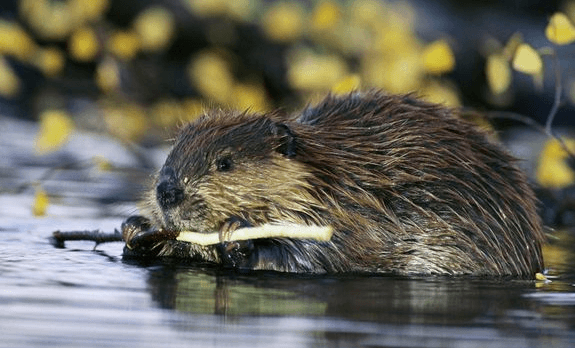
What is the term for a feature that allows an organism to survive in its environment?
a)
adaptation
b)
variation
c)
homologous structure
d)
vestigial structure
73.

a)
analogous structures
b)
homologous structures
c)
vestigial structures
d)
none of the above
74.

What is the process of which humans breed organisms for certain traits?
a)
artificial selection
b)
descent without modification
c)
inheritance of acquired characteristics
d)
natural selection
75.

Which of the following statements best explains why some mosquitoes survived after the first spraying?
a)
Some mosquitoes had a genetic mutation that made them resistant to the insecticide
b)
A. All mosquitoes had a genetic mutation that made them resistant to the insecticide
c)
A. None of the mosquitoes had a genetic mutation that made them resistant to the pesticide
76.
What is the monomer of nucleic acids?
a)
Glycerol
b)
Monosaccharides
c)
Amino Acids
d)
Nucleotides
77.
Phospholipids are used in what biological structure?
a)
RNA
b)
DNA
c)
Cell membrane
d)
Cell wall
78.
DNA and RNA are examples of...
a)
proteins
b)
nucleic acids
c)
carbohydrates
d)
lipids
79.
This is one job proteins do NOT have in the body
a)
insulation
b)
structure for tissues and organs
c)
speed up chemical reactions
d)
transport things through cell membrane
80.
Most enzymes:
a)
speed up the chemical reaction
b)
have no effect on the rate of the chemical reaction
c)
slow the rate of the chemical reaction
d)
keep the rate of the chemical reaction the same
81.
What suffix (word ending) is used in the names of most carbohydrates?
a)
-ase
b)
-nic
c)
-ose
d)
-yme
82.
Carbohydrates are made of...
a)
C H O
b)
C H O N
c)
C H O N P
d)
C H O N S
83.

Which macromolecule is shown?
a)
lipid
b)
protein
c)
nucleic acid
d)
carbohydrate
84.

Which macromolecule is shown?
a)
lipid
b)
protein
c)
nucleic acid
d)
carbohydrate
85.
Why are lipids insoluble in water?
a)
lipids are polar
b)
lipids are non-polar
c)
lipids have a negative charge
d)
lipids are building blocks of protiens
86.
cellulose, glycogen, starch, or chitin
a)
carbohydrates
b)
lipids
c)
proteins
d)
nucleic acid
87.

What is structure A?
a)
Substrate
b)
Active site
c)
Enzyme
d)
Products
88.

What is structure C?
a)
Substrate
b)
Active site
c)
Enzyme
d)
Products
89.

What is structure E, F, G?
a)
Substrate
b)
Active site
c)
Enzyme
d)
Products
90.

The graph shows how enzymes affect reactions in cells. Which statement best summarizes the information shown in the graph?
a)
Enzymes increase the energy of the reactants.
b)
Enzymes decrease the energy level of the products.
c)
Enzyme decrease the activation energy of the reaction.
d)
Enzymes reverse the direction of the reaction.
91.
What is another name for enzymes?
a)
chemical catalyst
b)
microorganism
c)
biological catalyst
d)
catalyst
92.
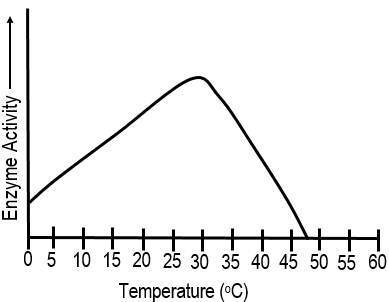
Based on the graph, what temperature does this enzyme work best?
a)
15 C
b)
40 C
c)
30 C
93.
The 3 categories of carbohydrates are:
a)
Monosaccharide, disaccharide, polysaccharide
b)
glucose, fructose, galatose
c)
starch, cellulose, chitin
d)
There are no categories of carbohydrates
94.
What are the functions of lipids?
a)
provide quick energy/
insulation
insulation
b)
repair tissues
c)
2nd source of energy/ insulates
d)
build struc
tures
tures
95.
What is the main function of a carbohydrate?
a)
Repair Tissue
b)
Main source of energy for cells
c)
Hydrate the body
d)
create struc
tures
body structures
tures
body structures
96.
What is the function of cellulose?
a)
store long-term energy
b)
repair tissues
c)
create plant cell walls
d)
supply short-term energy
97.

which symbiosis is this
a)
parasitism
b)
mutualism
c)
commensalism
d)
nonalism
98.

symbiotic relationship in which both organisms benefit
a)
competition
b)
Mutualism
c)
nitrogen fixation
d)
energy pyramid
99.

What does a food web represent?
a)
All connections of energy flow throughout all organisms in a habitat.
b)
The specific ways that mutualism is carried out.
c)
A single pathway or energy flow between organisms.
d)
How carnivores get their food.
100.

The image provided is an example of a(n):
a)
Carnivore
b)
Herbivore
c)
Producer
d)
Autotroph
101.
What gas is released by plants during photosynthesis?
a)
sulfur
b)
carbon dioxide
c)
oxygen
d)
hydrogen
102.

In which organelle (part of the cell) does photosynthesis take place?
a)
mitochondria
b)
chloroplast
c)
nucleus
d)
cell membrane
103.
What is the gas we breath out that plants use for photosynthesis?
a)
sulfur
b)
carbon dioxide
c)
oxygen
d)
hydrogen
104.
What are the products of photosynthesis?
a)
Carbon dioxide and water
b)
Carbon dioxide and oxygen
c)
Glucose and oxygen
d)
Glucose and water
105.

Autotroph or heterotroph?
a)
Autotroph
b)
Heterotroph
106.
Which of the following is the correct equation for PHOTOSYNTHESIS?
a)
6CO2 + 6H2O --> 6O2 + C6H12O6
b)
6CO2 + C6H12O6 + 6H2O --> O2
c)
6O2 + 6H2O --> 6CO2 + C6H12O6
d)
C6H12O6 + 6O2 ---> 6H2O + 6CO2
107.
Glycolysis occurs in __________.
a)
Eukaryotes
b)
Prokaryotes
c)
Archaea
d)
Every living thing that we know of.
108.
Glycolysis is a __________ process.
a)
aerobic
b)
anaerobic
c)
aerobic and anaerobic
d)
neither aerobic nor anaerobic
109.
after strenuous exercise, a muscle cell would contain decreased amounts of ______ and increased amounts of ______ ____
a)
glucose ATP
b)
ATP glucose
c)
oxygen lactic acid
d)
lactic acid ATP
110.

Which process does this entire picture represent?
a)
Ethanol Fermentation
b)
Lactate fermentation
c)
Respiration
d)
Glycolysis
111.
The process carried out by yeast that causes bread dough to rise is
a)
alcoholic fermentation
b)
cellular respiration
c)
lactic acid fermentation
d)
mitosis
112.
The net gain of energy from glycolysis is
a)
8 ADP molecules
b)
4 ATP molecules
c)
3 pyruvic acid molecules
d)
2 ATP molecules
113.
The Krebs cycle takes place within the
a)
chloroplast
b)
cytoplasm
c)
mitochondrion
d)
nucleus
114.
Because fermentation takes place without oxygen, it is said to be
a)
aerobic
b)
anaerobic
c)
cyclic
d)
oxygen-rich
115.
What are the products of cellular respiration?
a)
glucose, carbon dioxide, and ATP energy
b)
glucose and carbon dioxide
c)
carbon dioxide and water
d)
carbon dioxide, water, and ATP energy
116.
What are the raw materials for cellular respiration?
a)
oxygen and water
b)
oxygen and glucose
c)
glucose and carbon dioxide
d)
water and carbon dioxide
100 %

