wayground logo

Free Printable Worksheets

Font size

S
M
L
XL
Worksheets

Spring Sem Review #3

Total questions: 118

Worksheet time: 1hrs 12mins

Name
Class
Date
1.
Which of the following animals is an INVERTEBRATE?
a)
Cat
b)
Dog
c)
Spider
d)
Fish
2.
Which of the following is NOT a function of a skeleton?
a)
Movement
b)
Support
c)
Protection
d)
A place for muscles to attach to
3.
What type of skeleton is shown with this animal?
a)
endoskeleton
b)
exoskeleton
4.
Which animal does NOT have an endoskeleton?
a)
sea star
b)
shark
c)
snake
d)
snail
5.
Vertebrate animals must have which two features?
a)
endoskeleton and backbone
b)
exoskeleton and backbone
c)
brain and spinal cord
d)
spinal cord and backbone
6.
Choose the characteristics that animals must possess in the Animal Kingdom.
a)
multicellular
b)
eukaryotic and multicellular
c)
eukaryotic, multicellular, heterotroph
d)
eukaryotic, multicellular, autotroph
7.
If an animal is stationary and doesn't move around, it is called _____.
a)
sessile
b)
motile
8.
Worms are ____ because they produce eggs and sperm in the same body.
a)
sexual
b)
asexual
c)
hermaphrodites
9.
Fish an amphibians reproduce by _____ _____ because the eggs and sperm combine OUTSIDE the animal's body.
a)
internal fertilization
b)
external fertilization
c)
self-fertilization
10.
Which method of asexual reproduction is shown with this planaria?
a)
budding
b)
fragmentation
c)
regeneration
d)
parthenogenesis
11.
This hydra is reproducing asexually by which method?
a)
budding
b)
fragmentation
c)
regeneration
d)
parthenogenesis
12.
This underwater sponge farm is possible because sponges reproduce by ___.
a)
budding
b)
fragmentation
c)
regeneration
d)
parthenogenesis
13.
Identify this stage in early embryology.
a)
zygote
b)
morula
c)
blastula
d)
gastrula
14.
This is what you call the creases between embryonic cells.
a)
cell walls
b)
cleavage
c)
cracks
d)
lines
15.
Which sequence is correct in early embryonic development?
a)
morula, blastula, zygote, gastrula
b)
zygote, blastula, gastrula, morula
c)
gastrula, blastula, morula, zygote
d)
zygote, morula, blastula, gastrula
16.
Choose the body part that would come from the ECTODERM germ layer.
a)
brain
b)
lungs
c)
muscles
d)
kidneys
17.
Which of the following would NOT be created from the endoderm germ layer?
a)
trachea
b)
stomach
c)
urinary bladder
d)
skin
18.
In the diagram, which letter is pointing to ENDODERM tissue?
a)
E
b)
F
c)
G
d)
H
19.
Using the diagram, which letter shows "invagination?"
a)
E
b)
F
c)
G
d)
H
20.
Where do the following processes take place in the human body:
(A) fertilization
(B) implantation of the embryo
a)
Ovary  -  Fallopian Tube
b)
Fallopian Tube  -  Uterus
c)
Vagina  -  Uterus
d)
Ovary  -  Cervix
21.

this protein is present in animal cells

a)

cellulose

b)

collagen

c)

Chitin

d)

Lignin

22.

this molecule is present in plant cell walls

a)

cellulose

b)

collagen

c)

Chitin

d)

Lignin

23.

collagen is found in

a)

bone

b)

skin

c)

ligaments

d)

hair

e)

nails

24.

animals are generally

a)

diploid

b)

haploid

25.

animals are generally reproduce

a)

sexually

b)

asexually

26.

They control early development

a)

hox genes

b)

homeopatic genes

c)

genes

d)

boxing genes

27.

This group makes the biggest fraction of animals

a)

vertebrates

b)

invertebrates

28.

This group makes the biggest fraction of invertebrates

a)

arthropods

b)

mollusks

c)

worms

d)

sponges

29.

This group makes the biggest fraction of arthropods

a)

insects

b)

aracnids

c)

crustaceans

d)

miriapods

30.

radially symetric animals have______________ layers of tissue

a)

1

b)

2

c)

3

d)

4

e)

piitbull

31.

bilaterally symetric animals have______________ layers of tissue

a)

1

b)

2

c)

3

d)

4

e)

piitbull

32.

in protostomes which forms first?

a)

anus

b)

mouth

33.

in deuterostomes which forms first?

a)

anus

b)

mouth

34.

You are a

a)

chordate

b)

echinodermata

c)

arthropod

d)

annelid

35.

you are a

a)

deuterostome

b)

protostome

c)

potato

d)

human being with feelings and rights to seek happiness (yes, but don't choose this option)

36.

You are a

a)

haploid

b)

diploid

37.

Which term refers to the lack of a central point or axis?

a)

Symmetry

b)

Asymmetry

c)

Phylogeny

d)

Ecology

38.
Which term refers to how parts are arranged around a point or axis?
a)
Symmetry
b)
Asymmetry
c)
Phylogeny
d)
Ecology
39.
Which term refers to a true body cavity?
a)
Exoskeleton
b)
Endoskeleton
c)
Cephalization
d)
Coelom
40.
Which term of direction refers to the head end?
a)
Anterior
b)
Posterior
c)
Dorsal
d)
Ventral
41.

The embryo layer that forms the skin and nervous tissue is 

a)

endoderm

b)

ectoderm

c)

mesoderm

d)

protostome

42.

The animal's digestive tract forms from the

a)

endoderm

b)

extoderm

c)

mesoderm

d)

protostome

43.
Which of these animals has bilateral symmetry? 
a)
sponge
b)
hydra
c)
jellyfish
d)
flatworm
44.
Identify this body type.
a)
Diploblastic
b)
Coelomate
c)
Psuedocoelomate
d)
Acoelomate
45.
This body type is considered a false body cavity.
a)
Psuedocoelomate
b)
Coelomate
c)
Acoelomate
d)
Triploblast
46.

"Ventral" refers to which side of an organism?

a)

Along the back side, near the vertebral column

b)

Along the front side, away from the vertebral column

c)

Closer to the head

d)

Closer to the tail (rear)

47.

Posterior means:

a)

Closer to the front

b)

Along the front of the vertebral column

c)

Closer to the back

d)

Along the back of the vertebral column

48.

The embryo layer that forms the skin and nervous tissue is the _____.

a)

endoderm

b)

mesoderm

c)

ectoderm

d)

deuterostome

49.

The middle layer of the blastocyst is the

a)

endoderm

b)

ectoderm

c)

mesoderm

d)

deuterostome

50.

If the opening in the gastrula turns into the organisms mouth then it must be a

a)

deuterostome

b)

protostome

c)

human

d)

dog

51.
Choose the characteristics that animals must possess in the Animal Kingdom.
a)
multicellular
b)
eukaryotic and multicellular
c)
eukaryotic, multicellular, heterotroph
d)
eukaryotic, multicellular, autotroph
52.
Identify this stage in early embryology.
a)
zygote
b)
morula
c)
blastula
d)
gastrula
53.
In the diagram, which letter is pointing to ENDODERM tissue?
a)
E
b)
F
c)
G
d)
H
54.

Approximately what percentage of animals are invertebrates?

a)

25%

b)

40%

c)

60%

d)

95%

55.

Which animal is an example of an organism with radial symmetry?

a)

Sponges

b)

Sea anemone

c)

Flatworm

d)

Human

56.

What type of body cavities do humans have?

a)

Acoelomate

b)

Pseudocoelomate

c)

Coelomate

d)

None of the above

57.

An animal without a backbone

a)

chirdate

b)

vertebrate

c)

spina corda

d)

invertebrate

58.

An animal with a backbone

a)

invertebrate

b)

vertebrate

c)

spina corda

d)

cephalopod

59.

All of the following are characteristics of an animal EXCEPT:

a)

eats food

b)

moves in some way

c)

grows and changes

d)

has chlorophyll

60.

Animals get energy from

a)

excersing

b)

food

c)

water

d)

oxygen

61.
Which of these statements is true about animals?
a)
they are consumers
b)
they need water and oxygen
c)
they need to eat other living things for food
d)
all of these statements are true
62.

Reproduction that only involves one parent and all offspring are identical; for example, binary fission of bacteria or amoebas.

a)

Asexual

b)

Sexual

c)

Division

d)

Addition

63.

Reproduction that involves two cells from different parents unite to produce the first cell of a new organism.

a)

Asexual

b)

Sexual

c)

Budding

d)

Division

64.

Living things are based on a universal genetic

code. What molecule is responsible for that code?

a)

RNA

b)

Lipid

c)

Protein

d)

DNA

65.

All of these are characteristics of animals EXCEPT:

a)

Heterotrophic

b)

Multicellular

c)

Specialization

d)

Unicellular

66.

In a multicellular organism cells that are used for a specific function are an example of cell ________________.

a)

movement

b)

growth

c)

differentiation

d)

reproduction

67.

Eukaryotes have a membrane?

a)

True

b)

False

68.

Prokaryotes don't have a nucleus.

a)

True

b)

False

69.

Which is a definition for photosynthesis?

a)

Releasing energy from nutrients

b)

The breaking down of large insoluble molecules into small soluble molecules

c)

The process by which plants make carbohydrates from raw materials using energy from light

d)

The movement of particles from a high concentration to a low concentration

70.

Which is the word equation for photosynthesis?

a)

glucose + oxygen -> carbon dioxide + water

b)

methane + oxygen -> carbon dioxide + water

c)

glucose + carbon dioxide -> oxygen + water

d)

carbon dioxide + water -> oxygen + glucose

71.

State the balanced symbol equation for photosynthesis

a)

CO2 + H2O -> C6H12O6 + O2

b)

C6H12O6 + 6O2 -> 6CO2 + 6H2O

c)

6CO2 + 6H2O -> C6H12O6 + 6O2

d)

CO2 + H2O -> 6C6H12O6 + O2

72.

Which molecule transfers light energy into chemical energy for the synthesis of carbohydrates

a)

Chloroplast

b)

Chlorophyll

c)

Mitochondria

d)

Vacuole

73.

In plants the glucose produced in photosynthesis gets stored as which molecule?

a)

Starch

b)

Glycogen

c)

Lipids

d)

Protein

74.

State the name of structure A

a)

Vascular bundle

b)

Upper epidermis

c)

Palisade mesophyll

d)

Spongy mesophyll

75.

What is the name of the water proof layer on the top of the leaf?

a)

Vascular bundle

b)

Cuticle

c)

Palisade mesophyll

d)

Spongy mesophyll

76.

What are the cells in layer B called?

a)

Vascular bundle

b)

Cuticle

c)

Palisade mesophyll

d)

Spongy mesophyll

77.

What are the cells in layer C called?

a)

Vascular bundle

b)

Cuticle

c)

Palisade mesophyll

d)

Spongy mesophyll

78.

What structures are found in the vascular bundle? (pick 2 options)

a)

Xylem

b)

Phleom

c)

Palisade mesophyll

d)

Spongy mesophyll

79.

What is the role of the xylem?

a)

transports water and help supports the plant

b)

transports sugars

c)

where photosynthesis happens

d)

where respiration happens

80.

What is the role of the phloem?

a)

transports water and help supports the plant

b)

transports sugars

c)

where photosynthesis happens

d)

where respiration happens

81.

What is the name of layer D called?

a)

Vascular bundle

b)

Cuticle

c)

Palisade mesophyll

d)

Spongy mesophyll

82.

What is structure F called?

a)

Vascular bundle

b)

Cuticle

c)

Palisade mesophyll

d)

Stomata

83.

What is the role of stomata?

a)

Openings in the leaf that allows gas in and out of the plant

b)

Transports water and supports the plant

c)

transports sugars

d)

Where photosynthesis happens

84.

The stomata are openings in the leaf which allow for gas exchange. Which cells found either side of the opening control the stomata?

a)

Guard Cells

b)

Palisade Cells

c)

Spongy mesophyll

85.

What does the plant need nitrate for?

a)

For the production of chlorophyll

b)

For the production of amino acids

c)

For the production of glucose

d)

For the production of starch

86.

What does the plant need magnesium for?

a)

For the production of chlorophyll

b)

For the production of amino acids

c)

For the production of glucose

d)

For the production of starch

87.

What is structure E called?

a)

Vascular bundle

b)

Cuticle

c)

Palisade mesophyll

d)

Lower epidermis

88.

What is the role of the spongy mesophyl?

a)

It allows gas to move through the leaf

b)

It transports water

c)

It transports sugars

d)

It is where photosynthesis happens

89.
Plants that have true roots, stems and leaves are called ____.
a)
nonvascular plants
b)
vascular plants
c)
seed plants
d)
spore plants
90.
____ are plants that produce naked, or not covered, seeds.
a)
Nonvascular
b)
Vascular
c)
Gymnosperms
d)
Angiosperms
91.
The two groups of seed plants are....
a)
angiosperms and gymnosperms
b)
vascular and nonvascular
c)
spores and seeds
d)
short and tall
92.
This is a ____ plant.
a)
gymnosperm
b)
angiosperm
c)
vascular
d)
nonvascular
93.
Seedless plants reproduce with ___.
a)
spores
b)
seeds
c)
binary fission
d)
flowers
94.
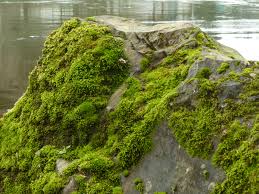
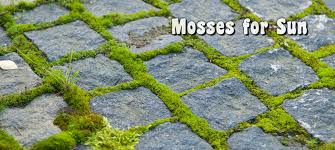
Which of the following is NOT true of mosses, liverworts, and hornworts?
a)
They are non-vascular
b)
They have roots, stems, and leaves
c)
They grow in moist places
d)
They are small and low-growing
95.
Which of the following groups of plants lacks the vascular tissues xylem and phloem?
a)
Bryophytes
b)
Pteridophytes
c)
Gymnosperms
d)
Angiosperms
96.
Which two groups of plants depend on water for reproduction?
a)
Bryophytes and Angiosperms
b)
Pteridophytes and Gymnosperms
c)
Bryophytes and Pteridophytes
d)
Angiosperms and Gymnosperms
97.
Which group of plants were the first to have vascular tissue?
a)
Bryophytes
b)
Pteridophytes
c)
Gymnosperms
d)
Angiosperms
98.
To which of the following groups do flowering plants that produce fruit belong?
a)
Bryophytes
b)
Pteridophytes
c)
Gymnosperms
d)
Angiosperms
99.

Organisms in the plant kingdom are unique because....

a)

they are unicellular.

b)

they lack a nucleus.

c)

they lack a cell wall.

d)

they produce their own food.

100.

Scientists classify organisms by....

a)

giving each several kingdom names.

b)

placing them in groups with organisms with similar characteristics.

c)

the type of brain the organism has.

d)

determining if the organism is helpful or hurtful.

101.

Which scientists created the binomial nomenclature system of classification?

a)

Watson

b)

Darwin

c)

Linneaus

d)

van Leeuwenhoek

102.

The process where organisms that are better adapted to their environment will survive and reproduce more successfully than organisms less adapted is called...

a)

Cloning.

b)

Selective Breeding.

c)

Evolution of all species.

d)

Natural Selection.

103.
Which is a NOT a characteristic that all plants have in common?
a)
All plants have tissues and organs.
b)
All plants have cell walls and chloroplasts.
c)
All plants are vascular.
d)
All plants make their own food.
104.
What are the 2 MAIN groups of plants?
a)
seed plants and seedless plants
b)
gymnosperms and angiosperms
c)
horsetails and ferns
d)
vascular and nonvascular
105.
A(n) ____________ is an any part or characteristic that helps a species survive or reproduce.
a)
leaf
b)
adaptation
c)
flower
106.
Which plants are very short and grow close to the ground?
a)
vascular
b)
nonvascular
107.
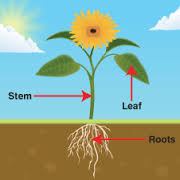
Why is the plant in the picture a vascular plant?
a)
it can absorb light from the sun
b)
it has a stem that can carry water and nutrients
c)
it has more than one cell
d)
it can make it's own foo
108.
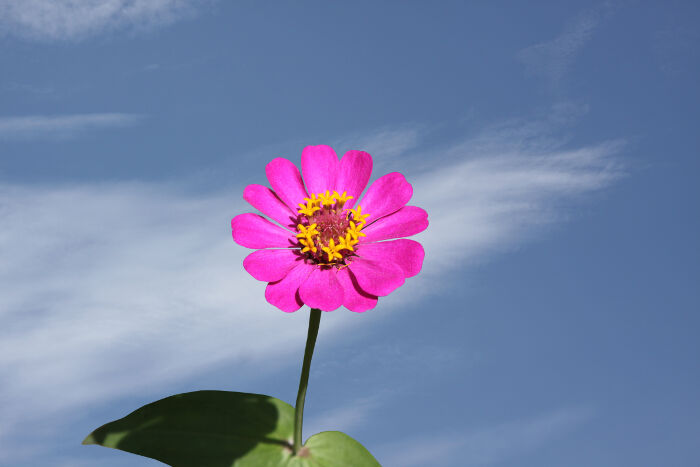
a)
Gymnosperm
b)
Angiosperm
109.
Which of these is not a plant?
a)
evergreen
b)
flower
c)
wheat 
d)
mushroom
110.
____ are plants that produce naked, or not covered, seeds.
a)
Nonvascular
b)
Vascular
c)
Gymnosperms
d)
Angiosperms
111.
The two groups of seed plants are....
a)
angiosperms and gymnosperms
b)
vascular and nonvascular
c)
spores and seeds
d)
short and tall
112.
Which type of plant has seeds that are encased in a protective fruit?
a)
gymnosperms
b)
conifers
c)
angiosperms
d)
horsetails
113.
Which statement best describes a gymnosperm?
a)
a nonvascular plant with roots, stems, and leaves
b)
a low-growing non-vascular plant lacking true roots
c)
a vascular plant that uses spores to reproduce
d)
a vascular plant that uses pollen to produce seeds that are not enclosed in protective fruits
114.
The part of a flower that produces the male reproductive cells.
a)
anther
b)
style
c)
stigma
d)
filament
115.

How is a dichotomous key used to determine the identity of a classified organism?

a)

Dichotomous keys use genetic characteristics or traits of an organism to identify it.

b)

Dichotomous keys use the binomial nomenclature system to identify an organism.

c)

Dichotomous keys use physical characteristics or traits of an organism to identify it.

d)

Dichotomous keys are not used to identify a classified organism.

116.

True or False: Evolution occurs at the individual level.

a)

True

b)

False

117.

Define the process of natural selection.

a)

the process unfavorable traits are passed on from parent to offspring.

b)

the process by which favorable traits are passed on from parent to offspring.

c)

the process by which individual organisms are chosen to survive.

118.

Which of these describes a situation where natural selection could lead to evolution?

a)

Radiation causes the leaves of sunflowers to curl.

b)

Overpredation removes a species of plant from the area.

c)

Colder temperatures result in smaller plants to thrive.

d)

Precipitation at higher rates stimulates the growth of elm trees.