
 Worksheets
DNA Structure
Total questions: 118
Worksheet time: 1hrs 5mins

What makes up the SIDES of a DNA ladder?
nitrogen bases
sugars & phosphates
genes & chromosomes
RNA

What makes up the rungs (steps) of a DNA ladder?
sugars & phosphates
nitrogen bases
sugars
genes & chromosomes

What SHAPE is DNA?
single strand
straight ladder
double helix (twisted ladder)
DNA has no shape

In DNA. what base always pairs with A?
A
T
C
G
In DNA, what base always pairs with C?
C
T
A
G

If one strand of a DNA molecule has the following order of bases, what will be the correct order of bases on the complementary (matching) strand?
AATTGGCC
AATTGGCC
TTAACCGG
GGCCAATT
GACTGACT

What is DNA made up of?
nucleotides
cytoplasm
RNA
cells

Which is NOT one of the three parts of a nucleotide?
sugar
base
ribosome
phosphate

In what cell part is the DNA located?
ribosome
cytoplasm
mitochondria
nucleus

What is a section of DNA that codes for a specific protein called?
RNA
replication
gene
protein

What is it called when DNA makes a copy of itself?
Translation
Replication
Mitosis
Gene therapy

TRUE or FALSE? During DNA replication, the two new copies of DNA formed are IDENTICAL
True
False

DNA sends a messenger with a copy of the code out of the nucleus to make proteins. What is that messenger?
mRNA
Uracil
DNA
phosphate

During protein synthesis, DNA sends mRNA out of the nucleus to make what?
identical DNA molecules
genes
proteins
fats

How is RNA different than DNA?
It is 2 stranded
It has the sugar deoxyribose
It has the base U instead of T
It is not different- RNA is identical to DNA

What are proteins made of?
Amino acids
chloroplasts
guanine
carbohydrates

What does DNA stand for?
Deoxyribonucleic acid
Diribose nutride acidosis
Dinitro acid
Deoxynitrogenic acid

What scientists were credited with discovering the structure of DNA?
Einstein and Darwin
Watson and Crick
Wallace and Cooper
Wegener and Chargoff

Fill in the matching bases that would appear on the top strand of the DNA molecule pictured, in order.
A G T C A T G A
A G T C A T G A
T T T A A A C C
T C A G T A C T
C A T G A G A T

Challenge- How many TOTAL NUCLEOTIDES are there in the DNA molecule pictured?
5
10
2
20
3' A A A T T T C 5'
The matching strand would read...


The picture below shows the steps of DNA replication beginning with step one and ending with step three.
Because you are reusing the old, or parent, DNA strand DNA replication is said to be
Semi- Conservative
Semi-discontinuous
Continuous
Fully-Conserveative

The picture below shows an enzyme unwinding and unzipping DNA.
What is the name of this enzyme?
DNA Helicase
DNA Ligase
DNA polyermase
RNA Polymerase
Match he nucleotide with its complementary nucleotide. (DNA to DNA).
Adenine -
Thymine
Guanine
Cytosine
Match he nucleotide with its complementary nucleotide. (DNA to DNA).
Cytosine-
Thymine
Guanine
Adenine
Which enzyme is responsible for adding the free nucleotides to the replicating DNA?
DNA Helicase
DNA Ligase
DNA polyermase
RNA Polymerase
Which is the first step?
DNA Helicase unwinds original DNA strand
RNA Primase lays down RNA primer for new nucleotide bases.
DNA polymerase builds new strands by bring in new nucleotide bases.
Ligase knits together fragments on lagging strand
Which is the second step?
DNA Helicase unwinds original DNA strand
RNA Primase lays down RNA primer for new nucleotide bases.
DNA polymerase builds new strands by bring in new nucleotide bases.
Ligase knits together fragments on lagging strand
Which is the third step?
DNA Helicase unwinds original DNA strand
RNA Primase lays down RNA primer for new nucleotide bases.
DNA polymerase builds new strands by bring in new nucleotide bases.
Ligase knits together fragments on lagging strand
Which is the fourth step?
DNA Helicase unwinds original DNA strand
RNA Primase lays down RNA primer for new nucleotide bases.
DNA polymerase builds new strands by bring in new nucleotide bases.
Ligase knits together fragments on lagging strand

Which letter in the picture below depicts the lagging strand in DNA replication?
A
C
B
None of the above
Which letter in the picture below depicts the leading strand in DNA replication?
A
C
B
None of the above
Which letter in the picture below depicts the replication fork in DNA replication?
A
C
B
None of the above
If a person suffered from a disorder where their DNA fragments were unable to fill in the missing slots in between the fragments of the lagging strand, they would most likely have a disorder that affected which enzyme?
DNA Helicase
DNA Ligase
DNA polyermase
RNA Polymerase
DNA replication runs from ______' to _____' and is said to be ______________________
5, 3, antiparallel
3, 5, antiparallel
5, 3, parallel
3, 5, parallel
Okazaki fragments appear on which strand of DNA during DNA replication?
lagging
leading
The directionality of DNA is said to be ___________, because it is side by side by goes in opposite directions.
Anti-directional
Parallel
Anti-parallel
Anti-uniform

What gray enzyme in the picture is shown removing the RNA primer?
DNA ligase
DNA Polymerase
Exonuclease
RNA Primase

1. Recoil
2. Straightens the double helix
3. Breaks Hydrogen bonds
4. Adds Free nucleotides

CAT TCA CTG
DNA replication results in
2 completely new DNA molecules
2 DNA molecules that each contain a strand of the original
1 new DNA molecule and 1 old
1 new molecule of DNA
Enzyme that connects the DNA to the backbone (glues)
Ligase
Polymerase
Helicase
Primase
Enzyme that breaks hydrogen bonds (unzips)
Ligase
Polymerase
Primase
Helicase
Site where replication begins
Polymerase action site
Replication fork
Replication Origin
In the front
The new DNA strand formed after DNA replication is an exact copy of its parent strand
True
False
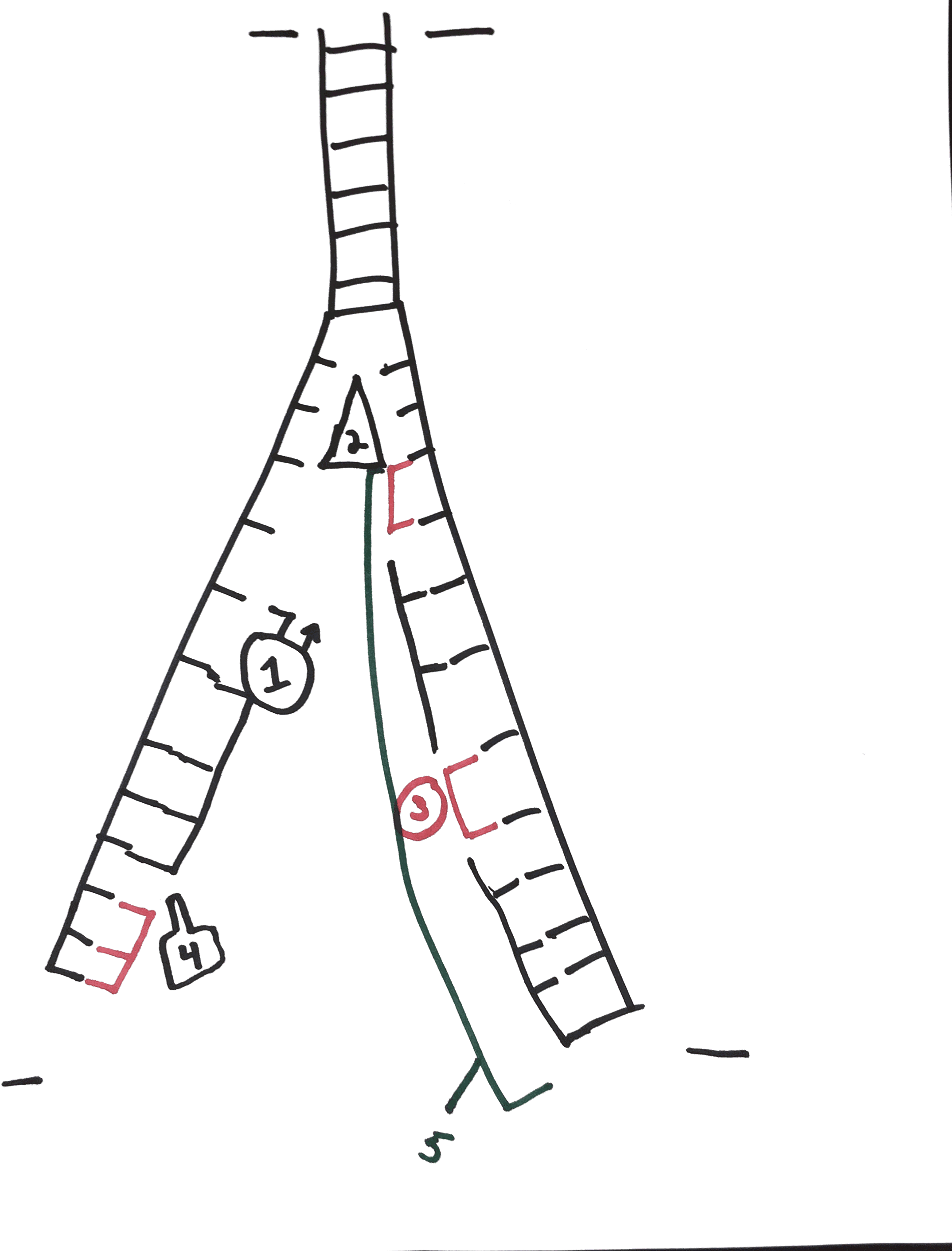
#4 in the picture
Polymerase
Primase
Helicase
Ligase
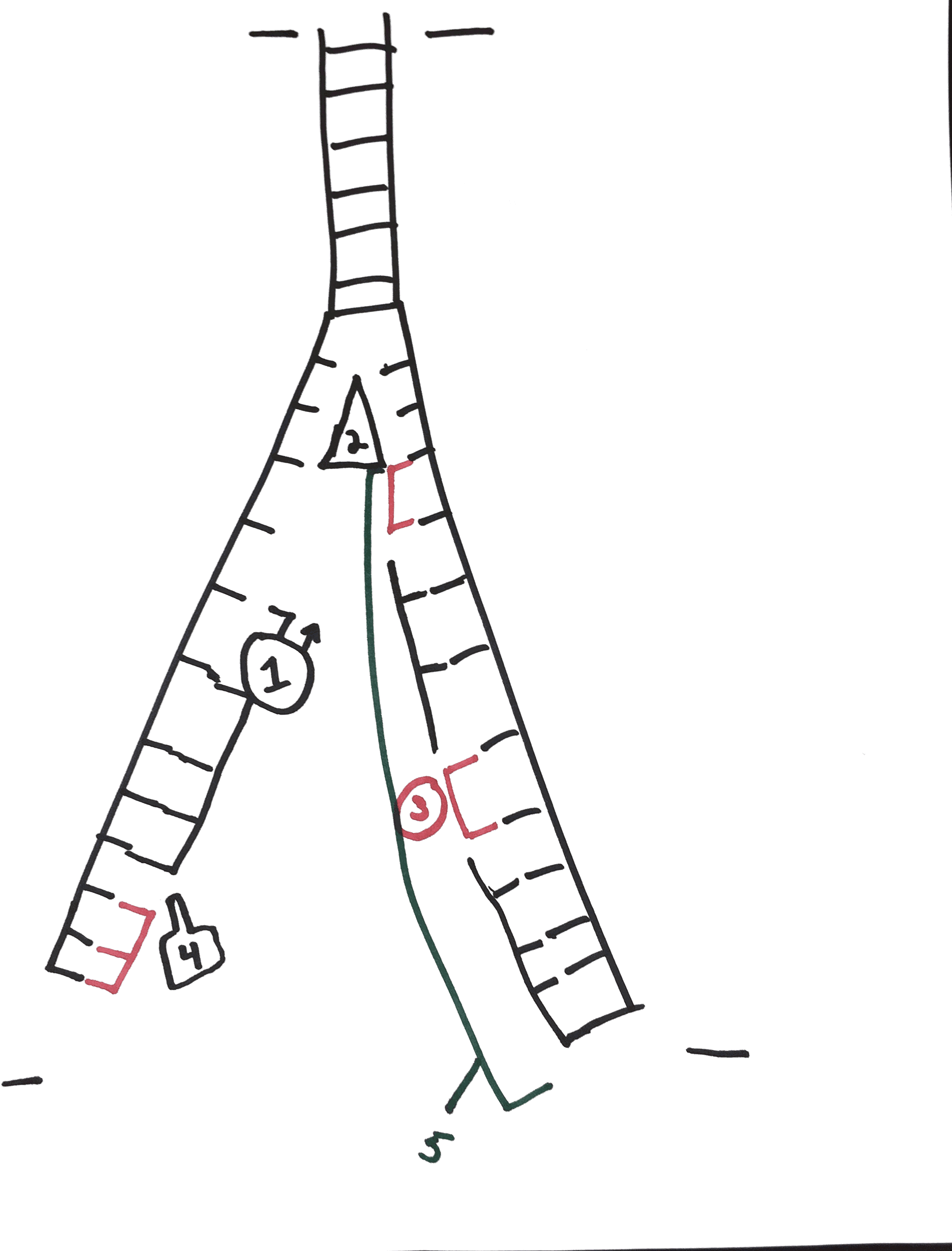
#1 in the picture above (builder)
Helicase
Primase
Polymerase
Ligase
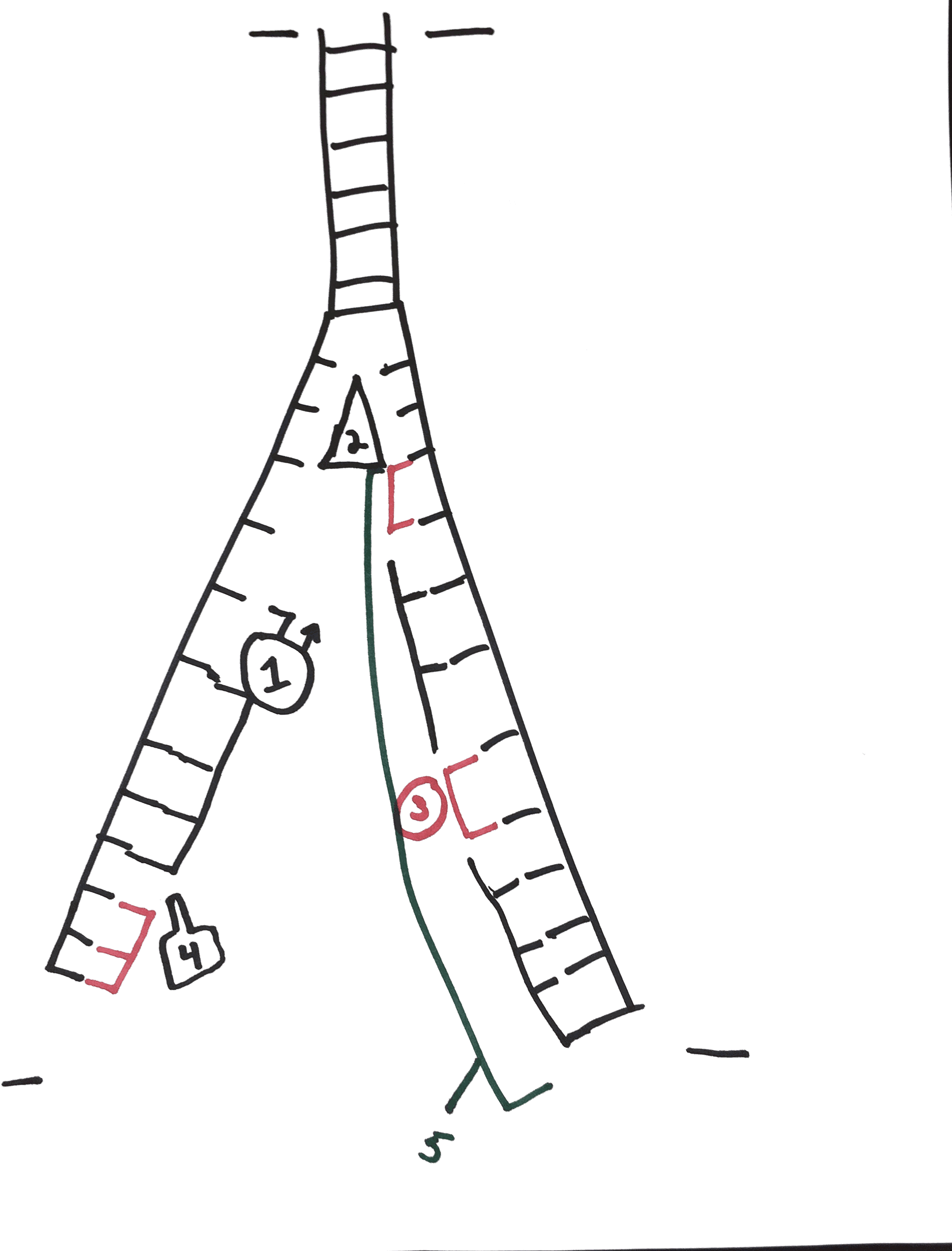
#3 setting Primers
Ligase
Helicase
Polymerase
Primase
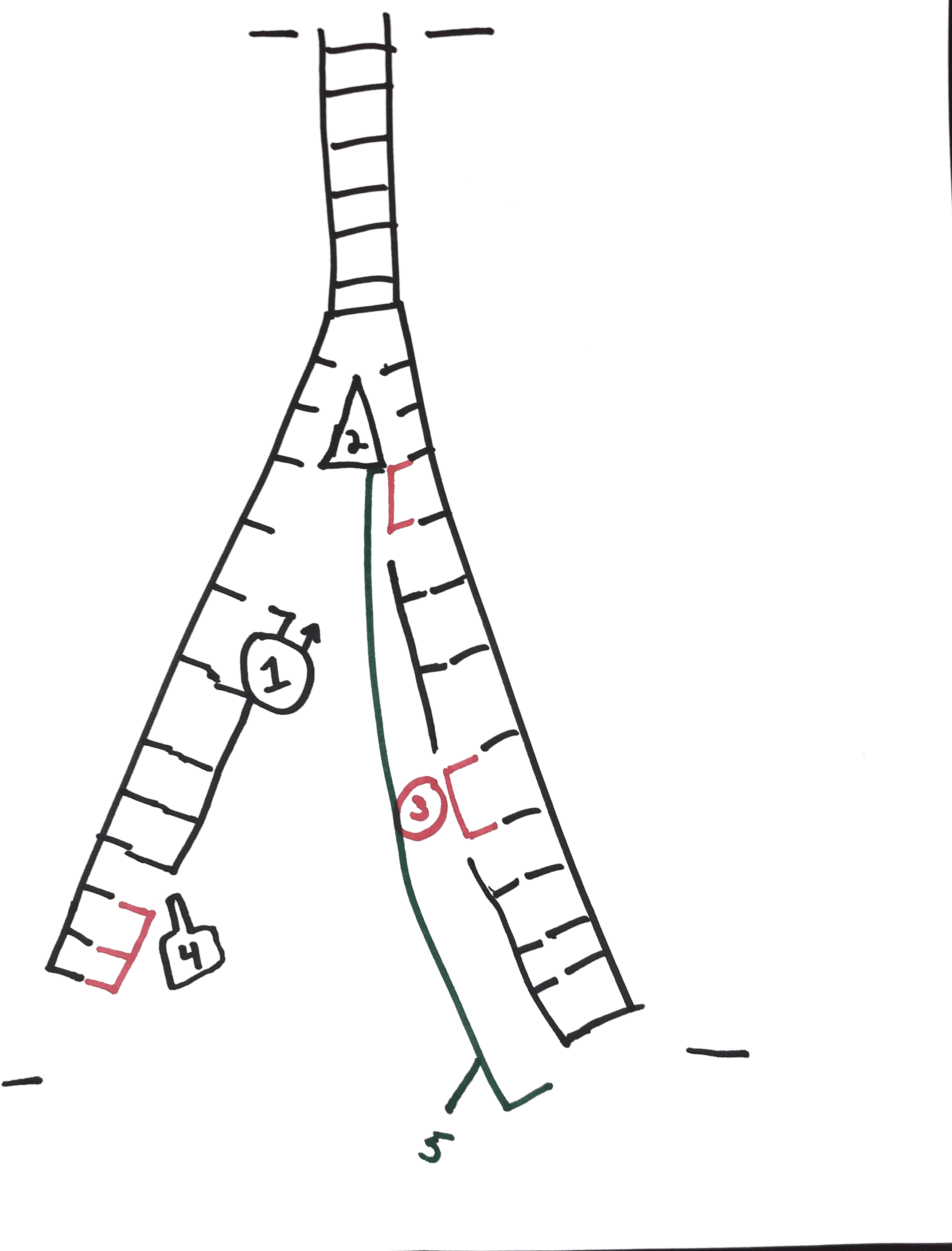
Number 1 in the picture above
Replication
DNA Polymerase
Primase
Ligase
Match he nucleotide with its complementary nucleotide. (DNA to DNA).
Adenine -
Thymine
Guanine
Cytosine
3' A A A T T T C 5'
The matching strand would read...
The picture below shows the steps of DNA replication beginning with step one and ending with step three.
Because you are reusing the old, or parent, DNA strand DNA replication is said to be
Semi- Conservative
Semi-discontinuous
Continuous
Fully-Conserveative
The picture below shows an enzyme unwinding and unzipping DNA.
What is the name of this enzyme?
DNA Helicase
DNA Ligase
DNA polyermase
RNA Polymerase
Match he nucleotide with its complementary nucleotide. (DNA to DNA).
Adenine -
Thymine
Guanine
Cytosine
Match he nucleotide with its complementary nucleotide. (DNA to DNA).
Cytosine-
Thymine
Guanine
Adenine
Which enzyme is responsible for adding the free nucleotides to the replicating DNA?
DNA Helicase
DNA Ligase
DNA polyermase
RNA Polymerase
Which is the first step?
DNA Helicase unwinds original DNA strand
RNA Primase lays down RNA primer for new nucleotide bases.
DNA polymerase builds new strands by bring in new nucleotide bases.
Ligase knits together fragments on lagging strand
Which is the second step?
DNA Helicase unwinds original DNA strand
RNA Primase lays down RNA primer for new nucleotide bases.
DNA polymerase builds new strands by bring in new nucleotide bases.
Ligase knits together fragments on lagging strand
Which is the third step?
DNA Helicase unwinds original DNA strand
RNA Primase lays down RNA primer for new nucleotide bases.
DNA polymerase builds new strands by bring in new nucleotide bases.
Ligase knits together fragments on lagging strand
Which is the fourth step?
DNA Helicase unwinds original DNA strand
RNA Primase lays down RNA primer for new nucleotide bases.
DNA polymerase builds new strands by bring in new nucleotide bases.
Ligase knits together fragments on lagging strand
Which letter in the picture below depicts the lagging strand in DNA replication?
A
C
B
None of the above
Which letter in the picture below depicts the leading strand in DNA replication?
A
C
B
None of the above
Which letter in the picture below depicts the replication fork in DNA replication?
A
C
B
None of the above
If a person suffered from a disorder where their DNA fragments were unable to fill in the missing slots in between the fragments of the lagging strand, they would most likely have a disorder that affected which enzyme?
DNA Helicase
DNA Ligase
DNA polyermase
RNA Polymerase
DNA replication runs from ______' to _____' and is said to be ______________________
5, 3, antiparallel
3, 5, antiparallel
5, 3, parallel
3, 5, parallel
Okazaki fragments appear on which strand of DNA during DNA replication?
lagging
leading
The directionality of DNA is said to be ___________, because it is side by side by goes in opposite directions.
Anti-directional
Parallel
Anti-parallel
Anti-uniform
What gray enzyme in the picture is shown removing the RNA primer?
DNA ligase
DNA Polymerase
Exonuclease
RNA Primase
1. Recoil
2. Straightens the double helix
3. Breaks Hydrogen bonds
4. Adds Free nucleotides
CAT TCA CTG
DNA replication results in
2 completely new DNA molecules
2 DNA molecules that each contain a strand of the original
1 new DNA molecule and 1 old
1 new molecule of DNA
Enzyme that connects the DNA to the backbone (glues)
Ligase
Polymerase
Helicase
Primase
Enzyme that breaks hydrogen bonds (unzips)
Ligase
Polymerase
Primase
Helicase
Site where replication begins
Polymerase action site
Replication fork
Replication Origin
In the front
The new DNA strand formed after DNA replication is an exact copy of its parent strand
True
False
#4 in the picture
Polymerase
Primase
Helicase
Ligase
#1 in the picture above (builder)
Helicase
Primase
Polymerase
Ligase
#3 setting Primers
Ligase
Helicase
Polymerase
Primase
Number 1 in the picture above
Replication
DNA Polymerase
Primase
Ligase
Match he nucleotide with its complementary nucleotide. (DNA to DNA).
Adenine -
Thymine
Guanine
Cytosine

