
 Worksheets
Environmental Science Review (Land, Urbanization, Water Unit)
Total questions: 120
Worksheet time: 3hrs 21mins

In class, we used an apple as a model to show the amount of arable land available on Earth. What did we find out?
Most of the earth is comprised of water.
There is more arable land than uninhabitable land
Only a small sliver of topsoil exists
Which of the following can be a model?
Graph
Chart
3D model
What do models show?
The parts of an item (structure)
The function of an item
Patterns and Predictions

An argument in favor of food biotechnology is that it
provides foods that cure viral diseases.
provides more food to feed a growing population.
provides a cash crop for low income nations.
biotech foods are not controversial

What is a GMO?
An organism that has had its DNA modified by humans
An organism missing a chromosome
Epigenetics
A genetically identical organism

A negative of GMOs is that
They are creating herbicide tolerant crops.
There is insufficient research to know the long term impacts they may have.
There is higher crop production.
They require fewer materials to grow crops.
All of the following are benefits of GMOs EXCEPT:
Drought resistant crops
Foods with longer shelf life
More nutritious foods
Less allergic reactions
All of the following are cons to the production of GMOs EXCEPT:
Possible increase of allergic reactions
They may contribute to antibiotic resistance
Some GMOs are linked to cancer
Larger, better looking crops

Concerns about genetically modified organisms include(s)
risk to human health
may be harmful to ecosystems
seed/pollen drift to organic farms
all of these are valid concerns
The shift of population from the countryside to a city is called:
land use
urbanization
infrastructure
land cover
What is one of the primary factors that draws people from rural areas to urban areas?
less pollution
more jobs
more open space
heat islands
Which of the following is a principle of smart growth?
protecting wildlife habitats
focusing development outside of existing urban centers
creating neighborhoods best suited for cars
building up, not out
Which statement about sustainable cities is true?
They can help improve the standard of living for residents.
No major cities have made significant progress toward sustainability yet.
They are only successful in the developed world.
They often help encourage sprawl.
Urban areas having higher than average temperatures than surrounding rural areas due to absorption and retention of passive solar energy are known as
suburbs
heat islands
hot air
tropical islands
Parks and green spaces help reduce:
nitrogen
runoff
landfills
mining
Which improvement to urban areas moderates temperature, controls rainwater runoff, and adds aesthetic value?
green spaces
storm sewers
public transportation

Which is NOT a benefit of Green roofs
absorbing rainwater and reducing the amount that goes into streams and rivers
providing insulation to the building and reduce heating and cooling bills
providing space to park additional cars
helping to lower urban air temperatures and mitigate the urban heat island effect
Which is more likely to have higher temperatures due to the urban heat island effect?
city (downtown)
rural area
residential
commercial area

How do cities contribute to the heat island effect?
By generating heat through air conditioning, burning fossil fuels, and other similar occurrences
By reducing wind speeds
By trapping heat
All of the answers are correct

How do asphalt and concrete contribute to urban heat island effects?
By absorbing the sun’s energy
By providing shade
By forcing evaporation of water
By reflecting most of the sun’s energy
Water that hits land and flows into a creek, stream, or a river is best describes as
condensation
precipitation
run-off
transpiration
Most of the water on Earth can be described as
freshwater
ice
salt (marine) water
groundwater
Why do cities and suburbs have more runoff and pollution?
More people making pollutants
Pavement doesn't absorb water
Storm drain water not cleaned
All of the above
Water that collects in cracks and pores in underground soil and rock layers.
Groundwater
Surface Water
Permeable
Impermeable

An underground layer of rock or sediment that holds water?
Reservoir
Aquifer
Watershed
By mid century, what percentage of the world will be urban.
20%
30%
50%
70%
Originally, how did people get their resources
They were hunter/gatherers
They had various trades
They were technology based
What are some of the effects of the development of cities?
Commerce
The expansion of trade and opportunities
Additional infrastructure
What does "rural" mean?
relating to characteristic of a town or city
relating to characteristics of a farmland
What is heat island effect?
wanting to have a tropical island life
urbanized areas that experience higher temperatures than outlying areas
ruralized areas that experience higher temperatures than outlying areas
increased anger due to heat

Which of the following is a principle of smart growth?
protecting wildlife habitats
focusing development outside of existing urban centers
creating neighborhoods best suited for cars
building up, not out
As rain falls on a landfill, it sinks through the Municipal Solid Waste (MSW = garbage), picking up pesticides, heavy metals and organic compounds. This liquid is called
leachate
methane
garbage soup
liners
Water that hits land and flows into a creek, stream, or a river is best describes as
condensation
precipitation
run-off
transpiration
Most of the water on Earth can be described as
freshwater
ice
salt (marine) water
groundwater
Why do cities and suburbs have more runoff and pollution?
More people making pollutants
Pavement doesn't absorb water
Storm drain water not cleaned
All of the above
Water that collects in cracks and pores in underground soil and rock layers.
Groundwater
Surface Water
Permeable
Impermeable
An underground layer of rock or sediment that holds water?
Reservoir
Aquifer
Watershed
Which percentage represents the amount of Earth's water that is found in oceans?
3%
71%
97%
1%
If water is recycled in the atmosphere, which best describes why water availability on Earth is decreasing?
an increase in droughts is slowly reducing freshwater reservoirs
due to an increase in Earth's temperature, evaporation rates continue to increase reducing liquid water on the surface
Earth's freshwater continues to become more polluted , reducing the supply of freshwater safe for humans to consume
Freshwater is not decreasing
Which best describes the role of the water cycle?
circulates existing water on Earth
reduces pollution in most of the water
increases usable supply of Earth's water
Often water must be treated to become _______, safe to drink
pathogen
potable
clarified
bonifide
As permeability increases
Infiltration decreases and runoff decreases
Infiltration increases and runoff decreases
Infiltration decreases and runoff increases
Infiltration increases and runoff increases
What is the relationship between particle size and porosity?
As particle size increases permeability increases
As particle size decreases permeability increases
There is no relationship
What type of sediment tends to be the most impermeable?
sand
clay
silt
rocks
If water can easily move between cracks of a rock, we can say that...
water is permeable
rock is permeable
rock is impermeable
water is impermeable
Water flows through permeable materials ____ than impermeable materials.
slower
faster
If particle size decreases permeability
decreases
increases
stays the same
It could increase or decrease
The amount of space between sediment is called ...
permeability
porosity
evaporation
condensation
As rain falls on a landfill, it sinks through the Municipal Solid Waste (MSW = garbage), picking up pesticides, heavy metals and organic compounds. This liquid is called
leachate
methane
garbage soup
liners
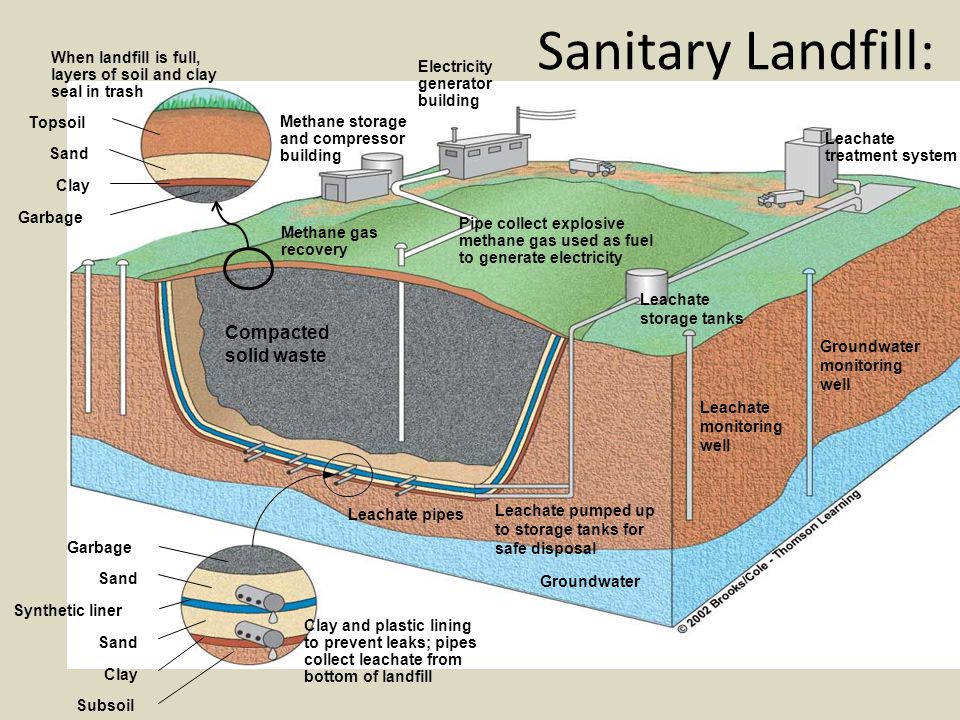
Sanitary landfills have __________ to prevent leachate from getting into groundwater. (CLICK ALL THAT APPLY!)
liners
collection systems
daily layers of soil
garbage
clay soils beneath landfill
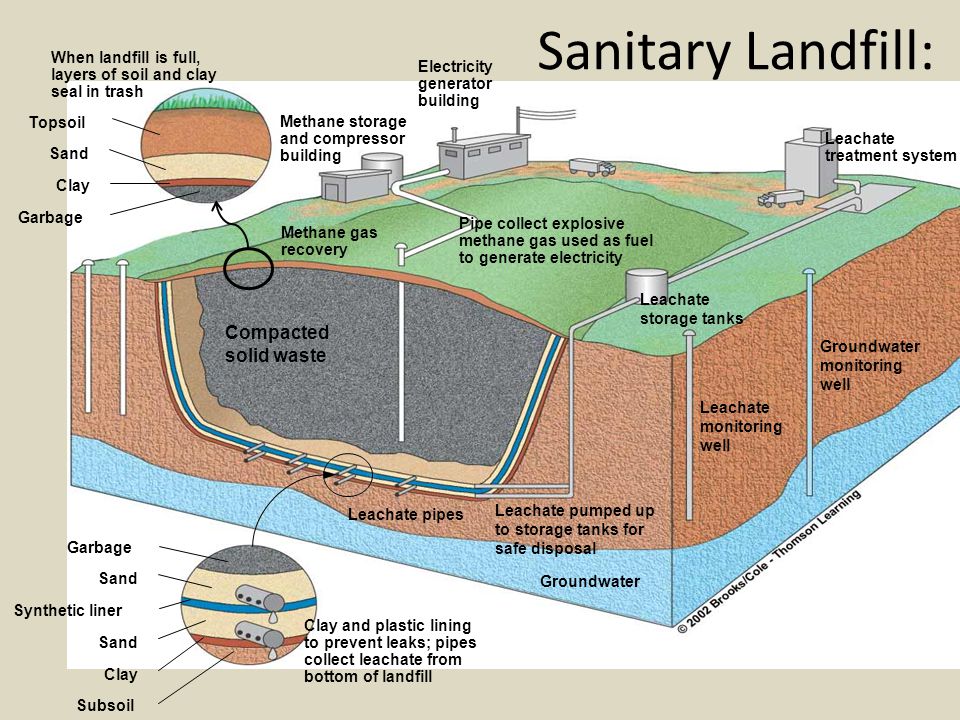
Where would you expect to find the greatest concentration of leachate?
at the bottom of the landfill
at the top of the landfill
throughout the landfill
leachate is not created in a landfill
As rain falls on a landfill, it sinks through the Municipal Solid Waste (MSW = garbage), picking up pesticides, heavy metals and organic compounds. This liquid is called
leachate
methane
garbage soup
liners
Some landfills (including Houston's biggest!) capture ______ to create electricity.
methane
leachate
garbage
CO2
paper and organics
Which of the following is the primary method of waste disposal in the U.S.?
Incineration
Landfills
Composting
Recycling
Which of the following are environmental problems often associated with sanitary landfills?
Generating vast quantities of carbon dioxide gas
Contamination of groundwater with landfill leachate
Release of disease organisms
Production of methane from anaerobic decomposition
Which of the following are benefits provided by waste incinerators for local communities?
Disposes of waste without any use of landfill space
Production of clean water from the combustion of waste
Cheapest option for disposal of MSW
Production of electrical energy from the combustion of waste
Extends life of local landfills

In this image, the function of D in the landfill is
collect & remove leachate
collect & remove methane gas
compact MSW so that it takes up as little space as possible
remove hazardous waste from MSW
Watch the video before beginning the questions.
What percentage of people currently live in urban areas?
20%
30%
50%
70%
By mid century, what percentage of the world will be urban.
20%
30%
50%
70%
Originally, how did people get their resources
They were hunter/gatherers
They had various trades
They were technology based
What was the effect of good farming practices on cities?
It allowed for mass production
It increased the variety of foods
It allowed for other trades
What are some of the effects of the development of cities?
Commerce
The expansion of trade and opportunities
Additional infrastructure
What were some of the limitations that occurred due to growing cities?
City walls provided protection but also limited the amount of space to grow outward
Additional infrastructure was needed
It increased the development of new methods of transportation
It increased the need for farmland
When did cities really boom?
The agricultural revolution
The industrial revolution
During the bronze age
What additional things were needed/became available as cities grew?
Police
Fire Department
Sanitation
Electricity
What does "urban" mean?
relating to characteristic of a town or city
relating to characteristics of a farmland
What does "rural" mean?
relating to characteristic of a town or city
relating to characteristics of a farmland
What is urban sprawl?
rapid expansion of farmland
moving from a farm to a city
rapid expansion of cities and towns
moving from a city to a farm
What is heat island effect?
wanting to have a tropical island life
urbanized areas that experience higher temperatures than outlying areas
ruralized areas that experience higher temperatures than outlying areas
increased anger due to heat
The rapid, often poorly planned spread of development from an urban area outward into rural areas
Suburb
Urban core
Urban sprawl
Urban fringe
An area outside of the city
Slums
Rural
Suburb
Urban
In class, we used an apple as a model to show the amount of arable land available on Earth. What did we find out?
Most of the earth is comprised of water.
There is more arable land than uninhabitable land
Only a small sliver of topsoil exists
Which of the following can be a model?
Graph
Chart
3D model
What do models show?
The parts of an item (structure)
The function of an item
Patterns and Predictions
An argument in favor of food biotechnology is that it
provides foods that cure viral diseases.
provides more food to feed a growing population.
provides a cash crop for low income nations.
biotech foods are not controversial
What is a GMO?
An organism that has had its DNA modified by humans
An organism missing a chromosome
Epigenetics
A genetically identical organism
A negative of GMOs is that
They are creating herbicide tolerant crops.
There is insufficient research to know the long term impacts they may have.
There is higher crop production.
They require fewer materials to grow crops.
All of the following are benefits of GMOs EXCEPT:
Drought resistant crops
Foods with longer shelf life
More nutritious foods
Less allergic reactions
All of the following are cons to the production of GMOs EXCEPT:
Possible increase of allergic reactions
They may contribute to antibiotic resistance
Some GMOs are linked to cancer
Larger, better looking crops
Concerns about genetically modified organisms include(s)
risk to human health
may be harmful to ecosystems
seed/pollen drift to organic farms
all of these are valid concerns
What does "urban" mean?
relating to characteristic of a town or city
relating to characteristics of a farmland
What does "rural" mean?
relating to characteristic of a town or city
relating to characteristics of a farmland
What is urban sprawl?
rapid expansion of farmland
moving from a farm to a city
rapid expansion of cities and towns
moving from a city to a farm
What is heat island effect?
wanting to have a tropical island life
urbanized areas that experience higher temperatures than outlying areas
ruralized areas that experience higher temperatures than outlying areas
increased anger due to heat
The rapid, often poorly planned spread of development from an urban area outward into rural areas
Suburb
Urban core
Urban sprawl
Urban fringe
An area outside of the city
Slums
Rural
Suburb
Urban
Watch the video before beginning the questions.
What percentage of people currently live in urban areas?
20%
30%
50%
70%
By mid century, what percentage of the world will be urban.
20%
30%
50%
70%
Originally, how did people get their resources
They were hunter/gatherers
They had various trades
They were technology based
What was the effect of good farming practices on cities?
It allowed for mass production
It increased the variety of foods
It allowed for other trades
What are some of the effects of the development of cities?
Commerce
The expansion of trade and opportunities
Additional infrastructure
What were some of the limitations that occurred due to growing cities?
City walls provided protection but also limited the amount of space to grow outward
Additional infrastructure was needed
It increased the development of new methods of transportation
It increased the need for farmland
When did cities really boom?
The agricultural revolution
The industrial revolution
During the bronze age
What additional things were needed/became available as cities grew?
Police
Fire Department
Sanitation
Electricity
An area's urbanization rate can tell you...
about people's economic status
what % of people have shifted from rural areas to urban areas
why people are moving
how people's daily lives have changed over time
increased air & water pollution are environmental impacts of urbanization
True
False
What is the development of land for houses and other buildings near a city called?
composting
mining
ruralization
urbanization
Sprawl increases carbon dioxide emissions by
generating more factories.
increasing the need to drive.
resulting in more tree growth.
expanding the use of public transportation.
The facilities, services, and installations needed for the functioning of a community make up its:
heat island
infrastructure
subrubs
ecosystem services
The approach to development LEAST likely to result in sprawl is:
leap frog development
commercial "strip" development
low density, single-use development
high density, multi-use development
An attempt to design cities so as to maximize their functionality and beauty is:
city planning
sprawl
urbanization
ecological restoration

