
 Worksheets
Anatomy S1 Study Guide
Total questions: 120
Worksheet time: 1hrs 18mins
Name
Class
Date
1.
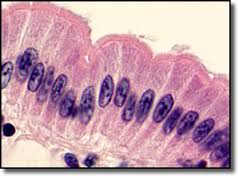
Identify:
a)
Columnar
b)
Cuboidal
c)
Pseudostratified
d)
Transitional
2.
The movement of water across a selectively permeable membrane without the use of any energy is called
a)
endocytosis
b)
diffusion
c)
active transport
d)
osmosis
3.
Closer to the point of attachment:
a)
superior
b)
proximal
c)
distal
d)
caudal
4.
Closer to the surface:
a)
anterior
b)
posterior
c)
superficial
d)
deep
5.
Tissue type that covers the body, forms glands, lines the surfaces of cavities and organs
a)
connective
b)
epithelial
c)
nervous
d)
muscle
6.
The smallest unit of life is:
a)
cell
b)
tissue
c)
organ
d)
body system
7.
The pelvis is an example of which type of bone?
a)
Long
b)
Short
c)
Flat
d)
Irregular
8.
The tarsals are an example of which type of bone?
a)
Long
b)
Short
c)
Flat
d)
Irregular
9.
Made of monomers of amino acids
a)
Carbohydrates
b)
Lipids
c)
Proteins
d)
Nucleic Acids
10.
Include waxes, oils, steroids (hormones)
a)
Carbohydrates
b)
Lipids
c)
Proteins
d)
Nucleic Acids
11.
Includes DNA and RNA
a)
Carbohydrates
b)
Lipids
c)
Proteins
d)
Nucleic Acids
12.
This cellular structure helps organisms maintain homeostasis by controlling what substances may enter or leave cells.
a)
vacuole
b)
nucleus
c)
cell membrane
d)
cell wall
13.

How many bones does an adult human have?
a)
300
b)
306
c)
206
d)
602
14.
What do your bones protect?
a)
organs
b)
skin
c)
muscles
d)
feelings
15.

Name this bacteria shape
a)
coccus
b)
spirillum
c)
bacillus
16.

Name this bacteria shape
a)
bacillus
b)
coccus
c)
spirillum
17.

Name this bacteria shape
a)
coccus
b)
bacillus
c)
spirillum
18.
Patellar
a)
Head
b)
Front of Knee
c)
Thigh
d)
Lower Leg
19.
Femoral
a)
Head
b)
Front of Knee
c)
Thigh
d)
Lower Leg
20.
Axillary
a)
Neck
b)
Abdomen
c)
Armpit
d)
Fingers/Toes
21.
Gluteal
a)
Lower Back
b)
Tail Bone
c)
Buttock
d)
Back of Hand
22.
Popliteal
a)
Back of Knee
b)
Heel
c)
Inner Hip
d)
Head
23.
Calcaneal
a)
Back of Knee
b)
Heel
c)
Inner Hip
d)
Head
24.
A group of cells that have similar functions? Examples are nervous, epithelial, muscle and connective
a)
cells
b)
tissues
c)
organs
d)
atoms
25.
Pertaining to the upper arm.
a)
Brachial
b)
Antebrachial
c)
Fibular
d)
Pectoral
26.
Pertaining to the foot.
a)
Manual
b)
Pectoral
c)
Pedal
d)
Buccal
27.
Pertaining to the limbs of the body.
a)
Appendicular
b)
Axial
c)
Axillary
d)
Acromial
28.
Pertaining to the cheek.
a)
Otic
b)
Occipital
c)
Orbital
d)
Buccal
29.
The lungs and heart would fill the
a)
cranial cavity
b)
abdominal cavity
c)
pelvic cavity
d)
thoracic cavity
30.
Water is ____ of your body.
a)
60-80%
b)
50%
c)
25%
d)
90-95%
31.
When molecules are being broken down in a chemical reaction it is called
a)
anabolism
b)
catabolism
c)
photosynthesis
d)
uptake
32.
What type of metabolism allows you to break down food into energy for your cells?
a)
anabolism
b)
catabolism
c)
exercise
d)
autotroph
33.
When molecules are being built by chemical reactions it is called
a)
anabolism
b)
catabolism
c)
fermentation
d)
respiration
34.

Identify letter I.
a)
nucleus
b)
mitochondria
c)
cell membrane
d)
DNA
35.

What type of carbohydrate is this?
a)
polysaccharide
b)
disaccharide
c)
monosaccharide
d)
it isn't a carbohydrate
36.
The femur is an example of which type of bone?
a)
Long
b)
Short
c)
Flat
d)
Irregular
37.

Identify the type of muscle tissue
a)
cardiac
b)
smooth
c)
skeletal
38.

Identify the type of muscle tissue
a)
skeletal
b)
cardiac
c)
smooth
39.

Identify the type of muscle tissue
a)
smooth
b)
skeletal
c)
cardiac
40.

Identify the type of epithelial cell
a)
cuboidal
b)
squamous
c)
columnar
41.

Identify the type of epithelial cell
a)
columnar
b)
squamous
c)
cuboidal
42.
Which elements are found in carbohydrates?
a)
C, H, O
b)
C, H, O, and N
c)
C, H, O, N, and P
d)
C, H, O, N, and S
43.
Which of these are disaccharides?
a)
Glucose and fructose
b)
Glucose and glycogen
c)
Glycogen and Starch
d)
Lactose and sucrose
44.
The matrix of dense connective tissue has what fibers as its main matrix component?
a)
Elastic
b)
Reticular
c)
Collagen
d)
Cotton
45.

Which region is represented by number 8?
a)
epigastric
b)
lumbar
c)
hypogastric
d)
iliac
46.

What layer of the epidermis is 1 pointing to?
a)
Stratum Basale
b)
Stratum Spinosum
c)
Stratum Granulosum
d)
Stratum Corneum
47.
The term for maintaining internal temperature is:
a)
Thermoregulation
b)
Thermometer
c)
Homeothermal
d)
Homeostasis
48.

Name this body plane
a)
transverse
b)
coronal
c)
sagittal
d)
frontal
49.

Name this body plane
a)
coronal
b)
transverse
c)
sagittal
d)
frontal
50.

Name this body plane
a)
transverse
b)
cross
c)
frontal/coronal
d)
midsagittal
51.
The maintenance of an organism’s internal environment is called:
a)
compensating
b)
homeostasis
c)
balancing
d)
routine
52.
If the environment gets cold, we will often shiver in order to:
a)
keep body temperature the same as the external temperature
b)
decrease body temperature
c)
increase body temperature
d)
regulate blood pressure
53.
What are the two major body cavities?
a)
Cranial & Vertebral
b)
Dorsal & Ventral
c)
Thoracic & Abdominopelvic
d)
Serous & Peritoneum
54.

What are the two sub-cavities of the dorsal body cavity?
a)
Cranial & Vertebral
b)
Brain & Spinal cord
c)
Thoracic & Abdominopelvic
d)
Pleural & Pericardial
55.
Closer to the feet:
a)
anterior
b)
posterior
c)
inferior
d)
superior
56.

Space number 2
a)
Vertebral Canal
b)
Cranial Cavity
c)
Abdominal Cavity
d)
Thoracic
57.

Space number 4
a)
Cranial Cavity
b)
Vertebral Canal
c)
Diaphragm
d)
Thoracic cavity
58.

Space number 6
a)
Thoracic cavity
b)
Abdominal cavity
c)
Pelvic Cavity
d)
Abdominopelvic cavity
59.

Space number 7
a)
Abdominal Cavity
b)
Abdominopelvic cavity
c)
Pelvic cavity
d)
Vertebral Canal
60.
Which additional element is found in proteins?
a)
Iron
b)
Nitrogen
c)
Sulfur
d)
Phosphorus
61.
What is the cause of infectious diseases?
a)
Antigens
b)
Evil spirits
c)
Bodily injury
d)
Pathogens
62.
What do antibiotics cure?
a)
bacterial infection
b)
viral infection
c)
parasites
d)
fungal infection
63.
Which pathogen needs a host cell to reproduce?
a)
virus
b)
bacteria
c)
fungus
d)
parasite
64.
Which pathogen lives in or on a host?
a)
bacteria
b)
virus
c)
parasite
d)
fungus
65.
Which pathogen reproduces using spores?
a)
Virus
b)
Bacteria
c)
Fungi
d)
Parasite
66.
Helminths are an example of
a)
worms
b)
AIDS
c)
common cold
d)
a bacterial infection
67.
Strep throat is caused by a
a)
bacteria
b)
virus
c)
arthropod
68.
An infection that begins in a healthcare facility is called
a)
endogenous
b)
nosocomial
c)
exogenous
d)
opportunistic
69.

Identify:
a)
Pseudostratified
b)
Smooth Muscle
c)
Transitional
d)
Stratified Squamous
70.
Flattened cells are
a)
Squamous
b)
Cuboidal
c)
Columnar
71.

Name this tissue.
a)
Bone
b)
Cartilage
c)
Blood
d)
Adipose
72.

Name this tissue.
a)
neuron
b)
blood
c)
loose reticular
d)
bone
73.

Name this tissue
a)
Bone
b)
Cartilage
c)
Blood
d)
Dense regular
74.

Connects muscle to bone
a)
tendon
b)
ligament
c)
cartilage
d)
bone
75.

Connects bone to bone
a)
ligaments
b)
tendons
c)
cartilage
d)
bone
76.
A fluid released by the sweat glands
a)
perspiration
b)
Pepsi™
c)
acne
d)
sebum
77.
A specialized tissue that produces and releases chemicals
a)
gallbladder
b)
glandular
c)
nerve
d)
adipose
78.
Which of the following is NOT part of the integumentary system?
a)
Skin
b)
Cartilage
c)
Nails
d)
Hair
79.
What cell produces the pigment melanin?
a)
Keratinocytes
b)
Melanocytes
c)
Merkel (Tactile) Cells
d)
Langerhans (dendritic) cell
80.
What layer of the epidermis is 5 pointing to?
a)
Stratum Basale
b)
Stratum Spinosum
c)
Stratum Granulosum
d)
Stratum Corneum
81.
What does the hypothalamus do?
a)
Makes humans shiver
b)
Regulates "automatic" functions like temperature
c)
Responsible for regrowth of skin
d)
Responsible to make us sweat when needed
82.
What is the hard protein that is found in hair and nails?
a)
Carotene
b)
Keratin
c)
Melanin
d)
Errector pili
83.
What do blood vessels do to help with thermoregulation?
a)
Dilate to make the blood vessels smaller so blood can flow faster
b)
Constrict to make the blood vessels smaller so blood can stay close to core
84.
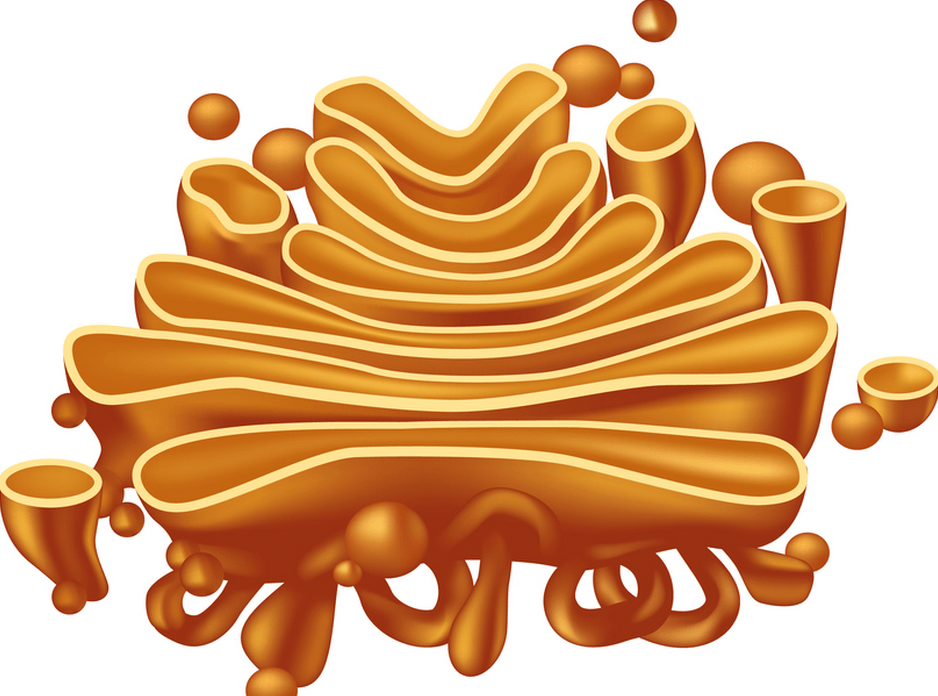
I am a protein packaging and shipping machine! What am I?
a)
vacuole
b)
ribosome
c)
mitochondrion
d)
golgi apparatus
85.
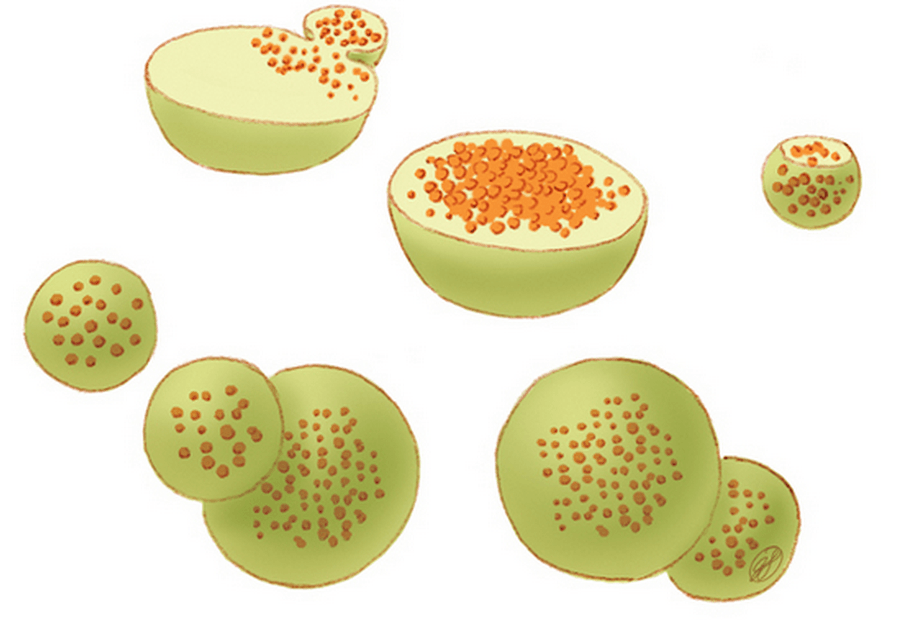
You might think of me as the trash collector, but recycler is maybe more accurate. What am I?
a)
mitochondria
b)
lysosome
c)
vacuole
d)
ribosome
86.
Where are proteins made?
a)
Golgi body
b)
Mitochondria
c)
Chromosomes
d)
Ribosomes
87.
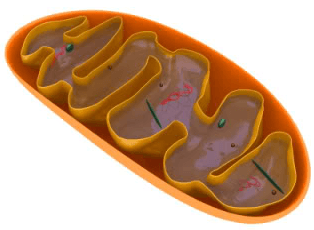
What are tiny organelles that convert glucose into ATP?
a)
Ribosomes
b)
Vesicles
c)
Cytoskeleton
d)
Mitochondria
88.
Antebrachial
a)
Mouth
b)
Shoulder
c)
Upper Leg
d)
Forearm
89.
Tarsal
a)
Elbow
b)
Wrist
c)
Hand
d)
Ankle
90.
Lower posterior region of the head
a)
Cervical
b)
Occipital
c)
Popliteal
d)
Cephalic
91.
Which region is represented by number 3?
a)
epigastric
b)
left hypochondriac
c)
right hypochondriac
d)
iliac
92.
Which region is represented by number 5?
a)
epigastric
b)
hypochondriac
c)
umbilical
d)
iliac
93.
What are the three jobs of your bones?
a)
movement, structure, and joints
b)
movement, structure, and protection
c)
structure, digestion, and breathing
d)
movement, digestion, and breathing
94.
What is the hard, outside layer of bone called?
a)
spongy
b)
marrow
c)
gelatinous
d)
compact
95.
What does the bone marrow make?
a)
muscles
b)
cartilage
c)
blood cells
d)
germs
96.
What do we call the place where two or more bones meet?
a)
head
b)
cranium
c)
joints
d)
feet
97.
Which of the following describes the purpose of the mitosis cell cycle?
a)
To make more of the same cells.
b)
For growth and repair.
c)
To prevent the cell from becoming too large.
d)
All of the above.
98.
The cell membrane is
a)
impermeable
b)
freely permeable
c)
semipermeable
99.

In the anatomical position, the palms are facing-
a)
forward
b)
backward
c)
inward
d)
outward
100.
All matter is made of
a)
energy
b)
atoms
c)
electrons
d)
compounds
101.
C2H8O
a)
element
b)
mixture
c)
enzyme
d)
compound
102.
All ____________ are made up of two or more atoms bonded together.
a)
atoms
b)
molecules
c)
electrons
d)
elements
103.

Atoms of the same element but with different numbers of neutrons.
a)
ion
b)
isotope
c)
mass number
d)
electron
104.
Something that speeds up a reaction
a)
catalyst
b)
inhibitor
105.
Identify letter F.
a)
nucleus
b)
mitochondria
c)
lysosomes
d)
centrioles
106.
Identify letter K.
a)
smooth ER
b)
Golgi cluster
c)
rough ER
d)
centrioles
107.
Identify letter A.
a)
nulcear pores
b)
Golgi cluster
c)
mitochonrion
d)
nucleolus
108.

Physiology is the study of
a)
The "function" of the body parts
b)
The "structure" of the body and organs
109.

Anatomy is the study of
a)
The "function" of body parts
b)
The "structure" between body parts
110.
Pertaining to the neck
a)
oral
b)
mental
c)
cervical
d)
sternal
111.
Pertaining to the breastbone
a)
mental
b)
inguinal
c)
mammary
d)
sternal
112.
Pertaining to the back of knee
a)
popliteal
b)
perineal
c)
calcaneal
d)
cranial
113.
Pertaining to the elbow
a)
olecranon
b)
dorsum
c)
lumbar
d)
sacral
114.
Pertaining to the anterior surface of the knee.
a)
Antecubital
b)
Patellar
c)
Popliteal
d)
Calcaneal
115.
Pertaining to the anterior surface of the elbow.
a)
Olecranal
b)
Antecubital
c)
Popliteal
d)
Axillary
116.
Pertaining to the ankle.
a)
Tarsal
b)
Carpal
c)
Acromial
d)
Appendicular
117.
Pertaining to the armpit.
a)
Acromial
b)
Axillary
c)
Crural
d)
Scapular
118.
Pertaining to the shoulder blade area.
a)
Scapular
b)
Sternal
c)
Thoracic
d)
Dorsal
119.
Pertaining to the buttocks.
a)
Inguinal
b)
Pubic
c)
Gluteal
d)
Buccal
120.
Pertaining to the inner thigh (groin).
a)
Inguinal
b)
Pubic
c)
Gluteal
d)
Buccal
100 %

