
 Worksheets
Marine Biology & Ecology Final Review
Total questions: 125
Worksheet time: 1hrs 14mins
Do Sperm Whales have teeth?
Yes
Some of them
No
Males only
What of these marine mammals lacks blubber?
seals
sea lions
walruses
sea otters
Which of these marine mammals has the thickest fur of any mammal?
harbor seals
fur seals
polar bears
sea otters
Polar bears favorite food is
sea lions
seals
walruses
sea otters


Invertebrates are:
plants
animals
fungi
bacteria
Which of the following types of animals is NOT an invertebrate?
annelid
fish
crustacean
echinoderm
Which of the following animals are VERTEBRATES? Select all that apply
amphibians
reptiles
fish
mammals
birds

Sponges belong to this phylum:
Porifera
Protista
Cnidarians
Echinoderms

Sponges have their own unique formations that give them structural support and can make them hard to eat:
spiracles
nematocysts
spicules
choanocytes
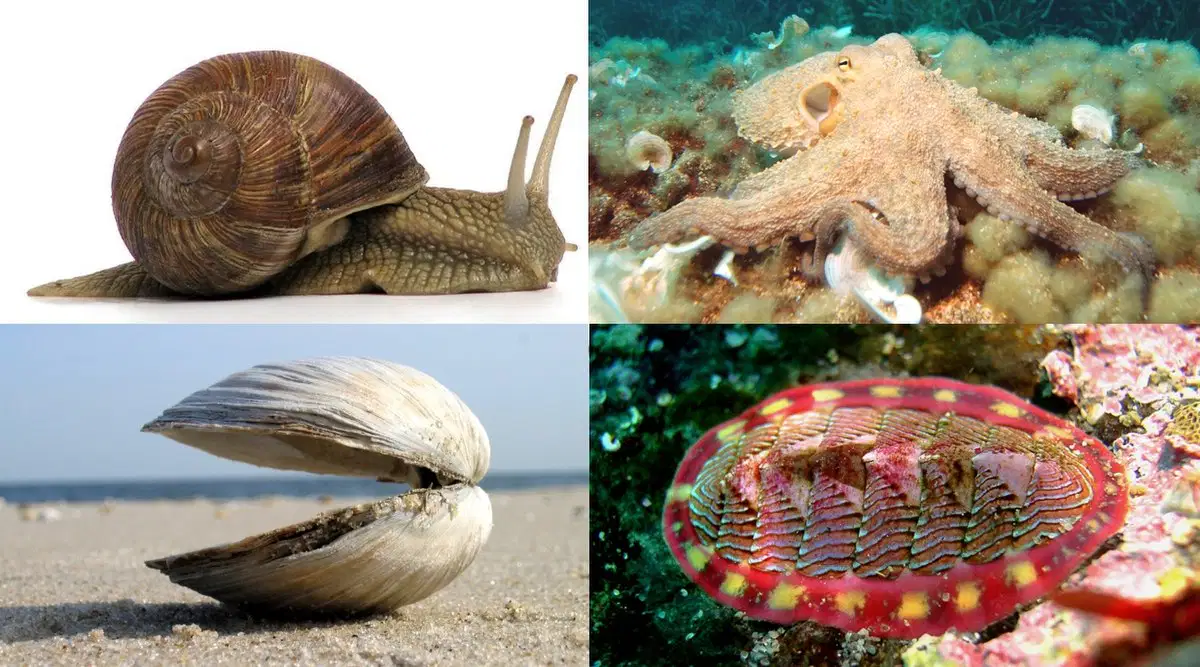
Snails, slugs, clams, mussels, octopuses, squid
Mollusca
Annelida
Arthropoda
Porifera
Snails, slugs, clams, mussels, octopuses, squid
Mollusca
Annelida
Arthropoda
Porifera
Which of the following animals are in phylum Cnidaria? Select ALL the cnidarians from the animals below:
Jellyfish
Anemones
Corals
Crabs
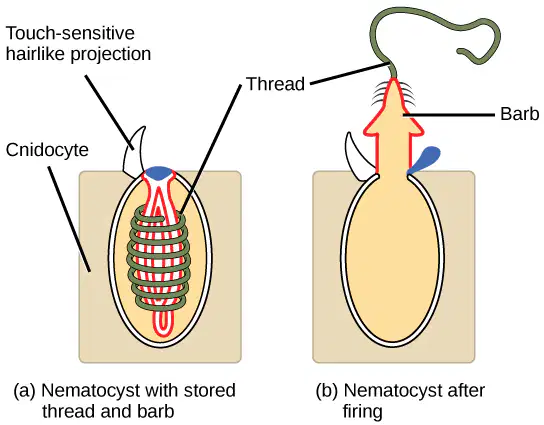
This phylum is characterized for animals with stinging cells that contain nematocysts:
Cnidaria
Arthropoda
Porifera
Mollusca
Phylum Mollusca (mollusks) is a very diverse group of animals, many of which have the following:
spicules and choanocytes
segmented body and jointed legs
shell, muscular foot, siphon
stinging cells and tentacles

Segmented worms: tube worms, feather duster worms, earthworms
Annelida
Arthropoda
Mollusca
Echinodermata
Annelida means:
stinging nettle
spiny skin
jointed legs
little ring
Arthropods are characterized for having the following (select all that apply):
jointed legs
segmented body
stinging cells
exoskeleton
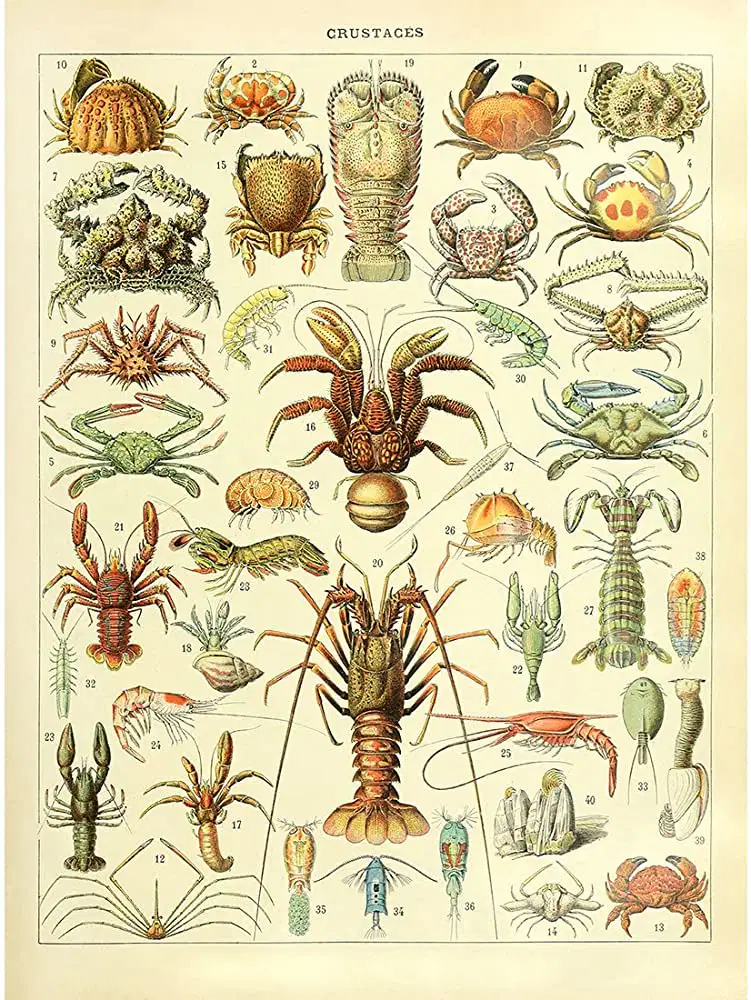
Shrimp, Crabs, Lobsters, Insects
Mollusca
Annelida
Arthropoda
Cnidarians
This name means "soft body" in Latin:
Arthropoda
Mollusca
Cnidaria
Porifera
This name means "soft body" in Latin:
Arthropoda
Mollusca
Cnidaria
Porifera
Echinodermata comes from Greek origin meaning:
little ring
spiny skin
porous
stinging nettle

Starfish (Sea stars), Sea urchins, Sea cucumbers
Echinoderms
Annelids
Arthropods
Crustaceans

Which terms below describe the two body forms of cnidarians?
polyp
benthic
medusa
neritic

This animal has what symmetry?
Bilateral
Asymmetric
No symmetry
Radial

This animal exhibits...
Radial Symmetry
Bilateral Symmetry
no symmetry

What are these organisms?
Sea anemone
Sea star
Sea sponge
Sea urchin

What phylum are these organisms classified under?
cnidaria
echinodermata
ctenophora
cephalopoda

An herbivore is serving as this trophic level:
primary consumer
seconday consumer
tertiary consumer
apex predator

A food web shows the flow of _____ in an ecosystem.
light
energy
water
oxygen

A secondary consumer only gains ____ of the energy of the total available energy of the primary consumer that it eats.
30%
50%
90%
10%

A sea horse eats zooplankton such as brine shrimp. If the brine shrimp eat phytoplankton, what trophic level is the sea horse?
primary consumer
secondary consumer
tertiary consumer
herbivore

The role an organism plays in its ecosystem is called its:
prey
niche
habitat
carrying capacity
This zone has extreme fluctions in temperature and salinity throughout the day and organisms that live here are at risk of dessication (drying out):
pelagic zone
intertidal zone
neritic zone
hadopelagic zone

The pelagic organisms in the ocean can be divided into these two major groups:
benthic and pelagic
pelagic and oceanic
plankton and neritic
plankton and nekton

This color of light is absorbed closest to the surface and cannot be seen in deeper water.
blue
red
green
yellow

This nutrient cycle requires bacteria to convert the gas into usable compounds:
carbon cycle
oxygen cycle
nitrogen cycle
phosphorus cycle

Producers like plants and algae require these reactants for photosynthesis to occur:
carbon dioxide and water
glucose and oxygen
oxygen and water
carbon dioxide and oxygen

What factors are likely to limit the growth and productivity of plants and algae if there is not enough available?
bacteria and viruses
light and nutrients
hydrogen ions
epiphytes
The earliest fish in the oceans were:
sponges
corals
jawless fish
sharks
Jawless fish include which of the following? Check all that apply:
moray eels
lampreys
hagfish
stingrays
Which of the following are vertebrates?
Fish
Reptiles
Amphibians
Birds
Mammals

Jawless fish such as hagfish and lampreys have vertebrae:
True
False

Sharks, skates, and rays have bony skeletons.
True
False
Bony fish have operculum, a structure that:
helps maintain buoyancy
covers their gills
protects their liver
aids in digestion

Bony fish have this to maintain buoyancy:
oily liver
lungs
swim bladder
large heart

Sharks have this to help maintain buoyancy:
oily liver
operculum
4 chambered heart
bony skeleton
Sharks and other cartilaginous fish have these scales that look like teeth:
ctenoid scales
placoid scales
sharks do not have scales

What parasitic animal is pictured here?
moray eel
freshwater eel
hagfish
lamprey
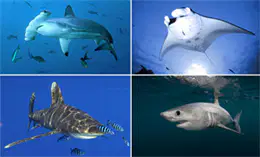
A subgroup of cartilaginous fish including sharks, skates, and rays (but not ratfishes):
Chondrichthyes
Elasmobranchs
Agnatha
Osteichthyes
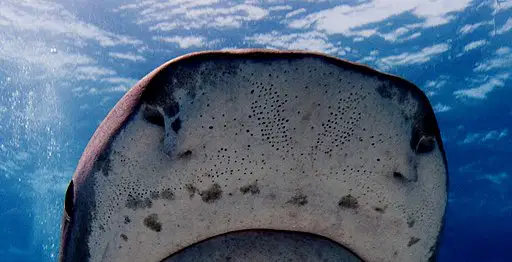
Sharks and other elasmobranchs use these pores to detect the electric fields from other animals in the ocean and under the sand:
lateral line
ampullae of Lorenzini
placoid scales
claspers
Some fish have one or two of these fins located on their top/back closest to the spine:
caudal fin
pectoral fin
dorsal fin
Sea birds (and some pelagic fish) are endotherms meaning
they lose their metabolic heat
they retain their metabolic heat
What do sea birds use to waterproof their feathers?
wax
salt
oil
mucus
How are the bones of birds adapted to make flight easier?
they're dense
they're hollow
they're thicker
they have more blood in them
All sea birds have
water proof feathers
webbed feet
deep diving capabilities
This type of sea bird has an extraordinary sense of sense which helps it locate food on the open ocean:
gulls
pelicans
tubenoses
cormorants
These sea birds have the largest wingspan of any bird:
petrels
albatrosses
pelicans
terns

What type of continental margin is found at the Atlantic coast, has wide and shallow shelves and little seismic activity?
inert
active
passive
fringing

What is the area called that extends from the major land masses underwater (people swim in this area of the ocean)?
continental shelf
continental slope
continental rise
abyssal plain

The deep, flat expanses of the ocean are called what?
trenches
abyssal plain
submarine canyons
continental rise
What is the order of the marine provinces from shore to mid-ocean ridge?
shelf, abyssal plain, rise, slope
abyssal plain, shelf, rise, slope
abyssal plain, rise, slope, shelf
shelf, slope, rise, abyssal plain
A seamount whose peak has eroded and become flat is called...
abyssal plain
continental shelf
guyot
continental rise

When were hydrothermal vents discovered?
1976
1977
1967
1981
Black smoke from hydrothermal vents is due to the presence of these elements...
calcium carbonate.
iron, copper, and zinc.
barium and oxygen.
silicon and calcium.

What are some organisms found near hydrothermal vents?
dolphins and whales
lemon sharks and Christmas tree worms
serpulid worms, tubeworms, and mussels

What is the main process used to harness energy for organisms around hydrothermal vents?
Chemosynthesis
Photosynthesis
Where are hydrothermal vents are found mostly around...
mid-ocean ridges and seamounts.
continental shelf.
guyots and abyssal plain.
middle of the ocean.

The main body structure of the coral is called...
zooxanthellae.
polyp
medusa
substrate

Bathymetry measures the...
height above sea level.
depth below sea level.
density of the crust.
thickness of the crust.

What mainly causes coral bleaching?
warm or lower water temperatures
Muro-ami practices
excess sediments
dynamiting reefs
How do organisms get their energy in the deep sea around hydrothermal vents? (Name the process, organisms involved, and the name of the chemical compound)
sun, bacteria, hydrogen sulfide
chemosynthesis, mutualism, chlorine
chemosynthesis, bacteria, hydrogen sulfide
photosynthesis, bacteria, hydroxide

This Image represents...
Downwelling
Upwelling
Thermohaline circulation
Rip Current
______ causes surface currents.
The Coriolis Effect
gravity
density differences
wind
The __________ is a surface current that flows along the eastern US and brings warm water to Europe.
California Current
Gulf Current
North American Gyre
Arctic Current

Temperature and salinity differences in ocean water cause:
Mid-ocean ridges
Deep Currents
Surface Currents
High tide and low tide

Two high tides and two low tides a day (approximately every 24 hours)
Diurnal tidal pattern
Semidiurnal tidal pattern
Mixed tides
One first quarter and third quarter of the moon cycle, there is less of a tidal range, called:
spring tides
low tides
king tides
neap tides
The tidal bulge follows the movement of the _____.
moon
sun
Earth
ocean

During new moon and full moon (twice a month) there is a greater tidal range, with higher high tides and lower low tides.
Spring tides
Neap tides
The moon is mainly responsible for the tides on Earth because it is ________.
much closer to Earth
much larger than the sun
much smaller than the sun
much brighter than the sun
The tidal force exerted by the ______ is stronger that the tidal force exerted by the _______.
earth, ocean
sun, moon
moon, stars
moon, sun

The bulges that occur in the Earth's oceans cause:
ebb tides
tsunamis
high tides
rogue waves

Tides are caused by:
wind
movement of tectonic plates
solar energy
gravitational forces

