
 Worksheets
APHY 101 Final Exam Review Part A
Total questions: 126
Worksheet time: 2hrs 44mins
Name
Class
Date
1.

Which is the correct structural order?
a)
tissue-cells-organ-organ system
b)
cells-tissue-organ system-organ
c)
tissue-cells-organ system-organs
d)
cells-tissue-organ-organ system
2.

The thoracic cavity and the abdominopelvic cavity are both contained within the _______ cavity.
a)
dorsal
b)
ventral
c)
cranial
d)
spinal
3.

Which body cavity contains organs including the stomach, spleen, liver, gallbladder, and pancreas?
a)
abdominal
b)
pelvic
c)
thoracic
4.
The branch of science concerned with the bodily structure of humans, animals, and other living organisms, especially as revealed by dissection and the separation of parts is...
a)
anatomy
b)
physiology
c)
Both anatomy and physiology
5.
The branch of biology that deals with the normal functions of living organisms and their parts. is...
a)
anatomy
b)
physiology
c)
Both anatomy and physiology
6.
Osteo- means...
a)
Bones
b)
Muscles
c)
Blood
d)
Nerves
7.
Homeostasis in the human body is often maintained by a:
a)
neutral feedback loop
b)
solar feedback loop
c)
positive feedback loop
d)
negative feedback loop
8.
The maintenance of an organism’s internal environment is called:
a)
compensating
b)
homeostasis
c)
balancing
d)
routine
9.
The "cause" for something to happen is the
a)
response
b)
effect
c)
stimulus
d)
homeostasis
10.
The "effect" of a given stimulus is the...
a)
response
b)
stimulus
c)
cause
d)
result
11.
What is another word that can be used to describe "homeostasis"?
a)
STABLE
b)
EQUAL
c)
COMPLETE
d)
CORRECT
12.
If the environment gets cold, we will often shiver in order to:
a)
keep body temperature the same as the external temperature
b)
decrease body temperature
c)
increase body temperature
d)
regulate blood pressure
13.
The basic units of structure and function within the human body.
a)
Cells
b)
Organs
c)
Systems
d)
Tissues
14.
A group of specialized cells that work together to perform the same function.
a)
Organ
b)
Organism
c)
System
d)
Tissue
15.
Humans have ___ for body temperature, blood glucose concentrations, electrolyte concentrations, pH levels, tendon tension and variables.
a)
positive feedback mechanisms
b)
set points
c)
a wide internal range
d)
no regulation
16.
When you get cut, your skin cells release hormones that signal platelets to come and stop the bleeding. Platelets then release more hormones that signal even more platelets to help stop bleeding. The hormone signals continue until the cut is closed.
a)
Positive Feedback Response
b)
Negative Feedback Loop
17.

Away from midline
a)
Lateral
b)
Distal
c)
Superior
d)
Transverse
18.

Body is standing straight, facing forward, upper limbs at side and palms facing forward.
*right and left refer to "right" and "left" of the body in position.
*right and left refer to "right" and "left" of the body in position.
a)
Sagittal
b)
Anatomical Position
c)
Anterior Position
d)
Anatomical Plane
19.

Away from the origin or trunk
a)
Deep
b)
Distal
c)
Proximal
d)
Posterior
20.
Which system eliminates waste products and helps maintain homeostasis?
a)
urinary
b)
respiratory
c)
cardiovascular
d)
digestive
21.
Which system helps with voluntary and involuntary movement; helps circulate blood and move food through the digestive tract.
a)
muscular
b)
skeletal
c)
lymphatic
d)
urinary
22.
This system fights pathogens (germs) and produces and stores white blood cells.
a)
lymphatic
b)
muscular
c)
endocrine
d)
integumentary
23.
This system supports and protects vital organs, stores minerals, and produces red blood cells.
a)
skeletal
b)
muscular
c)
cardiovascular
d)
nervous
24.
Which system sends electrical messages that helps control the body's responses to internal and external changes?
a)
nervous
b)
endocrine
c)
reproductive
d)
integumentary
25.
What is the correct order for the levels of organization (least complex to most complex)?
a)
cell, tissue, atom, molecule, macromolecule, organelle, organ, organism, organ system
b)
atom, molecule, macromolecule, organ, organelle, cell, tissue, organ system, organism
c)
atom, molecule, macromolecule, organelle, cell, tissue, organ, organ system, organism
d)
molecule, atom, macromolecule, organelle, cell, tissue, organ, organ system, organism
26.
Particles in an atom's nucleus that are neutral and have no charge are
a)
megatrons.
b)
electrons.
c)
neutrons.
d)
protons.
27.
A negatively charged particle that moves around the nucleus is a(n)
a)
proton
b)
neutron
c)
electron
d)
quark
28.
A negatively-charged ion.
a)
atom
b)
cation
c)
anion
d)
electron
29.
Cations are
a)
positive
b)
negative
c)
on the right side of the periodi table.
d)
nonmetals
30.
When an atom loses an electron, it becomes a:
a)
positive ion
b)
negative ion
c)
neutral ion
d)
neutral atom
31.
How are covalent bonds explained?
a)
When one atom takes the other atom's electron
b)
When the atom shares an electron with an another atom
c)
When the two nucleus merge
d)
When the neutrons leave the nucleus
32.
If an electrical current can run through a solution, it is said to contain
a)
magic
b)
nonelectrolytes
c)
electricity
d)
electrolytes
33.
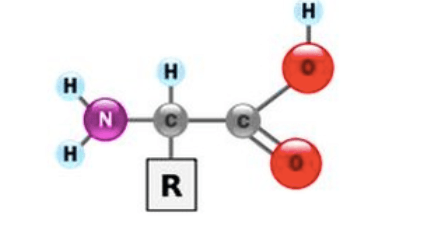
Which biomolecule is this a picture of?
a)
Protein
b)
Nucleic Acid
c)
Lipid
d)
Carbohydrate
34.
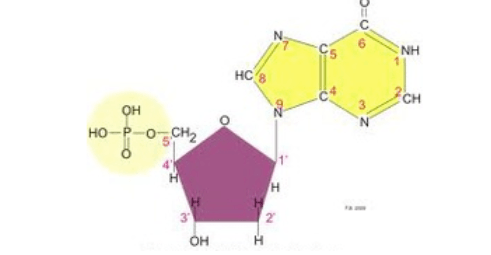
Which biomolecule is this a picture of?
a)
Protein
b)
Nucleic Acid
c)
Lipid
d)
Carbohydrate
35.
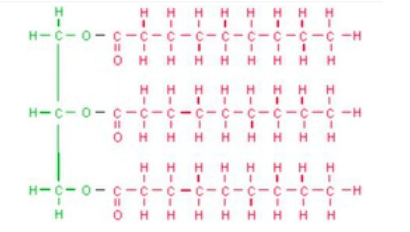
Which biomolecule is this a picture of?
a)
Protein
b)
Nucleic Acid
c)
Lipid
d)
Carbohydrate
36.
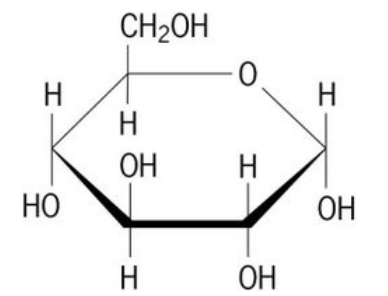
Which biomolecule is this a picture of?
a)
Protein
b)
Nucleic Acid
c)
Lipid
d)
Carbohydrate
37.
Which biomolecule is also known as enzymes?
a)
Carbohydrate
b)
Lipid
c)
Nucleic Acid
d)
Protein
38.
Which biomolecule contains pastas and breads?
a)
Lipid
b)
Protein
c)
Nucleic Acid
d)
Carbohydrate
39.
Which biomolecule helps form muscles?
a)
Nucleic Acid
b)
Carbohydrate
c)
Protein
d)
Lipids
40.
Which biomolecule is responsible for insulation and energy storage?
a)
Protein
b)
Nucleic Acid
c)
Lipid
d)
Carbohydrate
41.
Which biomolecule contains Deoxyribonucleic acid; a sequence of bases that makes hereditary code; Ribonucleic acid; translate hereditary code into proteins that determine how the cell will function under various conditions; provides storage and retrieval of information; encode genes, gene expression, helps make proteins
a)
Nucleic Acid
b)
Lipid
c)
Carbohydrate
d)
Protein
42.
Building blocks of polymers.
a)
monomer
b)
polypeptide
c)
monosaccharide
d)
glycerol
43.
Many monomers can be cross-linked together to form ______________.
a)
molecules
b)
plastic material
c)
polymers
d)
balloons and silly putty
44.
The monomer of a protein is called...
a)
an amino acid
b)
a monosaccharide
c)
a fatty acid
d)
a nucleotide
45.
C2H12O3
a)
Element
b)
Compound
46.
Is C2H12O3 an organic or Inorganic Compound?
a)
Inorganic
b)
Organic
47.

Is NaCl (table salt) a Organic or Inorganic Compound?
a)
Inorganic
b)
Organic
48.
What is the purpose of an enzyme?
a)
give permission for the reaction
b)
raise activation energy
c)
speed up reactions
d)
control how many reactions occur
49.
Where do substrates bind on an enzyme?
a)
voltage-gated channels
b)
surface receptor
c)
calcium channels
d)
active site
50.
Enzymes are capable of increasing the rate of a chemical reaction within a living cell. Enzymes accomplish this through which of the following means?
a)
reducing the number of products
b)
reducing the activation energy
c)
increasing the temperature of the cell
d)
increasing the concentration of reactants
51.
How do enzymes speed up chemical reaction?
a)
Increasing activation energy
b)
Decreasing activation energy
c)
Increasing deactivation energy
d)
Decreasing deactivation energy
52.
What is a substance called if it speeds up a chemical reaction?
a)
reusable
b)
catalyst
c)
specific
d)
fragile
53.
A(n) ______ is a substance with a pH less than 7
a)
Acid
b)
Alkaline
c)
Base
d)
Buffer
54.
A solution with a pH of 8.6 would be...
a)
Acid
b)
Base
c)
Neutral
d)
Acid and Base
55.
__________ are substances that release positively charged hydrogen ions, H+.
a)
acids
b)
bases
c)
solvents
d)
solutes
56.
What is the function of mRNA?
a)
storage of food
b)
prevents mutations
c)
provides energy
d)
carries genetic message
57.
The correct order of molecules involved in protein synthesis is...
a)
mRNA, tRNA, DNA, polypeptide
b)
DNA, mRNA, polypeptide, tRNA
c)
tRNA, polypeptide, DNA, mRNA, DNA
d)
DNA, mRNA, tRNA, polypeptide
58.
In messenger RNA, each codon specifies a particular...
a)
Nucleotide
b)
Enzyme
c)
Amino Acid
d)
Promoter
59.
diffusion is the movement of
a)
water from low to high concentration
b)
particles from low to high concentration
c)
water from high to low concentration
d)
particles from high to lowconcentration
60.
Which is true about active transport?
a)
It requires energy
b)
it does not require energy
c)
It moves substances down the concentration gradient
d)
it moves material from high to low concentration
61.

A process for removing toxins and waste from the cell is
a)
exorcism
b)
exocytosis
c)
endocytosis
d)
endoplasmic reticulum
62.
What forms the channels and pumps in the phospholipid bilayer?
a)
carbohydrates
b)
proteins
c)
hydrophilic heads
d)
lipids
63.
This cellular structure helps organisms maintain homeostasis by controlling what substances may enter or leave cells.
a)
vacuole
b)
nucleus
c)
cell membrane
d)
cell wall
64.

What type of transport is this?
a)
facilitated diffusion
b)
active transport
c)
diffusion
d)
osmosis
65.

In the image, the solution outside the cell is _____________.
a)
hypertonic
b)
hypotonic
c)
isotonic
66.

In the image, the solution outside the cell is _____________.
a)
hypertonic
b)
hypotonic
c)
isotonic
67.
A ______________ is composed of a phosphate and glycerol head and 2 fatty acid chain tails.
a)
phospholipid
b)
Carbohydrate
c)
Cholesterol
d)
Protein
68.
"Water Loving"
a)
Hydrophobic
b)
Hydrophilic
c)
Hydroelectric
d)
Hydroloric
69.
Describes the arrangement of the cell membrane as flexible, bendable, and made of many parts.
a)
The Fluid Mosaic Model
b)
The Major Mobility Model
c)
The Crazy Cell Model
d)
The Maze Model
70.
___________ allow cells to recognize each other.
a)
Carbohydrates
b)
Proteins
c)
Phospholipids
d)
Cholesterol
71.
What organelle is called the "powerhouse" of a cell?
a)
Endoplasmic Reticulum
b)
Nucleus
c)
Mitochondria
d)
Nucleolus
72.

I make proteins for the cell. What am I?
a)
ribosome
b)
mitochondria
c)
chloroplast
d)
lysosome
73.
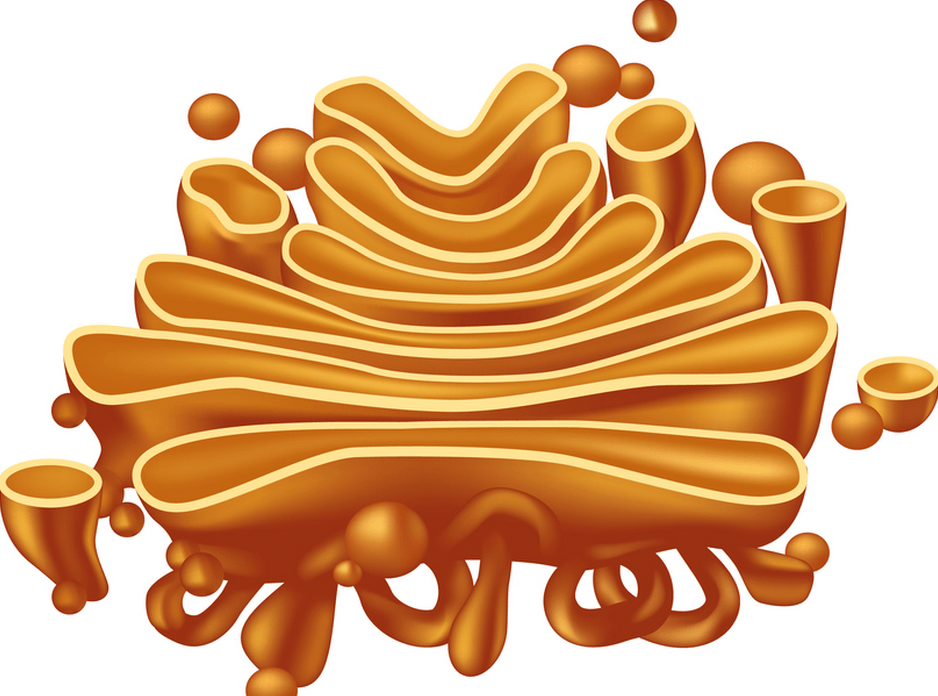
I am a protein packaging and shipping machine! Who am I?
a)
vacuole
b)
ribosome
c)
mitochondrion
d)
golgi apparatus
74.
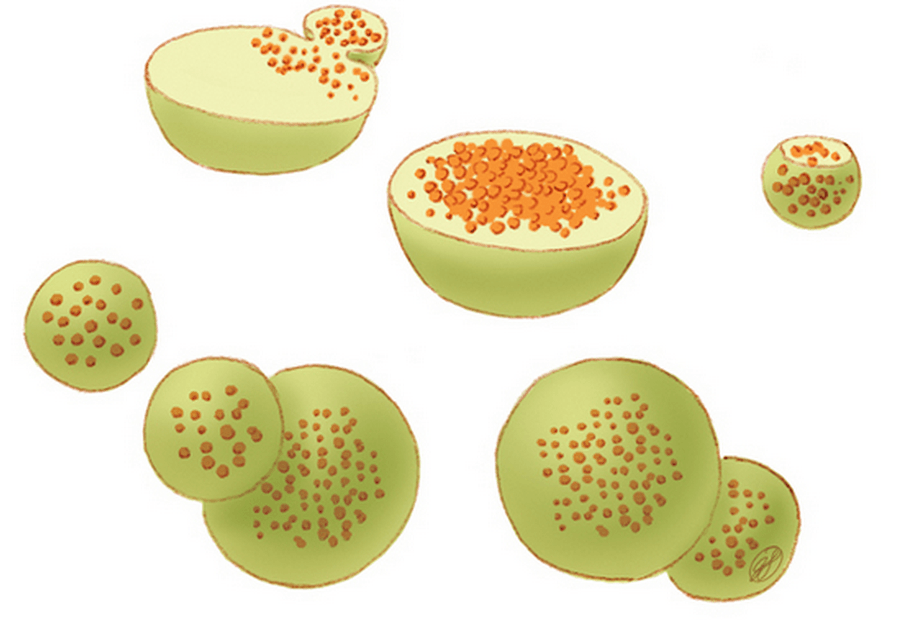
You might think of me as the trash collector, but recycler is maybe more accurate. What am I?
a)
mitochondria
b)
lysosome
c)
vacuole
d)
ribosome
75.

What is cancer?
a)
The heart does not receive enough blood.
b)
Sudden disruption of blood flow to part of the brain.
c)
Blood filled weak spot.
d)
Uncontrolled growth and spread of abnormal cells.
76.

Cancer cells typically form a mass of tissue called a:
a)
biopsy.
b)
carcinogen.
c)
tumor.
d)
allergy.
77.

What is is called when a tumor proves to be NON cancerous?
a)
malignant
b)
benign
c)
oncogene
d)
byogene
78.
When molecules are being built by chemical reactions it is called
a)
anabolism
b)
catabolism
c)
fermentation
d)
respiration
79.
When molecules are being broken down in a chemical reaction it is called
a)
anabolism
b)
catabolism
c)
photosynthesis
d)
uptake
80.
What type of metabolism is demonstrated the reaction?
2H2O ----- 2H2 + O2
2H2O ----- 2H2 + O2
a)
anabolism
b)
catabolism
c)
dehydration
d)
hydration
81.
What are all of the chemical reactions that occur within an
organism referred to?
organism referred to?
a)
Enzymes
b)
Macromolecules
c)
Metabolism
d)
Activation Energy
82.
In an Exergonic reaction, heat is ________.
a)
Absorbed
b)
Created
c)
Destroyed
d)
Released
83.
This process releases chemical energy from sugars and other carbon-based molecules to make ATP when oxygen is present.
a)
photosynthesis
b)
light-independent reaction
c)
cellular respiration
d)
light-dependent reaction
84.
Cellular respiration takes place in the
a)
nucleus
b)
cytoplasm
c)
ribosomes
d)
mitochondria
85.
Which is not a waste product of cellular respiration?
a)
Water
b)
Heat
c)
Carbon Dioxide
d)
Oxygen
86.
This means that oxygen is needed
a)
anaerobic
b)
aerobic
87.
What is the correct equation for cellular respiration?
a)
6O2 + C6H12O6 -> 6CO2 + 6H2O + Energy
b)
6O2 + C6H12O6 + Energy -> 6CO2 + 6H2O
c)
6CO2 + 6H2O -> 6O2 + C6H12O6 + Energy
d)
6CO2 + 6H2O + Energy -> 6O2 + C6H12O6
88.
Sugar that is stored in the liver for emergency use
a)
glucose
b)
glycogen
c)
glucagon
d)
sucrose
89.
hormone that lowers blood sugar
a)
glucose
b)
glycogen
c)
glucagon
d)
insulin
90.
liver uses fats and amino acids to create a glucose molecule
a)
gluconeogenesis
b)
glycogenolysis
c)
glycogenesis
d)
glyconemia
91.
normal blood sugar should be around
a)
80 mg/100mL
b)
120 mg/100mL
c)
100 mg/100mL
d)
200 mg/100mL
92.
Which shows the correct complementary base pairing for DNA?
a)
C-A, T-G
b)
A-G, C-T
c)
C-G, U-A
d)
T-A, G-C
93.

Nitrogenous bases are joined by which type of bond?
a)
polar bonds
b)
ionic bonds
c)
covalent bonds
d)
hydrogen bonds
94.

Why is DNA important?
a)
it is very small and very complicated
b)
it's in everything
c)
it serves as the blueprint for traits of all living things
d)
because we eat it every day for energy
95.

What determines the code, or information, of a DNA molecule?
a)
the shape (structure) of the nitrogen bases
b)
the order (sequence) of the nitrogen bases
c)
the color of the nitrogen bases
d)
the frequency (number) of nitrogen bases
96.

Which of the following best describes a DNA molecule?
a)
double helix
b)
contains ribose
c)
made of amino acids
d)
contains Uracil
97.
What do we call the process of turning DNA into mRNA?
a)
replication
b)
transcription
c)
translation
98.
Genetic info flows in one direction. Which best represents this flow?
a)
DNA-protein-RNA
b)
Protein-RNA-DNA
c)
RNA-protein-DNA
d)
DNA-RNA-protein
99.
Name the epithelial tissue type that is found within the salivary glands, thyroid gland & kidney tubules.
a)
transitional
b)
cuboidal
c)
areolar
d)
fibrous
100.
Which type of epithelial tissue is thin, flat & smooth, allowing the diffusion of gases between the alveoli & capillaries
a)
stratified squamous
b)
transitional
c)
cuboidal
d)
simple squamous
101.
Which of the epithelial tissues has many layers, the bottom layers are rounded & constantly going through mitosis, the top layers are flat because they're dead & constantly sloughing off
a)
simple squamous
b)
stratified squamous
c)
transitional
d)
areolar
102.
This type of muscle tissue is found in the walls of hollow organs such as the stomach, and blood vessels
a)
Skeletal
b)
Cardiac
c)
Smooth
d)
All of the above
103.

This type of tissue lines the internal organs and covers the outside of the body as skin
a)
epithelial
b)
connective
c)
muscular
d)
nervous
104.

Name this tissue
a)
Skeletal
b)
Cardiac
c)
Smooth
105.

Name this tissue
a)
Bone
b)
Cartilage
c)
Blood
d)
Adipose
106.
Which of the following represents the reason that cartilage repairs itself so slowly?
a)
it is never damaged
b)
it is vascular
c)
it is avascular
d)
hormones are present
107.
Which of these substances gives cartilage the ability to spring back after
being compressed?
being compressed?
a)
proteoglycan aggregates
b)
elastic fibers
c)
reticular fibers
d)
collagen fibers
108.
The outermost layer of the skin that contains no blood vessels or nerve cells.
a)
epidermis
b)
dermis
c)
subcutaneous tissue or hypodermis
109.
The innermost layer of the epidermis. This layer replaces new cells to the outermost layer of the epidermis.
a)
stratum corneum
b)
stratum germinativum
110.
The skin helps to produce _______________ by using UV rays from the sun.
a)
Vitamin A
b)
Vitamin C
c)
Vitamin D
d)
Vitamin K
111.
Brownish black pigment produced by cells in the skin.
a)
erythrocytes
b)
leukocytes
c)
melanocytes
112.
Where would you find the arrector pili muscle that causes chills and goosebumps?
a)
epidermis
b)
hypodermis
c)
dermis
d)
none of the above
113.

Which of the following is the oily secretion of the sebaceous glands?
a)
ecchymosis
b)
furuncle
c)
lunula
d)
sebum
114.
Skin color is due to a pigment called
a)
Keratin
b)
Melanin
c)
Chromatin
d)
Epithelium
115.
The protein that makes us "waterproof" is called
a)
keratin
b)
melanin
c)
carotene
d)
mucus
116.
The vascular of the skin is the:
a)
Dermis
b)
Epidermis
c)
Hypodermis
d)
Stratum basale
117.

In which direction will these molecules diffuse?
a)
from right to left
b)
from left to right
c)
they will not move at all
d)
they will move in both directions equally
118.

Which part of this phospholipid is hydrophobic?
a)
fatty lipid tails
b)
head
c)
all of it is hydrophobic
d)
none of it is hydrophobic
119.

ATP is a form of energy needed for.....
a)
passive transport
b)
active transport
c)
facilitated transport
d)
protein transport
120.
A type of active transport that brings particles into a cell when the cell membrane encloses a particle to make a vesicle
a)
Diffusion
b)
Passive Transport
c)
Active Transport
d)
Endocytosis
121.
What body membrane lines all body cavities that open to the exterior body surface?
a)
synovial
b)
serous
c)
mucous
d)
cutaneous
122.
Oil glands that are found all over the skin, except on the palms and soles, are called _____.
a)
merocrine glands
b)
sebaceous glands
c)
apocrine glands
d)
sweat glands
123.
Which vitamin is synthesized by the skin?
a)
A
b)
E
c)
K
d)
D
124.
Which type of sweat gland is found in the arm pits and produces smelly pheromones
a)
merocrine
b)
apocrine
c)
sebaceous
d)
holocrine
125.
Which layer of the skin does NOT contain blood vessels?
a)
epidermis
b)
hypodermis
c)
dermis
126.
Process in which cells become specialized in structure and function
a)
Definition
b)
Distinction
c)
Tarnation
d)
Differentiation
100 %

