wayground logo

Free Printable Worksheets

Font size

S
M
L
XL
Worksheets

EOC Review Biology

Total questions: 130

Worksheet time: 2hrs 25mins
Name
Class
Date
1.
Enzymes catalyze reactions by ___________ Activation Energy.
a)
Increasing
b)
Decreasing
2.
An experiment is performed on plants to see how different liquids affect plant growth. Each plant in the experiment is given a different liquid; water, apple juice, or milk. Each plant has the same amount of soil, sunlight, and listens to the same music. In this investigation, the independent variable is ...
a)
The type of plant
b)
The amount of sunlight
c)
The type of music
d)
The type of liquid
3.
The amount of energy that usually transfers from one trophic level to the next...
a)
10%
b)
20%
c)
80%
d)
50%
4.

Which of the following converts food into energy for the cell?

a)

vacuole

b)

mitochondria

c)

cytoplasm

d)

cell membrane

5.
What is something that prokaryotic and eukaryotic cells have in common?
a)
They have a nucleus. 
b)
They are multi-cellular. 
c)
They have DNA. 
d)
They have organelles that are membrane-bound.
6.
Active transport does not require energy.
a)
True 
b)
False 
7.
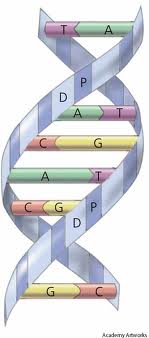
Which 2 molecules forms the sides (backbone) of the DNA ladder?
a)
deoxyribose and adenine
b)
deoxyribose and a hydrogen bond
c)
sugar and the nucleus
d)
deoxyribose (sugar) and phosphate
8.
These molecules represent which organic molecule?
a)
proteins
b)
lipids
c)
nucleic acids
d)
carbohydrates
9.

The light independent reactions (Calvin Cycle) of photosynthesis happen where?

a)

stroma of chloroplast

b)

mitochondrial matrix

c)

stem

d)

thylakoid membrane

10.
In this image, the cell is using which type of molecular transport?
a)
Osmosis
b)
Diffusion 
c)
Endocytosis
d)
Exocytosis 
11.
What are the two reactants of cellular respiration?
a)
C6H12O6 & 6CO2
b)
6 CO2 & 6H2O
c)
C6H12O& 6O2
d)
6CO2 & 6O2
12.
Name structure #5.
a)
rough ER
b)
nucleus
c)
vesicle
d)
cytoplasm
13.
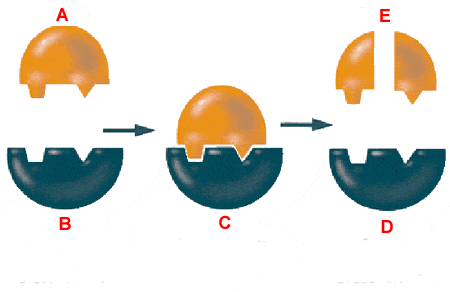
How do enzymes increase the speed of chemical reactions?
a)
reducing the number of products   
b)
reducing the activation energy
c)
increasing the temperature of the cell
d)
increasing the concentration of reactants 
14.
Which of these is NOT true?
a)
Enzymes can denature (change shape) when the temperature gets too high.
b)
Enzymes can only be used once in a chemical reaction. 
c)
Extreme pH can denature enzymes.
d)
Enzymes speed up chemical reactions. 
15.
What molecule is this
a)
sucrose
b)
protein
c)
glucose
d)
cellulose
16.
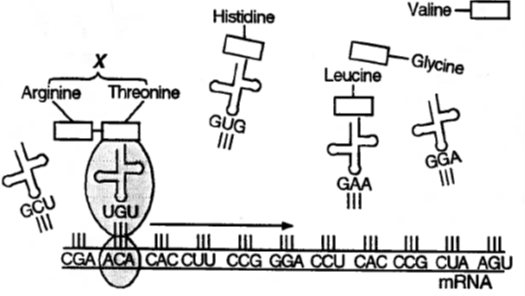
What process is going on in this photo? 
a)
Transcription 
b)
Translation 
c)
Replication 
d)
All the above 
17.
This picture represents which type of cellular transport?
a)
passive transport
b)
endocytosis
c)
exocytosis
d)
osmosis
18.
The cell below is in a _________ solution.
a)
Hypotonic
b)
Hypertonic
c)
Isotonic
19.
Which of these is not a way in which biotechnology can benefit agriculture?
a)
increase crop population
b)
reducing the loss of crops to insects
c)
producing better-tasting fruits
d)
improving farm machinery
20.
What two products does a plant make during photosynthesis?
a)
Water and Glucose
b)
Oxygen and Glucose
c)
Oxygen and Water
d)
CO2 and Glucose
21.

What is the role of the pioneer species in Primary Succession?

a)

To kill any remaining organisms from before the disturbance

b)

To break down rock and rebuild soil

c)

To provide food for large animals

d)

To put fresh oxygen into the air

22.

What are some abiotic factors that could be limiting factors in the Iowa River ecosystem?

a)

Temperature, fertilizer runoff from fields, drought or flood

b)

Invasive species, floods

c)

Temperature, predators, droughts, floods, over fishing

23.
The diagram below represents a cell. Which organelle is the site where amino acids are synthesized into proteins? 
a)
1
b)
2
c)
3
d)
4
24.
An offspring will receive how many alleles from each parent to determine a specific trait?
a)
one
b)
two
c)
three
d)
five
25.
G = green, g = yellow
The genotype for a yellow plant is...
a)
GG
b)
Gg
c)
gg
d)
all of the choices result in yellow
26.
All of the living and nonliving things in an area that interact with each other are called a/an ______.
a)
community
b)
habitat
c)
population
d)
ecosystem
27.

In the graph to the right, what is the population of deer at the carrying capacity of the environment?

a)

3

b)

7

c)

70

d)

40

28.
What does the graph represent?
a)
Emigration
b)
Exponential growth
c)
Immigration
d)
Logistic Growth
29.
Provides support and protection for the cell, while also controlling the movement of materials in and out of the cell.
a)
Cellular Membrane
b)
Nucleus
c)
Ribosomes
d)
Vacuole
30.
What type of transport is illustrated?
a)
facilitated diffusion
b)
active transport
c)
diffusion
d)
osmosis
31.
What will most likely be the result if all of the mitochondria are removed from a plant cell? 
a)
It will be unable to carry out respiration. 
b)
It will lose water through osmosis. 
c)
It will break down the ribosomes in the cell. 
d)
It will be unable to photosynthesize
32.
Fruit fly body cells have 8 chromosomes. After mitosis, you would expect a resulting fruit fly daughter cell to have ...
a)
16 chromosomes.
b)
46 chromosomes.
c)
8 chromosomes.
d)
4 chromosomes.
33.
Structure B is pointing to the _____. 
a)
chromosome
b)
centromere
c)
DNA
d)
chromatid
34.

In which cell below would a student likely observe a cell plate during mitosis?

a)

rat muscle cell

b)

alligator stomach cell

c)

onion root cell

d)

human lung cell

35.

Is the following cell diploid or haploid?

a)

Diploid

b)

Haploid

36.

What is the purpose of strand "A"?

a)

To carry amino acids to the ribosome

b)

To carry the genetic information to the cytoplasm

c)

To serve as a template for the synthesis of mRNA

37.
Replicate the following strand of DNA: 
AATCATGGA
a)
AATCATGGA
b)
TTAGTACCT
c)
UUAGUACCU
d)
GGATAUCUA
38.
What process best explains how a nerve cell and a muscle cell can both develop from the same fertilized egg?
a)
differentiation
b)
natural selection
c)
selective breeding
d)
genetic engineering
39.
What will most likely be the result if all of the mitochondria are removed from a plant cell? 
a)
It will be unable to carry out respiration. 
b)
It will lose water through osmosis.  
c)
It will break down ribosomes in the cell
d)
It will be unable to photosynthesize.
40.
During strenuous exercise, body temperature increases. The body responds to the increase in temperature by sweating, which helps to reduce the body temperature. Which is demonstrated in this situation?
a)
excretion
b)
metabolism
c)
homeostasis 
d)
synthesis
41.
Before mitosis begins, which happens before the nucleus starts dividing?
a)
The cytoplasm separates.
b)
The DNA replicates. 
c)
The sister chromatids separate. 
d)
The homologous chromosomes cross over. 
42.
Two different populations of birds live in the same area and eat the same types of food. Which most likely describes the relationship between these two populations of birds? 
a)
competition
b)
mutualism
c)
parasitism
d)
predator-prey
43.
A strand of DNA has these bases:
 AGC CAT GTA TAC What is the complementary DNA strand?
a)
ACG GAT CTA TAG
b)
TCG GTA CAT ATG
c)
TGC CTA GAT ATC
d)
UCG CUA CAU AUG
44.
Why is meiosis important for sexual reproduction?
a)
It allows the zygote formed from fertilization to have triple the chromosome number of the organism. 
b)
It allows gametes to have twice the original number of chromosomes of the organism.
c)
It allows gametes to have half the original number of chromosomes of the organism. 
d)
It allows the zygote formed from fertilization to have half the original number of chromosomes of the organism. 
45.
Which statement best describes the relationship that exists among proteins, DNA, and cells?
a)
Proteins combine to produce cells, which produce DNA
b)
Proteins are made up of DNA, which determines the cells that are produced. 
c)
DNA is made up of proteins, which tell a cell how to function. 
d)
Cells contain DNA, which controls the production of proteins.
46.
Which process produces the most variation within a species? 
a)
Asexual reproduction
b)
Sexual reproduction
c)
mitosis
d)
cloning
47.
Which technique would most likely be used by forensic scientists?
a)
gene cloning
b)
gene therapy
c)
DNA fingerprinting
d)
karyotyping
48.
Which is one reason scientists produce transgenic organisms?
a)
to create new species of organisms 
b)
to control microorganisms in the soil
c)
to prevent habitats from being destroyed
d)
to treat certain types of diseases
49.
What are the subunits of DNA and their function? 
a)
nucleotides that store information 
b)
monosaccharides that provide quick energy for the cell
c)
lipids that store energy and provide insulation 
d)
proteins that provide the building blocks for the structural components of organisms 
50.
What is the difference between the full classification of organisms and their scientific names?
a)
The full classification of organisms and their scientific names vary in different countries. 
b)
The scientific names of organisms include the order and family of the organisms, but the full classification includes only the species name
c)
The full classification of organisms will include more categories of organisms than their scientific names. 
d)
The scientific names of organisms include a single nomenclature, but the full classification includes various nomenclatures.
51.
What type of organic molecules are enzymes? 
a)
carbohydrates
b)
lipids 
c)
nucleic acids
d)
proteins
52.
A freshwater plant is placed in a container of saltwater. What will most likely happen to the cells of the plant?
a)
They will swell because water will move into them.
b)
They will swell because salt will move into them
c)
They will shrink because water will move out of them.
d)
They will shrink because salt will move out of them.
53.
This diagram shows a plant cell. Which structure is found in a plant cell but is absent in an animal cell? 
a)
1
b)
2
c)
3
d)
4
54.
How does the amount of energy resulting from fermentation compare with that of aerobic respiration? 
a)
Aerobic respiration results in less energy.
b)
Aerobic respiration results in more energy.
c)
Each process results in equal amounts of energy.
d)
Each process results in variable amounts of energy.
55.
Which best explains why muscle cells are different from blood cells? 
a)
A mutation occurs during the development of muscle cells but not in blood cells.
b)
Different genes are activated in muscle cells than in blood cells. 
c)
Muscles cells experience different environmental influences than blood cells. 
d)
Muscle cells are produced by the brain, but blood cells are produced by the heart.
56.
During which phase of the cell cycle is the cell growing and preparing for cellular division? 
a)
cytokinesis
b)
anaphase
c)
prophase
d)
interphase
57.

What do both prokaryotic and eukaryotic cells contain?

a)

membrane-bound organelles

b)

linear chromosomes

c)

cytoplasm

d)

a nucleus

58.

This diagram shows a Paramecium, a unicellular protist. When a chemical is added to the pond water in which the Paramecium lives, the Paramecium stops moving. Which structure is most likely affected?

a)

1

b)

2

c)

3

d)

4

59.

Which graph best illustrates the growth of a population introduced into an environment with limited resources?

a)
b)
c)
d)
60.

Which will most likely result in a negative growth rate in the human population of a country?

a)

The death rate is higher than the birth rate

b)

The birth rate is higher than the death rate

c)

The country has improved economic conditions

d)

The country has made improvements in sanitation

61.

During translation, what does the tRNA deliver to the ribosomes?

a)

amino acids

b)

DNA

c)

mRNA

d)

proteins

62.

Which will most likely cause an increase in the frequency of genetic mutations in humans?

a)

increased exposure to mold spores in the air

b)

increased exposure to the rising levels of atmospheric CO2

c)

increased exposure to bacteria in drinking water

d)

increased exposure to X-rays

63.

The chemical colchicine disrupts cell division. Which cell process would most likely stop if colchicine were added to a culture of human liver cells?

a)

mitosis

b)

meiosis

c)

crossing over

d)

active transport

64.

Which statement best explains why animals are considered heterotrophic?

a)

They are able to produce food through the process of photosynthesis.

b)

They are able to produce food through the process of respiration.

c)

They are able to obtain nutrients by decomposing plant and animal tissue.

d)

They are able to obtain nutrients by consuming other organisms or their products

65.

In some ecosystems, wolves have been eliminated due to their threats to humans. How can the reintroduction of wolves benefit the ecosystem?

a)

It can eliminate weak animals from a prey population, thereby decreasing competition for natural resources

b)

It can eliminate the most fit animals among the prey population, which will cause an increase in birth rates of the prey

c)

It can cause the prey population to migrate to other areas, resulting in more fit prey.

d)

It can cause the prey population to better blend in with their environment.

66.

What will most likely be the result as humans move into new areas, forests are clear cut and housing developments are built?

a)

Global temperatures will decrease because trees are removed.

b)

Many organisms will lose their homes because their habitats have been destroyed.

c)

Better sanitation in the area will reduce the amount of pollution.

d)

The rainfall in the area will increase because there will be increased runoff.

67.
The standardized system for naming organism is known as binomial nomenclature.  What two pieces of information are used to name and identify organisms using this system?
a)
genus and species
b)
class and genus
c)
class and species
d)
domain and kingdom
68.
The field of biology that deals with classifying organisms is
a)
phylogeny
b)
genetics
c)
taxonomy
d)
embryology
69.
The ability to taste a bitter chemical called PTC is a dominant trait in humans.  The Punnett square below shows a cross between two parents who are heterozygous for the ability to taste this chemical.  What is the probability, expressed as a percentage, that these parents will produce an offspring who is homozygous recessive for the tasting trait?
a)
0%
b)
25%
c)
50%
d)
75%
70.
Which of the following is most likely to alter the DNA in an individual's gametes before it is passed to offspring?
a)
poor nutrition
b)
bright lights
c)
ultraviolet (UV) radiation
d)
cool temperatures
71.
Below is a food web diagram. Based on the diagram, it is reasonable to conclude that energy could follow which of the following paths as it cycles through this ecosystem?
a)
Sun ---> plant seeds ---> deer
b)
Plant seeds ---> field mouse ---> robin
c)
Eagle ---> deer ---> plant seeds
d)
Grass ---> deer ---> mountain lion
72.
An organism has a nucleus, is multicellular but has no cell wall and no chloroplast?
a)
Fungi
b)
Plantae
c)
Animalia
d)
Eubacteria
73.
Autotroph or heterotroph?
a)
Autotroph
b)
Heterotroph
74.
Which of the following is homozygous dominant?
a)
Yy
b)
Y
c)
yy
d)
YY
75.
What type of mutation is represented in the second strand of DNA?
TACGGCACT
TACGGCCACT
a)
Deletion
b)
Insertion
c)
Substitution
d)
No mutation
76.
What you see, or the physical appearance in a person:
a)
Genotype
b)
Phenotype
c)
Homozygous
d)
Heterozygous
77.
The alleles Bb are:
a)
homozygous
b)
heterozygous
c)
homozygous recessive
d)
homozygous dominant
78.
Trisomy means you have __ copies of a chromosome.
a)
1
b)
2
c)
3
d)
4
79.
A person with an X and a Y chromosome is a ____.
a)
Male
b)
Female
c)
SheMan
d)
HeShe
80.
Is a cheek cell a haploid cell or a diploid cell?
a)
Diploid cell
b)
Haploid cell
81.
Gametes are haploid or diploid?
a)
Haploid
b)
Diploid
82.
A sex cell is a...?
a)
Gamete
b)
Haploid
c)
Diploid
d)
Somatic cell
83.
You cut your finger, and over the next few days, new cells replace the cells that were damaged. Is this an example of mitosis or meiosis?
a)
Mitosis
b)
Meiosis
84.
If haploid = 6 chromosomes, how many diploid chromosomes will there be?
a)
3
b)
12
c)
15
d)
2
85.
A cell with TWO sets of chromosomes
a)
Haploid
b)
Diploid
c)
Fertilization
d)
Gamete
86.
If B = brown eyes and b = blue eyes. A boy with Bb is: _______________ and he will have _______ eyes.
a)
Homozygous recessive; blue
b)
Homozygous dominant; brown
c)
Heterozygous; blue
d)
Heterozygous; brown
87.
When both phenotypes show up together, it is called?
a)
Codominance
b)
Incomplete dominance
88.
Which term has this definition: A new "blended phenotype" appears.
a)
Incomplete Dominance
b)
Codominance
89.
If you see a 1:3 ratio, what are the parents' genotypes?
a)
Aa x Aa
b)
AA x Aa
c)
Aa x aa
d)
aa x aa
90.
If you see a 1:1 ratio, what are the parents' genotypes?
a)
Aa x Aa
b)
Aa x aa
c)
AA x Aa
d)
AA x aa
91.
What shape are females on a pedigree?
a)
Circle
b)
Square
c)
Triangle
d)
Rhombus
92.
Humans are Homo sapiens. What is our genus name?
a)
Homo
b)
sapiens
c)
homo
d)
Sapiens
93.
Bald eagles are Haliaeetus leucocephalus. What is their species name?
a)
Haliaeetus
b)
leucocephalus
c)
haliaeetus
d)
Leucocephalus
94.
Which are more closely related: organisms that share the same kingdom, or that share the same phylum?
a)
Share the same kingdom
b)
Share the same phylum
95.
Which are more closely related: organisms that share the same order, or that share the same class?
a)
Share the same order
b)
Share the same class
96.
Organisms that start out the same and become more different are which kind of evolution?
a)
Adaptive Radiation
b)
Convergent Evolution
c)
Divergent Evolution
97.
Which process makes gametes?
a)
Mitosis
b)
Meiosis
98.
Which process produces cells that are identical to the original cells and each other?
a)
Mitosis
b)
Meiosis
99.
Hypotonic swells the cell or shrinks the cell?
a)
Swells
b)
Shrinks
c)
None of the above
100.
DNA --> mRNA is what process?
a)
Transcription
b)
Translation
101.
mRNA --> Protein is what process?
a)
Transcription
b)
Translation
102.
Where does transcription happen?
a)
Ribosome
b)
Nucleus
c)
Cytoplasm
d)
Mitochondria
103.
If you break down a polypeptide, what kind of monomers will you produce?
a)
Amino Acids
b)
Nucleotides
c)
Lipids
d)
Glucose
104.
Which macromolecules control the production of proteins?
a)
Carbohydrates
b)
Lipids
c)
Nucleic Acids
d)
Protein
105.
Which macromolecules are responsible for insulation in animals?
a)
Carbohydrates
b)
Protein
c)
Lipids
d)
Nucleic Acids
106.
Which macromolecules do cells use for short-term energy storage?
a)
Carbohydrates
b)
Proteins
c)
Nucleic Acids
d)
Lipids
107.
A chain of amino acids is called a?
a)
Polysaccaride
b)
Polypeptide
c)
Nucleic Acid
d)
None of the above
108.
A chain of fatty acids and glycerol is called a?
a)
Nucleic Acid
b)
Protein
c)
Lipid
d)
Carbohydrate
109.
True or False: Biomolecules, organic molecules, and macromolecules are all the same thing.
a)
True
b)
False
110.
Carry oxygen; a protein called hemoglobin on these cells carry the oxygen throughout your body.
a)
Red Blood Cells
b)
Veins
c)
Arteries
d)
Bile
111.
This muscle makes the lungs push air in and out
a)
Stomach
b)
Trachea
c)
Diaphragm
d)
Arteries
112.
What do antibiotics kill?
a)
Viruses
b)
Bacteria
c)
Both
d)
None of the Above
113.
What causes cancer?
a)
Uncontrolled cell growth
b)
Regulated cell growth
c)
Cancer? No such thing
d)
Nothing causes cancer
114.
What happens during prophase?
a)
Chromosomes line up in the middle
b)
Sister chromatids are being pulled apart
c)
Nuclear Membrane disappears
d)
Chromosomes appear
115.
What happens during anaphase?
a)
Chromosomes separate in the cell
b)
Chromosomes line up in the middle
c)
Nuclear membrane disappears
d)
Chromosomes appear
116.
Which organelle synthesizes proteins?
a)
Ribosomes
b)
Mitochondria
c)
Lysosome
d)
Cytoplasm
117.
Is passive transport from high to low concentration or low to high concentration?
a)
High to low
b)
Low to High
118.
What are the reactants of photosynthesis?
a)
Water, sunlight, and carbon dioxide
b)
Sugar and Oxygen
119.
What are the products of cellular respiration?
a)
Sugar and Oxygen
b)
Water, Carbon Dioxide and ATP
120.
What are the male flower parts?
a)
Stigma, Style, Ovary
b)
Anther and Filament
121.
What are the female flower parts?
a)
Stigma, Style, Ovary
b)
Anther and Filament
122.
What flower parts are part of the stamen?
a)
Anther and Filament (female)
b)
Stigma, Style and Ovary (male)
c)
Anther and Filament (male)
d)
Stigma, Style and Ovary (female)
123.
What flower parts are a part of the pistil?
a)
Stigma, Style and Ovary (female)
b)
Anther and Filament (female)
c)
Stigma, Style and Ovary (male)
d)
Anther and Filament (male)
124.
What is the body's first line of defense?
a)
Heart
b)
Lungs
c)
Integumentary System
d)
Immune System
125.
What is your body's second line of defense?
a)
Heart
b)
Lungs
c)
Skin
d)
Immune system
126.
What body system is associated with blood?
a)
Respiratory System
b)
Circulatory System
c)
Digestive System
d)
Integumentary System
127.
Which body system is associated with hormones?
a)
Digestive System
b)
Respiratory System
c)
Endocrine system
d)
Skeletal system
128.
When two organisms help each other (benefit each other), what kind of symbiosis do they have?
a)
Mutualism
b)
Commensalism
c)
Parasitism
d)
Predation
129.
When one organism benefits and the other is harmed, what kind of symbiosis do they have?
a)
Mutualism
b)
Commensalism
c)
Parasitism
d)
Predation
130.
Where is the most energy located on an energy pyramid?
a)
Bottom (plants/producers)
b)
Top (top predator)