
 Worksheets
Practice Final Exam - Biology A
Total questions: 129
Worksheet time: 4hrs 18mins

If two organisms belong to the same order, then they must also belong to the same...
Species
Class
Family
Genus
An organism's scientific name is based on how it is classified. Which of the following levels of classification determine the name?
kingdom & phylum
class & species
domain & order
genus & species
Largest and most general group into which organisms are classified is called...
Species
Class
Domain
Family

Within families, organisms are placed into groups called...
Genus
Kingdom
Class
Phylum
The more classification levels that two organisms share,
the closer together on earth they live.
the easier it is to tell them apart.
the more related they become because of many shared characteristics.
the more distance is between them due to lack of shared characteristics.
Reorder the following from most to least inclusive of taxa in classification.
Domain
Kingdom
Phylum
Class
Order

Bacteria
Protista
Plant
Animal

Bacteria
Protista
Plant
Animal

Bacteria
Protista
Plant
Animal

Fungi
Protista
Plant
Animal

Bacteria
Protista
Fungi
Plant

Prokaryotes
Eukaryotes
Both prokaryotes and eukaryotes

Which bacteria can live in extreme environments, such as hot springs?
Archaeabacteria
Eubacteria
Protist
Fungi
Unicellular
Autotrophic and Heterotrophic
Asexual
Protista has a nucleus

Which of the following is a common trait to all members of the six kingdoms: Eubacteria, Archaebacteria, Protista, Fungi, Plantae, and Animalia?
Presence of a cell wall
Capable of sexual reproduction
Presence of genetic material
Presence of a nucleus

They might belong to the same family, but a different genus and species
They might belong to the same order, but different phyla
They might belong to the same domain, but different kingdoms
They might belong to the same species, but different subspecies
A wolf's scientific name is Canis rufus. Which genus does it belong to?
Canis
rufus
wolf
animal
Step 1
Question
Step 2
Hypothesis
Step 3
Experiment
Step 4
Data
Step 5
Analyze
What is the last step of the Scientific Method
Report
Repeat
Hypothesis
Analyze
Which of the following is true for both bacteria and viruses?
both contain genetic material
can be killed using antibiotics
have cell organelles
Select the correct definition to the correct microbes
Virus
Contains DNA and a protein coat
Bacteria
No Nucleus and Unicellular
Protist
Has a nucleus, unicellular or multicellular, autotroph or heterotroph
Fungi
Has a nucleus, mainly multicellular, and heterotrophs
Which microorganisms are always harmful?
Bacteria
Microbes
Pathogens
Viruses
How many microbes are there in the world according to what we learned?
Trillions upon trillions
Billions
Millions
Thousands
Where are bacteria located?
No where.
Every where!
Only in the restroom.
On my hands only.
Viruses require a host cell to
Breathe and eat
Replicate
Move and sleep
Make protein and carbohydrates
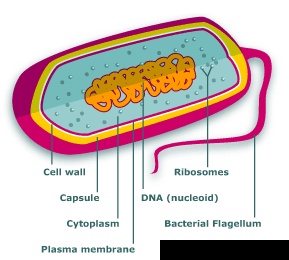

Prokaryotic cells are usually _______ and do not contain a ______
Multicellular, Nucleus
Unicellular, Nucleus
Match the following

Prokaryotic Cell

Eukaryotic Cell

Puppy
Choose one way that bacteria can be helpful.
Bacteria can help me with my homework.
Bacteria can feed my dog.
Bacteria can help me digest food.
Bacteria can help me sleep.
What shape is bacteria?
Round
Straight
Twisted
All of these
There are _____ different shapes of bacteria.
4
6
3
2
Bacteria is a prokaryote. Prokaryotes have ______ cell(s).
one
two
no
4
The ________ is a tail-like structure that helps the bacteria move in a swim-like motion.
nucleus
flagellum
foot
cytoplasm
_______ is a rod-shaped bacteria that can cause food to spoil and result in food poisoning if consumed.
bacillus
strep
spirochetes
What do you need to be able to see bacteria?
Microscope
Telescope
Sunglasses
3D Glasses
The region inside the cell membrane of a bacterium
bacteria
endospore
cytoplasm
decomposers
All viruses are different, but what are two parts that a virus must have?
Genetic Information (DNA or RNA)
a lipid membrane
a nucleus
a protein coat

Which of these statements is true?
A virus is unicellular, it has only one cell.
A virus may sometimes be multicellular, have many cells.
A virus has no cells

What is the name of this virus
Capsule
Helical
Bacteriophage
Teva (my dog)
Which processes allows for the viruses DNA to lay "dormant" or hide in the host DNA while the cell reproduces?
Lytic
Lysogenic
Enveloped
Capsid
As a virus changes over time, it can affect different systems within the organism. This change of the virus is called a _______________.
mutation
melanin
metaphysics
What is used to "cure" a virus
antirbiotic
Rest
Vaccine
Viruses have no cure
Antibiotics work to cure viruses?
True
False
Which of the following is a true statement about bacteria?
Bacteria exist in only a few environments on earth
Bacteria can grow to extremely large sizes
Most bacteria are harmful to humans
Bacteria can be both harmful and helpful to humans
A virus can be prevented by taking a (a)
A bacterium reproduces asexually by dividing to form two new bacterial cells. What is the name of the process by which bacteria reproduce?
meiosis
budding
binary fission
Which of the following is true for both bacteria and viruses?
both contain genetic material
can be killed using antibiotics
have cell organelles
Bacteria are important to the environment because that break down waste materials. They are called _.
Decomposers
Heterotrophs
Autotrophs
Bacteria that use oxygen
Aerobic
anaerobic
What is the process in which plants capture the energy in sunlight and use it to make food? (a)
What is the process in which energy is broken down to release energy? (a)
Plants make their own food called (a)
Where does photosynthesis occur? (a)
Where does cellular respiration take place? (a)
What role does sunlight play in photosynthesis? (a)
What are the inputs (reactants) of photosynthesis? (a)

Cellular Respiration's goal is to (a)
Cellular Respiration involves the chemical breakdown of (a) to form ATP Energy
Which of the following is the best description of the process photosynthesis?
Water, oxygen, and light are inputs while carbon dioxide and glucose are outputs
Water, oxygen, carbon dioxide, and light are inputs and glucose is the output.
Water, carbon dioxide, and light are inputs while oxygen and glucose are outputs.
Glucose, oxygen, and light are inputs while carbon dioxide and water are outputs.
This is given off by plants during photosynthesis as a waste product. (a)
What chemical pigment absorbs sunlight for photosynthesis? (a)
True of False, Plants can perform Cellular Respiration and Photosynthesis (a)
Which of the following is the correct reaction for photosynthesis?
sunlight + carbon dioxide + water --> glucose + oxygen
glucose + oxygen --> carbon dioxide + water + ATP
oxygen + water --> carbon dioxide + glucose
If carbon dioxide is removed from a plant’s environment, what would you expect to happen to its production
of high-energy sugars?
More sugars will be produced.
No sugars will be produced.
The same number of sugars will be produced but without carbon dioxide.
Carbon dioxide does not affect the production of high-energy sugars in plants.
What is the process in which plants capture the energy in sunlight and use it to make food? (a)
What is the process in which energy is broken down to release energy? (a)
Plants make their own food called (a)
Where does photosynthesis occur? (a)
Where does cellular respiration take place? (a)
What role does sunlight play in photosynthesis? (a)
What are the inputs (reactants) of photosynthesis? (a)
Cellular Respiration's goal is to (a)
Cellular Respiration involves the chemical breakdown of (a) to form ATP Energy
Which of the following is the best description of the process photosynthesis?
Water, oxygen, and light are inputs while carbon dioxide and glucose are outputs
Water, oxygen, carbon dioxide, and light are inputs and glucose is the output.
Water, carbon dioxide, and light are inputs while oxygen and glucose are outputs.
Glucose, oxygen, and light are inputs while carbon dioxide and water are outputs.
This is given off by plants during photosynthesis as a waste product. (a)
What chemical pigment absorbs sunlight for photosynthesis? (a)
True of False, Plants can perform Cellular Respiration and Photosynthesis (a)
Which of the following is the correct reaction for photosynthesis?
sunlight + carbon dioxide + water --> glucose + oxygen
glucose + oxygen --> carbon dioxide + water + ATP
oxygen + water --> carbon dioxide + glucose
If carbon dioxide is removed from a plant’s environment, what would you expect to happen to its production
of high-energy sugars?
More sugars will be produced.
No sugars will be produced.
The same number of sugars will be produced but without carbon dioxide.
Carbon dioxide does not affect the production of high-energy sugars in plants.

Select all that are products of Photosynthesis.
Water
Carbon Dioxide
Oxygen
Sunlight (Light Energy)
Glucose (Sugar/food)
Exit: Carbon dioxide
Exit: Glucose
Exit: Oxygen
Exit: Water vapor
What is the pigment in chloroplasts that performs photosynthesis?
Chlorosynthesis
Chlorophyll
Chloroplast
Green
In your own words: why is cell respiration important?
In which organelle does cellular respiration occur in animal and plant cells?
Chloroplast
Nucleus
Mitochondria
Vacuole
Which gas do plants give off for living things after photosynthesis?
Oxygen
Carbon
Nitrogen
Hydrogen
Which equation below represents photosynthesis?


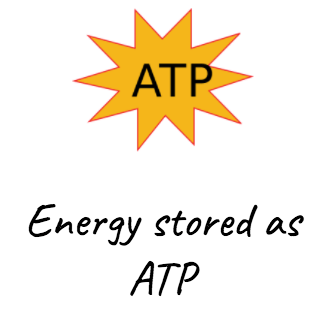
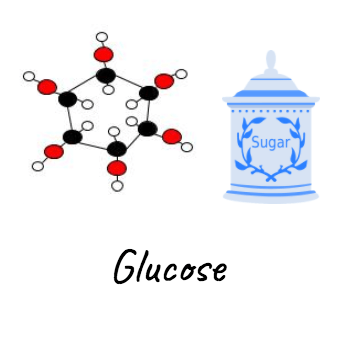
In which cell organelle does PHOTOSYNTHESIS take place?
The chloroplast
The mitochondria
The cytoplasm
The golgi apparatus

True or False: The ultimate source of energy for life on earth is the sun.
True
False
Photosynthesis is ...
The process in which organisms convert/transfer energy from glucose to ATP.
The process in which organisms exchange carbon dioxide and oxygen in their lungs.
The process of taking a picture.
The process of plants converting/transferring solar energy to chemical energy to make their food.
What is the main purpose of photosynthesis?
To make food
To create energy
To release oxygen
To absorb sunlight

What is this organelle?
mitochondria
cytoplasm
chloroplast
plant cell

If light is removed from a plant's environment, what would you expect to happen to its production of high-energy sugars?
More sugars will be produced
no more sugars will be produced
the same number of sugars will be produced but without light
light does not affect the production of high-energy sugars in plants.
What are the products of cellular respiration? Choose 3.
water
ATP
Oxygen
Sunlight
Carbon Dioxide
What are the products of photosynthesis?
carbon dioxide
glucose
light energy
oxygen
water

This is a picture of a(n) (a) . This is where the process of (b) occurs in the presence of (c) .

This is a picture of a (a) where (b) occurs, using light energy to transform carbon dioxide and water into glucose and oxygen.
Which molecule synthesized by plants is a major source of energy for the cellular processes of both plants and animals?
(a)

What are the products (what is released) of cellular respiration? (Mark all of them!)
oxygen
glucose
carbon dioxide
water
ATP (energy)
Draw a picture of a eukaryotic cell.

Recall: What are the 3 stages of the cell cycle? (in order)
Mitosis, Cytokinesis, Interphase
Interphase, Mitosis, Cytokinesis
Interphase, Cytokinesis, Mitosis
Mitosis, Interphase, Cytokinesis
What happens in the G1 phase of interphase?
Growth of the cell
DNA replication
More growth and preparation for mitosis
Division of the nucleus
What happens in the G2 phase of interphase?
Growth of the cell
DNA replication
More growth and preparation for mitosis
Division of the nucleus
What happens in the S phase of interphase?
Growth of the cell
DNA replication
More growth and preparation for mitosis
Division of the nucleus
Why is it important for the cell to replicate DNA before mitosis?

What stage of mitosis is shown in the image?
Prophase
Metaphase
Anaphase
Telophase

What stage of mitosis is shown in the image?
Prophase
Metaphase
Anaphase
Telophase

What stage of mitosis is shown in the image?
Prophase
Metaphase
Anaphase
Telophase

What stage of mitosis is shown in the image?
Prophase
Metaphase
Anaphase
Telophase
Cytokinesis is the final stage of the cell cycle. What happens in this stage?
in which phase of the cell cycle do cells spend most of their time?
Interphase
Prophase
Metaphase
Telophase
Cytokinesis
Match the image to the correct answer

Prophase

Metaphase

Anaphase

Telophase

Cytokinesis
Label the parts of the Cell Cycle
G1
S phase
G2
Mitosis
(a) is the uncontrolled growth of cells, often resulting in a tumor or mass of abnormal cells
Label the picture
Interphase
Prophase
Metaphase
Anaphase
Telophase
Cytokinesis

