
 Worksheets
Ch 4 Cell Structure
Total questions: 122
Worksheet time: 1hrs 19mins
What type of organisms does the cell theory apply to
bacteria
multicellular organisms
plants and animals
all of the above
Choose all parts of cell theory (more than 1 correct answer)
All eukaryotic cells were once prokaryotic
All cells come from preexisting cells
All living things are made of cells.
Cells are the most basic unit of life.
All cells contain a nucleus
Modern cell theory now states that all cells contain...
a nucleus
genetic information (DNA)
a cell wall
46 chromosomes
How does the history of Cell Theory illustrate the nature of science?
Scientific theories can change based on new evidence
Scientific theories are the same as laws and never change
All hypotheses are eventually proven to be true with enough experiments
Once something new is discovered, it only takes scientists a couple years to figure out how it works
A scientist develops a hypothesis, designs an experiment, and obtains data that
support her hypothesis. Which of the following best describes when a hypothesis
becomes a theory?
When the official scientific method is followed
When it is supported by consistent data from many experimental trials
When one good set of scientific data supports a theory
When it is published in a scientific journal

Students use a microscope to look for structures present in four different cells. The students placed an X for each structure that was viewed for each cell on the table shown. Which cell that was viewed is most likely a prokaryote?
Cell W
Cell X
Cell Y
Cell Z

The picture shows a student using a microscope to study a prepared slide of a single-celled organism. A single-celled organism can be classified as a prokaryote based on the absence of -
a cell membrane
ribosomes
chromosomes
a nucleus
Prokaryotic cells don't have:
Membrane bound organelles.
Ribosomes
Genetic material (DNA or RNA).
All of the above
Which of the following correctly compares prokaryotes and eukaryotes? Select all that apply.
Prokaryotes: smaller in size.
Eukaryotes: less complex.
Prokaryotes: nucleus absent.
Prokaryotes and eukaryotes: have DNA.
Prokaryotes and eukaryotes: membrane-bound organelles.
Students observe cells under a microscope. Which of the students’ observations will be most helpful in classifying a cell as either prokaryotic or eukaryotic?
Shape of the cell.
Presence of a nucleus.
Presence of organelles.
Visible DNA.

E. coli (a bacteria) is an example of a...
Prokaryote
Eukaryote
Both
Neither

A sunflower is an example of a...
Prokaryote
Eukaryote
Both
Neither
Which of the following would only be found in a eukaryotic cell?
Cell Membrane
DNA
Ribosomes
Mitochondria
Prokaryotic
These are small, single cells with a simple internal structure
Eukaryotic
These are larger and more complex with specialized membranous compartments
Unicellular
All Prokaryotes are and Some Eukaryotes can be ..
Multicellular
Only Eukaryotes are...
Bacteria
Prokaryotes include
Cell type that is very small in size
Prokaryotic
Eukaryotic

This type of cell contains no organelles except ribosomes
Prokaryotic
Eukaryotic

This type of cell has a nucleus
Prokaryotic
Eukaryotic

Plants, animals, protists, and fungi
have this cell type
Prokaryotic
Eukaryotic
This type of cell has many organelles such as chloroplasts, mitochondria, nuclei, the Golgi apparatus, and the endoplasmic reticulum.
Prokaryotic
Eukaryotic
This type of cell is typically 10 times larger than the other cell type.
Prokaryotic
Eukaryotic
Organelle that produces the energy a cell needs to carry out its function
Mitochondria
Golgi Apparatus
Ribosome
Endoplasmic Reticulum
Controls what comes into and out of a cell; found in plant and animal cells:
Cell membrane
Central vacuole
Cell wall
Nucleus
Assembles amino acids to make proteins
Cytoplasm
Endoplasmic reticulum
Ribosome
Golgi apparatus
Captures energy from the sun and uses it to produce food in plant cells
Ribosome
Chloroplast
Golgi apparatus
Endoplasmic reticulum
Receives proteins & materials from the ER, packages them, and distributes them
Nucleus
Ribosome
Golgi apparatus
Endoplasmic reticulum
Outer bilipid boundary of a nucleus
Cytoplasm
Nuclear envelope
Cell membrane
Cell Wall
Cell structure that contains genetic information
Golgi apparatus
Ribosome
Plasma membrane
Nucleus
This type of cell contains a nucleus and other organelles that are bound by membranes.
Prokaryotic
Eukaryotic
All cells have...
(select all that apply)
Cell membrane
Cytoplasm
DNA (genetic material)
A nucleus
Eukaryotic cells include...
(Select all that apply)
Animal cells
Plant cells
Bacteria cells
Viruses

A type of cell with no nucleus
Prokaryotic
Eukaryotic
small membrane-bound sacs that divide some materials from the rest of the cytoplasm and transport these materials from place to place within the cell
vacuole
vesicle
centriole
lysosome
receives proteins and materials from the ER, packages them, & distributes them
endoplasmic reticulum
nucleus
golgi apparatus
mitochondria
assembles amino acids to create proteins
ribosome
vacuole
lysosome
cytoplasm
found inside the nucleus and produces ribosomes
cytoplasm
mitochondria
golgi apparatus
nucleolus
gel-like fluid where the organelles are found
nucleus
cytoplasm
mitochondria
cell membrane
has passageways that carry proteins and other materials from one part of the cell to another
prokaryotic cell
golgi apparatus
endoplasmic reticulum
chloroplast
stores food, water, wastes, and other materials
vacuole
lysosome
nucleus
golgi apparatus
control center of the cell; contains DNA
cytoplasm
nucleolus
mitochondria
nucleus
uses chemicals to break down food and worn out cell parts
golgi apparatus
mitochondria
nucleus
lysosome
produces the energy a cell needs to carry out its functions
chloroplast
mitochondria
nucleus
golgi apparatus
cylinder-shaped organelles made of short microtubules arranged in a circle
vesicle
centriole
vacuole
chromatin
captures energy from the sunlight and uses it to produce food in plant cells
chloroplast
cell wall
chromatin
cytoskeleton
ridged outer layer of a plant cell
chloroplast
cell wall
cytoskeleton
cell membrane
a type of cell lacking a membrane-enclosed nucleus and membrane-enclosed organelles; Examples of organisms with these cells are bacteria and archaea.
cell theory
eukaryote
eukaryotic cell
prokaryotic cell
tiny strands inside the nucleus that contain the instructions for directing the cell's functions
organelle
cytoskeleton
chromatin
centriole
controls what comes into and out of a cell; found in plant and animal cells
cell membrane
cell wall
cell theory
cytoskeleton
idea that all living things are composed of cells, cells are the basic units of structure and function in living things, and new cells are produced from existing cells
organelle
prokaryotic cell
cytoskeleton
cell theory
a network of proteins that is constantly changing to meet the needs of a cell; made of small protein subunits that form long threads, or fibers that crisscross the entire cell
endoplasmic reticulum
cytoskeleton
golgi apparatus
vesicle
a tiny cell structure that carries out a specific function within the cell
organelle
chromatin
chloroplast
lysosome
a type of cell with a membrane-enclosed nucleus and membrane-enclosed organelles. Examples of organisms with these cells are protists, plants, fungi, and animals.
prokaryotic cell
cell theory
eukaryotic cell
golgi apparatus
Why is the inner membrane of the mitochondria highly folded?
Increase volume of mitochondria
Increase in surface area for oxidative phosphorylation
Decrease volume of mitochondria
Decrease in surface area for oxidative phosphorylation
Which of the following cells is most efficient?
Note: SA = surface area V = volume
SA: 4 V: 1
SA: 3 V: 2
SA: 2 V: 3
SA: 1 V: 4
Match the following
Microscopy
technique used to make things larger
magnification
making an image appear larger
Resolution
Clarity of object
how clear
Shantel wanted to look at her skin cells under a microscope. After making a wet-mount slide, she looks at it under her compound microscope. The image she sees is clear but not big enough.
Resolution
magnification
The power ( (a) ) of image = power of the (b) x power of the (c) lens.
we use the term (d) (times
larger) when describing the
magnification.
If the eyepiece has a power of 10x and the objective has a power of 30, what is the total magnification?
3
30
300
We can see greater detail with higher levels of magnification but we cannot see
the entire specimen.
Which has the broader field of view?
Low power objective
Medium power objective
High power objective
Why does the high power objective have higher magnification, but lower field of view?
It is closer to the stage and specimen
It is further away from the stage and specimen
Match the following

Light shines off specimen

Light shines through the specimen

Uses electrons to form an image
How to prepare a wet mount slide
Get a clean slide and (a) slip.
Carefully place your (b) on the slide.
Place one drop of (c) If your specimen is clear or hard to see, use a stain.
Slowly lower the cover slip on top of the specimen at a (d) angle to prevent (e) bubbles.on top of your specimen.
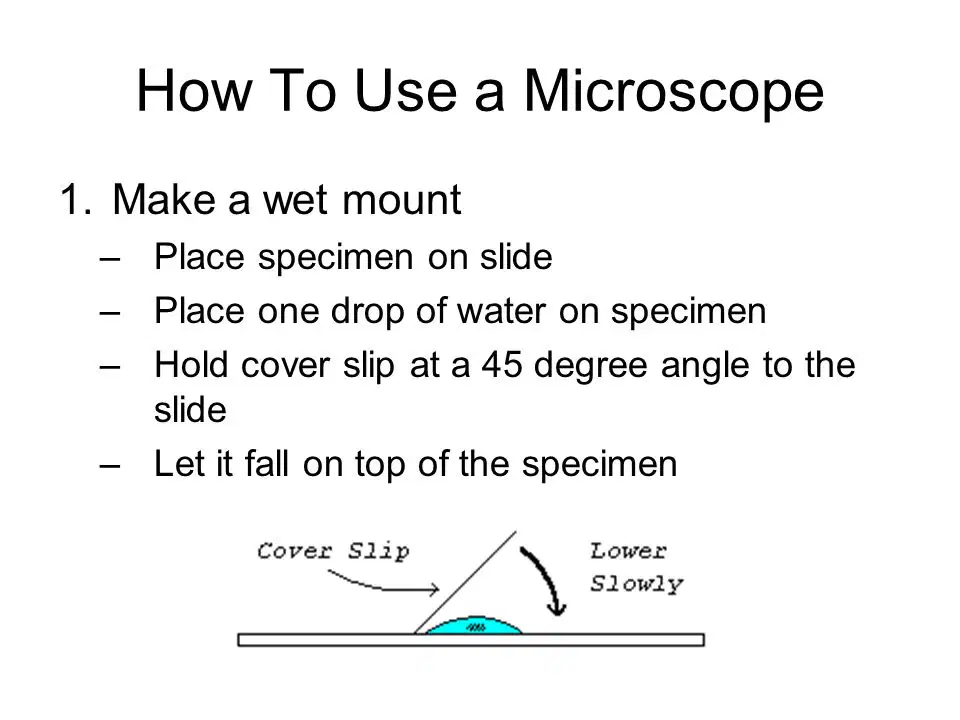
Why do you place a slide cover on the slide at a 45 degree angle?
To trap the organism
To prevent air bubbles
To trap the water
Eyepiece = 10X
Objective lens = 55X


What is the function of the organelle depicted in the photo?
To dispose of waste in the cell.
To capture sunlight and convert it into glucose for the cell.
To release energy into the cell.
To control what leaves and enters the cell.
True or False:
Chloroplasts are found in both plant and animal cells.
True
False
Which photo shows the mitochondrion of the cell?


This organelle is found in both plant and animal cells, but is usually much bigger in plant cells.


The purple organelle in photo depicts which organelle?
Nucleus
Endoplasmic Reticulum
Lysosome
Ribosome

Identify the structure that is indicated by the arrow in the image.
cell wall
central vacuole
chloroplast
cell membrane
Which of these organelles is not found in a animal cell?
Cell Membrane
Nucleus
Mitochondria
Cell Wall
This organelle is responsible for disposing of waste in the cell.
Mitochondria
Nucleus
Cell Wall
Lysosome
Which organelle serves as an internal transport system, and can be either "rough" or "smooth"?
Nucleus
Mitochondria
Cell Wall
Endoplasmic Reticulum
Which organelle makes proteins?
Mitochondria
Chloroplast
Ribosome
Lysosome
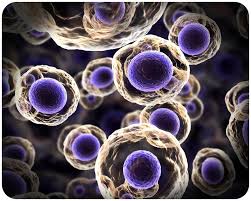

All the organelles in a cell work together to help the cell and the whole organism function. Some diseases are caused by the failure of one type of organelle. Read the description below of an example of this type of disease. A mosaic is a picture made up of small colored pieces. Mosaic viruses cause plant leaves to look like mosaic art. A mixture of dark and light green patches appear on the leaves. The light green patches are not able to capture much energy from sunlight. Which organelle is affected by mosaic viruses?
cell membrane
mitochondrion
chloroplast
cell wall

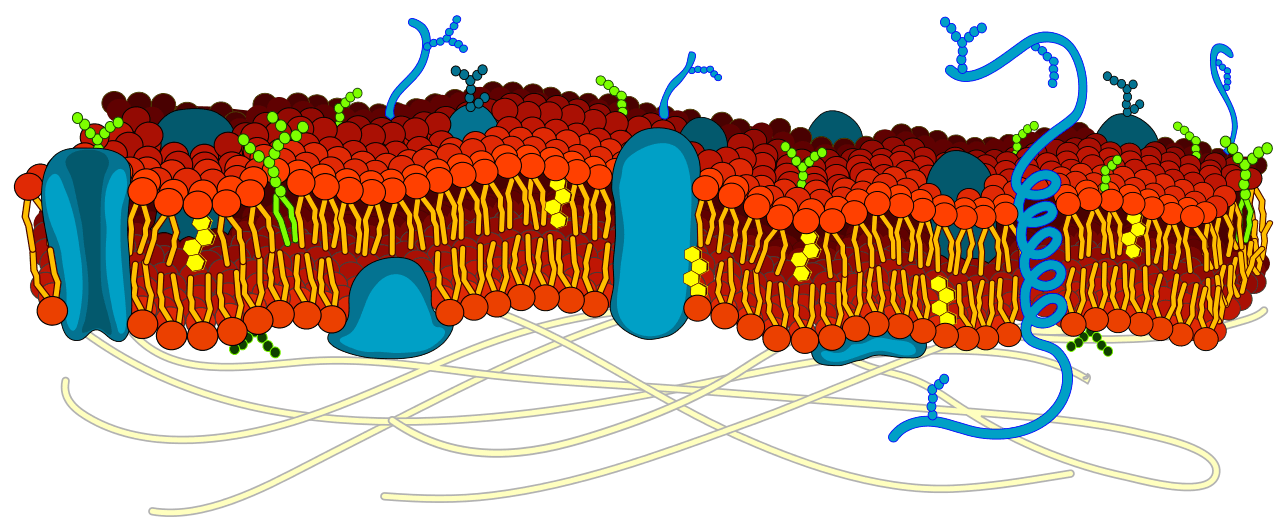
What is the function of the cell membrane?
To control what comes in and out of the cell
To break down food inside the cell
to serve as a barrier
to eat the cells food

Which organelle produces the energy a cell needs to carry out its function
Mitochondria
Golgi Bodies
Cytoplasm
Nucleus

Which organelle receives proteins and materials from the ER, packages them and distributes them
Vacuoles
Golgi Bodies
Nucleus
Chromatin

what is the function of ribosomes
to assemble amino acids to create proteins
to pack proteins
to clean proteins

The control center of cell is
the nucleus
ribosomes
chromatin

Chromatin is
tiny strands inside the nucleus that contain the instructions for directing the cell's function
found inside the nucleus
needed to make proteins

