
 Worksheets
Final Exam Review (CAS Biology)
Total questions: 120
Worksheet time: 2hrs 6mins
Am autotroph can:
Make its own food
Make its own water
Make its own oxygen
Make its own carbon
What type of energy conversion occurs in photosynthesis?
Light from the sun to chemical in glucose
Chemical in glucose to chemical in ATP
Which of the following equations represents the overall chemical reaction for photosynthesis?
6O2+ 6H2O → C6H12O6+ 6O2
C6H12O6 + 6H2O→ 6O2+ 6O2
6CO2+ 6H2O→ C6H12O6+ 6O2
6O2 + 6H2O→ C6H12O6 + 6CO2

Exit: Carbon dioxide
Exit: Glucose
Exit: Oxygen
Exit: Water vapor
what are the products of the light reactions
thylakoid
oxygen
ATP
NADPH
Which statement is true regarding cellular respiration?
The reactants of cellular respiration are identical to the reactants of photosynthesis.
The reactants of cellular respiration are obtained from the products of photosynthesis.
The products of cellular respiration are the same as the products of photosynthesis
Cellular respiration only occurs in autotrophs, photosynthesis occurs only in heterotrophs.
Glucose molecules store _____________.
chemical energy
kinetic energy
gravitational potential energy
heat energy
The energy stored in glucose is transferred to ________________.
A molecule known as ATP
A molecule known as ADP
water molecules
oxygen molecules
Identical halves of a chromosome are called?
Cousins
Chromatids
Centromere
Centrosome
Chromosomes are visible and spindle fibers start to appear
prophase
metaphase
telophase
anaphase
Sister Chromatids separate from each other
prophase
telophase
anaphase
metaphase
Having only one copy of each chromsome
haploid
diploid
triploid
octoploid
After mitosis the number of chromosomes in the newly created cells will be:
Half the number of the original cell
The same number as the original cell
Twice as much as the original cell
The division of chromosomes is called?
anaphase
mitosis
cytokineses
G0
The division of the cytoplasm is called?
anaphase
mitosis
cytokineses
G0
Non dividing state of the cell cycle
Interphase
Mitosis
Telophase
Cytokinesis
Uncontrolled growth can result in:
G0 phase
S phase
Replication
Cancer
Responsible for making sure that the cell is ready to divide
G1 checkpoint
G2 checkpoint
M checkpoint
G0 checkpoint


The stage of mitosis where the sister chromatids separate:
prophase
anaphase
telophase
metaphase

In humans, the haploid number of chromosomes is ____.
23
46
69
92
Which of the following is the best definition for MEIOSIS?
the process of two haploid cells uniting
the counting of chromosomes within a diploid cell
a two-step process that reduces the number of chromosomes in half such that there is only one copy of all the chromosomes
the equational division of a cell into two identical copies
What is unique to Prophase I- is that the duplicated chromosomes pair up to form _______.
a centrosome
a tetrad
the mitotic spindle
sister chromatids

In which stage of MEIOSIS does crossing over occur? (The exchange of genetic material between chromosomes in a tetrad.)
Anaphase I
Metaphase I
Prophase I
Telophase I
In Metaphase I, tetrads line up along the _______.
mitotic spindle
centrosomes
equatorial plane
contractile ring
In Anaphase I, the _________ are separated by the pulling of the spindle fibers to opposite poles of the cell.
homologous pairs of chromosomes
sister chromatids
centromeres
centrosomes
Check all of the following that DO occur during Telophase I and cytokinesis.
The separated homologous chromosomes are at opposite poles of the cell.
The cell divides in two.
The chromosomes do not uncoil, since they are getting ready for Meiosis II.
Sister chromatids are pulled away from each other.
At the start of Meiosis II, which of the following is NOT true?
There are two cells.
The cells are haploid.
The chromosomes are paired up as homologues.
DNA is present as two sister chromatids joined at the centromere.
In Prophase II, the_________ reforms and the spindle fibers attach to each chromosome.
mitotic spindle
centrosomes
nucleus
cell plate
In Metaphase II, _________ line up on equatorial plane.
homologous pairs of chromosomes
single chromosomes (made up of 2 sister chromatids)
tetrads
centrosomes
In Anaphase II, the _________ separate.
Homologues
Sister Chromatids
Tetrads
Centrioles
How many cells are formed at the end of Meiosis II?
2
3
4
8
Which of the following are CORRECT observations about the differences between MITOSIS and MEIOSIS? (Check all that apply.)
Mitosis produces cells that identical to the parent cell.
Meiosis produces cells that have half the number of chromosomes as the parent cell.
All cells go through INTERPHASE as part of the cell cycle, whether it goes to mitosis or meiosis next.
In both types of cell division, the chromosomes are only duplicated once.
Only in Mitosis, do you see chromosomes pair up to form a tetrad.
The products of MEIOSIS have _______ number of chromosomes.
haploid
diploid
During the process of differentiation
all sections of DNA are activated to determine the structure of a body cell
ONLY ONE section of DNA are deactivated to determine the structure of a body cell
only specific sections of DNA sequence are activated to determine the structure and functions of a body cell
Unspecialized cells in our body that has the ability to differentiate into different types of cells are called
specialized cells
differentiated cells
nerve cells
stem cells
Multicellular organism begin as one cell to undifferentiated masses of cells and ultimately have different type of cells due to
different DNA
deactivated DNA
gene expression in specific parts of DNA
DNA is copied during
During cell division
All the time
During protein production
Which of the following is NOT part of a nucleotide
sugar
phosphate
nitrogen base
amino acid
The backbone of DNA is made of
base pairs
sugars and phosphates
only sugars
only phosphates
The two strands of DNA are held together with
covalent bonds
hydrogen bonds
nothing
If a DNA molecule has 30% Guanine bases, how many Cytosine bases will it have?
30%
25%
20%
10%
One function of DNA is to
code for proteins
code for lipids
code for carbohydrates
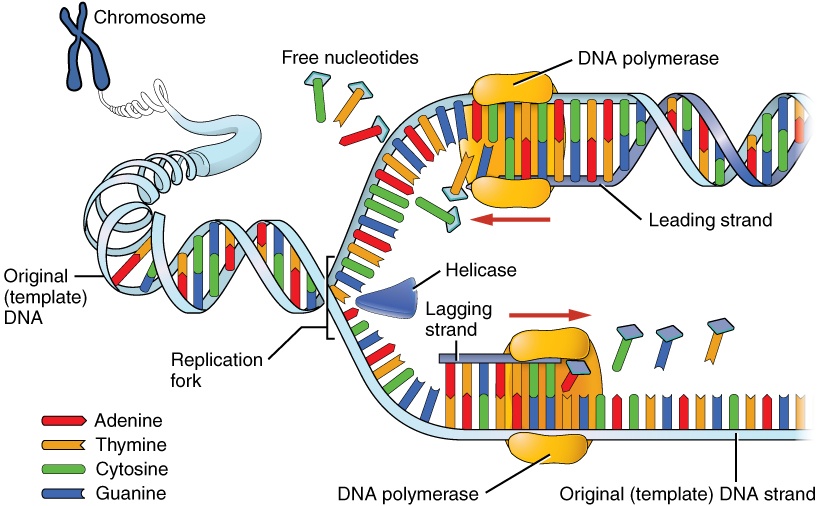
The first step in DNA replication is
to unwind and unzip the two strands
to break the backbone in half so the sequence can be copies
to attach new nucleotides
to proof read the sequence
What does semiconservative replication mean?
that the DNA is proof read at the end of the process
that the newly made DNA has one strand from the original DNA and one new strand
that the newly made DNA will send half of its strand to one cell and leave the old strand in the original cell
that the original DNA strands come back together after replication is over
What does semiconservative replication mean?
that the DNA is proof read at the end of the process
that the newly made DNA has one strand from the original DNA and one new strand
that the newly made DNA will send half of its strand to one cell and leave the old strand in the original cell
that the original DNA strands come back together after replication is over
What does the term antiparallel refer to?
the two strands are connected upside down
the the DNA is made of two strands
DNA twists
DNA copies itself from bottom up to the top of the strand
When DNA replicates what is separated?
the backbone
the base pairs
the sequence of bases
the sugar- phosphate bond
5'-ATGCCAT-3'
The two strands of DNA are
Parallel
Antiparallel
Perpendicular
At Right Angles
What enzyme is responsible for the second step of DNA replication?
DNA Ligase unwinds original DNA strand
RNA Primase lays down RNA primers for new nucleotide bases.
RNA polymerase builds new strands by bringing in new nucleotide bases.
Helicase knits together fragments on lagging strand

Which letter in the picture below depicts the leading strand in DNA replication?
A
C
B
None of the above
Which letter in the given picture depicts the okazaki fragments?
A - lagging strand
C - leading strand
B - lagging strand
C - replication fork
DNA replication puts down nucleotides ______' to _____' and is said to be ______________________
5, 3, antiparallel
3, 5, antiparallel
5, 3, parallel
3, 5, parallel
GAG-CTC-GAC-AGA
Mutant
GAG CTC-CAC-AGA
The mutated DNA segment is TTCGCAAG. This is an example of ___ mutation.
Mutation: ATC GCAT
What mutation occurred?

Which of the following are differences in the structure between RNA and DNA
DNA uses deoxyribose sugar, RNA uses sugar ribose
DNA pairs Adenine with Uracil, RNA pairs Adenine with Thymine
DNA is a double helix, RNA is a single helix
DNA pairs Adenine with Thymine, RNA pairs Adenine with Uracil
During transcription, this type of ribonucleic acid is responsible for copying the DNA and brining it out of the nucleus.
tRNA
mRNA
rRNA
dRNA
There are a total of ____ different amino acids
20
1
4
unlimited

Which organelle contains rRNA and reads the mRNA to synthesize a protein?
Ribosome
Nucleus
Cytoplasm
Nucleotide

What brings the amino acids to the ribosome to assemble a protein?
DNA

Which process does this diagram illustrate?
transcription
DNA replication
translation
What determines the shape and function of a protein?
The sequence of amino acids
The type of ribosome that assembles the protein
The cell that manufactures the protein
How can a mutation in the DNA sequence result in NO change to the protein that is made?
There are multiple codons that can code for the same amino acid and result in the same protein
There is always a change in the protein when a mutation occurs
Only the mRNA is used in protein synthesis so a mutation in the DNA would have no effect on the protein


Short = S
Short = t
Short = T
Short = tt

Which of the following genotypes is homozygous dominant?
Yy
yY
yy
YY
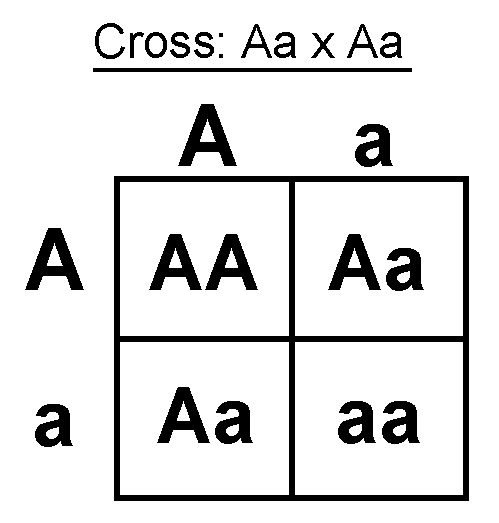
What is the genotypic ratio of the offspring?
3:1
1:3
1:2:1
2:2
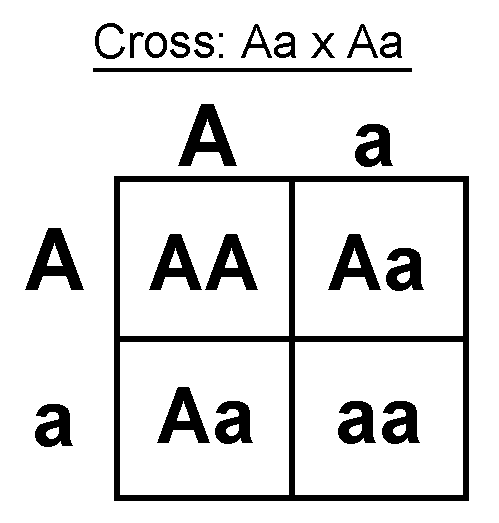
What are the phenotype percentages of the offspring?
(A-Brown fur color; a-white fur color)
50 % Brown fur and 50% White fur
25 % Brown fur and 75% White fur
75 % Brown fur and 25% White fur
0% Brown fur and 100% White fur


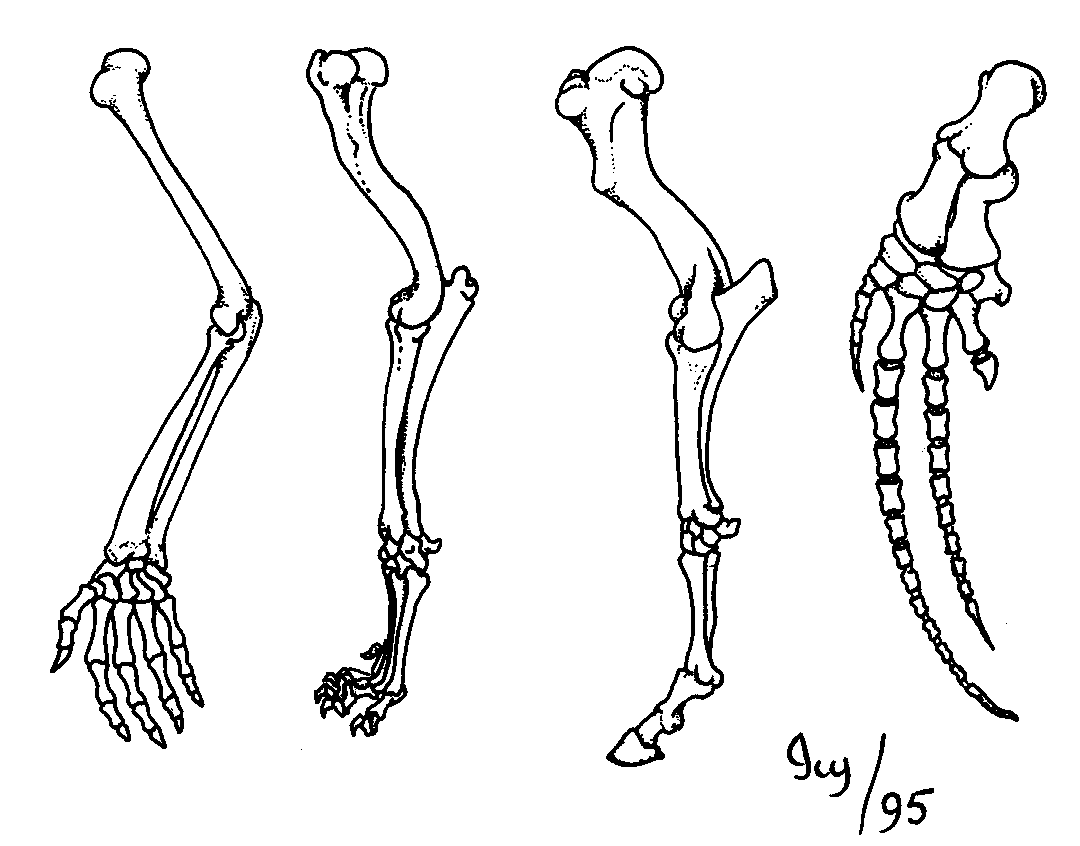
What do we call a change in a species over time?
Adaptation
Evolution
Extinction
Environmental influences
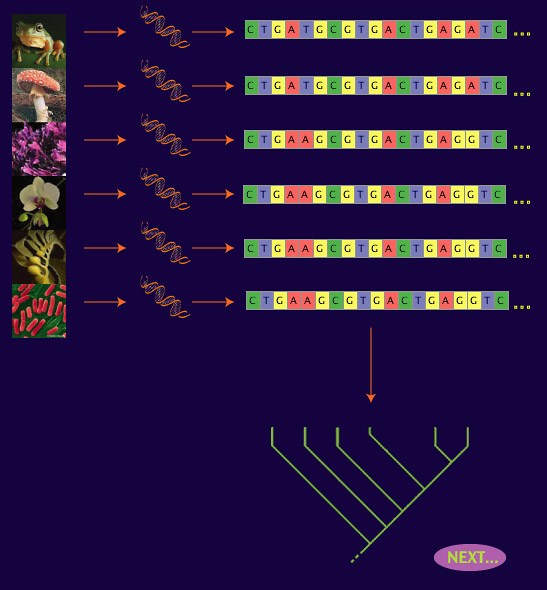
An organisms with the “best” traits (adaptations) will live longer and
reproduce more than others, causing changes in the population over time by acting on traits that are heritable
Evolution
Natural Selection
Fitness
Variation
Genes that are beneficial to the species will....
evolve a new species
will not be passed down to its' offspring
become more common over time
cause the extinction of a species
Which one does not increase variation?
Gene flow
Migration
Mitosis
Crossing Over
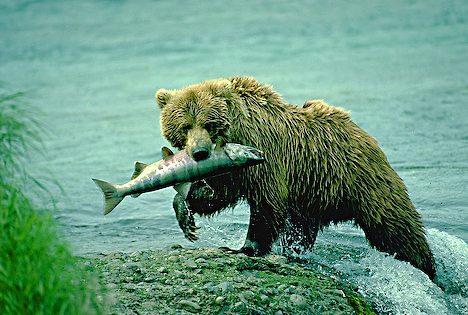
A grizzly bear survives because he is well-adapted to his environment. When he reproduces he passes on those traits to his offspring. This process is called
Natural Selection
Selective Breeding
Random mutations
Variations in a species
Where do adaptations come from?
The individual organism decides to adapt
Mutations that give an organism an advantage in its environment
Genetic recombination during meiosis
Both mutations and genetic recombination are sources of adaptation

