wayground logo

Free Printable Worksheets

Font size

S
M
L
XL
Worksheets

Biology Fall Final Review

Total questions: 117

Worksheet time: 2hrs 52mins

Name
Class
Date
1.

Which biomolecule includes DNA, RNA and ATP?

a)

Protein

b)

Nucleic Acid

c)

Carbohydrate

d)

Lipids

2.
Which biomolecule is found in fats, oils, and waxes and is a source of long-term energy
a)
Proteins
b)
Nucleic Acid
c)
Lipids
d)
Carbohydrate
3.
What biomolecule do enzymes belong to? 
a)
Carbohydrate
b)
Lipid
c)
Nucleic Acid
d)
Protein
4.

Which biomolecule is made up of amino acids and helps build muscles?

a)

Nucleic Acid

b)

Carbohydrate

c)

Protein

d)

Lipids

5.

What two things do enzymes do?

a)

speed up chemical reactions

b)

break things down

c)

provide quick energy

d)

provide long term energy

6.
Animal Cells are
a)
Prokaryotic
b)
Eukaryotic
7.
Which does NOT have a nucleus?
a)
Prokaryotic
b)
Eukaryotic
8.
Do all cells have DNA?
a)
Yes
b)
NO
9.
Which organelle is only found in a plant cell? 
a)
nucleus
b)
chloroplast
c)
mitochondria
d)
cell membrane
10.
The Golgi apparatus _____.
a)
packages cell products for export
b)
eliminates waste
c)
stores DNA
d)
makes energy
11.
The chloroplast _____.
a)
uses sugar to make energy
b)
eliminates waste products from the cell
c)
uses light energy to make sugar
d)
manufactures proteins for cell export
12.

Which of the following are reactants of photosynthesis?

a)

CO2 and H2O

b)

O2

c)

H2O and Glucose

d)

None of the above

13.
What is the pigment in chloroplasts that performs photosynthesis?
a)
Chlorosynthesis
b)
Chlorophyll
c)
ADP
d)
Electron Transport
14.
What is the ultimate ORIGINAL source of energy for living things
a)
Sugar
b)
Sun
c)
Moon
d)
Carbon Dioxide
15.

What is the correct equation for photosynthesis?

a)

C6H12O6 + 6O2 --> 6CO2 + 6H2O

b)

6CO2 + 6O2 --> C6H12O6 + 6H2O

c)

6CO2 + 6O2 --> 6H2O + C6H12O6

d)

6CO2 + 6H2O + sunlight --> 6O2 + C6H12O6

16.

What are the reactants in cell respiration?

a)

water, carbon dioxide, light

b)

oxygen, glucose

c)

glucose, water, carbon dioxide

17.

Aerobic means

a)

without oxygen

b)

with oxygen

c)

without effort

18.

Anaerobic means

a)

with oxygen

b)

without oxygen

c)

to run for a long time

19.

Which type of respiration produces more ATP?

a)

aerobic

b)

anaerobic

20.

The movement of particles from an area of high to low concentration is known as--

a)

Passive Transport

b)

Active Transport

21.

How does a cell maintain homeostasis?

a)

By controlling what enters and leaves the cell

b)

Flexibility

c)

Protective barrier

d)

Structure and support

22.

Cell membrane transport that occurs without energy is called--

a)

active transport

b)

endocytosis

c)

passive transport

d)

exocytosis

23.
What is the difference between active and passive transport?
a)
Active does not need energy and passive uses ATP (energy)
b)
Active uses ATP (energy) and passive does not need energy
c)
Active stores transport proteins and passive releases 
d)
Active uses hormones and passive does not 
24.

The movement of molecules from low to high is known as

a)

simple diffusion

b)

facilitated diffusion

c)

active transport

d)

osmosis

25.
Osmosis is the movement of _____ across a membrane.
a)
food
b)
energy
c)
oxygen
d)
water
26.
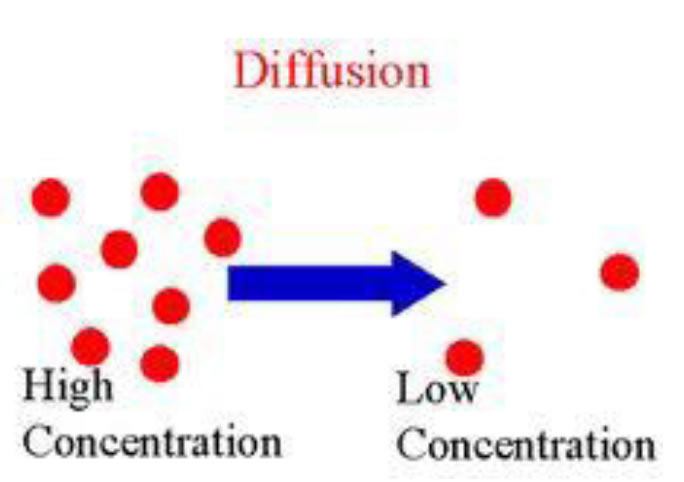
What type of transport is illustrated?
a)
facilitated diffusion
b)
active transport
c)
diffusion
d)
osmosis
27.
The picture is an example of...
a)
active tranport
b)
passive transport
c)
diffusion
d)
osmosis
28.
The cell membrane of the red blood cell will allow water, oxygen, and carbon dioxide to pass through. Because other substances are blocked from entering, this membrane is called
a)
perforated
b)
semi-permeable
c)
non-conducive
d)
permeable
29.
What is the longest stage of the cell cycle called?
a)
Cytokinesis
b)
M phase
c)
Interphase
d)
G1 Phase
30.
During what stage does the G1, S and G2 phases happen?
a)
Interphase
b)
M phase
c)
Mitosis
d)
Cytokinesis
31.
During which stage of the cell cycle does mitosis and cytokinesis occur?
a)
Interphase
b)
S phase
c)
M phase
d)
G1 phase
32.
During what phase of the cell cycle does cell division occur?
a)
Interphase
b)
M phase
c)
S phase
d)
G2 phase
33.
During what phase of the cell cycle is DNA replicated?
a)
G1 phase
b)
S phase
c)
G2 phase
d)
M phase
34.
During what phase of the cell cycle does the cell grow?
a)
G1 phase
b)
S phase
c)
M phase
d)
Cytokinesis
35.
Put the following stages of mitosis in order: anaphase, prophase, metaphase, and telophase. 
a)
prophase, metaphase, telophase, anaphase
b)
prophase, anaphase, metaphase, telophase
c)
prophase, metaphase, anaphase, telophase
d)
prophase, telophase, metaphase, anaphase
36.

What are the "X" shaped things in the drawing.

a)

PMATs

b)

Chromosomes

c)

Ribosomes

d)

Telophase

37.

During what phase of Mitosis do the chromosomes line up in the Middle

a)

Metaphase

b)

Prophase

c)

Telophase

d)

Anaphase

38.

PMAT helps us remember the correct order of the phases of Mitosis. Which of the following has the phases of Mitosis in the correct Order

a)

Interphase, Mitosis, Cytokinesis

b)

Prophase, Metaphase, Anaphase, Prophase

c)

Anaphase, Telophase, Prophase, Telophase

d)

Prophase, Metaphase, Anaphase, Telophase

39.

In which phase of Mitosis do the Chromosomes pull Apart

a)

Metaphase

b)

Prophase

c)

Anaphase

d)

Telophase

40.
Cells spend 90% of their time in this stage of the cell cycle. This is the reason you would see most cells in this stage if viewed under a microscope.
a)
Prophase
b)
Metaphase
c)
Anaphase
d)
Interphase
41.
What phase of mitosis is pictured?
a)
Metaphase
b)
Telophase
c)
Prophase
d)
Anaphase
42.
Which phase comes NEXT?
a)
prophase
b)
metaphase
c)
anaphase
d)
telophase
43.

CROSSING OVER INCREASES

a)

LIFE SPAN

b)

GENETIC VARIATION

c)

THE NUMBER OF OFF-SPRING

d)

ALL ARE TRUE

44.

CROSSING OVER TAKES PLACE DURING

a)

PROPHASE II

b)

PROPHASE I

c)

INTERPHASE

d)

METAPHASE I

45.
Which process and type of resulting cells are represented?
a)
mitosis, gametes
b)
mitosis, body cells
c)
meiosis, gametes
d)
meiosis, body cells
46.
Compared to the number of chromosomes contained in a body cell, how many chromosomes would normally be contained in a gamete?
a)
The same number
b)
One-fourth as many
c)
Twice as many
d)
Half as many
47.
What causes genetic variation in meiosis?
a)
chromosomes lining up
b)
crossing over of chromosomes
c)
separation of chromosomes
d)
chromosomes pulling apart
48.
How many daughter cells are produced at the end of mitosis?
a)
1
b)
2
c)
3
d)
4
49.
The purpose of sexual reproduction and meiosis is to form ________ cells.
a)
body
b)
sex
c)
somatic
d)
brain
50.

What are the parts of a nucleotide?

a)

phosphate, sugar, base

b)

A, T, G, C

c)

Nucleic Acids

d)

two base pairs connected

51.

What is this a picture of?

a)

nucleotide

b)

DNA strand

c)

chromosome

d)

gene

52.
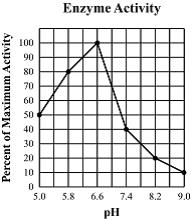
Which of the following conclusions can be drawn from this graph?
a)
The optimum pH of the enzyme is 6.6.
b)
The optimum pH of the enzyme is 5.8
c)
The enzyme’s activity increases as pH increases 5.0 to 9.0
d)
The enzyme’s activity is greater around pH of 8.0 .
53.
What is the function of an enzyme?
a)
enzymes break themselves into small pieces
b)
enzymes slow down chemical reactions
c)
enzymes speed up chemical reactions
d)
enzymes combine products to form reactants 
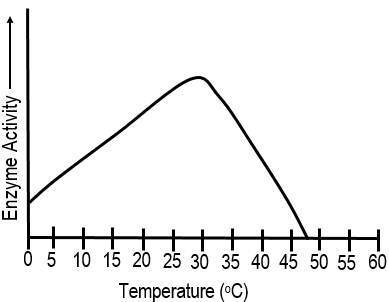
54.

Based on the graph, what temperature does this enzyme work best?

a)

15 C

b)

40 C

c)

30 C

d)

50 C

55.
The parts of the experiment that must be kept the same.
a)
Constants
b)

Independent variable

c)

Dependent variable

d)

Conclusion

56.

The type of variable that responds to the experiment and is what you measure or count to determine if your hypothesis is true.

a)
Independent
b)
Dependent
c)
Control
57.
Dory set up an experiment to see how the mass of a ball affects the distance it rolls off a ramp. What is the dependent variable?
a)
distance traveled by the ball
b)
height of the ramp
c)
mass of the ball
d)
ball type
58.
An experiment is performed on plants to see how different liquids affect plant growth. Each plant in the experiment is given a different liquid; water, apple juice, or milk. Each plant has the same amount of soil, sunlight, and listens to the same music. In this investigation, the independent variable is ...
a)
The type of plant
b)
The amount of sunlight
c)
The type of music
d)
The type of liquid
59.
What is the factor that an experimenter changes on purpose?
a)
Dependent Variable
b)
Independent Variable
c)
Constant
d)
Control
60.
In this graph, what is the independent variable? 
a)
Population
b)
Day
c)
Species 5
61.
In this graph, what is the dependent variable? 
a)
Walla Walla Island
b)
Time
c)
Number of Deer
62.

Using the picture, identify the control group.

a)

Trial 1

b)

Trial 2

c)

Trial 3

63.

What makes a good scientific question?

a)

The question can be answered by yes or no.

b)

The question can be answered by doing an experiment.

c)

The question can be answered through extended thought.

64.

  Which invention was the most important thing that helped scientists develop the cell theory?

a)

compound light microscope

b)

petri dish

c)

scanning electron microscope

d)

dissection tools

65.
Which statement reflects one of the major components of the cell theory?
a)
All living things are multi-cellular.
b)
Organs are the basic unit of structure and function for all living things.
c)
All cells come from previously existing cells.
d)
Every organism has a reproductive system to ensure survival of the species.
66.

The solution surrounding the cell in Diagram B, would be defined as:

a)

hypertonic

b)

hypotonic

c)

isotonic

67.

The solution surrounding the cell in Diagram C, would be defined as

a)

hypertonic

b)

isotonic

c)

hypotonic

68.

Movement of SOLUTE through the cell membrane from high to low concentration is called.....

a)

diffusion

b)

active transport

c)

facilitated diffusion

d)

osmosis

69.
In this picture, which way will the water move?
a)
Water will move into the cell
b)
Water will move out of the cell
c)
Water will move in and out of the cell
d)
Water will not move
70.
In this picture, how do you classify the solution?
a)
The solution is hypotonic
b)
The solution is hypertonic
c)
The solution is isotonic
d)
The solution is my tonic
71.
How does a cell maintain homeostasis?
a)
Regulates what enters and leaves the cell
b)
Flexibility
c)
Protective barrier
d)
Structure and support
72.
The cell membrane is selectively permeable, which means...
a)
All materials can enter and leave the cell
b)
Certain things can enter while others cannot
c)
The cell manually sorts through all materials
d)
Only certain cells can interact with the cell.
73.

Where does dark reaction or light independent specifically occur?

a)

thylakoid membrane

b)

Stroma of the chloroplast

c)

Grana

d)

nuclear membrane

74.

The openings that are found in the leaves of plants are called:

a)

Stomata

b)

Chlorophyll

c)

Xylem

d)

Chloroplast

75.
Which structures shown in the Figure make up the ADP molecule?
a)
A and B
b)
A, B and C
c)
A, B, C, and D
d)
C and D
76.
Using the figure, which parts of the molecule must the bonds be broken to form an ADP molecule?
a)
A and B
b)
B and C
c)
C and D
d)
all of the above
77.
Which of the following can be compared to a battery in need of recharging?  (empty wallet)
a)
ADP
b)
ATP
c)
Ribose
d)
Adenosine
78.
What are the products of photosynthesis?
a)
water and carbon dioxide
b)
oxygen and glucose
c)
oxygen and carbon dioxide
d)
oxygen and water
79.
Which of the following molecules is not needed for the Calvin Cycle?
a)
CO2
b)
ATP
c)
NADPH
d)
H2O
80.

Glucose is broken down into pyruvic acid during which process

a)
Krebs cycle
b)
Calvin cycle
c)
Glycolysis
d)
Photosynthesis
81.
Aerobic respiration is different from anaerobic respiration in that aerobic respiration needs...
a)
chlorophyll
b)
carbon dioxide
c)
glucose
d)
oxygen
82.
What is the correct equation for cellular respiration?
a)
6O2 + C6H12O6 -> 6CO2 + 6H2O + Energy
b)
6O2 + C6H12O6 + Energy -> 6CO2 + 6H2O
c)
6CO2 + 6H2O -> 6O2 + C6H12O6 + Energy
d)
6CO2 + 6H2O + Energy -> 6O2 + C6H12O6
83.
Where does the Krebs Cycle take place?
a)
mitochondria
b)
chloroplast
c)
cytoplasm
d)
nucleus
84.
Where does glycolysis take place?
a)
Cytoplasm
b)
Stroma
c)
Thylakoid
d)
Mitochondria
85.

What role do NADH and FADH2 (produced during Glycolysis and Kreb's Cycle) play in cellular respiration

a)

they are energy carriers (hydrogen)that use that energy to produce massive amounts of ATP

b)

They are waste products and are pushed out of the cell

c)

They are necessary for long-term energy storage

d)

They don't play any role in cellular respiration

86.

Which type of fermentation/anaerobic respiration occurs in muscles?

a)
Alcoholic 
b)
Lactic acid
87.

What is the name of the process done by yeast that helps make beer/wine/breads?

a)

Aerobic Respiration

b)
Alcoholic fermentation
c)
Lactic acid fermentation
d)
Glycolysis
88.

Anaerobic respiration/fermentation is essentially only the 1st step of Aerobic Respiration, which is...

a)

Glycolysis

b)

Krebs Cycle

c)

Electron Transport Chain (ETC)

89.
How are lactic acid and alcoholic fermentation similar?
a)
They have the same products
b)
They have the same reactants
c)
They both require oxygen
d)
They occur in the same organisms
90.
How many variables should you change in an experiment?
a)
none
b)
1
c)
2 or more
d)
depends on the type of experiment
91.
The variable in an experiment deliberately changed by the scientist. The variable being tested.
a)
dependent variable
b)
independent variable
c)
data
d)
control group
92.
The variable that depends on changes to the independent variable. 
a)
control group
b)
dependent variable
c)
experimental variable
d)
independent variable
93.
A factor in an experiment that stays the same.
a)
control group
b)
constant
c)
dependent variable
d)
experimental group
94.

Why does ice stay at the top of oceans instead of sinking to the bottom?

a)

Ice is colder than liquid water.

b)

Ice is more dense than liquid water.

c)

Ice is warmer than liquid water.

d)

Ice is less dense than liquid water.

95.

Water striders are an insect that gets it's name from its ability to walk on top of water. This is due to the _________________.

a)

surface tension resulting from the polarity of water molecules

b)

high specific heat of water of water

c)

ability of water to act as a solvent

d)

expansion of water upon freezing

96.

This structure represents

a)

carb

b)

lipids

c)

proteins

d)

nucleic acids

97.

A substance made of many parts

a)

polymer

b)

monomer

c)

monosaccharides

d)

proteins

98.

Monomer of nucleic acid

a)

hemoglobin

b)

monosaccharide

c)

nucleotide

d)

nucleolus

99.

Which macromolecule builds muscles and immunity?

a)
protein
b)
nucleic acid
c)
lipids
d)
carbohydrates
100.
What are the four macromolecules?
a)
proteins, nucleic acids, carbohydrates, and lipids
b)
monosaccharides, lipids, polysaccaharides, and proteins
c)
RNA, DNA, proteins, and carbohydrates
d)
proteins, DNA, RNA, and steroids
101.
If green is dominant over purple, then what is the genotype for this individual?
a)
Purple
b)
Green
c)
GG
d)
gg
102.
Another word for homozygous is...
a)
purebred
b)
hybrid
c)
heterozygous
d)
dominant
103.
If a pea plant were homozygous recessive for height, how would its alleles be represented?
a)
TT
b)
Tt
c)
tt
d)
tT
104.
Which of the following is an example of a heterozygous genotype?
a)
RR
b)
Rr
c)
rr
105.

What is the predicted percentage of homozygous recessive offspring in this cross?

a)

0%

b)

25%

c)

50%

d)

75%

106.
This type of inheritance pattern shows BOTH traits in possible offspring
a)
complete dominance
b)
incomplete dominance
c)
co-dominance
d)
dominant pattern
107.
The dominant trait in this punnett square is
a)
yellow pea seeds
b)
green pea seeds
c)
there is no dominant seed
108.
Two brown eyed parents (Bb) have a baby. What is the chance the baby is blue eyed?
a)
0 %
b)
25%
c)
50%
d)
75%
109.
What percentage of the possible offspring will be hybrids?
a)
25%
b)
50%
c)
75%
d)
100%
110.
What allele combination should go in the missing box?
a)
AA
b)
Aa
c)
aa
d)
none of these
111.
A heterozygous long-tusked elephant is crossed with a homozygous recessive short-tusked elephant. What is the probability of the offspring having short tusks?
a)
0%
b)
25%
c)
50%
d)
75%
112.

In chickens, black is co dominant with white feathers. Which cross would result in 50% black and white feathers?

a)

BW x BW

b)

BB x WW

c)

BW x WW

d)

WW x BB

113.
In flowers, 2 pink (RW) flowers are crossed. What are the genotypes and phenotypes of their offspring?
a)
100% pink (RW)
b)
50% pink (RW); 25% white (WW); 25% red (RR)
c)
75% pink (RW); 25% white (WW)
d)
100% red (RR)
114.
Looking at this pedigree, how many family members have the disease?
a)
4
b)
7
c)
All
d)
None
115.
How many generations are shown in this pedigree?
a)
1
b)
2
c)
3
d)
4
116.

Codominance occurs in calico cats, which allows for the Black and Tan colors to show. What percentage of the offspring represented in this P square will be calico (black and tan spotted)?

a)

25%

b)

50%

c)

75%

d)

100%

117.
Purple is dominant to white. A heterozygous purple flower is crossed with a white flower. What are the genotypes and phenotypes of the offspring?
a)
100% Pp (purple)
b)
50% Pp (purple); 50% pp (white)
c)
75% Pp (purple); 25% pp (white)
d)
25% PP, 50% Pp, 25% pp
75% purple, 25% white