
 Worksheets
Biology Summer 1 2022 Final Exam
Total questions: 117
Worksheet time: 2hrs 8mins
Carbon forms _______ bonds.
Covalent
Ionic
super elastic
blue
Carbon forms bonds with up to ______ other atoms, including other carbon atoms.
1
2
3
4
Many carbon-based molecules are make of many small subunits called _________.
Monomers
Polymers
many mers
Meer cats

__________ are made of many monomers that are bonded together.
a few mers
polymers
monomers
polymonomers
Which of these are examples of Lipids?
simple sugars
complex carbohydrates
fats, oils, & waxes
hair, skin, & nails
Lipids are made of...
CHO
CHON
CHONP
CHONS
Which of the following is a main function of a lipid?
source of quick energy
stores energy, insulates us, and makes up the cell membrane
transport substances in and out of the cell
stores genetic information
Which of these is NOT a part of the endomembrane system?
Nuclear membrane
Endoplasmic reticulum
Golgi apparatus
Mitochondria
What happens to new traits that HELP organisms survive over time?
They become MORE COMMON
They become LESS COMMON
They are EQUALLY COMMON
Cells spend 90% of their time in this phase
Interphase
Prophase
Metaphase
Anaphase
Telophase
Chromosomes line up along the middle of the cell
Interphase
Prophase
Metaphase
Anaphase
Telophase
DNA replication occurs
Interphase
Prophase
Metaphase
Anaphase
Telophase
Chromosomes consist of DNA and proteins.
True
False
Chromosomes are located in the nucleus of eukaryotic cells.
True
False
single celled organism that lacks a nucleus
bacteria
cell wall
flagellum
endospore
a process of heating food to a temperature that is high enough to kill most harmful bacterial without changing the taste of the food.
pasteurization
flagellum
endospore
conjugation
Cells that lack membrane bound organelles such a nucleus are called
prokaryotic
eukaryotic
Bacteria are single-celled microscopic organisms
true
false
A segment of DNA that has the ability to code for a specific trait.
gene
allele
chromosome
chromatid
Humans have _______ pairs of chromosomes, for a total of _______ chromosomes.
10, 20
25, 100
23, 46
46, 92
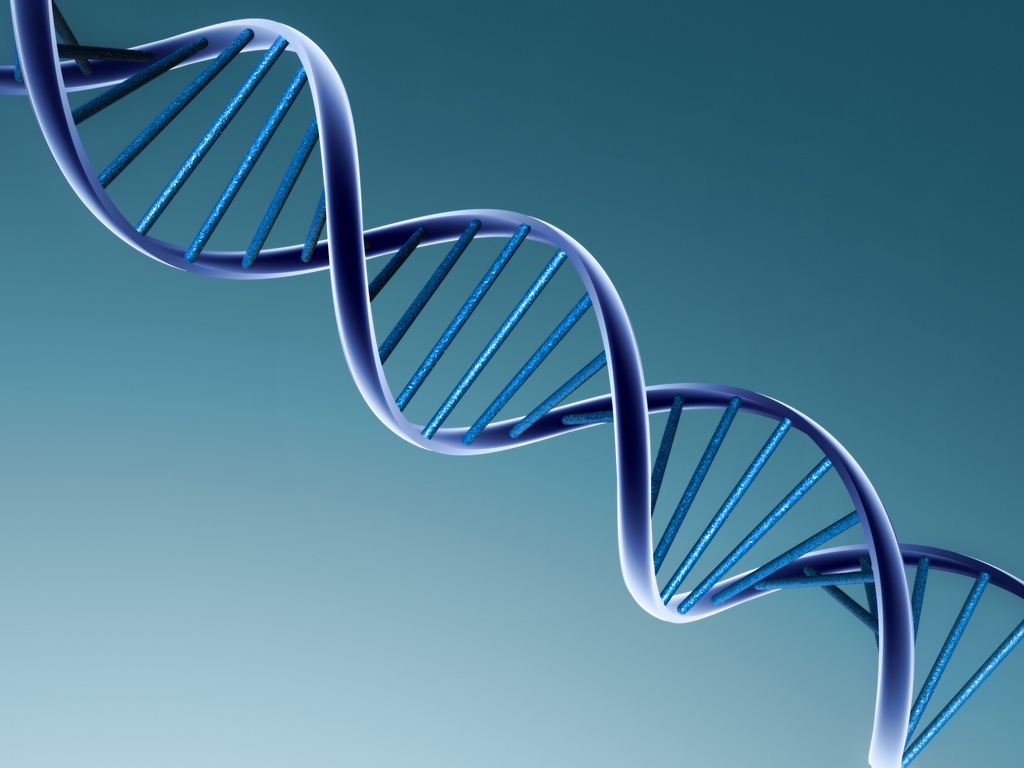
True or False: DNA is the carrier for genetic information.
True
False
True Or False


Which describes the functions of proteins in living things?
structural, transport, signaling, catalysts, etc.
stores and transmits genetic information
stores energy and makes up cell membranes
quick energy and forming cell structure

Proteins are composed of
carbon
hydrogen
nitrogen
phosphorus

All proteins
have a unique structure that determines their unique function.
are exactly the same in function but different in structure.
are exactly the same in structure but different in function.
are enzymes.

The order of amino acids determines the ______ and ultimately the function of a protein.
shape
color
flavor
texture


Which is true of prokaryotic and eukaryotic cells?
Prokaryotic cells are larger than eukaryotic cells.
Eukaryotic cells do not have nuclei, and prokaryotic cells do have nuclei.
Prokaryotic cells lack membrane-bound organelles, and eukaryotic cells contain membrane-bound organelles.
Eukaryotic cells are simpler than prokaryotic cells.

What are different forms of a gene called?
Alleles
Chromosomes
Factors
Traits

If you have immunity to a disease:
It can not enter your body
Your body can fight the disease off before it makes you sick.
The germs change as soon as they enter your body.
You will be able to recover very quickly.
What do antibodies do?
Attach themselves to germs to flag them for destruction.
Engulf and digest germs.
Make your cells impenetrable to germs.
Carry genes from your bloodstream to the outside of your body.
What might happen if your immune system lacked memory cells?
Your body wouldn't be able to fight off diseases.
Diseases would make you sicker than normal.
You might get the same disease over and over.
Your body wouldn't be able to produce antibodies.
A person develops natural immunity.
Before getting sick.
After one dose of a vaccine.
After several doses of a vaccine.
After recovering from an illness.
Unlike germs in nature, the germs used in vaccines:
Don't have antigens
Are weakened or altered
Aren't real germs
Change share frequently
What do measles, smallpox and polio have in common?
They are caused by bacteria.
Vaccines have dramatically reduced the number of people who catch them.
They are constantly changing
They have been wiped out forever.
mRNA vaccines work by
introducing inactivated virus into the body to start an immune response.
having your own cells make a protein from the virus so your immune cells will recognize the virus.
changing the DNA of your cells to protect you from infection from the virus.
using a carrier virus to start an immune response.
The vaccine used to prevent coronavirus infections is a ___________ vaccine that makes __________________ from the virus.
mRNA, DNA
mRNA, spike protein
attenuated, proteins
toxoid, toxins
Sometimes vaccines need boosters to remain effective.
True
False


A way to predict genetic probability using two different
sets of alleles on two different chromosomes.
Co-Dominance
Incomplete Dominance
Monohybrid Cross
Dihybrid Cross
What type of cells does meiosis create?
Gametes
body cells
prokaryotic
cancer cells
How many cells are produced after meiosis 2?
1
2
4
8
What is one of the processes that lead to variety?
Crossing over
dependent assortment
deletion
duplication
Mitosis and Meiosis have some similarities. Check all that are true.
Both have Interphase
Both produce cells
Both end up with the same number of chromosomes compared to the start.
Both make copies of genetic information.
Three truths and a lie.
Meiosis and Mitosis have several differences. Choose the lie.
Meiosis makes sex cells but mitosis does not.
Meiosis makes 4 copies of the genes. Mitosis only makes two.
Meiosis involves far fewer steps than mitosis.
Mitosis is used to duplicate regular cells. Meiosis is not.
Which two processes creates variety in sperm and egg.
Mitosis and meiosis
DNA replication and synapses
Transcription and translation
Crossing over and independent assortment

Cellular Respiration occurs within me and I am in BOTH plant and animal cells. I am a....
Nucleus
Golgi Body
Cytoskeleton
Mitochondria
True or False:
Chloroplasts are found in both plant and animal cells.
True
False
Which photo shows the mitochondrion of the cell?
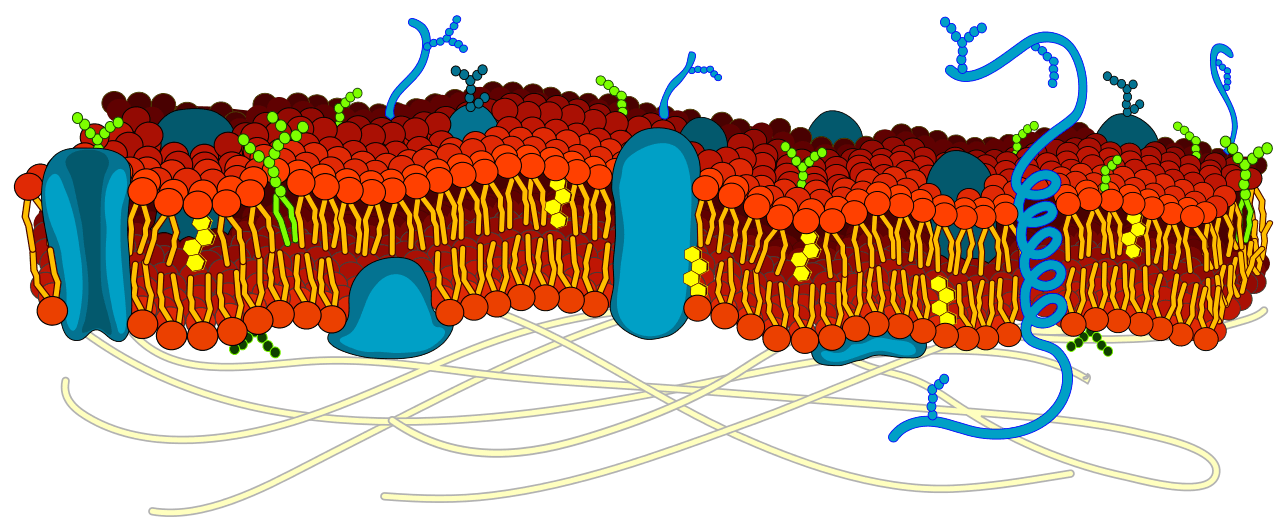


Identify the structure that is indicated by the arrow in the image.
cell wall
central vacuole
chloroplast
cell membrane
This organelle is responsible for disposing of waste in the cell.
Mitochondria
Nucleus
Cell Wall
Lysosome
Which organelle serves as an internal transport system, and can be either "rough" or "smooth"?
Nucleus
Mitochondria
Cell Wall
Endoplasmic Reticulum
Which organelle makes proteins?
Mitochondria
Chloroplast
Ribosome
Lysosome
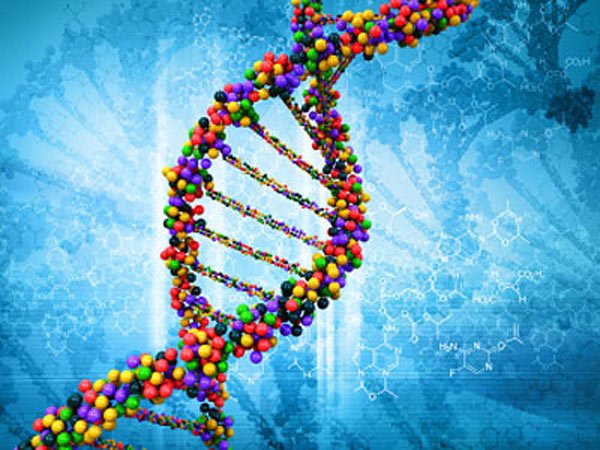
What mutation has occurred here?
T-G-A-C-C-A
T-G-A-G-C-A
Substitution
Deletion
Insertion
Frameshift
DNA molecule segment is : TTACGCAAG
The mutated DNA segment is TTCGCAAG. This is an example of ___ mutation.
Substitution
Deletion
Insertion
Inversion
A mutation is defined as:
A change in the cell's structure
Anything that changes in an embryo
Any change in the physical features of a human
A change in the DNA sequence
ATTTGAGCC- Original
ATTGAGCC - Mutated
The example above is an example of a
Insertion- Frameshift
Deletion- Substitution
Deletion -Frameshift
All of the above
What mutation has occurred here?
T-G-A-C-C-A
T-G-A-G-C-A
Substitution
Deletion
Insertion
Frameshift
Why are insertion and deletion (frameshift) mutations so harmful?
They change all of the codons from the mutation on down the line, which changes the amino acid sequence
They insert things that an organism doesn't need.
They often delete things that organisms need.
Insertion and deletions are not any more harmful than substitution mutations.
An example of a nucleic acid is
amino acid
DNA
sugar
wax
What is the function of nucleic acids?
store energy (long-term)
store energy (short-term)
build skin, hair, nails, muscles
store genetic information

Contains DNA & RNA
Nucleotides
Nucleic acids
Proteins
Amino Acids
Nucleic Acids are made of
CHO
CHON
CHONP
CHONS

The nucleus of an atom is made up of ___________________.
Protons and Neutrino
Neutrons and Electrons
Protons and Neutrons
Protons and Electrons
What are the building blocks of matter?
Atoms
Protons
Cells
Neutrons
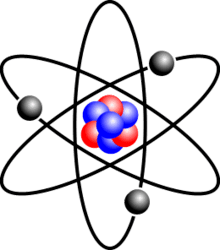
Which subatomic particle has a negative charge in the atom?
proton
neutron
electron
quark
ALL atoms of the same element have:
same number of proton
same number of nucleon
different number of neutron
different number of electron
What are atoms composed of?
Protons and electrons.
Protons, neutrons, and electrons.
Neutrons and electrons.
Ions, elements, and compounds.
What charge does an atom have when it GAINS electrons?
Positive
Negative
Neutral

Watch the clip to answer the next few questions.
Are viruses considered to be living? Why or why not?
No because they don't have a nucleus.
Yes, because they have nucleus and other membrane-bound organelles.
No, because they are not made of cells and they lack the characteristics of life.
Yes, because they are prokaryotic cells.
True or False:
Viruses can be treated with antibiotics.
False
True

TRUE or FALSE:
Viruses are smaller than the hosts they infect.
True
False

Viruses are prokaryotes?
True
False
TRUE or FALSE:
There is a cure for viruses.
False. There are only therapeutic remedies available for viruses.
True. They can be killed with antibiotics.
Viruses require a host to reproduce?
True
False
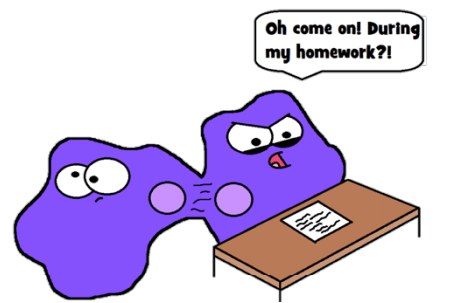
To understand DNA replication, we need to understand the “why.” Why does DNA need to replicate before cells divide?
So that each cell has a full copy of DNA
So that each cell has half a copy of DNA
So that each cell has a no copies of DNA
So that each cell has a different copies of DNA
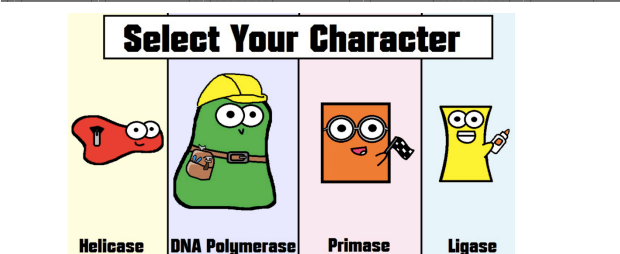
What does the enzyme Helicase do?
unzips the 2-strand DNA into single strand
builds a new set of DNA
shows way for Polymerase, creates primer
glues fragments of DNA together
What does the enzyme DNA Polymerase do?
unzips the 2-strand DNA into single strand
builds a new set of DNA
shows way for Polymerase, creates primer
glues fragments of DNA together
What does the enzyme Ligase do?
unzips the 2-strand DNA into single strand
builds a new set of DNA
shows way for Polymerase, creates primer
glues fragments of DNA together
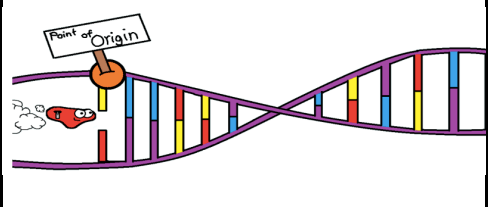
What is going on in this image of the events occurring in DNA replication?
helicase unwinds DNA strands
binds DNA strands
builds the complementary strands
gluing fragments
Which happens first?
make a hypothesis
make a plan
ask a question/make an observation
draw conclusions

