wayground logo

Free Printable Worksheets

Font size

S
M
L
XL
Worksheets

Biology Unit 2 Cell structure and transport test review

Total questions: 119

Worksheet time: 3hrs 34mins
Name
Class
Date
1.

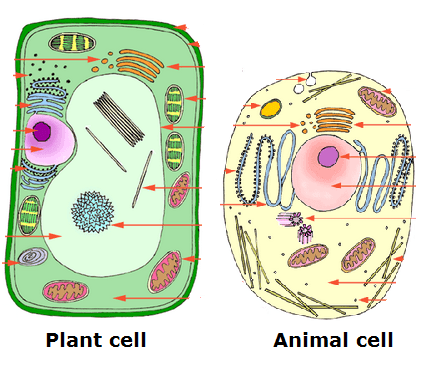
What distinguishes a plant cell from an animal cell? (How do you tell them apart) Hint: There's 3 ways (Check all 3)

a)

Central Vacuole

b)

Mitochondria

c)

Cell Wall

d)

Ribosomes

e)

Chloroplasts

2.

The 3 parts of the Cell Theory are...?

a)

All living things are composed of cells

Cells are the basic units of structure and function in living things

All cells are produced from other cells

b)

All living things are composed of cells

Cells are the basic units of dance and vibes in living things

All cells are destroyed from other aliens

c)

All living things are composed of Jell-O

Cells are the basic units of structure and function in living things

All cells are produced from factories in Canada

d)

All living things are composed of cells

Cells do karate and practice eating whole pies in their free time

All cells are produced from other cells

3.

There are how many main Bio-molecules that help make up cell organelles?

a)

2

b)

6

c)

4

d)

5

4.

Cellular Respiration occurs within me and I am in BOTH plant and animal cells. I am a....

a)

Nucleus

b)

Golgi Body

c)

Cytoskeleton

d)

Mitochondria

5.

The Golgi Apparatus/Body is responsible for doing what within a cell?

a)

gathers simple molecules

b)

gathers simple molecules and combines them to make lysosomes

c)

gathers simple molecules and combines them to make molecules that are more complex

d)

gathers simple molecules and combines them to make molecules that are more fun than others

6.
Plants and animal cells both have a nucleus.
a)
True
b)
False
7.
Provides extra support for the plant cell and gives in shape
a)
chlorophyll
b)
chloroplast
c)
cell wall
d)
vacuole
8.
A storage structure- in an animal cell there are many small ones, but in a plant cell there is just one large one.
a)
vacuole
b)
ribosomes
c)
golgi body
d)
chloroplast
9.
What is the smallest unit of life that can carry out all life functions?
a)
the nucleus
b)
the vacuole
c)
the mitochondria
d)
the cell
10.
All living things are made of _______.
a)
tissues
b)
organs
c)
cells
d)
chloroplasts
11.
what's the difference between prokaryotes vs. eukaryotes?
a)
Prokaryotes have nucleus
b)
Eukaryotes do not have a nucleus
c)
Prokaryotes have a cell wall
d)
Eukaryotes do have a nucleus
12.
Which one of the following organelles is not found in a an animal cell?
a)
cell membrane
b)
nucleus
c)
chloroplast
d)
endoplasmic reticulum
13.
First type of cell to appear on Earth?
a)
Plant
b)
Animal
c)
Prokaryotic
d)
Eukaryotic
14.
What tool do you use to view the cells?
a)
metric ruler
b)
centrifuge
c)
microscope
d)
pipette
15.
Both animal cells and plant cells have 
a)
Cell membrane
b)
Cell wall
c)
Cell beams
d)
blood
16.
Both animal cells and plant cells have 
a)
chlorophyll
b)
chloroplasts
c)
a nucleus
d)
bones
17.
Both plant and animal cells have
a)
chloroplasts
b)
mitochondria
c)
leaves
d)
cell wall
18.
Animal cells do not have 
a)
cytoplasm
b)
cell membrane
c)
chloroplasts
d)
organelles
19.
This organelle is not found in animal cells
a)
nucleus
b)
cell wall 
c)
cytoplasm
d)
mitochondria
20.
The two organelles found only in plant cells are 
a)
cytoplasm and vacuole
b)
cell membrane and mitochondria
c)
cell wall and chloroplasts
d)
nucleus and vacuole
21.
This substance is found in chloroplasts and is necessary for photosynthesis
a)
peroxide
b)
mold
c)
cytoplasm
d)
chlorophyll
22.
Has membrane bound organelles
a)
Prokaryote
b)
Eukaryote
c)
both
23.
Oldest type of cell
a)
Prokaryote
b)
Eukaryote
c)
both
24.
Smaller
a)
Prokaryote
b)
Eukaryote
c)
both
25.

Has cell membrane

a)

Prokaryote

b)

Eukaryote

c)

both

26.
Has cytoplasm
a)
Prokaryote
b)
Eukaryote
c)
both
27.
Has nucleus
a)
Prokaryote
b)
Eukaryote
c)
both
28.
Bacteria
a)
Prokaryote
b)
Eukaryote
c)
both
29.
more complex
a)
Prokaryote
b)
Eukaryote
c)
both
d)
both
30.
multicellular
a)
Prokaryote
b)
Eukaryote
c)
both
31.
plants
a)
Prokaryote
b)
Eukaryote
c)
both
32.
Which type of cell?
a)
Prokaryote
b)
Eukaryote
33.
Which type of cell?
a)
Prokaryote
b)
Eukaryote
34.
Which type of cell?
a)
Prokaryote
b)
Eukaryote
35.
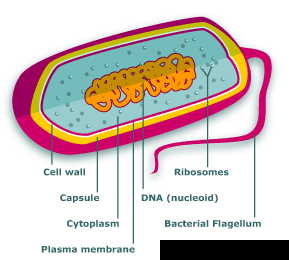
A single-celled organism that lacks a membrane-bound nucleus, mitochondria, or any other membrane -bound organelle .
a)
Prokaryote
b)
Eukaryote
c)
Nucleus
d)
Single-celled organism
36.
Where is the DNA found in a prokaryotic cell? 
a)
floating around in the cytoplasm 
b)
in the nucleus 
37.
What type of cell has a nucleus? 
a)
eukaryotic
b)
prokaryotic 
38.
What type of cell does not have a nucleus?
a)
eukaryotic 
b)
prokaryotic 
39.
Plants and animal cells are examples of ___ cells 
a)
prokaryotic cells 
b)
eukaryotic cells 
40.
Prokaryotes have contains membrane-bound organelles. True or False?
a)
True
b)
False
41.
Are prokaryotes multicellular or unicellular? 
a)
Multicellular
b)
Unicellular
42.
Organelle that links amino acids together to make proteins. 
a)
ribosome
b)
endoplasmic reticulum 
c)
vacuole 
d)
nucleus 
43.
Layered stack of flat membrane-enclosed spaces containing enzymes that process, sort, and deliver proteins. 
a)
Golgi apparatus 
b)
vacuole 
c)
cell wall
d)
none of these 
44.
Fluid filled sac for storage of materials; stores food, water, and enzymes. 
a)
vacuole 
b)
centrosome 
c)
nucleus 
d)
chloroplast
45.
Small membrane-bound sac that contains and transports materials within the cytoplasm; for storage. 
a)
vesicle
b)
nucleolus 
c)
chloroplast
d)
cytoskeleton 
46.
Bean-shaped organelle that supplies energy to the cell and has its own ribosomes and DNA. 
a)
mitochondria
b)
nucleus
c)
cell wall 
d)
smooth endoplasmic reticulum 
47.
This organelle is found only in plants; it takes up a lot of space and strengthens cells and helps to support the entire plant. 
a)
central vacuole 
b)
chloroplast
c)
mitochondroa 
d)
nucleus 
48.
Dense area of the nucleus that is essential for making protiens. 
a)
nucleolus
b)
ribosome 
c)
lysosome 
d)
cytoskeleton 
49.
The organelle located near the nucleus in the cytoplasm that divides and migrates to the opposite poles during mitosis; is involved in the formation of the mitotic spindle. 
a)
centrosome 
b)
vacuole 
c)
cell membrane 
d)
lysosome 
50.
Organelle composed of many membranes used to convert solar energy into chemical energy; contains chlorophyll and is where photosynthesis occurs. 
a)
chloroplast
b)
smooth endoplasmic reticulum
c)
nucleus
d)
vesicle 
51.
A rigid structure that gives protection, support, and shape to plants, algae, fungi and some bacteria. 
a)
cell wall
b)
cell membrane 
c)
cytoskeleton 
d)
cytoplasm 
52.
Small cylinder shaped organelle made of protein tubes; it aids in cell separation during mitosis. 
a)
centriole 
b)
nucleus
c)
lysosome 
d)
Golgi apparatus 
53.
A network of proteins such as microfilaments, microtubules, that are inside of eukaryotic cells that support it and gives cells their shape. 
a)
cytoskeleton
b)
cell wall
c)
nucleus 
d)
ribosome 
54.
A double-layer of phospholipids that forms a boundary between the cell and surrounding environment and controls the passage of materials into and out of the cell.
a)
cell membrane 
b)
cell wall
c)
cytoplasm 
d)
lysosome 
55.
Organelle composed of a double membrane that acts as a storehouse of a cell's DNA.
a)
nucleus
b)
cell membrane
c)
rough endoplasmic reticulum 
d)
vacuole 
56.
An interconnected network of thin, folded membranes that produce, process, and distribute proteins. Is covered in ribosomes. 
a)
rough endoplasmic reticulum 
b)
cell wall
c)
smooth endoplasmic reticulum 
d)
centriole 
57.
An interconnected network of thin, folded membranes that produce, process, and distribute proteins. Is NOT covered in ribosomes. 
a)
smooth endoplasmic reticulum 
b)
nucleus 
c)
ribsome
d)
Golgi apparatus 
58.
An interconnected network of thin, folded membranes that produce, process, and distribute proteins. Is NOT covered in ribosomes. 
a)
smooth endoplasmic reticulum 
b)
nucleus 
c)
ribsome
d)
Golgi apparatus 
59.
Organelle that contains enzymes. It helps with the immune system and breaks down dead or damaged cell parts.
a)
lysosomes
b)
nucleus
c)
cell wall
d)
chloroplast
60.
Which of the following is NOT part of the cell membrane?
a)
Lipids
b)
Carbs
c)
Proteins
d)
Nucleic Acids
61.
Lipid tails are...
a)
Hydrophobic
b)
Hydrophilic
62.
What does hydrophobic mean?
a)
Likes water as a friend
b)
Dissolves in water
c)
Loves water
d)
Hates water
63.
What does hydrophilic mean?
a)
Fills water up
b)
Hates water
c)
Loves water
d)
Only associates with water if it has to
64.
When looking at the cell membrane, where are the phosphate heads located?
a)
Floating between bilayer levels
b)
Outer part of the bilayer
c)
Inner part of the bilayer
d)
Located at different parts throughout the bilayer
65.
When looking at the cell membrane, where are the lipid tails located?
a)
Inner part of the bilayer
b)
Outer part of the bilayer
c)
At the end of the bilayer
d)
Goes through each end of the bilayer
66.
Which of the following is responsible for getting complex molecules across the cell membrane?
a)
Lipids
b)
Carbs
c)
Proteins
d)
Nucleic Acids
67.
The phosphate heads of the lipid bilayer are
a)
Hydrophilic
b)
Hydrophobic
c)
Amphipathic
68.
Cholesterol is an important component of the cell membrane because
a)
It makes the membrane more fluid and adds to its flexibility
b)
It aids in diffusion
c)
It aids in cell recognition
d)
It transports large, polar molecules
69.
What is B
a)
Phospholipid
b)
Protein
c)
Carbohydrate
d)
cholesterol
70.
What is D
a)
Phospholipid
b)
carrier protein
c)
cholesterol
d)
peripheral protein
71.
Which is the protein?
a)
A
b)
B
c)
C
d)
D
72.
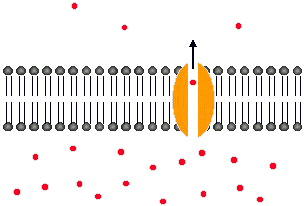
This picture show the molecules getting help across the membrane.  The vocabulary word that best describes this is
a)
diffusion
b)
osmosis
c)
facilitated diffusion
d)
active transport
73.
Which type of Passive Transport is being represented in this picture?
a)
Passive Diffusion
b)
Simple Diffusion
c)
Active Diffusion
d)
Facilitated Diffusion
74.
When particles move out of a cell through facilitated diffusion, the cell ____________.
a)
Gains energy
b)
Uses energy
c)
Releases energy
d)
Does not use energy
75.
This cell organelle helps organisms maintain homeostasis by controlling what substances may enter or leave cells.
a)
vacuole
b)
nucleus
c)
cell membrane
d)
cell wall
76.
Osmosis is the diffusion of __________.
a)
water
b)
glucose
c)
air
d)
passive transport
77.
How is diffusion (left) different from the process on the right?
a)
 Diffusion takes place due to osmotic pressure. 
b)
Diffusion requires cellular energy for the transfer of molecules.
c)
Diffusion requires protein channels as a passage-way for particles
d)
Diffusion transfers particles from an area of high to low concentration. 
78.

Describe the movement of molecules going through the proteins in the illustration.

a)

Molecules are moving from a higher concentration to a lower concentration.

b)

Molecules are moving from a lower concentration to a higher concentration.

c)

Molecules are moving from a higher concentration to a lower concentration and then from a lower to higher concentration.

d)

Molecules are moving from a lower concentration to a higher concentration and then from a higher concentration to a lower concentration.

79.
The cellular process in which materials are moved across a membrane from an area of low concentration to an area of high concentration is called
a)
Osmosis
b)
Simple Diffusion
c)
Active Transport
d)
Passive Transport 
80.
What does “high concentration area” mean?
a)
Spread out
b)
Tightly packed together
c)
Uncrowded
d)
Spacious
81.
When particles move from areas of high concentration to areas less concentrated, this has taken place.
a)
diffusion
b)
mitosis
c)
endocytosis
d)
photosynthesis
82.
What process occurs when WATER diffuses across a membrane?
a)
endocytosis
b)
mitosis
c)
osmosis
d)
nuclear fission 
83.
Which diagram best shows the end result of diffusion?
a)
F
b)
G
c)
H
d)
J
84.
 In the given scenario what will happen?  An egg with a dissolved shell is placed in pure water for 48 hours.
a)
Water will move in and out of the cell equally, and the cell with neither shrink nor swell.
b)
The egg will gain water and swell.
c)
The egg will lose water and shrink.
85.
The picture  is an example of _________________.
a)
isotonic
b)
diffusion
c)
osmosis
d)
active transport
86.
In this given scenario, corn syrup is hypertonic to an egg with a dissolved shell. What will happen to the egg when it is place in corn syrup?
a)
It will stay the same.
b)
It will swell- get bigger.
c)
It will shrink- get smaller.
87.
What does selectively-permeable mean?
a)
The cell controls what passes in and out of the cell
b)
Nothing gets through
c)
The cell lets only large substances through
88.
 An animal cell placed in a hypertonic (salty) solution will
a)
Stay the same
b)
Shrink- get smaller
c)
Swell- get bigger
89.
 If a cell containing 5% salt is placed into a glass of water with 20% salt, the water is _______ compared to the cell.
a)
hypertonic-
b)
hypotonic
c)
isotonic
90.
The cell below is in a _________ solution.
a)
Hypotonic
b)
Hypertonic
c)
Isotonic
91.
The cell below is in a _____________ solution.
a)
Hypertonic
b)
Hypotonic
c)
Isotonic
92.
This occurs when the molecules are the same throughout. 
a)
homeostasis 
b)
diffusion 
c)
active transport 
d)
equilibrium 
93.
Which form of active transport is being shown?
a)
Facilitated Diffusion
b)
Exocytosis
c)
Endocytosis
d)
Protein Pumps
94.
Which type of transport requires an input of energy?
a)
Passive Transport
b)
Osmosis
c)
Simple Diffusion
d)
Active Transport
95.
Which is NOT a form of active transport?
a)
Endocytosis
b)
Osmosis
c)
Exocytosis
d)
Pinocytosis
96.
When cells take in a liquid through active transport, what is it called?
a)
Exocytosis
b)
Phagocytosis
c)
Pinocytosis
d)
Osmosis
97.
Which form of active transport is being shown?
a)
Pinocytosis
b)
Endocytosis
c)
Exocytosis
d)
Osmosis
98.
What is the difference between active and passive transport?
a)
Active does not need energy and passive uses ATP (energy)
b)
Active uses ATP (energy) and passive does not need energy
c)
Active stores transport proteins and passive releases 
d)
Active uses hormones and passive does not 
99.
My cells are Shriveled!    What state are my cells in?
a)
Hypertonic
b)
Hypotonic
c)
Isotonic
d)
Diffusion 
100.
When moving particles AGAINST their concentration gradient, this is called?
a)
Passive Transport
b)
Osmosis
c)
Active Transport
d)
Facilitated Diffusion
101.
If the question asks about something being PUMPED, I will look for an answer about?
a)
Passive Transport
b)
Active Transport
c)
Facilitated Diffusion
d)
Osmosis
102.
A person with swollen gums rinses his mouth with warm salt water, and the swelling decreases.  What has occurred?
a)
The water in his gums moved from high to low concentration
b)
The water in his gums moved from low to high concentration
c)
The water in his gums move in and out at equal rates. 
103.
A solute traveling DOWN its concentration gradient using a protein channel does this by ________.
a)
Facilitated diffusion
b)
Diffusion
c)
Osmosis
d)
Endocytosis
104.
Which way is the water moving in this cell?
a)
The water level will increase on the right side
b)
The water level will increase on the left side
c)
The water level on both sides will increase
d)
The water level on both sides will decrease
105.
My cells are in an isotonic solution, and are in a constant internal environment.  What is this called?
a)
Homeostasis
b)
Respiration
c)
Evolution
d)
Diffusion
106.
Passive transport requires no
a)
concentration gradient
b)
protein channels
c)
molecules
d)
energy
107.
The cell membrane is solid and rigid.
a)
true
b)
false
108.
Engulfs large molecules inside the membrane and uses energy
a)
exocytosis
b)
endocytosis
c)
protein channel 
109.
Particles like glucose and amino acids are too large to enter through the membrane.
a)
active transport
b)
passive transport
c)
facilitated diffusion
d)
diffusion
110.
Particles move from high to low.
Doesn't need energy
a)
passive transport
b)
facilitated transport
c)
active transport
111.
What is the function of cholesterol in the cell membrane?
a)
make the membrane thicker
b)
make the membrane more porous
c)
connect the proteins together
d)
make the membrane more stable
112.
Placing a cell containing 10% salt  into a solution containing 15% salt will cause the cell to
a)
shrink
b)
 swell
c)
stay the same
113.
"Cell drinking"
a)
Phagocytosis
b)
Pinocytosis
114.
"Cell eating"
a)
Phagocytosis
b)
Pinocytosis
115.
Endocytosis and exocytosis are examples of bulk transport. Which one carries molecules INTO the cell?
a)
Endocytosis
b)
Exocytosis
116.
All cells have a cell wall.
a)
True
b)
False
117.
All cells have a cell membrane. 
a)
True
b)
False
118.
The cell membrane is made mostly of
a)
phospholipid monolayer and proteins
b)
phospholipid bilayer and proteins
c)
proteins and carbohydrates bilayer
d)
triglycerides and carbohydrates
119.
When the concentration of solutes or solvent is the same on both sides of the membrane, molecules will still continue to move at equal rates across the membrane. 
a)
True
b)
False