wayground logo

Free Printable Worksheets

Font size

S
M
L
XL
Worksheets

Biology

Total questions: 115

Worksheet time: 58mins

Name
Class
Date
1.
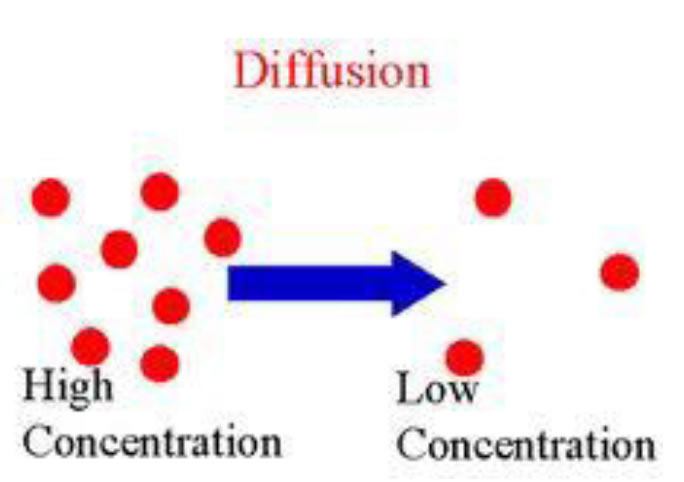
Movement of anything from an area of high concentration to low concentration.
a)
Diffusion
b)
Hypotonic
c)
Isotonic
d)
Passive Transport
2.

The following features are found only in the plant cell

a)

Lysosome

b)

Cell wall

c)

Chloroplast

d)

Central vacuole

3.

The animal that is hunted and killed for food.

a)

Decomposer

b)

Predator

c)

Scavenger

d)

Prey

4.
Which term refers to the process by which individuals that are better suited to the environment survive and reproduce therefore passing down their genes to their offspring? 
a)
Evolution 
b)
Variation 
c)
Adaptation
d)
Natural Selection 
5.
The amount of energy that usually transfers from one trophic level to the next...
a)
10%
b)
20%
c)
80%
d)
50%
6.
According to the diagram, when did the common ancestor of giant pandas and spectacled bears exist? 
a)
5-10 mya
b)
10-15 mya
c)
15-20 mya
d)
20-25 mya
7.
Look at the image.  Which scientist is responsible for this experiment?
a)
Pasteur
b)
Griffith
c)
Redi
d)
Virchow
8.
Which scientist looked at cork under a microscope and labeled the little rooms he saw, 'cells?'
a)
Hooke
b)
Leeuwenhoek
c)
Schwann
d)
Schleiden
9.
Osmosis is a form of ______________. 
a)
Passive Transport
b)
Active Transport
10.
Movement of particles from high to low concentration. 
a)
Passive Transport
b)
Active Transport
11.
a)
Passive Transport
b)
Active Transport
12.
Low to High
a)
Passive Transport
b)
Active Transport
13.
Osmosis is a form of ______________. 
a)
Passive Transport
b)
Active Transport
14.

The cytoskeleton is important because

a)

It gives the cell its shape

b)

It strengthens the cells

c)

It helps the cells move and divide

d)

All of the above

15.

The following features are found only in the plant cell

a)

Lysosome

b)

Cell wall

c)

Chloroplast

d)

Central vacuole

16.

The following is found inside the nucleus

a)

Cytoplasm

b)

DNA

c)

Mitochondria

d)

Nucleolus

17.

The nucleus is the

a)

Power house of the cell

b)

Waste collector in the cell

c)

Control center of the cell

d)

protein factory in the cell

18.

The main function of rough ER is

a)

Fat production

b)

Protein production

c)

Breaking down alcohol and drugs

d)

Delivering proteins to Golgi Body

19.

Breaking down alcohol and drug is one job of the

a)

Nucleus

b)

Rough ER

c)

Smooth ER

d)

Golgi apparatus

20.

It is mainly membrane-enclosed spaces stacked on top of each other

a)

Rough ER

b)

Mitochondria

c)

Smooth ER

d)

Golgi Apparatus

21.

It provides the cell with energy

a)

Vesicle

b)

Nucleus

c)

mitochondria

d)

Vacuole

22.

It is the waste collector and recycler in the animal cell

a)

Ribosome

b)

Vesicle

c)

Central vacuole

d)

Lysosome

23.

Centrosome and centrioles play a major role in

a)

Cell movement

b)

Cell division

c)

Cell contraction

d)

Cell membrane

24.

Which of the chambers has the highest pressure?

a)

Right verticle

b)

Left atrium

c)

Left verticle

25.

Which blood vessel carries the deoxygenated blood to the right atrium?

a)

Vena cava

b)

Pulmonary vein

c)

Pulmonary artery

d)

All of them

26.

Which blood vessels carries oxygenated blood from the heart to the whole body?

a)

Vena cava

b)

Aorta

c)

Pulmonary vein

27.

What happen when the ventricles of the heart contract?

a)

The semilunar valve close

b)

The semilunar valve open

c)

The atrioventricular valve open

28.

Which valve action results from an increase in pressure in the atrial of the heart?

a)

The opening of the semilunar valve

b)

The closing of the atrioventricular valve

c)

The opening of the atrioventricular valve

29.

Where does the sino-atrial node, which generates the electrical impulses that coordinate heart-muscle contracted is located in?

a)

Left atrium

b)

Right atrium

c)

Septum

30.

Right atrium and ventricle are separated from the left atrium and ventricle by______________

a)

AV node

b)

SA node

c)

Septum

31.

Where do aorta pump oxygenated blood?

a)

Lungs

b)

Whole body

c)

Brain

32.

What is the function of SA node?

a)

Spread impulse to both atrium

b)

Generate electrical impulse

c)

Spread impulse to AV node

33.

How long does impulse delayed at AV node

a)

0.01s

b)

0.1s

c)

1.0s

d)

0.001s

34.

The cytoskeleton is important because

a)

It gives the cell its shape

b)

It strengthens the cells

c)

It helps the cells move and divide

d)

All of the above

35.

The following features are found only in the plant cell

a)

Lysosome

b)

Cell wall

c)

Chloroplast

d)

Central vacuole

36.

The following is found inside the nucleus

a)

Cytoplasm

b)

DNA

c)

Mitochondria

d)

Nucleolus

37.

The nucleus is the

a)

Power house of the cell

b)

Waste collector in the cell

c)

Control center of the cell

d)

protein factory in the cell

38.

The main function of rough ER is

a)

Fat production

b)

Protein production

c)

Breaking down alcohol and drugs

d)

Delivering proteins to Golgi Body

39.

The main function of rough ER is

a)

Fat production

b)

Protein production

c)

Breaking down alcohol and drugs

d)

Delivering proteins to Golgi Body

40.

It is mainly membrane-enclosed spaces stacked on top of each other

a)

Rough ER

b)

Mitochondria

c)

Smooth ER

d)

Golgi Apparatus

41.

It provides the cell with energy

a)

Vesicle

b)

Nucleus

c)

mitochondria

d)

Vacuole

42.

It is the waste collector and recycler in the animal cell

a)

Ribosome

b)

Vesicle

c)

Central vacuole

d)

Lysosome

43.
Jelly-like substance found inside cell that acts as a medium for chemical reactions within the cell
a)
Nuclear Membrane
b)
Golgi Body
c)
Cytoplasm
d)
Ribosome
44.
"Storage tanks" Can hold food, water or waste for the cell
a)
Ribosomes
b)
Vacuole
c)
Chloroplast
d)
Nucleolus
45.
"Gatekeeper" Separates the cell from the rest of the environment and helps control what passes in and out of the cell.  Semi-permeable: allows some materials to pass through but not all
a)
Cell Wall
b)
Cytoplasm
c)
Mitochondria
d)
Cell Membrane
46.
Rigid outer layer made of cellulose that supports and protects the cell (plant, fungi, and bacterial cells)
a)
Nucleolus
b)
Golgi Body
c)
Cell Wall
d)
Cytoskeleton
47.
gives support and shape to the cell, made of proteins
a)
Cell Wall
b)
Cytoskeleton
c)
Cell Membrane
d)
Nuclear Membrane
48.
The organelle that uses the energy of sunlight to make food for the cell.
a)
Chloroplast
b)
Ribosome
c)
Mitochondria
d)
Nucleus
49.
Contains the Cell's DNA and is a part of the processes of growth, metabolism, and reproduction.
a)
Downy
b)
Nucleus
c)
Cell Wall
d)
Golgi Complex
50.
Which number is the arm in the image?
a)
3
b)
6
c)
9
d)
12
51.
Which number is the ocular lens in the image?
a)
1
b)
7
c)
8
d)
12
52.

What is the role of a ribosome?

a)

Link amino acids together

b)

Bind messenger RNA

c)

Synthesize polypeptides and proteins

d)

Make other ribosomes

53.
Capillary action is the result of adhesion. Which aspect of water is responsible for this?
a)
Nonpolar covalent bonds that enable water to dissolve other substances
b)
Polar covalent bonds that join molecules of water to other substances
c)
Hydrogen bonds between water and another substance
d)
Ionic bonds that enable electrons to flow through water and into another substance
54.
Which of the following properties of water enables it to move from the roots to the leaves of plants?
a)
Water expands as it freezes.
b)
Water is an excellent solvent.
c)
Water exhibits cohesive behavior.
d)
Water moderates temperature.
55.
What property of water allows it to be such a versatile solvent that it is often called the "universal solvent?"
a)
Purity
b)
Polarity and cohesion
c)
High heat capacity
d)
Expansion upon freezing
56.
What two elements make up water?
a)
Helium and oxygen
b)
Hydrogen and oxygen
c)
helium and carbon
d)
oxygen and carbon
57.
What property of water helps to moderate earth's temperature?
a)
adhesion
b)
chohesion
c)
Specific heat capacity
d)
Latent heat of vaporization
58.
Vitamin D can be obtained from _______________. 
a)
Carrots
b)
Wholegrain food
c)
Cereal
d)
Sunlight
59.
Examples of water soluble vitamins are ___________.
a)
Vitamin A & C
b)
Vitamin B & D
c)
Vitamin B & C
d)
VItamin E and K
60.
___________ is needed to heal cuts and wounds and to absorb iron from dark green vegetables. 
a)
Vitamin A
b)
Vitamin B-group
c)
Vitamin C
d)
Vitamin D
61.
_____________ cannot be stored in the body  and gets excreted through urine when not used immediately. 
a)
Water-soluble vitamins
b)
Trace minerals
c)
Fat-soluble vitamins
d)
Major Minerals
62.
Vitamins B and C are considered to be water soluble.
a)
True
b)
False
63.
Nucleotides are made up of a sugar, phosphate, and..?
a)
nitrogenous base
b)
nucleic acid
c)
cholesterol
d)
fatty acid
64.
Which shows the correct complementary base pairing for DNA?
a)
C-A, T-G
b)
A-G, C-T
c)
C-G, U-A
d)
T-A, G-C
65.
Why is DNA important?
a)
it is very small and very complicated
b)
it's in everything
c)
it serves as the blueprint for traits of all living things
d)
because we eat it every day for energy
66.
Non-meat examples of protein include
a)
broccoli, kale, carrots
b)
beans, legumes, eggs
c)
tofu, apples, spinach
67.
_ is/are used to build and repair muscle.
a)
carbohydrates
b)
fiber
c)
protein
d)
fat
68.
eating a lot of high protein meals is really good for you
a)
true
b)
false
69.

Which one reign is prokariotic

a)

Animalia

b)

Fungi

c)

Monera

d)

Protisti

70.

Which organelle produces energy for the cell?

a)

Golgi apparatum

b)

Mithocondrion

c)

Nucleum

d)

Endoplasmic Reticulum

71.

Who used first binomial nomenclature?

a)

Darwin

b)

Linneum

c)

Hopkins

d)

Newton

72.

Which scientist is fundamental for his evolutionary theory?

a)

Monod

b)

Darwin

c)

Hopkins

d)

Einstein

73.

The cytoskeleton is important because

a)

It gives the cell its shape

b)

It strengthens the cells

c)

It helps the cells move and divide

d)

All of the above

74.

The following features are found only in the plant cell

a)

Lysosome

b)

Cell wall

c)

Chloroplast

d)

Central vacuole

75.

The following is found inside the nucleus

a)

Cytoplasm

b)

DNA

c)

Mitochondria

d)

Nucleolus

76.

The nucleus is the

a)

Power house of the cell

b)

Waste collector in the cell

c)

Control center of the cell

d)

protein factory in the cell

77.

It is the waste collector and recycler in the animal cell

a)

Ribosome

b)

Vesicle

c)

Central vacuole

d)

Lysosome

78.

Centrosome and centrioles play a major role in

a)

Cell movement

b)

Cell division

c)

Cell contraction

d)

Cell membrane

79.

Centrosome and centrioles play a major role in

a)

Cell movement

b)

Cell division

c)

Cell contraction

d)

Cell membrane

80.

It is mainly membrane-enclosed spaces stacked on top of each other

a)

Rough ER

b)

Mitochondria

c)

Smooth ER

d)

Golgi Apparatus

81.

It is mainly membrane-enclosed spaces stacked on top of each other

a)

Rough ER

b)

Mitochondria

c)

Smooth ER

d)

Golgi Apparatus

82.

It is mainly membrane-enclosed spaces stacked on top of each other

a)

Rough ER

b)

Mitochondria

c)

Smooth ER

d)

Golgi Apparatus

83.
Movement of anything from an area of high concentration to low concentration.
a)
Diffusion
b)
Hypotonic
c)
Isotonic
d)
Passive Transport
84.
A solution that contains more dissolved substances than the cell it surrounds.  Water leaves the cell. Cell shrinks.
a)
Exocytosis
b)
Osmosis
c)
Hypertonic
d)
Passive transport
85.
Movement of particles into the cell that does not require energy.  From low to high.
a)
Facilitated Diffusion
b)
Osmosis
c)
Isotonic
d)
Active transport
86.
Movement of water from an area of high concentration to low concentration.  Diffusion of water.
a)
Exocytosis
b)
Osmosis
c)
Hypotonic
d)
Isotonic
87.
Movement of particles into a cell that does not require energy.  From high to low.
a)
Passive transport
b)
Hypotonic
c)
Isotonic
d)
Endocytosis
88.
Process by which very large particles are brought into the cell by the formation of vacuoles.
a)
Isotonic
b)
Hypotonic
c)
Exocytosis
d)
Endocytosis
89.
Solution that contains the same amount of dissolved substances as the cell it surrounds.  No water movement. Shape stays the same.
a)
Hypotonic
b)
Isotonic
c)
Diffusion
d)
Endocytosis
90.
Movement of very large particles out of the cell through the binding of vacuoles to the plasma membrane.
a)
Diffusion
b)
Passive transport
c)
Active transport
d)
Exocytosis
91.
Solution that contains less dissolved substances than the cell it surrounds.  Water enters the cell. Cell swells up.
a)
Exocytosis
b)
Isotonic
c)
Hypotonic
d)
Active transport
92.
Movement of particles from high to low through a transport protein.  Form of passive transport.
a)
Facilitated diffusion
b)
Active transport
c)
Endocytosis
d)
Hypotonic
93.

This occurs when organisms try to get the same resources.

a)

Symbiosis

b)

Competition

c)

Predation

d)

Parasitism

94.

A relationship in which one animal hunts, kills and eats another.

a)

Symbiosis

b)

Mutualism

c)

Parasitism

d)

Predation

95.

The animal that is hunted and killed for food.

a)

Decomposer

b)

Predator

c)

Scavenger

d)

Prey

96.

A close relationship between two different species of organisms living together.

a)

Mutualism

b)

Symbiosis

c)

Competition

d)

Commensialism

97.

A symbiotic relationship in which both species benefit.

a)

Mutualism

b)

Commensialism

c)

Parasitism

d)

Predation

98.

A symbiotic relationship in which on species benefits without benefiting or harming the other organism.

a)

Commensialism

b)

Competition

c)

Parasitism

d)

Mutualism

99.

A symbiotic relationship in which one species benefits by harming another.

a)

Competition

b)

parasitism

c)

commensialism

d)

mutualism

100.

A dog and a tick are examples of which symbiotic relationship?

a)

Predator

b)

mutualism

c)

parasitism

d)

commensialism

101.

An owl and a mouse are examples of which symbiotic relationship?

a)

parasitism

b)

mutualism

c)

commensialism

d)

predator/prey

102.

A clownfish lives in a sea anemone. The anemone is not hurt, but the clownfish can live in its safety. This is an example of what symbiotic relationship?

a)

Mutualism

b)

commensialism

c)

predator

d)

parasitism

103.

The process of transmission of genes from parents to offspring is called.....

a)

Genetics

b)

Heredity

c)

Evolution

d)

Genesis

104.

Variations

a)

Combination of new characters

b)

New Characters

c)

Combination of new characters Of offspring

d)

All the above

105.

Find homozygous

a)

TT

b)

Tt

c)

tt

d)

TT and tt

106.

Heterozygous

a)

Tt

b)

TT

c)

tt

d)

None

107.

Characters are controlled by......

a)

Genes

b)

Chromosomes

c)

DNA

d)

All the above

108.

The study of genes

a)

Heredity

b)

Evolution

c)

Genetics

d)

All the above

109.

Chromosomes are present in....

a)

Nucleus

b)

Nuclear

c)

Neurons

d)

Nucleolus

110.

The tread like structure present on the chromosomes are called

a)

DNA

b)

Genes

c)

DNA and genes

d)

None

111.

Genetically constitutional structure of the organism is known as....

a)

Genotype

b)

Phenotype

c)

Homologous

d)

Heterozygous

112.

Governour of the offspring

a)

Genes

b)

Chromosomes

c)

Chromatin

d)

Nucleolus

113.

Heterozygous

a)

Tt

b)

TT

c)

tt

d)

None

114.
All cells are surrounded by a thin, flexible barrier called a(n)
a)
electron microscopy
b)
cell wall
c)
cell membrane
d)
photo cell
115.
_____ are cells that enclose their DNA in nuclei.
a)
Phototophylites
b)
Prokaryote
c)
Eukaryote
d)
LocoKaryotes