wayground logo

Free Printable Worksheets

Font size

S
M
L
XL
Worksheets

Biology Final Exam Review

Total questions: 110

Worksheet time: 2hrs 51mins

Name
Class
Date
1.

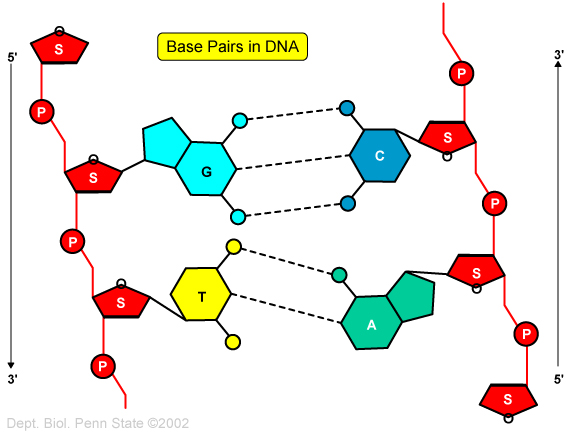
In DNA, cytosine always pairs with

a)

guanine

b)

uracil

c)

thymine

d)

adenine

2.

Vestigial structures show

a)

how an ancestor may have lived

b)

how old a fossil is

c)

what the organism is not related to

d)

usefulness in the organism that has it

3.

DNA is made up of phosphates, sugars, and

a)

proteins

b)

lipids

c)

bases

d)

iodine

4.

A red flower bred to a white flower produces red and white spotted flowers. This is an example of

a)

incomplete dominance

b)

recessive genes

c)

epistasis

d)

co-dominance

5.

The amount of energy expected to be transferred from one trophic level to another is ___?

a)

1%

b)

10%

c)

90%

d)

100%

6.

Identify the cellular organelle that the process of photosynthesis occurs in:

a)

mitochondria

b)

chloroplast

c)

nucleus

d)

vacuole

7.

Identify the gas that is an input (reactant) of photosynthesis:

a)

oxygen

b)

Water

c)

carbon dioxide

d)

nitrogen

8.

Identify the cellular organelle that the process of cellular respiration occurs in:

a)

mitochondria

b)

chloroplast

c)

nucleus

d)

golgi

9.

Which of the following levels of organization BEST represents the sequence from smallest to largest?

a)

Cell, tissue, organism, organ

b)

Cell, organism, organ, tissue

c)

Cell, tissue, organ, organ system

d)

Cell, organism, tissue, organ system

10.

A gene is_______________________.

a)

located only in sex cells

b)

a whole chromosome

c)

a section of DNA that codes for a trait

d)

not expressed in the dominant form

11.

The diagram shows homologous chromosomes during prophase I of meiosis. Which of the following correctly describes the process being illustrated?

a)

Segregation of sister chromatids

b)

Mutation in which the DNA content of the gene is altered

c)

Crossing over in which alleles are exchanged

d)

Condensation and segregation of alleles
12.
Nitrogenous bases are joined by which type of bond?
a)
polar bonds
b)
ionic bonds
c)
covalent bonds
d)
hydrogen bonds
13.
Which is the correct phenotype for this organism?
a)
BB
b)
blue
c)
green
d)
bb
14.
What are the products of photosynthesis?
a)
glucose + water
b)
glucose + oxygen
c)
oxygen + water
d)
oxygen + carbon dioxide
15.
1. ___ combine to form DNA.
2. ___ combine to form proteins.
a)
1. amino acids
2. nucleotides
b)
1. sugars
2. amino acids
c)
1. nucleotides
2. amino acids
d)
1. lipids
2. nucleotides
16.
Scientifically, what causes cancer?
a)
exposure to chemicals
b)
poor diet
c)
genetics
d)
uncontrollable cell growth
17.

Cells that contain a nucleus and other membrane bound organelles are called:

a)

Prokaryotic

b)

Eukaryotic

c)

Simple

d)

Bacteria

18.

Select all cell organelles that are found ONLY in plant cells.

a)

Cell Wall

b)

Central Vacuole

c)

Cell Membrane

d)

Chloroplast

e)

Golgi Apparatus

19.

A cell has a cell wall, ribosomes, but NO nucleus. What type of cell is it?

a)

Plant Cell

b)

Bacteria Cell

c)

Animal Cell

20.

What cell organelle is responsible for synthesizing proteins?

a)

Nucleus

b)

Ribosome

c)

Flagella

d)

Mitochondria

21.

What makes up a nucleotide?

a)

Sugar

b)

Polymer

c)

Nitrogen Base

d)

Polypeptide

e)

Phosphate

22.

What is the complementary strand of the DNA sequence ATA GCC AGC AAG? (Include spaces)

(a)  

23.

Which nitrogen base in found only in mRNA?

a)

Thymine

b)

Lysine

c)

Uracil

d)

Cytosine

24.

RNA and DNA are both made up of building blocks called...

a)

Cells

b)

Proteins

c)

Nucleotides

d)

Atoms

25.

Every 3 nucleotides codes for an

a)

Codon

b)

Amino Acid

c)

Protein

d)

Polypeptide

26.

Three nucleotides on tRNA are called an

a)

Codon

b)

Codes

c)

Anticodon

d)

Amino Acid

27.

What 3 observations make RNA different from DNA?

a)

Single-stranded

b)

An acid

c)

Contains Uracil

d)

Ribose sugar

e)

Located in the nucleus

28.

The process where the better adapted organisms survive to pass traits along to offspring.

a)

Evolution

b)

Natural Selection

c)

Extinction

d)

Artifical Selection

29.

Why are advantageous traits more likely to be passed onto offspring?

a)

Because they are more likely to survive and reproduce.

b)

Because they come from dominant genes.

c)

Because they come from recessive genes.

d)

Because the trait is an acquired trait.

30.
A testable explanation to a problem that has not yet been tested. 
a)
data
b)
theory
c)
hypothesis
d)
fact
31.
This variable in an experiment is the one being changed by the scientist. 
a)
dependent variable
b)
independent variable
c)
data
d)
control group
32.
An experiment is performed on plants to see how different liquids affect plant growth. Each plant in the experiment is given a different liquid; water, apple juice, or milk. Each plant has the same amount of soil, sunlight, and listens to the same music. In this investigation, the independent variable is ...
a)
The type of plant
b)
The amount of sunlight
c)
The type of music
d)
The type of liquid
33.
Nick wanted to see how high an ice cube would float in different temperatures of water. Identify the DEPENDENT variable
-Amount of water
-Height of Ice cube
-Temperature the ice cube was at its highest height
-Temperature of the water
-Size of the ice cube
a)
Amount of water 
b)
Height of Ice cube
c)
Temperature the ice cube was at its highest height 
d)
Size of the ice cube
34.
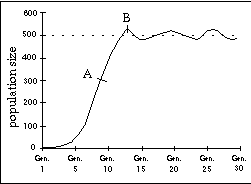
What is the carrying capacity of the graph?
a)
around 500
b)
more than 500
c)
less than 500
d)
around 600
35.
What is the ultimate ORIGINAL source of energy for living things
a)
Sugar
b)
Sun
c)
Moon
d)
Carbon Dioxide
36.
What are the reactants in the equation for cellular respiration?
a)
oxygen and lactic acid
b)
carbon dioxide and water
c)
glucose and oxygen
d)
water and glucose
37.
What is the correct equation for cellular respiration?
a)
6O2 + C6H12O6 -> 6CO2 + 6H2O + Energy
b)
6O2 + C6H12O6 + Energy -> 6CO2 + 6H2O
c)
6CO2 + 6H2O -> 6O2 + C6H12O6 + Energy
d)
6CO2 + 6H2O + Energy -> 6O2 + C6H12O6
38.

Based on this graph, which of the following statements is true?

a)

The anole weighs 2.5 grams after 3 days of observation

b)

The mass of the anole increased by 2.5 grams in 3 days

c)

The anole weighs 2.3 grams after 3 days

d)

The mass of the anole increased by 2.7 grams during the experiment
39.
In recent years "SuperBugs" (bacteria that aren't effected by antibiotics) are becoming more and more common. How could natural selection explain this?
a)
Superbugs survive antibiotics and reproduce
b)
Antibiotics cause bacteria to become superbugs
c)
We have always had the same amount of superbugs; modern media just discusses them more.
d)
There is no reliable data on the origin of super bugs.
40.
Why do peppered moths tend to be the same color as the trees on which they live?
a)
The coloring goes along with tasting like the tree. 
b)
It keeps the moth the same temperature as the tree. 
c)
It makes the moths faster than the birds
d)
It makes the moths harder to see.
41.
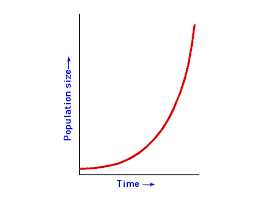
What type of growth is shown in the diagram?
a)
exponential growth
b)
logistic growth 
c)
predator-prey cycle
d)
boom-bust curve
42.

Living things are made up of units called

a)

DNA

b)

Cells

c)

Homeostasis

d)

Seeds

43.
If reaction starts with 20g of reactants it should produce 
a)
a total of 40g of products
b)
a total of 10g of products
c)
a total of 80 g of products
d)
a total of 20g of products
44.
Which biomolecule includes fats, such as triglycerides, oils, waxes, and steroids (cholesterol); insoluble in water; provides energy storage, insulation, part of cell membrane, and hormones 
a)
Nucleic Acid
b)
Lipids
c)
Carbohydrate
d)
Protein
45.
Lipids are made up of which of the following?
a)
glycerol and fatty acids tails
b)
glycerol and monolipids
c)
fatty acids and phosolipids
d)
amino acids and nucleotides
46.
Which process produces the most ATP per molecule of glucose?
a)
lactic acid fermentation
b)
aerobic respiration
c)
alcoholic fermentation
d)
all are about the same
47.
the sequence of growth and division of a cell
a)
cell cycle
b)
mitosis
c)
anaphase
d)
cancer
48.
All existing cells are produced by other
a)
living cells
b)
dead cells
c)
atom cells
d)
animal cells
49.
During what phase of the cell cycle is DNA replicated?
a)
G1 phase
b)
S phase
c)
G2 phase
d)
M phase
50.
What does heterozygous mean?
a)
An organism that has the same genes for a trait (TT or tt)
b)
An organism that has different genes for a trait (Tt)
c)
When neither gene is fully dominant; offspring is a mixture of both
d)
the different forms of a trait (hair color--> brown, blonde, red
51.
A heterozygous yellow pea plant's genotype would be:
a)
YY
b)
yy
c)
Yy
d)
Yg
52.
Which process and type of resulting cells are represented?
a)
mitosis, gametes
b)
mitosis, body cells
c)
meiosis, gametes
d)
meiosis, body cells
53.
Which of the following cell types is formed by meiosis?
a)
muscle cells
b)
skin cells
c)
sperm cells
d)
blood cells
54.
What is one advantage of sexual reproduction?
a)
offspring are identical to parents
b)
offspring are resistant to viruses
c)
offspring are born live, rather thna from eggs
d)
offspring inherit a wider variety of genetic information
55.
The inherited combination of alleles is known as the offspring's
a)
heredity
b)
phenotype
c)
genotype
d)
redigree
56.
The man who studied genetics and came up with genetics is
a)
Watson
b)
Crick
c)
Mendel
d)
Darwin
57.
the passing of genetic traits from parent to offspring.
a)
heredity
b)
trait
c)
gene
d)
allele
58.
Which of the following best describes a DNA molecule?
a)
double helix
b)
contains ribose
c)
made of amino acids
d)
contains Uracil
59.
A process in which DNA has the unique ability to make an exact copy of itself.
a)
Replication
b)
Translation
c)
Transcription
60.
Who were the first guys to build a model of a DNA molecule?
a)
Larry, Moe, and Curley Joe
b)
Watson and Crick
c)
Watson and Holmes
d)
Superman and Batman
61.
RNA is read in sections called:
a)
Triplets
b)
Genes
c)
Codons
d)
Genes
62.
The enzyme that produces RNA in Transcription is called
a)
RNA Polymerase
b)
DNA Polymerase
c)
Transcriptase
d)
RNA Intrase
63.
Translation is a process in eurkaryotic cells takes place in the:
a)
Cytoplasm
b)
Nucleus
c)
Nucleolus
d)
Golgi Bodies
64.
The process to go from mRNA to a protein is called ____
a)
transcription
b)
rRNA
c)
replication
d)
translation
65.
What characteristic did Darwin observe about the finches on the Galapagos Islands?
a)
Their feathers 
b)
Genotypes 
c)
Their beaks
d)
Their body sizes
66.
The scientific name for an organism is made from the:
a)
class and family name
b)
genus and species name
c)
domain and kingdom name
d)
kingdom and phylum name
67.
A dichotomous key for trees is provided. Hikers found a tree that has large brown cones and single sharp needles. What species of tree have the hikers found?
a)
Juniper
b)
Pine
c)
Spruce
d)
Fir
68.
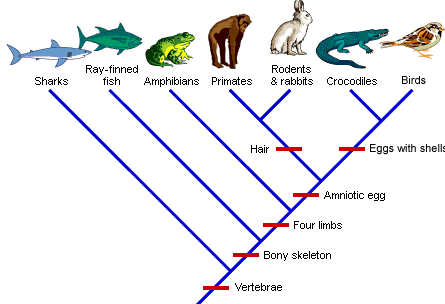
According to this cladogram, sharks are MOST closely related to which organism? 
a)
Amphibians
b)
Ray finned fish
c)
Crocodiles
d)
Birds
69.
Who first proposed binomial nomenclature as a way of classifying organisms?
a)
Carolus Linnaeus
b)
Carl's Jr.
c)
Charles Darwin
d)
Henry Groseclose
70.
What are the 8 levels of classification of living things from most general to most specific?
a)
domain, kingdom, phylum, class, order, family, genus, species
b)
domain, kingdom, phylum, class, order, family, genius, species
c)
domain, kingdom, phamily, class, order, family, genus, species
d)
domain, king, phillip, class, order, family, genus, species
71.
The sex chromosomes of a male.
a)
XX
b)
YY
c)
XY
72.

Tiny hair-like structures that protozoa use for movement are

a)

cilia

b)

flagella

c)

pseudopods

d)

pilli

73.

A population can evolve over multiple generations.

a)

true

b)

false

74.

Any living factor in an organism's environment (food, predation, disease, etc).

a)

biotic factor

b)

niche

c)

food web

d)

autotroph

75.

Organism that captures energy from sunlight or inorganic substances to produce its own food-- aka the producers.

a)

symbiosis

b)

herbivore

c)

autotroph

d)

population

76.

Each step in a food chain or food web. Also each level in the energy pyramid.

a)

ecology

b)

habitat

c)

biodiversity

d)

trophic level

77.

Diagrammed family history used to study inheritance patterns through several generations.

a)

codominance

b)

carrier

c)

karyotype

d)

pedigree

78.

Alternative form that a single gene may have for a particular trait.

a)

allele

b)

autosome

c)

homozygous

d)

gamete

79.

If a homozygous dominant parent is crossed with a homozygous recessive parent, what percent of the offspring are heterozygous?

a)

25%

b)

50%

c)

75%

d)

100%

80.

Tall pea plants are dominant to short pea plants. If a homozygous dominant plant is crossed with a homozygous recessive plant, the parents are ____.

a)

TT x TT

b)

TT x tt

c)

tt x tt

d)

Tt x Tt

81.

Transcription & translation are the steps of _______.

a)

replication

b)

evolution

c)

the energy pyramid

d)

protein synthesis

82.

A permanent change in a cell's DNA is called a ______.

a)

base

b)

carcinogen

c)

mutation

d)

prokaryote

83.
Green and brown algae share many common features. Both have pigments for trapping sunlight and use photosynthesis for energy. Both store their food as sugars. Both have cell walls and plant-like bodies. However, their DNA suggests that they are not even remotely related to one another. Green algae and brown algae show __________________ evolution, since they look similar, but are not close relatives
a)
convergent
b)
divergent
c)
homologous
d)
vestigial
84.

The following is an example of which type of symbiotic relationship? Human eyelashes are home to tiny mites that feast on oil secretion and dead skin. Without harming us, up to 20 mites may be living in one eyelash follicle.

a)

Parasitism

b)

Mutualism

c)

Predation

d)

Commensalism

85.
If the diploid number of an organism is 36, how many chromosomes are found in a gamete?
a)
36
b)
72
c)
18
d)
Not enough information
86.
Transcribe this sequence:  ACTGTTC
a)
UGACAAG
b)
TGACAAG
c)
TGUCUUG
d)
AGUCUUG
87.
As you go to higher trophic levels....
a)
Amount of energy available decreases
b)
Amount of biomass increases
c)
Number of organisms increases
d)
Size of organisms decreases
88.
Cell membrane allows nutrients to enter the cell and wastes to leave but prevents unwanted materials from entering or needed things from leaving.  What does this describe?
a)
Selective permeability
b)
Metabolism
c)
Respiration
d)
Photosynthesis
89.
The process of turning nitrogen gas into solid nitrogen (ammonia).
a)
Transpiration
b)
Mutualism
c)
Denitrification
d)
Nitrogen Fixation
90.
These special cells have the ability to become any type of cell.
a)
Cancer Cells
b)
Blood Cells
c)
Nerve Cells
d)
Stem Cells
91.
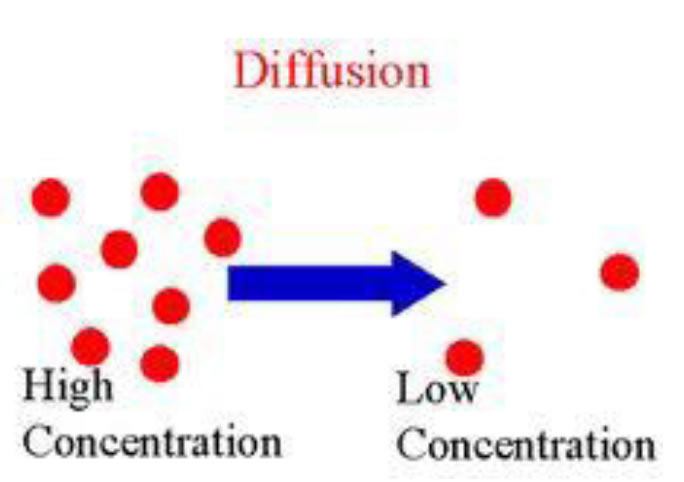
Movement of particles from high to low concentration. 
a)
Passive Transport
b)
Active Transport
92.
What is it called when molecules move across the cell membrane from an area of high concentration to an area of low concentration through a carrier protein?
a)
Diffusion
b)
Osmosis
c)
Active Transport
d)
Facilitated Diffusion
93.
A type of Reproductive Isolation that occurs because organisms have unique mating calls or dances.
a)
Behavioral Isolation
b)
Temporal Isolation
c)
Geographic Isolation
d)
Psychological Isolation
94.
What is the purpose  of an enzyme?
a)
give permission for the reaction
b)
raise activation energy
c)
speed up reactions
d)
control how many reactions occur
95.
Put the following stages of mitosis in order: anaphase, prophase, metaphase, and telophase. 
a)
prophase, metaphase, telophase, anaphase
b)
prophase, anaphase, metaphase, telophase
c)
prophase, metaphase, anaphase, telophase
d)
prophase, telophase, metaphase, anaphase
96.
a)

Cytokinesis

b)

Interphase

c)

Anaphase

d)

Metaphase

97.

This is the practice of producing a genetically identical cell or organism

a)

Cloning

b)

Gel Electrophoresis

c)

Genetic Engineering

d)

DNA Fingerprinting

98.

This is the practice of cutting DNA and separating it by the size of the pieces

a)

Cloning

b)

Gel Electrophoresis

c)

Genetic Engineering

d)

DNA Fingerprinting

99.

This is the practice of choosing individuals of a species to mate based on their desirable characteristics

a)

Bacterial recombination

b)

Natural selection

c)

Genetic modification

d)

Selective breeding

100.
A genome is
a)
part of a chromosome
b)
a gene inserted into a chromosome of bacteria
c)
a sequence of units in a short segment of DNA
d)
the complete sequence of an organism’s DNA  
101.
A gene gun and a virus may both be classified as ____ because they are mechanisms by which foreign DNA may be transferred into a host cell.
a)
bacteria
b)
plasmids
c)
vectors
d)
splicers
102.

Which of the following is used to cut DNA from organisms?

a)

Gel Electrophoresis

b)

Restriction Enzymes

c)

Karyotypes

d)

Haplotypes

103.

A genetically engineered organism that contains a new gene from a different organism is called?

a)

Bacterial

b)

Genetic

c)

Transgenic

d)

Multigenic

104.

Which best describes a controversial issue associated with the use of genetically modified crops?

a)

the use of genetically modified crops to increase potential yield

b)

the short term use of genetically modified crops in famine stricken countries

c)

the development of genetically modified crops which are resistant to herbicides

d)

the long term effects which may arise from the use of genetically modified crops

105.
 This diagram shows the DNA fingerprints of a common ancestor of Deer Species. Which deer species is most related to the common ancestor
a)
2
b)
3
c)
4
106.
Gel electrophoresis separates DNA according to size. Which is true regarding movement of the DNA?
a)
The longest pieces of DNA will move the least distance.
b)
The longest pieces of DNA will move the greatest distance.
c)
The shortest pieces of DNA line up along the middle.
d)
The shortest pieces of DNA line up an equal distance from the middle
107.
Who is the father?
a)
Dad 1
b)
Dad 2
c)
Dad 3 
d)
can not be determined
108.

a photograph or picture of chromosomes grouped in ordered pairs is a ______________

a)

pedigree

b)

Punnett Square

c)

Venn Diagram

d)

Karyotype

109.
What makes this individual's karyotype not normal?
a)
An extra sex chromosome
b)
An extra autosome
c)
A missing sex chromosome
d)
A missing autosome
110.

SELECT ALL THAT APPLY:

a)

Male

b)

Female

c)

No chromosomal abnormalities

d)

Trisomy 21