Worksheets
25/26 A&P Fall Midterm Review
Total questions: 111
Worksheet time: 3570secs
What is the basic unit of structure and function of ALL LIVING organisms?
organism
tissue
cell
organ system
Homeostasis refers to:
internal conditions that change
internal conditions that are stable
external conditions that change
external conditions that are stable
Small structures within cells that carry on specific functions are called _____________.
organelles
tissues
molecules
parasites
The sum of all chemical reactions in the body is called _____________.
metabolism
assimilation
growth
digestion
Which of the following is the most complex level of organization?
cell
organ system
organ
organelle
The study of the structure of the human body is called _______________.
What is formed when cells of the same type join to perform a common task?
Measuring an organ's size would relate more closely to the study of _______________.
Measuring the acid content of the stomach would relate more closely to the science of ______________.
physiology
anatomy
both anatomy and physiology
neither anatomy or physiology
The branch of biology that studies the normal functions of living organisms is called ______________.
homeostasis
anatomy
physiology
none of the above
Which of the following muscle tissue is striated?
Which of the following lists of body organizational terms is in the correct order from smallest to largest?
What type of cartilage covers the ends of bones?
What body cavity houses the lungs?
The doctor told me that I have an abrasion on the lateral aspect of my forearm. Where is the location of the abrasion in layman's terms?
A CT technologist is instructed to perform an anterior and posterior view of the body. Which body plane is the order referring to?
An MRI of the head and neck is ordered to look through the body from the superior aspect of the head inferiorly. What body plane should the MRI be set up to scan?
This organelle's job is to aid in digestion and waste removal inside the cell.
There are a total of ________ bones in the human skeleton.
What is the medical term for the tailbone?
The connective tissue that covers a muscle fascicle is called ______.
What is the medical term for the connective tissue that covers the outside of the muscle?
The contractile units that are repeated along the myofibrils and are the functional unit of muscle contraction are known as _____________.
What is the medical term for the ends of a long bone?
What are the two main types of anatomy?
gross antomy
microscopic anatomy
physical anatomy
pathophysiology anatomy
What structures form the axial skeleton?
What structures form the appendicular skeleton?
What is the role of osteoblasts?
What role do osteoclasts play in bone reconstruction?
How many bones make up the thoracic vertebrae?
Sam was playing soccer and injured one of the ligaments in his knee. What does a ligament do?
The Achilles Tendon is one of the most powerful structures in the musculoskeletal system. What is the function of a tendon?
The hip and shoulder are also known as a ________ joint.
A jumping jack involves two types of movements away from and toward the body. What are these movements in medical terms?
The ankles, knees, elbows and fingers are examples of what type of synovial joint?
What organelle is called the "powerhouse" of a cell because it breaks down glucose and oxygen to produce energy?
Mitochondria
What organelle surrounds a cell providing structure as well as servers as a permeable membrane?
This gel-like fluids fills both plant and animal cells, holding organelles in place and gives the cell its shape. What am I?
The diffusion of water through a selectively permeable membrane is known as _________.
Movement of substances from an area of low concentration to an area of high concentration is called _______.
_____________ is when solutes move with the concentration gradient, not against it.
Failure to maintain homeostasis in the body could result in which of the following?
What are the two types of feedback mechanisms used by the body to maintain homeostasis?
When glucose levels in the blood rise, your brain sends a signal to your pancreas. The pancreas releases insulin, which opens channels in cell membranes to allow glucose to enter the cell, lowering blood sugar levels. This is an example of which Feedback Loop?
What are the two positive feedback loops in the body?
This structure separates the two sections of the ventral cavity.
The armpit is located in this region of the body.
The spinal column is located in this region.
Thoracic region
Vertebral region
The cheeks are located in the ________ region.
Your feet are ________ to your knees.
inferior
superior
anterior
posterior
The nurse was told that the patient's shoulder was proximal to the elbow. In this description what does the term proximal refer to?
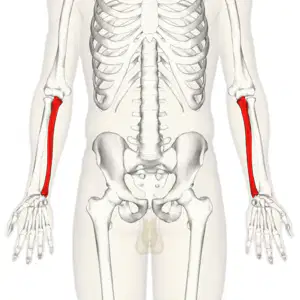
Identify the bone highlighted in the picture.
Clavicle
Ulna
Femur
Humerus

Identify the skeletal bone in the picture highlighted blue
mandible
humerus
cranium
femur

What bone is highlighted?
Femur
Tibia
Fibula
Humerus

What is the name of the bone in green?
Parietal
Occipital
Frontal
Ethmoid

What is the name of the bone in green?
Sphenoid
Parietal
Maxilla
Temporal

What is the name in green?
Parietal
Temporal
Occipital
Squamous

What is the name of this suture?
Lambdoid suture
Occipitomastoid suture
Squamous suture
Sagittal suture
choose the image that shows the Vomer bone.


What is the highlighted area
Lacrimal
Nasal
vomer
zygomatic

What is the highlighted area
Temporal
sphenoid
Parietal
zygomatic

What is the highlighted area
Sagittal Suture
Lambdoid Suture
Coronal Suture
Squamous Suture

What is the highlighted area
Frontal
Parietal
Occipital
Temporal


The highlighted bones are the:
Humerus
Radius
Ulna
Scapula

The highlighted bone is known as the:
Pelvis
Pubis
Sacrum
Coccyx

The bone (in green) is the:
Clavicle
Humerus
Spatula
Scapula

The bone (in red) is known as the:
Clavicle
Collarbone
Scapula
Sternum

The weight-bearing bone of the lower leg:
Femur
Tibia
Fibula
Fibia

This lower leg bone (red) is known as:
Femur
Tibia
Fibula
Tibula

What is the correct name of this bone (in red):
Hyoid
Thymus
Sternum
Breastbone

The highlighted bones are called:
Tarsals
Metatarsals
Phalanges
Feets

which skeletal muscle is represented in the image?
brachioradialis
biceps brachii
biceps femoris
deltoideus

which skeletal muscle is represented in the image?
external obliques
serratus anterior
rectus abdominis
pectoralis major

which skeletal muscle is represented in the image?
gastrocnemius
tibialis anterior
fibularis longus
vastus medialis

which skeletal muscle is represented in the image?
gluteus medius
gluteus maximus
semitendinosus
external obliques

which skeletal muscle is represented in the image?
latissmus dorsi
teres major
infraspinatus
deltoideus

which skeletal muscle is represented in the image?
pectoralis major
serratus anterior
rectus abdominis
deltoideus

which skeletal muscle is represented in the image?
pectoralis major
serratus anterior
rectus abdominis
deltoideus

which skeletal muscle is represented in the image?
sternocleidomastoid
trapezius
zygomaticus
depressor anguli oris

which skeletal muscle is represented in the image?
sternocleidomastoid
trapezius
zygomaticus
depressor anguli oris

which skeletal muscle is represented in the image?
triceps brachii
latissimus dorsi
deltoideus
brachioradialis

What's the name of this muscle?
Pectoral
Deltoid
Bicep
Abdominal

Name this muscle
Gastrocnemius
Quadricep
Gluteus Maximus
Hamstring

Name the highlighted muscle
quadraceps
hamsting
rectus abdominals
deltoid


Identify this muscle
fibularis longus
tibialis anterior
soleus
gastrocnemius


First cervical vertebra; articulates with the head.
What is the sketch that Leonardo DaVici is most famous for in the medical field?
Why was dissecting human bodies was against the law in ancient times?
It was really messy
People believed it was against God's will and they were very suspicious of the afterlife
The way that scientist acquired bodies was inhumane
The government didn't want scientists to know more about how the body worked.
In the year 1286, we have reference to a human dissection being performed to determine the cause of death. Today, this procedure is called a (an) __________
autopsy
funeral
cadaver
criminal act
True or False: The Anatomy Act of 1832 legalized the dissection of cadavers for medical purposes.
True
False
A series of steps used by scientists to solve a problem or answer a question.
What is the top layer of the skin called?
What time is it in military time? 4:35 PM
As per the doctor's instructions, a patient weighs himself at home every week. He reports that he weighed 286 pounds this week. What is his weight in kilograms?
130 kg
128 kg
131 kg
129 kg
The end of mitosis results in ____ cells.
The end of meiosis results in ____ cells.
What is NOT a job of the integumentary system?
protect the body
produce vitamin D
eliminate waste
Circulate the blood
What is the largest organ in the body.
skin
liver
heart
lungs
Which skin layer is only present in thick skin?
stratum corneum
stratum lucidum
stratum spinosum
stratum granulosum
stratum basale (aka: germinativum)
Which of the following lists the stratum of the epidermis from superficial to deep?
What is the softer connective tissue that fills the interior of the ends of most long bones called?
Where does hematopoiesis, the production of blood cells, take place?
Please rate this test using the following choices!! Congratulations you did it!!!
I hope you have an incredible holiday 🤗!!