wayground logo

Free Printable Worksheets

Font size

S
M
L
XL
Worksheets

Fall Final Review

Total questions: 112

Worksheet time: 27hrs 49mins

Name
Class
Date
1.

What are the goals of science?

a)

Tell society what to feel and think

b)

Provide explanations for events in the natural world

c)

Explain religion and philosophy

2.

Science can change and is a continually ongoing process.

a)

True

b)

False

3.
What scientific attitudes help generate new ideas?
a)
Curiosity, skepticism, open-mindedness, and creativity help scientists generate new ideas.
b)
Anger, frustration, and curiosity help generate new ideas.
c)
No one knows what attitudes generate new ideas.
d)
Only creativity helps scientists generate new ideas.
4.
Scientist and other people start with questions and observations that may come from:
a)
Curiosity, skepticism, open-mindedness, and creativity
b)
Practical problems (flooding issue in a coastal area)
c)
New technology (3-D printers)
d)
All of the above
5.
How can an one help insure that an experiment is unbiased and valid?
a)
peer review
b)
multiple graphs
c)
multiple trials, peer review, independent and dependent variables
d)
send a link to a news outlet
6.
The scientific method is used in everyday life to acquire/get information.
a)
True
b)
False
7.
What do you do to test a hypothesis?
a)
Guess
b)
Design an experiment
c)
Create a spreadsheet with data
d)
Publish a scientific paper
8.
This variable in an experiment is the one being changed by the scientist. 
a)
dependent variable
b)
independent variable
c)
data
d)
control group
9.
Dependent variable means
a)
the scientist controls what to test
b)
educated guess
c)
ask a question
d)
what is being measured
10.
There are two types of data. Which type of data involves descriptions that cannot be counted or measured?
a)
qualitative
b)
quantitative
11.
In order to be accepted, a scientific theory must be
a)
 widely tested and supported by extensive data
b)
 based on the results of a single experiment
c)
 controversial and cause debate
d)
 in line with all previous historical ideas
12.

A _____ is something in the environment that causes an organism to respond.

a)

stimulus

b)

response

c)

cause

d)

effect

13.
When a baby kitten becomes an adult cat, this is an example of...
a)
energy metabolism
b)
growth and development
c)
response to stimuli
d)
having cells
14.
Your body shivers when you are cold. This is because of the concept of...
a)
homeostasis
b)
heredity
c)
energy metabolism
d)
cellular organization
15.

Living things are made up of units called

a)

DNA

b)

Cells

c)

Homeostasis

d)

Seeds

16.

Living things are based on a universal genetic

code. What molecule is responsible for that code?

a)

RNA

b)

Lipid

c)

Protein

d)

DNA

17.

Maintaining a stable internal

environment is called

a)

homeostasis

b)

equilibrium

c)

balance

d)

evenness

18.

If an organism is made entirely of one cell it is called...

a)

Multicellular

b)

Prokaryotic

c)

Unicellular

d)

Eukaryotic

19.

Reproduction that only involves one parent and all offspring are identical; for example, binary fission of bacteria or amoebas.

a)

Asexual

b)

Sexual

c)

Division

d)

Addition

20.

In the Metric System, which units should be used to measure length

a)

Inches

b)

Centimeters

c)

Feet

d)

Yards

21.

Which is NOT a benefit of the Metric system?

a)

It is universal, so we can share data.

b)

It is more precise.

c)

It is based on 10, so doing math is much easier.

d)

It has fewer units of measurement.

22.

What is the center of an atom called?

a)

The headquarters

b)

The centrometer

c)

The hypothesis

d)

The nucleus

23.

Which subatomic particle does the GREEN( ) circle represent?

a)

proton

b)

neutron

c)

electron

d)

nucleus

24.

Which subatomic particle does the YELLOW(-) circle represent?

a)

proton

b)

neutron

c)

electron

d)

nucleus

25.

Which subatomic particle does the RED(+) circle represent?

a)

proton

b)

neutron

c)

electron

d)

nucleus

26.
How are ionic bonds formed?
a)
Transfer of electrons
b)
Sharing of electrons
27.
How are covalent bonds formed?
a)
Sharing of electrons
b)
Transfer of electrons
28.
Attractions between the negative Oxygen atom of one water molecule and the positive Hydrogen atom of another water molecule are called
a)
Covalent bonds
b)
Ionic bonds
c)
Polar bonds
d)
Hydrogen bonds
29.

When water molecules stick to each other because of the polar attraction between hydrogen and oxygen atoms, it is called ______________.

a)

adhesion

b)

cohesion

c)

specific heat index

d)

properties of water

30.
What word describes when water is attracted to other substances?
a)
cohesion
b)
adhesion
c)
capillary action
d)
surface tension
31.
Large bodies of water do not quickly fluctuate in temperature. Why?
a)
Water is a solvent.
b)
Water has a high heat capacity.
c)
Water acts as a buffer.
d)
Water is non-polar.
32.

In a ______________, one substance is dissolved in another substance.

a)

solution

b)

suspension

c)

colloid

33.

A snow globe would be an example of a __________________.

a)

colloid

b)

solution

c)

suspension

34.
A(n) ______ is a substance with a pH less than 7
a)
Acid
b)
Alkaline
c)
Base
d)
Buffer
35.
A(n) _______ is a substance with a pH greater than 7.
a)
Base
b)
Acid
c)
Buffer
d)
Water
36.
Two examples of carbohydrates are
a)
fatty acids and glycerol
b)
fats and waxes
c)
sugars and starches
d)
amino acids and alcohol
37.
Which group of organic molecules serve as long-term energy storage and make the cell membrane is?
a)
proteins
b)
carbohydrates
c)
lipids
d)
nucleic acids
38.
What is the function of nucleic acids?
a)
store genetic information
b)
store energy (long-term)
c)
store energy (short-term)
d)
build skin, hair, nails, muscles
39.
Proteins are composed of what smaller building blocks?
a)
amino acids
b)
nucleic acids
c)
fatty acids
d)
nucleotides
40.
Enzymes are _________ that __________ chemical reactions.
a)
proteins, slow down
b)
proteins, speed up
c)
lipids, slow down
d)
lipids, speed up
41.
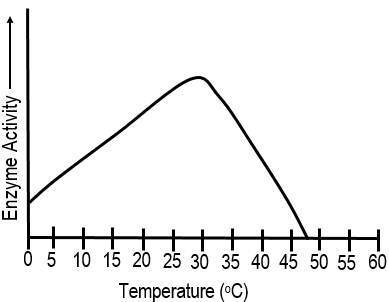
Based on the graph, what temperature does this enzyme work best? 
a)
15 C
b)
40 C
c)
30 C
42.
Letter D...
a)
active site
b)
enzyme
c)
substrate
d)
products
43.
Letter C...
a)
active site
b)
enzymes
c)
substrate
d)
products
44.
Which of the following binds to the active site of an enzyme? 
a)
substrate
b)
product
c)
codon
d)
none of the above
45.

The study of how living things interact in an environment is called

a)

Ecosystem

b)

Biology

c)

Ecology

d)

Zoology

46.
What does biotic mean?
a)
Living
b)
Non living
c)
Man made
47.
Which of the following is biotic?
a)
Building
b)
Apple
c)
Rock
d)
Sun
48.
What does abiotic mean?
a)
Living
b)
Non-living
c)
Man made
49.
All of parts of Earth where life exists including land, water, and the atmosphere: 
a)
biosphere
b)
community
c)
ecosystem
d)
population
50.
A grasshopper feeds on a leaf.  The leaf gets its food through photosynthesis, so it is a(an):
a)
autotroph
b)
heterotroph
c)
secondary autotrophs
d)
cannibal
51.
A grasshopper feeds on a leaf.  The grasshopper is feeding as a(an):
a)
secondary consumer
b)
heterotroph
c)
autotroph
d)
tertiary autotroph
52.
Plants are an example of: 
a)
Producers
b)
Decomposers
c)
Heterotrophs
d)
Consumers
53.

The most common energy source for things on Earth:

a)

Water

b)

Chemicals

c)

Oxygen

d)

Sun

54.

A bacterial cell feeds on chemicals deep in the ocean where there is no light. Its feeding method is:

a)

photosynthesis

b)

primary producer

c)

chemosynthesis

d)

tertiary consumers

55.

________ obtain energy and nutrients by eating plant leaves, roots, seeds, or fruits.

a)

Herbivores

b)

Carnivores

c)

Detritivores

d)

Decomposers

56.

_________kill and eat other animals.

a)

Herbivores

b)

Carnivores

c)

Detritivores

d)

Omnivores

57.
____________ feed chemically by breaking down organic matter.
a)
Detritivores
b)
Omnivores
c)
Decomposers
d)
Carnivores
58.
A series of steps in which organisms transfer energy by eating or being eaten is called a:
a)
food chain
b)
food web
c)
ecosystem
d)
energy triad
59.
_____________ flows through an ecosystem in a one-way stream, from primary producers to various consumers.
a)
Waste
b)
Food
c)
Energy
d)
Sound
60.
A network of feeding interactions is called a:
a)
food chain
b)
food web
c)
energy triad
d)
feeding frenzy
61.

On average, about _______________ of the energy available within one trophic level is transferred to the next level. The rest is lost as waste heat.

a)

10%

b)

20%

c)

50%

d)

90%

62.

Unlike energy, nutrients are recycled through ecosystems.

a)

True

b)

False

63.
Which of the following are considered decomposers in a food web?
a)
Plants and animals
b)
Bacteria and Fungi
c)
Soil and plants
d)
Soil and animals
64.

When water returns to the Earth's surface, it is called:

a)

Transpiration

b)

Condensation

c)

Precipitation

d)

Evaporation

65.
Nitrogen fixation & denitrification are carried out mainly by: 
a)
Bacteria
b)
Humans
c)
Plants
d)
Animals
66.

A habitat is ___________________.

a)

the place or kind of place in which an animal or plant naturally lives.

b)

is how plants produce their own food.

c)

is an animal that only eats meat.

d)

the place where only one animal lives.

67.

What is a niche?

a)

Where an organism lives.

b)

An organisms role, or job, within its habitat.

c)

What an organism eats.

d)

Knights who say funny words.

68.

No two species can occupy the same niche, at the same place, and the same time.

a)

Competitive Exclusion Principle

b)

Limiting Exclusion Theory

c)

Competitive Limiting Principle

d)

Limiting Competitive Theory

69.

In this photo, two lions are fighting for a resource. What type of competition is this?

a)

Interspecific competition

b)

Intraspecific competition

c)

Machismo

d)

Competitive exclusion principle

70.

Many different organisms are competing for the zebra as food. What type of competition is this?

a)

Intraspecific competition

b)

Interspecific competition

71.

This photo is showing the same ecosystem in two scenarios: one with the sea otter and one without the sea otter. What term best describes the sea otter?

a)

Niche

b)

Climax community

c)

Pioneer species

d)

Keystone species

72.

One organism hunts and eats another organism.

a)

predation

b)

mutualism

c)

carnivore

d)

parasitism

73.

The relationship between two different species living close together

a)

Biosphere

b)

Ecology

c)

Symbiosis

d)

Environment

74.
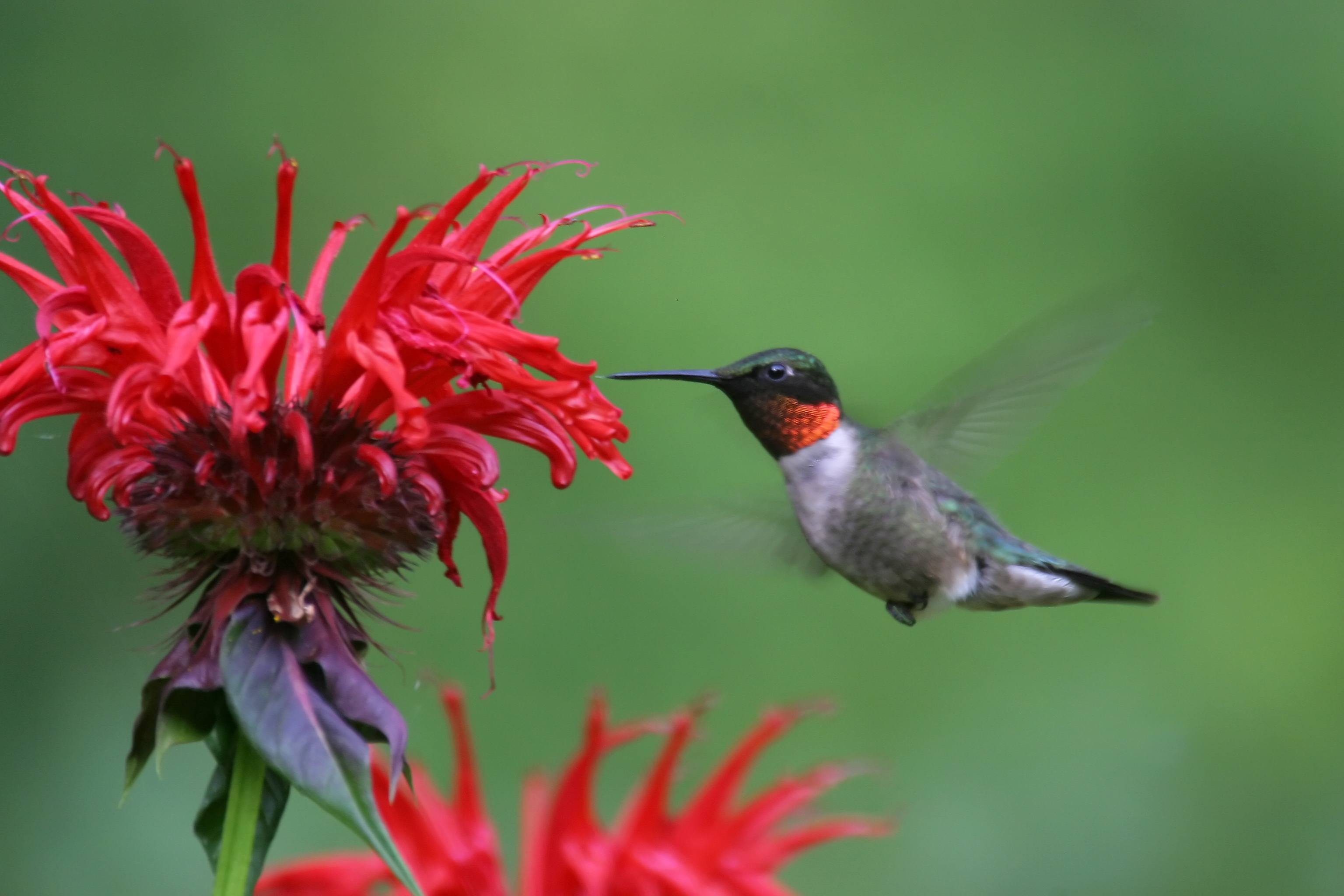
What type of symbiosis?  Hummingbirds feed on nectar from flowers.  The flowers are pollinated by hummingbirds as they move from flower to flower.
a)
commensalism
b)
mutualism
c)
parasitism
d)
predation
75.

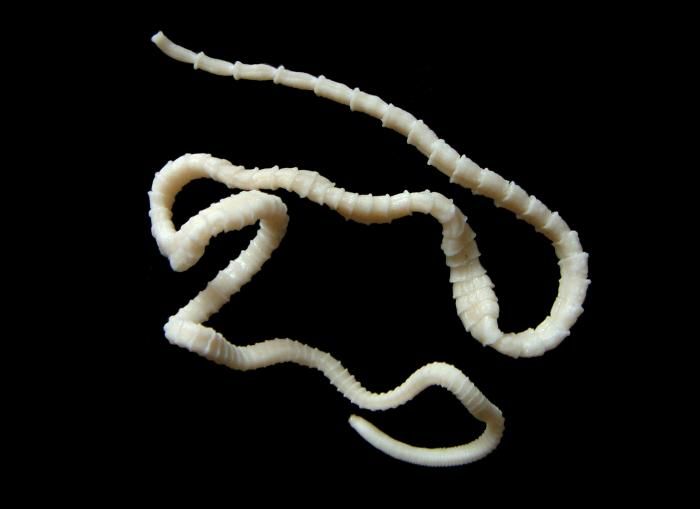
A tapeworm lives in the intestine of a cat absorbing nutrients through its skin. A tapeworm and a cat have this type of relationship.

a)

mutualism

b)

parasitism

c)

commensalism

d)

competition

76.

Which symbols best describe parasitism?

a)

+,+

b)

+,-

c)

-,-

d)

+,0

77.
Cattle egrets forage (feed) in fields among cattle. The egret gets easy access to flying insects stirred up by the cattle, and the cattle don't care if they are there or not.
a)
mutualism
b)
commensalism
c)
competition
d)
parasitism
78.

Which of the following best describes primary succession?

a)

Volcano wipes out ecosystem that gradually grows back from ash covered soil

b)

Volcano creates a new island of rock that must break down to form an ecosystem

c)

Forest fire burns down forest that must bounce back over time

d)

Tornado destroys a crop that must slowly grow back over time.

79.

Succession that occurs in an area where soil is already present

a)

ecological succession

b)

primary succession

c)

secondary succession

d)

pioneer species

80.

An example of pioneer species, organism that appears in the earliest stages of ecological succession is

a)

Oak Trees

b)

Spiders

c)

Weeds

d)

Small Conifer Trees

81.

A stable ecological community that has reached equilibrium

a)

ecological succession

b)

climax community

c)

secondary succession

d)

pioneer species

82.
A population is...
a)
A group of one species in one area
b)
Multiple species that live in one area
c)
All of the living and nonliving things in an area
d)
None of these
83.

The range or area occupied by a population is its

a)

growth rate

b)

geographic range

c)

age structure

d)

population density

84.

Which of the following is NOT a purpose of an age structure diagram?

a)

Shows percentages of a population.

b)

Describes why a population graph has a certain shape.

c)

It tells us about the number of males and females.

d)

Breaks down percentages of a population based on age group.

85.

Number of organisms per unit of living area

a)

Population density

b)

dispersion

c)

carrying capacity

d)

population growth rate

86.

How population numbers change over time

a)

dispersion

b)

population density

c)

population growth rate

d)

density- independent factor

87.
The movement of individuals away from a population
a)
emigration
b)
immigration
c)
dispersion
d)
population density
88.

What type of growth is this?

a)

exponential growth

b)

logistic growth

c)

Type I curve

d)

Type III curve

89.
The largest number of individuals in a species that an environment can support long term
a)
carrying capacity
b)
emigration
c)
immigration
d)
population density
90.
Biotic or abiotic things that control the size of a population
a)
Limiting factor
b)
density- dependent factor
c)
density- independent factot
d)
tolerance
91.

An environmental factor such as predation, disease, and competition that depends on the number of members in a population per unit

a)

dispersion

b)

density- independent factor

c)

density- dependent factor

d)

population growth rate

92.

An environmental factor such as storms and extreme heat or cold that affects population regardless of their density

a)

density- dependent factor

b)

population density

c)

dispersion

d)

density- independent factor

93.

Which of the following is NOT a term for animals brought into Australia from another country?

a)

Introduced Species

b)

Native Species

c)

Feral Animals

d)

Invasive Species

94.

Human activities can cause of desertification.

a)

True

b)

False

95.
__________ is an energy resource that WILL NOT run out in the next several hundred years.
a)
Renewable Energy Resource
b)
Nonrenewable Energy Resource
96.
Coal is a __________ energy resource.
a)
Renewable
b)
Nonrenewable
97.

Biodiversity refers to

a)

the same species in a general location

b)

the number of different species in a given area

c)

the total number of animals in a given area

d)

the number of plant species in a given area

98.

How can humans best help an endangered species avoid extinction?

a)

feed the animals

b)

put the animals in a zoo

c)

protect the animal’s habitat with help from locals

d)

take the animal to new habitats

99.
Who discovered and named cells? 
a)
Captain Hook
b)
Robert Hooke
c)
Zacharias Janssen
d)
Rudolf Virchow
100.
Which is not a part of cell theory?
a)
All organisms are made of cells
b)
All existing cells come from preexisting cells
c)
All matter is composed of living cells
d)
The cell is the most basic unit of life
101.
Microscopic single-cells that do not have a nucleus or other membrane-bound organelles. 
a)
DNA
b)
RNA
c)
Eukaryotes
d)
Prokaryotes
102.

Structures in a cell that have specialized jobs.

Similar concept to organs for the human body.

a)

Biomolecules

b)

Atoms

c)

Molecules

d)

Organelle

103.

Storage area inside of cells, lined by a membrane.

a)

Nucleus

b)

Lysosome

c)

Endoplasmic Reticulum

d)

Vacuole

104.

Surrounds a cell and regulates what gets into and out of the cell.

a)

Endoplasmic Reticulum

b)

Vacuole

c)

Cell Membrane

d)

Lysosome

105.

A tough, rigid layer of cellulose found outside the cell membrane in plants, algae, and prokaryotes.

a)

Nucleus

b)

Vacuole

c)

Cell Membrane

d)

Cell Wall

106.

A green organelle found in producers that converts light energy into chemical energy (photosynthesis).

a)

Chloroplast

b)

Mitochondria

c)

Nucleus

d)

Vacucole

107.

All the material inside a cell except the nucleus.

a)

Endoplasmic Reticulum

b)

Cytoplasm

c)

Plastid

d)

Lysosome

108.

An organelle that transports and packages large molecules like complex carbohydrates, lipids and proteins.

a)

Ribosome

b)

Golgi Reticulum

c)

Endoplasmic Apparatus

d)

Golgi Apparatus

109.

An organelle containing enzymes that “digest”, or breakdown, macromolecules.

a)

Endoplasmic Reticulum

b)

Golgi Apparatus

c)

Lysosome

d)

Vacuole

110.
Most of the cell membrane is made of...
a)
Lipids
b)
Carbohydrates
c)
Proteins
d)
Nucleic acids
111.

Hydrophobic means...

a)

water-loving

b)

water-fearing

c)

nonpolar

d)

lipid soluble

112.

What is NOT TRUE about the cell membrane

a)

It controls what enters and leaves the cell

b)

Selectively permeable

c)

Phospholipid bilayer

d)

Contains digestive enzymes