
 Worksheets
Biology Review
Total questions: 118
Worksheet time: 1hrs 26mins
Name
Class
Date
1.
If plants are exposed to sunlight, then they will grow taller.
What part of the scientific method is this an example of?
What part of the scientific method is this an example of?
a)
Procedure
b)
Hypothesis
c)
Question
d)
Results
2.
The summary at the end of an experiment that explains the results.
a)
conclusion
b)
procedures
c)
materials
d)
hypothesis
3.
The independent variable is the ONE thing you _____.
a)
change on purpose
b)
control or keep constant
c)
measure
4.
Anything that can change in an experiment. There are three types of these in an experiment.
a)
variables
b)
constant
c)
independent
d)
dependent
5.
The variable that is being measured or observed is called the _______________. Hint: this is the variable that is the result or effect
a)
independent variable
b)
dependent variable
c)
control variable
6.
An experiment is performed on plants to see how different liquids affect plant growth. Each plant in the experiment is given a different liquid: water, apple juice, or milk. What variables should be kept constant/controlled?
a)
type of plant, flower pot, soil, and amount of sunlight
b)
water, apple juice, milk
c)
only the amount of sunlight
d)
type of plant only
7.
Why do we want to test one variable at a time?
a)
Because it is hard to setup a data table with more
b)
To know what is causing the changes. This helps us understand cause and effect.
c)
It is what has always been done
8.
This part of the experiment serves as a basis of comparison; the one variable being tested has been omitted.
a)
experimental group
b)
control group
c)
data
d)
variables
9.
Which biomolecule is made of nucleotides and contain you DNA?
a)
Carbohydrate
b)
Lipids
c)
Protein
d)
Nucleic Acid
10.
Which biomolecule helps form muscles?
a)
Nucleic Acid
b)
Carbohydrate
c)
Protein
d)
Lipids
11.
Which biomolecule is responsible for insulation and energy storage?
a)
Protein
b)
Nucleic Acid
c)
Lipid
d)
Carbohydrate
12.
Which biomolecule has sugars and starches?
a)
Lipids
b)
Proteins
c)
Carbohydrates
d)
Nucleic Acid
13.
Which biomolecule contain your genetics?
a)
Carbohydrate
b)
Lipid
c)
Nucleic Acid
d)
Protein
14.
Which biomolecule is made of amino acids?
a)
Nucleic Acid
b)
Carbohydrate
c)
Protein
d)
Lipid
15.
Which biomolecule is your main source of energy?
a)
Nucleic Acid
b)
Protein
c)
Lipid
d)
Carbohydrate
16.
Which biomolecule contains fats, oils, and waxes?
a)
Proteins
b)
Nucleic Acid
c)
Lipids
d)
Carbohydrate
17.
four most common elements that make up all living things are carbon, hydrogen,
a)
nitrogen, and iron.
b)
oxygen, and nitrogen.
c)
calcium, and phosphorus.
d)
oxygen, and iron.
18.
Which of the following is NOT a biomolecule?
a)
Water
b)
Nucleic Acid
c)
Protein
d)
Lipid
19.
What is the monomer for a protein?
a)
Monosaccharide
b)
Triglyceride
c)
Amino Acid
d)
Nucleotide
20.
Large bodies of water do not quickly fluctuate in temperature. Why?
a)
Water is a solvent.
b)
Water has a high heat capacity.
c)
Water acts as a buffer.
d)
Water is non-polar.
21.
Water striders can walk across the surface of calm water. Their feet push the surface of the water down slightly, but they do not break the surface. Why?
a)
The insects are light enough so they do not break the hydrogen bonds holding the water molecules together
b)
The insects actually use their wings to hover slightly above the water’s surface and they only skim it with their feet.
c)
The insect’s feet are non-polar, so they are repelled by the polar water molecules and are pushed away from the water’s surface.
d)
The insects are small enough to see the individual water molecules, so they are able to step carefully from one molecule to the next
22.
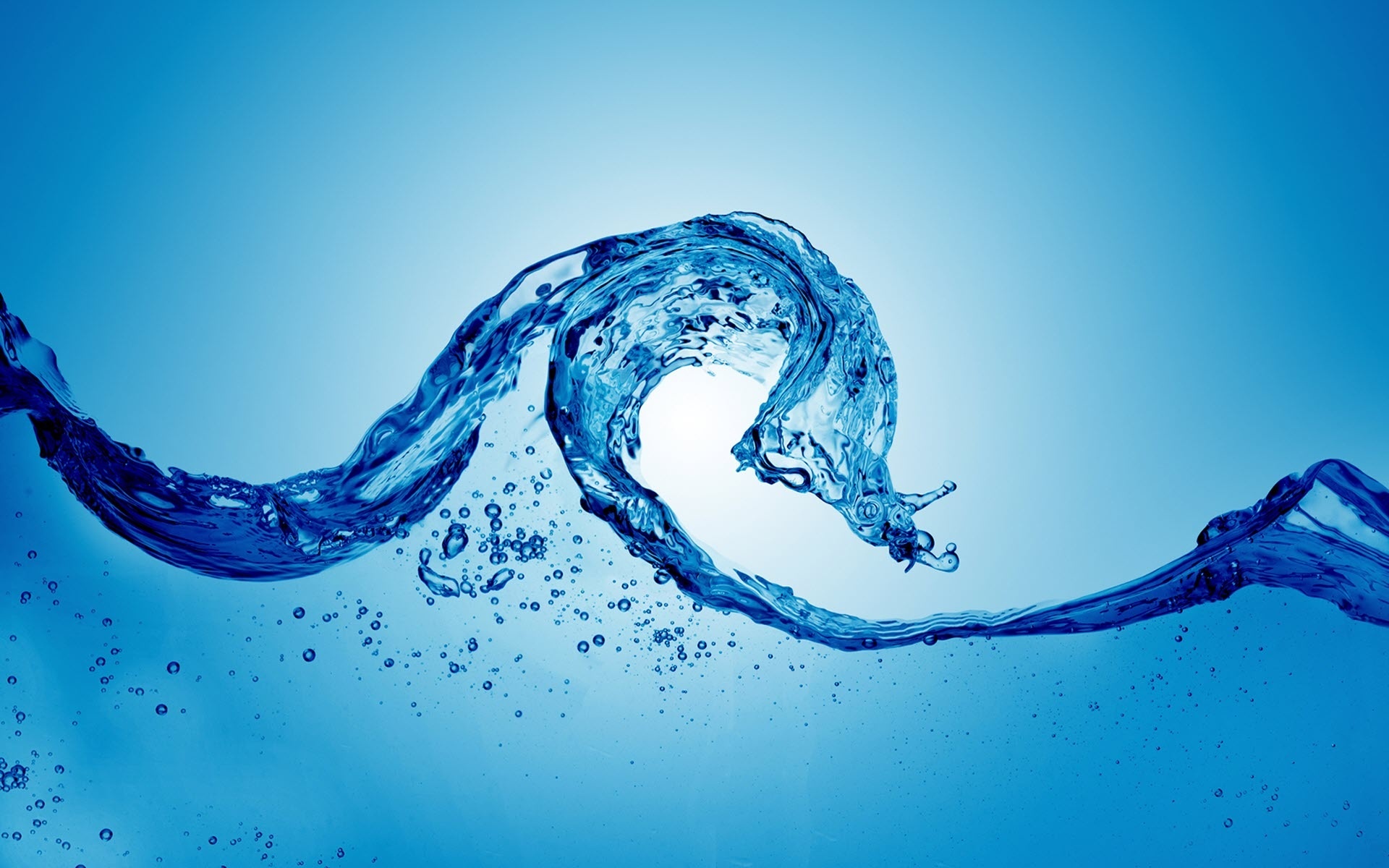
What two elements make up water?
a)
Helium and oxygen
b)
Hydrogen and oxygen
c)
helium and carbon
d)
oxygen and carbon
23.

What word describes when water is attracted to other substances?
a)
cohesion
b)
adhesion
c)
capillary action
d)
surface tension
24.
Why can water have no net charge but have slight charges in different parts of the molecule?
a)
The oxygen end is slightly negative and the hydrogen end is slightly positive
b)
The hydrogen end is slightly negative and the oxygen end is slightly positive
c)
The hydrogen and oxygen ends change in polarity
d)
Because it is hydrophobic
25.
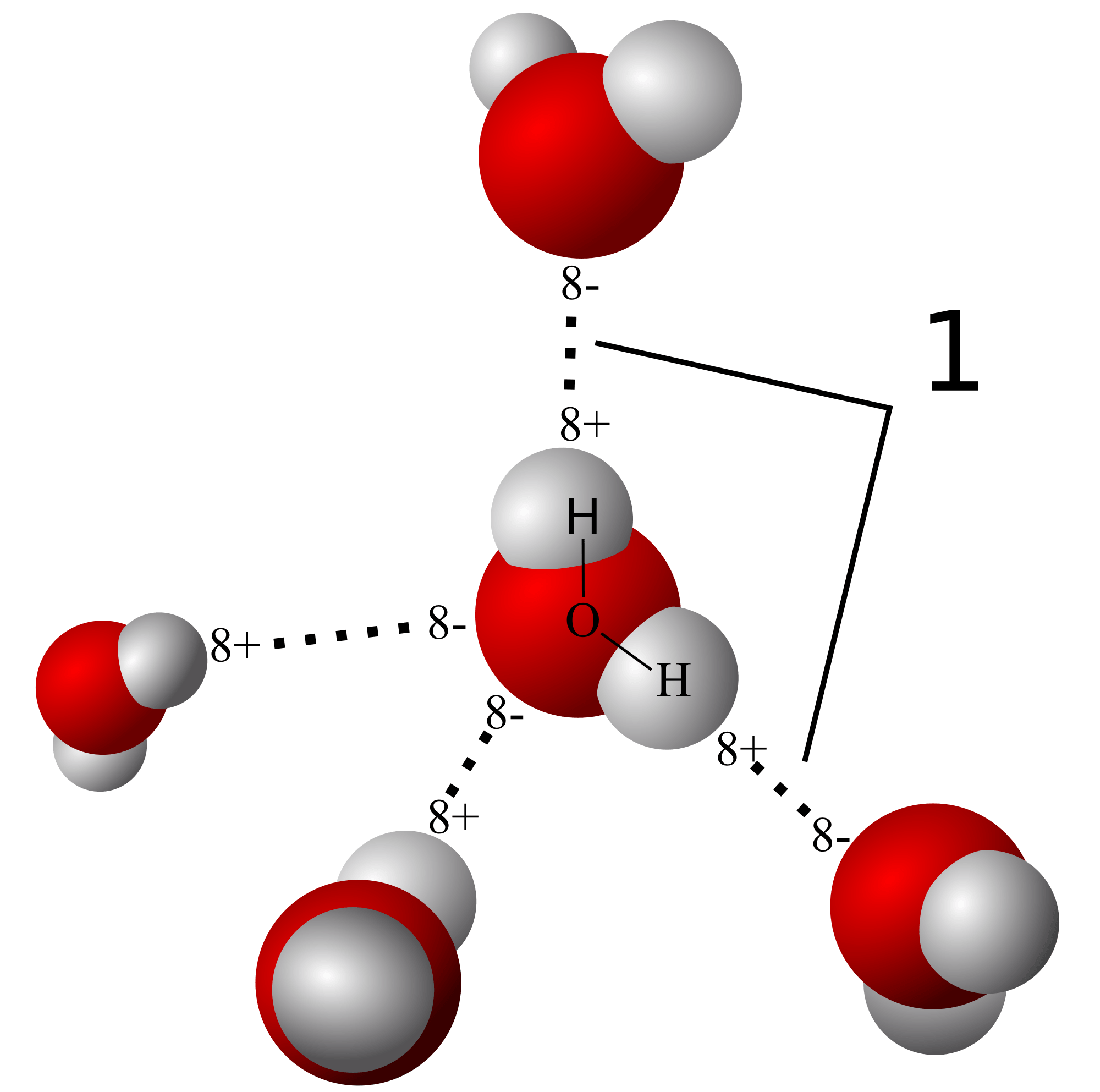
Attractions between water molecules are called
a)
Covalent bonds
b)
Ionic bonds
c)
Polar bonds
d)
Hydrogen bonds
26.

The attraction that causes water and other liquids to form drops on thin films is called ________________. This is also water’s ability to be attraction to other water molecules.
a)
adhesion
b)
capillary action
c)
cohesion
d)
surface tension
27.
Why does ice float?
a)
As water freezes, it expands and its density decreases.
b)
As water freezes, it takes up more hydrogen from the atmosphere, causing it to have a greater buoyancy.
c)
As water freezes, air becomes trapped between the hydrogen bonds of water molecules.
d)
As water freezes, it takes up more oxygen from the atmosphere, causing it to have a greater buoyancy.
28.
Water is polar because...
a)
The unequal sharing of electrons gives the water molecule a slight negative charge near its oxygen atom and a slight positive charge near its hydrogen atoms.
b)
The molecule has two poles, at which the it is colder than other regions of the molecule.
c)
The unequal sharing of electrons gives the water molecule a slight negative charge near its hydrogen atoms and a slight positive charge near its oxygen atom.
d)
The water molecule is neutral.
29.
What is surface tension?
a)
Water's ability to stick to itself
b)
Water's ability to stick to other substances
c)
The strength of the cohesion of all the water molecules combined
d)
Tape, glue and other adhesives
30.
What are abiotic factors?
a)
All of the living things in an ecosystem
b)
All of the non living things in an ecosystem
c)
All of the living and nonliving things combined
d)
A piece of a living thing
31.
What are biotic factors?
a)
All of the living things in an ecosystem
b)
All of the non living things in an ecosystem
c)
All of the living and nonliving things combined
d)
A piece of a living thing
32.
What is an ecosystem?
a)
All of the living things in an ecosystem
b)
All of the non living things in an ecosystem
c)
All of the living and nonliving things combined
d)
A piece of a living thing
33.

Directs all cell activities through the DNA located there.
a)
Lysosomes
b)
Nucleus
c)
ribosomes
d)
Mitochondria
34.
Which of the following is directly involved in the transportation of materials inside/within the cell?
a)
Endoplasmic Reticulum
b)
Vacuole
c)
Lysosome
d)
Mitochondria
35.
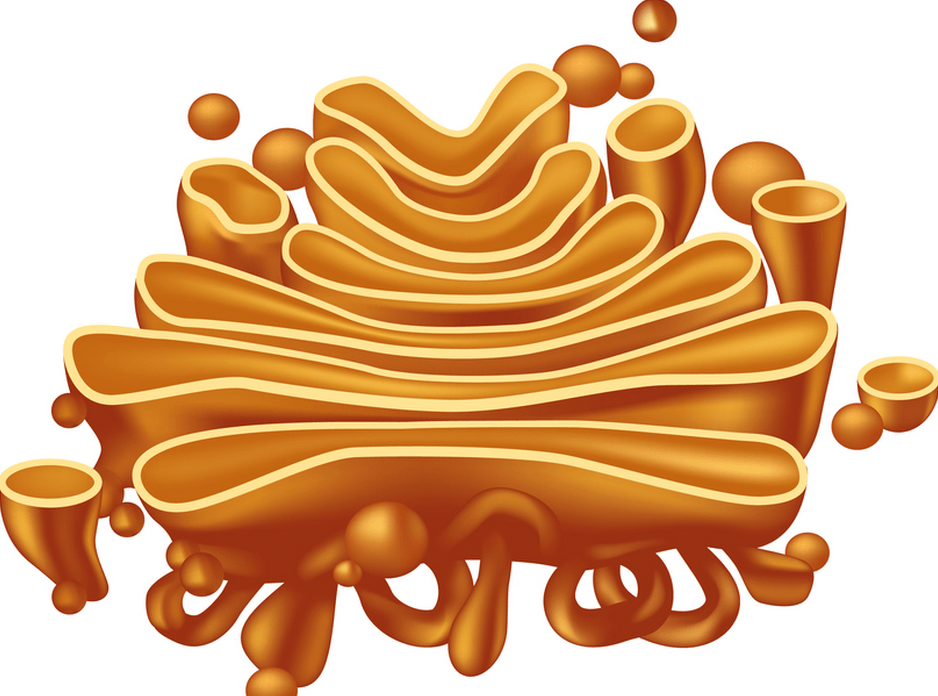
I am a protein packaging and shipping machine! Who am I?
a)
vacuole
b)
ribosome
c)
mitochondrion
d)
golgi apparatus
36.
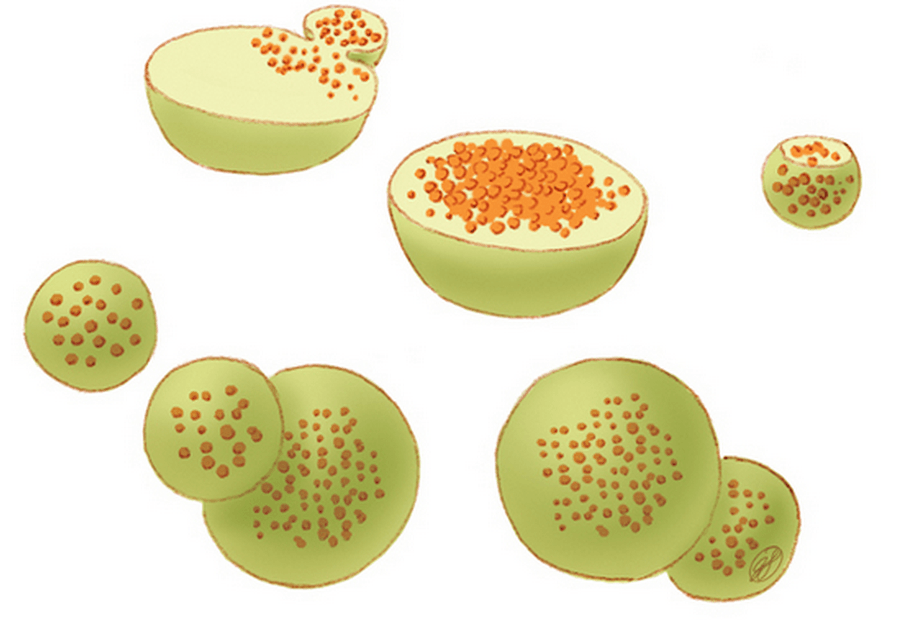
You might think of me as the trash collector, but recycler is maybe more accurate. What am I?
a)
mitochondria
b)
lysosome
c)
vacuole
d)
ribosome
37.
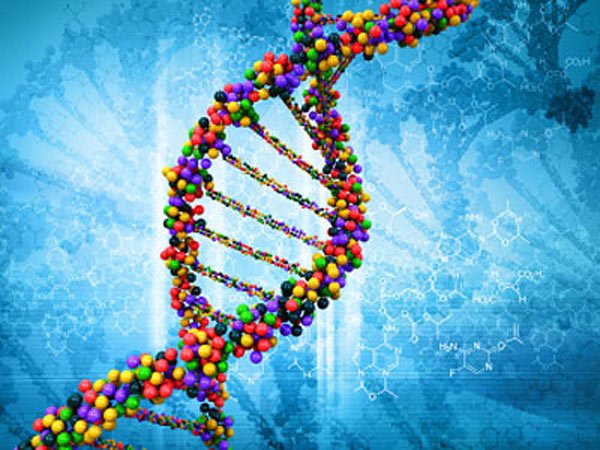
What is the name of the genetic material that is inside the nucleus?
a)
ER
b)
ATP
c)
YOLO
d)
DNA
38.

Which part of the cell is often called "the brain of the cell"?
a)
nuclear membrane
b)
endoplasmic reticulum
c)
nucleus
d)
mitochondria
39.
What is found in both plant and animal cells but is much larger in plant cells?
a)
Nucleus
b)
Mitochondria
c)
Chloroplast
d)
Vacuole
40.
Where are proteins made?
a)
Golgi body
b)
Mitoichondria
c)
Chromosomes
d)
Ribosomes
41.
This organelle takes food and turns it into ENERGY for plant and animal cells.
a)
Chloroplast
b)
Mitochondria
c)
Lysosome
d)
Ribosome
42.
The site of photosynthesis
a)
ribosome
b)
mitochondria
c)
chloroplast
d)
nucleus
43.

I am the outer most layer of an animal cell. What am I?
a)
cell wall
b)
nucleus
c)
cell membrane
d)
cell skin
44.
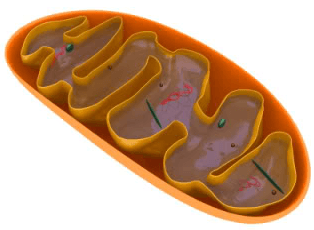
What are tiny organelles that convert glucose into ATP?
a)
Ribosomes
b)
Vesicles
c)
Cytoskeleton
d)
Mitochondria
45.
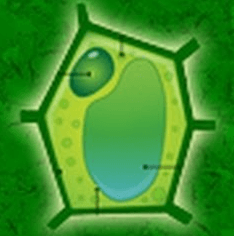
A rigid layer that lies outside the cell's membrane is...
a)
Cytoskeleton
b)
Cilia
c)
Cell Wall
d)
Flagella
46.
What is the gel-like substance inside of cells called?
a)
photoplasm
b)
photosynthesis
c)
cytoskeleton
d)
cytoplasm
47.

According to cell theory, where did this cell come from?
a)
another living cell
b)
energy from sun
c)
a multicellular organism
d)
the nonliving environment
48.
Athlete's foot is an example of this pathogen
a)
Bacteria
b)
Virus
c)
Fungus
d)
Protozoan
49.
This is the word for a disease causing organism.
a)
Phagocyte
b)
Pathogen
c)
Pandemic
50.
In order for a virus to reproduce, it needs...
a)
a source of food
b)
another virus
c)
a host cell
d)
warm temperatures
51.
Which best describes the structure of a virus?
a)
a nucleic acid with a protein coat
b)
a prokaryotic cell
c)
a eukaryotic cell
d)
a unicellular organism
52.
Viruses reproduce themselves by...
a)
dividing into two identical copies
b)
causing cells to transform into viruses
c)
making host cells reproduce copies of the viruses
d)
planting eggs inside host organisms
53.
Joseph Lister was one of the first surgeons to identify the cause of and reduce the spread of infectious diseases among his patients. What techniques did he develop to achieve this?
a)
He refused to touch any of his patients.
b)
He washed his hands and surgical tools.
c)
He quarantined all patients with bacterial infections.
d)
He stopped changing the patients' bandages so often.
54.
Which two scientists' experimentation and hypotheses led to an understanding of the presence of microorganisms and their relationship to diseases?
a)
Shleiden and Schwann
b)
Pasteur and Koch
c)
Hooke and Virchow
d)
Watson and Crick
55.
A pathogen that passes from one host to another is called...
a)
infectious
b)
toxic
c)
non-specific
d)
poisonous
56.
What is the foundation of the germ theory of disease?
a)
Disease is caused by microorganisms
b)
Disease is caused by unknown factors
c)
Disease is caused by the spontaneous generation of harmful organisms
d)
Disease and microorganisms are not related in any way
57.
Although controversial at first, the germ theory of disease proposed that microorganisms were the cause of many diseases. Which of these was a result of the general acceptance of the germ theory?
a)
The development and use of antibiotics
b)
The belief in spontaneous generation
c)
The proof of a supernatural cause for illness
d)
The link between viruses and RNA
58.
What is the job of the immune system?
a)
To help you breathe
b)
To circulate blood throughout your body
c)
To fight against disease
d)
To send messages throughout the body
59.
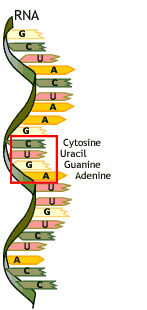
In RNA, Uracil pairs with ______.
a)
cytosine
b)
adenine
c)
guanine
d)
thymine
60.
The process to go from DNA to mRNA is _______
a)
translation
b)
transcription
c)
replication
61.
The process to go from mRNA to a protein is called ____
a)
transcription
b)
rRNA
c)
replication
d)
translation
62.
DNA holds the code for
a)
lipids
b)
carbohydrates
c)
protein
d)
sugar
63.
Choose the nucleotide sequence of the RNA strand that would be complementary to the following strand:
GTAGTCA
GTAGTCA
a)
UATUAGA
b)
ACGACTG
c)
CAUCAGU
d)
CATCAGT
64.
The main function of tRNA is to...
a)
carry a message that, when translated, forms proteins
b)
form a portion of ribosomes
c)
string together complementary RNA and DNA strands
d)
bring amino acids from the cytoplasm to the ribosomes
65.
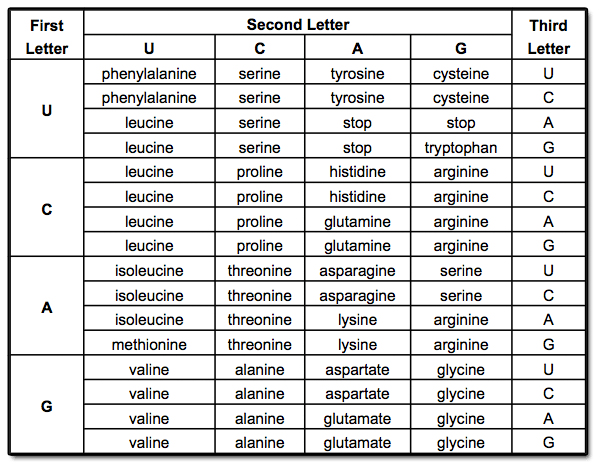
What amino acid is represented by the codon UUA?
a)
Phenylalanine
b)
Tyrosine
c)
Leucine
d)
Stop codon
66.
What is the three base sequence of mRNA that codes for a single amino acid?
a)
Anticodon
b)
Codon
c)
Protein
67.
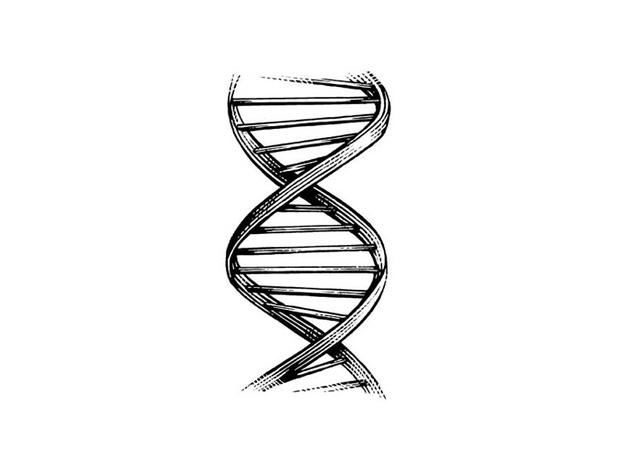
DNA has a _____________ structure.
a)
double helix
b)
single strand
c)
ring
d)
chain
68.
Translation is the process where
a)
mRNA is created in the Nucleus
b)
mRNA is decoded to form a protein
c)
glucose molecules are made
d)
is where lipids are synthesised
69.
What law states that in Tt the person will only show the dominant allele
a)
law of segregation
b)
law of independent assortment
c)
law of dominance
d)
law of punnett squares
70.

Genotype refers to the ...
a)
physical expression of the genes
b)
the possible combination of alleles in a gene
c)
whether an allele is dominant or recessive
d)
how an organism will appear
71.
A homozygous dominant dog with brown fur is crossed with a heterozygous dog with brown fur. What are the percentages of the possible genotypes?
a)
100% BB
b)
75% BB and 25%Bb
c)
50 % BB and 50% Bb
d)
50% Bb and 50% bb
72.

An offspring will receive how many alleles from each parent to determine a specific trait?
a)
one
b)
two
c)
three
d)
five
73.
Which of the following is a phenotype?
a)
BB
b)
Bb
c)
bb
d)
Blue eyes
74.
What is a phenotype
a)
The genetic make up (code)
b)
The physical trait
75.
the passing of genetic traits from parent to offspring.
a)
heredity
b)
trait
c)
gene
d)
allele
76.
having two of the same genes for the trait (sometimes called purebred).
a)
homozygous
b)
hetrozygous
c)
protein
d)
chromosome
77.
having two different genes for a trait (sometimes called hybrid).
a)
protein
b)
homozygous
c)
heterozygous
d)
genotype
78.
An allele whose trait only shows up when no dominant allele is present.
a)
hidden allele
b)
dominant allele
c)
recessive allele
d)
present allele
79.
Two heterozygous (Tt) tall pea plants are crossed. Which describes their offspring?
a)
50% tall and 50% short
b)
75%tall and 25% short
c)
100%short
80.

Looking at this pedigree, how many female family members are carriers?
a)
1
b)
3
c)
10
d)
7
81.

What percentage of the female offspring will be a carrier for this recessive disease?
a)
0%
b)
50%
c)
100%
d)
25%
82.
How many PAIRS of chromosomes do humans have?
a)
23
b)
46
c)
1
d)
2
83.
I have 2 X chromosomes. What am I?
a)
Male
b)
Female
84.
If a gene is found only on the X chromosome and not the Y chromosome, it is said to be what?
a)
sex-linked trait
b)
polygenic trait
c)
codominant trait
d)
incomplete dominance trait
85.
What is a change in an organism that allows for it to survive in its environment?
a)
homologous
b)
vestigial
c)
variation
d)
adaptation
86.
What is the study of organisms at the early stages of development?
a)
DNA studies
b)
embryology
c)
extinction
d)
fossil record
87.
What is an organism that has similar characteristics and can reproduce?
a)
species
b)
organism
c)
embryology
d)
vestigial
88.

Which layer is the oldest?
a)
1
b)
2
c)
3
d)
4
89.
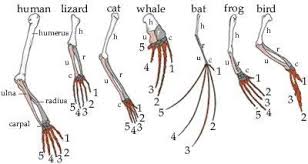
What is this an example of?
a)
vestigial structures
b)
embryology
c)
homologous structures
d)
fossil record
90.
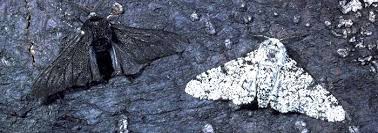
Predict which moth would increase in population
a)
light
b)
dark
91.
When individuals choose traits possessed by the opposite sex it is called…
a)
Mutation
b)
Gene Flow
c)
Genetic Drift
d)
Sexual Selection
92.
The cause of artificial selection is…
a)
The environment
b)
Humans
c)
Mutation
d)
Gene Flow
93.

Which species’ DNA is most similar to the DNA of the toothed whale?
a)
Hippopotamus
b)
Baleen Whale
c)
Grazing Mammals
d)
Camels
94.
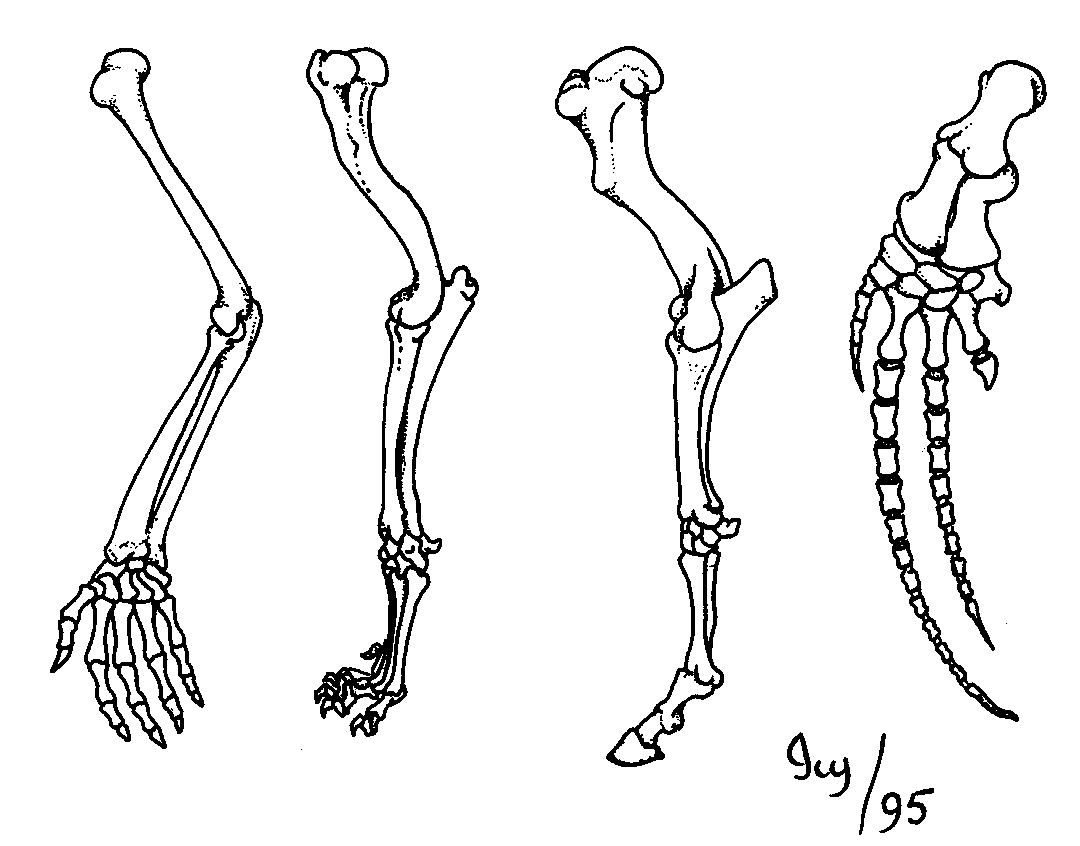
Structures with the same parts have different functions; suggests that organisms share a common ancestry
a)
vestigial structures
b)
homologous structures
c)
adaptive radiation
d)
fossil
95.
The ability of an organism to survive and reproduce in its specific environment
a)
diversity.
b)
evolution
c)
adaptation
d)
fitness
96.
Which term refers to the process by which individuals that are better suited to the environment survive and reproduce therefore passing down their genes to their offspring?
a)
Evolution
b)
Variation
c)
Adaptation
d)
Natural Selection
97.

What type of selection is depicted in the picture?
a)
stabilizing
b)
directional
c)
disruptive
d)
the answer is not here
98.

What type of selection?
a)
Directional
b)
Stabilizing
c)
Disruptive
99.

What type of natural selection is this?
a)
Disruptive Selection
b)
Directional Selection
c)
Stabilizing Selection
d)
Sexy Selection
100.
Human babies don't do well if they are born too small. If they are too big complications can occur during birth. Baby size should then be selected for by which method?
a)
stabilizing
b)
directional
c)
disruptive
d)
Beyonce is having twins
101.
An organism that produces its own food supply from inorganic compounds is called a(an)
a)
heterotroph
b)
consumer
c)
detritivore
d)
autotroph
102.
What is the original source of almost all energy in most ecosystems?
a)
carbohydrates
b)
sunlight
c)
water
d)
carbon
103.
What is the term for each step in the transfer of energy and matter within a biological community?
a)
energy path
b)
food web
c)
trophic level
d)
food pyramid
104.
Autotrophs make up the _______ level in all ecosystems.
a)
First
b)
Second
c)
Third
d)
Fourth
105.

A living relationship between two species in which one organism is harmed is called...
a)
mutualism
b)
commensalism
c)
parasitism
d)
niche
106.

symbiotic relationship in which both organisms benefit
a)
competition
b)
Mutualism
c)
nitrogen fixation
d)
energy pyramid
107.
A living relationship between two species in which one organism is harmed is called...
a)
mutualism
b)
commensalism
c)
parasitism
d)
niche
108.

What does a food web represent?
a)
All connections of energy flow throughout all organisms in a habitat.
b)
The specific ways that mutualism is carried out.
c)
A single pathway or energy flow between organisms.
d)
How carnivores get their food.
109.
The amount of energy that usually transfers from one trophic level to the next...
a)
10%
b)
20%
c)
80%
d)
50%
110.
Which of the following would be the definition of a detritivore?
a)
Animals that eat insects.
b)
Organisms that feed on rocks, recycling the nutrients back into the ground.
c)
Organisms that eat only pants
d)
Things that feed on dead organisms, recycling the nutrients back into the ground.
111.
An illustration that uses arrows to show the many possible directions in which matter and energy can pass through the organisms in an ecosystem.
a)
Food chain
b)
Food web
c)
Energy Pyramid
d)
Succession Map
112.

What is the order of succession shown in this figure?
a)
A, B, C, D
b)
B, A, D, C
c)
C, D, A, B
d)
D, A, B, C
113.
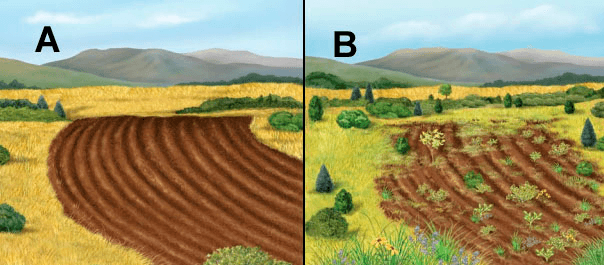
What type of succession is shown going from figure A to figure B?
a)
primary succession
b)
ecological succession
c)
secondary succession
d)
intermediate
114.
What is the goal of the pioneer species in Primary Succession?
a)
To kill the dead materials after a disaster
b)
To rebuild soil
c)
To feed Johnny
d)
To put fresh oxygen into the air
115.
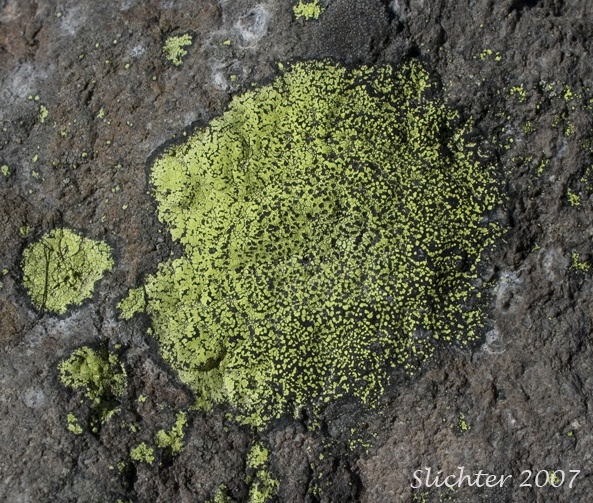
What is the name given to lichen or algae after a primary succession?
a)
pioneer species
b)
volunteer species
c)
founder species
d)
conqueror species
116.
After a volcanic eruption, lava covers the land. What is the order that plants grow to repopulate the area?
a)
Lichens → Shrubs → Grasses → Trees
b)
Lichens → tree → shrubs→Grasses
c)
Grasses → Lichens → Shrubs → Trees
d)
Lichens → Grasses → Shrubs → Trees
117.
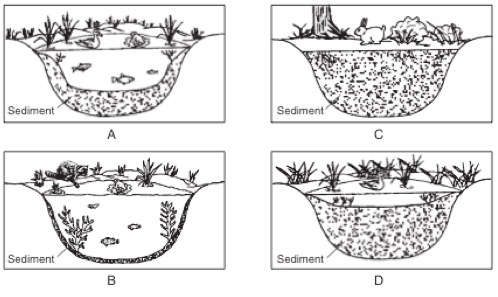
What is the correct order from oldest (happened first) to youngest (happened last) in this pond succession?
a)
A, B, C, D
b)
D, C, B, A
c)
B, A, D, C
d)
C, D, A, B
118.
Reaches a climax community quicker because soil is already present
a)
primary succession
b)
secondary succession
c)
both types of succession
100 %

