wayground logo

Free Printable Worksheets

Font size

S
M
L
XL
Worksheets

Protein Synthesis/Mutations/DNA Technology

Total questions: 120

Worksheet time: 2hrs 40mins

Name
Class
Date
1.
Which of the following are in the correct order?
a)
proteins determine traits --> genes code for proteins --> DNA divided into genes
b)
proteins determine traits --> DNA divided into genes --> genes code for proteins
c)
DNA divided into genes --> proteins determine traits --> genes code for proteins
d)
DNA divided into genes --> genes code for proteins --> proteins determine traits
2.
Which of the following is a protein that acts as DNA scissors?
a)
plasmid
b)
restriction enzyme
c)
ligase
d)
protein expression
3.

A student performed a gel electrophoresis experiment. The results are represented in the diagram

below. Compared to the fragments at the top of the gel, the fragments at the lower end are

a)

larger, and move slower

b)

larger, and move faster

c)

smaller, and move faster

d)

smaller, and move slower

4.
Which two bat species are most closely related?
a)
 Bat 1 and Bat 2
b)
Bat 1 and Bat 3
c)
Bat 2 and Bat 3
d)
There’s no way to tell
5.
What does PCR stand for?
a)
Polymerase Chronic Reagent
b)
Principle Chorionic Reliability
c)
Polymerase Chain Reaction
d)
Probably Cannot React
6.

Definition: Purposefully adding or removing genetic material (usually in a very early embryo)

a)

Genetic Engineering

b)

GMO

c)

Restriction Enzyme

d)

Gel Electrophoresis

7.

The technique used to amplify DNA is called ______

a)

Recombinant DNA

b)

Genetic Engineering

c)

Polymerase Chain Reaction (PCR)

d)

Gene splicing

8.

DNA has a slight ___________ charge.

a)

Positive

b)

Negative

9.

What is recombinant DNA

a)

DNA from 2 different organisms combined

b)

DNA from 2 different ribosomes

c)

DNA that is separated out from a vector

10.
Gel electrophoresis enables scientists to
a)
separate DNA fragments.
b)
combine DNA fragments.
c)
count the genes in DNA.
d)
insert DNA in cells.
11.
Which is used to cut DNA molecules at specific points?
a)
gel electrophoresis
b)
PCR analysis
c)
a restriction enzyme
d)
recombinant DNA
12.
A molecule containing DNA from two different organisms is called
a)
a plasmid.
b)
a polyploid.
c)
a hybrid organism.
d)
recombinant DNA.
13.

Hair samples found at the crime scene during a murder investigation were used to obtain the genetic profile. The sample was checked against the 3 suspects. Which of the suspects committed the crime?

a)

Suspect 3.

b)

Any of them could be the killer.

c)

Suspect 1.

d)

Suspect 2.

14.
Genetic engineering has been used to produce
a)
medicines.
b)
food animals.
c)
improved crops.
d)
all of these.
15.

Organisms that have had DNA from other organisms inserted into their DNA to produce certain traits are called:

a)

Plasmids

b)

Clones

c)

Transgenic organisms

d)

Recombinant organisms

16.
GMO stands for
a)
Genetically Made Organism
b)
Growing More Organisms
c)
Genetically Modified Organism
d)
Growing Many Organisms
17.
You have benefited from selective breeding by having more agricultural produce than would have been possible otherwise.
a)
True
b)
False
18.
Based on these results whose blood was found in the blood stain at the crime scene?
a)
Bob
b)
Sue
c)
John
d)
Lisa
19.
This picture is an example of what type of DNA cut?
a)
Sticky Ends
b)
Blunt Ends
20.
DNA fingerprinting works because
a)
Most genes are dominant
b)
Most people have DNA that contains repeats
c)
The most important genes are different among most people
d)
No two people, except identical twins, have exactly the same DNA 
21.
A new variety of rice called golden rice has been genetically modified to have  vitamin A. people in  starving countries can eat this rice and receive vitamin A. Without this rice people go blind from vitamin A deficiency. What word(s) below best describes this rice?
a)
Electrophoresis
b)
DNA fingerprint
c)
Genetically modified organism
d)
Clone
22.
This picture shows how what is made?
a)
Recombinant DNA
b)
PCR
c)
Gel Electrophorisis
d)
Clones
23.
What applications can gel electrophoresis be used for?
a)
Parental Testing
b)
Criminal Investigations
c)
Sequence Endangered Species DNA
d)
All of the above
24.

Which of the following is considered the "Central dogma of biology"?

a)

Evolution by natural selection leads to changes in population

b)

"DNA that is transcribed into RNA which is translated into protein" .

c)

Proteins have four levels of structure. The fourth level is when all 3D subunits come together to make a functional protein.

25.

Transcription occurs in __________.

a)

the nucleus

b)

in the cytoplasm

26.

A unique series of DNA bands on a gel is known as a ________.

a)

Gel electrophoresis

b)

fingerprint

c)

DNA fingerprint

d)

criminal investigation

27.

Definition: Purposefully manipulating an organism by adding or removing DNA.

a)

Genetic engineering

b)

Transgenic Organism

c)

Ge Electrophoresis

d)

Transcription

28.

In which ways can genetic engineering can improve crops

a)

Make them pest or drought resistant

b)

Make them more nutritious

c)

Make them larger

d)

All answers are correct

29.
Which term refers to a farmer choosing the best corn from this year to plant next year?
a)
natural selection
b)
selective breeding
c)
genetic engineering
d)
genetic transformation
30.
Someone has a wild cat breed with a house cat in order to have a cat that looks wild but is more gentle. This is__.
a)
Genetic Modification
b)
Gene Therapy
c)
Animal Husbandry
d)
Selective breeding
31.
Putting the gene for bioluminescence into a fish is an example of...
a)
Genetic Engineering
b)
Selective Breeding
c)
Artificial Selection
d)
Gene Mutation
32.
What mutation has occurred here? 
T-G-A-C-C-A
T-G-A-G-C-A
a)
Substitution
b)
Deletion
c)
Insertion
d)
Frameshift 
33.
Which of the following would result in a frameshift mutation?
a)
Insertions only
b)
Substitution only
c)
Deletion only
d)
Insertions and Deletions
34.
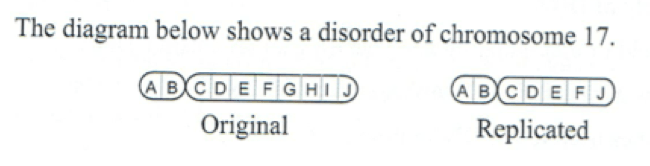
What type of chromosomal mutation has occurred?
a)
substitution
b)
insertion
c)
deletion
d)
nondisjunction
35.

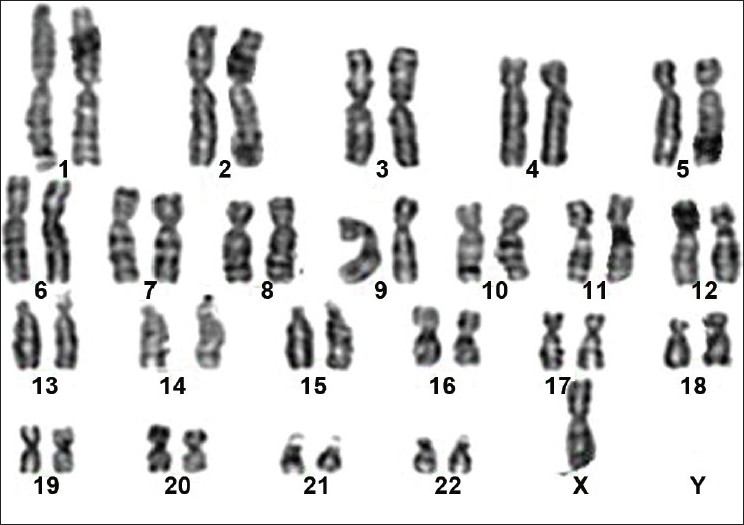
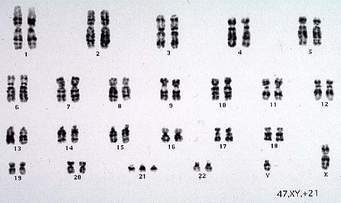
Which Karyotype displays a female with Down syndrome?

a)
b)
c)
d)
36.

A mutation in which only one nucleotide is altered is called a:

a)

Frameshift Mutation

b)

Deletion Mutation

c)

Point Mutation

d)

Insertion Mutation

37.
DNA molecule segment is : TTACGCAAG
The mutated DNA segment is TTCGCAAG. This is an example of ___ mutation.
a)
Substitution
b)
Deletion
c)
Insertion
d)
Inversion
38.

A mutation is defined as:

a)

A change in the cell's structure

b)

Anything that changes in an embryo

c)

Any change in the physical features of a human

d)

A change in the DNA sequence

39.
ATTTGAGCC- Original
ATTGAGCC - Mutated
The example above is an example of a 
a)
Insertion- Frameshift
b)
Deletion- Substitution
c)
Deletion -Frameshift
d)
All of the above
40.
What mutation has occurred here? 
T-G-A-C-C-A
T-G-A-G-C-A
a)
Substitution
b)
Deletion
c)
Insertion
d)
Frameshift 
41.
What mutation has occurred here? 
T-G-A-C-C-A
T-G-A-G-C-A
a)
Substitution
b)
Deletion
c)
Insertion
d)
Frameshift 
42.
Identify the DELETION mutation form the following: 
ATG CCA AAT
a)
ATG TCA AAT
b)
ATG CCT AAA T
c)
ATC CA  AT
d)
ATG CCA AAT
43.
Identify the SUBSTITUTION mutation form the following: 
ATG CCA AAT
a)
ATG TCA AAT
b)
ATG CCT AAA T
c)
ATC CA  AT
d)
ATG CCA AAT
44.
Which mutation will cause translation to stop? 
a)
Mutations 1 and 3 only
b)
Mutation 1 only
c)
Mutation 2 only
d)
Muations 1, 2, 3
45.

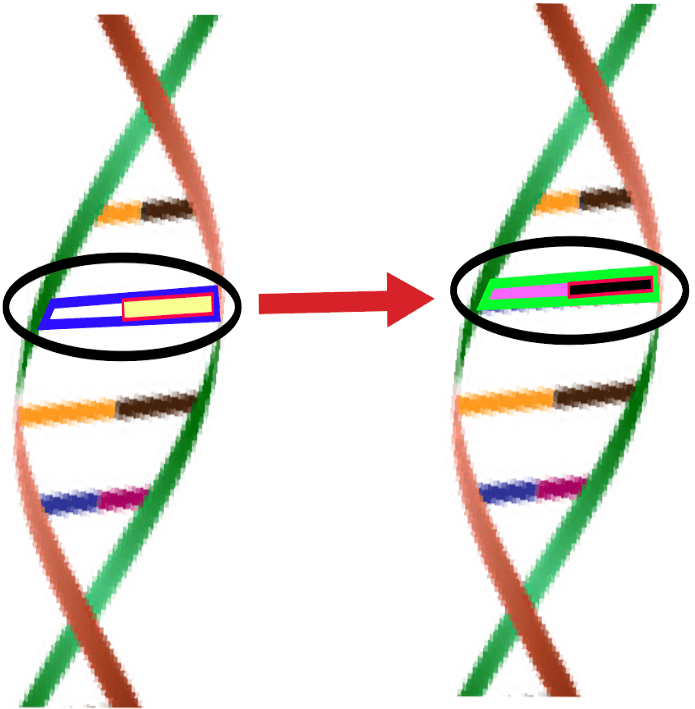
What type of mutation is shown in the diagram?

a)

Point mutation - missense

b)

Frameshift Mutation - deletion

c)

Frameshift Mutation - addition

d)

Point mutation - nonsense

46.

Which organelle is DNA usually found in?

a)

cell membrane

b)

vacuole

c)

chloroplast

d)

nucleus

47.

What are the building blocks of proteins called?

a)

DNA

b)

RNA

c)

Ribosomes

d)

Amino Acids

48.

What do gene mutations change?

a)

DNA

b)

RNA

c)

Proteins

d)

Lipids

49.

What is the building block of DNA

a)

Monosaccharide

b)

Amino Acid

c)

Fatty Acid

d)

Nucleotide

50.

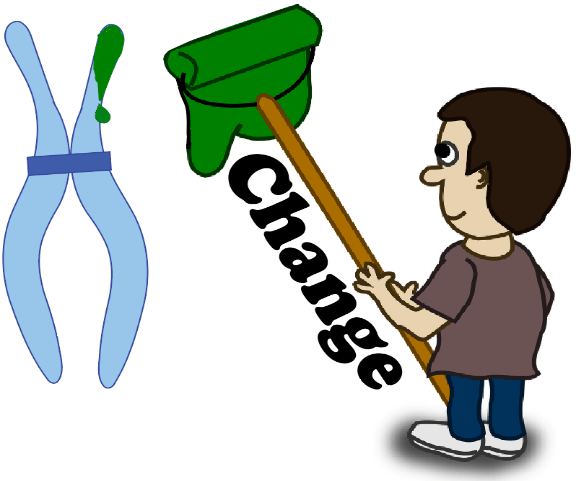
A permanent change in the DNA sequence

which can affect a single gene or group of genes

a)

Homeostasis

b)

Somatic Cell

c)

Chromosomal Mutation

d)

Gene Mutation

51.

A substitution mutation that has no effect

on amino acids sequence

a)

Insertion Mutation

b)

Translocation

c)

Silent Mutation

d)

Deletion Mutation

52.

Mutations that involve parts of or all of

a chromosome

a)

Replication

b)

Deletion Mutation

c)

Chromosomal Mutation

d)

Transcription

53.

Part of a chromosome

is deleted

a)

Deletion Mutation-Gene

b)

Translocation

c)

Deletion Mutation -Chromosomal

d)

Crossing Over

54.

Part of a chromosome is repeated

a)

Gene Mutation

b)

Point Mutation

c)

Deletion Mutation

d)

Duplication Mutation

55.

Part of a chromosome is reversed.

a)

Inversion Mutation

b)

Deletion Mutation

c)

Translocation

d)

Point Mutation

56.

Part of one chromosome is transported and attached

to a non-homologous chromosome

a)

Inversion Mutation

b)

Translocation Mutation

c)

Duplication Mutation

d)

Point Mutation

57.

Failure of homologous chromosomes

to separate during meiosis.

Results in gametes with either one extra or one missing chromosome.

a)

Translocation

b)

Nondisjunction

c)

Replication

d)

Transcription

58.

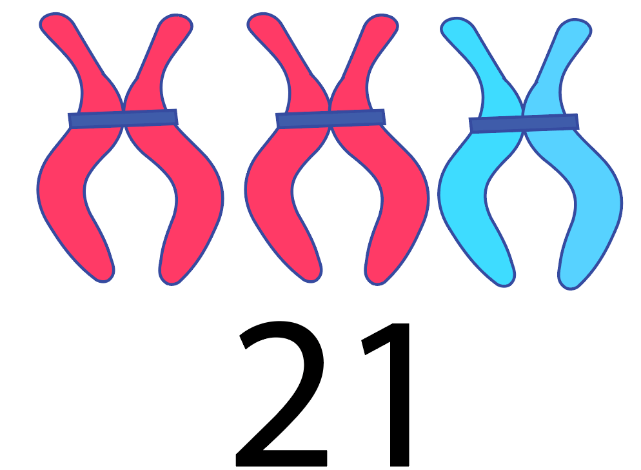
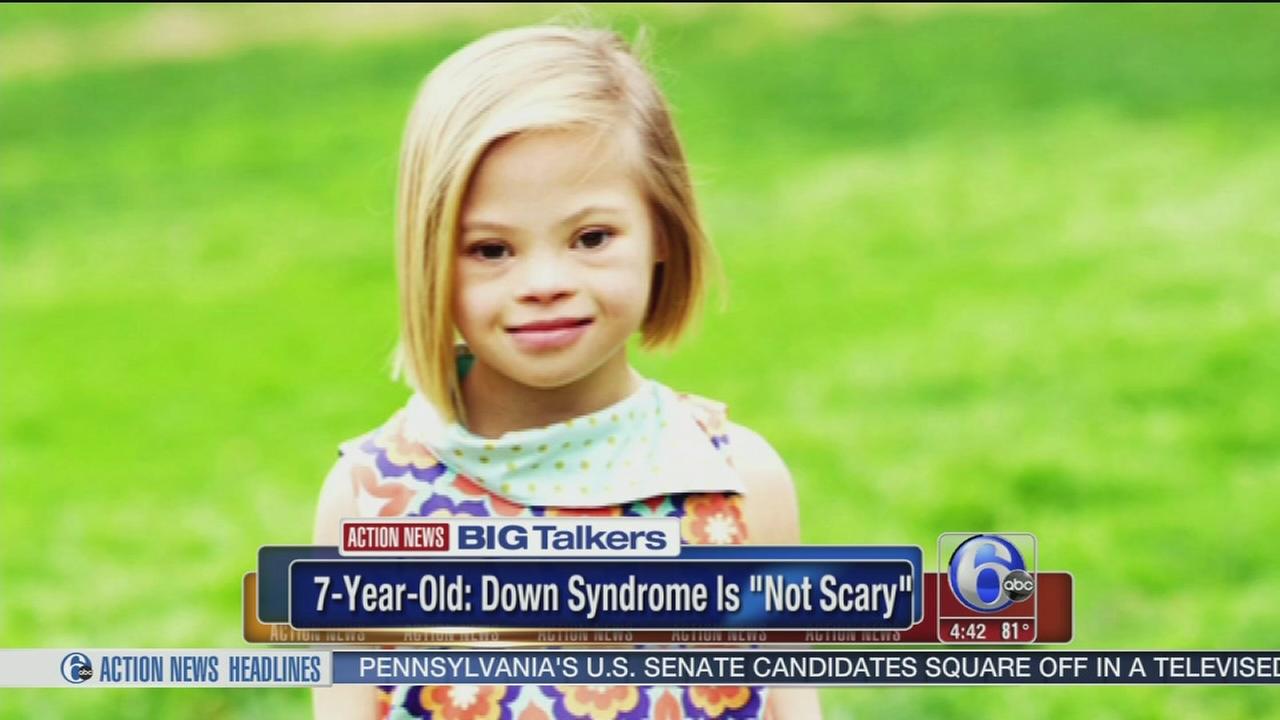
Condition caused by nondisjunction at pair 21 during meiosis.

Individuals have an extra chromosome

at pair 21, or a total of 47 chromosomes.

Also called Trisomy 21.

a)

Cystic Fibrosis

b)

Translocation

c)

Hemophilia

d)

Down Syndrome

59.
a)
This karyotype shows Trisomy 21
b)
This karyotype has no abnormality
c)
This karyotype is missing a sex chromosome (monosomy x)
d)
This karyotype is from a gamete
60.
Based on the Karyotype shown, at which chromosome pair can we identify a genetic disorder? 
a)
Chromosome pair 5
b)
sex chromosomes
c)
Chromosome pair 21
d)
There are no chromosomal disorders
61.
Which statement is NOT true about Karyotypes
a)
Chromosomes (pairs 1-22) are arranged by size
b)
Sex chromosomes are found at the end
c)
A normal karyotype has 46 chromosomes or 23 pairs
d)
Having missing or extra chromosomes does not indicate a disorder
62.
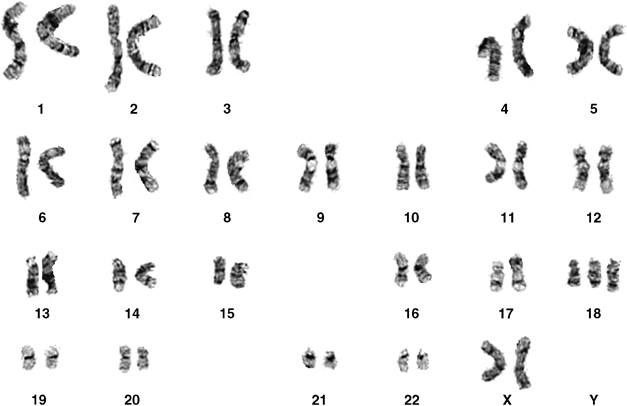
What is the chromosomal condition of the individual whose karyotype is seen in the image?
a)
Monosomy X (Turner's Syndrome)
b)
Trisomy 21 (Down's Syndrome)
c)
Trisomy 13 (Patau Syndrome)
d)
Trisomy 18 (Edwards's Syndrome)
63.
A pair of identical chromosomes shown in a karyotype, one inherited from mom, and one inherited from dad are called
a)
sister chromotids
b)
centromeres
c)
homologous chromosomes
d)
autosomes
64.
Nondisjunction can result in 
a)
trisomy conditions
b)
monosomy conditions
c)
additional sex chromosomes
d)
all of these
65.
When chromosomes fail to separate correctly during anaphase of meiosis, what can occur?
a)
extra chromosomes are found in the sex cell
b)
chromosomes of the sex cell are doubled
c)
chromosomes of the sex cell are halved
d)
meiosis never completes
66.
Down's syndrome occurs because of a(n)
a)
missing sex chromosome
b)
extra sex chromosome
c)
additional 21st chromosome
d)
additional 18th chromosome
67.

What would you call the failure of one or more pairs of homologous chromosomes or sister chromatids to separate normally during meiosis?

a)

nondisjunction

b)

anaphase I

c)

nondiploidy

d)

karyotype

68.
Which sex chromosomes would indicate a typical human male?
a)
XX
b)
X
c)
XY
d)
XXY
69.
Photograph of chromosomes grouped in ordered pairs
a)
pedigree
b)
Punnett Square
c)
Venn Diagram
d)
Karyotype
70.
Determine the sex of the individual whose karyotype is displayed in the image.
a)
female
b)
male
71.
When chromosomes fail to separate correctly during anaphase of meiosis, what can occur?
a)
extra chromosomes are found in the sex cell
b)
chromosomes of the sex cell are doubled
c)
chromosomes of the sex cell are halved
d)
meiosis never completes
72.

Turner's Syndrome has a karyotype notation of

a)

OY

b)

XXY

c)

XO

d)

XX

73.

Having a Y chromosome makes you male.

a)

true

b)

false

74.

Which best describes nondisjunction?

a)

an inherited mutation carried in an egg or a sperm

b)

an error in meiosis where chromosomes fail to separate

c)

when chromosomes fuse together during mitosis

d)

when homologous chromosomes trade segments

75.

Which best describes trisomy?

a)

inheriting three copies of a specific chromosome

b)

inheriting three complete sets of chromosomes

c)

when three chromosomes fuse together

d)

when a child inherits one less than the normal diploid number

76.

In a karyotype, how many total chromosomes would a person with downs syndrome have? HINT: Downs is also called trisomy 21

a)

21

b)

23

c)

45

d)

46

e)

47

77.

How many total chromosomes would a normal adult have in their diploid body cells?

a)

23

b)

46

78.

How many copies of each chromosome should be present in the cells of a normal human?

a)

1

b)

2

c)

3

d)

4

79.

A point mutation that does not change the amino acid sequence is known as a(n) ____________ mutation.

a)

Frameshift

b)

Nondisjunction

c)

Inversion

d)

Silent

80.

What type of mutation is shown in the image?

a)

Nondisjunction

b)

Gene Translocation

c)

Trinucleotide Repeat Expansion

d)

Frameshift

81.

What is the name of the following mutation?

a)

Silent

b)

Trinucleotide Repeat Expansion

c)

Nondisjunction

d)

Frameshift

82.

Which of the following is a result of a nondisjunction?

a)

Klinefleter syndrome

b)

Sickle cell anemia

c)

Cystic fibrosis

d)

Hemophilia

83.

Which of the following are differences in the structure between RNA and DNA

a)

DNA uses deoxyribose sugar, RNA uses sugar ribose

b)

DNA pairs Adenine with Uracil, RNA pairs Adenine with Thymine

c)

DNA is a double helix, RNA is a single helix

d)

DNA pairs Adenine with Thymine, RNA pairs Adenine with Uracil

84.

Which organelle is the location where protein is made?

a)

Ribosome

b)

Nucleus

c)

Cytoplasm

d)

Nucleotide

85.

Insertion, deletion, and substitution are all examples of a change in a genetic sequence which is also referred to as (a)

a)

Gene

b)

Amino Acid

c)

Ribose

d)

Mutation

86.

During transcription, this type of ribonucleic acid is responsible for copying the DNA and brining it out of the nucleus.

a)

tRNA

b)

mRNA

c)

rRNA

d)

dRNA

87.

When these bond together, they form a protein

a)

Amino Acids

b)

Peptide Bonds

c)

Ribose

d)

Nucleotides

88.

These building blocks consist of a sugar, phosphate, and nitrogen base.

a)

Ribose

b)

Nucleotide

c)

Gene

d)

Protein

89.

During translation, this type of ribonucleic acid is responsible for delivering amino acids to help make a protein.

a)

mRNA

b)

rRNA

c)

tRNA

d)

dRNA

90.

mRNA occurs during this process

a)

Translation

b)

Transcription

c)

Replication

d)

Delivery

91.

Which of the following is the complementary mRNA sequence to this DNA strand: AACTGAA

a)

UUGACUU

b)

TTGACTT

c)

AACTGAA

d)

AACUGAA

92.
The process of going from DNA to mRNA is called
a)
Transcription
b)
Translation
c)
Transportation
d)
Transient
93.
The process where DNA is transcribed to mRNA happens in what part of the cell?
a)
Nucleus
b)
Mitochondria
c)
Cytoplasm
d)
Endoplasmic Reticulum
94.
The function of ______ is to combine with proteins to form ribosomes.
a)
rRNA
b)
tRNA
c)
mRNA
d)
DNA
95.
The process where mRNA is read and made into an amino acid chain.
a)
Transcription
b)
Translation
c)
Transportation
d)
Transient
96.
What is the three base sequence of mRNA that codes for a single amino acid?
a)
Anticodon
b)
Codon
c)
Protein
97.
In proteins, the amino acid order is determined by 
a)
nitrogenous bases in RNA
b)
random placement
c)
nitrogenous bases in DNA
d)
there is no order
98.
What is the mRNA strand that would result from the DNA template strand CCTA?
a)
GGAT
b)
CCAT
c)
GGAU
d)
CCAU
99.
The principle shown in the image is called what?
a)
Transcription
b)
The Central Dogma
c)
Translation
d)
The Principle of Proteins
100.
Which of these nitrogenous bases is NOT in RNA?
a)
Uracil
b)
Thymine
c)
Cytosine
d)
Guanine
101.
In RNA, Uracil pairs with ______. 
a)
cytosine
b)
adenine
c)
guanine
d)
thymine
102.
The process to go from DNA to mRNA is _______
a)
translation
b)
transcription
c)
replication
103.
The process to go from mRNA to a protein is called ____
a)
transcription
b)
rRNA
c)
replication
d)
translation
104.
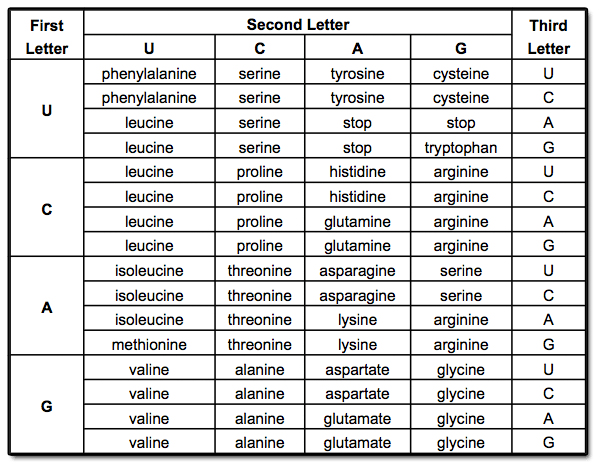
What amino acid is represented by the codon UUA?
a)
Phenylalanine
b)
Tyrosine
c)
Leucine
d)
Stop codon
105.
What process is going on in this photo? 
a)
Transcription 
b)
Translation 
c)
Replication 
d)
All the above 
106.
Translation is the process where
a)
mRNA is created in the Nucleus
b)
mRNA is decoded to form a protein 
c)
glucose molecules are made
d)
is where lipids are synthesised
107.
Does the order of amino acids in a protein matter?
a)
YES!
b)
NO!
108.

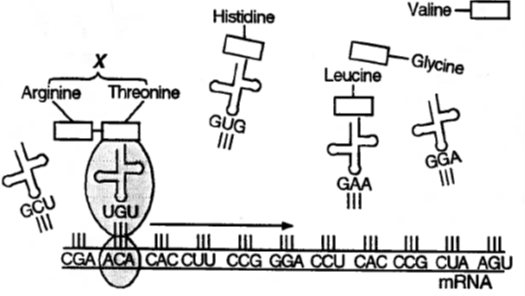
What process is happening in the diagram?

a)

transcription

b)

translation

c)

dna replication

d)

mitosis

109.

Where does TRANSCRIPTION occur?

a)

Nucleus

b)

Ribosome

c)

Cytoplasm

d)

Mitochondria

110.

Why must transcription occur where DNA can be found?

a)

because DNA can't leave

b)

because ribosomes are in the nucleus

c)

because DNA polymerase is found there

d)

because helicase unzips the DNA

111.

How many codons equals 1 amino acid?

a)

1

b)

2

c)

3

d)

4

112.

How many nucleotides equal 1 amino acid?

a)

1

b)

2

c)

3

d)

4

113.

What is the purpose for anti-codons?

a)

to ensure the correct amino acid is dropped off

b)

to match the strand of DNA

c)

to decode a sequence of 4 nucleotides into an amino acid

d)

to make me hate biology

114.

TRANSCRIBE this DNA sequence: TACGTTACT

a)

AUGCAAUGA

b)

ATGCAATGA

c)

AUGGATUGA

d)

TACGTTACT

115.

TRANSLATE this RNA sequence: AUGCAAUGA

a)

Met-Glu-Stop

b)

Met-His-Stop

c)

Thr-Glu-Stop

d)

Thr-Pro-Stop

116.

A DNA nucleotide may be made up of a phosphate group, along with

a)

deoxyribose sugar and uracil

b)

ribose sugar and cytosine

c)

deoxyribose sugar and thymine

d)

ribose sugar and adenine

117.
DNA sequence is ACAGTGC. How would this be coded on mRNA?
a)
TGTCACG
b)
UGUCACG
c)
GUGACAU
d)
CACUGUA
118.
Genetic info flows in one direction. Which best represents this flow?
a)
DNA-protein-RNA
b)
Protein-RNA-DNA
c)
RNA-protein-DNA
d)
DNA-RNA-protein
119.
What are the backbones (sides) of the DNA structure made up of?
a)
repeating phosphates and sugars
b)
nitrogen bases
c)
nucleotides
d)
adenine and thymine
120.
Which is the mRNA molecule that would be transcribed from this DNA template:
TGGCAAGTACGT
a)
ACCGTTCATGCA
b)
UGGCAAGUACGU
c)
UCCGUUCUUGCU
d)
ACCGUUCAUGCA