
 Worksheets
Biology Final Review
Total questions: 120
Worksheet time: 3hrs 44mins
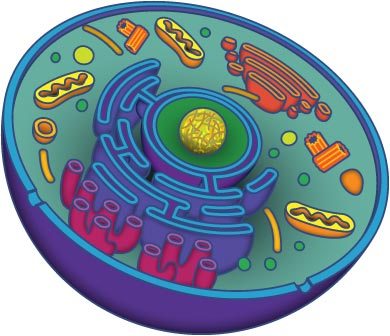
What is the basic structural and functional unit of all living things?
atom
cell
bacteria
animalcules

The 3 parts of the Cell Theory are...?
All living things are composed of cells
Cells are the basic units of structure and function in living things
All cells are produced from other cells
All living things are composed of cells
Cells are the basic units of dance and vibes in living things
All cells are destroyed from other aliens
All living things are composed of Jell-O
Cells are the basic units of structure and function in living things
All cells are produced from factories in Canada
All living things are composed of cells
Cells do karate and practice eating whole pies in their free time
All cells are produced from other cells
What does it mean to say that a cell membrane is semipermeable?
it allows some materials to pass through
it allows nothing to enter the cell, only to leave
It only allows things into the cell and not out
it allows all materials to pass through
What is the function of an organelle?
to take up space
to carry out a specific function in the cell
to carry out all the functions of a cell
to create new cells
What is the function of the mitochondria?
to capture energy from the sun and turn it to sugar
to release usable energy for the cell
to store energy for when the cell needs it
to remove waste from the cell
What organelle allows plants to create their glucose?
Mitochondira
Lysosome
Ribosome
Chloroplast
Which of the following is not one of the 5 things all cells have?
cell membrane
cytoplasm
DNA
nucleus
What is the difference the key difference between prokaryotic and eukaryotic cells?
Prokaryotes have a nucleus, Eukaryotes do not
Eukaryotes have a nucleus, Prokaryotes do not
Prokaryotes have a cell membrane, Eukaryotes do not
Eukaryotes have ribosomes, Prokaryotes do not
Which of the following organelles do plants have that animals to not? (Select all that apply)
Cell wall
Golgi Apparatus
Endoplasmic Reticulum
Chloroplasts
Ribosomes
Which organelle provides structure and protection to plant cells?
cell membrane
ribosome
golgi apparatus
cell wall
Dilcia wants to know how drinking milk affects how tall Monica grows. Which is the independent variable?
Monica's growth
drinking milk
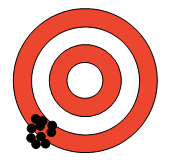
How close a measurement is to the true value is called..
Accuracy
Precision
Significant
Estimate
All students should exercise, not just because exercise is fun, but also because it is good for the brain.
Objective
Subjective
In a study, participants who exercised showed improvement of their memory while participants who did not exercise showed no improvement.
Objective
Subjective


Why does ice float?
As water freezes, the molecules spread out decreasing its density.
As water freezes, it takes up more hydrogen from the atmosphere, causing it to have a greater buoyancy.
As water freezes, air gets trapped making it more dense
As water freezes, it takes up more oxygen from the atmosphere, causing it to be more dense
Which of the following is LEAST likely to dissolve in water?
nonpolar fats and oils
polar sugar molecules
salt made of a positive sodium ion and a negative chloride ion
all of the substances will dissolve easily in water

Why does water move from the roots to the leaves of plants?
Water is pushed by solutes
Capillary action pulls the water molecules up like a chain
Water is pulled by gravity
Water cannot move up roots to leaves
The diffusion of water molecules through a selectively permeable membrane is:
Homeostasis
Osmosis
Active Transport
Equilibrium
All matter is composed of very small particles called:
Molecules
Ions
Solutes
Isotopes
The movement of molecules from a place where there is a greater/higher concentration to an area where there is lesser/lower concentration is:
Homeostasis
Diffusion
Endocytosis
Active Transport
A solution in which the concentration of solutes is the same inside and outside of a cell is a _____________________ solution.
hypertonic
hypotonic
isotonic
homeotonic
If a red blood cell is placed in a solution that has a concentration gradient higher than the red blood cell, this type of solution is called:
Isotonic
Hypotonic
Hypertonic
Homeotonic
If a red blood cell is placed in a hypotonic solution, it will eventually
shrink up
swell and burst
no change will occur
swell and not burst
When substances move in and out of cells using only their own kinetic energy this is called:
Active Transport
Passive Transport
Activation Energy
Selective Transport
Molecular movement continues even when there is no overall change in concentration. This is referred to as:
active transport
passive transport
homeostasis
equilibrium
The difference in the concentration of a substance across a space is called:
kinetic energy gradient
solvent gradient
concentration gradient
dynamic equilibrium
During which phase does the cell grow and copy its DNA before Mitosis?
Prophase
Interphase
Telophase
Anaphase
Which phase of mitosis is when the chromosomes become visible and the spindle forms outside the nucleus?
Prophase
Interphase
Anaphase
Metaphase

What phase of the cell cycle is pictured?
Interphase
Prophase
Anaphase
Metaphase

What phase of the cell cycle is pictured?
Prophase
Anaphase
Metaphase
Telophase

What is the scientific term that refers to sex cells?
autosome
gamete
karyotype
chromosome

This term refers to half the normal chromosome number
haploid
2N
diploid
3N

The stage of meiosis where crossing over or the exchange of genetic information happens between pairs of chromosomes
Prophase II
Telophase I
Metaphase II
Prophase I

The term that refers to a cell that has its full or complete number of chromosomes is
diploid
N
gamete
haplpoid

What is another term for body cells?
somatic cells
gamete
stem cell
neural cell
Which process converts carbon dioxide, water, and sunlight into sugar and oxygen?
Cell respiration
Nucleus
Chlorosynthesis
Photosynthesis

What is the energy transformation that occurs in photosynthesis?
Light energy to Chemical energy
Light energy to Electrical energy
Chemical energy to Light Energy
Which organelle and process converts chemical energy stored in sugar into ATP?
Chloroplasts via Photosynthesis
Mitochondria via Carbon cycle
Photosynthesis via Chloroplasts
Mitochondria via Cellular Respiration
Which organisms undergo cell respiration?
1. Plants
2. Animals
3. Bacteria
1. Only
1. and 2. Only
3. Only
ALL organisms, 1., 2. and 3.
Which organelle is the site of Cell Respiration in Eukaryotes?
Chlorplast
Mitchondria
Nucleus
Cell Membrane

What do genes do?
Give the body chromosomes.
Control the DNA.
Control the production of proteins.
What is the correct sequence of structures from smallest to largest?
Chromosomes, Gene, DNA, Nucleus, Cell
Cell, Nucleus, Chromosomes, DNA, Genes
DNA, Gene, Nucleus, Chromosome, Cell
Gene, DNA, Chromosomes, Nucleus, Cell
Gene Nucleus, DNA, Chromosome, Cell

Chromosomes are made of
DNA
genes
proteins
traits

What are the structures in this image called?
chromosomes
centromere
sister chromatids
chromatin

Eye color, hair color, having freckles, etc. are examples of:
DNA
Chromosomes
Genes
Traits

The part of the cell that contains chromosomes and genes is the:
Mitochondria
Nucleus
Chloroplast
Ribosomes
How many alleles for the same gene do offspring get?
1
2
23
100's to 1000's
Homologous Chromosomes are a combination of how many chromosomes from each parent?
1 from each parent
2 from each parent
1/2 from each parent
23 from each parent
Which set of chromosomes represents a male?
XX
XY
XXY
XYY

Is this person a male or female?
Male
Female
Which of the following will pair with Adenine?
Guanine
Thymine
Cytosine
What does semiconservative replication mean?
that the DNA is proof read at the end of the process
that the newly made DNA has one strand from the original DNA and one new strand
that the newly made DNA will send half of its strand to one cell and leave the old strand in the original cell
that the original DNA strands come back together after replication is over
DNA is copied during
During cell division
All the time
During protein production
The DNA sequence is TTA CCG What is the complementary sequence?
TTA CCG
AAT GGC
GGC AAT
Semiconservative replication is how DNA reproduces. What does it mean
DNA will only partially copy itself
One strand is kept as a template to build the other new strand
One strand is upside down to the other strand.
One strand is made of DNA while the other strand is made of proteins
Enzymes are an example of
lipids
carbohydrates
protein
nucleic acid
What is a substance called if it speeds up a chemical reaction?
reusable
catalyst
specific
fragile
Each enzyme only has 1 substrate that will fit its active site. What is this called?
reusable
catalyst
fragile
specific

Letter B...
substrate
active site
enzyme
products

Letter C...
products
substrate
enzymes
active site
An enzyme speeds up a reaction by
raising the activation energy
lowering the activation energy
releasing energy
absorbing energy.
What happens when enzymes are heated to a high temperature?
The shape of the enzyme are changed and it denatures
The enzymes die
The enzymes' amino acid sequence changes
The enzymes remain the same
Substances that are changed during a chemical reaction
reactants
products
Releases energy
endothermic reaction
exothermic reaction
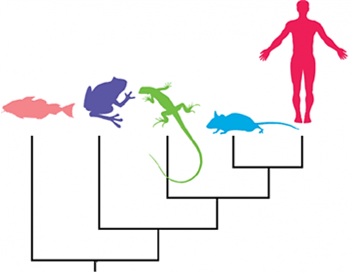
What is the human most closely related to?
Fish
mouse
Salamander
Human

Which group of animals on this tree are most closely related to birds?
Saurischian dinosaurs
Ornithischian dinosaurs
Crocodiles
None of these are related to birds

According to this tree, which of these animal phyla are most closely related?
Arthropoda & Mollusca
Arthropoda & Chordata
Chordata & Mollusca
A personal with type AB blood has which genotype?
type A
AA
IAIA
IAIB
A person with a Type O Phenotype would have what potential genotypes?
IBIB
IBi
ii
IAIB
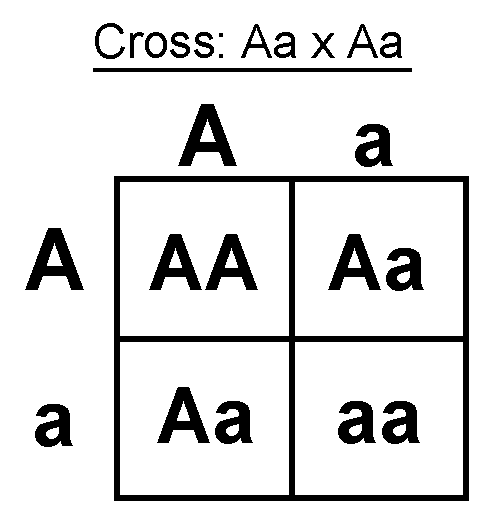


A calico cat shows both the traits for orange fur and black fur.
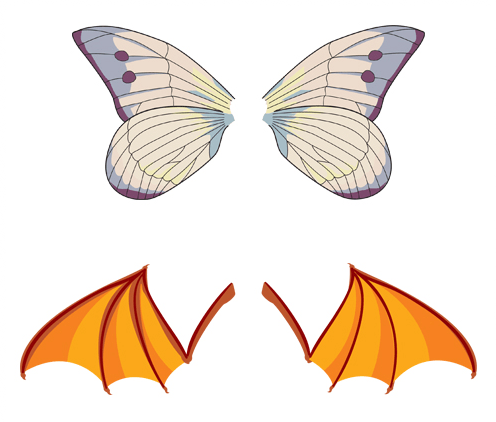
What is this an example of?
Homologous structure
Analogous structure
Vestigial organs
Functional adaption
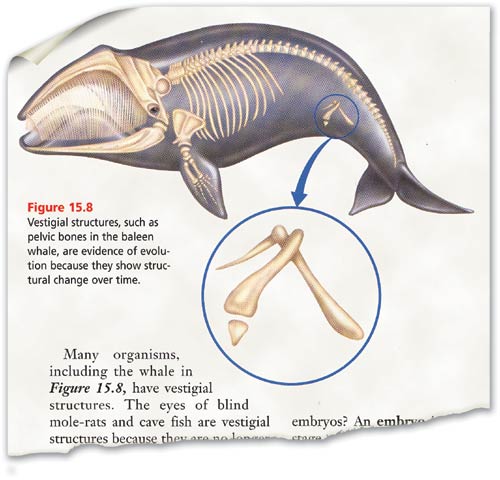

Similarities in bone arrangements, like those in the picture, support the hypothesis that...
these organisms are not well adapted
these organisms share a common ancestor
these organisms all share the same DNA sequences
these organisms are members of the same species
Natural selection causes the frequency of favorable alleles to
decrease in a population
remain constant in a population
Increase in a population
vary widely in a population

What happens if a population grows past its carrying capacity?
The population keeps growing
The population starts to die off
The entire species will go extinct
The carrying capacity just increases
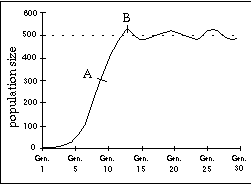
What is the carrying capacity of the graph?
around 500
more than 800
less than 300
around 700

What are the major roles plants and animals play in the food web?
producers, consumers, and decomposers
composers, consumers, and reproducers
consumers, scavengers, and parasites
What do you call an organism that eats both plants and meat?
carnivore
omnivore
herbivore
What are animals that eat only plants called?
producer
herbivore
decomposer
An example of decomposers is/are
very hungry animals
bacteria and fungi
scavengers
What makes up the largest part of every trophic pyramid?
producer
consumer
decomposer

Which statement describes the movement of energy in the diagram?
Energy flows from the Sun, to the corn, to the mouse, to the owl.
The owl gets its energy directly from the Sun.
Energy flows from the owl, to the mouse, to the corn.
What is the difference between biotic & abiotic factors?
Biotic are non-living & abiotic are living
Biotic has to do with ecosystems, abiotic has to do with cars
Biotic are living & abiotic are non-living
What is the difference between producers & consumers?
Producers make their own food, consumers eat other organisms
Consumers make their own food, producers eat other organisms
Consumers are always at the bottom of the pyramid, producers are always at the top
Why are decomposers important to the trophic pyramid (and circle of life)?
Decomposers break down dead material and recycle energy
Decomposers make the food for the consumers
Decomposers give plants the sunlight that they need for photosynthesis

A ______________ is a large molecule.
Micromolecule
Polymer
Amino Acid
Macromolecule
Which of the following elements are found in all macromolecules? (Select all that apply).


Which of the following is not one of the four major classes of macromolecules?
Lipids
Carbon
Protein
Carbohydrates
Nucleic Acid

