
 Worksheets
Spring 2021 FINAL EOC REVIEW
Total questions: 112
Worksheet time: 2hrs 49mins
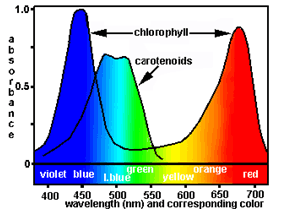

If a stem cell (body cell) has 24 chromosomes, how many will it have at the end of meiosis?
24
12
6
the number varies per species
Meiosis results in ______.
4 genetically unique haploid gametes
4 genetically unique diploid cells
2 genetically identical cells
4 genetically identical cells

Two processes that increase genetic variation during meiosis are crossing over and _____
Synapsis
Tetrad
Independent assortment
Gameiosis
A haploid cell has
three sets of chromosomes
one set of chromosomes
two sets of chromosomes
four sets of chromosomes
Haploid cells are represented by
2n
n
1/2 n
4n


What are two types of Nucleic acids?
DNA & BNA
DNA & NNA
RNA & fRNA
DNA & RNA

What composes a semi-permeable membrane?
Proteins
Carbohydrates
Phospholipids
Fatty acids
What are simple sugars that serve as a building block for carbohydrates?
Monosaccharides
Disaccharides
Polysaccharides
I have no clue. I'm just selecting random answers waiting for the game to be over
A fat that is solid at room temperature. (ex. Animal fat)
Saturated Fat
Supersaturated Fat
Unsaturated Fat
I haven't answered a question since the first one
A fat that is liquid at room temperature because of the kinks in the molecule. (ex. Plant oils)
Supersaturated
Unsaturated
Saturated
I am playing games on my phone now.

This egg has shrunk, what type of solution was it placed in?
hypotonic solution
hypertonic solution
isotonic solution

In an isotonic solution which way will the water flow
it will not flow at all
it will flow into the cell
it will flow both ways at equal rates
out of the cell
In Darwin's thinking, the more closely related two different organisms are, the
more similar their habitats are.
less similar their DNA sequences are.
more recently they shared a common ancestor.
less likely they are to have the same genes in common.
more similar they are in size.
Homologous structures are often cited as evidence for evolution. All of the following are examples of homologous structures EXCEPT
the wings of a bird and with wings of a bat
the flippers of a whale and the arms of a man
the pectoral fins of a porpoise and the flippers of a seal
the forelegs of an insect and the forelimbs of a dog
the hind legs of a lizard and the legs of a chicken.
Cellular respiration is the process by which ____________ is consumed and _______________ is produced.
Carbon, Oxygen
Oxygen, Carbon dioxide
H20, oxygen
Carbon, H2O

Based on the diagram, what would be the most likely effect of a mutation in the YUC gene?
The Trp-T enzyme would not function
I3PA would not be produced
IAA would not be produced
The Trp-T gene would be mutated

What is the role of ribosomes?
To store genetic information.
To produce glycolipids.
To synthesize proteins.
To hydrolyze waste materials.

Which of the following is a difference between smooth and rough endoplasmic reticulum (ER)?
Smooth ER exists in a part of the cell near the cell membrane, while rough ER exists in a part of the cell near the nucleus.
Smooth ER is not studded by ribosomes, while rough ER is studded by ribosomes.
Smooth ER is meant to compartmentalize the cell, while rough ER detoxifies and synthesizes lipids.
Smooth ER is made without the additional help of proteins, whereas rough ER is made with the help of special proteins called reticuloproteins.

In plants, what is the primary function of vacuoles?
To maintain water pressure inside of the cell.
To remove waste from inside of the cell.
To store nutrients inside of the cell.
To synthesize new membranes for the cell.

Which of the following correctly describes hydrophobic and hydrophilic regions of the cellular membrane?
The hydrophobic region is made of phosphates, and the hydrophilic region is made of lipids.
The hydrophobic region is 'water-loving', and the hydrophilic region is 'water-fearing'.
The hydrophobic region is polar, and the hydrophilic region is non-polar.
The hydrophobic region faces inward in the interior of the membrane, the hydrophilic region faces outwards towards the aqueous environment.
Which of the following describes a solution that has a higher concentration than the internal environment of the cell?
Hypotonic
Isotonic
Hypertonic
Transtonic
Which of the following membrane-bound organelles evolved from free-living prokaryotic cells?
Nuclei and plasmids.
Mitochondria and chloroplasts.
Vacuoles and lysosomes.
Centrioles and microtubules.


Which of the following cells would most likely have the greatest concentration of densely packed rough endoplasmic reticulum?
An amoeba engulfing small ciliates
A bioluminescent bacterial cell
A pancreatic cell engaged in the production of digestive enzymes
A functional cell at maturity functioning in transporting hormones

What macromolecule class is represented by the picture above?
carbohydrate
lipid
protein
nucleic acid
Which of the following characteristics, structures, or processes is common to both bacteria and
viruses?
cell division
genetic material composed of nucleic acid
ribosomes
metabolism
How do the leading and the lagging strands differ?
The leading strand is synthesized in the same direction as the movement of the replication fork, and the lagging strand is synthesized in the opposite direction.
The leading strand is synthesized at twice the rate of the lagging strand.
The leading strand is synthesized in short fragments that are ultimately stitched together, whereas the lagging strand is synthesized continuously.
The leading strand is synthesized by adding nucleotides to the 3' end of the growing strand, and the lagging strand is synthesized by adding nucleotides to the 5? end.
If 2n = 48 for a particular cell, then the chromosome number in each cell after meiosis would be
96
48
24
12
An alternate form of a gene for a specific trait or gene product
genotype
allele
gene
phenotype

Chromosomes with genes for traits unrelated to sex are called
autosomes
complete
deutosomes
linked genes
How does the active site of an enzyme determine the substrate for that enzyme?
The active site has the right polarity to interact with the substrate.
The active site is hydrophobic and interacts with other hydrophobic amino acids on the substrate
The active site has a specific shape that fits the shape of the substrate
The active site uses energy to form covalent bonds with the substrate
Enzymes ___________________ activation energy to speed up chemical reactions.
increase
decrease
Why do plants not store 100% of the light energy absorbed by chlorophyll in glucose molecules?
Most of the energy is used to power the reaction or is lost as heat
Plants do not have a high energy requirement, so they do not need to convert 100% of the energy
The energy is used to power ATP synthase proteins on the thylakoid membrane
The remaining energy is used actively transport oxygen out of the cell.
What factors affect the rate of photosynthesis?
CO2 concentration
H2O available
Temperature
Light intensity
All of the above
When will lactic acid build up in animal cells?
When there is excess carbon dioxide
When the cells produce too much ATP
When there is not enough oxygen to fuel the mitochondria
When the cells need to remove excess oxygen to avoid damaging their components.
A mutation resulting in the change of one amino acid
substitution-missense
substitution-silent
frameshift-insertion
frameshift-deletion
What is the purpose of translation?
to replicate DNA before cell division
to assemble mRNA into a chain
to synthesize amino acids that open up the DNA
to use the genetic code to form a specific sequence of amino acids
What type of organism makes its own food?
Autotroph
Heterotroph
Large molecules made up of small monomers are called
polymers
monomer
allotrope
functional group

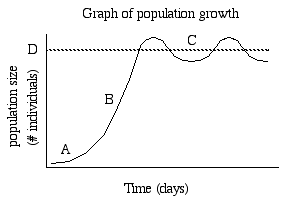

Which curve best describes an organism that invests a lot of energy in parenting?
What types of organisms are producers?
autotrophs
apex predators
heterotrophs
keystone species
If the producer level of an ecosystem has 750,000 J of energy, how much energy would be passed on to the secondary consumers?
75,000 J
7,500 J
750 J
75 J
How does competition affect population?
Most populations do not have competition
It maximizes the carrying capacity of an ecosystem
It limits population sizes and drives natural selection
It benefits both species and increases their populations
How do invasive species impact ecosystems?
The increase density dependent limiting factors
They establish themselves as new keystone species in an area
The open up new niches in the ecosystem
They outcompete native species and overpopulate the area
Which of these provides evidence of the common ancestry of all life?
near universality of the genetic code
structure of the nucleus
structure of cilia
structure of chloroplasts
Which type of specialized cell has many mitochondria and changes size (contracts)?
red blood cells
squamous (skin) cells
muscle cells
white blood cells (macrophages)
nerve cells (neurons)
Which type of specialized cell carries electrical signals through the body to the brain?
red blood cells
squamous (skin) cells
muscle cells
white blood cells (macrophages)
nerve cells (neurons)
What type of cells contain a nucleus?
Just plant cells
Just bacteria cells
Only animal cells
Both animal and plant cells
What extra organelles are found in plant cells only
Chloroplasts, Nucleus and Cytoplasm
Nucleus only
Nucleus and Cytoplasm
Chloroplasts, Cell wall and Vacoule
Adenosine triphosphate or ATP is composed of adenine, ribose and three phosphate groups. The phosphate groups have a negative charge and as a result the bonds holding them onto the molecule are weak thus easily broken. Which of the following best explains why ATP serves as a common energy source for organisms?
Traces of ATP have been found in fossils of ancient organisms dating back to the beginning of life on Earth
ATP energy can be easily transferred to do cellular work.
ATP is extremely stable and can be stored in the cell for long periods of time.
ATP is the smallest energy molecule.
1.) They act like gatekeepers, only let certain things in.
2.) Enzyme receptors embedded in the membrane.

