wayground logo

Free Printable Worksheets

Font size

S
M
L
XL
Worksheets

Biology Final

Total questions: 122

Worksheet time: 2hrs 2mins

Name
Class
Date
1.
What is this?
a)
Xylem
b)
Phloem
2.
Moves sugar from leaves to roots
a)
Xylem
b)
Phloem
3.
Xylem and Phloem are both __.
a)
Transpiration
b)
Absorption
c)
Photosynthesis
d)
Vascular tissue
4.
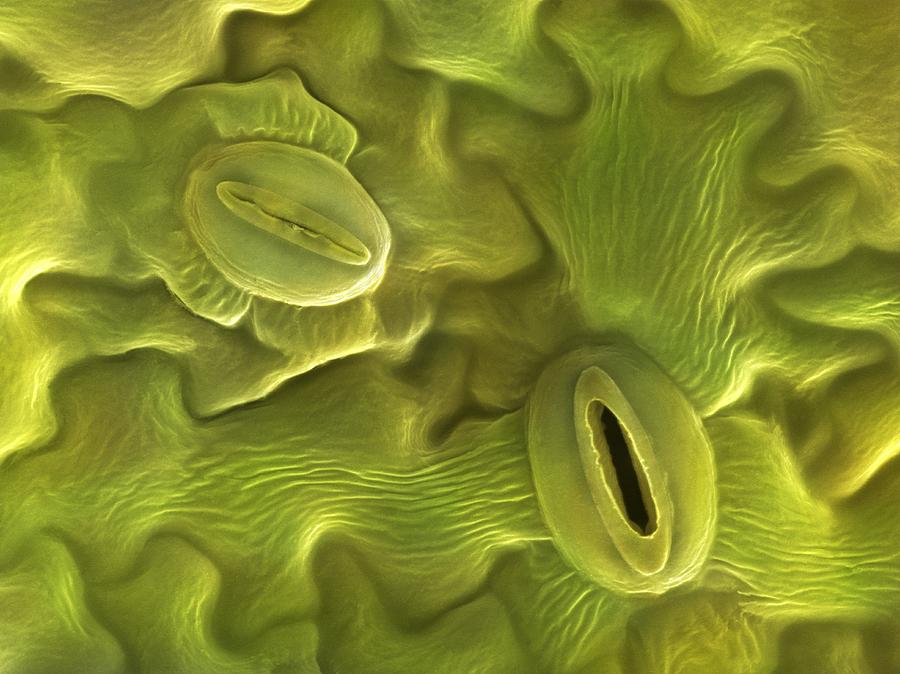
Opening that allows gas exchange
a)
Stomata
b)
Leaves
c)
Roots
d)
Vascular tissue
5.
Water exits the leaf through the __.
a)
Stomata
b)
Flower
c)
Roots
d)
Phloem
6.
___ opens and closes the stomata.
a)
Guard cells
b)
Xylem
c)
Roots
d)
Phloem
7.
Which structure of the plant absorbs water and nutrients from the soil?

a)
stem
b)
leaves
c)
roots
d)
flowers
8.
The male part of the flower is known as the _____.
a)
stamen
b)
pistil
c)
ovary
d)
petal
9.
The female part of the flower is known as the ____.
a)
stamen
b)
anther
c)
filament
d)
pistil
10.

A plant makes its own food in the...

a)

roots

b)

stem

c)

leaves

11.

what is the name of the process by which a plant makes its own food?

a)

photosynthesis

b)

nutrition

c)

reproduction

d)

germination

12.

which part of the plant is used to attract insects for pollination?

a)

roots

b)

stem

c)

leaves

d)

flowers

13.

what is the name of the part of the plant which produces ovule cells?

a)

filament

b)

pistil

c)

stamen

d)

petal

14.

what is the name used when the pollen and the ovule join together to make a seed?

a)

condensation

b)

nutrition

c)

fertilisation

15.

pollination: pollen is transferred from one plant to another by the wind or by some animals

a)

True

b)

False

16.

An apple tree is a non-flowering plant

a)

True

b)

False

17.
Small grains that contain a plant's male reproductive cells.
a)
stamen
b)
pollen
c)
anther
d)
stigma
18.
Brightly colored parts of flowers that attract insects.
a)
petals
b)
pistils
c)
stamen
d)
filaments
19.
The transfer of pollen, containing the sperm cells, to the female part of the flower. 
a)
seed disperal
b)
pollination 
c)
germination
d)
fertilization
20.

Which is NOT a category of plants

a)

Ferns

b)

Angiosperms

c)

Mosses

d)

Bryosperms

e)

Gymnosperms

21.

Plant cell walls are made of

a)

petidoglycan

b)

cellulose

c)

chitin

d)

pollen

22.

Which types of plants produce asexually with spores?

a)

mosses & gymnosperms

b)

mosses & angiosperms

c)

angiosperms & gymnosperms

d)

mosses & ferns

23.

What do farmers add to their plants to help them grow?

a)

Growth aid

b)

Pesticides

c)

Fertiliser

d)

Glucose

24.

What is the function of the flower part of a plant?

a)

help the plant reproduce

b)

transport water to the leaves

c)

make food for the plant

d)

provide support for the plant

25.


Nitrogen helps make plants look

a)

Green

b)

Yellow

c)

Short

d)

Dried out

26.


Plant fertilizers generally include these three elements:

a)

Nitrogen (N)

b)

Iron (Fe)

c)

Phosphorus (P)

d)

Potassium (K)

27.
What are the basic needs of plants?
a)
wind, air, water, and nutrients
b)
sunlight, water, air, and nutrients
c)
rocks, water, air, and nutrients
d)
shelter, water, nutrients, and wind
28.
Plants grow from _____________.
a)
rocks
b)
seeds
c)
eggs
d)
leaves
29.

Which of the following belong to main elements which are needed by plants?

a)

Potassium

b)

Boron

c)

Zink

d)

Manganese

30.

Which elements are considered non-mineral nutrients?

a)

Carbon, Hydrogen & Oxygen

b)

Carbon, Hydrogen, Oxygen and Nitrogen

c)

Carbon, Potassium, Hydrogen & Nitrogen

31.

3. Which of the following statements is false?

a)

a. Carnivorous plants get their energy from eating bugs.

b)

b. Carnivorous plants do not get nutrients from the soil.

c)

c. Carnivorous plants get their energy from the sun.

d)

d. Carnivorous plants get their nutrients from eating bugs.

32.
Plants with seeds in cones are called?
a)
gymnosperms
b)
angiosperms
c)
flowers
d)
mosses
33.

Where do the seeds of a gymnosperm come from?

a)

fruit

b)

flowers

c)

spores

d)

cones

34.
What do male cones produce?
a)
spores
b)
pollen
c)
eggs
d)
seeds
35.
How is pollen able to move from a male cone to a female cone?
a)
blows loose in the wind
b)
through tiny little water droplets
36.

improved water quality can be achieved by

a)

appropriate use of water

b)

careful water storage and handling

c)

proper land management

d)

all of the above

37.
What are two things that water treatment plants need to do?
a)
Clean and disinfect the water
b)
Boil and evaporate the water
c)
Remove the animals and plants
d)
Add chemicals and remove pesticides
38.

What is the first step in the water treatment process?

a)

coagulation

b)

filtration and removal of debris, sand, grit, etc.

c)

flocs

d)

concentation

39.
What is the role of bacteria in the water purification process?
a)
digested organic matter
b)
add chlorine
c)
nothing, we don't want them in there
d)
add nutrients to the sludge
40.

The final step of the water treatment process is...

a)

Coagulation

b)

Disinfection

c)

Filtration

d)

Sedimentation

e)

Flocculation

41.

Natural disturbances, such as fires or hurricanes, can result in

a)

A.parasitism.

b)

B.competition.

c)

C.commensalism.

d)

D.succession.

42.

The end result of ecological succession is usually a(n)

a)

A.land biome.

b)

B.aquatic biome.

c)

C.unstable community.

d)

D.climax community.

43.

. Which of the following is an example of primary succession?

a)

A.lichens growing on rocks following a volcanic eruption

b)

B.grasses growing after a forest fire

c)

C.oak trees replacing pine trees in a forest

d)

D. non-native species introduced into a climax community

44.

How is primary succession different from secondary succession?

a)

Primary succession starts with soil.

b)

Secondary succession start with bare rock.

c)

Primary succession starts with bare rock, with lichens and moss.

d)

Fire is an example of primary succession.

45.

Examples of Abiotic Factors include:

a)

Weather, birds, plants, and animals

b)

Rocks, reptiles, shrubs, trees, and grasses

c)

Weather, wind, rain, sunlight, and rocks

d)

Birds, plants, animals, reptiles, shrubs, trees, and grasses

46.
What is a producer? 
a)
Organism that creates their own food.
b)
Organism that eat other organisms for energy
c)
Organism that eat other dead organisms
47.
What is a consumer? 
a)
Organism that creates their own food.
b)
Organism that eat other organisms for energy
c)
Organism that eat other dead organisms
48.
What is a decomposer? 
a)
Organism that creates their own food.
b)
Organism that eat other organisms for energy
c)
Organism that eat other dead organisms
49.
What do Omnivores eat? 
a)
Plants ONLY 
b)
Animals ONLY
c)
Plants AND Animals
50.
What do Herbivores eat? 
a)
Plants ONLY 
b)
Animals ONLY
c)
Plants AND Animals
51.
What do Carnivores eat? 
a)
Plants ONLY 
b)
Animals ONLY
c)
Plants AND Animals
52.
Who is the producer in this food chain? 
a)
Grass
b)
Grasshopper
c)
Mouse
d)
Ow
53.
In an energy pyramid, energy_______ as you move up the pyramid.
a)
Increases
b)
Decreases
c)
Stays the same
d)
Changes up and down
54.
An organism that eats another organism.
a)
Autotroph
b)
Heterotroph
c)
Plant
d)
Producer
55.
A third-level consumer has to be which type?
a)
Carnivore.
b)
Decomposer.
c)
Producer.
d)
Herbivore.
56.
A secondary consumer 
a)
eats primary consumers
b)
eats producers
c)
eats plants
57.
Species that are indigenous to an area with no human intervention
a)
invasive species
b)
native species
c)
all species that live in an ecosystem
58.
A species that is NOT native to a particular region is called
a)
natural
b)
invasive
c)
endemic
d)
extraordinary
59.

What is an invasive species?

a)

An organism that is new to an environment that has positive effects on the environment.

b)

An organism that is native to an environment that has negative effects on the environment.

c)

An organism that is new to an environment that has negative effects on the environment.

d)

An organism that is native to an environment that has positive effects on the environment.

60.

Invasive species can crowd out native species.

a)

TRUE

b)

FALSE

61.

Why do the populations of invasive species grow so quickly?

a)

Invasive Species are native to an area.

b)

Invasive species are prey to many animals.

c)

Invasive species have no natural predators.

d)

Invasive species keep the ecosystems in equilibrium.

62.
The process of plants losing water through their leaves is called ____.
a)
condensation
b)
evaporation
c)
transpiration
d)
exhaling
63.
What is the only process that removes carbon from the atmosphere?
a)
combustion
b)
cellular respiration
c)
photosynthesis
d)
decomposition
64.
These gases, such as carbon dioxide, trap heat in the Earth's atmosphere causing global warming
a)
Global warming gases
b)
Hot House gases
c)
Green House gases
d)
Thermal pollution
65.
Why is solar energy considered renewable energy?
a)
It's cheaper than fossil fuels
b)
The sun's energy would not run out for billions of years
c)
Solar energy recharges batteries
d)
All of them
66.

All of the following are considered renewable energy sources EXCEPT –

a)

Wind

b)

Coal

c)

Biomass

d)

Solar

67.
Which is NOT an example of biomass?
a)
wood
b)
crop leftovers (the part of the plant that isn't consumed)
c)
manure and/or trash
d)
petroleum
68.
_____________________ carries information for inherited traits.
a)
DNA
b)
FBI
c)
RNA
d)
CBS
69.
A nucleotide is made up of three parts:  which of these is not one of those parts?
a)
sugar
b)
phosphate
c)
amino acids
d)
base
70.
A strand of DNA that looks like a twisted ladder is called a _____________________
a)
triple twist
b)
corkscrew
c)
double helix
d)
chain reaction
71.
____________________ is to make copies of DNA
a)
replicate
b)
recycle
c)
reuse
d)
rejoice
72.
RNA and DNA are all __________________, meaning they stand for something else.
a)
substitutes
b)
codes
73.
DNA is a polymer made of:
a)
Nucleotides
b)
Ribosomes
c)
Purines
d)
Pyrimidines
74.
Which organelle is DNA usually found in?
a)
cell membrane
b)
vacuole
c)
ribosome
d)
nucleus
75.
What will the matching sequence be on a strand that reads AAGCTAT?
a)
AACGATA
b)
TTCGTTA
c)
CCTGATA
d)
TTCGATA
76.
What are the three components of a nucleotide?
a)
sugar, hydrogen, nitrogen base
b)
sugar, oxygen, nitrogen base
c)
sugar, phosphate, nitrogen base
d)
sugar, phosphate, protein
77.
the process of making a copy of DNA
a)
transcription
b)
double helix
c)
DNA replication
d)
replication fork
78.
Which shows the correct complementary base pairing for DNA?
a)
C-A, T-G
b)
A-G, C-T
c)
C-G, U-A
d)
T-A, G-C
79.

The backbone of a DNA molecule is made from a 5 carbon ______________ and a _______________ group.

a)

lipid, carbon

b)

sugar, phosphate

c)

nitrogen, oxygen

d)

nitrogen, sulfur

80.
What are the four nitrogen bases?
a)
adenine, thymine, guanine, cytosine
b)
adenine, lysine, prolene, guanine
c)
arganine, cytosine, lysine, purine
d)
lysine, cytosine, lucine, guanine
81.
What nitrogen base pairs with adenine in DNA?
a)
T
b)
U
c)
C
d)
G
82.
Which nitrogen base pairs with T in mRNA?
a)
A
b)
U
c)
C
d)
G
83.
Which sequence of DNA bases would pair with this partial strand
ATG TGA CAG
a)
ATG TGA CAG
b)
TAC ACT GTC
c)
GTA AGT GAC
d)
CAT TCA CTG
84.
Replicate the following strand of DNA: 
AATCATGGA
a)
AATCATGGA
b)
TTAGTACCT
c)
UUAGUACCU
d)
GGATAUCUA
85.

If a strand of DNA is 31% guanine, it is ____ cytosine.

a)

69%

b)

10%

c)

31%

d)

0%

86.

What are Chargaff’s rules?

a)

A = T, G = C

b)

A = G, T = C

c)

A = T, U = C

d)

A = U, T = C

87.
What did Erwin Chargaff conclude from his experiments?
a)
Nitrogen bases are held together by peptide bonds
b)
A and T, C and G always occur in equal amounts
c)
Proteins are the carriers of genetic information
d)
C and G rarely occur in eukaryotic organisms
88.
What does this image show?
a)
Double helical structure of DNA
b)
Triple Helical Structure of DNA
c)
Double helical structure of RNA
d)
Triple Helical Structure of RNA
89.
The work of scientists including Griffin, Avery, Hershey & Chase, and Franklin helped us to determine that _______ are responsible for carrying genetic material.
a)
Amino Acids
b)
Proteins
c)
Nucleic Acids
d)
Carbohydrates
90.
By using radioactive isotopes, Hershey and Chase were able to conclude that _____ is the carrier of genetic information.
a)
DNA
b)
Protein
c)
Carbohydrate
d)
Lipid
91.
the process of making a copy of DNA
a)
transcription
b)
double helix
c)
DNA replication
d)
replication fork
92.
Which shows the correct complementary base pairing for DNA?
a)
C-A, T-G
b)
A-G, C-T
c)
C-G, U-A
d)
T-A, G-C
93.
Who said, "The amount of A = the amount of T, and the amount of G = the amount of C"?
a)
Chargaff
b)
Avery
c)
Griffith
d)
Franklin
94.
What process does a multi-cellular organism use to replace its damaged body cells?
a)
mitosis
b)
meiosis
c)
replication
d)
transcription
95.
Which of these phases of mitosis take place first?
a)
anaphase
b)
telophase
c)
prophase
d)
metaphase
96.

A chromosome is packaged

a)

DNA

b)

Protein

c)

Carbohydrates

d)

Lipids

97.

What stage of mitosis is depicted here

a)

Prophase

b)

Anaphase

c)

Telophase

d)

Metaphase

98.

What stage of mitosis is depicted here

a)

Prophase

b)

Metaphase

c)

Anaphase

d)

Telophase

99.

What stage of mitosis is depicted here

a)

Prophase

b)

Metaphase

c)

Anaphase

d)

Telophase

100.

What stage of mitosis is depicted here

a)

Prophase

b)

Metaphase

c)

Anaphase

d)

Telophase

101.

In which phase does a cell spend most of its life?

a)

Interphase

b)

Prophase

c)

Metaphase

d)

Anaphase

e)

Telophase

102.
Before a cell can divide, what must happen?
a)
Nothing, it is always ready to divide
b)
The number of chromosomes must be reduced by half
c)
The  chromosomes must replicate
d)
The number of chromosomes must triple.
103.
After meiosis,  the haploid number of chromosomes in a human sex cell is:
a)
46
b)
92
c)
22
d)
23
104.
What is the diploid number of cells found in a human body cell?
a)
23
b)
46
c)
92
d)
47
105.
Meiosis creates how many cells?
a)
1
b)
2
c)
3
d)
4
106.
At the end of mitosis, how many identical cells will you have?
a)
1
b)
2
c)
3
d)
4
107.
The process on the left is:
The process on the right is:
a)
Left: meiosis
Right: meiosis
b)
Left: meiosis
Right: cloning
c)
Left: mitosis
Right: meiosis
d)
Left: mitosis
Right: mitosis
108.
Osmosis is the movement of _____ across a membrane.
a)
food
b)
energy
c)
oxygen
d)
water
109.
During osmosis
a)
water moves from high to low concentration
b)
large or oddly shaped molecules move across a cell membrane
c)
water moves when energy is used
d)
proteins are built
110.

A segment of DNA that codes for a trait

a)

gene

b)

allele

c)

chromosome

d)

chromatid

111.

an observable characteristic

a)

trait

b)

gene

c)

allele

d)

DNA

112.

When an organism has two of the same alleles, it is called

a)

homozygous

b)

heterozygous

c)

recessive

d)

dominant

113.

When an organism has two different alleles, it is called

a)

homozygous

b)

heterozygous

c)

recessive

d)

dominant

114.

This type of allele is expressed whether there are one or two copies present.

a)

dominant

b)

recessive

c)

homozygous

d)

heterozygous

115.

These types of alleles are only expressed if the organism has two copies

a)

dominant

b)

recessive

c)

homozygous

d)

heterozygous

116.

The genotype gg is best described as

a)

heterozygous

b)

homozygous

117.

The genotype Aa is best described as

a)

heterozygous

b)

homozygous

118.

In mice, black fur (B) is dominant to brown fur (b). A bb mouse would have the phenotype of

a)

brown fur

b)

black fur

c)

white fur

119.

In mice, black fur (B) is dominant to brown fur (b). A Bb mouse would have the phenotype of

a)

brown fur

b)

black fur

c)

white fur

120.

In pea plants, purple flowers (P) are dominant to white flowers (p). The phenotype of a Pp plant would be

a)

purple

b)

white

c)

homozygous

d)

heterozygous

121.

In pea plants, purple flowers (P) are dominant to white flowers (p). The phenotype of a pp plant would be

a)

purple

b)

white

c)

homozygous

d)

heterozygous

122.

In pea plants, purple flowers (P) are dominant to white flowers (p). The phenotype of a PP plant would be

a)

purple

b)

white

c)

homozygous

d)

heterozygous