
 Worksheets
Semester 1 Exam Review
Total questions: 131
Worksheet time: 2hrs 44mins
Name
Class
Date
1.
Living things need energy to survive?
a)
True
b)
False
2.
All living things are composed of cells.
a)
True
b)
False
3.
Living things do all of the following except:
a)
Respond to stimulus
b)
Grow and develop
c)
maintain homeostasis
d)
They do not change
4.
Living things respond to the environment (homeostasis) and external stimuli (react to something).
a)
True
b)
False
5.
During ___________ conditions inside our body are kept stable (the same)
a)
homeopathic
b)
Homo sapian
c)
homeostasis
d)
homologous
6.
An example of homeostasis includes maintaining :
a)
oxygen level
b)
body temperature
c)
blood sugar level
d)
all of these levels
7.
Which of the following do living things not need to survive?
a)
DNA
b)
Respond to change
c)
permanent home
d)
they reproduce
8.
An organism made of one cell is called
a)
unicellular
b)
multicellular
9.
identify the correct order of organization in living things
a)
atoms, molecules, organelles, cells, tissues, organs, organ systems, organism
b)
atoms, molecules, cells, organelles, tissues, organ systems, organs, organisms
10.
Humans would be classified as
a)
multicellular heterotrophs
b)
multicellular autotrophs
c)
unicellular heterotrophs
d)
unicellular autotrophs
11.
a characteristic that increases the chances of survival are called
a)
adaptations
b)
homeostasis
c)
extinction
d)
growth
12.

Identify this structure.
a)
cell wall
b)
cell membrane
c)
sap vacuole
d)
cytoplasm
13.
Which organelle converts the energy in food into energy for the cell (cellular respiration)?
a)
Ribosomes
b)
Nucleolus
c)
Mitochondria
d)
Golgi Body
14.
Which organelle is responsible for making proteins?
a)
Nucleus
b)
Nucleolus
c)
Lysosomes
d)
Ribosomes
15.
ALL living cells have this in common
a)
Nucleus
b)
Cell Membrane
c)
Cell Wall
d)
Mitochondria
16.
This process happens inside chloroplasts
a)
Cellular Respiration
b)
Photosynthesis
c)
Protein Synthesis
d)
Osmosis
17.
Cellular respiration happens inside of this organelle
a)
chloroplasts
b)
ribosomes
c)
lysosomes
d)
mitochondria
18.
Which is true about active transport?
a)
It requires energy
b)
it does not require energy
c)
It moves substances down the concentration gradient
d)
it moves material from high to low concentration
19.
Osmosis is the movement of _____ across a membrane.
a)
food
b)
energy
c)
oxygen
d)
water
20.
Movement across the cell membrane that does not require energy is called
a)
active transport
b)
passive transport
21.
Which organelle is only found in a plant cell?
a)
nucleus
b)
chloroplast
c)
mitochondria
d)
cell membrane
22.

Directs all cell activities through the DNA located there.
a)
Lysosomes
b)
Nucleus
c)
ribosomes
d)
Mitochondria
23.
Which of the following is directly involved in the transportation of materials inside/within the cell?
a)
Endoplasmic Reticulum
b)
Vacuole
c)
Lysosome
d)
Mitochondria
24.
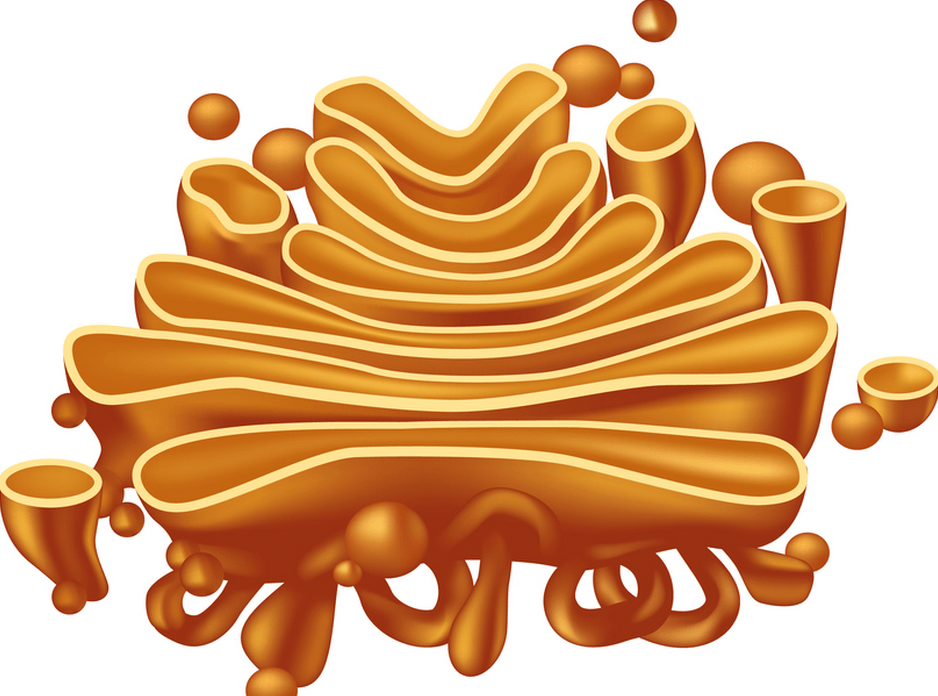
I am a protein packaging and shipping machine! Who am I?
a)
vacuole
b)
ribosome
c)
mitochondrion
d)
golgi apparatus
25.
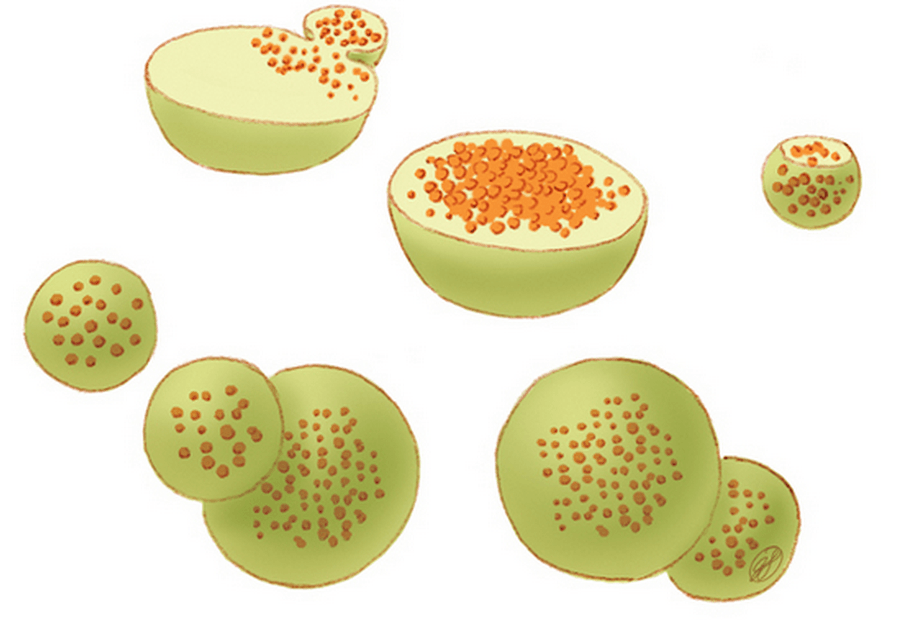
You might think of me as the trash collector, but recycler is maybe more accurate. What am I?
a)
mitochondria
b)
lysosome
c)
vacuole
d)
ribosome
26.
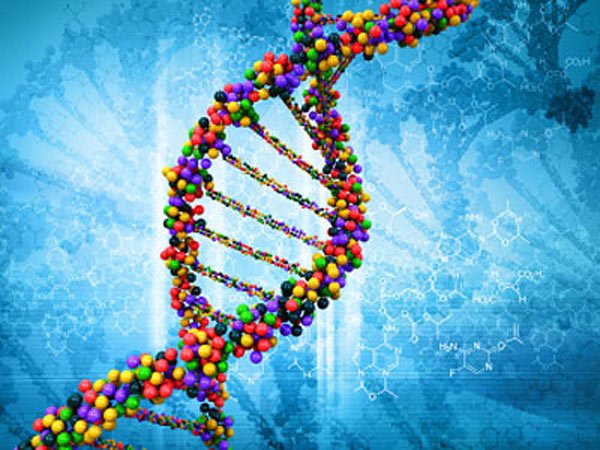
What is the name of the genetic material that is inside the nucleus?
a)
ER
b)
ATP
c)
YOLO
d)
DNA
27.

Which part of the cell is often called "the brain of the cell"?
a)
nuclear membrane
b)
endoplasmic reticulum
c)
nucleus
d)
mitochondria
28.

I am the outer most layer of an animal cell. What am I?
a)
cell wall
b)
nucleus
c)
cell membrane
d)
cell skin
29.
What organelle is called the "powerhouse" of a cell?
a)
Endoplasmic Reticulum
b)
Nucleus
c)
Mitochondria
d)
Nucleolus
30.
What organelle helps with cell digestion?
a)
Lysosomes
b)
Ribosomes
c)
Golgi Complex
d)
ER
31.
What is the gel-like substance inside of cells called?
a)
photoplasm
b)
photosynthesis
c)
cytoskeleton
d)
cytoplasm
32.
The movement of molecules from higher concentration to lower concentration is
a)
diffusion
b)
cell division
active transport
active transport
c)
active transport
d)
tonicity
33.
A cell in an isotonic solution will
a)
swell
b)
shrink
c)
stay the same size
d)
impossible to tell
34.
A cell in a hypotonic solution will
a)
swell
b)
shrink
c)
stay the same size
d)
impossible to tell
35.
Which term means "water-fearing"?
a)
Adhesion
b)
Polar
c)
Hydrophilic
d)
Hydrophobic
36.
When a cell is placed in a hypertonic (more concentrated) solution water
a)
moves from the inside of the cell to the solution
b)
moves from the solution to the inside of the cell
c)
moves equally in and out of the cell
d)
none of these
37.
Bacteria is what kind of cell?
a)
Eukaryotic
b)
Prokaryotic
38.
What type of cell has a nucleus?
a)
eukaryotic
b)
prokaryotic
39.
What type of cell does not have a nucleus?
a)
eukaryotic
b)
prokaryotic
40.
Plants and animal cells are examples of ___ cells
a)
prokaryotic cells
b)
eukaryotic cells
41.
What gas is released by plants during photosynthesis?
a)
sulfur
b)
carbon dioxide
c)
oxygen
d)
hydrogen
42.
Which of the following is the correct equation for PHOTOSYNTHESIS?
a)
carbon dioxide + water --> oxygen + glucose
b)
carbon dioxide + glucose + water --> oxygen
c)
oxygen + water --> carbon dioxide + glucose
d)
glucose+ oxygen ---> water + carbon dioxide
43.
What are the products of photosynthesis?
a)
water and carbon dioxide
b)
oxygen and glucose
c)
oxygen and carbon dioxide
d)
oxygen and water
44.
Which organelle does photosynthesis take place in?
a)
Mitochondrion
b)
Chlorplast
c)
Cytoplasm
d)
Nucleus
45.
What are the reactants (what's needed) for photosynthesis?
a)
glucose and oxygen
b)
light, water, and carbon dioxide
c)
oxygen and water
d)
carbon dioxide and water
46.
All energy originally comes from _________?
a)
Moonlight
b)
Soonlight
c)
Sunlight
d)
Other
47.

What gas do plants take in to make food?
a)
natural gas
b)
oxygen
c)
carbon dioxide
d)
oxygen and carbon dioxide
48.

The process by which cells use oxygen to produce energy from food is called?
a)
photosynthesis
b)
transpiration
c)
cellular respiration
d)
germination
49.
What is the chemical reaction formula for Cellular Respiration?
a)
Light + CO2 --> O2 + C6H12O6
b)
ATP + C6H12O6
c)
CHO + O --> CO + H2O +ATP
d)
C6H12O6 + O2 --> CO2 + H2O + ATP
50.
What are the products (things that are made) in cellular respiration
a)
ATP
b)
Carbon dioxide (CO2)
c)
Water
d)
All of the above
51.
Using carbon dioxide and water to create glucose and oxygen is
a)
photosynthesis
b)
respiration
c)
diffusion
d)
osmosis
52.
Which process produces the most ATP per molecule of glucose?
a)
lactic acid fermentation
b)
aerobic respiration
c)
alcoholic fermentation
d)
all are about the same
53.
what is the only useable form of energy?
a)
ADP
b)
ATP
c)
Glucose
d)
sugar
54.
where are the reactants ?
a)
left of the arrow
b)
right of the arrow
55.
Where are the products?
a)
on the left side of the arrow
b)
on the right side of the arrow
56.
Lactic acid fermentation occurs in your muscles after a workout because your cells are struggling to get...
a)
Glucose
b)
Sunlight
c)
Oxygen
d)
Water
57.
Fermentation is cellular respiration without which molecule?
a)
CO2
b)
O2
c)
C6H12O6
58.
When respiration occurs with oxygen, it is called _______
a)
anaerobic
b)
aerobic
c)
light-dependent
d)
fermentation
59.
Because fermentation takes place in the absence of oxygen, it is said to be
a)
aerobic
b)
anaerobic
c)
cyclic
d)
oxygen-rich
60.
The process carried out by yeast that causes bread to rise is
a)
alcoholic fermentation
b)
lactic acid fermentation
c)
cellular respiration
d)
yeast mitosis
61.
Autotrophs are also know as __________ because they make their own food.
a)
Consumer
b)
Herbivore
c)
Producer
d)
Omnivore
62.
Organisms that cannot make their own food and must obtain energy from external sources are called
a)
autotrophs
b)
heterotrophs
c)
thylakoids
d)
plants
63.

Autotroph or heterotroph?
a)
Autotroph
b)
Heterotroph
64.
What is an autotroph?
a)
an organism that can make their own food.
b)
an organism that cannot make their own food
c)
Herbivore
d)
Omnivore
65.
What are the steps of the cell cycle in order?
a)
Interphase, Mitosis, Cytokinesis
b)
Interphase, Cytokinesis, Mitosis
c)
Mitosis, Cytokinesis, Interphase
d)
Cytokinesis, Mitosis, Interphase
66.
Which step of the cell cycle do cells spend a majority of their time?
a)
Prophase
b)
Interphase
c)
Mitosis
d)
Cytokinesis
67.
Why do cells go through cell division
a)
Growth
b)
Reproduction
c)
Repair
d)
All of the above
68.
Before cells can divide, what must be copied?
a)
mitochondria
b)
cytoplasm
c)
DNA
d)
Cell Wall
69.
In the S stage of interphase_______________
a)
the cell grows
b)
the nucleus divides
c)
the cell membrane divides
d)
the DNA is replicated
70.
Uncontrollable cell growth is known as _____
a)
obesity
b)
cancer
c)
diabetes
d)
hepatitis
71.
The ___________ holds the replicated sister chromatids together.
a)
centriole
b)
chromosomes
c)
centromere
d)
cycles
72.

Highly coiled strand of DNA
a)
Chromatin
b)
Chromosome
c)
Sister Chromatid
d)
Centeromere
73.
Humans have ________ pairs of chromosomes.
a)
21
b)
23
c)
46
d)
None of the above
74.
A pair of chromosomes that consists of XX is a __________________.
a)
Male
b)
Female
75.
A human cell has 46 chromosomes before mitotic division. How many chromosomes will the daughter cells after mitosis.
a)
12
b)
23
c)
46
d)
92
76.
which cell cycle result in giving identical daughter cells?
a)
mitosis
b)
meiosis
77.
which cell cycle gives crossing over resulting in genetic variation
a)
mitosis
b)
meiosis
78.
which cell cycle consists of body cells division
a)
mitosis
b)
meiosis
79.
which cell cycle results in production of gametes
a)
mitosis
b)
meiosis
80.
When a cell divides, what do we call the 2 new cells?
a)
mother cells
b)
father cells
c)
daughter cells
d)
son cells
81.
In which type of cells will mitosis occur?
a)
egg cells
b)
sperm cells
c)
jail cells
d)
Body cells except the sperm and egg cells
82.
In meiosis, the haploid number of chromosomes in a human sex cell is:
a)
46
b)
92
c)
22
d)
23
83.
What is the diploid number of cells found in a human body cell?
a)
23
b)
46
c)
92
d)
47
84.
When you start with 1 cell, at the end of mitosis, how many identical cells will you have?
a)
1
b)
2
c)
3
d)
4
85.
After meiosis is complete how many cells will there be?
a)
1
b)
2
c)
3
d)
4
86.
Another name for a sex cell is a:
a)
gamete
b)
embryo
c)
bone cell
d)
muscle cell
87.
After meiosis is complete, the new cells:
a)
are all identical
b)
are all different
c)
are half identical and half different
d)
are all stretched out
88.
Why is sexual reproduction better than asexual reproduction?
a)
It gives an advantage to organisms to be different than the rest, if the environment changes.
b)
It is better for all organisms to be the same.
c)
It happens faster.
d)
It helps skin cells divide faster to heal wounds.
89.

Which of the following best describes a DNA molecule?
a)
double helix
b)
contains ribose
c)
made of amino acids
d)
contains Uracil
90.
Which of the following units are repeatedly joined together to form a strand of DNA? (This is the MONOMER of DNA.)
a)
amino acids
b)
nucleotides
c)
fatty acids
d)
polysaccharides
91.
Adenine bonds with ______________.
a)
Guanine
b)
Thymine
c)
Cytosine
d)
Adenine
92.
Guanine bonds with ______________.
a)
Adenine
b)
Guanine
c)
Cytosine
d)
Thymine
93.

Name this structure
a)
double helix
b)
nucelotide
c)
twisted ladder
d)
hydrogen bond
94.
What are the 4 nitrogen bases?
a)
adenine, thymine, cytoplasm, and guanine
b)
adenine, thymine cytosine, and guanine
c)
adenine, thymine, cytosine, and gylcerol
d)
adenine, thymine, cytosine, and glucose
95.
Which 2 molecules forms the sides (backbone) of the DNA ladder?
a)
deoxyribose and adenine
b)
deoxyribose and a hydrogen bond
c)
sugar and the nucleus
d)
deoxyribose (sugar) and phosphate
96.
Which shows the correct complementary base pairing for DNA?
a)
C-A, T-G
b)
A-G, C-T
c)
C-G, U-A
d)
T-A, G-C
97.
The process by which a DNA molecule is copied is called _____.
a)
binary fission
b)
mitosis
c)
replication
d)
translation
98.
Which of these enzymes is responsible for breaking the hydrogen bonds which "unzips" the DNA molecule?
a)
Topoisomerase
b)
Primase
c)
Helicase
d)
zippase
99.
What enzyme is responsible for laying down the RNA primers during DNA Replication?
a)
Helicase
b)
RNA Primase
c)
Ligase
d)
There are no RNA primers during DNA Replication
100.
Which enzyme is responsible for adding nucleotides?
a)
Topoisomerase
b)
DNA Polymerase
c)
Ligase
d)
Primase
101.
Which strand is synthesized continuously during DNA Replication
a)
Leading Strand
b)
Lagging Strand
102.
The _________ contains __________.
a)
Leading Strand / Okazaki Fragments
b)
Lagging Strand / Okazaki Fragments
c)
Leading Strand / Topoisomerase
d)
Lagging Strand / dispersive replication
103.
Which sequence of DNA bases would pair with this partial strand
ATG TGA CAG
ATG TGA CAG
a)
ATG TGA CAG
b)
TAC ACT GTC
c)
GTA AGT GAC
d)
CAT TCA CTG
104.
In order for DNA instructions to move from the nucleus to the ribosomes in the cytoplasm of a cell, an RNA copy of a DNA strand must be made. This process, which takes place in a cell's nucleus is called...
a)
translation
b)
mutation
c)
DNA replication
d)
transcription
105.
Translation is the process where
a)
mRNA is created in the Nucleus
b)
mRNA is decoded to form a protein
c)
glucose molecules are made
d)
is where lipids are synthesised
106.
The anti-codon
a)
contains a sequence the same as the codon
b)
contains a sequence complementary to the codon
c)
contains the base thymine
107.
tRNA is involved in
a)
carrying amino acids
b)
carrying ribosomes
c)
carrying glucose
d)
carrying lipids
108.
Amino acids are joined together in order to form
a)
DNA
b)
ribosomes
c)
proteins
d)
RNA
109.

which process is shown?
a)
diffusion
b)
repiration
c)
recombination
d)
translation
110.
What is the name of 3 bases on mRNA called?
a)
gene
b)
triplet
c)
codon
d)
anticodon
111.

What is occurring in this picture?
a)
Translation
b)
DNA Replication
c)
Polymerase is unzipping the DNA
d)
Transcription
112.
The anticodon is located on
a)
DNA
b)
mRNA
c)
tRNA
d)
rRNA
113.
Codons contain ______ bases
a)
1
b)
3
c)
6
d)
9
114.

A ________________________ is a tool used to predict the possible genotype from certain parents
a)
Mendel Grid
b)
Genetic Tic Tac Toe
c)
Punnett Square
d)
Pedigree Plot
115.

The dominant trait is
a)
yellow pea seeds
b)
green pea seeds
c)
there is no dominant seed
d)
Jolly green giant
116.

What are the possible genotypes for this cross?
a)
TT = 25% Tt= 50% tt=25%
b)
all tall
c)
TT= 75% tt = 25%
d)
Tt = 100%
117.

Two brown eyed parents which are both heterozygous(Bb) have a baby. What is the possibility of the baby being blue eyed?
a)
0 %
b)
25%
c)
50%
d)
75%
118.

What term describes what you see, or the physical appearance.
a)
Genotype
b)
Phenotype
c)
Homozygous
d)
Heterozygous
119.
In a heterozygous genotype, the ___________ allele takes over in the phenotype.
a)
recessive
b)
dominant
c)
lower case letter
d)
both
120.
What is another way of saying "hybrid"?
a)
heterozygous
b)
homozygous dominant
c)
homozygous recessive
d)
none of these choices
121.

Two heterozygous parents produce offspring. What is the probability of the HETEROZYGOUS GENOTYPE appearing in the offspring generation?
a)
75%
b)
25%
c)
50%
d)
100%
122.

Two heterozygous parents produce offspring. What is the probability of the HOMOZYGOUS DOMINANT GENOTYPE appearing in the offspring generation?
a)
75%
b)
25%
c)
50%
d)
100%
123.
What is another way of saying "purebred"?
a)
homozygous
b)
dominant
c)
recessive
d)
heterozygous
124.

HH crossed with Hh. What is the probability of hh?
a)
0%
b)
25%
c)
50%
d)
100%
125.
Which of the following is a phenotype?
a)
Aa
b)
red hair
c)
heterozygous
d)
DNA
126.
True or False: Recessive traits are ALWAYS present
a)
True
b)
False
127.
A matching pair of alleles are called
a)
dominant
b)
recessive
c)
heterozygous
d)
homozygous
128.
A mismatched pair of alleles is called
a)
dominant
b)
recessive
c)
heterozygous
d)
homozygous
129.
An allele whose trait only shows up when no dominant allele is present.
a)
hidden allele
b)
dominant allele
c)
recessive allele
d)
present allele
130.
Which of the following alleles is homozygous recessive?
a)
Tt
b)
tt
c)
TT
d)
T
131.
Dominant alleles are represented by a:
a)
Male gene
b)
lowercase letter
c)
recessive trait
d)
capital letter
100 %

