
 Worksheets
H-BIO_Unit 2 Cells Review
Total questions: 128
Worksheet time: 2hrs 0mins

Which of the following cells contain the highest water potential?
A
B
C
D


The _____ is a densely packed area in a cell that contains the genetic material - DNA - for controlling the cell's activities.
Chloroplast
Nucleus
Mitochondria
Vacuole
This outermost layer protects and supports the cells of plants and some other organisms.
Cell Membrane
Cell Wall
Cytoplasm
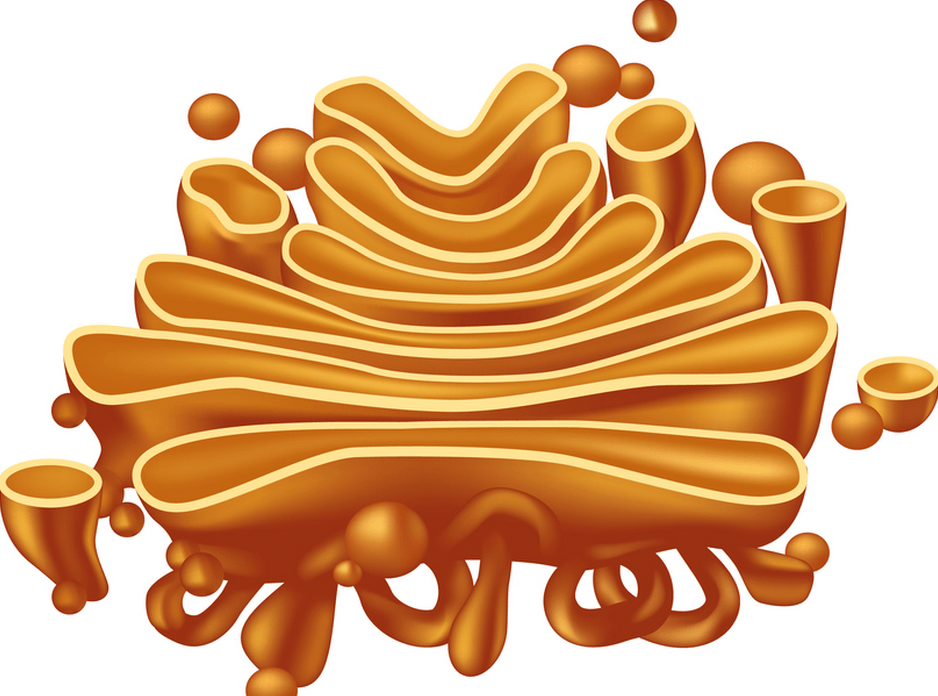
Golgi Apparatus
This structure surrounds the cytoplasm of all cells and controls what enters and leaves the cell.
Cell Membrane
Cellophane
Cell Wall
Cellulose
This fluid in the cell is where the organelles are found. It contains water and chemicals the cell needs.
Blood
Cytoplasm
Plasma
Vacuole

These organelles convert the energy in food molecules to a form the cell can use.
Chloroplasts
Mitochondria
Lysosomes
Ribosomes

These tiny cell structures assemble protein molecules from amino acids.
Carbohydrates
Lipids
Nucleic Acids
Ribosomes

These organelles in plants capture light energy and store it in glucose molecules to be used as food.
Chloroplasts
Mitochondria
Endoplasmic Reticulum
Vacuoles

These organelles are used for storage. Plants have one that is very large and filled with water.
Cell Wall
Chloroplast
Nucleus
Vacuole



What forms the channels and pumps in the phospholipid bilayer?
carbohydrates
proteins
hydrophilic heads
lipids


Hydrophobic means...
water-loving
water-fearing
nonpolar
lipid soluble


_______ regulates what enters and leaves a cell.
Cell Membrane
Nucleus
Mitochondria
Cytoplasm
During osmosis
water moves from high to low concentration
large or oddly shaped molecules move across a cell membrane
water moves when energy is used
proteins are built
In an isotonic solution which way will the water flow
it will not flow at all
it will flow into the cell
it will flow both ways at equal rates
out of the cell

Which Type of solution is the middle cell placed in?
Hypertonic
Hypotonic
Isotonic
Robotonic


This egg has shrunk, what type of solution was it placed in?
hypotonic solution
hypertonic solution
isotonic solution

Fill in the blank:
Osmosis is the movement of ________ across a cell membrane from high to low.
Carbon dioxide
Starch
Water
Oxygen

What is the role of ribosomes?
To store genetic information.
To produce glycolipids.
To synthesize proteins.
To hydrolyze waste materials.
Which of the following is not found in all forms of life, and therefore is not evidence of the common ancestry of life?
Nuclei
Ribosomes
Plasma Membranes
Cytosol

Which of the following is a difference between smooth and rough endoplasmic reticulum (ER)?
Smooth ER exists in a part of the cell near the cell membrane, while rough ER exists in a part of the cell near the nucleus.
Smooth ER is not studded by ribosomes, while rough ER is studded by ribosomes.
Smooth ER is meant to compartmentalize the cell, while rough ER detoxifies and synthesizes lipids.
Smooth ER is made without the additional help of proteins, whereas rough ER is made with the help of special proteins called reticuloproteins.
Which of the following is the "receiving" side of the Golgi apparatus?
cis
trans
gamma
iota

Which of the following is a function of the Golgi apparatus?
Detoxification of the cell and lipid synthesis.
Protein and rRNA synthesis.
Synthesis of chemical energy (adenosine triphosphate).
Chemical modification of newly synthesized proteins before they are packaged for trafficking to other parts of the cell or outside of the cell.

In plants, what is the primary function of vacuoles?
To maintain water pressure inside of the cell.
To remove waste from inside of the cell.
To store nutrients inside of the cell.
To synthesize new membranes for the cell.
Which of the following membrane-bound organelles is responsible for hydrolysis (using enzymes to break down macromolecules)?
Vacuoles
Chloroplasts
Lysosomes
Peroxisomes
Which of the following is a reason that cells are so small?
Cells are small because they want to maximize their surface area-to-volume ratio.
Cells are small because they want to maximize their volume-to-surface area ratio.
Cells are small because they need to produce extremely small macromolecules.
Cells are small because they prefer to work together in clusters of many thousands that wouldn't otherwise fit anywhere.
Which of the following is one way that cells increase their surface area without increasing their size?
Cells will often include perfectly spherical membranes.
Cells will often include folds in their membranes.
Cells will often include holes in their membranes.
Cells will maximize their volume.

Which of the following correctly describes hydrophobic and hydrophilic regions of the cellular membrane?
The hydrophobic region is made of phosphates, and the hydrophilic region is made of lipids.
The hydrophobic region is 'water-loving', and the hydrophilic region is 'water-fearing'.
The hydrophobic region is polar, and the hydrophilic region is non-polar.
The hydrophobic region faces inward in the interior of the membrane, the hydrophilic region faces outwards towards the aqueous environment.
Which of the following would need assistance moving through the plasma membrane?
Nitrogen gas (N2)
Oxygen gas (O2)
Carbon Dioxide gas (CO2)
Water
Which of the following is a difference between passive and active transport?
Passive transport moves molecules against their gradient, while active transport moves molecules with their gradient.
Passive transport moves molecules with a direct input of energy, while active transport moves molecules without a direct input of energy.
Passive transport moves molecules non-spontaneously, while active transport moves molecules spontaneously.
Passive transport moves molecules without a direct input of energy, while active transport moves molecules with a direct input of energy.
What is the primary role of aquaporins?
To transport water across the membrane.
To change the state of water from gas to liquid.
To pump water into the mitochondria for cellular respiration.
To use water for hydrolytic purposes.
Which of the following describes a solution that has a higher concentration than the internal environment of the cell?
Hypotonic
Isotonic
Hypertonic
Transtonic
Which of the following describes the endosymbiotic theory?
A prokaryotic cell engulfed several other types of smaller prokaryotic cells, and eventually its compartmentalization made the cell eukaryotic.
A eukaryotic cell engulfed several other types of smaller prokaryotic cells, and eventually its compartmentalization made the cell prokaryotic.
A prokaryotic cell engulfed several other types of smaller eukaryotic cells, and eventually its compartmentalization made the cell eukaryotic.
A eukaryotic cell engulfed several other types of smaller eukaryotic cells, and eventually its compartmentalization made the cell prokaryotic.
Which of the following membrane-bound organelles evolved from free-living prokaryotic cells?
Nuclei and plasmids.
Mitochondria and chloroplasts.
Vacuoles and lysosomes.
Centrioles and microtubules.
According to the fluid mosaic model of cell membranes, phospholipids___________________.
can shift laterally along the plane of the membranee
frequently flip-flop from one side of the membrane to the other
occur in an uninterrupted bilayer, with membrane proteins restricted to the surface of the membrane
have hydrophilic tails in the interior of the membrane
Which of the following types of molecules are hydrophilic and therefore excluded from the hydrophobic portion of the phospholipid bilayer?
transmembrane proteins
integral membrane proteins
peripheral proteins
cholesterol
Which of the following would likely diffuse through the lipid bilayer of a plasma membrane most rapidly?
sucrose.
an amino acid.
O2.
Na+.
White blood cells engulf bacteria using _______________.
phagocytosis
pinocytosis
osmosis
receptor-mediated exocytosis
Which of the following factors would tend to increase membrane fluidity?
a greater proportion of unsaturated phospholipids
a greater proportion of saturated phospholipids
a lower temperature
a relatively high protein content in the membrane

Assuming that the purple molecules are too large to pass through the membrane, what would happen to the water level as a result of osmosis?
The water level would rise on the A side
The water level would rise on the B side
The water level would remain constant
The water level would drop on the A side.
Which of the following membrane activities requires energy from ATP?
Facilitated diffusion of chloride ions through a chloride channel.
Movement of Na+ ions from lower concentration in a mammalian cell to a higher concentration in the extracellular fluid.
Movement of glucose molecules into a bacteria cell from a medium containing a higher concentration of glucose than inside the cell.
Movement of carbon dioxide out of a paramecium.
An animal cell lacking in carbohydrates on the external surface of its plasma membrane would likely be impaired in which function?
transporting ions against an electrochemical gradient
cell-cell recognition
attaching the plasma membrane to the cytoskeleton
establishing a diffusion barrier to charged molecules
If a cells Ψp = 3 bars and its Ψs = -4.5 bars, what is the resulting Ψ ?
-7.5
7.5
-1.5
1.5
A cell with a water potential of -1.5 bars is placed in a beaker of sugar water with Ψs = -4.0 bars. In which direction will the net flow of water be?
Out of the cell
Into the cell
Both into and out of the cell
Neither into nor out of the cell
A plant cell with a Ψs of -7.5 bars keeps a constant volume when immersed in an open-beaker solution that has a Ψs of -4 bars. What is the cells Ψp ?
-4
-7.5
-3.5
3.5
What is the Ψs of a 1.0M sugar solution at 22 ° C under standard atmospheric conditions?
-24.5 bars
24.5 bars
-2.45
2.45
The substance that dissolves to make a solution is called the ___________________
diffuser
solvent
solute
concentrate
Which of the following forms of transport do not require the cell to use energy (ATP)
Active Transport
Facilitated Diffusion
Diffusion
Osmosis
Endocytosis
Which of the following forms of transport DO require the cell to use energy (ATP)
Active Transport
Facilitated Diffusion
Exocytosis
Osmosis
Endocytosis
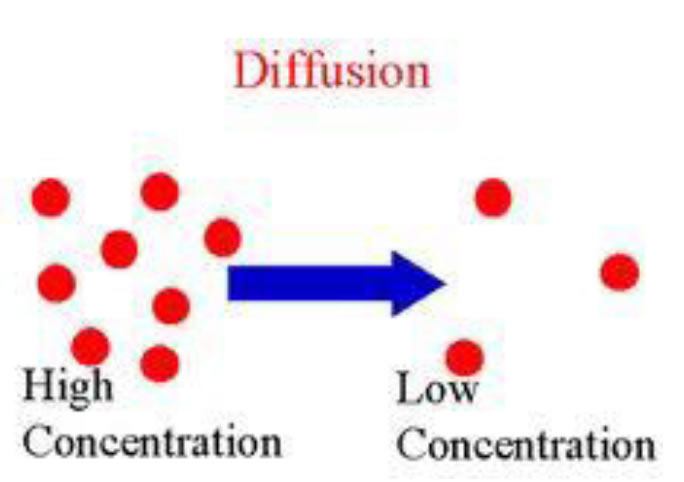
During diffusion molecules tend to move
up the concentration gradient
in a direction that doesn't depend on concentration
from an area of higher concentration to an area of lower concentration
The cell uses __________ to transport waste out of the cell.
passive transport
diffusion
endocytosis
exocytosis
The diffusion of water across a selectively permeable membrane is called ______
active trasport
passive transport
osmosis
endocytosis
A cell must expend energy to transport substances using ___________
diffusion
osmosis
active transport
passive transport
White blood cells engulf (take in), digest, and destroy invading bacteria using ________
passive transport
endocytosis
exocytosis
osmosis

What type of cell transport is being show in the picture.
Active transport
Diffusion
Osmosis
Endocytosis

What type of cell transport is being show in the picture.
Active transport
Diffusion
Osmosis
Endocytosis

What type of cell transport is being show in the picture.
Active transport
Diffusion
Osmosis
Endocytosis

What type of cell transport is being show in the picture.
Active transport
Diffusion
Osmosis
Endocytosis

If the solute (dots) in this diagram are unable to pass through the dividing membrane, what will happen?
The water level will rise on the right side of the tube.
The water level will rise on the left side of the tube.
The water level will stay the same.
What is the movement of small particles across a selectively permeable membrane like the cell membrane until equilibrium is reached?
Diffusion
Osmosis
Facilitated Diffusion
Ion Channel
What is the term to describe maintaining internal balance in the cell?
Diffusion
Homeostasis
Osmosis
Active transport
Which of these is not a form of passive transport?
Endocytosis
Diffusion
Osmosis
Facilitated Diffusion
What is the process of moving water from high to low concentrations through the cell membrane?
Diffusion
Osmosis
Endocytosis
Exocytosis
Which process moves molecules from low to high concentration?
Diffusion
Osmosis
Facilitated diffusion
Active transport
What type of active transport does waste move out of the cell?
Endocytosis
Exocytosis
Sodium Potassium Pump
Diffusion
What type of active transport does food move into the cell?
Endocytosis
Exocytosis
Sodium Potassium Pump
Diffusion
Active transport requires
A concentration gradient
Osmosis
Energy
Hypertonic solution
What is the job of the cell membrane?
Make proteins
Fold proteins
Direct cell's activities
Allow things in and out of the cell

The picture shows
Osmosis
Diffusion
Endocytosis
Exocytosis

The picture shows
Osmosis
Diffusion
Endocytosis
Exocytosis
Which type of transport goes from low concentration to high concentration using ATP energy?
active transport
passive transport

What type of transport is occurring in the diagram?
diffusion
facilitated diffusion
active transport
Diffusion is a form of __________ transport.
Passive
Active
Easy
Free
Passive Transport uses ____ energy
no
a lot of
a little bit of
some
_____________ is the free movement of particles across the membrane with the concentration gradient
diffusion
facilitated diffusion
active transport
fusion
The general name for movement of substances across cell membranes without need of energy input
passive transport
active transport

Some cells move large particles out of the cell through the process of:
Protein Synthesis
Endocytosis
Exocytosis
Cytoplasmic Streaming


