
 Worksheets
Unit 3 Biology I Review
Total questions: 130
Worksheet time: 1hrs 5mins
Name
Class
Date
1.
the two new cells that result from mitosis and cytokinesis
a)
daughter cells
b)
Spindle
c)
Anaphase
d)
Cell Cycle
2.
also known as body cells, these are all the cells in an organism that are different from the X or Y sex chromosomes.
a)
Somatic cells
b)
S Phase
c)
Carcinogens
d)
Centromere
3.
Substances and agents that are known to cause cancer
a)
Carcinogens
b)
Mitosis
c)
Cell Plate
d)
Apoptosis
4.
Fanlike microtubule structure that helps separate the chromosomes during mitosis
a)
Spindle
b)
Telophase
c)
Anaphase
d)
Carcinogens
5.
Programmed cell death
a)
Apoptosis
b)
daughter cells
c)
Mitosis
d)
Cell Cycle
6.
The period in the cell cycle when the cell is not dividing but growing. Often accounts for about 90% of the cell cycle. During this time, cellular metabolic activity is high, chromosomes and organelles are duplicated, and cell size may increase.
a)
interphase
b)
Spindle
c)
Mitosis
d)
S Phase
7.
The phase of the cell cycle that includes mitosis and cytokinesis.
a)
M phase
b)
daughter cells
c)
Spindle
d)
G2 Phase
8.
Area where the chromatids of a chromosome are attached to one another to make the classic " X " shape (in the center of the chromosome)
a)
Centromere
b)
Spindle
c)
Carcinogens
d)
Anaphase
9.
identical copies of a chromosome; full sets of these are created during the S phase (DNA replication) of interphase
a)
Sister Chromatids
b)
Anaphase
c)
G1 Phase
d)
Cell Cycle
10.
relaxed form of DNA that makes up chromosomes
a)
Chromatin
b)
Telophase
c)
Spindle
d)
Cell Cycle
11.
A disease in which some body cells grow and divide uncontrollably, damaging the parts of the body around them.
a)
Cancer
b)
Chromosomes
c)
Cell Cycle
d)
Telophase
12.
In a plant cell, midline of dividing cells. Becomes the cell wall eventually.
a)
Cell Plate
b)
G1 Phase
c)
Somatic cells
d)
Sister Chromatids
13.
The second gap, or growth phase, of the cell cycle, consisting of the stage of interphase after DNA synthesis occurs.
a)
G2 Phase
b)
Apoptosis
c)
Spindle
d)
Anaphase
14.
The synthesis phase of the cell cycle; the stage of interphase during which DNA is replicated.
a)
S Phase
b)
Cytokinesis
c)
Anaphase
d)
Cell Cycle
15.
The first gap, or growth phase, of the cell cycle, consisting of the portion of interphase before DNA synthesis begins.
a)
G1 Phase
b)
Spindle
c)
Anaphase
d)
Mitosis
16.
A cellular structure carrying genetic material, found in the nucleus of eukaryotic cells. Each one consists of one very long DNA molecule and associated proteins
a)
Chromosomes
b)
Anaphase
c)
Apoptosis
d)
Prophase
17.
The division of the cytoplasm to form two separate daughter cells immediately after mitosis, meiosis I, or meiosis II. (translates to cell-movement)
a)
Cytokinesis
b)
Cell Cycle
c)
Cell Plate
d)
Chromosomes
18.
What is the 4th stage of mitosis?
a)
Telophase
b)
Metaphase
c)
Cell Cycle
d)
daughter cells
19.
A process of nuclear division in eukaryotic cells divided into four stages: prophase, metaphase, anaphase, and telophase. Number of chromosomes are equal in each of the daughter cells.
a)
Mitosis
b)
Somatic cells
c)
G2 Phase
d)
interphase
20.
An ordered sequence of events in the life of a cell that includes Interphase and M phase
a)
Cell Cycle
b)
Telophase
c)
Apoptosis
d)
Metaphase
21.
The genetic code word of three bases on mRNA that specify one amino acid is...?
a)
codon
b)
base
c)
triplet
d)
anti-codon
22.
One similarity between DNA and messenger RNA molecules is that they both contain...?
a)
genetic codes based on sequences of bases
b)
double stranded polymers
c)
a nitrogenous base known as uracil
d)
the same sugar
23.
Amino acids are held together by __?__ bonds.
a)
peptide
b)
weak
c)
covalent
d)
hydrogen
24.
The genetic code is based upon the reading of how many bases at a time?
a)
three
b)
two
c)
one
d)
four
25.
During the process of transcription, which of the following is produced?
a)
proteins
b)
ATP
c)
ADP
d)
water
26.
Which term is NOT a part of protein synthesis?
a)
replication
b)
transcription
c)
translation
d)
duplication
27.
Translation occurs in the _______, while transcription occurs in the _______.
a)
ribosome, nucleus
b)
cytoplasm, nucleolus
c)
nucleolus, mitochondria
d)
nucleus, ribosome
28.
Several different ribosomes can code for an amino acid at the same time.
a)
TRUE
b)
FALSE
29.
The polypeptide strand must have a ______ to begin the process.
a)
start codon
b)
stop codon
c)
ribosome
d)
protein
30.
When undergoing protein synthesis, the nitrogen base THYMINE, is changed to _______.
a)
URACIL
b)
GUANINE
c)
RIBOSE
d)
ADENINE
31.
It is important to always use the _______ for locating the amino acid in the codon chart.
a)
mRNA
b)
none are correct
c)
rRNA
d)
tRNA
32.
What is the enzyme that unzips the DNA double helix to begin semi-conservative replication?
a)
helicase
b)
lactase
c)
ligase
d)
polymerase
33.
________ RNA enters the nucleus through the nuclear pore to "copy the recipe" for amino acids.
a)
messenger
b)
transport
c)
ribosomal
d)
deoxyribose
34.
DNA holds the blueprint of life. The DNA is located in the nucleus and cannot leave.
a)
TRUE
b)
FALSE
35.
The enzyme that binds and checks the RNA nitrogen bases during protein synthesis is called...?
a)
RNA polymerase
b)
ligase
c)
helicase
d)
DNA polyermase
36.
Transcribe AGC ATC
a)
UCG UAG
b)
TCG TAG
c)
UCC UAG
d)
TGG TAG
37.
The type of RNA molecule that transfers amino acids to ribosomes during protein synthesis.
a)
tRNA (transfer RNA)
b)
mRNA
c)
gene
d)
rRNA
38.
Why are the nitrogenous bases the most important part of the nucleotide?
a)
Their order/sequence is what makes us unique--All organisms' DNA contains the SAME 4 bases!! (A very small percentage of our genetic code actually differs from other organisms and those slight differences are what make us unique)
b)
AUG (Met = methionine)
c)
nucleus
d)
tRNA (transfer RNA)
39.
Decoding of a mRNA message into a polypeptide chain of amino acids from codons; Takes place in the cytoplasm/ribosomes
a)
translation
b)
termination
c)
elongation
d)
transcription
40.
Process in which part of the nucleotide sequence of DNA is copied into a complementary sequence in mRNA
a)
transcription
b)
translation
c)
hydrolysis
d)
gene mutation
41.
A single strand of nucleotides with ribose sugar is called...?
a)
RNA
b)
anticodon
c)
DNA
d)
codon
42.
The site of protein synthesis is ...?
a)
ribosome
b)
nucleotide
c)
mitochondria
d)
chloroplast
43.
A-U and G-C... these are called?
a)
RNA base pair rules
b)
double strand (helix)
c)
DNA base pair rules
d)
single strand
44.
Find the amino acid sequence for this strand of DNA: GGT ATG
a)
Proline, Tyrosine
b)
Serine, Valine
c)
Alanine, Leucine
d)
Start, stop
45.
A chain of amino acids held together by peptide bonds (also called a protein)...?
a)
polypeptide
b)
monosaccharide
c)
nucleotide
d)
polysaccharide
46.
Name of the bond that bonds amino acids together...?
a)
peptide bond
b)
covalent
c)
nitrogen
d)
hydrogen
47.
What does a chain of amino acids create?
a)
proteins
b)
fatty acids
c)
carbohydrates
d)
tRNA (transfer RNA)
48.
A segment of DNA on a chromosome that codes for a specific trait
a)
gene
b)
anticodon
c)
nucleic acid
d)
codon
49.
A-T and G-C is called...?
a)
DNA base pair rules
b)
translation
c)
transcription
d)
RNA base pair rules
50.
The elements found in Nucleic Acids (and nucleotides) such as DNA and RNA are...?
a)
CHONP
b)
CHO only
c)
rRNA (ribosomal RNA)
d)
CHON only
51.
Nucleic acid that contains the sugar deoxyribose is called ...?
a)
DNA
b)
peptide bond
c)
polypeptide
d)
RNA
52.
The cellular structure that contains the cell's genetic material (DNA) and controls the cell's activities is the ...?
a)
nucleus
b)
Rough E.R.
c)
DNA
d)
cell membrane
53.
Monomer of nucleic acids made up of a 5-carbon sugar, a phosphate group, and a nitrogenous base is called...?
a)
Nucleotide
b)
codon
c)
anticodon
d)
polysaccharide
54.
What section of a nucleotide is considered to be "complimentary"?
a)
nitrogen base
b)
the phopshate
c)
the sugar
d)
hydrogen bond
55.
RNA molecule, complementary to DNA, that carries instructions from DNA in the nucleus for the assembly of amino acids is ...?
a)
mRNA (messenger RNA)
b)
rRNA (ribosomal RNA)
c)
tRNA (transfer RNA)
d)
Nucleotide
56.
Weak bond in-between the nitrogen bases of the 2 strands of DNA is called...?
a)
hydrogen bond
b)
covalent bond
c)
ionic bond
d)
peptide bond
57.
A triplet (3) found on the tRNA (transfer) is called...?
a)
anticodon
b)
codon
c)
RNA
d)
DNA
58.
three-nucleotide base sequence on messenger RNA that codes for a single amino acid is called a ...?
a)
codon
b)
anit-codon
c)
nitrogen bases A T C G
d)
DNA replication
59.
The basic concept that, in nature, genetic information generally can flow only from DNA to RNA to PROTEIN.
a)
central dogma (protein synthesis)
b)
-nitrogen bases A U C G
c)
AAC
d)
nonsense mutation
60.
Find complimentary DNA strand to TTG
a)
AAC
b)
GGU
c)
AAT
d)
UUC
61.
Find the amino acid sequence for this strand of DNA: CGT AAT
a)
alanine, leucine
b)
tryptophan, glycine
c)
serine, valine
d)
sugar, ribose
62.
The only start codon is...
a)
AUG (Met = methionine)
b)
UCG UAG
c)
hydrogen bond
d)
(RNA --> Amino Acid/Protein/Trait)
63.
This is the DNA code: TTG; please transcribe & locate correct amino acid
a)
asparagine (Asn)
b)
Lysine (Lys)
c)
Arginine (Arg)
d)
Serine (Ser)
64.
An organic base that contains nitrogen, such as a purine or pyrimidine; a subunit of a nucleotide in DNA and RNA
a)
Nitrogenous base
b)
Hydrogen bond
c)
Double helix
d)
Watson and Crick
65.
A five-carbon sugar that is a component of DNA nucleotides
a)
Deoxyribose
b)
Nucleotide
c)
Basepair
d)
Nitrogenous base
66.
Found that [A=T] and [G=C], found that ratio varied between species
a)
Chargaff
b)
how many hydrogen bonds does cytosine and guanine have
c)
nitrogen bases
d)
Sugar molecule
67.
Developed the double helix model of DNA
a)
Watson and Crick
b)
Double helix
c)
nitrogen bases
d)
1 nucleotide
68.
Woman who generated x-ray images of DNA, she povided Watson and Crick with key data about DNA
a)
Rosalind Franklin
b)
Chargaff
c)
Hydrogen bond
d)
how many hydrogen bonds does Adenine and thymine have
69.
3
a)
how many hydrogen bonds does cytosine and guanine have
b)
Nitrogenous base
c)
Nucleotide
d)
Hydrogen bond
70.
2
a)
how many hydrogen bonds does Adenine and thymine have
b)
nitrogen bases
c)
Phosphate group
d)
Rosalind Franklin
71.
adenine, thymine, cytosine and guanine
a)
nitrogen bases
b)
Rosalind Franklin
c)
how many hydrogen bonds does cytosine and guanine have
d)
how many hydrogen bonds does Adenine and thymine have
72.
Weak attraction that holds together a nitrogenous base pair
a)
Hydrogen bond
b)
Nucleotide
c)
how many hydrogen bonds does cytosine and guanine have
d)
Chargaff
73.
Two strands of nucleotides wound about each other; structure of DNA
a)
Double helix
b)
Deoxyribose
c)
Chargaff
d)
sugar phosphate backbone
74.
A bonds with T and G bonds with C (connected by hydrogen bonds)
a)
Basepair
b)
Hydrogen bond
c)
Nitrogenous base
d)
Chargaff
75.
A building block of DNA, consisting of a five-carbon sugar bonded to a nitrogenous base and a phosphate group
a)
Nucleotide
b)
Hydrogen bond
c)
Rosalind Franklin
d)
sugar phosphate backbone
76.
alternating deoxyribose and phosphates on the outside of DNA.
a)
sugar phosphate backbone
b)
Hydrogen bond
c)
Sugar molecule
d)
Chargaff
77.
A functional group consisting of a phosphorus atom covalently bonded to four oxygen atoms
a)
Phosphate group
b)
Basepair
c)
nitrogen bases
d)
1 nucleotide
78.
What attaches to the nitrogen base in DNA (deoxyribose; pentose)
a)
Sugar molecule
b)
Hydrogen bond
c)
Rosalind Franklin
d)
Chargaff
79.
sugar molecule phosphate group and 1 nitrogen base
a)
1 nucleotide
b)
Nitrogenous base
c)
Deoxyribose
d)
Hydrogen bond
80.
What is it called when 2 identical cells are created?
a)
Cytokinesis
b)
Daughter Cells
c)
Telophase
d)
DUMMY_CHOICE
81.
What phase of mitosis do the sister chromatids pull apart?
a)
Anaphase
b)
Metaphase
c)
Interphase
d)
Telophase
82.
Which phase of mitosis do the chromosomes align in the middle (also the shortest phase)?
a)
Metaphase
b)
Prophase
c)
Telophase
d)
Anaphase
83.
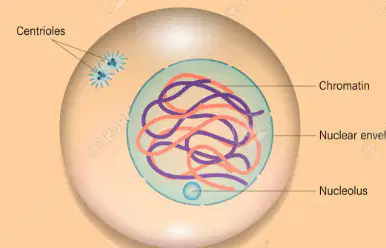
What phase of mitosis?
a)
Interphase
b)
Telophase
c)
Metaphase
d)
Prophase
84.
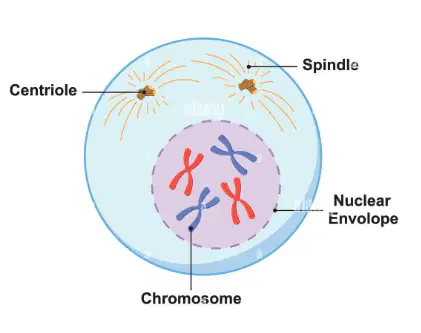
What phase of mitosis?
a)
Prophase
b)
Metaphase
c)
Interphase
d)
Anaphase
85.

What phase of mitosis?
a)
Metaphase
b)
Anaphase
c)
Prophase
d)
Interphase
86.

What phase of mitosis?
a)
Telophase
b)
Prophase
c)
Metaphase
d)
Interphase
87.
During what phase of mitosis do 2 new nuclei form?
a)
Telophase
b)
Anaphase
c)
Metaphase
d)
Prophase
88.
During which phase of mitosis does the nucleus disappear?
a)
Prophase
b)
Metaphase
c)
Telophase
d)
Anaphase
89.
During what phase do cells spend most of their lives in?
a)
Interphase
b)
G2 phase
c)
S phase
d)
Prophase
90.
What is happening during the S phase of the Cell Cycle?
a)
DNA Replication
b)
Prep for Mitosis
c)
Cell Growth
d)
DUMMY_CHOICE
91.
What is happening during the G2 phase of the Cell Cycle?
a)
Prep for Mitosis
b)
DNA Replication
c)
Cell Growth
d)
DUMMY_CHOICE
92.
What is happening during the G1 phase of Mitosis?
a)
Cell Growth
b)
Prep for Mitosis
c)
DNA Replication
d)
DUMMY_CHOICE
93.
What phase of mitosis?
a)
Prophase
b)
Telophase
c)
Interphase
d)
Anaphase
94.
What type of mitosis?
a)
Anaphase
b)
Metaphase
c)
Interphase
d)
Prophase
95.
What phase of mitosis?
a)
Telophase
b)
Anaphase
c)
Metaphase
d)
Interphase
96.
What phase of mitosis?
a)
Metaphase
b)
Prophase
c)
Interphase
d)
Anaphase
97.
What phase of mitosis?
a)
Interphase
b)
Telophase
c)
Metaphase
d)
Anaphase
98.
What phase of mitosis?
a)
Anaphase
b)
Metaphase
c)
Telophase
d)
Interphase
99.
is replicated by going from 5' to 3'
a)
both strands
b)
leading strand
c)
neither strand
d)
lagging strand
100.
Errors made by enzymes in replication are
a)
rare
b)
occasional
c)
common
d)
never happens
101.
DNA replication has multiple replication "bubbles" on a single double helix
a)
true
b)
false
c)
sometimes true
d)
DUMMY_CHOICE
102.
The DNA nucleotides are ________ the sugar phosphate backbone
a)
inside
b)
outside
c)
underneath
d)
none
103.
used an X- ray picture to help decipher the shape of DNA and her data stolen/used with out consent
a)
Franklin
b)
Wilkins
c)
Watson and Crick
d)
Pauling
104.
Credited with discovery of the shape of DNA but took data from another
a)
Watson and Crick
b)
Franklin
c)
Pauling
d)
Wilkins
105.
C always goes with
a)
G
b)
C
c)
T
d)
U
106.
G always goes with
a)
C
b)
T
c)
U
d)
G
107.
T always goes with
a)
A
b)
T
c)
G
d)
C
108.
A always goes with
a)
T
b)
C
c)
U
d)
G
109.
A whole section of DNA is wrong and needs to be changed. Which one will the cell do?
a)
excision repair
b)
mismatch repair
c)
proofread
d)
none of these
110.
A single base pair is wrong and needs to be changed. Which one will the cell do
a)
mismatch repair
b)
proofread
c)
excision repair
d)
none of these
111.
Polymerase will _____________during replication
a)
proofread
b)
excision repair
c)
none of these
d)
mismatch repair
112.
DNA replication always happens from
a)
5' to 3'
b)
start to finish
c)
5' to 5'
d)
3' to 5'
113.
Lagging strand will have _______ primer piece(s) that cause them to start and stop
a)
many
b)
one
c)
some
d)
none
114.
3rd step (3rd enzyme) in DNA replication
a)
dna polymerase
b)
rna polymerase
c)
helicase
d)
ligase
115.
lays down RNA
a)
primase
b)
dna polymerase
c)
helicase
d)
ligase
116.
The 2nd enzyme (2nd step) in DNA replication
a)
primase
b)
dna polymerase
c)
ligase
d)
helicase
117.
Last step (5th enzyme) in DNA replication
a)
ligase
b)
helicase
c)
polymerase I
d)
polymerase III
118.
Last step (5th enzyme) in DNA replication
a)
ligase
b)
rna polymerase
c)
dna polymerase
d)
helicase
119.
Fills the gaps in the DNA strands (think Okazaki fragments)
a)
ligase
b)
helicase
c)
rna polymerase
d)
dna polymerase
120.
Removes RNA and puts down DNA
a)
dna polymerase
b)
ligase
c)
helicase
d)
rna polymerase
121.
The 4th enzyme (4th step)
a)
dna polymerase
b)
rna polymerase
c)
helicase
d)
ligase
122.
This lays down most of the new DNA nucleotides
a)
polymerase III
b)
ligase
c)
helicase
d)
polymerase I
123.
Requires RNA to get started
a)
dna polymerase
b)
ligase
c)
helicase
d)
rna polymerase
124.
The first enzyme (first step) in DNA replication
a)
helicase
b)
dna polymerase
c)
ligase
d)
primase
125.
Breaks the H-bonds that are present between complementary base pairs
a)
helicase
b)
primase
c)
ligase
d)
one of the polymerases
126.
DNA is unwound/unzipped/split apart by
a)
helicase
b)
ligase
c)
primase
d)
one of the polymerases
127.
there are 3 possible models of DNA replication... which one si correct
a)
semi- conservative
b)
conservative
c)
disruptive
d)
DUMMY_CHOICE
128.
DNA stores all the genotype information for the phenotype expression
a)
true
b)
false
c)
DUMMY_CHOICE
d)
DUMMY_CHOICE
129.
DNA strands run in opposite directions to each other
a)
true
b)
false
c)
DUMMY_CHOICE
d)
DUMMY_CHOICE
130.
dna is
a)
double strand
b)
quadruple strand
c)
triple strand
d)
single strand
100 %

