wayground logo

Free Printable Worksheets

Font size

S
M
L
XL
Worksheets

Biology Final Review

Total questions: 126

Worksheet time: 1hrs 3mins

Name
Class
Date
1.

I am the control center of a cell.

a)
Nucleus
b)
Mitochondria
c)
Ribosome
d)
Plasma membrane
2.
Which is NOT true of MEIOSIS?
a)
Produces two cells
b)
Allows for genetic recombination
c)
Produces gametes
d)
Includes crossing over
3.
Which of the following is true of NUCLEIC ACIDS?
a)
Examples include enzymes and hormones
b)
Function is transmitting information
c)
Monomer is amino acid
d)
Used for long-term energy storage
4.
If the diploid number of an organism is 36, how many chromosomes are found in a gamete?
a)
36
b)
72
c)
18
d)
Not enough information
5.
Which process creates an identical copy of DNA?
a)
Mutation
b)

DNA Replication

c)
Transcription
d)
Translation
6.
Transcribe this sequence:  ACTGTTC
a)
UGACAAG
b)
TGACAAG
c)
TGUCUUG
d)
AGUCUUG
7.

Scientists estimate that the earth is how old?

a)

4.5 billion years

b)
3.5 billion years
c)

4.5 million years

d)
3.5 million years
8.
In a cross of two heterozygous parents, what proportion of the offspring will also be heterozygous?
a)
50%
b)
100%
c)
0%
d)
75%
9.

Who was the first to successfuly study Genetics?

a)
Gregor Mendel
b)
Charles Darwin
c)
Louis Pasteur
d)
Robert Hooke
10.
Which of the following DOES NOT require cell division?
a)
Growth
b)
Hunger
c)
Reproduction
d)
Cell repair
11.
What do you call all of the chemical reactions of a living thing?
a)
Metabolism
b)
Homeostasis
c)
Energy
d)
Photosynthesis
12.
As you go to higher trophic levels....
a)
Amount of energy available decreases
b)
Amount of biomass increases
c)
Number of organisms increases
d)
Size of organisms decreases
13.

Reestablishing a damaged ecosystem where all life and the soil was destroyed...

a)
Secondary succession
b)
Primary succession
c)
Carrying capacity
d)
Homeostasis
14.

Organisms that CANNOT make their own food.

a)
Autotrophs
b)
Heterotrophs
c)
Producers
d)
Prokaryotes
15.
Spiders are predators that trap insects such as mosquitoes.  What is this describing?
a)
Habitat
b)
Niche
c)
Metabolism
d)
Ecosystem
16.

The process of sunlight being used to make glucose.

a)
Respiration
b)
Photosynthesis
c)
Chemosynthesis
d)
Replication
17.
Cell membrane allows nutrients to enter the cell and wastes to leave but prevents unwanted materials from entering or needed things from leaving.  What does this describe?
a)
Selective permeability
b)
Metabolism
c)
Respiration
d)
Photosynthesis
18.
What do you call a change in an organism's DNA?
a)
Replication
b)
Mutation
c)
Codon
d)
Phenotype
19.
Which scientist determined that DNA contains equal amounts of Guanine and Cytosine, and equal amounts of Adenine and Thymine?
a)
Erwin Chargaff
b)
James Watson and Francis Crick
c)
Rosalind Franklin
d)
Toby McGuire
20.
Which is not part of nucleotide?
a)
Deoxyribose sugar
b)
Phosphate
c)
Nitrogen Base
d)
Glucose
21.
Which of the following is true about RNA?
a)
RNA contains Thymine.
b)
RNA is double-stranded.
c)
RNA contains the sugar ribose.
d)
RNA is an Amino Acid.
22.
Which organelle assembles proteins?
a)
Chloroplast
b)
Ribosome
c)
Nucleus
d)
Mitochondrion
23.
Proteins are long chains composed of ________.
a)
Amino Acids
b)
Fatty Acids
c)
Nucleic Acids
d)
Hydrochloric Acids
24.
What do we call the physical trait that an organism exhibits?
a)
Phenotype
b)
Genotype
c)
Allele
d)
Recessive
25.
When an red flower and a white flower are crossed and the offspring are pink flowers... 
a)
Codominance
b)
Epistasis
c)
Intollerance
d)
Incomplete Dominance
26.
What is the genotype for an individual that is homozygous dominant?
a)
AA
b)
Aa
c)
aA
d)
aa
27.
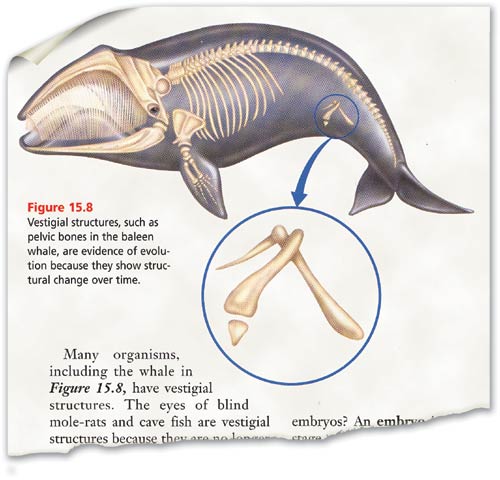
A structure that no longer serves a purpose in the current organism, but may have had a purpose in an ancestor (Example: human tailbone).
a)
Homologous Structure
b)
Analogous Structure
c)
Vestigial Structure
d)
Complex Structure
28.
Believed that organisms could inherit acquired traits.
a)
Lamarck
b)
Darwin
c)
Sidol
d)
Watson
29.
A symbiotic relationship where one species benefits and the other is harmed.
a)
Parasitism
b)
Mutualism
c)
Commensalism
d)
Community
30.
An organism that can collect energy from the sun and use it to make food/energy.
a)
Heterotroph
b)
Decomposer
c)
Autotroph
d)
Consumer
31.
A collection of all of the organisms of the same species living in the same area.
a)
Community
b)
Population
c)
Ecosystem
d)
Biosphere
32.

The study of human population growth.

a)
Demography
b)
Astrology
c)
Biography
d)
Geography
33.
This organelle maintains homeostasis for the cell, by choosing which particles can enter or exit the cell.
a)
Nucleus
b)
Mitochondrion
c)
Cell Membrane
d)
Chloroplast
34.
Which items are created during Cellular Respiration?
a)

Water, CO2 and ATP

b)
Glucose and Oxygen
c)
Alcohol and CO2
d)
Lactic Acid
35.
The cell pictured above most likely came from which of the following organisms? 
a)
Fungus
b)
Bacterium
c)
Human
d)
Plant
36.
Acacia trees provide food for a species of ant that lives on them. The ants defend the acacia tree from grasshoppers and beetles. This relationship between the ant and the acacia tree is best described as
a)
Commensalism
b)
Mutualism
c)
Parasitism
d)
Saprophytism
37.
The diagram below illustrates the relationships between organisms in an ecosystem.             
Which change would most likely reduce the population of the carnivorous fish?
a)
An increase in the autotroph populations
b)
A decrease in the duck population
c)
An increase in the raccoon population
d)
A decrease in pathogens of carnivorous fish
38.
The shaded box on the right represents a cell with a semi-permeable membrane. The small dots represent molecules of water, and the larger dots represent a solute such as sugar or salt. The membrane is thin enough for water to pass through, but it is not thin enough for the solute to pass.  What will happen to the substances in this diagram to bring the concentrations closer to equilibrium? 
a)
Nothing will change--it is already in equilibrium
b)
The solute will flow into the cell from the surrounding environment.
c)
Water will flow into the cell from the surrounding environment.
d)
Water will flow out of the cell and into the surrounding environment.
39.
Having two of the same genes for the trait (TT, tt); Both dominant or both recessive.
a)

homozygous

b)
heterozygous or hybrid
c)
twin offspring
d)
pairs of chromosomes
40.
This type of inheritance pattern shows BOTH traits in possible offspring
a)
complete dominance
b)
incomplete dominance
c)
co-dominance
d)
dominant pattern
41.
Which process and type of resulting cells are represented?
a)
mitosis, gametes
b)
mitosis, body cells
c)
meiosis, gametes
d)
meiosis, body cells
42.
Which statement correctly describes meiosis?
a)
cells divide only once
b)
meiosis does not occur in reproductive cells
c)
the cells produced at the end of meiosis are genetically identical to the parent cell
d)
The cells produced at the end of meiosis contain half the number of chromosomes as the parent cell
43.
Which best describes the process shown?
a)
mutation in which the DNA content of the gene is ltered
b)
segregation of sister chromatids
c)
condensation and segregation of the alleles
d)

crossing-over which alleles for the same gene are exchanged

44.
What is the genotype for a pea plant heterozygous for round seeds (R), and homozygous recessive for green seeds (y)?
a)
Ry
b)
RRyy
c)
RrYy
d)
Rryy
45.
What is the functions of lipids?
a)
Quick source of energy
b)
Builds muscles, skin, enzymes
c)
Stores genetic information
d)
Stores energy, insulation, protection
46.

A producer that gets energy from photosynthesis produces what gas from the process?

a)

Oxygen

b)

Nitrogen

c)

Carbon Dioxide

d)

Water Vapor

47.

How do omnivores and carnivores get the glucose needed to do cellular respiration?

a)

They make it for themselves during photosynthesis

b)

From the sun's energy

c)

They need to eat other organisms

d)

from the geosphere

48.

When humans burn fossil fuels, the process is called

a)

combustion

b)

decomposition

c)

cellular respiration

d)

diffusion

49.
What is the process by which evolution occurs?
a)
Artificial Selecton
b)
Natural Selection
c)
Selective Breeding
d)
Mimicry
50.
What is a change in the DNA code called?
a)
Genetic drift
b)
Gradual change
c)
Mutation
d)
Natural selection
51.

What are inherited characteristics that an organism has to help them survive in their environment?

a)
Accomodation
b)
Adaptaion
c)
Fossilization
d)
Variation
52.
What are the PHYSICAL traits that we can see called?
a)
Phenotype
b)
Genotype
c)
Genes
d)
Alleles
53.
What are alternate forms of a gene called?
a)
Alleles
b)
Centromeres
c)
Phenotypes
d)
Genotypes
54.
Where in the cell is DNA located?
a)
Golgi body
b)
Lysosome
c)
Ribosome
d)
Nucleus
55.
Adenine, Thymine, Guanine, and Cytosine are all...
a)
Nitrogen bases
b)
Phosphate groups
c)
Deoxyribose sugar
d)
Hydrogen bonds
56.
Which nitrogen base does Adenine bond with?
a)
Adenine
b)
Cytosine
c)
Thymine
d)
Guanine
57.
Which nitrogen base does Cytosine bond with?
a)
Adenine
b)
Guanine
c)
Cytosine
d)
Thymine
58.
During which phase of the cell cycle does MITOSIS happen?
a)
G1 phase
b)
G2 phase
c)
M phase
d)
S phase
59.
During which phase of the cell cycle does the DNA replicate?
a)
G1 phase
b)
G2 phase
c)
M phase
d)
S phase
60.
What is the function of ATP?
a)
Stores energy for cell use
b)
Carries hydrogen
c)
Releases oxygen
d)
Absorbs carbon dioxide
61.
In which part of the plant cell does photosynthesis occur?
a)
Mitochondria
b)
Chloroplast
c)
Cell membrane
d)
Nucleus
62.
What is the process in which plants make glucose called?
a)
Respiration
b)
Fermentation
c)
Photosynthesis
d)
Transformation
63.
What is the pigment that captures the sun's energy?
a)
Chlorophyll
b)
Organelle
c)
Glucose
d)
Carbon dioxide
64.
During cellular respiration, how many ATP molecules are produced?
a)
30
b)
36
c)
40
d)
63
65.
What type of organisms perform photosynthesis?
a)
Animals
b)
Plants
c)
Both plants and animals
d)
Neither plants nor animals
66.
What type of organisms perform cellular respiration?
a)
Animals
b)
Plants
c)
Both plants and animals
d)
Neither plants nor animals
67.
What does ATP stand for?
a)
Adenosine Triphosphate
b)
Adenosine Diphosphate
c)
Adenine Triphosphate
d)
Adenine Diphosphate
68.
What molecule does cellular respiration begin with?
a)
Pyruvic acid
b)
Glucose
c)
Carbon dioxide
d)
Citric acid
69.
Which cell organelle is associated with cellular respiration?
a)
Mitochondria
b)
Chloroplast
c)
Nucleus
d)
Chlorophyll
70.
Which organelle synthesizes proteins?
a)
Chloroplast
b)
Mitochondria
c)
Ribosome
d)
Nucleus
71.
Which phase of mitosis is highlighted?
a)
Prophase
b)
Metaphase
c)
Anaphase
d)
Telophase
72.
Which phase of mitosis is highlighted?
a)
Metaphase
b)
Anaphase
c)
Prophase
d)
Telophase
73.
Which phase of mitosis is highlighted?
a)
Metaphase
b)
Anaphase
c)
Telophase
d)
Prophase
74.

Cells that contain a nucleus and other membrane bound organelles are called:

a)

Prokaryotic

b)

Eukaryotic

c)

Simple

d)

Bacteria

75.

What cell part is responsible for the conversion of sunlight and water into glucose (photosynthesis)?

a)

Lysosome

b)

Central Vacuole

c)

Endoplasmic Reticulum

d)

Chloroplast

76.

What kind of bonds hold nitrogen bases together in the middle of a DNA molecule?

a)

Polymer Bonds

b)

Hydrogen Bonds

c)

Ionic Bonds

d)

Peptide Bonds

77.

Which nitrogen base in found only in mRNA?

a)

Thymine

b)

Lysine

c)

Uracil

d)

Cytosine

78.

RNA and DNA are both made up of building blocks called...

a)

Cells

b)

Proteins

c)

Nucleotides

d)

Atoms

79.

Three base sequence on tRNA complementary to a codon on mRNA are called an

a)

Codon

b)

Codes

c)

Anticodon

d)

Amino Acid

80.
If a daughter cell is going to be normal, when must DNA be replicated?
a)
during mitosis
b)
after mitosis
c)
before mitosis
d)
anytime
81.
There are 18 body chromosomes in diploid cells of frogs.  How many chromosomes are in their haploid sex cells?
a)
9
b)
18
c)
36
d)
48
82.
If a mother's genotype is AaGg, which of the following is NOT a possible combination that she could give to her offspring?
a)
AG
b)
Ag
c)
aG
d)
Aa
83.
If a species has gone extinct, what MIGHT have happened?
a)
the species was well-adapted to its environment
b)
the species was poorly adapted to  its environment
c)
the species was able to kill a large amount of prey
d)
the species had no threatening predators
84.

Who came up with the theory of evolution through natural selection?

a)

Carolus Linnaeus

b)

Charles Darwin

c)

Jean-Baptiste Lamarck

d)

Principal Watson

85.

What did Charles Darwin observe in finch populations on the Galapagos Islands?

a)

Different species of finches lived on the different islands.

b)

All the species of finches lived on one island.

c)

Identical species of finches lived on the different islands.

d)

Finches did not live on the Galapagos Islands.

86.

The white feathers of a snowy owl allow it to blend in with its environment during the snowy, winter months. This is an example of:

a)

variation.

b)

overproduction.

c)

adaptation.

d)

descent with modification.

87.

What does "the fittest" mean in evolution?

a)

The strongest

b)

The longest lived

c)

The fastest

d)

The most reproductively successful

88.
Study of embryos of various organisms to show a common ancestor because of similarities in development
a)
natural selection
b)
embryology
c)
speciation
d)
evolution
89.
Which of the following is an example of a vestigial structure?
a)
the wings of a red-tailed hawk
b)
the hind limbs of a house cat
c)
the fins of sharks
d)
the tailbone of a human
90.
Which of the following best describes a DNA molecule?
a)
double helix
b)
contains ribose
c)
made of amino acids
d)
contains Uracil
91.
Which 2 molecules forms the sides (backbone) of the DNA ladder?
a)
deoxyribose and adenine
b)
deoxyribose and a hydrogen bond
c)
sugar and the nucleus
d)
deoxyribose (sugar) and phosphate
92.

Which of the following statements is correct?

a)

DNA and RNA must stay inside the cell nucleus.

b)

DNA stays in the cell nucleus and RNA can leave the nucleus.

c)

RNA stays in the cell nucleus and DNA can leave the nucleus.

d)

DNA and RNA can go into and out of the cell nucleus.

93.

DNA replication results in two DNA molecules,

a)

each one with two original strands.

b)

each one with two new strands.

c)

each one with one new strand and one original strand.

d)

one with two new strands and the other with two original strands.

94.

What process synthesizes mRNA from DNA?

a)

Translation

b)

Transcription

c)

DNA Replication

95.

What is the main function of a tRNA molecule?

a)

It carries the instructions to make proteins

b)

It forms part of the ribosomes

c)

It strings together complementary RNA and DNA strands

d)

It brings amino acids from the cytoplasm to the ribosomes

96.
Humans have ________ pairs of chromosomes.
a)
21
b)
23
c)
46
d)
None of the above
97.
The structures labeled B are
a)
centrioles
b)
chromatids
c)
centromeres
d)
chromopheres
98.
A human cell has 46 chromosomes before mitotic division.  How many chromosomes will the daughter cells after mitosis.
a)
12
b)
23
c)
46
d)
92
99.
Cells of organism must replicate for ?
a)
growth
b)
repair of damaged cells
c)
replacement of dying cells.
d)
All of the above
100.
When an area of a chromatid is exchanged with the matching area on a chromatid of its homologous chromosome, _________________ occurs
a)
crossing over
b)
mutagenesis
c)
hybridization
d)
fertilization
101.
Human eggs and sperm are _____, and each has ____ chromosomes.
a)
diploid, 23
b)
diploid, 46
c)
haploid, 23
d)
haploid, 46
102.
Identify the phase.
a)
Metaphase I
b)
Metaphase II
c)
Prophase I
d)
Anaphase II
103.
Brown fur color is dominant over black fur color. Which of the following is the actual genotype of ALL of the offspring in the next generation of this cross for fur color?
AA x aa
a)
AA
b)
Aa
c)
aa
d)
brown fur
104.
If green is dominant over purple, then what is the genotype for this individual?
a)
Purple
b)
Green
c)
GG
d)
gg
105.
Tt is-
a)
homozygous dominant
b)
homozygous recessive
c)
heterozygous
d)
none of these
106.
A portion of DNA reads GAG. The corresponding mRNA would be
a)
GUG
b)
GTG
c)
CTC
d)
CUC
107.
The process of creating RNA using DNA as the template is
a)
translation
b)
transcription
c)
translocation
d)
Transylvania
108.
RNA is different from DNA in ___
a)
RNA is single stranded
b)
RNA has uracil 
c)
RNA has the sugar ribos
d)
All of these
109.
Where does DNA replication take place?
a)
Nucleus
b)
Ribosome
c)
Cytoplasm
d)
Golgi Body
110.
Which process is happening in this picture?
a)
Transcription
b)
Translation
c)
Replication
111.
Proteins are simply a chain of amino acids.
a)
True
b)
False
112.
What bonds hold DNA bases together?
a)
nitrogen bonds
b)
hydrogen bonds
c)
phosphorus bonds
d)
carbon bonds
113.
What mutation has occurred here? 
T-G-A-C-C-A
T-G-A-G-C-A
a)
Substitution
b)
Deletion
c)
Insertion
d)
Frameshift 
114.
What type of cell is shown below?
a)
Prokaryotic
b)
Eukaryotic
c)
Awesomekaryotic
d)
Lamekaryotic
115.
Provides structure and support to the cell
a)
Chloroplast
b)
Cytoskeleton
c)
Cell membrane
d)
Golgi apparatus
116.

_____ only provides external structural support to cells.

a)
Cell wall
b)
Cell membrane
c)
Cytoskeleton
d)
Cytoplasm
117.
Controls all cell activities and contains DNA
a)
Ribosome
b)
Chloroplast
c)
Endoplasmic reticulum
d)
Nucleus
118.
Uses energy from the sun to make sugars/food for the cell
a)
Mitochondria
b)
Chloroplast
c)
Vacuole
d)
Lysosome
119.
Controls what enters and exits the cell, like a fence
a)
Cell membrane
b)
Cytoplasm
c)
Nucleus
d)
Ribosome
120.
Makes proteins, works like a “contractor”, building more cell parts
a)
Endoplasmic reticulum
b)
Mitochondria
c)
Chloroplast
d)
Ribosome
121.
Break down molecules and dead organelles, works like a “garbage disposal”
a)
Mitochondria
b)
Vacuole
c)
Lysosome
d)
Ribosome
122.
“Powerhouse” of the cell, breaks food down into energy for the cell
a)
Vacuole
b)
Chloroplast
c)
Nucleus
d)
Mitochondria
123.
Stores food and water like a refrigerator for the cell
a)
Chloroplast
b)
Vacuole
c)
Lysosome
d)
Cytoplasm
124.

Transports materials throughout the cell, like a winding road

a)

Golgi Bodies

b)

cell membrane

c)

ER

d)

ribosomes

e)

cytoskeleton

125.

Modifies, packages materials, and sends them to other parts of the cell

a)

ER

b)

nucleus

c)

Golgi bodies

d)

ribosomes

e)

chloroplasts

126.

Which organelle is this?

a)

mitochondria

b)

ER

c)

Golgi bodies

d)

nucleus

e)

cytoplasm