wayground logo

Free Printable Worksheets

Font size

S
M
L
XL
Worksheets

DCA Spring Review

Total questions: 122

Worksheet time: 6hrs 6mins

Name
Class
Date
1.

What is the term for tissues grouped together to perform a specific function?

a)

cell

b)

tissue

c)

organ

d)

organ system

2.

What is the term for the organ system that provides oxygen to the blood and removes carbon dioxide from the blood?

a)

circulatory system

b)

respiratory system

c)

nervous system

d)

muscular system

e)

digestive system

3.

What is the term for cells grouped together to perform a specific function?

a)

cell

b)

tissue

c)

organ

d)

organ system

4.
The efficiency of energy transfer from a lower trophic level to the next highest level is roughly
a)
1%
b)
10%
c)
100%
d)
1000%
5.
In the energy pyramid here, how much of the energy in each level gets lost as heat or used by the organism for survival?
a)
80%
b)
90%
c)
10%
d)
20%
6.

How many calories will be passed on from 2,587 to the next trophic level?

a)

2,587.0

b)

258.7

c)

25.87

d)

10%

7.
A super bacteria is one...
a)
that kills you quickly
b)
a very large bacteria
c)
a bacteria that is resistant to pesticides
d)
a bacteria that is resistant to antibiotics
8.
Bacteria can be helpful to humans by 
a)
producing vitamin K
b)
helping to digest food
c)
protect against harmful bacteria
d)
all of the answer choices.
9.

People are making antibiotic resistance worse by:

a)

taking antibiotics only when they need them

b)

putting antibiotics into our food and environment which allows more opportunity for a resistance mutation to occur

c)

not sharing antibiotics with others

10.
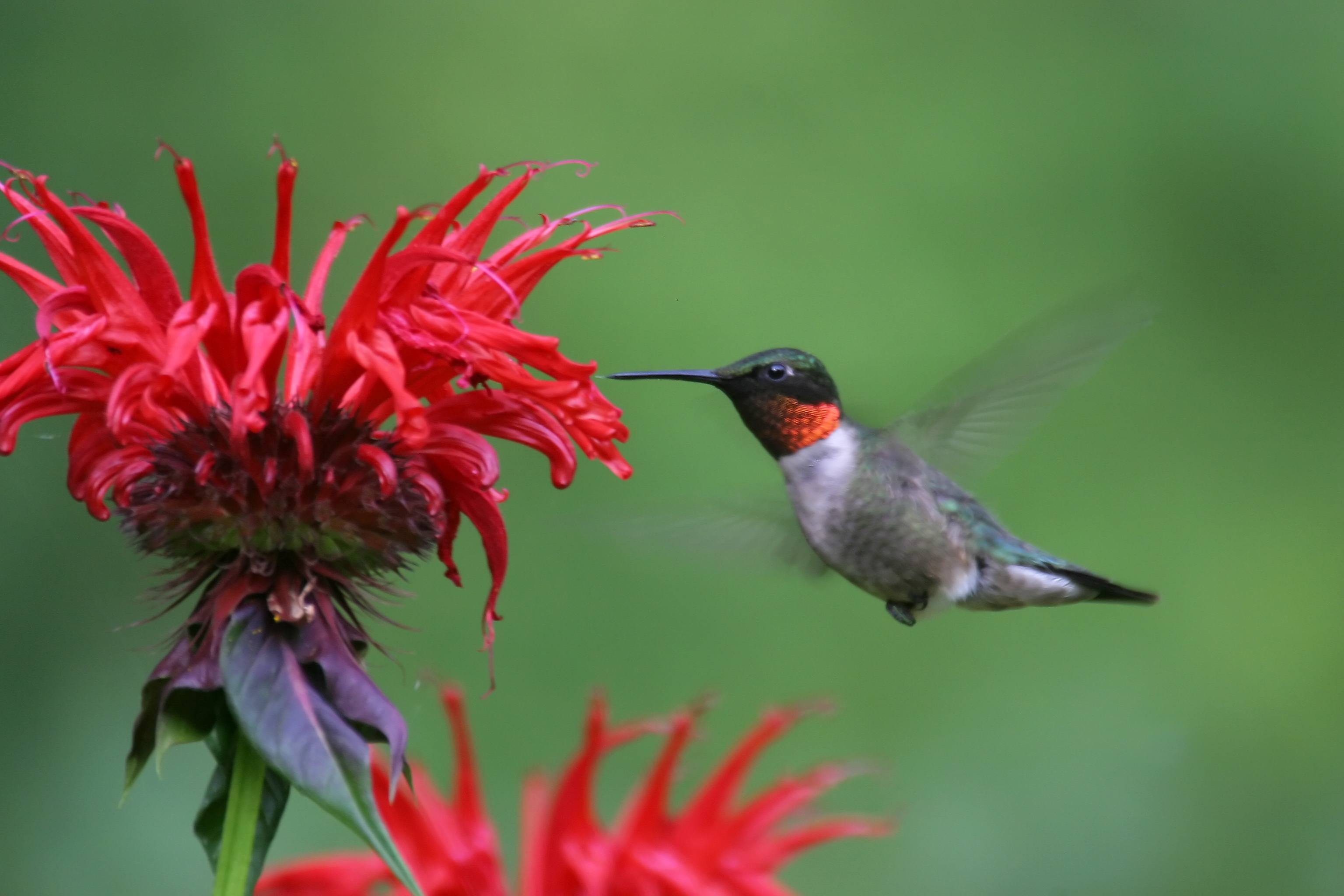
What type of symbiosis?  Hummingbirds feed on nectar from flowers.  The flowers are pollinated by hummingbirds as they move from flower to flower.
a)
commensalism
b)
mutualism
c)
parasitism
d)
predation
11.
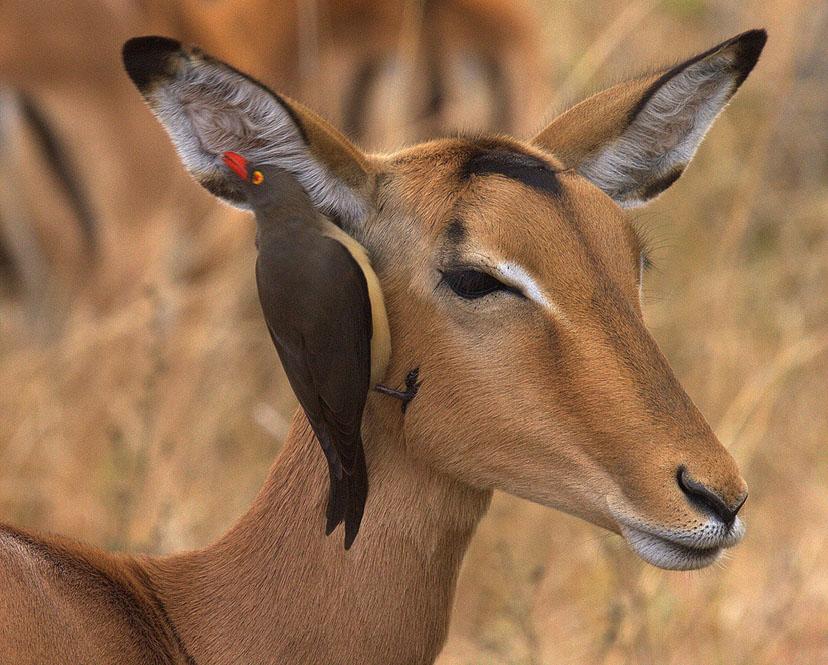
Red-billed oxpeckers are birds that often feed on parasites that infest impala.  This is an example of _______.
a)
commensalism
b)
mutualism
c)
neutralism
d)
competition
12.

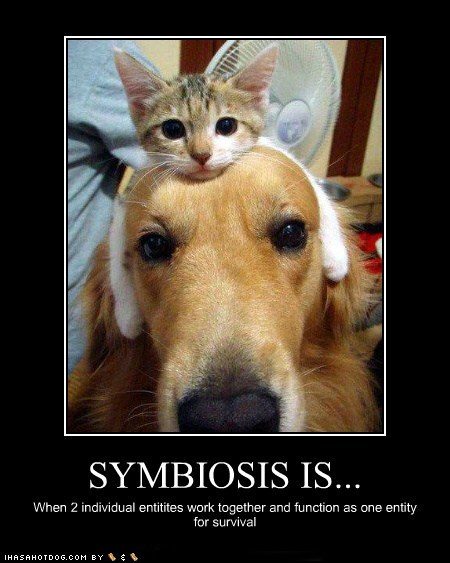
A relationship in which two species live closely together.

a)

resource

b)

mutualism

c)

succession

d)

symbiosis

13.
Reasons that viruses are considered to be nonliving is because
a)
They are not cellular
b)
They cannot reproduce on their own
c)
They cannot make proteins
d)
all of the above
14.
What do viruses need to reproduce?
a)
they need genetic material
b)
They need a host cell
c)
They need  bacteria
d)
They need insulin
15.

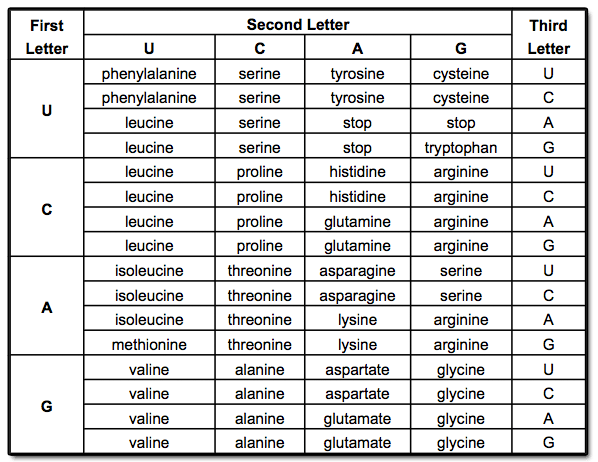
The following codon is translated into which amino acid?


AUG

a)

Methionine

b)

Isoleucine

c)

Histidine

d)

Arginine

16.

What is the correct amino acid sequence for the DNA code TAC-GGT-CAA

a)

Met-Pro-Ala-Val

b)

Met-Pro-Val

c)

Tyr-Gly-His

d)

Tyr-Gly-Arg-His

17.

When you eat food, a hormone is secreted by the pancreas to control the amount of sugar or glucose levels in your blood, called insulin. What systems work together to produce and transport this hormone?

a)

Digestive and Nervous

b)

Circulatory and Endocrine

c)

Immune and Endocrine

d)

Muscular and Nervous

18.

Which level of organization is listed correctly from simple to complex?

a)

Organelle, organ, organ system, tissue, cell

b)

Cell, tissue, organ, organ system, organism

c)

Organism, organ system, organ, tissue, cell

d)

cell, tissue, organ system, organ, organelle

19.

What systems would be involved in kicking a soccer ball?

a)

Muscular, Endocrine, Respiratory

b)

Digestive, Circulatory, Integumentary

c)

Immune, Circulatory, Endocrine

d)

Muscular, Skeletal, and Nervous

20.
What type of inheritance do two alleles have if their traits blend together? 
a)
Incomplete Dominance
b)
Co-Dominance
21.
This is an example of ___________?
a)
Incomplete dominance
b)
Co-Dominance
22.
This is an example of ___________.
a)
 Incomplete Dominance
b)
 Codominance
23.
A calico cat shows both the traits for orange fur and black fur. What kind of allele expression is this?
a)
Incomplete Dominance
b)
Co dominance
24.

What is Global Warming?

a)

Increasing temperature in Earth's atmosphere

b)

Decreasing temperature in a city

c)

Increasing rain rates in Earth

d)

Decreasing temperature rates

25.
Burning fossil fuels is one of the main causes for global warming.
a)
True
b)
False
26.

How can Global Warming cause sea levels to rise?

a)

by causing it to rain more often.

b)

by creating bigger and more powerful hurricanes.

c)

by melting glaciers and ice caps.

d)

by increasing the number of undersea volcanic eruptions.

27.
a)
Prophase
b)
Interphase
c)
Anaphase
d)
Telophase
28.
a)
Anaphase
b)
Cytokinesis
c)
Telophase
d)
Metaphase
29.
a)
Anaphase
b)
Cytonkinesis
c)
Interphase
d)
Prophase
30.
Which of the following is the correct acronym for the stages of the cell cycle?
a)
IPMATC
b)
MPIATC
c)
CAPMIT
d)
IMATCP
31.
Which is Metaphase?
a)
A
b)
E
c)
C
d)
F
32.

What are the oldest fossils and why?

a)

B, C- because they are closest to the top

b)

A, B- because they are closest to the bottom

c)

They are all the same age- because they are all found on layer 2

d)

A, B- because they are found closest to the top

33.
By determining the age of fossils, scientists can reconstruct the history of life on Earth
a)
True
b)
False
34.
The millions of fossils that scientists have collected are called
a)
The Geologic Time Scale
b)
The Origin of Species
c)
The Fossil Record
d)
A really neat fossil collection
35.
How many chromosomes are in the new cells of mitosis?
a)
46
b)
23
36.
How many chromosomes are in the new cells of meiosis?
a)
46
b)
23
37.

If the diploid number of carrots is 18, the haploid number after meiosis is

a)

18

b)

9

c)

27

d)

36

38.

What does it mean for an animal to adapt?

a)

when an organism changes to suit its environment

b)

when an organism dies due to a change in its habitat

c)

when an organism has a disease and dies

39.

From smallest to largest how would genetic information be organized?

a)

genes, cell, nucleus, chromosome, DNA

b)

chromosome, cell, gene, DNA, nucleus

c)

DNA, gene, chromosome, nucleus, cell

d)

nucleus, cell, gene, DNA, chromosome
40.
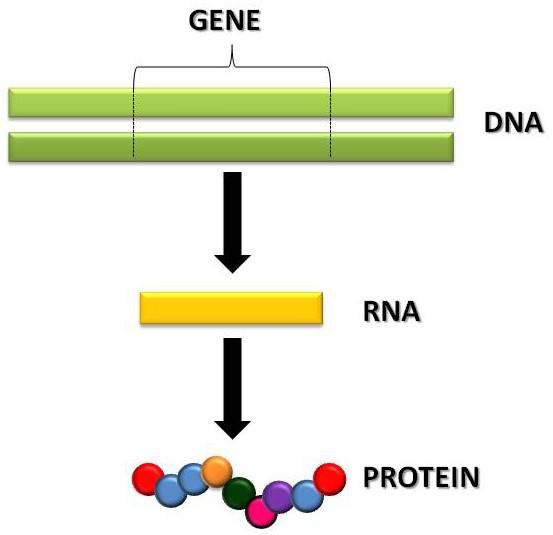
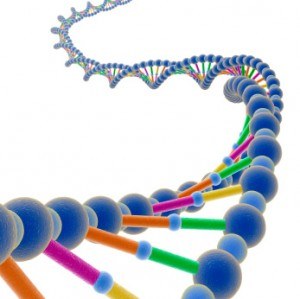
What is the name given to part of a DNA molecule that codes for a protein?
a)
Glucose
b)
Chromosome
c)
Gene
d)
Phosphate
41.
Using this dichotomous key, identity the name of the circled fish.
a)
band-tail puffer
b)
spotted goat fish
c)
peacock flounder
d)
trumpet fish
42.
The first part of a scientific name is an organism's _______________ and the second part is its ________________.
a)
species, genus
b)
phylum, order
c)
class, spices
d)
genus, species
43.
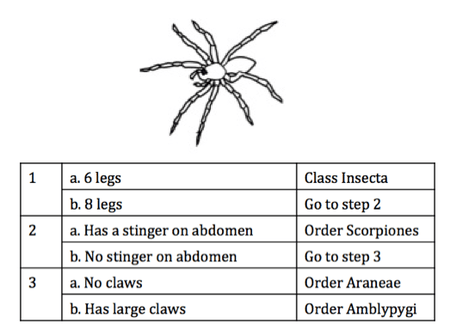
An illustration and a dichotomous key are given. What is the correct classification for this organism?
a)
Class Insecta
b)
Order Amblygygi
c)
Order Araneae
d)
Order Scorpiones
44.
Any change in the sequence of DNA is...
a)
transgenic shift
b)
Single Genotype
c)
Monohybrid Trait
d)
Mutation
45.

A mutation is defined as:

a)

A change in the cell's structure

b)

Anything that changes in an embryo

c)

Any change in the physical features of a human

d)

A change in the DNA sequence

46.

Adaptation is

a)

Bringing home stray animals.

b)

When animals adjust or change their DNA in order to survive better in their environment.

47.

Mutations occur in what part of an animal?

a)

DNA

b)

WWE

48.
During photosynthesis, what gas do plants release?
a)
oxygen
b)
carbon dioxide
c)
water
d)
nitrogen
49.
Photosynthesis is important because....
a)
plants need air to breathe
b)
it makes the plants green
c)
it is the process by which plants make their own food
d)
without it the Earth would all be a desert
50.
The purpose of photosynthesis is ...
a)
to make glucose
b)
to break glucose
c)
to capture energy from the sun
d)
to change carbon dioxide
51.
The purpose of cellular respiration is to
a)
make glucose
b)
break glucose
c)
capture the energy in sunlight
d)
change carbon dioxide
52.
How are photosynthesis and cellular respiration related?
a)
They have opposite equations
b)
they have the same equation
c)
they both produce carbon dioxide
d)
they both produce oxygen
53.
What gas is released into the air during cellular respiration?
a)
oxygen
b)
carbon dioxide
c)
water 
d)
glucose
54.

___ is a group of organs and tissues that act as transfer stations carrying needed materials to cells and removing their waste products.

a)

circulatory system

b)

respiratory system

c)

nervous system

55.

colorful to attract insects

a)

Style

b)

Sepals

c)

Petals

d)

Anther

56.

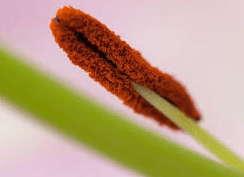
Produces pollen

a)

Ovule

b)

Stem

c)

Pistil

d)

Anther

57.
The tip of the style that has sticky hairs to trap pollen is the ___.
a)
stamen
b)
stigma
c)
ovary
d)
style
58.
The part of a flower that produces the male reproductive cells.
a)
anther
b)
style
c)
stigma
d)
filament
59.
What is seed dispersal?
a)
plant reproduction
b)
ability of plants to make food
c)
moving seeds to a new location
d)
adaptation of plants to produce more seeds
60.
What is ecological succession?
a)
A slow change in an environment
b)
A change that takes days in an environment
c)
No change
d)
Abiotic change
61.
A climax community is ….
a)
the beginning of a new ecological succession.
b)
the rocks in a new environment.
c)
the fire that will cause destruction.
d)
an area that reaches its greatest growing potential.
62.
What is the difference between primary and secondary succession?
a)
Primary succession already has soil.
b)
Primary has soil and secondary does not
c)
soil is present in both
d)
primary has no soil and secondary has soil
63.
Why does primary succession take longer to reach climax community?
a)
Because trees do not perform photosyntheses.
b)
Because climax community is in a forrest.
c)
Because primary succession already has soil
d)
Because primary succession does not have soil
64.
After a volcanic eruption, lava covers the land. What is the order that plants grow to repopulate the area?
a)
Lichens → Shrubs → Grasses → Trees
b)
Lichens → tree → shrubs→Grasses
c)
Grasses → Lichens → Shrubs → Trees
d)
Lichens → Grasses → Shrubs → Trees
65.
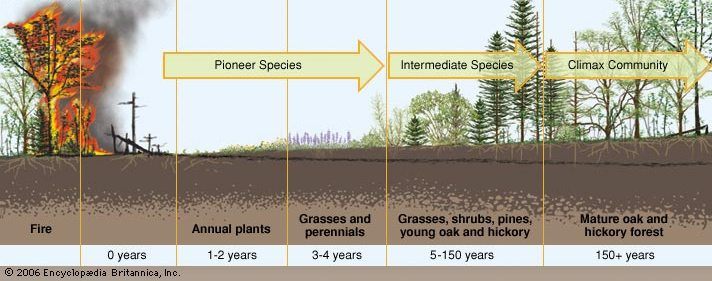
The picture shows what type of succession?
a)
primary
b)
secondary
c)
tertiary
d)
quadanary
66.

Epigenetics modulates genetic expression:

a)

differently in each cell in the body.

b)

by altering the genome.

c)

in response to only intracellular processes.

d)

consistently throughout an individual's life.
67.
Which of the following best explains the term gene expression?
a)
the production of proteins based on the genetic information in DNA
b)
the suppression of RNA polymerase
c)
the suppression of protein production
d)
the production of lipids based on the genetic information in DNA
68.
In the lac operon model the genes within the operon will be expressed if:
a)
lactose is absent in the cell
b)
glucose is present in the cell
c)
lactose is present in the cell
69.
Which human activity would preserve nonrenewable resources?
a)
deforestation
b)
removing carnivores from a forest 
c)
recycling
d)
heating homes with fossil fuels  
70.
Which human activity is correctly paired with its likely future consequence?
a)
overfishing in the Atlantic — increase in supply of flounder and salmon as food for people 
b)
development of electric cars or hybrid vehicles — increased rate of global warming 
c)
use of fossil fuels — depletion of underground coal, oil, and natural gas supplies 
d)
genetically engineering animals — less food available to feed the world’s population
71.
Many common products, such as wooden furniture, paper, and books, are made from trees. Which of the following is a likely consequence of humans cutting down a forest in order to make use of the natural resources there? 
a)
the decrease of chemical runoff into the oceans
b)
increased acid rain
c)
the increase of light pollution in cities
d)
the destruction of habitats
72.
Which of the following best describes a DNA molecule?
a)
double helix
b)
contains ribose
c)
made of amino acids
d)
contains Uracil
73.
What part of DNA is different between individuals?
a)
Sugar
b)
Phosphate
c)
Order of nitrogen bases
74.

The part of the plant

that is generally

under the ground

and in the soil

a)

Reproductive System

b)

Transpiration

c)

Shoot System

d)

Root System

75.

The tubes and support that transport water

and nutrients up, down and around in plants

a)

Vascular System

b)

Shoot System

c)

Root System

d)

Reproductive System

76.

The outer layer of plants which protects the plants and regulates water levels inside the plant.

a)

Shoot System

b)

Root System

c)

Dermal System

d)

Reproductive System

77.

The parts of the plant (angiosperms) involved in producing gametes (pollen and eggs) and seeds (fertilized eggs)

a)

Shoot System

b)

Phloem

c)

Xylem

d)

Reproductive System

78.
If you are missing or have an extra base  at the end of your mutated DNA . What type of mutation occurred?
a)
Substitution
b)
Frameshift
c)
Duplication 
d)
Insertion
79.
Normal-
GAG-CTC-GAC-AGA
Mutant
GAG CTC-CAC-AGA
a)
no mutation
b)
substitution
c)
insertion
d)
deletion
80.
What mutation has occurred here? 
T-G-A-C-C-A
T-G-A-G-C-A
a)
Substitution
b)
Deletion
c)
Insertion
d)
Frameshift 
81.
Has membrane bound organelles
a)
Prokaryote
b)
Eukaryote
c)
both
82.
Which type of cell?
a)
Prokaryote
b)
Eukaryote
83.

Has chloroplast and mitochondria

a)

Prokaryote

b)

Eukaryote

c)

both

84.
How do lichens contribute to primary succession?
a)
Lichens decompose organic matter from animals and plants
b)
Lichens begin to break down rock to form soil
c)
Lichens are nitrogen fixing bacteria
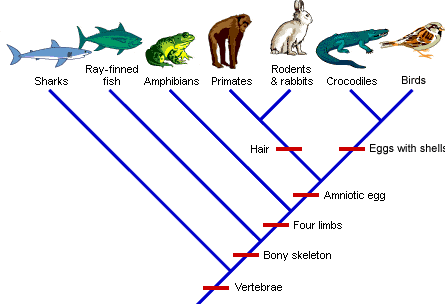
85.
According to this cladogram, sharks are MOST closely related to which organism? 
a)
Amphibians
b)
Ray finned fish
c)
Crocodiles
d)
Birds
86.
whats more related to the horse
a)
rabbit
b)
chicken
c)
frog
87.

During which stage of the cell cycle does the nucleus divide?

a)

interphase

b)

mitosis

c)

endocytosis

d)

cytokinesis

88.

In which part of Interphase are the chromosomes replicated?

a)

G0

b)

G1

c)

S

d)

G2

89.
What type of solution allows water to enter the plant cell?
a)
hypotonic solution
b)
hypertonic solution
c)
isotonic solution
d)
active transport
90.
The cell below is in a _____________ solution.
a)
Hypertonic
b)
Hypotonic
c)
Isotonic
91.
What type of solution is this cell in?
a)
Isotonic
b)
Hypertonic
c)
Hypotonic
d)
diffused
92.
If a cell is placed in a HYPOTONIC solution, water will move _________ of the cell, causing it to ___________.
a)
into, swell
b)
out of, shrivel
c)
in and out of the cell, stay the same
93.

What is an inherited characteristic that helps organisms survive?

a)

Evolution

b)

Adaptation

c)

Natural Selection

d)

Extinction

94.
measure of an organisms's ability to survive and produce offspring relative to other members of a population 
a)
Natural Selection
b)
Adaptation
c)
Fitness
d)
Variation
95.
Darwin referred to this as survival of the fittest. Over time, it results in changes in the inherited characteristics of a population. 
a)
Natural Selection
b)
Genetic Variation
c)
Survival of the Fittest
d)
Extinction
96.
What are the 8 levels of classification of living things from most general to most specific?
a)
domain, kingdom, phylum, class, order, family, genus, species
b)
domain, kingdom, phylum, class, order, family, genius, species
c)
domain, kingdom, phamily, class, order, family, genus, species
d)
domain, king, phillip, class, order, family, genus, species
97.
Which organism in the table is least closely related to the chimpanzee?
a)
human
b)
grey wolf
c)
tiger snake
d)
monarch butterfly
98.
Which biomolecule is responsible for insulation and LONG term energy storage?
a)
Proteins
b)
Nucleic Acids
c)
Lipids
d)
Carbohydrates
99.
Which biomolecule is important source of energy for humans; glucose for human cells, tissues, and organs; provides fiber, sugar, and starches; provides structural support, cell wall, and cell membrane maker?
a)
Nucleic Acid
b)
Lipid
c)
Carbohydrate
d)
Protein
100.

This biomolecule helps build muscles...

a)

Carbohydrate

b)

Lipid

c)

Protein

d)

Nucleic acid

101.

Meiosis takes place in ____

a)

gametes (sex cells)

b)

somatic cells (non sex cells)

102.

Using the food web what would happen if the eagle became extinct?

a)

The frog population would decrease.

b)

The frog population would increase.

c)

The butterfly population would increase.

d)

The snake population would decrease.

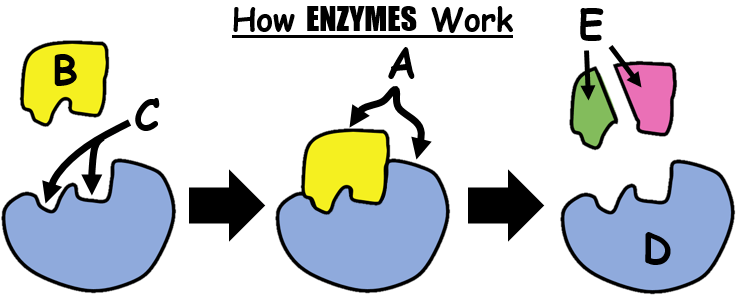
103.
What is being represented by the letter A in the image?
a)
Substrate
b)
Enzyme
c)
Product
d)
Complex
104.
Where do substrates bind on an enzyme?
a)
voltage-gated channels
b)
surface receptor
c)
calcium channels
d)
active site
105.
Letter D...
a)
active site
b)
enzyme
c)
substrate
d)
products
106.
Cancer creates abnormal cells by disrupting
a)
the cell cycle
b)
red blood cell formation
c)
DNA replication
d)
ATP synthesis
107.
Oncogenes cause super-accelerated
a)
apoptosis
b)
mitosis
108.
The checkpoints that regulate the cell cycle can fail when ____ becomes damaged.
a)
DNA 
b)
Cell Membrane
c)
Mitochondria
d)
Ribosomes
109.

Which of the following best defines an oncogene?

a)

An oncogene codes for a cell cycle control protein.

b)

An oncogene codes for a protein that prevents the cell from undergoing apoptosis.

c)

An oncogene codes for a mutated form of a protein that forms part of a signal transduction pathway

d)

An oncogene is a dominantly expressed mutated gene that gives a cell a growth or survival advantage

110.
Which of the following removes carbon from the atmosphere?
a)
Combustion
b)
Respiration
c)
Photosynthesis
d)
Death
111.
What determines the code, or information, of a DNA molecule?
a)
the shape (structure) of the nitrogen bases
b)
the order (sequence) of the nitrogen bases
c)
the color of the nitrogen bases
d)
the frequency (number) of nitrogen bases
112.
An organism that is killed and eaten by another organism
a)
Predator
b)
Prey
c)
Competition
d)
Adaptation
113.
A consumer that hunts is called:
a)
a producer.
b)
an omnivore.
c)
a predator.
d)
a herbivore.
114.

What 2 systems: Absorb and deliver the digested nutrients to the cells

a)

Digestive and muscular

b)

Muscular and lymphatic

c)

Digestive and circulatory

d)

Nervous and skeletal

115.

What is the name of Kingdom A and Kingdom B in the Venn Diagram

a)

A-Fungi; B-Archaebacteria

b)

A-Plant; B-Eubacteria

c)

A-Fungi; B-Eubacteria

d)

A-Fungi; B-Plant

116.
What type of transport is this?
a)
Endocytosis
b)
Facilitated Diffusion
c)
Active Transport Pump
d)
Osmosis
117.
Which best describes the basic structure of a virus?
a)
nucleic acid strand surrounded by a protein coat
b)
a tail surrounded by a protein coat
c)
a tail surrounded by a carbohydrate coat
d)
nucleic acid strand surrounded by a carbohydrate coat
118.

Which of the following components would be found in ALL viruses? [pick 2]

a)

protein capsid

b)

nucleic acid (either DNA or RNA)

c)

an envelope

d)

tail & tail fibers

119.
A ribosome can be best described as...
a)
a protein factory
b)
a trash collector
c)
the powerhouse of the cell
d)
the brain of the cell
120.
What goes in box 3
a)
Aabb
b)
AABB
c)
AAbb
d)
aaBb
121.

(Grey fur (G) is dominant over white fur (g) and Black eyes (B) are dominant over red eyes(b))

A male rabbit GGbb crossed with a female rabbit with ggBb.


How many out of 16, have grey fur and red eyes?

a)

4

b)

8

c)

12

d)

16

122.

What anchors a plant to the ground, stores sugar made in photosynthesis, and increases surface area for absorption?

a)

leaves

b)

stems

c)

roots