
 Worksheets
❓ BIOLOGY REVIEW - 2D - 2
Total questions: 131
Worksheet time: 2hrs 30mins

Which is NOT a step in the processing of foods in out digestive tract?
Digestion
Egestion / Elimination
Indigestion
Absorption

The digestive system starts from the __________.
tongue
mouth
ear
stomach

Why is the Digestive system important?
transports blood cells
provides oxygen that cells need
Provides nutrients that cells need to produce energy
Carries carbon dioxide and oxygen away from the body

Which of these is not a function of the digestive system.
Absorption
Ingestion
Elimination
Oxygen Intake

The accessory organs are...
liver, heart, lung, gallbladder
liver, trachea, nasal cavity, villi
liver, gallbladder, pancreas, salivary glands
gallbladder, liver, spleen, stomach
The organs part of the gastrointestinal tract are...
liver, esophagus, stomach, gallbladder
liver, large intestines, small intestines, villi
gallbladder, esophagus, pharynx, pancreas, salivary glands
pharynx, esophagus, stomach, small and large intestines, rectum
Classify the following organs into "gastrointestinal tract" or "accessory" organs.
mouth and oral cavity
pharynx
esophagus
stomach
small intestines
large intestines
rectum
anus
liver
gallbladder
salivary glands
pancreas

Where does digestion start?
Esophagus
Mouth
Stomach
Liver

Mechanical digestion is breaking, crushing, & mashing of food.
True
False

Chemical digestion is the use of enzymes to break food down.
True
False

the word bolus is just another name for stomach.
True
False

salivary glands secrete saliva.
True
False

The tongue rolls mixed food and saliva into what?
Bolus
Salivary glands
Mucus
Soft Palate

What is the function of the pancreas
It produces bile and stores and concentrates it
Stores nutrients and breaks down toxins
It breaks down the food in the mouth and secretes enzymes
It makes bicarbonate that protect the small intestine from acids and secretes enzymes

What is the function of the stomach
It absorbs most of the remaining water
It churns the food and produces acid that helps in digestion
It makes fluids that protect the small intestine from acids
It produces saliva for the mouth

The stomach turns the bolus into this liquid:
Extracellular fluid
Chyme
Plasma
Lymphatic fluid

What is the function of the esophagus
It moves partly digested food travel down to the stomach
It stores feces until they can be expelled
It produces bile
It digests the food into very small particles

What is the function of the mouth
It churns the food and produces acid that helps in digestion
It stores bile
It chews up and moistens the food. Digestion starts here
It produces bile

Where is saliva produced?
salivary glands
amylase
taste buds
mouth glands

What is the function of saliva?
To break down the food
Kill off any harmful bacteria in your mouth
To moisten the foods you eat
All of the above

What is the function of the epiglottis?
It covers the trachea when breathing
It covers the trachea when eating
It covers the esophagus when eating
It covers the larynx when breathing

Whats is peristalsis?
The muscular contraction that moves food down the digestive tract
the act of swallowing
A flap that covers your windpipe when you swallow food
Spongebob's pet snail

What is a sphincter
Muscles that surround the esophagus and promote digestion
Circular muscles that contract to control passage of waste
muscles that push food through the intestines
the pain that happens when you eat too fast

3 parts of the small intestine are the Duodenum, Jejunum and Ileum?
True
False

What is the function of villi?
Absorb nutrients
Create enzymes
Help with peristalsis
None of them

The duodenum is the smallest part of the small intestine.
True
False

What is the function of the gallbladder?
Mechanical breakdown of fats
Chemical breakdown of fats
Makes bile
Concentrates and stores bile

Which function is performed by small intestines - ileum and jejunum?
Absorption of nutrients
Assimilation of nutrients
Egestion of sugars
Ingestion of fats

What does the large intestine absorb?
Water
Bile
Feces
All of the above

The large intestine houses bacteria that do what?
produce water
produce vitamin C
produce vitamin K
absorb nutrients

The large intestine has little or no digestive function.
True
False

The large intestine is named the large intestine because why?
It's longer than the small intestine
Because it's diameter is greater than the small intestine.
It's larger than the brain.
It's diameter is larger than that of the femur.

location of the appendix
end of the ascending large intestine
small intestine
rectum
gall bladder

What Vitamin is synthesized by bacteria in the large intestine?
A
C
D
K

What is the rectum used for?
Absorbs waters and salts
Carries most of the digestive processes.
It is used for greatly increasing surface area for food.
Holding feces

The Gallbladder produces bile and stores it in the liver
True
False

What is made by the liver?
bile
blood
gastric juice
urine

The ________ is a pear-shaped sac under the liver
Kidney
Stomach
Gall bladder
Intestine

What does bile breakdown?
Sugars
Fat Molecules
Carbohydrates
bacteria

From where does the stomach receive food?
large intestine
small intestine
trachea
esophagus
What is the order of the processes of the digestive system in the order in which they happen?
Ingestion
Digestion
Absorption
Elimination
Food is called either a bolus, chyme, or waste, depending on where it is in the digestive tract. Identify the organs in which food is called a bolus, chyme, and waste.
oral cavity
esophagus
stomach
small intestines
large intestines
end of large intestines
rectum
Which organ is protected from acid by mucus-lining cells?
esophagus
stomach
small intestines
large intestines
Which structures increase surface area for absorption in the small intestines? Select ALL that apply.
villi
microvilli
cillia
flagellum
Which accessory organ produces insulin (which aids in the uptake of sugars)?
liver
gallbladder
pancreas
salivary glands
Which structures from the circulatory system help absorb nutrients into the bloodstream?
veins
arteries
red blood cells
capillaries
Identify the stomach.
Identify the esophagus.
Identify the salivary gland.
Identify the pharynx.
Identify the oral cavity.
Identify the large intestines.
Identify the small intestines.
Identify the rectum.
Label the accessory organs present in the image.
The (a) churns and digests the food with enzymes and gastric juices.
The (b) continue chemical digestion and absorb nutrients from chyme.
The (c) contracts via (d) and transports the food bolus to the stomach.
The (e) house bacteria that produce vitamin K and is the site of water reabsorption.

The respiratory system is responsible for:
Exchange of O2 and CO2 in lungs and blood
Removing carbon dioxide from the lungs
Exchange of O2 and CO2 in blood and body cells
O2 saturation
How is gas exchange performed?
dialysis
diffusion
osmosis
active transport
Respiratory surfaces must be: (choose all that apply)
large surface area
thin
thick
moist
What is the function of nasal passages?
Filter the air
Warm the air
Moisten the air
All are true
The throat is called the
Pharynx
Trachea
Larynx
Esophagus
The tube leading to the lungs:
vacuum
trachea
esophagus
bronchi

If you removed the laynx, a person would be unable to ...
hear
speak
eat
breathe

The sacs at the end of the bronchioles that are the sites of gas exchange are called:
bronchi
cavities
albumen
alveoli
First tube to branch off of the trachea
larynx
bronchus/bronchi
bronchioles
pharynx
Smaller branches off of bronchi
bronchioles
alveoli
tracheal system
What controls respration rate?
Skeletal System
Nervous system
Digestive System
Immune System

What two muscles control your breathing?
Heart and Lungs
Pulmonary contractile muscles
Intercostal muscles & lungs
Diaphragm & intercostal muscles
During inhalation the diaphragm ___ and the expiratory muscles such as the external intercostals muscles ____
Relaxes; relax
Contracts; contract
Contracts; relax
Relaxes; contract
On exhalation the diaphragm
Relaxes
Contracts

When the diaphragm contracts, we inhale because ........
air pressure in lungs decreases
air pressure in lungs increases
What is spirometer?
A device used to measure a patient's lung capacity
a device used to measure a patient's oxygen level
a device used to measure the humidity in a patient's room
a device used to measure body heat
On a spirograph, tidal volume refers to the amount of air during
forced exhalation
forced inhalation
normal breathing
rebreathing the same air

What effect does smoking have on cilia
Cilia are floppy in a smoker
There is minimal mucous build up
Cilia is not effected by smoking
Cilia become damaged in a smoker

Smoking causes you to inhale toxins including carbon monoxide, cyanide, and carcinogens.
True
False
What is a carcinogen?
A zoological agent
A dermatitis causing agent
An asthma causing agent
A cancer causing agent
Select the diaphragm.
Select the nasal cavity.
Select the trachea.
Select the bronchioles.
Select a bronchus.
Select the alveoli.
Select the lung.
Select the larynx.
Select the pharynx.
Which body system does the respiratory work in conjunction with during gas exchange?
circulatory system
digestive system
skeletal system
immune system
Popcorn lung can cause shortness of breath because...
it constricts your larynx
inflamed bronchioles and alveoli make gas exchange difficult
It prevents your diaphragm from contracting properly

Which part of the blood carries dissolved subtances to the body's cells
Plasma
White blood cells
Red blood cells
Platelets

Which type of blood vessel has a 'pulse' because it is under high pressure?
Vein
Capillaries
Artery
Valves

Which type of blood vessel has valves inside?
Capillaries
Artery
Aorta
Vein

From which chamber of the heart does blood leave to go to the lungs?
left ventricle
right atrium
right ventricle
left atrium
Label the left atrium.
Label the left ventricle.
Label the right ventricle.
Label the right atrium.
Label the aorta.
Label the superior vena cava.
Label the inferior vena cava.
Label the pulmonary veins.
From which chamber of the heart does blood leave to go to the lungs?
left ventricle
right atrium
right ventricle
left atrium
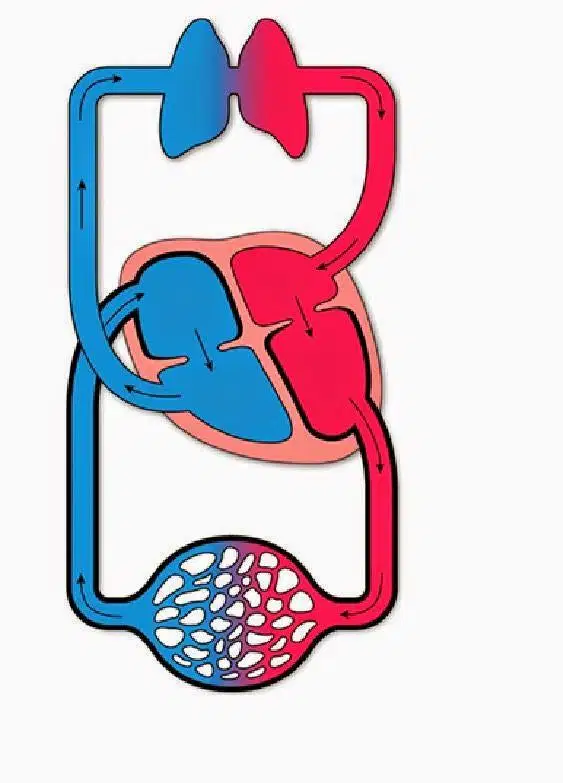
The blue in this diagram represents:
Deoxygenated blood with low content of oxygen
Oxygenated blood with high content of oxygen
Deoxygenated blood with no content of oxygen
Oxygenated blood with low content of oxygen

What chamber of the heart does the blood enter after leaving the lungs?
right atrium
right ventricle
left atrium
left ventricle
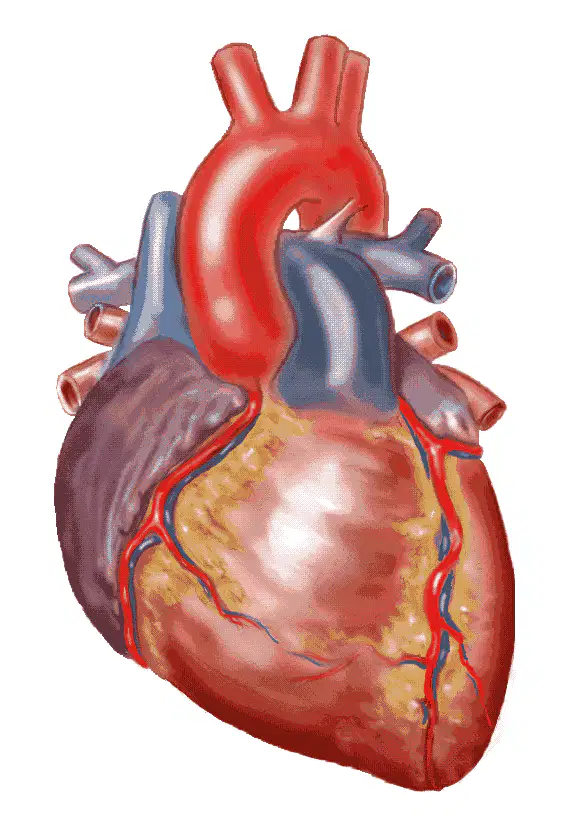
Which side of the heart has deoxygenated blood?
Right side
Left side

What is the function of the circulatory system?
transports nutrients and wastes, regulate body's temperature
breaks down toxins in the body
transports information from the brain
breaks down food to absorbable nutrients
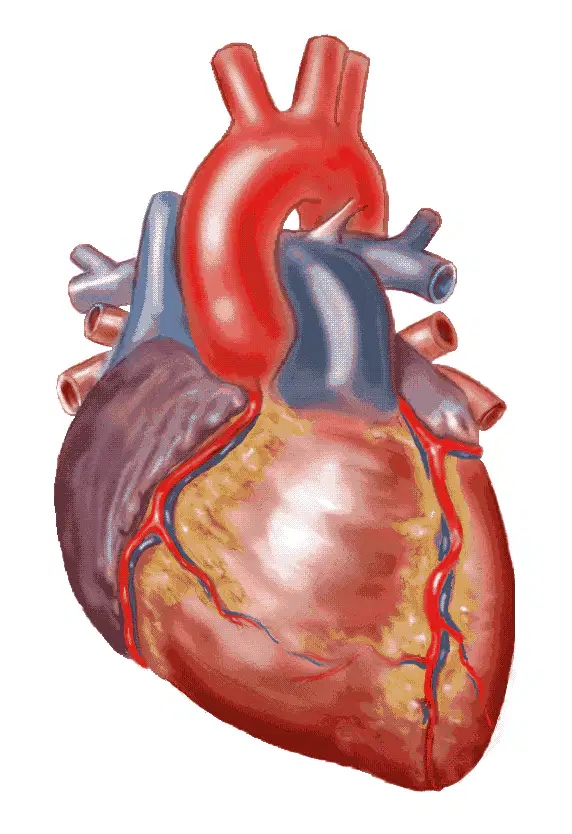
If you increase your activity, then your pulse increases because
your cells need more oxygen sent to them for cellular respiration
you are breathing harder
you need to digest more food to get energy
your heart is slowing down
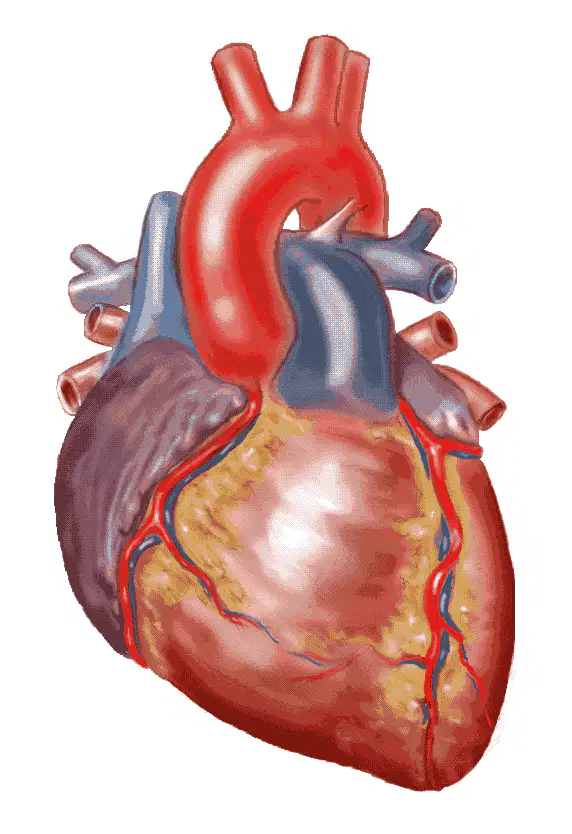
These take blood away from the heart.
capillaries
veins
valves
arteries
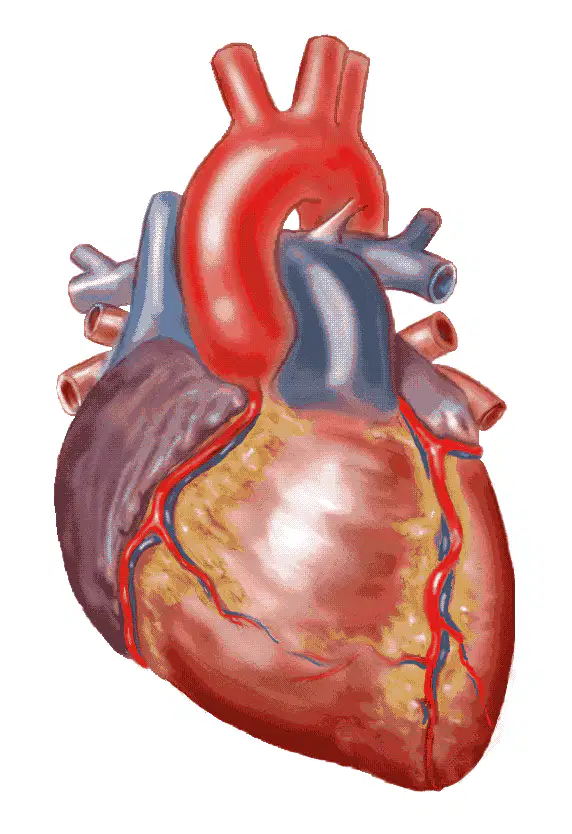
These take blood back to the heart.
capillaries
veins
valves
arteries
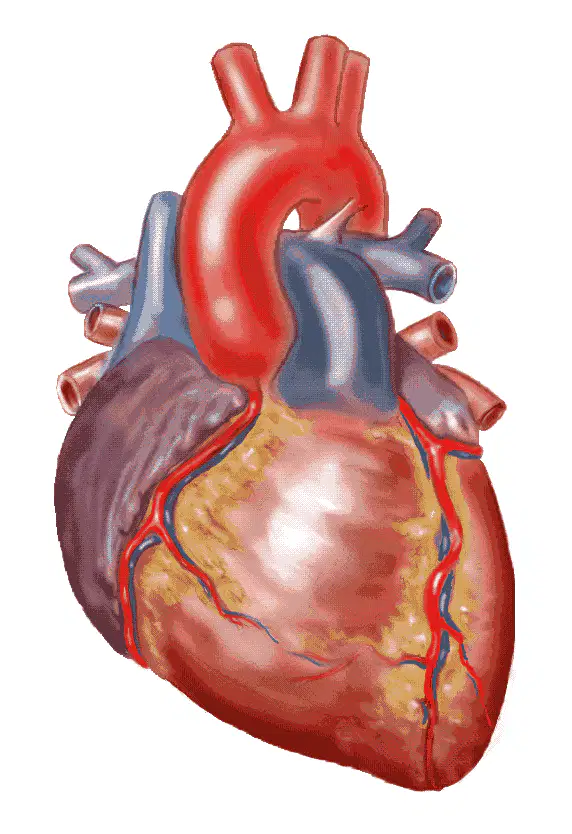
These connect the other vessels allowing the blood to exchange oxygen and carbon dioxide.
capillaries
veins
valves
arteries

Which blood vessels are extremely thin to permit diffusion?
capillaries
veins
valves
arteries

What prevents blood from flowing back into the heart?
capillaries
veins
valves
arteries
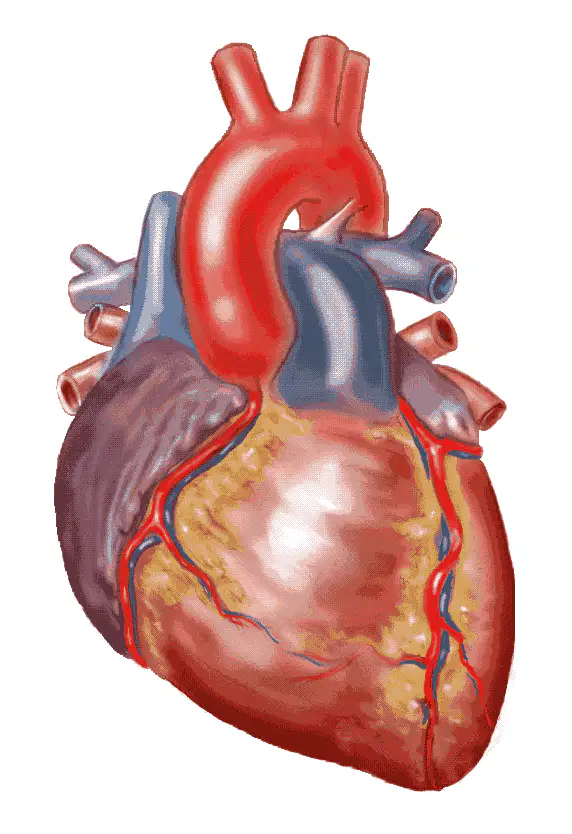
An important function of the circulatory system is to
control muscle movement
mechanically breakdown food
absorb nutrients and water form from chyme
transport nutrients and oxygen to the cells
Which structure has muscular, thick walls that keeps blood under high pressure?
Artery
Vein
Capillary
Red blood cell

What do red blood cells carry?
Plasma
Glucose
Mostly oxygen bound to hemoglobin
Platelets
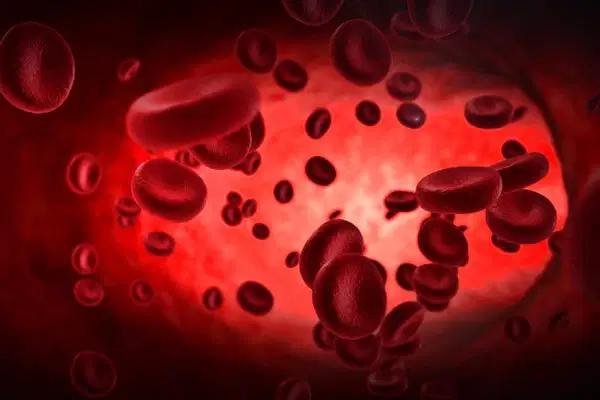
Functions of white blood cells
Kill pathogens (i.e. bacteria)
Dissolve nutrients in the blood
Produce hemoglobin
Help in clotting

What is the function of platelets?
helps prevent excessive bleeding by clotting
defend against pathogens
transports oxygen and carbon dioxide
transports white blood cells

what is not one of the four components of blood?
plasma
platelets
white/red blood cells
veins

Identify these
Red blood cell
Platelet
White blood cell
Plasma

What do platelets do?
Cause you to bleed more
They feed the cells
Stop you from bleeding
Cause more infections

What is the function of platelets?
To clot blood
To fight those darn bugs
To make blood red
To carry nutrients

What is the name for immature WBCs?
Neutrophils
blast cells
Basophils
baby WBCs

primary function of WBCs
fight infection
clotting of blood
carrying oxygen to tissues

where are WBCs produced (formed) :
blood
brain
liver
bone marrow

Pulmonary Arteries
pulls away oxygen
carries deoxygenated blood to lungs
carries oxygenated blood from lungs to heart

the arteries pump blood to the heart
True
False

As blood leaves the heart through the arteries...
the O2 is low and the CO2 is high
the O2 is high and the CO2 is low

Anemia is a disorder that results in fatigue. How is the circulatory system affected to cause this?
There is a low number of white blood cells, or the WBCs are inactive
There is a low red blood cell count, or the RBCs have low hemoglobin
There is a low platelet count in the blood
None of the above

Hemophilia is a disease that easy bruising, bleeding into joints and muscles that will not stop easily. This disease affects what?
There is a low number of white blood cells, or the WBCs are inactive
There is a low red blood cell count, or the RBCs have low hemoglobin
There is a low platelet count in the blood
None of the above
The following is a microscope image of two blood vessels. Observe the appearance and label the blood vessels.
Organize the following characteristics into the correct type of blood vessel.
carry blood away from the heart
carry blood toward the heart
diffusion of gases and nutrients occurs here
Thick, muscular
Thin layer of smooth muscle
One-cell thick
Blood is under high pressure
Have valves
Net-like network that surround tissues
Mostly carry oxygenated blood
Mostly carry deoxygenated blood
Which circuit of blood circulation involves deoxygenated blood from the heart to the lungs, and oxygenated blood back to the heart?
Pulmonary circuit
Systemic circuit
Which circuit of blood circulation involves oxygenated blood flowing from the heart to the body, and deoxygenated blood fback to the heart?
Pulmonary circuit
Systemic circuit

