
 Worksheets
5.1 - 5.5 Quiz (Cell Cycle/Mitosis)
Total questions: 127
Worksheet time: 2hrs 57mins
Cells of organisms must go through cell division for?
growth
repair of damaged cells
replacement of dying cells.
All of these
DNA is replicated during ______ of the cell cycle.
Gap 1
Synthesis (S phase)
Gap 2
Gap 0
During most of interphase, DNA is found in a relaxed form called
chromosome
centromere
centriole
chromatin
During mitosis, DNA is found in the condensed form called a
chromosome
centromere
centriole
chromatin
This process is the programmed death of a cell
stem cell
regulation
apoptosis
cytocide
These undifferentiated cells can become specialized cells after receiving a chemical signal.
stem cells
generic cells
blank cells
empty cells


The three stages of the cell cycle are __________, mitosis, and
cytokinesis.
interphase
anaphase
metaphase
prophase
The final stage of the cell cycle is called:
Interphase
mitosis
cytokinesis
daughter cells
True or False.
After a cell goes through cytokinesis, it immediately starts mitosis all over again.
True
False

What is the result of the cell cycle?
Three cells
Four daughter cells
Two identical cells
One clone cell
In what phase does chromatin condense to form chromosomes?
Mitosis
Interphase
Prophase
Anaphase
In what phase do the chromosomes get pulled apart into sister chromatid to opposite sides of the cell?
Prophase
Interphase
Metaphase
Anaphase
In what phase do the organelles disperse out into the daughter cells, and the cell prepares for cytokinesis?
Prophase
Interphase
Mitosis
Telophase
Which of these lists presents the stages of the cell cycle in the correct order?
interphase, mitosis, cytokinesis
cytokinesis, mitosis, interphase
mitosis, interphase, cytokinesis
interphase, cytokinesis, mitosis

What stage is represented with this image?
Interphase
Prophase
Metaphase
Anaphase
Telophase

What stage is represented with this image?
Interphase
Prophase
Metaphase
Anaphase
Telophase

What are the "strings" called that are attached to the chromosomes?
Centrioles
Chromatin
Spindle Fibers

What stage is represented by this image?
Prophase
Metaphase
Anaphase
Telophase

What stage is represented by this image?
Prophase
Metaphase
Anaphase
Telophase
Why is the Cell Cycle often represented as a circle?
Because it is easy to draw
Because cell cycles has a distinct beginning and end point
to highlight the checkpoints
to show that it repeats over and over
Which stage of the cell cycle is MOST critical for ensuring that daughter cells are identical?
G1
S
Prophase
G2
Select all stages of interphase?
G1
S
G2
Mitosis
_____ is the uncontrolled growth of cells, often resulting in a tumor or mass of abnormal cells
Cancer
Apoptosis
Radiation
If you look at a cell under a microscope, which phase is it MOST likely to be in?
Cytokinesis
M phase
Interphase
G1 Phase
During which part of the cell cycle is DNA replicated?
interphase
mitosis
cytokinesis
Which part of the cell cycle is divided into prophase, metaphase, anaphase, and telophase?
interphase
mitosis
cytokinesis
What happens at the end of interphase?
the cell splits into 2 identical cells
the cell's nucleus divides
the DNA unwinds
the cell is preparing for mitosis
Simon looks at an image of a slide and notices that all of the chromosomes are lined up in along the middle of the cell. He is likely looking at a cell that is in
prophase
metaphase
anaphase
telophase
Which statement best describes chromosomes?
They carry out cellular respiration
They consist of the pigment chlorophyll
Their structure is only visible during interphase
They consist of tightly coiled strands of DNA and proteins
Why is it so important to replicate DNA?
so that each daughter cell is unique
to release energy
to make sure that the daughter cells are genetically identical to the parent cells
all of the above


What happens in interphase (choose 2)
Cell grows and developes
DNA lines up in middle
DNA pulls apart
DNA replicates
What happens in Prophase (choose 3)
DNA condenses (packs up)
Spindle fibers appear
Daughter cells separate
DNA lines up in middle
Nuclear envelope (membrane) dissolves
What happens in metaphase? (choose 1)
DNA splits apart
Cell divides
DNA lines up in middle
New nuclei form
What happens in anaphase? (choose 1)
DNA replicates
Chromatids pull apart to opposite sides
DNA lines up in middle
Cell divides
What happens in telophase? (choose 2)
Two new nuclei form
Daughter cells separate into two cells
DNA pulls apart to opposite sides
cytoplasm begins to pinch apart
What happens in cytokinesis? (choose 1)
Daughter cells separate completely as cytoplasm is split into two
Nuclear envelope dissolves
DNA separates apart to opposite sides of the cell
DNA replicates
During prophase
DNA lines up in the middle of the cell and DNA attaches to spindle fibers
DNA condenses into chromosomes, centrioles and spindle fibers appear
2 new identical cells are created
DNA gets copied
During metaphase
DNA lines up in the middle of the cell and DNA attaches to spindle fibers
centrioles and spindle fibers appear
2 new identical cells are created
DNA gets copied
During anaphase
DNA lines up in the middle of the cell and DNA attaches to spindle fibers
centrioles and spindle fibers appear
Each DNA gets pull to the opposite sides of the cell
DNA gets copied
During telophase
DNA lines up in the middle of the cell and DNA attaches to spindle fibers
centrioles and spindle fibers appear
Each DNA gets pull to the opposite sides of the cell
2 new nuclei form
During cytokinesis
DNA lines up in the middle of the cell and DNA attaches to spindle fibers
Cell membrane pinches to make 2 new identical daughter cells
Each DNA gets pull to the opposite sides of the cell
2 new nuclei form

Which phase is shown here?
anaphase
telolphase
metaphase
prophase

Which phase is shown here?
metaphase
prophase
anaphase
telophase

Which phase is shown here?
metaphase
prophase
anaphase
telophase

metaphase
prophase
anaphase
telophase
In general, the purpose of a checkpoint in the cell cycle is:
To allow the cell to rest
To check for any errors
To signal cell replication
To signal DNA replication
Why is the synthesis stage called this?
because protein synthesis is taking place
because DNA synthesis is taking place
because it combines several smaller stages into one
because the chromosomes come together
Why is it important for the chromosomes to condense during mitosis?
to facilitate DNA replication
to facilitate chromosome movement without tangling and breaking
to facilitate cytokinesis and formation of a cell plate
to facilitate microtubule spindle formation

Which of these is a reason that the chromosomes in the cell have two chromatids?
Each chromatid contains unique genetic information.
It allows the cell to divide into genetically identical daughter cells.
A chromosome requires two chromatids to initiate protein synthesis.
It allows genetic information to cross over between sister chromatids during mitosis, increasing genetic diversity.
The cell grows and develops. DNA duplicates
Metaphase
Telophase
Interphase
Anaphase
Name all 6 phases of the cell cycle in the order that they occur.
Interphase, Prophase, Metaphase, Anaphase, Telophase, Cytokinesis
Prophase, Metaphase, Interphase, Anaphase, Telophase, Cytokinesis
Interphase, Anaphase, Prophase, Metaphase,Telophase, Cytokinesis
Prophase, Interphase, Metaphase, Telophase, Anaphase, Cytokinesis
Why can’t a cell just keep growing and getting bigger?
Cells cannot get enough resources from the outside
They can keep growing forever
Cells only live 2-3 months
Cells get smaller with age

What is the image above:
Chromosome
Chromotid
Centromere
Centriole
The disc shaped protein core that DNA wraps around is called
histone
nucleosome
chromatin
gene
A chromosome is composed of two identical sister
centromeres
chromatids
autosomes
somatic cells
Sister chromatids are held together by a
histone core
chromatin
nucleosome
centromere
During which checkpoint does the cell check its surroundings to determine if the cell is large enough to begin synthesis?
G2 Checkpoint
Metaphase Checkpoint
Cytokinesis Checkpoint
G1 Checkpoint
During which checkpoint does the cell check to make sure the DNA is copied correctly and that it is big enough to divide.
G2 Checkpoint
G1 Checkpoint
Interphase Checkpoint
Metaphase Checkpoint
Cancer is defined as the
uncontrolled division of mutated cells
normal division of cells
normal DNA replication
abnormal ATP synthesis
A benign tumor differs from a malignant tumor in that a benign tumor
is cancerous
spreads from the original site
does not metastisize
never causes health problems
A ________________is a critical point where stop and go signals can regulate the cycle
tumor
checkpoint
growth factor
oncogene
Which type of tumor is worrisome!?
malignant
benign
biopsy
cyclic
Any substance that is known to cause cancer is called a
Pathogen
Biopsy
Carcinogen
Retrovirus
A non-cancerous tumor is
Malignant
Metastatic
Benign
Malign
Cell programmed self destruction is called
Atopic
Apoptosis
Abi-normal
Anticellular
An abnormal mass of cancer cells is called a
tumor
cyst
lesion
Cancer creates abnormal cells by disrupting
the cell cycle
DNA replication
cellular respiration
True or False: Environmental factors can increase the risk of cancer.
True
False
Cancer is
a premature stop in the cell cycle.
uncontrolled mitosis.
programmed cell death.
Cancer is a consequence of the disruption of the cell cycle
True
False
Apoptosis is
the process of programmed cell death
the process of programmed cell growth
the process of programmed cell birth
the process of programmed cell regulation
Which is NOT a normal reason for apoptosis?
Destroy old or worn out cells
Destroy damaged or dangerous cells
Encourage division of cancer cells
Break down unwanted tissue in embryos
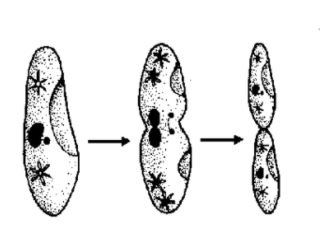
What type of asexual reproduction is illustrated in the diagram?
binary fission
budding
vegetative reproduction
fragmentation
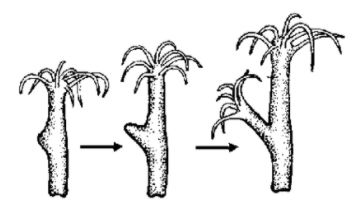
What type of asexual reproduction is illustrated in the diagram?
binary fission
budding
sporulation
fragmentation

What type of asexual reproduction is it?
vegetative propagation
sporulation
budding
binary fission

What type of asexual reproduction is it?
budding
fragmentation
vegetative reproduction
binary fission

What type of asexual reproduction is it?
budding
fragmentation
vegetative reproduction
binary fission

What type of asexual reproduction is it?
vegetative reproduction
fragmentation
budding
binary fission

What type of asexual reproduction is it?
budding
fragmentation
vegetative reproduction
binary fission
How many parents are required for asexual reproduction?
none
1
2
4
Why do stomach cells function differently than skin cells?
They contain entirely different DNA
They use different genes in the DNA
What is cell differentiation?
Process by which cells produce MORE cells.
Process by which cells become UNSPECIALIZED
Process by with cells become SPECIALIZED
Process by which cells become old and DIE
What is one goal of cellular differentiation?
To create many identical copies of cells.
To make stem cells for use in the future.
To make single-celled organisms.
To make specialized cells to maintain homeostasis.
Stem cells are cells that...
grow uncontrollably
are undifferentiated
never divide
What is Cell differentiation?
The process of cell divison
The process of cells becoming specialized for specific functions
The process of cells becoming identical
The process of cells becoming mutated
Which of the following best describes stem cells?
Cells that have already differentiated
Cells that cannot undergo cell division
Cells that have been mutated
Original human cells that are able to develop into specialized cells
Which of the following best describes Specialized Cells?
They can divide rapidly
They are identical to all other cells in the organism
They have specific structures and functions
They are only found in cancerous cells
Cells differentiate to perform different functions because
all genes are turned on inside that cell
all genes are turned off inside that cell
different genes are turned on inside that cell
different genes are turned on or off inside that cell
Unspecialized cells in our body that has the ability to differentiate into different types of cells are called
specialized cells
differentiated cells
nerve cells
stem cells
What is the term for cells that have the potential to differentiate into various cells types?
Stem Cells
Cancer Cells
Zygotes
Specialized Cells

