
 Worksheets
Midterm Practice 2.
Total questions: 132
Worksheet time: 3hrs 33mins
Name
Class
Date
1.
Which system is correctly paired with its function?
a)
circulatory system—produce building blocks of complex compounds
b)
digestive system—transport energy-rich molecules to cells
c)
excretory system—remove potentially dangerous materials from the body
d)
immune system—intake and distribution of oxygen to cells of the body
2.
Which body system is correctly paired with its function?
a)
respiratory—collects waste material for digestion
b)
circulatory—transports materials for energy release in body cells
c)
digestive—produces hormones for storage and insulation
d)
excretory—produces antibodies to fight disease-causing organisms
3.
Homeostasis involves all organ systems interacting to maintain internal stability.
a)
true
b)
false
4.
The interacting body systems are controlled and regulated by which two systems?
a)
integumentary system and endocrine system
b)
nervous system and skeletal system
c)
nervous system and endocrine system
d)
muscular system and digestive system
5.
the feedback mechanisms regulated by the nervous system are slower than those regulated by the endocrine system
a)
true
b)
false
6.
Automatic responses by the body to internal or external stimuli that threaten homeostasis are known as
a)
the islets of langerhans
b)
the pituitary gland
c)
the master gland
d)
feedback mechanisms
7.
When a person is exercising on a hot day, he or she sweats, helping to maintain homeostatic body temperature. This is an example of:
a)
organ system malfunction
b)
feedback
c)
fighting infection
d)
a disruption of homeostasis
8.
Which type of diabetes develops suddenly, at a young age?
a)
type I
b)
type II
c)
type III
9.
The opposing actions of the hormones insulin and glucagon help, in a healthy person, keep blood glucose within a range of 65 mg/dL and 140 mg/dl. This is an example of
a)
A feedback mechanism
b)
a disruption of homeostasis.
10.
The opposing actions of the hormones insulin and glucagon help, in a healthy person, keep blood glucose within a range of 65 mg/dL and 140 mg/dl. This range means that blood glucose should never get too high or low, and is an example of:
a)
Feeding positivity
b)
Positive feedback
c)
Equal dynamism
d)
Dynamic equillibrium
11.
The opposing actions of the hormones insulin and glucagon help, in a healthy person, keep blood glucose within a range of 65 mg/dL and 140 mg/dl. These hormones are produced by which gland?
a)
the adrenal gland
b)
the pancreas
c)
the testes
d)
the pineal gland
12.
Which organ is not a gland?
a)
the pancreas
b)
the parathyroid
c)
the ovaries
d)
the liver
13.
which is an exocrine gland (not an endocrine gland)
a)
thyroid gland
b)
pituitary gland
c)
sweat gland
d)
ovaries
14.
What do all endocrine glands produce
a)
sweat
b)
hormones
c)
insulin
d)
enzymes
15.
Insulin and most other hormones are what kind of organic molecule?
a)
carbohydrates
b)
lipids
c)
proteins
d)
nucleic acids
16.
After a person eats starchy foods, the digestive system will, over time, break these complex carbohydrate compounds down into what smaller molecules?
a)
DNA
b)
lipids
c)
amino acids
d)
sugars
17.
molecules small enough to pass through the pores of cell membranes can passively leave the digestive system and enter the blood through what process?
a)
diffusion
b)
active transport
c)
photosynthesis
d)
cellular respiration
18.
Which molecule can be directly used by cells to power metabolic activities?
a)
DNA
b)
glucose
c)
RNA
d)
ATP
19.
Homeostasis means that for a healthy person, conditions inside an individual's body stay exactly the same at all times, regardless of external stimuli.
a)
true, internal conditions stay exactly the same, always.
b)
false, internal conditions vary widely, even in a healthy person.
c)
false, internal conditions in a healthy person remain at dynamic equilibrium, which means they are constantly changing, but within a narrow range.
d)
true, internal conditions stay exactly the same in the healthy person, any disruption is due to severe medical conditions.
20.
When the homeostasis of at least one body system is disrupted, this is called:
a)
disease/illness
b)
dynamic equilibrium
c)
feedback mechanism
d)
response to stimuli
21.
To maintain dynamic equilibrium, after a stimulus is detected by the nervous system, what happens next?
a)
disease/illness
b)
internal conditions remain exactly the same
c)
homeostasis is disrupted
d)
a response to the stimulus
22.
Internal conditions of an organism remain at dynamic equilibrium due, in part, to feedback mechanisms. This truth describes:
a)
The importance of carbohydrates.
b)
The role of the pancreas.
c)
the endocrine system's control over the nervous system
d)
homeostasis
23.
After a person eats a starchy meal, what is the correct sequence of events?
a)
diffusion, respiration, circulation, respiration.
b)
circulation, diffusion, respiration, digestion, circulation.
c)
digestion, diffusion, circulation, diffusion. respiration.
d)
digestion, respiration, diffusion, respiration, circulation.
24.
Autotrophs differ from heterotrophs in that only autotrophs
a)
(1) require carbon dioxide for cellular respiration
b)
(2) release oxygen as a product of cellular respiration
c)
(3) synthesize nutrients using carbon dioxide and water
d)
(4) break down sugars to assemble other molecules
25.
Which sequence represents structures organized from most complex to least complex?
a)
(1) chloroplast → guard cell → leaf → oak tree
b)
(2) guard cell → chloroplast → leaf → oak tree
c)
(3) oak tree → guard cell → leaf → chloroplast
d)
(4) oak tree → leaf → guard cell → chloroplast
26.
In humans, the maintenance of a stable internal temperature is a direct result of
a)
(1) detection of and reaction to stimuli in the environment
b)
(2) digestion of starches and absorption of protein from the internal environment
c)
(3) diffusion of water and excretion of glucose to the external environment
d)
(4) transport of ATP and locomotion through the environment
27.
Which statement best describes a situation where competition occurs in an ecosystem?
a)
A deer outruns an attacking wolf.
b)
A deer, during the winter, consumes tree bark.
c)
A deer and a rabbit consume grass in a field.
d)
A deer and a rabbit are both startled by a hawk flying overhead.
28.
An energy-rich organic compound needed by organisms is:
a)
water
b)
glucose
c)
oxygen
d)
salt
29.
A researcher concludes from a 10-year study that the biodiversity of an ecosystem had increased. Which set of observations represents evidence for this claim?
a)
There were fewer niches for consumers and greater cycling of materials.
b)
There were more niches and greater stability in the ecosystem.
c)
There were more niches and less energy lost as heat in the ecosystem.
d)
There were fewer niches for decomposers and less stability.
30.
. The final consumers in many food webs are:
a)
herbivores
b)
autotrophs
c)
carnivores
d)
hosts
31.

The student observed the unicellular organism shown in the image, predicted that the contractile vacuole, which eliminates excess water, would contract fewer times in one minute in a solution that had a higher concentration of salt than that found in typical pond water. This prediction is most likely:
a)
correct, because water would be moving out of the cell into the salt solution
b)
correct, because a high concentration of salt in the environment will force water into the cell, causing the contractile vacuole to pump
c)
incorrect, because salt would be entering the cell, and the contractile vacuole would have to pump it out
d)
incorrect, because the concentration of salt in the environment should not affect a cell
32.
As it grows from a seed to a mature plant, a plant will grow taller and thicker. Which are abiotic factors most responsible for the increase in the mass of the plant?
a)
water, minerals, bacteria
b)
minerals, water, plant enzymes
c)
sunlight, oxygen, plant receptors
d)
water, sunlight, carbon dioxide
33.
When a natural disaster destroys a stable ecosystem, the area is temporarily less stable than before. This is most likely due to:
a)
an increase in the number of species
b)
a decrease in biodiversity
c)
an increase in the number of food chains
d)
a decrease in the rate of mutation
34.
Dodder, a plant with no chlorophyll, grows on a living plant of a different species from which it obtains nutrients. Which pair of terms describes this relationship?
a)
consumer and scavenger
b)
producer and decomposer
c)
predator and prey
d)
parasite and host
35.
. An amoeba, a one-celled organism, can move, ingest, and transport materials within the cell, because it has:
a)
systems
b)
tissues
c)
organelles
d)
organs
36.
An individual eats a hamburger. Which two systems must interact to transfer the nutrients in the hamburger to human muscle tissue?
a)
circulatory and respiratory
b)
digestive and circulatory
c)
digestive and immune
d)
respiratory and excretory
37.
AKA measured variable. This is the data that you collect during your experiment which shows the effect that your IV is having.
a)
IV
b)
DV
c)
Constant
d)
variable
38.
In an experiment, this is any factor that may affect the results.
a)
constant
b)
IV
c)
DV
d)
Variable
39.
In an experiment, this is any variable that is made to be the same for all the groups being compared. AKA controlled variable.
a)
Constant
b)
IV
c)
DV
40.
A proposed solution to the problem question.
a)
hypothesis
b)
data
c)
experiment
d)
conclusion
41.
How many IVs must a valid experiment have?
a)
0
b)
1
c)
2
d)
more than 2
42.
If an experiment has 2 IVs, the results will be
a)
more valid than if there was only one IV
b)
Less valid than if there were 3 IVs
c)
Invalid
d)
Somewhat valis
43.
is the variable being “tested”. It is the single variable that the experimenter makes sure is different for all the groups. AKA manipulated variable.
a)
IV
b)
DV
c)
Contstant
d)
Control group
44.
A question that can be answered by doing an experiment/
a)
problem
b)
hypothesis
c)
data
d)
experiment
45.
An investigation which tests the validity of your hypothesis.
a)
problem
b)
experiment
c)
data
d)
conclusion
46.
Information gathered during the experiment
a)
Data
b)
hypothesis
c)
problem
d)
hypothesis
47.
A statement about whether or not the data supports your hypothesis.
a)
problem
b)
experiment
c)
conclusion
d)
DV
48.

Sabrina wants to test which brand of popcorn pops the most kernels. She picked a Giant Eagle brand, Orville Redenbacher, and PopSecret. All three bags started with the same number of kernels. She popped each for 3 minutes in the same microwave, and then counted the number of kernels left over. What is her independent variable?
a)
Number of kernels left over
b)
Brand of popcorn
c)
Number of kernels before popping
d)
Length of time cooking
49.

Kira wants to test which type of soda creates the biggest foam explosion when adding a Mentos candy. She chose Sprite, Coke, and Mountain Dew. One at a time, she added a single Mentos candy and measured the height of the foam eruption. Mountain Dew created a foam eruption of 7 inches. Coke and Sprite tied at 5 inches. What is her dependent variable?
a)
Brand of soda
b)
Number of mentos candies used
c)
Height of foam eruption
d)
Temperature of soda
50.

This step comes after ask a question:
a)
Record your results
b)
Design and perform an experiment
c)
Form an hypothesis
d)
Share your results
51.
A possible explanation to a problem that has not yet been tested =
a)
data
b)
theory
c)
hypothesis
d)
fact
52.
The cell phone is making noise...
a)
Observation
b)
Hypothesis
c)
Inference
53.
The flower has red petals....
a)
Observation
b)
Hypothesis
c)
Inference
54.
The boy has tears in his eyes, so he must be sad....
a)
Observation
b)
Hypothesis
c)
Inference
55.
If I study, I will get an A on the quiz...
a)
Observation
b)
Hypothesis
c)
Inference
56.
If I do all my homework, I will get to go to the movies....
a)
Observation
b)
Hypothesis
c)
Inference
57.
which is NOT true about the climax community (the last stage of ecological succession)
a)
has the greatest biodiversity
b)
is the most stable
c)
will not change until an environmental disruption
d)
grasses and mosses are the dominant plants
58.

An individual belonging to a specific species
a)
Biotic
b)
Community
c)
Organism
d)
Reptile
59.

All of the living and nonliving things in an area that interact with each other are called a/an ______.
a)
community
b)
habitat
c)
population
d)
ecosystem
60.

An area where an organism finds food, shelter and water in a specific arrangement
a)
niche
b)
biosphere
c)
biome
d)
habitat
61.
The living part of an ecosystem
a)
Biotic
b)
Abiotic
c)
Mother Earth
d)
Flowers
62.

The non-living part of an ecosystem
a)
Ocean
b)
Lava Flow
c)
Birds
d)
Abiotic
63.

Organisms that look similar and can produce fertile offspring
a)
Species
b)
Fish
c)
Community
d)
Trees
64.
What is a correct food chain?
a)
Acorn -> squirrel -> hawk
b)
Hawk -> squirrel -> acorn
c)
Squirrel -> acorn -> hawk
d)
Worm -> hawk -> acorn
65.
What is another name for an autotroph?
a)
Herbivore
b)
Producer
c)
Consumer
d)
Decomposer
66.
What is an example of an herbivore?
a)
Fox
b)
Wolf
c)
Deer
d)
Hawk
67.
What is something in an environment that will limit population growth?
a)
Carrying Capacity
b)
Limiting Factor
c)
Abiotic Factor
d)
Biotic Factor
68.
What are decomposers?
a)
Organisms that get their nergy by breaking down waste and dead organims
b)
Organisms that eat other living organisms
c)
Organisms that eat plants
d)
Organisms that make their own food
69.
What is a carrying capacity?
a)
The number of organisms in a population that an envrionment can support and maintain
b)
The number of organisms currently in an envrionment
c)
The number of organisms in an area of land
d)
The combination of living and non-living factors
70.
An organism that produces its own food supply from inorganic compounds is called a(an)
a)
heterotroph
b)
consumer
c)
detritivore
d)
autotroph
71.
What is the original source of almost all energy in most ecosystems?
a)
carbohydrates
b)
sunlight
c)
water
d)
carbon
72.

which symbiosis is this
a)
parasitism
b)
mutualism
c)
commensalism
d)
nonalism
73.
Autotrophs make up the _______ level in all ecosystems.
a)
First
b)
Second
c)
Third
d)
Fourth
74.
What is the term for each step in the transfer of energy and matter within a biological community?
a)
energy path
b)
food web
c)
trophic level
d)
food pyramid
75.

symbiotic relationship in which both organisms benefit
a)
competition
b)
Mutualism
c)
nitrogen fixation
d)
energy pyramid
76.

What does a food web represent?
a)
All connections of energy flow throughout all organisms in a habitat.
b)
The specific ways that mutualism is carried out.
c)
A single pathway or energy flow between organisms.
d)
How carnivores get their food.
77.

The image provided is an example of a(n):
a)
Carnivore
b)
Herbivore
c)
Producer
d)
Autotroph
78.

The image provided is an example of a(n):
a)
Producer
b)
Autotroph
c)
Consumer
d)
Insect
79.
The amount of energy that usually transfers from one trophic level to the next...
a)
10%
b)
20%
c)
80%
d)
50%
80.
Water temperature would be an example of ...
a)
A biotic factor
b)
An abiotic factor
81.
A collection of organisms that belong to different populations but all live in the same area and interact with one another.
a)
Population
b)
Ecosystem
c)
Community
d)
Ecosphere
82.
A collection of organisms that make up a community as well as all of the nonliving aspects of the environment.
a)
Population
b)
Community
c)
Habitat
d)
Ecosystem
83.

If the amount of food or resources available increases, the carrying capacity for an animal:
a)
Stays the same
b)
Increases
c)
Decreases
d)
Fluctuates
84.
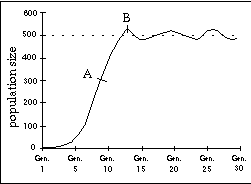
What is the carrying capacity of the graph?
a)
around 500
b)
more than 500
c)
less than 500
d)
around 600
85.

Will competition increase/decrease the carrying capacity of an ecosystem for the animal in competition?
a)
Decrease
b)
Increase
86.

What is the order of succession shown in this figure?
a)
A, B, C, D
b)
B, A, D, C
c)
C, D, A, B
d)
D, A, B, C
87.
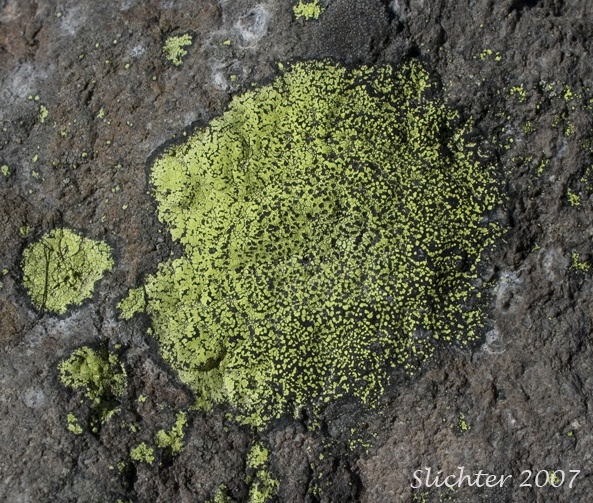
What is the name given to lichen or algae after a primary succession?
a)
pioneer species
b)
volunteer species
c)
founder species
d)
conqueror species
88.
After a volcanic eruption, lava covers the land. What is the order that plants grow to repopulate the area?
a)
Lichens → Shrubs → Grasses → Trees
b)
Lichens → tree → shrubs→Grasses
c)
Grasses → Lichens → Shrubs → Trees
d)
Lichens → Grasses → Shrubs → Trees
89.
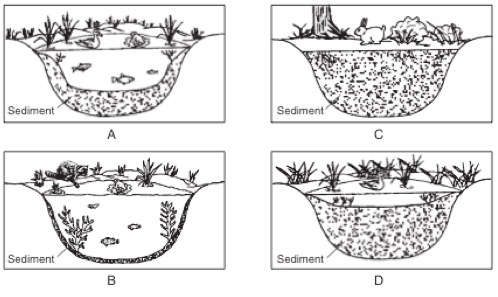
What is the correct order from oldest (happened first) to youngest (happened last) in this pond succession?
a)
A, B, C, D
b)
D, C, B, A
c)
B, A, D, C
d)
C, D, A, B
90.
Which would be true about a graph of human population over the last 20 centuries?
a)
Was at carrying capacity for a long time, gradual rising, then in recent times a dramatic rising
b)
was never at carrying capacity
c)
Is currently at carrying capacity
d)
population rose dramatically in the past, then reached cayying capacity; currently there is a gradual rising.
91.
Between starch, glucose, water, and starch indicator, which could NOT pass through an artificial membrane in our lab, because its particles were too big?
a)
starch
b)
glucose
c)
water
d)
starch indicator
92.

When was this viewed?
a)
After distilled (pure) water was added
b)
after salt water was added
93.
These onion cells have lost water from their cytoplasm after a certain procedure has been performed. What has caused the change?
a)
diffusion
b)
active transport
c)
photosynthesis
d)
cellular respiration
94.

When was this viewed?
a)
After distilled (pure) water was added.
b)
After salt water was added
95.

At this stage of the experiment, have either starch or starch indicator passed (noticeably) though the dialysis tubing?
a)
yes, both
b)
yes, starch only
c)
yes, starch indicator only
d)
no
96.
what does the amber coloring of the fluid indicate?
a)
glucose has passed through membrane
b)
starch has passed through membrane
c)
it proves NO glucose passed through membrane
d)
it proves NO starch has passed through membrane
97.
what does the amber coloring of the fluid indicate?
a)
glucose has passed through membrane
b)
starch has passed through membrane
c)
it proves NO glucose passed through membrane
d)
it proves NO starch has passed through membrane
98.
what does the amber coloring of the fluid indicate?
a)
glucose has passed through membrane
b)
starch has passed through membrane
c)
it proves NO glucose passed through membrane
d)
it proves NO starch has passed through membrane
99.
what does the white coloring inside the artificial cell indicate?
a)
starch indicator has passed through membrane
b)
glucose indicator has passed through membrane
c)
it proves NO glucose indicator passed through membrane
d)
it proves NO starch indicator has passed through membrane
100.

What does the blue black coloring inside the artificial cell indicate?
a)
starch indicator passed through dialysis membrane
b)
glucose indicator passed through dialysis membrane
c)
glucose had a chemical reaction with starch
d)
someone spilled ink in their "cell"
101.

This procedure proves glucose passed through the dialysis membrane. What was in that test tube?
a)
glucose indicator, fluid from outside the "cell"
b)
glucose indicator, sample from inside "cell"
c)
starch indicator, fluid from outside the "cell"
d)
starch indicator, sample from inside the "cell"
102.
The test tube was originally blue, but turned orange when heated. How can we interpret this?
a)
its positive, so glucose passed through the dialysis membrane
b)
its positive, so starch passed through the dialysis membrane
c)
its negative, so glucose passed through the dialysis membrane
d)
its negative, so starch passed through the dialysis membrane
103.
When you are viewing some onion cells under the microscope, and you add salt water to observe changes, and later add distilled (pure) water and observe further changes, what do you see?
a)
whole cell (cell wall, cell membrane, cytoplasm) shrinks and expands
b)
cell wall remains unchanged, cell membrane and cytoplasm change in response to diffusion
c)
cell membrane remains unchanged, cell wall and cytoplasm change in response to diffusion
104.

this coverslip is being lowered over the specimen (which is in a few drop of water) at a 45 degree angle. What is the importance of this angle?
a)
it decreases water bubbles
b)
no importance
c)
it will make the specimen more focused
d)
it will make the specimen darker and easier to view
105.

What is the purpose of adding a biological stain to these cheek cells before viewing?
a)
to cause diffusion to occur
b)
to shrink the cell
c)
to make everything darker and easier to view
d)
to increase magnification
106.
Why could many students squeeze a clothespin more times in a minute after exercising?
a)
heart beating faster delivers more glucose and oxygen to muscle cells
b)
you do better when you're tired
107.
Exercise causes your heart and lungs to work faster. Which organ systems does this most directly involve, and which process is sped up?
a)
circulatory and digestive; photosynthesis
b)
nervous and endocrine; active transport
c)
respiratory and skeletal; diffusion
d)
circulatory and respiratory; (cellular) respiratory
108.
When we were determining our average pulse rate, what was NOT part of our procedure?
a)
count pulse beats for 20 seconds, then multiply by 3 to get rate per minute
b)
take the pulse in different locations for different trials
c)
do 3 trials and then take average
109.

Autotroph or heterotroph?
a)
Autotroph
b)
Heterotroph
110.
Cells with membrane- bound structures are called .............?
a)
multicellular organisms
b)
unicellular organisms
c)
prokaryotic
d)
eukaryotic
111.
prokaryotic means
a)
single celled
b)
multicellular
c)
has organelles
d)
lacks organelles
112.
In which eukaryotic organelles does photosynthesis occur?
a)
mitochondria
b)
stomata
c)
xylem
d)
chloroplast
113.
The main source of energy for all life comes from ____.
a)
the Earth
b)
the moon
c)
the sun
d)
the food we eat/make
114.
The reactants of photosynthesis are
a)
sugar and water.
b)
sugar and oxygen.
c)
carbon dioxide and water.
d)
carbon dioxide and oxygen.
115.
Which of the following is the correct equation for PHOTOSYNTHESIS?
a)
6CO2 + 6H2O --> 6O2 + C6H12O6
b)
6CO2 + C6H12O6 + 6H2O --> O2
c)
6O2 + 6H2O --> 6CO2 + C6H12O6
d)
C6H12O6 + 6O2 ---> 6H2O + 6CO2
116.
The overall equation for cellular respiration is:
a)
C6H12O6 + energy -> 6CO2 + 6H2O + energy
b)
CH2O + O2 -> CO2 + 6H2O + energy
c)
C6H12O6 + 6O2 -> 6CO2 + 6H2O + energy
d)
C6H12O6 + 6CO2 -> 6O2 + 6H2O + energy
117.
Which process do the animals in the food web use to convert energy from food into ATP?
a)
cellular respiration
b)
osmosis
c)
photosynthesis
d)
transcription
118.
One of the principal compounds that living things use to store energy is
a)
DNA
b)
ATP
c)
H20
d)
CO2
119.
Cellular Respiration's goal is to
a)
make water
b)
make ATP
c)
make glucose
d)
make oxygen
120.
What are the reactants (what's needed) for photosynthesis?
a)
glucose and oxygen
b)
light, water, and carbon dioxide
121.
A student collects the gas given off from a plant in bright sunlight. The gas being collected is
a)
oxygen
b)
carbon dioxide
c)
ATP
d)
vaporized water
122.
Which of the following is used in the overall reaction of photosynthesis
a)
carbon dioxide
b)
water
c)
light
d)
all of these
123.
Which of the following is released during cellular respiration
a)
oxygen
b)
air
c)
energy
d)
lactic acid
124.
What are the reactants in the equation for cellular respiration
a)
oxygen and lactic acid
b)
carbon dioxide and water
c)
glucose and oxygen
d)
water and glucose
125.
The sugar produced in photosynthesis is called...
a)
ATP
b)
Cellular
c)
Glucose
d)
None of the above
126.

A diagram representing the relationship between photosynthesis and cellular respiration is shown.
The numbered boxes in the diagram represent which of the following?
The numbered boxes in the diagram represent which of the following?
a)
1 - water; 2 - nitrogen
b)
1 - nitrogen; 2 - oxygen
c)
1 - oxygen; 2 - carbon dioxide
d)
1 - carbon dioxide; 2 – water
127.
In which way are photosynthesis and cellular respiration different?
a)
Cellular respiration stores ATP, while photosynthesis releases ATP.
b)
Cellular respiration produces oxygen, while photosynthesis uses oxygen.
c)
Photosynthesis releases energy, while cellular respiration stores energy.
d)
Photosynthesis uses carbon dioxide, while cellular respiration produces carbon dioxide.
128.
In which way are photosynthesis and cellular respiration different?
a)
Cellular respiration stores ATP, while photosynthesis releases ATP.
b)
Cellular respiration produces oxygen, while photosynthesis uses oxygen.
c)
Photosynthesis releases energy, while cellular respiration stores energy.
d)
Photosynthesis uses carbon dioxide, while cellular respiration produces carbon dioxide.
129.

The picture is an example of _________________.
a)
isotonic
b)
diffusion
c)
osmosis
d)
active transport
130.

The picture below is an example of _________________.
a)
osmosis
b)
isotonic
c)
diffusion
d)
active transport
131.

What type of transport is this?
a)
passive transport
b)
diffusion
c)
Active Transport
d)
Osmosis
132.
In active transport, molecules move from an area of __________ concentration to an area of __________ concentraiton, and use ATP
a)
high, low
b)
low, high
c)
water, salt
d)
active, passive
100 %

