wayground logo

Free Printable Worksheets

Font size

S
M
L
XL
Worksheets

Honors Biology Midterm Review

Total questions: 126

Worksheet time: 3hrs 35mins

Name
Class
Date
1.
When you step out into the cold, your body shivers in order to keep its temperature at 98.6F.
a)
All living things use energy
b)
All living things contain cells
c)
All living things maintain homeostasis
d)
All living things grow
2.
Which of the following is the correct equation for PHOTOSYNTHESIS?
a)
CO+ light + H2O --> O+ Sugar
b)
CO+ sugar + H2O --> O+ light
c)
O2 + light + H2O --> CO+ Sugar
d)
CO+ O2 + H2O --> Light+ Sugar
3.
Enzymes are capable of increasing the rate of a chemical reaction within a living cell.  Enzymes accomplish this through which of the following means?
a)
reducing the number of products   
b)
reducing the activation energy
c)
increasing the temperature of the cell
d)
increasing the concentration of reactants 
4.
In mitosis, the two resulting cells are
a)
different from the starting cell and identical to each other.
b)
different from the starting cell and different from each other.
c)
identical to the starting cell and different from each other.
d)
identical to the starting cell and identical to each other.
5.
A single-celled organism that lacks a membrane-bound nucleus, mitochondria, or any other membrane -bound organelle .
a)
Prokaryote
b)
Eukaryote
c)
Nucleus
d)
Single-celled organism
6.

Which biomolecule is a main source of quick energy?

a)

Nucleic Acid

b)

Protein

c)

Lipid

d)

Carbohydrate

7.

What is the movement of particles with the concentration gradient using protein "helpers"?

a)

diffusion

b)

facilitated diffusion

c)

active transport

d)

enzymatic reactions

8.
How is energy released from ATP?
a)
adding a phosphate
b)
making a new bond
c)
removing the 3rd phosphate
d)
adding a protein
9.
Which organelle is only found in a plant cell? 
a)
nucleus
b)
chloroplast
c)
mitochondria
d)
cell membrane
10.

This organelle takes food and creates energy in the form of ATP for plant and animal cells.

a)

Chloroplast

b)

Mitochondria

c)

Lysosome

d)

Ribosome

11.
Sac within the cytoplasm that is full of fluid; plants have one large; stores food, water, etc.
a)
vacuole
b)
cell wall
c)
lysosome
d)
ribosome
12.
Which biomolecule is found in fats, oils, and waxes and is a source of long-term energy
a)
Proteins
b)
Nucleic Acid
c)
Lipids
d)
Carbohydrate
13.
Carbon, Hydrogen, Oxygen and Nitrogen are elements in what biomolecule?
a)
Carbohydrate
b)
Lipid
c)
Protein
d)
Nucleic acid
14.
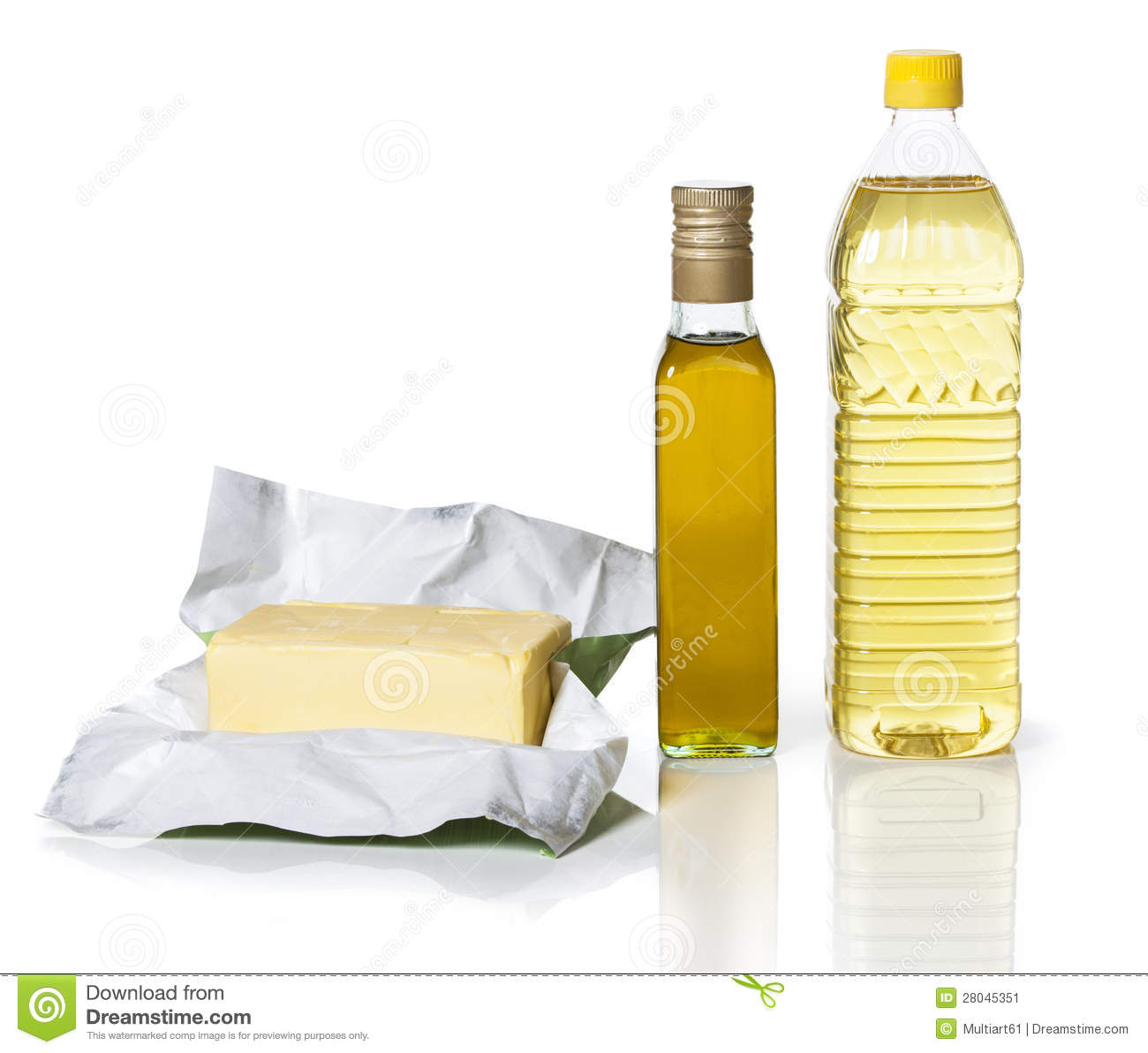
Which biomolecule is this a picture of?
a)
Protein
b)
Nucleic Acid
c)
Lipid
d)
Carbohydrate
15.

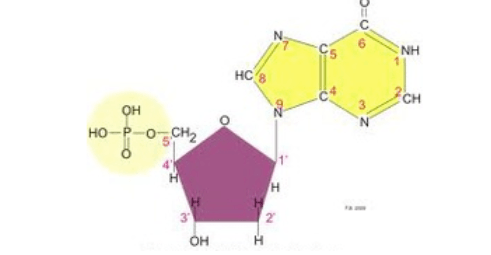
Which biomolecule is made of nucleotides and includes DNA?

a)

Carbohydrate

b)

Lipids

c)

Protein

d)

Nucleic Acid

16.
The 4 macromolecules are
a)
vitamins, lipids, water, micronutrients
b)
micronutrients, macronutrients, water, vitamins
c)
Lipids, Waxes, Vitamin A, Water
d)
Carbohydrates, Lipids, Proteins, Nucleic Acids
17.
What element must be present for a molecule to be considered organic?
a)
nitrogen
b)
water
c)
hydrogen
d)
carbon
18.
_ are organelles responsible for digesting certain materials within the cell.
a)
vacuoles
b)
chloroplasts
c)
lysosomes
d)
cell membrane
19.
What type of solution allows water to enter the plant cell?
a)
hypotonic solution
b)
hypertonic solution
c)
isotonic solution
d)
active transport
20.
If a cell is placed in a HYPOTONIC solution, water will move _________ of the cell, causing it to ___________.
a)
into, swell
b)
out of, shrivel
c)
in and out of the cell, stay the same
21.
What type of solution is this cell in?
a)
Isotonic
b)
Hypertonic
c)
Hypotonic
d)
diffused
22.
 If a cell containing 5% salt is placed into a glass of water with 20% salt, the water is _______ compared to the cell.
a)
hypertonic-
b)
hypotonic
c)
isotonic
23.
During what phase of the cell cycle is DNA replicated?
a)
G1 phase
b)
S phase
c)
G2 phase
d)
M phase
24.
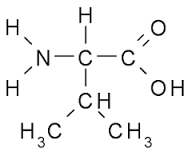
Which biomolecule is made of amino acids?
a)
Nucleic Acid
b)
Carbohydrate
c)
Protein
d)
Lipid
25.
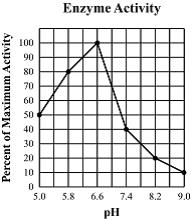
Which of the following conclusions can be drawn from this graph?
a)
The optimum pH of the enzyme is 6.6.
b)
The optimum pH of the enzyme is 5.8
c)
The enzyme’s activity increases as pH increases 5.0 to 9.0
d)
The enzyme’s activity is greater around pH of 8.0 .
26.
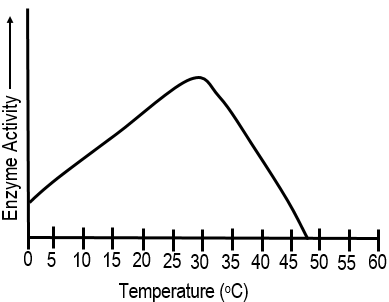
Based on the graph, what is the optimal temperature for this enzyme? 
a)
15oC
b)
40oC
c)
30oC
d)
35oC
27.
Hydrophobic (water - fearing)
a)
Lipid
b)
Nucleic Acid
c)
Protein
d)
Carbohydrate
28.
The pH of a solution is tested, and it is found to be a basic solution. Of the following choices, what could the pH have been?
a)
3
b)
9
c)
7
d)
5
29.

what provides strength and support in plant cells, it is made of cellulose &

a)

cell membrane

b)

cell wall

c)

cytoplasm

d)

chloroplast

30.

what allows nutrients in and lets waste products out; it keeps the cytoplasm inside; it interacts with the cell's environment

a)

cell membrane

b)

cell wall

c)

cytoplasm

d)

chloroplast

31.

the gelatin like fluid in the cell that flows inside the cell membrane

a)

cell membrane

b)

cell wall

c)

cytoplasm

d)

chloroplast

32.

the control center of the cell; it stores the DNA

a)

golgi body

b)

endoplasmic reticulum

c)

cytoplasm

d)

nucleus

33.

the chemical that contains the code for the cell's structure and activities; it is found in the nucleus

a)

DNA

b)

chloroplast

c)

nucleus

d)

ER

34.

traps sun's light energy and converts it to chemical energy -glucose or sugar

a)

chloroplast

b)

mitochondria

c)

golgi body

35.

the green pigment inside the chloroplast

a)

cytoplasm

b)

chlorophyll

c)

cell membrane

36.

powerhouse of the cell; respiration occurs here

a)

chlorophyll

b)

golgi body

c)

endoplasmic reticulum

d)

mitochondria

37.

makes proteins

a)

ribosomes

b)

mitochondria

c)

endoplasmic reticulum

38.

the passageway for proteins; they transport the proteins

a)

ribosomes

b)

endoplasmic reticulum

c)

gogli complex

d)

mitochondria

39.

these package proteins to be shipped out of the cell

a)

proteins

b)

ribosomes

c)

golgi bodies

d)

endoplasmic reticulum

40.
This picture represents what type of cell transport?
a)
endocytosis
b)
exocytosis
c)
osmosis
d)
passive transport
41.
Osmosis is the movement of _____ across a membrane.
a)
food
b)
energy
c)
oxygen
d)
water
42.
Which is true about active transport?
a)
It requires energy
b)
it does not require energy
c)
It moves substances down the concentration gradient
d)
it moves material from high to low concentration
43.
Molecules diffusing with the concentration gradient through a protein channel is...
a)
Facilitated Diffusion
b)
Simple Diffusion
c)
Active Transport
d)
Osmosis
44.
In a nerve cell, ATP energy is used to pump sodium (Na) out of the cell and potassium (K) into the cell. This is an example of...
a)
Facilitated Diffusion
b)
Simple Diffusion
c)
Active Transport
d)
Osmosis
45.
Food is moved into the cell by ________________________.
a)
endocytosis
b)
diffusion
c)
exocytosis
d)
osmosis
46.
This cell organelle helps organisms maintain homeostasis by controlling what substances may enter or leave cells.
a)
vacuole
b)
nucleus
c)
cell membrane
d)
cell wall
47.
The cell below is in a _________ solution.
a)
Hypotonic
b)
Hypertonic
c)
Isotonic
48.
The cell below is in a _____________ solution.
a)
Hypertonic
b)
Hypotonic
c)
Isotonic
49.
A cell in an isotonic solution will
a)
swell
b)
shrink
c)
stay the same size
d)
impossible to tell
50.
When a cell is placed in a hypertonic solution water
a)
moves from the inside of the cell to the solution
b)
moves from the solution to the inside of the cell
c)
moves equally in and out of the cell
d)
none of these
51.
What type of transport is this?
a)
facilitated diffusion
b)
active transport
c)
diffusion
d)
osmosis
52.
Active transport requires ______, moves materials from __________________, and goes _______ the concentration gradient.
a)
No energy, low to high, against
b)
ATP, high to low, with
c)
ATP, low to high, with
d)
ATP, low to high, against
53.
A cell will __________________ in a hypotonic solution.
a)
swell and perhaps burst (lyse)
b)
shrink
c)
the size of the cell will not change
d)
the size of the cell will change from large to small and from small to large
54.
The difference in the concentration of a substance from one location to another is called 
a)
diffusion
b)
osmosis
c)
concentration gradient
d)
passive transport
55.
A molecule that diffuses down a concentration gradient goes from an area of ______ concentration into an area of ______ concentration.
a)
high, low
b)
low, high
c)
passive, active
d)
active, passive
56.
Two examples of passive transport are
a)
Earth and Sun
b)
Diffusion and Osmosis
c)
Energy and Wind
d)
None of the above
57.
Members of a species in a defined area
a)
Ecosystem
b)
community
c)
biodiversity
d)
population
58.
Consumer that eats plants
a)
heterotroph
b)
herbivore
c)
producer
d)
community
59.
Series of steps in which organisms transfer energy by eating and being eaten
a)
foodweb
b)
consumer
c)
food chain
d)
omnivore
60.
Organisms that relies on other organisms for food; consumer
a)
herbivore
b)
decomposer
c)
heterotroph
d)
species
61.
All the organisms in a particular location, including their nonliving environment
a)
ecosystem
b)
carnivore
c)
niche
d)
population
62.
What may happen if the snowshoe hare was removed from the food web pictured?
a)
The insects in the habitat would increase.
b)
The shrew population would decrease due to being only hawk food source.
c)
The willow tree population would decrease.
d)
Foxes would dies due to no food source. 
63.
In the energy pyramid here, how much of the energy in the producers gets passed to the herbivores?
a)
10%
b)
20%
c)
80%
d)
90%
64.
Which of the following leads to a decrease in biodiversity?
a)
protection of ecosystems
b)
pollution control
c)
selective cutting
d)
introduction of exotic or invasive species
65.
Nitrogen fixation processes nitrogen from which of the following sources?
a)
lightning
b)
fertilizers
c)
dead plants
d)
atmosphere
66.
Nitrogen makes up _____ percent of the atmosphere.
a)
66%
b)
78%
c)
90%
67.
In the food web shown, the snail would be considered...
a)
primary consumer
b)
secondary consumer
c)
tertiary consumer
d)
producer
68.
Organisms that lay eggs, do no nurturing of their young and are adults for only short periods of time:
a)
Type 1
b)
Type 2
c)
Type 3
d)
Zebras
69.
A Killer Whale would be an example of this type of survivorship.
a)
Type 1
b)
Type 2
c)
Type 3
d)
None of the Above
70.
A rabbit would show this type of survivorship.
a)
Type 1
b)
Type 2
c)
Type 3
d)
Type 4
71.
Organisms that either die at birth or get eaten as eggs show this type of survivorship.
a)
Type 1
b)
Type 2
c)
Type 3
d)
Elephants
72.
Organisms that have gestation (pregnancy) periods and usually only give birth to one offspring at a time.
a)
Type 1
b)
Type 2
c)
Type 3
d)
Foxes
73.
Most organisms of this type reach adulthood and will go on to reproduce themselves.
a)
Type 1
b)
Type 2
c)
Type 3
d)
Insects
74.
Organisms that have a 50/50 shot as survival at any given point during their lifespan.
a)
Type 1
b)
Type 2
c)
Type 3
d)
Type 4
75.
Humans are an example of this type of survivorship.
a)
Type1
b)
Type 2
c)
Type 3
d)
Type 4
76.
All members of one species in a certain area.
a)
Population
b)
Limiting Factors
c)
Immigration
d)
Birth Rate
77.

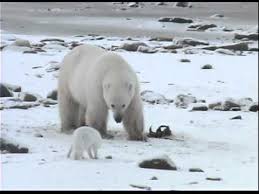
Two arctic fox are fighting with a polar bear for a sea lion carcass. One fox distracts the bear while the other eats. What type of limiting factor is the polar bear?

a)

Predator-Prey Relationships

b)

Competition

c)

Herbivory Effect

d)

Weather

78.

A group of elephants gets stuck in mud at the edge of the river from a recent mud slide. A lion waits for an elephant to get tired before it attacks. What is the limiting factor to the elephant population?

a)

Predator-Prey Relationships

b)

Natural Disaster

c)

Herbivory Effect

d)

Competition

79.

A duck population is breeding at exponential rates. The snakes that hunted them have been collected by fur collectors. They make boots from python snake skin. What is the limiting factor to the snakes?

a)

Ducks

b)

Predator-Prey

c)

Exponential Growth

d)

Humans

80.

A duck population normally begin migrating south right after the last rain of the late summer season. Suddenly, they’re migrating much earlier. The climate has been changing far too often which is altering the effects of their magnetite.

a)

Predator-Prey Relationships

b)

Weather

c)

Herbivory Effect

d)

Competition

81.

One of the wolf populations leaves the forest. Over time, bushes, trees and moisture begin to leave as well. There is an effect on the producer populations because the herbivores are overgrazing the land. What is the limiting factor to the producer?

a)

Competition

b)

The wolf

c)

Herbivory Effect

d)

Mutualism

82.

One of the wolf populations begins to compete with a new bear population for the same herbivores. Over time, bushes, trees and rivers improve in numbers. There is an effect on the producer populations. What is the limiting factor to the herbivore?

a)

Predator-Prey Relationships

b)

Herbivory Effect

c)

Competition

d)

Wolves and Bears

83.

Small krill sweep the river bottom rocks for debris and muck. Next, the krill is suddenly swooped up by a small fish. The small fish then gets eaten by a salmon. A week after the bear eats the salmon, it begins to have symptoms. Over time the bear weakens from a botfly infection. What is the limiting factor to all the consumers?

a)

Predator-Prey Relationships

b)

Parasites

c)

Disease

d)

Competition

84.

The wolf population gets reintroduced to the ecosystem. There is enough deer to go around, so they eat comfortably. The wolf population begins to grow out of control with so much food. The different wolf families then begin to compete for the few caves that exist. Not everyone has good shelter so some have to sleep in the forest floors. What is the limiting factor to the wolves?

a)

Overcrowding

b)

Competition

c)

Weather

d)

Shelter

85.

A landslide covers the river’s path. Further downstream, water depletes and fish populations start to go down. In this case the landslide was a limiting factor.

a)

Weather

b)

Natural Disaster

c)

Climate Change

d)

Global Warming

86.

Which of these factors do not respond to the density of a population in an ecosystem?

a)

Density Dependent Limiting Factors

b)

Density Independent Limiting Factors

c)

Herbivory Effect

d)

Competition

87.
When a pine tree grows real tall and blocks sunlight to another pine tree it is _______ competition.
a)
Interference
b)
Intraspecific
c)
Interspecific
d)
Exploitative
88.

Which factor promotes competition between organisms in an ecosystem?

a)

cycling of minerals

b)

limited resources

c)

decomposition of organic matter

d)

presence of saprophytes

89.

Two closely related species of birds live in the same tree. Species A feeds on ants and termites, while Species B feeds on caterpillars. The two species coexist successfully because

a)

each occupies a different niche

b)

they interbreed

c)

they use different methods of reproduction

d)

birds compete for food

90.
No two species can occupy the same niche
a)
Competitive Exclusion Principle 
b)
Limiting Exclusion Theory
c)
Competitive Limiting Principle
d)
Limiting Competitive Theory 
91.
What statement is TRUE about the graph?
a)
The prey is the green line because there needs to be more prey than predators.
b)
The prey is the red line because there needs to be more predators than prey.
c)
The green line is the producers
d)
The red line is the producers
92.
Which structures shown in the Figure make up the ADP molecule?
a)
A and B
b)
A, B and C
c)
A, B, C, and D
d)
C and D
93.
What are the parts of the ATP molecule?
a)
adenine, thylakoids, stroma
b)
stroma, grana, chlorophyll
c)
adenine, ribose, phosphate groups
d)
NADH, NAHPH, FADH
94.
Which bond of the ATP molecule is broken in order to release energy?
a)
A
b)
B
c)
C
d)
D
95.
Where do the light-dependent reactions occur? 
a)
thylakoid membrane
b)
stroma
c)
mesophyll
d)
mitochondria
96.
Where does the Calvin Cycle occur?
a)
thylakoid
b)
stroma
c)
lumen
d)
mitochondria
97.
What are the reactants (what's needed) for photosynthesis?
a)
glucose and oxygen
b)
light, water, and carbon dioxide
98.
What gas is released by plants during photosynthesis?
a)
sulfur
b)
carbon dioxide
c)
oxygen
d)
hydrogen
99.
What are the products of photosynthesis?
a)
water and carbon dioxide
b)
oxygen and glucose
c)
oxygen and carbon dioxide
d)
oxygen and water
100.
What are the reactants of cellular respiration?
a)
glucose & carbon dioxide
b)
glucose & oxygen
c)
water & oxygen
d)
water & carbon dioxide
101.
The purpose of cellular respiration is to 
a)
make water
b)
make ATP
c)
make glucose
d)
make  oxygen
102.
In which way are photosynthesis and cellular respiration different?
a)
Cellular respiration stores ATP, while photosynthesis releases ATP.
b)
Cellular respiration produces oxygen, while photosynthesis uses oxygen.
c)
Photosynthesis releases energy, while cellular respiration stores energy.
d)
Photosynthesis uses carbon dioxide, while cellular respiration produces carbon dioxide.
103.
What is the correct equation for cellular respiration?
a)
6O2 + C6H12O6 -> 6CO2 + 6H2O + Energy
b)
6O2 + C6H12O6 + Energy -> 6CO2 + 6H2O
c)
6CO2 + 6H2O -> 6O2 + C6H12O6 + Energy
d)
6CO2 + 6H2O + Energy -> 6O2 + C6H12O6
104.
If oxygen is not present what process will occur in yeast cells?
a)
Alcoholic fermentation
b)
Respiration
c)
Photosynthesis
d)
Lactic acid fermentation
105.
During fermentation, yeast produces CO2 and
a)
lactic acid
b)
alcohol
c)
hydrogen 
d)
water
106.
Which process produces the most ATP per molecule of glucose?
a)
lactic acid fermentation
b)
aerobic respiration
c)
alcoholic fermentation
d)
all are about the same
107.
In the presence of oxygen, cellular respiration takes place in two stages. They are
a)
glycolysis and fermentation
b)
electron transport chain, then fermentation
c)
glycolysis, then aerobic respiration
d)
glycolysis, then the Calvin cycle
108.
Which of the following processes creates the most ATP during aerobic cellular respiration?
a)
glycolysis
b)
fermentation
c)
electron transport chain
d)
Kreb's cycle
109.
After intense activity, your muscles feel sore because of 
a)
the accumulation of NAD+
b)
the accumulation of lactic acid 
c)
the accumulation of ATP
d)
the accumulation of carbon dioxide
110.
What growth pattern describes a population whose growth rate slows or stops following a period of exponential growth?
a)
logistic growth
b)
population growth
c)
exponential growth
d)
predator-prey cycle
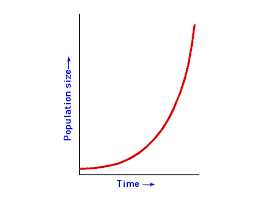
111.
What type of growth is shown in the diagram?
a)
exponential growth
b)
logistic growth 
c)
predator-prey cycle
d)
boom-bust curve
112.
Largest number of individuals of a population that the environment can support...  
a)
carrying capacity
b)
population crash
c)
lag phase
d)
mutualism
113.
Plants and animals that are not native to a habitat (nonindigenous)...
a)
predators
b)
biological magnification
c)
invasive species
d)
prey
114.
What type of growth curve is pictured?
a)
exponential 
b)
logistic
c)
predator-prey
d)
invasive
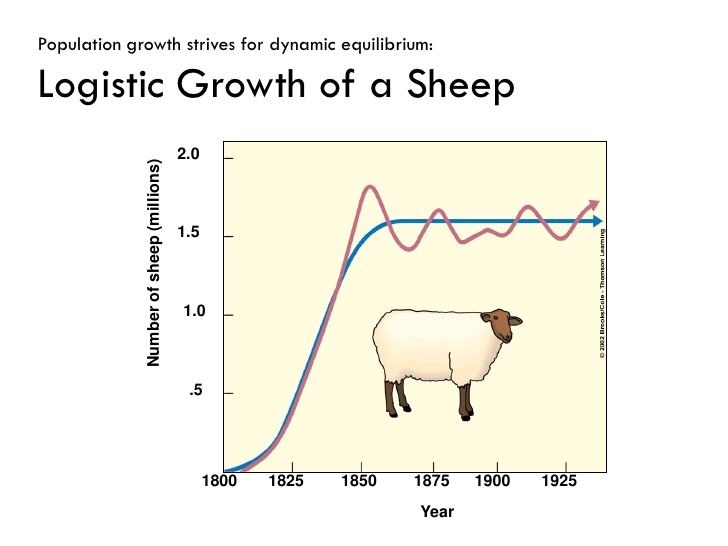
115.
What is the carrying capacity for this sheep population?
a)
1.8 million
b)
1.25 million
c)
1.6 million
d)
1.o million
116.
What is a substance called if it speeds up a chemical reaction?
a)
reusable
b)
catalyst
c)
specific
d)
fragile
117.
Enzymes are...
a)
nucleic acids
b)
proteins
c)
lipids
d)
carbohydrates
118.
With what 3 letters do enzymes typically end?
a)
-ose
b)
-ase
c)
-ese
d)
-tic
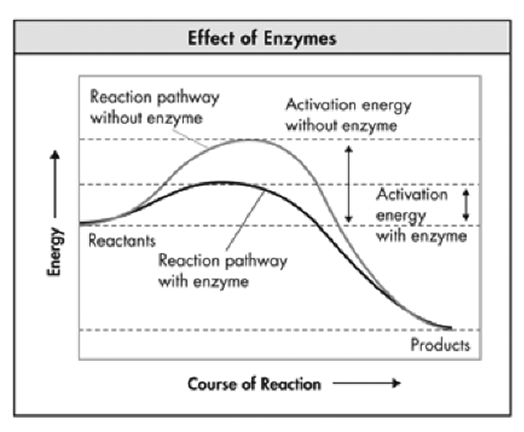
119.
The graph shows how enzymes affect reactions in cells. Which statement best summarizes the information shown in the graph?
a)
Enzymes increase the energy of the reactants.
b)
Enzymes decrease the energy level of the products.
c)
Enzyme decrease the activation energy of the reaction.
d)
Enzymes reverse the direction of the reaction.
120.
Which of the following conclusions can be drawn from this graph?
a)
The optimum pH of the enzyme is 6.6.
b)
The optimum pH of the enzyme is 5.8
c)
The enzyme’s activity increases as pH increases 5.0 to 9.0
d)
The enzyme’s activity is greater around pH of 8.0 .
121.
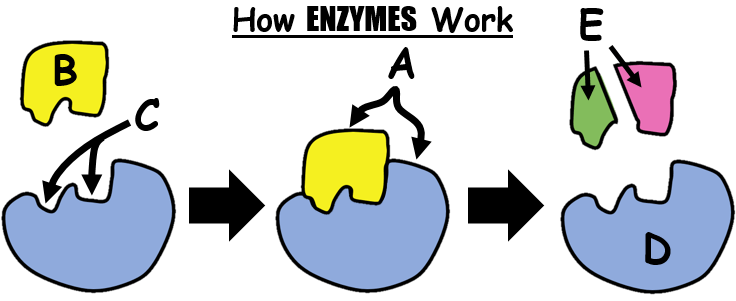
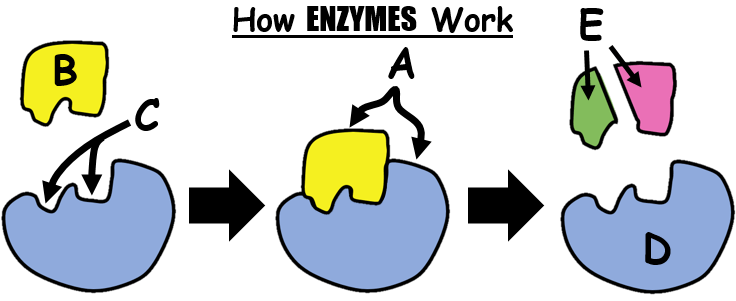
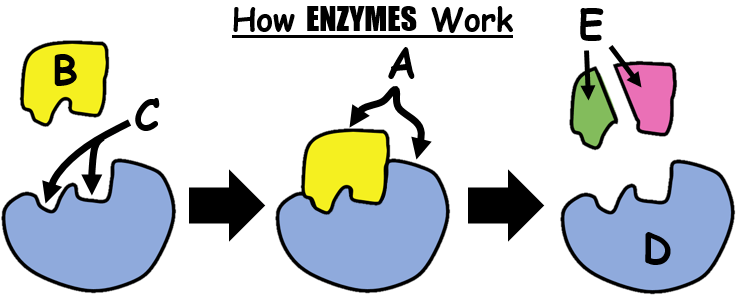
Letter B...
a)
active site
b)
enzyme
c)
substrate
d)
products
122.
Letter C...
a)
active site
b)
enzymes
c)
substrate
d)
products
123.
Letter D...
a)
active site
b)
enzyme
c)
substrate
d)
products
124.
Which one of these does not add CO2 to the atmosphere?
a)
cooking with gas
b)
planting trees
c)
burning wood
d)
riding in a bus
125.
Organisms that do not decompose can be buried and become what?
a)
water
b)
nutrients
c)
air
d)
fossil fuels
126.

Which of the following describes the role of nitrogen-fixing bacteria in the nitrogen cycle? Nitrogen-fixing bacteria convert....

a)

nitrates intro nitrogen gas

b)

ammonia into proteins

c)

nitrogen gas into ammonium ions

d)

proteins into nitrates