
 Worksheets
Bio CP Fall Semester Final Review
Total questions: 129
Worksheet time: 5hrs 58mins
The rock and minerals on Earth's surface and below it. Includes the crust, mantle, and core.
hydrosphere
geosphere
atmosphere
biosphere
Choose the picture that best represents the "biosphere".


Choose the picture that best represents the "geosphere".

When an animal or human breathes air, the interaction is between the __________ and the _____________.
atmosphere and hydrosphere
biosphere and geosphere
hydrosphere and biosphere
atmosphere and biosphere

When a river current erodes the banks of the river, the interaction is between the __________ and the _____________.
atmosphere and hydrosphere
biosphere and geosphere
hydrosphere and geosphere
atmosphere and biosphere

When lake water evaporates, the interaction is between the __________ and the _____________.
atmosphere and hydrosphere
biosphere and geosphere
hydrosphere and geosphere
atmosphere and biosphere

What is the atmosphere?
all the air and gases on the planet
made up of living things
the non-living soil, rocks, and minerals of the Earth
the rivers, lakes, and oceans of the Earth

What is the hydrosphere?
all the air and gases on the planet
made up of living things
the non-living soil, rocks, and minerals of the Earth
the rivers, lakes, and oceans of the Earth

What is the geosphere?
all the air and gases on the planet
all the frozen water on the Earth
the non-living soil, rocks, and minerals of the Earth
the rivers, lakes, and oceans of the Earth

What is the biosphere?
all the air and gases on the planet
made up of living things
the non-living soil, rocks, and minerals of the Earth
the rivers, lakes, and oceans of the Earth

When ocean water evaporates into the air, which 2 spheres are interacting? (choose 2)
Geosphere
Hydrosphere
Atmosphere
Biosphere

When a river deposits sediment, which 2 spheres are interacting? (choose 2)
Geosphere
Hydrosphere
Atmosphere
Biosphere

When plants use their roots to get water from the ground, which 2 spheres are interacting? (choose 2)
Geosphere
Hydrosphere
Atmosphere
Biosphere
What is the relationship between global winds and global ocean currents?
The pattern of global winds is one of the factors that drives global ocean currents
The pattern of global ocean currents is one of the factors that drives global winds
Both are caused by heat from the sun, and they do not affect each other
Both are caused by Earth's rotation, and they do not affect each other
An abiotic thing is...
all non living parts of an ecosystem
all living organisms in an ecosystem
A biotic thing is..
all living organisms in an ecosystem
all non living things in an ecosystem
What is population growth?
Increase in the number of individuals in a population over time.
Decrease in the number of individuals in a population over time.
The average number of individuals in a population.
The movement of individuals from one population to another.
Which of the following factors can cause a population to grow?
high birth rates, low death rates, and immigration,
high death rates, low birth rates, and emigration
low birth rates, high death rates, emigration, and lack of healthcare
low birth rates, low death rates, emigration, and lack of healthcare
What is population density?
Population density is the average age of a population.
Population density is the total number of individuals in a population.
Population density is the number of individuals per unit time.
Population density is the number of individuals per unit area or volume.
Which of the following factors can affect population density?
geographical location, natural disasters, technological advancements
education level, healthcare system, cultural practices
birth rate, death rate, immigration, emigration, and availability of resources
climate change, economic growth, political stability
What is population size?
Number of females in a group or area.
Average number of individuals in a group or area.
Number of males in a group or area.
Total number of individuals in a group or area.
Which of the following factors can affect population size?
education level
weather conditions
birth rate, death rate, immigration, and emigration
political stability
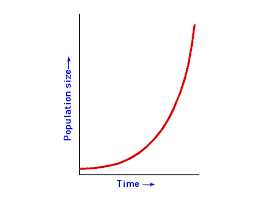
What is exponential growth?
A rapid increase in a population over time
A stagnant quantity that remains constant over time.
A sudden increase in a population that eventually levels off
A gradual decrease in quantity over time with a constant percentage growth rate.
What is logistic growth?
A type of population growth that levels off as it reaches its carrying capacity.
A type of population growth that is only observed in plants.
A type of population growth that decreases over time.
A type of population growth that continues to increase indefinitely.
What is carrying capacity?
Maximum number of individuals an environment can support
The number of individuals that have migrated from one environment to another
The average number of individuals an environment can support
The minimum number of individuals an environment can support
Which of the following factors can influence carrying capacity?
climate change, human activities, genetic variation
migration, population density, natural disasters
availability of resources, competition for resources, predation, disease, and environmental conditions
age structure, birth rate, death rate
What is the difference between climate and weather?
Climate is the day to day temps; Weather is the average temps
Climate is the latitude number; Weather is the longitude number
Climate is the average weather in an area; Weather is atmospheric conditions day to day
Climate measures humidity; Weather measures precipitation
Which of the following has caused an increase in carbon dioxide in the atmosphere?
recycling plastic
photosynthesis
solar panels
burning fossil fuels

Refer to the food chain. Why are the arrows from each organism pointing to the worms, fungi and bacteria?
Because they are omnivores.
Because they are decomposers that recycle nutrients of dead organisms.
Because they are the secondary consumer of every food chain.
Because they are the tertiary consumer of every food web.
Plants take in carbon dioxide to complete photosynthesis. What do plants use the carbon dioxide to do?
create glucose
create more carbon dioxide
purify the air
produce water

Refer to the food chain diagram. Which organism is the secondary consumer?
plant
grasshopper
bird
Snake

Refer to the picture. This represents what part of the water cycle?
precipitation
aquifer
transpiration
evaporation

Refer to the ecological pyramid. Why is the owl section smaller than the plants section?
There is less biomass of owls than grass.
Owls weigh more than grass.
There are more owls in an ecosystem than grass.
The owls take up more space than grass.

Refer to the food web. Which organism is in trophic level 3?
wolf
eagle
butterfly
plant

Refer to the diagram. Which letter represents an aquifer in the water cycle?
A
B
C
D

Refer to the diagram. Which organism fixes nitrogen (nitrogen fixation) so that other organisms can use it?
bacteria
atmosphere
plant leaves
primary consumers

Identify the biotic factors in this picture. Select ALL that apply.
plants
water
fish
rocks
Which of the following shows the correct levels of organization from largest to smallest?
Population, biosphere, ecosystem, organism, community, biome
Organelle, cell, tissue, organ, organ system, organism
biosphere, biome, ecosystem, community, population, organism
biosphere, community, ecosystem, biome, population, organism
What is the original source of energy for life on Earth?
Carbohydrates
Water
Sunlight
Lipids
Herbivores, carnivores, detritivores, and decomposers are all examples of
Consumers
Producers
Autotrophs
True or False: a food web is a network of multiple food chains.
True
False
True or False: in a food chain, energy flows in both directions (from sunlight to producers to consumers and vice versa).
True
False
True or False: chemotrophs use chemosynthesis for energy and can live without sunlight.
True
False
True or False: sunlight is an example of a biotic factor.
True
False
How do mountain ranges affect temperature and precipitation?
They increase wind speeds.
They create different conditions on each side of the mountain.
They make both sides of the mountain equally dry.
They reduce greenhouse gases in the atmosphere.
What causes winds to blow in different directions across Earth?
Earth’s rotation
The amount of greenhouse gases in the atmosphere
The tilt of Earth’s axis
The density of ocean water
Why is there more heat near the equator than at the poles?
The equator is closer to the Sun.
The Sun’s rays hit the equator directly and spread less.
Greenhouse gases are concentrated near the equator.
Winds carry warm air from the poles to the equator.
What is a population?
What do ecologists focus on?
Marine biology
Predation
Survival curves


Which of the following is a density-dependent factor?
Drought
Tornado
Temperature
Competition
Which of the following is a density-dependent factor?
Lightening
Earthquake
Predation
Floods
Which of the following is a density-independent factor?
Disease
Competition
Floods
Predation
Which of the following is a density-independent factor?
Wildfire
Food supply
Disease
Competition
True or False: sunlight is an example of a biotic factor.
True
False
What two organelles are NOT in an animal cell?
Cell Membrane and Mitochondria
Nucleus and Ribosomes
Cell Wall and Chloroplasts
Golgi Body and Lysosomes
The tough outer barrier of some cells, holds the shape and protects the cell
Mitochondria
Cell Wall
Nucleus
Ribosomes
Controls what enters and exits ALL cells
Golgi Body
Lysosomes
E.R.
Cell Membrane

Name this organelle
Ribosomes
Vacuole
Nucleus
Chloroplast
Makes proteins
Ribosomes
Lysosomes
Golgi Body
Nucleus
Creates energy for ALL cells, the powerhouse of the cell
Nucleolus
Vacuole
Cytoplasm
Mitochondria
Creates energy for some cells using sunlight, the solar panel of the cell
Vacuole
Chloroplast
E.R.
Ribosomes
Holds the DNA, or genetic material, in ALL cells; the brain of the cell
Cell Wall
Mitochondria
Golgi Body
Nucleus

Name this organelle
Cell Wall
Mitochondria
Nucleus
Vacuole
Stores water in all cells
Cytoplasm
Ribosomes
Cell Membrane
Vacuoles
Transports materials OUTSIDE of the cell
Golgi Body
Cell Wall
Nucleolus
Ribosomes

Name this organelle
Cell Membrane
Ribosomes
Golgi Body
Chloroplast
Creates ribosomes
Nucleolus
Ribosomes
Chloroplast
E.R.

Name this organelle
Cell Wall
Lysosomes
E.R.
Vacuole
Digests waste, cleans the cell; the garbage man of cells
Vacuoles
Lysosomes
Nucleus
E.R.
How many vacuoles does a PLANT cell have?
1
2
3
4+
Jelly-like substance that fills ALL cells
E.R.
Cell Membrane
Cytoplasm
Ribosomes
The rough E.R. has what organelle attached to it, making it look rough
Vacuole
Ribosomes
Lysosomes
Cell Wall

What is the LARGE blue circular organelle named?
Nucleus
Golgi Body
Cell Wall
Vacuole
Transports materials INSIDE the cell
Mitochondria
E.R.
Vacuole
Lysosomes
Which organelle holds the DNA?
Nucleus
Cell membrane
Cell wall
Mitochondria
Which organelle allows things into and out of the cell?
Mitochondria
Ribosome
Cell membrane
Cell wall
Which organelle gives the cell structure and support?
Vacuole
Cell wall
Nucleus
Chloroplast
Which organelle stores water?
Vacuole
Mitochondria
Chloroplast
Ribosome
Which organelle builds protein?
Mitochondria
Vacuole
Chloroplast
Ribosome
Which organelle is responsible for the process of photosynthesis?
Ribosome
Chloroplast
Cell membrane
Cell wall
Which organelle makes ATP (energy)?
Cell membrane
Cell wall
Mitochondria
Ribosome
Which organelle is larger in plants than in animals?
Vacuole
Mitochondria
Chloroplast
Nucleus

Which organelle is colored purple in this photo?
Vacuole
Mitochondria
Nucleus
Ribosome

Which organelle is colored blue in this photo?
Nucleus
Cell membrane
Cell wall
Vacuole
What organelle is present in all cells?
Cell membrane
Cell wall
Mitochondria
Chloroplast
Which organelle is found only in plant cells?
Cell wall
DNA
Cell membrane
Chloroplast
Which of the following organelles is found in all living cells?
Mitochondria
Chloroplasts
Vacuoles
Ribosomes
Which of the following types of cells DO NOT have a nucleus?
Prokaryotes
Eukaryotes
Plants
Animals
Prokaryotes are always...
Plants
Animals
Bacteria
Eukaryotes
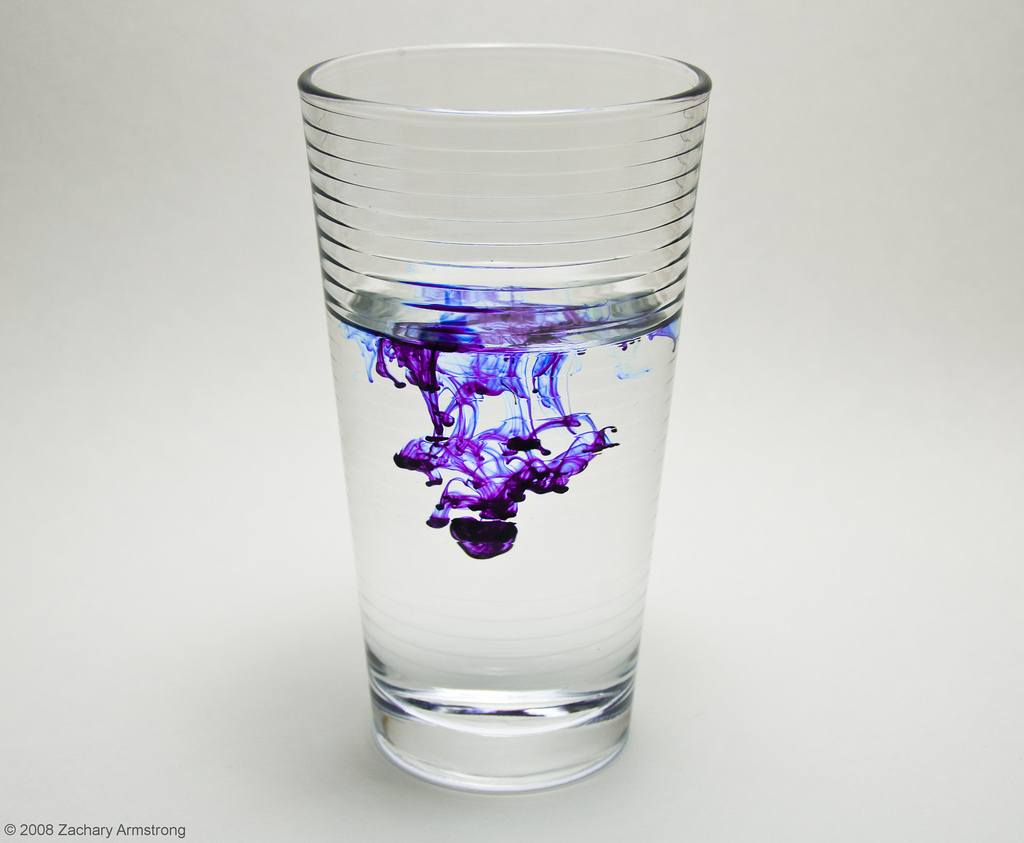
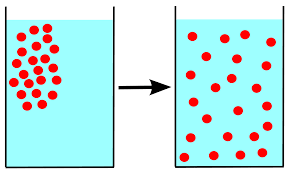


Movement of SOLUTE through the cell membrane from high to low concentration is called.....
diffusion
active transport
facilitated diffusion
osmosis

What will happen to the cell in the given solution?
Swell up
Shrink
Stay the same

The solution surrounding the cell in Diagram C, would be defined as
hypertonic
isotonic
hypotonic

The solution surrounding the cell in Diagram B, would be defined as:
hypertonic
hypotonic
isotonic
In a hypotonic solution, where are most of the solutes?
inside the cell
outside of the cell
In a hypotonic solution, where is most of the water?
inside the cell
outside of the cell
During which osmotic state does the cell swell and get bigger?
Hypertonic
Isotonic
Hypotonic
In which osmotic state does the cell look normal?
hypertonic
isotonic
hypotonic
In which osmotic state does the cell shrink?
hypertonic
isotonic
hypotonic

