wayground logo

Free Printable Worksheets

Font size

S
M
L
XL
Worksheets

6 weeks exam review unit 6 and 7

Total questions: 126

Worksheet time: 1hrs 25mins

Name
Class
Date
1.

90% of a cell's life is spent in.....

a)

Interphase

b)

Mitosis

c)

Cytokinesis

d)

G0

2.

What happens during Interphase?

a)

cell splits in two

b)

cells grow

c)

cell rests

d)

cell starts dividing

3.

What happens during Mitosis?

a)

cell splits in two

b)

cells grow

c)

cell rests

d)

cell starts dividing

4.

What happens during Cytokinesis?

a)

cell splits in two

b)

cells grow

c)

cell rests

d)

cell starts dividing

5.

What happens during G0?

a)

cell splits in two

b)

cells grow

c)

cell rests

d)

cell starts dividing

6.

What is the first step in the cell cycle?

a)

Interphase

b)

Mitosis

c)

Cytokinesis

d)

G0

7.

What happens after a cell splits in half?

a)

Interphase

b)

Mitosis

c)

Cytokinesis

d)

G0

8.

What happens after a cell splits in half?

a)

cell splits in two

b)

cells grow

c)

cell rests

d)

cell starts dividing

9.

What is a cells life cycle called?

a)

Cell Cycle

b)

Nitrogen Cycle

c)

DNA Cycle

d)

Wash Cycle

10.

What is the purpose of the cell cycle?

a)

Growth

b)

Repair cells

c)

Replace cells

d)

Create ATP

11.

How do things grow?

a)

cells divide and make more cells

b)

cells absorb nutrients in food

c)

cells stretch and grow longer

d)

cells grow large to become bigger

12.

How many cells are there at the END of the cell cycle?

a)

one

b)

two

c)

three

d)

four

13.

What happens during Interphase?

a)

cell splits in two

b)

cells grow

c)

cell rests

d)

cell starts dividing

14.

What is the phase where cells grow and get ready to divide?

a)

Interphase

b)

Mitosis

c)

Cytokinesis

d)

G0

15.

Which part of the cell cycle is when cells begin to divide?

a)

Interphase

b)

Mitosis

c)

Cytokinesis

d)

G0

16.

Which part of the cell cycle is when the cell splits in half

a)

Interphase

b)

Mitosis

c)

Cytokinesis

d)

G0

17.

Which part of the cell cycle is when the cell rests after it divides?

a)

Interphase

b)

Mitosis

c)

Cytokinesis

d)

G0

18.

Which part of the cell cycle is happening in the picture?

a)

Interphase

b)

Mitosis

c)

Cytokinesis

19.

Which part of the cell cycle is happening in the picture?

a)

Interphase

b)

Mitosis

c)

Cytokinesis

20.

Which part of the cell cycle is happening in the picture?

a)

Interphase

b)

Mitosis

c)

Cytokinesis

d)

G0

21.

What stage is represented by the X?

a)

Interphase

b)

Mitosis

c)

G0

d)

Cytokinesis

22.

What stage is represented by the X?

a)

Interphase

b)

Mitosis

c)

G0

d)

Cytokinesis

23.

What stage is represented by the X?

a)

Interphase

b)

Mitosis

c)

G0

d)

Cytokinesis

24.

What stage is represented by the X?

a)

Interphase

b)

Mitosis

c)

G0

d)

Cytokinesis

25.

Nuclear membrane (nucleus) forms around chromosomes, cell begins to separate

a)

Anaphase

b)

Telophase

26.
a)

Prophase

b)

Interphase

c)

Anaphase

d)

Telophase

27.
a)
Anaphase
b)
Cytokinesis
c)
Telophase
d)
Metaphase
28.
a)
Cytokinesis
b)
Interphase
c)
Anaphase
d)
Metaphase
29.
a)
Anaphase
b)
Cytonkinesis
c)
Interphase
d)
Prophase
30.
a)
Cytokinesis
b)
Anaphase
c)
Telophase
d)
Prophase
31.
The phase in mitosis where chromosomes move away and are pulled apart by spindles to opposite sides of the cell.
a)
prophase
b)
anaphase
c)
metaphase
d)
telephase
32.

Chromosomes condense from long DNA strands and the nucleus dissolves

a)

Prophase

b)

Interphase

33.

Which is Metaphase?

a)

A

b)

E

c)

C

d)

F

34.

The process by which the nuclear material is divided equally between two new cells

a)

mitosis

b)

cancer

c)

spindle

d)

centromere

35.
Why would it be important to replicate DNA before a cell divides in mitosis or meiosis?
a)
In order for genetic information to be transferred into daughter cells.
b)
In order for the cell to be able to increase in size.
c)
In order for the DNA to be contained in the nucleus.
d)
In order for the cell to re-order the DNA sequencing in the new cells.
36.
In mitosis, the two resulting cells are
a)
different from the starting cell and identical to each other.
b)
different from the starting cell and different from each other.
c)
identical to the starting cell and different from each other.
d)
identical to the starting cell and identical to each other.
37.
The time between cell divisions in the life cycle of the cell is called
a)
anaphase
b)
interphase
c)
prophase
d)
metaphase
38.
A chromosome is a single, long DNA molecule in a compact formation
a)
True
b)
False
39.
Where does a cell contain it's genetic material?
a)
nucleus
b)
nucleolus
c)
cytoskeleton
d)
golgi
40.

Which of the following best describes a DNA molecule?

a)

twisted like a helix

b)

not important to the cell

c)

straight like a ladder

41.

Which of the following units are repeatedly joined together to form a strand of DNA?

a)

proteins

b)

nucleotides

c)

fats

d)

carbohydrates

42.
Adenine bonds with ______________.
a)
Guanine
b)
Thymine
c)
Cytosine
d)
Adenine
43.
Guanine bonds with ______________.
a)
Adenine
b)
Guanine
c)
Cytosine
d)
Thymine
44.

Why is DNA important?

a)

it creates energy during cellular respiration

b)

it is not important

c)

it serves as the blueprint for traits of all living things

d)

because we eat it every day for energy

45.
What are the 4 nitrogen bases?
a)
adenine, thymine, cytoplasm, and guanine
b)
adenine, thymine cytosine, and guanine
c)
adenine, thymine, cytosine, and gylcerol
d)
adenine, thymine, cytosine, and glucose
46.
Which 2 molecules forms the sides (backbone) of the DNA ladder?
a)
deoxyribose and adenine
b)
deoxyribose and a hydrogen bond
c)
sugar and the nucleus
d)
deoxyribose (sugar) and phosphate
47.
Which sequence of DNA bases would pair with this partial strand
ATG TGA CAG
a)
ATG TGA CAG
b)
TAC ACT GTC
c)
GTA AGT GAC
d)
CAT TCA CTG
48.
A process in which DNA has the unique ability to make an exact copy of itself.
a)
Replication
b)
Translation
c)
Transcription
49.
Which 2 molecules form the sides (backbone) of the DNA ladder?
a)
deoxyribose sugar and adenine
b)
deoxyribose sugar and a hydrogen bond
c)
deoxyribose sugar and the nucleus
d)
deoxyribose sugar and phosphate
50.
Which organelle is DNA usually found in?
a)
cell membrane
b)
vacuole
c)
chloroplast
d)
nucleus
51.
Nitrogenous bases are joined by which type of bond?
a)
polar bonds
b)
ionic bonds
c)
covalent bonds
d)
hydrogen bonds
52.
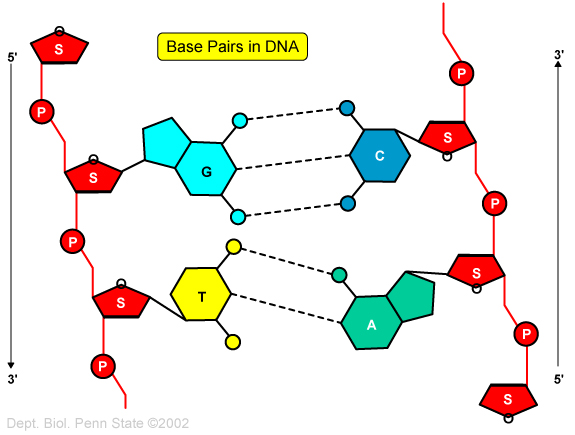
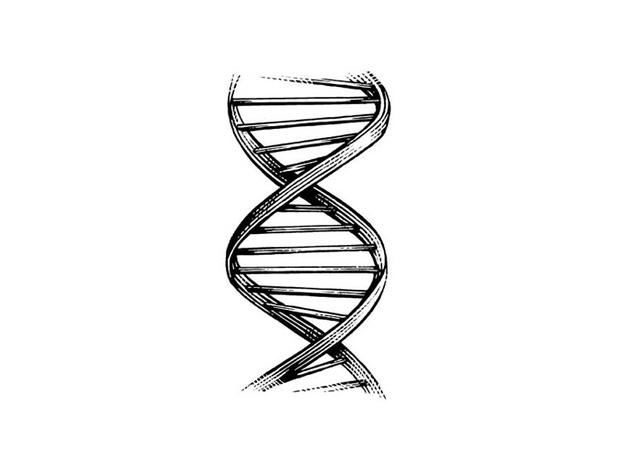
The drawing shows the structure of what molecule?
a)
A DNA molecule
b)
A lipid molecule
c)
A carbohydrate molecule
d)
A protein molecule
53.

Why does DNA have to copy itself?

a)

when a new cell is made it needs its own copy of DNA

b)

Just because

c)

each cell needs two copies of DNA

54.

The backbone of DNA is alternating....

a)

Sugar and phosphate

b)

Sugar and bases

c)

Phosphate and bases

d)

Hydrogen bonds and sugar

55.

Deoxyribose sugar and Phosphate groups make up the DNA's.....

a)

spiral backbone

b)

alternating bases

c)

hydrogen bonds

d)

caramel center

56.

The DNA backbone is ALWAYS sugar and phosphate sugar phosphate..... etc

a)

True

b)

False

57.

What determines how to make an organism?

a)

The order of the bases

b)

The order of the phosphates

c)

The order of the sugars

d)

The order of the hydrogen bonds

58.

If you change the order of the bases, what happens?

a)

you might get a completely different organism

b)

nothing happens

59.

What three things makes a nucleotide?

a)

sugar, phosphate, base

b)

2 sugars and a phosphate

c)

2 phosphates and a base

d)

base, sugar, hydrogen bond

60.

What happens if you change the order of the nucleotides?

a)

Traits may change

b)

nothing happens

61.

Does a plant have DNA?

a)

Yes

b)

No

62.

How many Nitrogenous bases are there?

a)

3

b)

4

c)

5

d)

1

63.

A (Adenine) always attaches to....

a)

T (Thymine)

b)

C (Cytosine)

c)

G (Guanine)

64.

T (Thymine) always attaches to....

a)

A (Adenine)

b)

C (Cytosine)

c)

G (Guanine)

65.

C (Cytosine) always attaches to....

a)

A (Adenine)

b)

T (Thymine)

c)

G (Guanine)

66.

G (Guanine) always attaches to....

a)

A (Adenine)

b)

T (Thymine)

c)

C (Cytosine)

67.

When two bases connect, it makes a......

a)

Base Pair

b)

Phosphate Group

c)

Deoxyribose Sugar

d)

Nucleotide

68.

What is the complementary pairing to ATCGG ?

a)

TAGCC

b)

CGTAA

c)

TTACG

d)

TAAAG

69.

What is the complementary pairing to GCGCA?

a)

CGCGT

b)

CGTAA

c)

TTACG

d)

ATGCA

70.

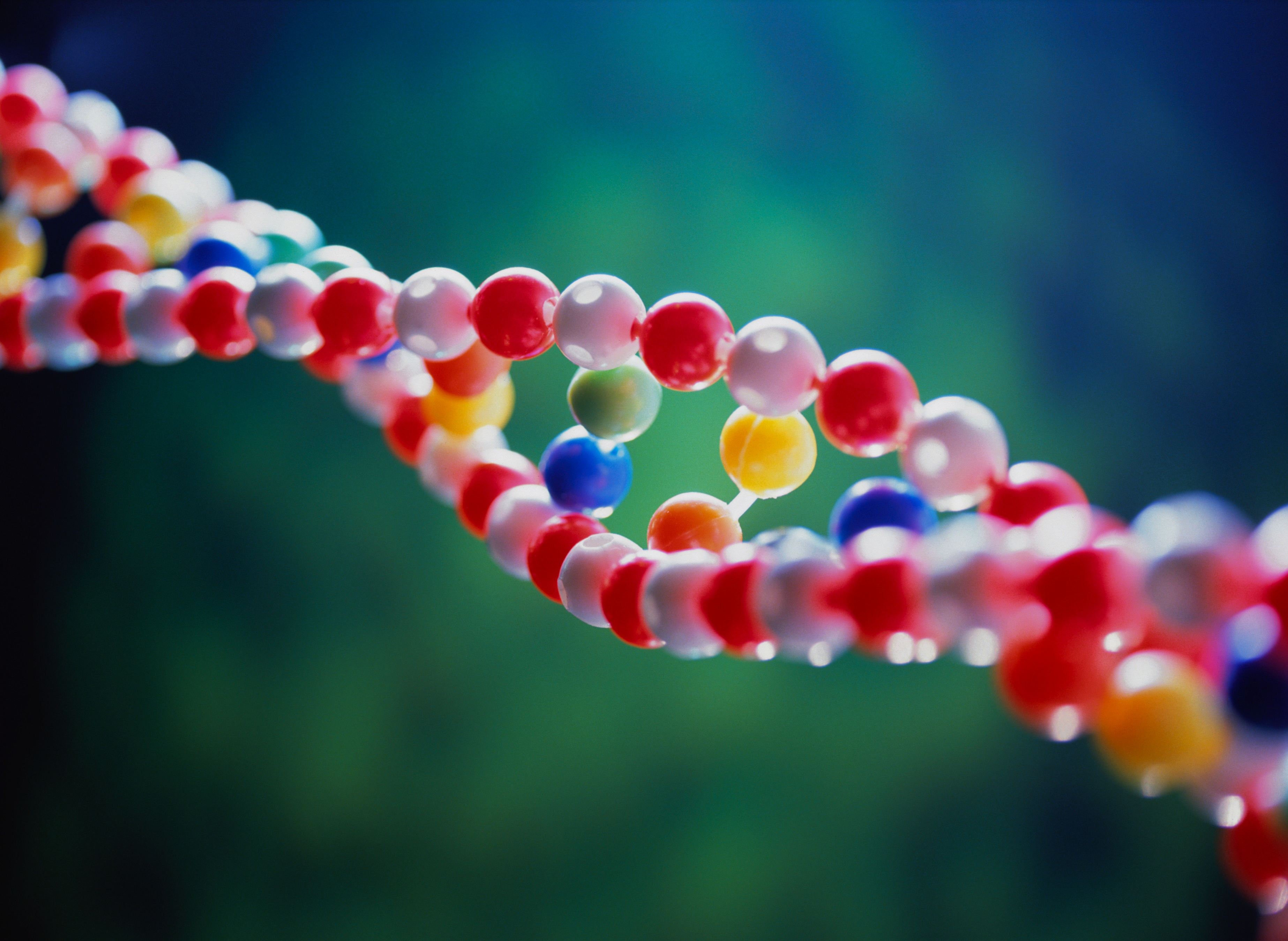
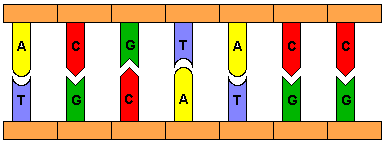
What is this a model of?

a)

DNA strand

b)

A nucleotide

c)

sugar-phosphate backbone

d)

one phosphate

71.

In this model, the orange circle represents.....

a)

a nitrogenous base

b)

a hydrogen bond

c)

a deoxyribose sugar

d)

a phosphate

72.

In this model, the blue shape represents.....

a)

a nitrogenous base

b)

a hydrogen bond

c)

a deoxyribose sugar

d)

a phosphate

73.

In this model, the green shape represents.....

a)

a nitrogenous base

b)

a hydrogen bond

c)

a deoxyribose sugar

d)

a phosphate

74.

What shape can describe a DNA molecule?

a)

Helix

b)

Spiral

c)

Twisted Ladder

d)

All of these

75.
Which of the following best describes a DNA molecule?
a)
double helix
b)
contains ribose
c)
made of amino acids
d)
contains Uracil
76.
Adenine bonds with ______________.
a)
Guanine
b)
Thymine
c)
Cytosine
d)
Adenine
77.
What are the 4 nitrogen bases?
a)
adenine, thymine, cytoplasm, and guanine
b)
adenine, thymine cytosine, and guanine
c)
adenine, thymine, cytosine, and gylcerol
d)
adenine, thymine, cytosine, and glucose
78.
Which 2 molecules forms the sides (backbone) of the DNA ladder?
a)
deoxyribose and adenine
b)
deoxyribose and a hydrogen bond
c)
sugar and the nucleus
d)
deoxyribose (sugar) and phosphate
79.
What is the purpose of DNA replication?
a)
Cut the DNA 
b)
Make more cells
c)
Apoptosis
d)
Duplicate the DNA
80.
Which enzyme breaks the hydrogen bonds between the two DNA strands?
a)
Topoisomerase
b)
Helicase
c)
DNA polymerase
d)
Ligase
81.
What is the backbone of DNA made of?
a)
Nitrogen bases
b)
Amino acids
c)
Double H
d)
Sugar & Phosphate
82.
Why is it crucial that living things are able to replicate their DNA?
a)
Each cell must have its own DNA
b)
Less copies of DNA are needed when a new cell is created
c)
A cell needs multiple copies of DNA
d)
Only muscle cells need DNA 
83.

DNA is called the "blueprint of life" because

a)

it is like a fingerprint

b)

it has a blue color

c)

it contains the plans for building an organism

d)

it can relay messages to other molecules

84.
Replicate the following strand of DNA: 
AATCATGGA
a)
AATCATGGA
b)
TTAGTACCT
c)
UUAGUACCU
d)
GGATAUCUA
85.

What is this picture showing?

a)

DNA replication

b)

Cell Cycle

c)

Mitosis

d)

G2 phase of cell cycle

86.

What is this picture showing?

a)

DNA replication

b)

Cell Cycle

c)

Mitosis

d)

G2 phase of cell cycle

87.

Which part of the cell cycle does DNA replicate?

a)

S Phase

b)

Mitosis

c)

G1

d)

G2

88.

When does this process in the picture occur?

a)

S Phase

b)

Mitosis

c)

G1

d)

G2

89.

cancer is when a cell’s ___________ in the cell cycle are not working

a)

Checkpoints

b)

Mitosis

c)

Interphase

90.

cancer cells do not go to _________ in the cell cycle

a)

G0

b)

G1

c)

G2

d)

Mitosis

91.

Cancer cells keep ____________ forever.

a)

Dividing

b)

Resting

c)

duplicating organelles

92.
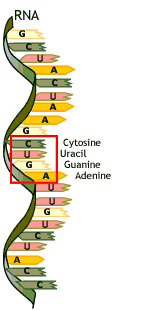
In RNA, Uracil pairs with ______. 
a)
cytosine
b)
adenine
c)
guanine
d)
thymine
93.
The process to go from DNA to mRNA is _______
a)
translation
b)
transcription
c)
replication
94.
The process to go from mRNA to a protein is called ____
a)
transcription
b)
rRNA
c)
replication
d)
translation
95.
DNA holds the code for
a)
lipids
b)
carbohydrates
c)
protein
d)
sugar
96.
Choose the nucleotide sequence of the RNA strand that would be complementary to the following strand: 
GTAGTCA
a)
UATUAGA
b)
ACGACTG
c)
CAUCAGU
d)
CATCAGT
97.
The main function of tRNA is to...
a)
carry a message that, when translated, forms proteins
b)
form a portion of ribosomes
c)
string together complementary RNA and DNA strands
d)
bring amino acids from the cytoplasm to the ribosomes
98.
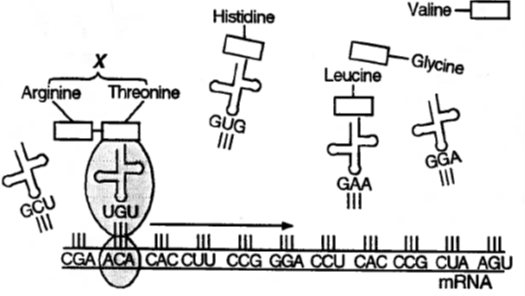
What process is going on in this photo? 
a)
Transcription 
b)
Translation 
c)
Replication 
d)
All the above 
99.
Which component of DNA determines the traits of an organism? 
a)
Nitrogen Bases
b)
Sugar-Phosphate Backbone
c)
Hydrogen bonds
100.
What is the location in the cell for translation?
a)
nucleus
b)
mitochondria
c)
ribosome
d)
chloroplast
101.
What is the three base sequence of mRNA that codes for a single amino acid?
a)
Anticodon
b)
Codon
c)
Protein
102.
What are the backbones (sides) of the DNA structure made up of?
a)
repeating phosphates and sugars
b)
nitrogen bases
c)
nucleotides
d)
adenine and thymine
103.
What is the location in the cell for transcription?
a)
nucleus
b)
cytoplasm
c)
ribosome
d)
mitochondria
104.
Which is the mRNA molecule that would be transcribed from this DNA template:
TGGCAAGTACGT
a)
ACCGTTCATGCA
b)
UGGCAAGUACGU
c)
UCCGUUCUUGCU
d)
ACCGUUCAUGCA
105.
DNA has a _____________ structure. 
a)
double helix
b)
single strand
c)
ring 
d)
chain
106.
In DNA, Adenine pairs with ___________. 
a)
Guanine
b)
Cytosine
c)
Thymine
d)
Uracil
107.
In DNA, Adenine pairs with ___________. 
a)
Guanine
b)
Cytosine
c)
Thymine
d)
Uracil
108.
Translation is the process where
a)
mRNA is created in the Nucleus
b)
mRNA is decoded to form a protein 
c)
glucose molecules are made
d)
is where lipids are synthesised
109.
Does the order of amino acids in a protein matter?
a)
YES!
b)
NO!
110.
How many amino acids are coded for by this sequence of nucleotides:
ATG GGA ACT CCA
a)
4
b)
2
c)
6
d)
12
111.

What is the end product of Transcription?

a)

mRNA

b)

tRNA

c)

Protein

d)

Nucleus

112.

What is the end product of Transcription?

a)

mRNA

b)

tRNA

c)

Protein

d)

Nucleus

113.
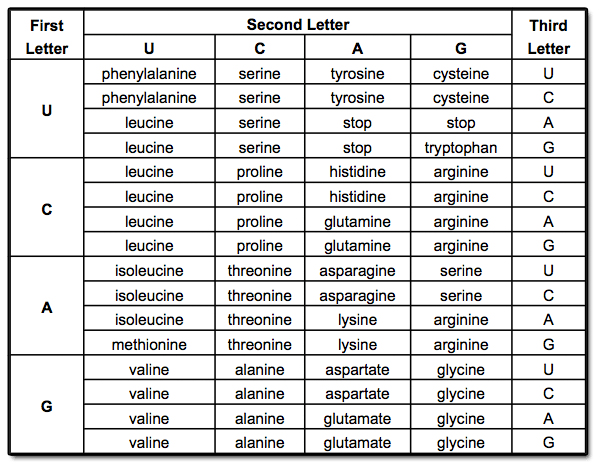
Which amino acid is made from the RNA codon UUA?
a)
Phenylalanine
b)
Leucine
c)
Serine
d)
Tyrosine
114.
What is the correct sequence?
a)
RNA --> DNA --> Protein
b)
Protein --> RNA --> DNA
c)
DNA --> RNA --> Protein
d)
DNA --> Protein --> RNA
115.
which process is shown?
a)
diffusion
b)
repiration
c)
recombination
d)
translation
116.
Using the codon identify the amino acid sequence:
AUG-GGC-ACC-UCA-UGA
a)
MET-GLU-VAL-TYR-STOP
b)
MET-GLY-THR-SER-STOP
c)
MET-SER-THR-GLY-STOP
d)
MET-LYS-ASN-STOP
117.
What amino acid is represented by the codon UUA?
a)
Phenylalanine
b)
Tyrosine
c)
Leucine
d)
Stop codon
118.
What is the correct amino acid sequence for the mRNA code AUGCCAGUAUGA?
a)
 Met-Pro-Val-Stop
b)
Met-Pro-Arg-Stop
c)
 Tyr-Gly-His
d)
Tyr-Gly-Arg-His
119.
What amino acid is represented by the codon CAG?
a)
Aspartic Acid
b)
Histidine
c)
Glutamine
d)
Methionine
120.
What is the correct amino acid sequence for the mRNA code AUGCCAGUAUGA
a)
Met-Pro-Ala-Val
b)
Met-Pro-Val
c)
Tyr-Gly-His
d)
Tyr-Gly-Arg-His
121.

RNA has what type of sugar?

a)

Glucose

b)

Ribose

c)

Deoxyribose

d)

Salt

122.

DNA has how many strands?

a)

One

b)

Two

c)

Three

d)

Four

123.

What is a stem cell?

a)

An Undifferentiated cell

b)

An unspecialized cell

c)

A cell that hasn't turned into a specific type of cell yet

d)

A cell that could be anything

124.

A chromosome has the genes 1-2-3--4-6-5.

What type of mutation occurred?

a)

Inversion

b)

Deletion

c)

Duplication

d)

Translocation

125.

Most mutations are....

a)

helpful

b)

harmful

c)

neutral

126.

A chromosome has the genes 1-2-3--4-4-5-6

What type of mutation occurred?

a)

Inversion

b)

Deletion

c)

Duplication

d)

Translocation