wayground logo

Free Printable Worksheets

Font size

S
M
L
XL
Worksheets

Biology Final Exam Review

Total questions: 132

Worksheet time: 3hrs 47mins

Name
Class
Date
1.
What was Watson and Crick's main scientific accomplishment?
a)
Building the first accurate model of DNA
b)
Isolating strains of pneumonia causing bacteria
c)
Determining base pairing rules
d)
Discovering the process of genetic transformation
2.
Rosalind Franklin's "Photo 51" allowed Watson and Crick to determine the _______ of DNA.
a)
Shape
b)
Backbone
c)
Nitrogen bases
d)
Hydrogen bonds
3.
Who is responsible for producing this image?
a)
Francis Crick
b)
James Watson
c)
Rosalind Franklin
d)
Watson and Crick
4.
What does DNA stand for?
a)
Deoxyribonucleic acid
b)
Denitrogenous acid
c)
Deribonucleic acid
d)
Diribonucleic acid
5.
Adenine bonds with ______________.
a)
Guanine
b)
Thymine
c)
Cytosine
d)
Adenine
6.
Guanine bonds with ______________.
a)
Adenine
b)
Guanine
c)
Cytosine
d)
Thymine
7.
DNA is a polymer made of:
a)
Nucleotides
b)
Ribosomes
c)
Purines
d)
Pyrimidines
8.
What are the three components of a nucleotide?
a)
sugar, hydrogen, nitrogen base
b)
sugar, oxygen, nitrogen base
c)
sugar, phosphate, nitrogen base
d)
sugar, phosphate, protein
9.
What will the matching sequence be on a strand that reads AAGCTAT?
a)
AACGATA
b)
TTCGTTA
c)
CCTGATA
d)
TTCGATA
10.
What is the purpose of DNA replication?
a)
Cut the DNA 
b)
Make more cells
c)
Apoptosis
d)
Duplicate the DNA
11.

The enzyme that unzips the DNA by breaking hydrogen bonds to prepare for replication

a)

helicase

b)

replicase

c)

polymerase

d)

synthase

12.
Which enzyme is responsible for adding nucleotides?
a)
Topoisomerase
b)
DNA Polymerase
c)
Ligase
d)
Primase
13.
The function of _____ is to transport amino acids in the cytoplasm to the ribosome.
a)
rRNA
b)
tRNA
c)
mRNA
d)
DNA
14.
This molecule carries genetic information from the nucleus to the ribosomes in the cytoplasm.
a)
rRNA
b)
tRNA
c)
mRNA
d)
DNA
15.
The process of going from DNA to mRNA is called
a)
Transcription
b)
Translation
c)
Transportation
d)
Transient
16.
The process where mRNA is read and made into an amino acid chain.
a)
Transcription
b)
Translation
c)
Transportation
d)
Transient
17.
The process where mRNA is translated into amino acids happens in what part of the cell?
a)
Nucleus
b)
Mitochondria
c)
Cytoplasm
d)
Endoplasmic Reticulum
18.
The process where DNA is transcribed to mRNA happens in what part of the cell?
a)
Nucleus
b)
Mitochondria
c)
Cytoplasm
d)
Endoplasmic Reticulum
19.
What is the difference between DNA and RNA in terms of bases?
a)
RNA contains uracil in place of thymine
b)
RNA contains uracil in place of adenine
c)
RNA contains uracil in place of guanine
d)
RNA contains uracil in place of  cytosine
20.

What is the location in the cell for translation?

a)

nucleus

b)

mitochondria in cytoplasm

c)

ribosome in cytoplasm

d)

chloroplast in cytoplasm

21.
Any change in the sequence of DNA is...
a)
transgenic shift
b)
Single Genotype
c)
Monohybrid Trait
d)
Mutation
22.
Original: ATC CAT
Mutation: ATC GCAT
What mutation occurred?
a)
deletion
b)
insertion
c)
silent
d)
transverse
23.
Which of the following would result in a frameshift mutation?
a)
Insertions only
b)
Substitution only
c)
Deletion only
d)
Insertions and Deletions
24.

What do gene mutations change?

a)

DNA

b)

RNA

c)

Proteins

d)

Lipids

25.

A point mutation where one nucleotide base replaces an original nucleotide base

a)

Inversion Mutation

b)

Chromosomal Mutation

c)

Translocation

d)

Substitution Mutation

26.

A nucleotide base is inserted or deleted shifting the entire DNA sequence. Entire protein will be changed.

a)

Substitution Mutation

b)

Silent Mutation

c)

Frameshift Mutation

d)

Translocation

27.

Mutations that involve parts of or all of

a chromosome

a)

Replication

b)

Deletion Mutation

c)

Chromosomal Mutation

d)

Transcription

28.
What is the cell cycle?
a)
The gradual development of something, especially from a simple to a more complex form.
b)
The study of heredity and the variation of inherited characteristics.
c)
The branch of biology that deals with the relations of organisms to one another and to their physical surroundings.
d)
The series of events that take place in a cell leading to its division and duplication of its DNA to produce two daughter cells.
29.
Put the following actions in order: DNA replicates, cell grows, cell divides, cell prepares for mitosis. 
a)
DNA replicates, cell grows, cell prepares for mitosis, cell divides
b)
cell grows, cell prepares for mitosis, DNA replicates, cell divides
c)
cell grows, DNA replicates, cell prepares for mitosis, cell divides
d)
DNA replicates, cell prepares for mitosis, cell grows, cell divides
30.

During what phase of the cell cycle does the cell grow and prepare for DNA replication?

a)

G1 phase

b)

S phase

c)

M phase

d)

Cytokinesis

31.

During what phase of the cell cycle is DNA replicated (the number of chromosomes double)?

a)

G1 phase

b)

S phase

c)

G2 phase

d)

M phase

32.

During what phase of the cell cycle does the cell prepare for mitosis (cell division)?

a)

G1 phase

b)

S phase

c)

G2 phase

d)

M phase

33.

During which stage of the cell cycle does mitosis and/or meiosis occur?

a)

Interphase

b)

S phase

c)

M phase

d)

G1 phase

34.
Put the following in order: G2, G1, S, mitosis, cytokinesis. 
a)
G1, G2, S, Mitosis, cytokinesis
b)
G1, S, G2, Mitosis, cytokinesis
c)
G1, G2, S, cytokinesis, mitosis
d)
G1, S, G2, cytokinesis, mitosis
35.

In which stage of the cell cycle does the cell split into two?

a)

Mitosis

b)

G1

c)

Cytokinesis

d)

S

36.
The process by which the nuclear material is divided equally between two new cells
a)
mitosis
b)
cancer
c)
spindle
d)
centromere
37.
What type(s) of cells undergo mitosis?
a)
sex cells
b)
gametes
c)
body cells
d)
sperm and egg cells
38.

What is the purpose of Mitosis?

a)

Growth of an organism and Repair of damaged tissue

b)

To help the body get rid of extra cells

c)

To increase the amount of classwork you have to do

d)

To get rid of the nucleus

39.
In mitosis, the two resulting cells are
a)
different from the starting cell and identical to each other.
b)
different from the starting cell and different from each other.
c)
identical to the starting cell and different from each other.
d)
identical to the starting cell and identical to each other.
40.

Which of these are part of Mitosis?

a)

Metaphase

b)

Prophase

c)

Anaphase

d)

Telophase

e)

Cytokines

41.
How many daughter cells are produced in mitosis?
a)
1
b)
2
c)
4
d)
6
42.
Which process and type of resulting cells are represented?
a)
mitosis, gametes
b)
mitosis, body cells
c)
meiosis, gametes
d)
meiosis, body cells
43.
Meiosis makes sperm and egg cells. In humans, sperm and egg cells each have _____ chromosomes. Therefore a zygote (sperm and egg cell combined) would create a cell with _____ chromosomes.
a)
23, 46
b)
46, 23
c)
2, 4
d)
50, 100
44.

A human body (somatic) cell usually has how many chromosomes?

a)

6

b)

22

c)

4

d)

46

45.

Which of these are stages of Meiosis?

a)

Prophase 1 and 2

b)

Metaphase 1 and 2

c)

Cytophase 1 and 2

d)

Anaphase 1 and 2

e)

Telophase 1 and 2

46.
The study of Heredity
a)
science
b)
genetics
c)
english
d)
gene
47.

Who is considered the "father" of modern genetics?

a)

Einstein

b)

Mendel

c)

Disney

d)

Washington

48.
The exact genetic makeup of an organism, such as RR, Tt, PP is its?
a)
phenotype
b)
dominance
c)
genotype
d)
trait
49.
What is the relationship between DNA and chromosomes?
a)
Chromosomes are made of DNA
b)
DNA is made of chromosomes
c)
DNA and chromosomes are the same thing.
d)
All of the above are correct
50.
Aa is
a)
homozygous (purebred)
b)
heterozygous (hybrid)
51.
In a heterozygous genotype, the ___________ allele takes over in the phenotype.
a)
recessive
b)
dominant
c)
lower case letter
d)
both 
52.
How many alleles (letters) do each person carry for a trait?
a)
1
b)
2
c)
3
d)
4
53.
Which of the following is heterozygous
a)
FF
b)
tt
c)
Gg
d)
RR
54.
Which of the following is homozygous recessive?
a)
rr
b)
AA
c)
TT
d)
Ff
55.
Which of the following is homozygous dominant?
a)
Jj
b)
Rr
c)
MM
d)
ee
56.
The physical appearance of an organism based on traits
a)
Genotype
b)
Phenotype
c)
Meiosis
d)
Genetics
57.
different forms of the same gene are called
a)
alleles
b)
genetics
c)
p generation
d)
law of segregation
58.
Mark is heterozygous. If B is for brown hair, and b is for blonde hair, what is Mark's genotype?
a)
BB
b)
bb
c)
Bb
d)
bB
59.

Which of the following genotypes is dominant?

a)

AA

b)

Aa

c)

aa

d)

both AA and Aa

60.

If brown eyes are dominant and blue eyes are recessive, what color eyes do the parents in this Punnett Square have?

a)

one has brown eyes and the other has blue eyes

b)

they both have blue eyes

c)

they both have brown eyes

d)

there's no way to tell based on this information

61.
T - tall and t = short
In the punnett square below, what belongs in the missing square
a)
tt
b)
Tt
c)
Bb
d)
TT
62.
B = brown fur  b = white fur
In the punnett square, what is the probability for white fur? 
a)
0%
b)
25%
c)
50%
d)
75%
63.

When a trait is either dominant or recessive with no 3rd possible phenotype.

a)

incomplete dominance

b)

complete dominance

c)

hybrid dominance

d)

codominance

64.

When a trait can be expressed in 3 possible phenotypes - dominant, recessive, or Both (ex. black, white, or striped).

a)

incomplete dominance

b)

complete dominance

c)

hybrid dominance

d)

codominance

65.

When a trait can be expressed in 3 possible phenotypes - dominant, recessive, or a Blend (ex. red, white, or pink).

a)

incomplete dominance

b)

complete dominance

c)

hybrid dominance

d)

codominance

66.
A dihybrid cross shows the possible outcomes of _______ 
a)
two alleles
b)
two parents
c)
two traits/characters
d)
a self pollination
67.

This image is an example of a _____________ cross.

a)

Monohybrid

b)

Dihybrid

c)

Purebred

d)

Pure Breeding

68.

How many phenotypes are possible in dihybrid cross?

a)

2

b)

3

c)

4

d)

8

69.

What goes in box 3

a)

Aabb

b)

AABB

c)

AAbb

d)

aaBb

70.
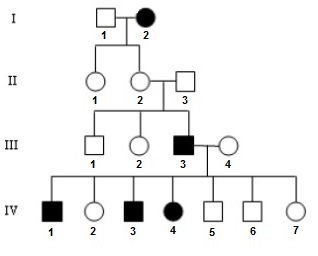
How many generations are shown in this pedigree?
a)
1
b)
2
c)
3
d)
4
71.
This pedigree represents the inheritance of hemophilia in this family. How many of the females have the hemophilia trait?
a)
8
b)
5
c)
2
d)
3
72.
Is this trait (the shaded individuals) dominant or recessive?
a)
dominant
b)
recessive
73.

a photograph or picture of chromosomes grouped in ordered pairs is a ______________

a)

pedigree

b)

Punnett Square

c)

Venn Diagram

d)

Karyotype

74.
Which sex chromosomes would indicate a typical human male?
a)
XX
b)
X
c)
XY
d)
XXY
75.

A normal human zygote should have _____ chromosomes inside.

a)

46

b)

23

c)

92

d)

64

76.
What is the definition of ecology?
a)
The scientific study of interactions among organisms and between organisms and their environment.
b)
The scientific study of human populations.
c)
The scientific study of composition, structure, properties and change of matter.
d)
The scientific study of processes that produced the diversity of life on Earth starting from a single origin of life.
77.

What are the two themes of Ecology?

a)

interdependence

b)

consumerism

c)

interdisciplinary

d)

interconnectedness

78.

An organism is __________________.

a)

all organisms in an area that belong to the same species

b)

all of the different species living together in an area

c)

an individual living thing

d)

all of the biotic and abiotic non-living factors in an area

79.

A population is __________________.

a)

all organisms in an area that belong to the same species

b)

all of the different species living together in an area

c)

an individual living thing

d)

all of the biotic and abiotic non-living factors in an area

80.

A community is __________________.

a)

all organisms in an area that belong to the same species

b)

all of the different species living together in an area

c)

an individual living thing

d)

all of the biotic and abiotic non-living factors in an area

81.

A ecosystem is __________________.

a)

all organisms in an area that belong to the same species

b)

all of the different species living together in an area

c)

an individual living thing

d)

all of the biotic and abiotic non-living factors in an area

82.

Abiotic factors are _______________.

a)

living things

b)

non-living things

83.

Biotic factors are _________________.

a)

living things

b)

nonliving things

84.

Together, all the ecosystems on Earth form...

a)

a community.

b)

a biome.

c)

a biosphere.

d)

an Earthsphere.

85.

What is a group of ecosystems that share similar climates and types of organisms called?

a)

A community

b)

A biome

c)

An ecosystem

d)

A biosphere

86.

What are the biotic factors in this image?

a)

sunlight, elephants, and grasses

b)

sunlight, water, and air

c)

elephants, plants, trees

87.

What are the abiotic factors in this image?

a)

water, sunlight, dirt, air

b)

birds and plants

c)

water, plants, and birds

88.

A food chain is:

a)

an animal that eats only plants.

b)

a diagram that shows how energy moves from one organism to another. (Grass>Mouse>Owl)

c)

An animal that is hunted and eaten by another animal.

89.
What is a decomposer? 
a)
Organism that creates their own food.
b)
Organism that eat other organisms for energy
c)
Organism that eat other dead organisms
90.
What do Omnivores eat? 
a)
Plants ONLY 
b)
Animals ONLY
c)
Plants AND Animals
91.
What do Herbivores eat? 
a)
Plants ONLY 
b)
Animals ONLY
c)
Plants AND Animals
92.
What do Carnivores eat? 
a)
Plants ONLY 
b)
Animals ONLY
c)
Plants AND Animals
93.
What percentage of energy is passed on to each tropic level?
a)
10%
b)
50%
c)
90%
d)
100%
94.
Use the diagram answer the question.
What is a fitting description for this diagram?
a)
A Food Chain
b)
An Ecosystem
c)
A Food Web
d)
Biotic and Abiotic Factors
95.
Use the diagram to answer the question.
The Mayfly is a food source for which 3 organisms?
a)
Frog, Dragon Fly and snake
b)
Frog, trout and dragon fly
c)
Frog, salamander and trout
d)
Frog and phytoplankton
96.
When a specific population grows past the ecosystem's carrying capacity, what happens to the population?
a)
Density Independent limiting factors start to occur resulting in the population going farther above carrying capacity.
b)
Density Dependent limiting factors start to occur resulting in the population going back below carrying capacity.
c)
The population will go extinct due to lack of resources
d)
The population grows then finds a new carrying capacity
97.
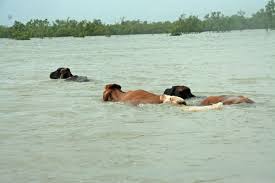
Excessive amounts of rain caused a flood in the southwest United States that resulted in substantial amounts of deaths in the rabbit population? This situation is an example of a density _____________ limiting factor.
a)
density-independent
b)
density-dependent
c)
density- too high
d)
density- too low
98.
Limiting factors which impact the size of a population no matter how large that population is.
a)
Density Independent Limiting Factors
b)
Density Dependent Limiting Factors
c)
Carrying Capacity
d)
Exponential Growth
99.

Due to severe overcrowding in an Asian village, many children do not survive to reach adulthood.

a)

Density-Dependent: Disease

b)

Density-Independent: Disease

100.

At what population was carrying capacity met?

a)

250

b)

1000

c)

400

d)

720

101.

Exponential population growth can be described as

a)

growth when resources are limited

b)

a j-shaped curve

c)

a s-shaped curve

d)

growth that reaches carrying capacity

102.

Three factors can affect population size

a)

births, deaths,leaves or enters population

b)

deaths, birth, buildings

c)

photosynthesis, weather, deaths

d)

houses, weather, heath

103.

Factor that causes population growth to decrease.

a)

growth factor

b)

limiting factor

c)

density factor

d)

environmental factor

104.
In which way are photosynthesis and cellular respiration different?
a)
Cellular respiration stores ATP, while photosynthesis releases ATP.
b)
Cellular respiration produces oxygen, while photosynthesis uses oxygen.
c)
Photosynthesis releases energy, while cellular respiration stores energy.
d)
Photosynthesis uses carbon dioxide, while cellular respiration produces carbon dioxide.
105.
What is the correct equation for cellular respiration?
a)
6O2 + C6H12O6 -> 6CO2 + 6H2O + Energy
b)
6O2 + C6H12O6 + Energy -> 6CO2 + 6H2O
c)
6CO2 + 6H2O -> 6O2 + C6H12O6 + Energy
d)
6CO2 + 6H2O + Energy -> 6O2 + C6H12O6
106.

Which organism go through cellular respiration?

a)

animals

b)

plants

c)

both animals and plants

d)

none

107.

Occurs in plants

a)

photosynthesis only

b)

cellular respiration only

c)

photosynthesis and cell respiration

d)

all of the above

108.
Which of the following is the correct equation for PHOTOSYNTHESIS?
a)
CO+ light + H2O --> O+ Sugar
b)
CO+ sugar + H2O --> O+ light
c)
O2 + light + H2O --> CO+ Sugar
d)
CO+ O2 + H2O --> Light+ Sugar
109.
What is the pigment in chloroplasts that performs photosynthesis?
a)
Chlorosynthesis
b)
Chlorophyll
c)
ADP
d)
Electron Transport
110.
What are the products of photosynthesis?
a)
Glucose and Chlorophyll
b)
Glucose and Oxygen
c)
Water and Light energy
d)
Carbon Dioxide and Light energy
111.
What is photosynthesis?
a)
The process plants use to turn carbon dioxide and water into food.
b)
The process plants use to chlorophyll and sunlight into air. 
c)
The process plants use to turn sunlight and chlorophyll into soil.
d)
The process plants use to turn chocolate and milk into chocolate milk.
112.
What three things are needed for a plant to do photosynthesis?
a)
Glucose, Oxygen, Sunlight
b)
CO2, Oxygen, Sunlight
c)
CO2, Water, Sunlight
d)
Oxygen, Water, Sunlight
113.

What type of organism makes its own food?

a)

Autotroph

b)

Heterotroph

114.

Which category of organism cannot make its own food?

a)

Autotroph

b)

Heterotroph

115.
This scientist came up with the idea of natural selection.
a)
Jean Baptiste Lamarck
b)
Gregor Mendel
c)
Charles Darwin
d)
Thomas Malthus
116.
Where did Charles Darwin travel to?
a)
Australia
b)
Barbados
c)
Galapagos 
d)
Trinidad
117.
Darwin studied which of these species on Galapagos?
a)
Pigeons and tortoises
b)
Tortoises and finches
c)
Finches and Pigeons
d)
Zebras and Mockingbirds
118.
Where the better adapted organisms survive to pass traits along to offspring.
a)
Evolution
b)
Natural Selection
c)
Extinction
d)
Artifical Selection
119.
Why are advantageous traits more likely to be passed onto offspring?
a)
Because they are more likely to survive and reproduce.
b)
Because they come from dominant alleles.
c)
Because they come from recessive alleles.
d)
Because the trait is an acquired phenotype.
120.

What word describes a trait that helps an organism survive in its environment?

a)

natural selection

b)

mutation

c)

camouflage

d)

adaptation

121.
The differences among a species, like different bird beaks, are called
a)
genes.
b)
variations.
c)
traits.
d)
theories.
122.

What does "fitness" mean in evolutionary biology?

a)

How fast an organism can run

b)

How well an organism can survive and reproduce

c)

That an organism is strong

d)

The different traits in a population

123.

A population of polar bears have fur that vary from thin to thick. This trait is passed down from parents to offspring. The polar bears live in the the artic, where it is snowy and often freezing. What would happen to the population over time in this scenario?

a)

The percentage of individuals with thick fur would increase

b)

The percentage of individuals with thin fur would increase

c)

The percentage of both thin and thick fur would increase

d)

There would be no change in the population

124.

In a population of rabbits, some individuals have short teeth while others have long teeth. This trait is not passed down from parents to offspring. Having long teeth allows the rabbit to eat through tougher plants that rabbits with shorter teeth cannot eat. During a drought, only tougher plants survive. Will natural selection occur in this scenario?

a)

Yes, natural selection will occur because the rabbit with longer teeth has an advantage over the rabbit with shorter teeth

b)

Yes, natural selection will occur because the scenario has most of the four components of natural selection

c)

No, natural selection will not occur because the scenario does not have all four components of natural selection

d)

No, natural selection will not occur because the rabbits with shorter teeth will grow their teeth longer so they can survive too

125.

Which of the following are components of Natural Selection?

a)

Inheritance of traits

b)

Variation of traits

c)

Developmental homologies

d)

Differential Survival & Reproduction

126.

The three species pictured share a common ancestor and have adapted so that each lives in a different environment. This is an example of

a)

Law of Superposition

b)

Evolutionary Arms Race

c)

Divergent Evolution

d)

Convergent Evolution

127.
A bumble bee has just enough weight to open up the snapdragon flower and get the nectar/pollen inside.  Other insects cannot do this. This adaption is an example of........
a)
convergent evolution
b)
co-evolution
c)
divergent evolution
d)
speciation
128.

The idea that life arises from nonliving.

a)

Theory of biogenesis

b)

Spontaneous generation

129.

theory of biogenesis

a)

Living organisms can produce other living organisms

b)

Life arises from nonliving

130.
Which of the following is a key difference between Needham's and Spallanzani's experiments testing the idea of spontaneous generation?
a)
Needham heated his broth while Spallanzani did not.
b)
Spallanzani heated his broth while Needham did not.
c)
Needham sealed his flasks tightly while Spallanzani did not.
d)
Spallanzani sealed his flasks tightly while Needham did not.
131.
Which scientist disproved spontaneous generation of large organisms by showing maggots came from flies not from rotting meat?
a)
Redi
b)
Needham
c)
Spallanzani
d)
Pasteur
132.
Which scientist designed a special flask that allowed air in but kept microbes out and once and for all disproved spontaneous generation?
a)
Redi
b)
Needham
c)
Spallanzani
d)
Pasteur