wayground logo

Free Printable Worksheets

Font size

S
M
L
XL
Worksheets

Nervous system

Total questions: 124

Worksheet time: 5hrs 26mins
Name
Class
Date
1.
A nerve cell can also be termed
a)
Neuron
b)
Cell Body
c)
Dendrite
d)
Axon
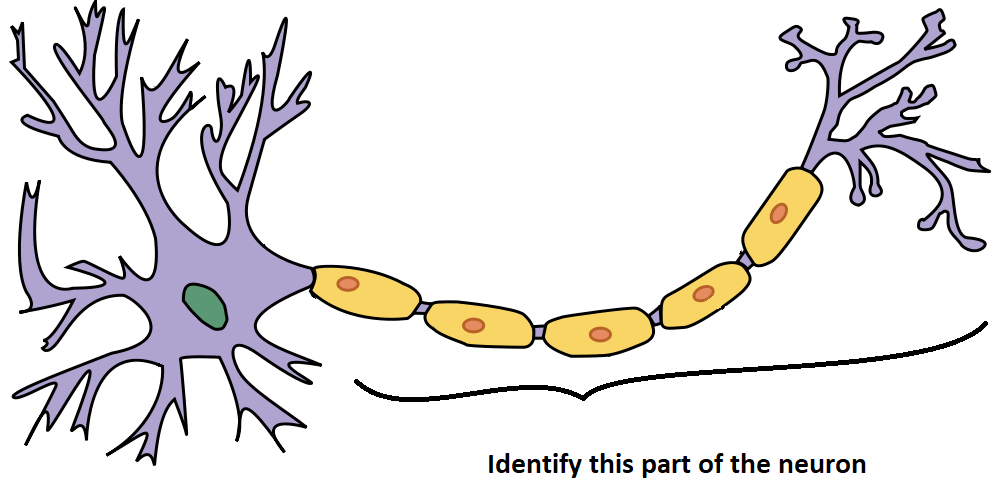
2.
a)

Dendrites

b)

Axon Terminals

c)

Myelin Sheath

d)

Schwann Cells

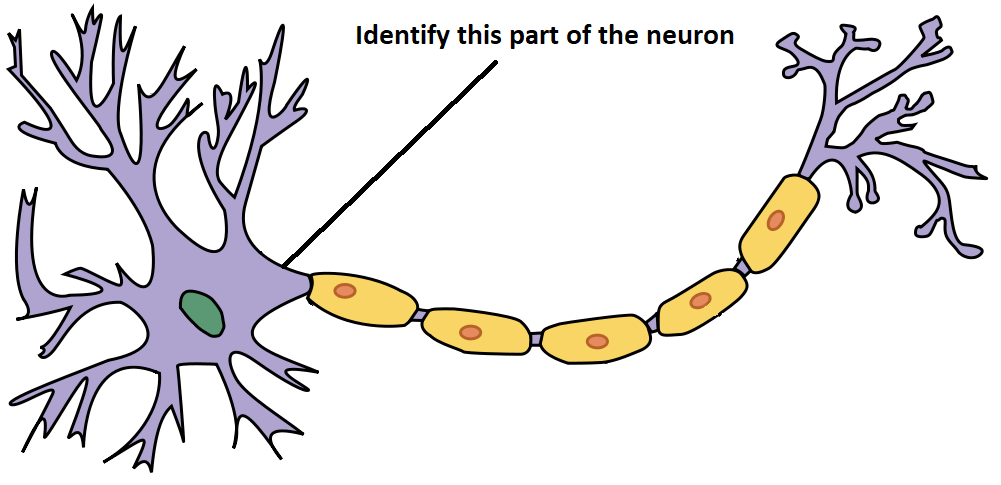
3.
a)

Nucleus

b)

Cell Body

c)

Axon

d)

Node of Ranvier

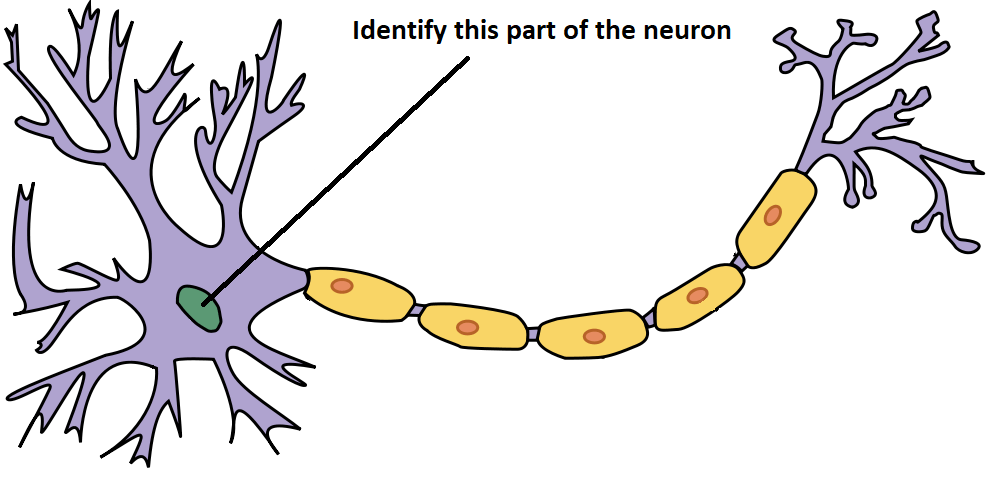
4.
a)

Nucleus

b)

Cell Body

c)

Axon

d)

Node of Ranvier

5.
a)

Nucleus

b)

Cell Body

c)

Axon

d)

Node of Ranvier

6.
The part of the neuron that takes information away from the cell body is called a(n) _____________.
a)
dendrite
b)
axon
c)
cell body
d)
Schwann cell
7.
The nerve cell that transmits impulses from the brain or spinal cord to a muscle or gland.
a)
Motor Neuron
b)
Relay Neuron
c)
Sensory Neuron
8.
The nerve cell that carries impulses from a sense receptor to the brain or spinal cord is a _____________.
a)
Motor Neuron
b)
Sensory Neuron
c)
Relay Neuron
9.

Which statement best describes a reflex?

a)

Slow response that you have to think about

b)

Rapid response to protect body from harm

10.
Which is the correct sequence in the transmission of a neural impulse?
a)
axon, dendrite, cell body, synapse
b)
dendrite, axon, cell body, synapse
c)
synapse, axon, dendrite, cell body
d)
dendrite, cell body, axon, synapse
11.

What type of neuron is A?

a)

Sensory

b)

Inter

c)

Motor

12.

What type of neuron is C?

a)

Sensory

b)

Inter

c)

Motor

13.

An action potential is __________ in nature, with the inside of the neuron being more ________.

a)

chemical, negative

b)

electrical, negative

c)

chemical, positive

d)

electrical, positive

14.
In resting potential, neurons have more ____________ on the inside of the cell membrane.
a)
NaCl
b)
Na+
c)
K+
d)
Cl-
15.
In resting potential, neurons have more _________ on the outside of the cell membrane.
a)
K+
b)
NaCl
c)
Na+
d)
Cl-
16.
A membrane potential becoming less negative is called
a)
hyperpolarization
b)
depolarization
c)
repolarization
d)
polarization
17.
When a neuron is resting, the inside of the axon has a ____________ charge.
a)
positive
b)
negative
18.
When a neuron is not engaged in an impulse.
a)
Resting potential
b)
Action potential
c)
Neural potential
d)
Synaptic potential
19.
The sodium potassium pump restores the resting potential. By which process does this work? 
a)
Osmosis
b)
Diffusion
c)
Facilitated diffusion
d)
Active transport
20.
Which ions are involved in an action potential?
a)
Na; Cl
b)
Na; K
c)
K; Cl
d)
Na; Ca
21.
The "fight or flight" response during threatening situations in the role of the:
a)
sympathetic nervous system
b)
parasympathetic system
c)
somatic nervous system
d)
cerebellum
22.
The part of the nervous system that consists of nerves that branch out from the CNS (central nervous system) and connect to other body parts
a)
Sympathetic
b)
Parasympathetic
c)
Autonomic
d)
Peripheral
23.
The _____part of the autonomic nervous system is active during resting.
a)
sympathetic
b)
parasympathetic
c)
somatic
d)
peripheral
24.
Part of the peripheral that controls conscious activities
a)
autonomic
b)
somatic
c)
sympathetic
d)
parasympathetic
25.
Controls automatic functions like breathing, heart rate, body temperature, wake and sleep cycles, etc.
a)
cerebrum
b)
cerebellum
c)
basal ganglia
d)
brainstem
26.
The job of the somatic nervous system is to control breathing and the respiratory system.
a)
True
b)
False
27.
Lack of salivation
a)
sympathethic
b)
parasympathetic
28.
active digestion
a)
sympathetic
b)
parasympathetic
29.

How many pairs of cranial nerves are there?

a)

9

b)

12

c)

21

d)

31

30.

The Sympathetic and Parasympathetic nervous systems are part of the :

a)

Autonomic nervous system

b)

Somatic Nervous System

c)

Central nervous system

d)

Limbic System

31.
The nervous system_________
a)
receives information about what is going on in your body as well as what is going on around you. 
b)
tells your body how to react to the information it receives. 
c)
helps your body maintain homeostasis. 
d)
all of the above.
32.
Name the two major parts of the central nervous system.
a)
The brain and the skull. 
b)
The brain and the body.
c)
The spinal cord and the brain.
d)
The spinal cord and the body. 
33.
A_______is what your body does in reaction to a stimuli. 
a)
reaction
b)
response
c)
change
34.
What is "homeostasis"?
a)
The body's ability to react to a stimuli. 
b)
The body's ability to keep everything inside it in balance. 
35.
the central nervous system______________
a)
is the control center of the body. 
b)
the main body system. 
36.
A bundle of nerve tissue that links the brain to the nerves in peripheral nerve system is called the________________
a)
brain stem. 
b)
central nervous system. 
c)
spinal cord. 
37.
The brain is made up of three major parts. What are they?
a)
The occipital lobe, the parietal lobe, and the frontal lobe. 
b)
The spinal cord, the cerebrum, and the cerebellum. 
c)
The brain stem, the cerebrum, and the cerebellum. 
38.
What are different "halves" of your brain called?
a)
cerebellum
b)
cerebrum
c)
hemispheres
d)
brain stem
39.
What is "stimuli"?
a)
A major organ in the brain that is a part of the nervous system. 
b)
What your body does to a change or a signal. 
c)
A change or a signal your body receives. 
40.
Name the two major parts of the central nervous system.
a)
The brain and the skull. 
b)
The brain and the body.
c)
The spinal cord and the brain.
d)
The spinal cord and the body. 
41.
A_______is what your body does in reaction to a stimuli. 
a)
reaction
b)
response
c)
change
42.
What are the two divisions of the nervous system?
a)
The brain and spinal cord. 
b)
The central nervous system and the skeletal system. 
c)
The central and peripheral nervous systems. 
43.
the central nervous system______________
a)
is the control center of the body. 
b)
the main body system. 
44.

What kind of cells make up the nervous system?

a)

Plasma

b)

Neurons

c)

Blood Vessels

d)

Spinal Cord

45.

What does the nervous system do?

a)

Pumps blood from your heart to your body

b)

Carries messages back and forth between your brain and the rest of your body

c)

Breaks up food

d)

Secrete hormones.

46.

What are the 3 mains parts of the Nervous System

a)

Brain, heart, blood vessels

b)

Blood Vessels, spinal cord, blood

c)

Brain, Spinal Cord, Neurons

d)

Heart, blood vessels, and blood

47.

The part of the neuron that receives messages from other neurons

a)

axon

b)

dendrite

c)

cell body

d)

Schwann cell

48.
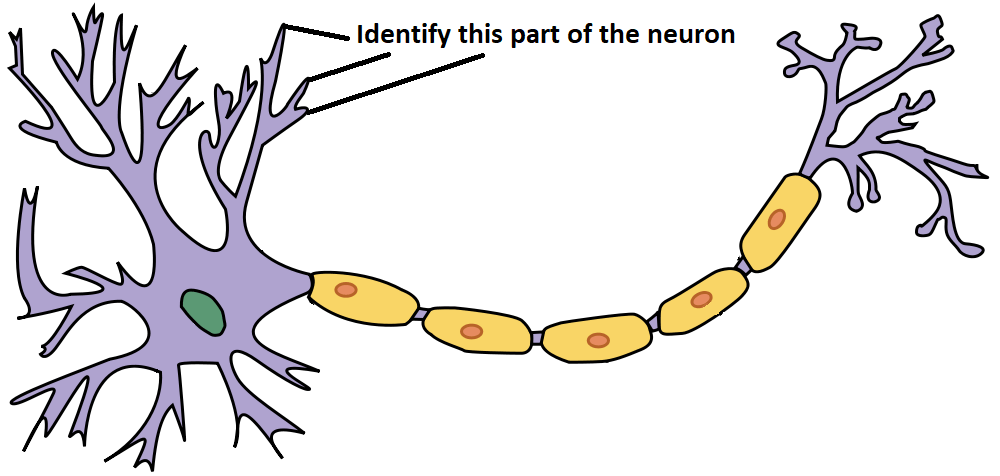
Identify the part of the neuron
a)
axon
b)
axon terminal
c)
dendrite
d)
Node of Ranvier
49.

A sensory neuron has the following role:

a)

To carry messages from the CNS to effectors

b)

To carry messages between neurons and the CNS

c)

To carry messages from receptors to the CNS

d)

None of the above

50.

An relay neuron is also known as:

a)

A connector neuron

b)

A motor neuron

c)

A sensory neuron

d)

All of the above

51.

What is the name of the part of the neuron that is pointed out in the image?

a)

Myelin sheaths

b)

Cell Body (Soma)

c)

Axon

d)

Dendrites

52.

Type of neuron that sends nerve impulses to muscles and gland, by the command of other neurons.

a)

Motor Neurons

b)

Interneurons

c)

Sensory Neurons

53.
What is the central nervous system (CNS) made of?
a)
brain and spinal cord
b)
brain and cranial nerves
c)
spinal cord and spinal nerves
d)
cranial nerves and spinal nerves
54.
What is the purpose of the myelin sheath on the axon?
a)
To maintain temperature
b)
To improve conductivity
c)
To protect the axon
d)
To release neurotransmitters
55.
What is NOT part of the peripheral nervous system (PNS)?
a)
axons
b)
sensory receptors
c)
spinal cord
d)
motor neurons
56.
a signal molecule that transmits nerve impulses across synapses
a)
neuron
b)
neurotransmitter
c)
nerve
d)
action potential
57.
Location at which a neuron can transfer an impulse to another cell with the use of neurotransmitters is called __________.
a)
myelin sheath
b)
axon
c)
threshold
d)
synapse
58.

Which is not a reflex action

a)

Swallowing

b)

Coughing

c)

Knee jerk

d)

Closing of eyes on flashing light

59.

Which body system coordinates all of the systems by controlling every activity that takes place?

a)

The Nervous System

b)

The Digestive System

c)

The Endocrine System

d)

The Circulatory System

e)

The Immune System

60.

Which organ is represented by letter B?

a)

Brain

b)

Spinal Cord

c)

Nerves

61.

Which organ is represented by letter A?

a)

Brain

b)

Spinal Cord

c)

Nerves

62.

Which organ is represented by letter C?

a)

Brain

b)

Spinal Cord

c)

Nerves

63.

The Nervous System is divided into two parts called

a)

The Central Nervous System & The Peripheral Nervous System

b)

The Central Nervous System & The Paradigm Nervous System

c)

The Corollary Nervous System & The Paradigm Nervous System

d)

The Corollary Nervous System & The Peripheral Nervous System

64.

This is the control center of the nervous system controlling both voluntary and involuntary processes.

a)

Central Nervous System

b)

Peripheral Nervous System

65.

The nerves that coordinate messages from the brain and spine to all other parts of the body.

a)

Central Nervous System

b)

Peripheral Nervous System

66.

Digestion, Heartbeat, and Reflexes are examples of

a)

Voluntary Processes

b)

Involuntary Processes

67.

Speaking, Running, and Karate Chopping are examples of

a)

Voluntary Processes

b)

Involuntary Processes

68.

The Brain is made of a large mass of

a)

Muscular Tissue

b)

Neurons

c)

Red Blood Cells

d)

While Blood Cells

e)

Glands

69.

Letter B represents the

a)

Cerebrum

b)

Cerebellum

c)

Medula

70.

Letter C represents the

a)

Cerebrum

b)

Cerebellum

c)

Medula

71.

Which brain structure is responsible for balance and is involved with movement?

a)

Cerebellum

b)

Cerebrum

c)

Medulla

72.

Which brain structure controls all voluntary activities and is responsible for thought, memory, emotions, and reasoning?

a)

Cerebellum

b)

Cerebrum

c)

Medulla

73.

1.Three main parts of nervous system.

(a)  

74.

Which is the largest part of brain?

(a)  

75.

3.---------- a stem shaped structure beneath the cerebellum.

(a)  

76.

4.--------------------controls memory,learning ability,etc

(a)  

77.

5.Nerve cells are known as-------------

(a)  

78.

6.------------------ nerves carry message from brain or spinal cord to other parts of the body.

(a)  

79.

7.Automatic and quick action of the body is called------------------------

(a)  

80.

8.----------------------- is the circular transparent area in front of the eye.

(a)  

81.

9.Vibrations of ear drum passes through the tiny bones in the -----------------

(a)  

82.

10.------------------ is the largest organ of the body

(a)  

83.

11.------------------------------------------ helps to maintain balance.

(a)  

84.

12.The external openings of the nose are called-------------------------

(a)  

85.

The nucleus is located in which part of the neuron (nerve cell)?

a)

dendrites

b)

cell body

c)

axon

d)

synapse

86.

What is considered the command center of the nervous system?

a)

Neurons

b)

Heart

c)

Spinal Cord

d)

Brain

87.

What kind of cells make up the nervous system?

a)

Plasma

b)

Neurons

c)

Blood Vessels

d)

Spinal Cord

88.

What makes up the Central Nervous System?

a)

Blood and Heart

b)

Spinal Cord

c)

Nerves

d)

Brain and Spinal Cord

89.

Which of the following is the nervous system?

a)
b)
c)
d)
90.

What is the gap between two neurons called?

a)

Impulse

b)

Synapse

c)

CNS

d)

Inter neuron

91.

The branch like figures that receive impulses & conducts them to the cell body

a)

Dendrite

b)

Axon

c)

Cell Body

d)

Myelin Sheath

92.

what might be a job of a motor neuron?

a)

connecting to a muscle and helping you move

b)

connecting within the brain to help you make a decision

c)

sending a message toward your brain from a pain receptor in your skin

d)

all of these

93.

Which of the follow is the correct order of events in a reflex?

a)

Afferent system -> Efferent System -> Interneuron

b)

Efferent System -> Afferent system -> Interneuron

c)

Interneuron -> Afferent system -> Efferent System

d)

Afferent system -> Interneuron -> Efferent System

e)

Interneuron -> Efferent System -> Afferent system
94.
Which ions are involved in the electrical nerve impulse?
a)

Iodine and Sodium (I and Na)

b)

Potassium and Sodium (K and Na)

c)

Iron and Sodium (Fe and Na)

d)

Calcium and Iodine (Ca and I)

95.
-70 mV is the measure of a
a)
Threshold Potential
b)
Action Potential
c)
Resting Potential
d)
End Point Potential
96.

Which of the following uses ACTIVE transport?

a)

sodium-potassium pump

b)

sodium channel

c)

potassium channel

d)

diffusion

97.
What is a neurotransmitter?
a)
fatty covering of the axon
b)
nerve cell
c)
chemical messenger
d)
gap between neurons
98.

The location of neurotransmitters

a)

axon terminals

b)

dendrites

c)

Schwann cells

d)

cell body

99.

What is the insulating membrane (covering) that surrounds parts of the axon that helps to protect & propagate action potential to avoid loss of signal and increase transmission speed?

a)

Axon

b)

Dendrites

c)

Node of Ranvier

d)

Myelin Sheath

100.
What is "stimuli"?
a)
A major organ in the brain that is a part of the nervous system. 
b)
What your body does to a change or a signal. 
c)
A change or a signal your body receives. 
101.
Name the two major parts of the central nervous system.
a)
The brain and the skull. 
b)
The brain and the body.
c)
The spinal cord and the brain.
d)
The spinal cord and the body. 
102.
A_______is what your body does in reaction to a stimuli. 
a)
reaction
b)
response
c)
change
103.
What are the two divisions of the nervous system?
a)
The brain and spinal cord. 
b)
The central nervous system and the skeletal system. 
c)
The central and peripheral nervous systems. 
104.
the central nervous system______________
a)
is the control center of the body. 
b)
the main body system. 
105.

What does the nervous system do?

a)

Pumps blood from your heart to your body

b)

Carries messages back and forth between your brain and the rest of your body

c)

Breaks up food

d)

Secrete hormones.

106.

What are the 3 mains parts of the Nervous System

a)

Brain, heart, blood vessels

b)

Blood Vessels, spinal cord, blood

c)

Brain, Spinal Cord, Neurons

d)

Heart, blood vessels, and blood

107.

What kind of cells make up the nervous system?

a)

Plasma

b)

Neurons

c)

Blood Vessels

d)

Spinal Cord

108.

The part of the neuron that receives messages from other neurons

a)

axon

b)

dendrite

c)

cell body

d)

Schwann cell

109.
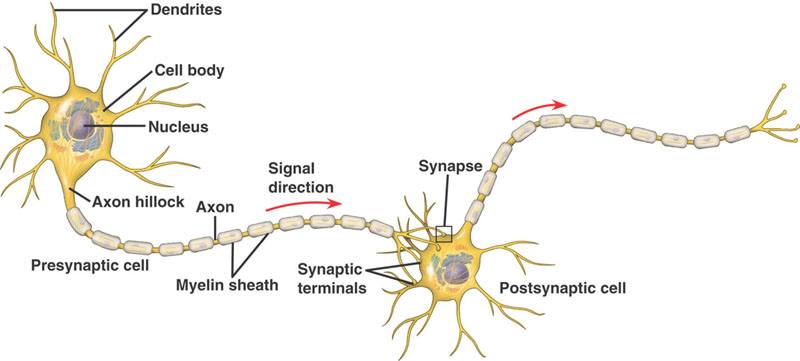
Identify the part of the neuron
a)
axon
b)
axon terminal
c)
dendrite
d)
Node of Ranvier
110.

A sensory neuron has the following role:

a)

To carry messages from the CNS to effectors

b)

To carry messages between neurons and the CNS

c)

To carry messages from receptors to the CNS

d)

None of the above

111.

An interneuron is also known as:

a)

A connector neuron

b)

A motor neuron

c)

A sensory neuron

d)

All of the above

112.

What is the name of the part of the neuron that is pointed out in the image?

a)

Myelin sheaths

b)

Cell Body (Soma)

c)

Axon

d)

Dendrites

113.

Type of neuron that sends nerve impulses to muscles and gland, by the command of other neurons.

a)

Motor Neurons

b)

Interneurons

c)

Sensory Neurons

114.

Where would the nerve impulse start in this reflex arc?

a)

A

b)

C

c)

D

d)

E

115.

_____ neurons carry messages away from the central nervous system and out to muscles or glands. The RED neuron in diagram.

a)

sensory

b)

motor

c)

inter

d)

central

116.
The junction between 2 neurons is called the
a)
dendrite
b)
axon
c)
node of Ranvier
d)
synapse
117.
Which ions are involved in an action potential?
a)
Na; Cl
b)
Na; K
c)
K; Cl
d)
Na; Ca
118.
The sodium potassium pump restores the resting potential. By which process does this work? 
a)
Osmosis
b)
Diffusion
c)
Facilitated diffusion
d)
Active transport
119.
What is the insulating membrane that surrounds parts of the axon that helps to protect & propagate action potential?
a)
Axon
b)
Dendrites
c)
Node of Ranvier
d)
Myelin Sheath
120.
When a neuron is resting, the inside of the axon has a ____________ charge.
a)
positive
b)
negative
121.
In resting potential, neurons have more _________ on the outside of the cell membrane.
a)
K+
b)
NaCl
c)
Na+
d)
Cl-
122.
At what stages do Sodium/Potassium Channels open?
a)
Repolarization/ Repolarization
b)
Depolarization/ Hyperpolarization
c)
Hyperpolarization/ Repolarization
d)
Depolarization/ Repolarization
123.

Which one of the following is involved in maintaining a resting membrane potential?

a)

Na+/K+ ATPase pump moves 3Na+ in for every 2K+ out

b)

Na+/K+ ATPase pump moves 3K+ in for every 2Na+ out

c)

Na+/K+ ATPase pump moves 3Na+ out for every 2K+ in

d)

Na+/K+ ATPase pump moves 3K+ out for every 2Na+ in

124.
Which ions are involved in the electrical nerve impulse?
a)
Iodine and Sodium
b)
Potassium and Sodium
c)
Iron and Sodium
d)
Calcium and Iodine