wayground logo

Free Printable Worksheets

Font size

S
M
L
XL
Worksheets

Term 1 General Human Biology Revision

Total questions: 119

Worksheet time: 1hrs 3mins

Name
Class
Date
1.
What unit are all living things made of?
a)
Cells
b)
Skeletons
c)
Hearts
d)
Carapaces
2.
Many cells of the same type form a _____.
a)
Organism
b)
Chloroplast
c)
Tissue
d)
Organ system
3.
Two or more kinds of tissues together form an _____.
a)
Organ
b)
Chloroplast
c)
Cell
d)
Tissue
4.
Organ systems working together form a living _____.
a)
Chloroplast
b)
Tissue
c)
Cell
d)
Organism
5.
Skin is a kind of _____ tissue.
a)
Nervous
b)
Epithelial
c)
Digestive
d)
Muscular
6.
Red blood cells are a kind of _____ tissue.
a)
Nervous
b)
Skeletal
c)
Connective
d)
Muscle
7.
Bone cells (osteocytes) make up _____ tissue.
a)
Skeletal
b)
Nervous
c)
Heart
d)
Skin
8.
The brain is part of the _____ system.
a)
Skeletal
b)
Nervous
c)
Digestive
d)
Respitory
9.
The stomach is part of the _____ system.
a)
Skeletal
b)
Respitory
c)
Digestive
d)
Integumentary
10.
The heart is part of the _____ system.
a)
Skeletal
b)
Muscular
c)
Integumentary
d)
Circulatory
11.
The heart and lungs bring _____ to the rest of your body.
a)
Waste
b)
Oxygen
c)
Carbon dioxide
d)
Carbon monoxide
12.
The digestive system provides _____ to the rest of your body.
a)
Waste
b)
Nutrients
c)
Oxygen
d)
Carbon monoxide
13.
The _____ system allows us to sense things. This organ system includes the nerves.
a)
Connective
b)
Skeletal
c)
Heart
d)
Nervous
14.
_____ tissue wraps around, supports, cushions, and protects organs. It stores nutrients.
a)
Connective
b)
Nervous
c)
Muscular
d)
Nerve
15.
Bones are organs in the _____ system.
a)
Digestive
b)
Respitory
c)
Skeletal
d)
Integumentary
16.
_____ tissue is responsible for body movement, moves blood, food, and waste through the body's organs.
a)
Skeletal
b)
Integumentary
c)
Muscle
d)
Bone
17.
This is the _____ system.
a)
Circulatory
b)
Digestive
c)
Nervous
d)
Respitory
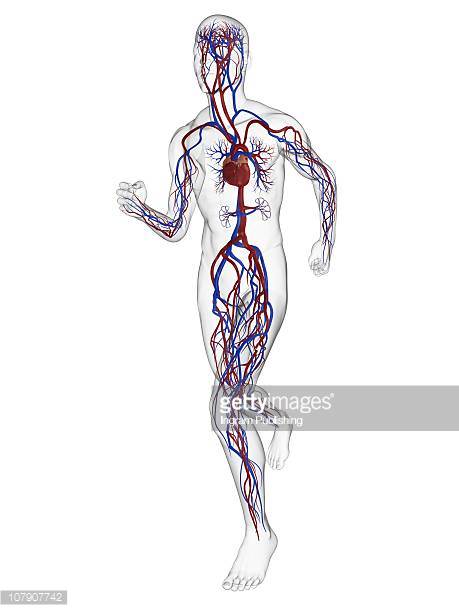
18.
This is the _____ system.
a)
Muscular
b)
Skeletal
c)
Circulatory
d)
Nervous
19.
In living things, this is a system that regulates its internal environment and tends to maintain a stable, constant condition such as body
a)
homeostasis
b)
symbiosis
c)
contractile vacuole
d)
cytoplasmic streaming
20.
Which of the following is NOT a characteristic of living things?
a)
organised
b)
use energy
c)
grow and develop
d)
conducts photosynthesis
21.
This is anything that is made up of at LEAST one cell and can perform life functions on its own?
a)
organelle
b)
tissue
c)
organism
d)
organ
22.
Which sequence correctly shoes the levels of increasing organisation of the human body?
a)
cell-tissue-organ-organ system-organism
b)
organism-organ system-organs-tissues-cells
c)
cells-organs-tissues-organ system-organism
d)
organism-cell-tissue-organs-organ system
23.
What is a group of similar tissues?
a)
Tissue 
b)
Organ
c)
Cell group
d)
Organ system
24.
What do muscle cells do?
a)
receive and transmit signals
b)
carry gasses (such as oxygen)
c)
provide protection
d)
contract and relax
25.
What do red blood cells do?
a)
receive and transmit signals
b)
carry gasses (such as oxygen)
c)
provide protection
d)
contract and relax
26.
What do nerve cells do?
a)
receive and transmit signals
b)
carry gasses (such as oxygen)
c)
provide protection
d)
contract and relax
27.
What do bone cells do?
a)
receive and transmit signals
b)
carry gasses (such as oxygen)
c)
provide protection
d)
contract and relax
28.
What does muscle tissue do?
a)
carries messages to and from the brain
b)
provides structure and support
c)
causes movement
d)
forms the protective outer layer of skin
29.
What does nervous tissue do?
a)
carries messages to and from the brain
b)
provides structure and support
c)
causes movement
d)
forms the protective outer layer of skin
30.
What does epithelial tissue do?
a)
carries messages to and from the brain
b)
provides structure and support
c)
causes movement
d)
forms the protective outer layer of skin
31.
What does connective tissue do?
a)
carries messages to and from the brain
b)
provides structure and support
c)
causes movement
d)
forms the protective outer layer of skin
32.
For the body to maintain homeostasis ...
a)
Just the digestive systems much be functioning properly.
b)
Some organ systems must function properly.
c)
Only the circulatory system must be functioning properly
d)
All organ systems must be functioning properly
33.

The cell membrane is mostly made of what?

a)

Membrane-spanning Proteins

b)

Surface Proteins

c)

Phospholipids

d)

Carbohydrates

34.

What are the two parts of a phospholipid?

a)

head

b)

enzyme

c)

tail

d)

hormone

35.

The phospholipid head is _____________

a)

Hydrophilic

b)

Hydrophobic

36.

This regulates the movement of molecules from one side of the membrane to the other.

a)

cell membrane

b)

equilibrium

c)

passive transport

d)

diffusion

37.

The main parts that make up the cell membrane are made of:

a)

lipids, DNA, phosphate

b)

phospholipids, proteins, carbohydrates

c)

cholesterol, sugar, water

d)

proteins, carbohydrates, oxygen

38.
What is another term for "selectively permeable"?
a)
porous
b)
completely permeable
c)
permanent
d)
semipermeable
39.

What forms the transport channels in the phospholipid bilayer?

a)

carbohydrates

b)

proteins

c)

hydrophilic heads

d)

lipids

40.
What does "bilayer" mean?
a)
one layer
b)
two layers
c)
laminated
d)
bilateral
41.

Hydrophobic region of the cell membrane

a)

E

b)

B

c)

C

d)

A

42.

Which of the following can easily pass through the cell membrane?

a)

Polar molecules

b)

Large molecules like glucose

c)

Small and uncharged molecules

d)

Protein

43.

Involved in communication

a)

E

b)

B

c)

C

d)

A

44.

Phospholipids

a)

E

b)

B

c)

C

d)

A

45.

Ions like sodium cannot pass through the phospholipid bilayer because they are

a)

Too big

b)

Charged

c)

Too small

d)

Uncharged

46.

"Oxygen molecules are small, uncharged and non-polar". Oxygen must pass into the cell membrane using transport proteins

a)

True

b)

False

47.
When you breathe, your lungs take in ___ and remove ___. 
a)
air/oxygen
b)
oxygen/carbon dioxide 
c)
carbon dioxide/waste 
d)
waste/air 
48.
The air sacs that are covered with capillaries where gas exchange takes place
a)
bronchi
b)
lungs
c)
oxygen
d)
alveoli
49.

Flap of tissue that covers the opening to the windpipe during swallowing

a)

Pharynx

b)

Trachea

c)

Epiglottis

50.
What is the main function of the respiratory system?
a)
to provide oxygen and remove carbon dioxide from the body
b)
to bring oxygen to the body
c)
to break down food and absorb nutrients
d)
to remove oxygen from the body and deliver carbon dioxide
51.
Given the following structures:
1. larynx
2. nasal cavity
3. pharynx
4. trachea
Which of the following is the correct order that air would flow during inhalation. 
a)
1,2,3,4
b)
2,3,1,4
c)
2,1,3,4
d)
4,2,3,1 
52.
Which body function is made possible by the fibrous bands stretched across the larynx?
a)
swallowing
b)
breathing
c)
diffusion
d)
speech
53.
The left lung has three lobes and the right lung has two. 
a)
True
b)
False
54.
A chamber behind the nose and mouth that leads to the trachea
a)
pharynx
b)
trachea
c)
epiglottis
d)
larynx
55.

The drawing in of breath; inhalation.

a)

Inspiration

b)

Expiration

56.

Breathing out; exhalation of breath.

a)

Inspiration

b)

Expiration

57.

What is the site of gas exchange?

a)

alveoli

b)

nose

c)

lung

d)

bronchi

58.

A cavity within a bone or other tissue, especially one in the bones of the face or skull connecting with the nasal cavities.

a)

Sinus

b)

Nose

c)

Pharynx

d)

Larynx

59.

The process of diffusing oxygen from the blood, into the interstitial fluid and into the cells.

a)

inspiration

b)

expiration

c)

internal respiration

d)

external respiration

60.

The process of exchanging oxygen and carbon dioxide in the lungs.

a)

inspiration

b)

expiration

c)

internal respiration

d)

external respiration

61.

The only externally visible part of the respiratory system

a)

Eyes

b)

Nose

c)

Pharynx

d)

Larynx

62.

Which lung has 2 lobes?

a)

Right

b)

Left

63.

The division of the trachea forms

a)

nose

b)

main bronchi

c)

lungs

d)

alveoli

64.

The opening between vocal cords

a)

glottis

b)

epiglottis

65.

Olfactory receptors are located in the mucosa of the nose. What are these receptors used for?

a)

sight

b)

smell

c)

touch

d)

taste

66.

Which part of the Respiratory System plays a major role in speech?

a)

nose

b)

pharynx

c)

larynx

d)

trachea

67.

When you breathe, your lungs take in _______ and remove ________

a)

air/ oxygen

b)

air/ carbon

c)

oxygen/ carbon dioxide

d)

oxygen/ nitrogen

68.

What is the main function of the respiratory system?

a)

to provide oxygen to and remove carbon dioxide from the body

b)

to break down food and provide nutrients

c)

to bring oxygen into the body

d)

to remove oxygen from the body

69.

a disorder of the lungs called _______ causes the bronchi to become restricted (smaller) so air can't get into the lungs

a)

influenza

b)

cold

c)

asthma

d)

bronchitis

70.

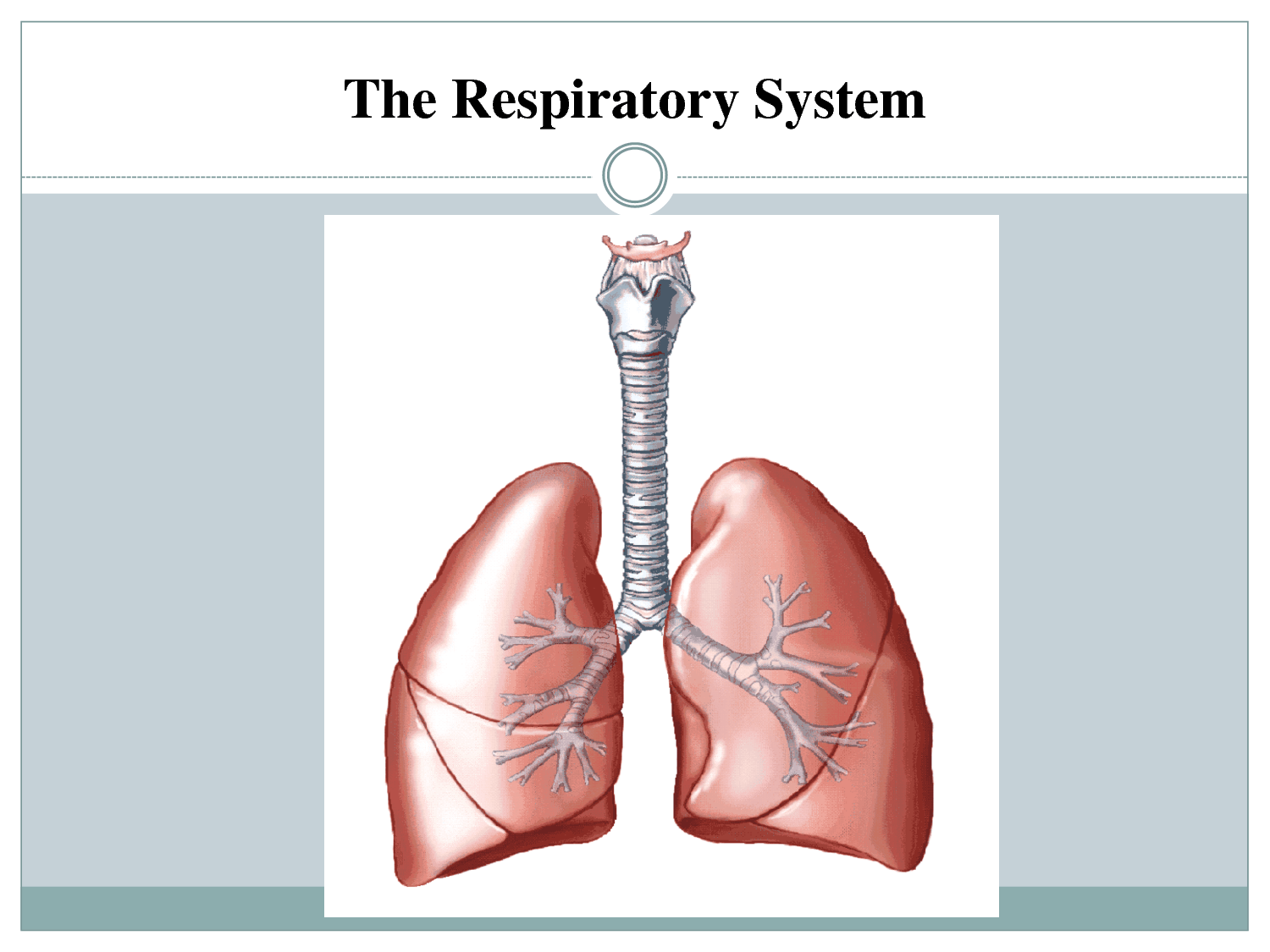
Name the organ in the picture

a)

trachea

b)

lungs

c)

diaphragm

d)

nasal cavity

71.

What is the name of the muscle below the lungs that helps with breathing?

a)

trachea

b)

diaphragm

c)

alveoli

d)

bronchi

72.

The beginning of the respiratory system that warms and moistens the air is:

a)

trachea

b)

nose

c)

bronchi

d)

larynx

73.

How much of the air we breathe in is Oxygen?

a)

74%

b)

100%

c)

1%

d)

20.1%

74.

What is the main bone structure that protects the lungs?

a)

vertebrate

b)

rib cage

c)

pelvis

d)

spine

75.

How many times does the average person breathe in a minute?

a)

18

b)

12

c)

24

d)

45

76.

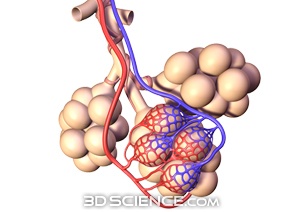
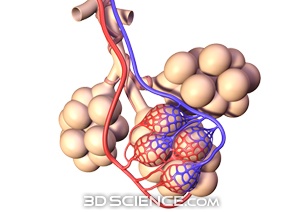
What is this organ

a)

Nasal cavity

b)

trachea

c)

bronchi

d)

alveoli

77.

Which of these are NOT apart of the respiratory system?

a)

nose, lungs, alveoli

b)

nose, trachea, larynx

c)

tongue, stomach, esophagus

d)

mouth, nose, trachea

78.

Name this organ:

a)

alveoli

b)

pharynx

c)

bronchi

d)

nasal cavity

79.

What is the main organ of the circulatory system?

a)

small intestine

b)

bone

c)

lungs

d)

heart

80.

Arteries carry oxygen rich blood away from the heart.

a)

True

b)

False

81.

Veins carry oxygen poor blood back to the heart.

a)

False

b)

True

82.

The job of the heart is to . . .

a)

pump blood around the body.

b)

send food to the small intestines.

c)

break down food.

d)

give energy to the body.

83.

The heart is about the size and shape of your . . .

a)

head

b)

fist

c)

hand

d)

foot

84.
______________ are the smallest blood vessels.
a)
Arteries
b)
Veins
c)
Capillaries
85.
The circulatory system works with the ___________ system to provide our body with oxygen.
a)
respiratory
b)
digestive
c)
muscular
d)
skeletal
86.
The main function of the circulatory system is 
a)
To give the body structure and support
b)
Excrete waste
c)
transport blood, nutrients, and gases throughout the body
d)
to transport messages from the body to the brain
87.

The FREQUENCY of heart contractions is...

a)

heart rate

b)

blood pressure

c)

respiratory rate

d)

voluntary muscle contraction

88.
The heart has ___ chambers.
a)
1
b)
2
c)
3
d)
4
89.
What is the Circulatory System also known as?
a)
The heart
b)
Cardiovascular System
c)
Nervous System
d)
Aorta
90.
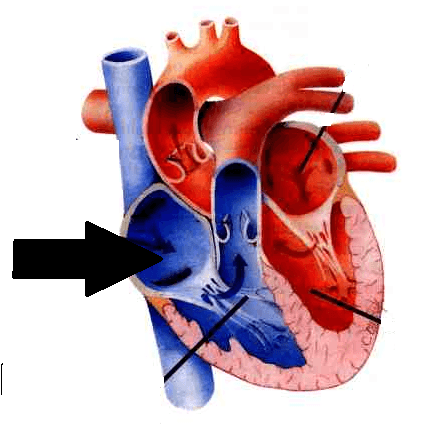
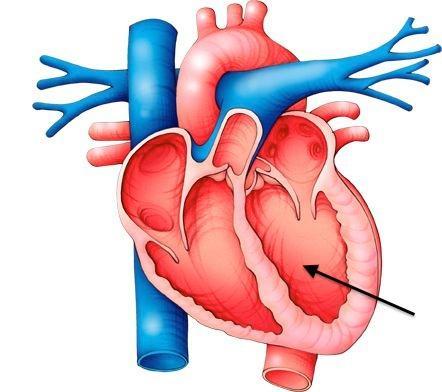
Identify
a)
Left atrium
b)
Right atrium
c)
Left ventricle
d)
Right ventricle
91.
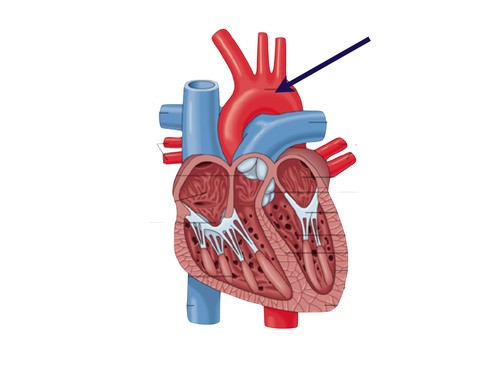
Identify
a)
Pulmonary veins
b)
Pulmonary artery
c)
Aorta
d)
Vena cava
92.
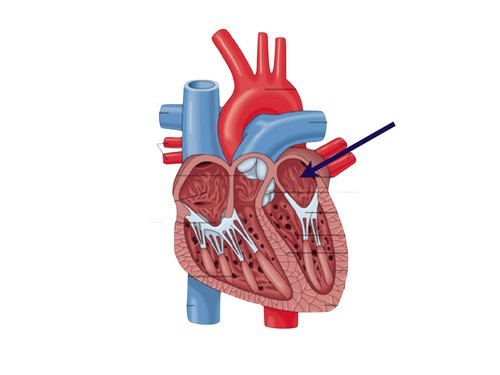
Identify
a)
Left atrium
b)
Right atrium
c)
Left ventricle
d)
Right ventricle
93.
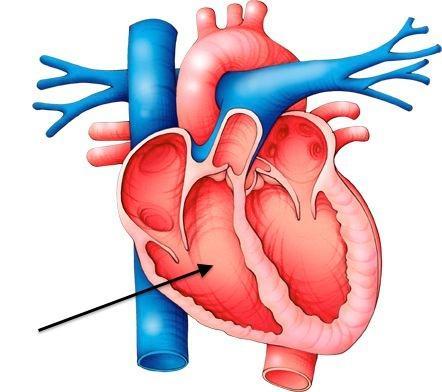
Identify
a)
Left atrium
b)
Right atrium
c)
Left ventricle
d)
Right ventricle
94.
Identify
a)
Left atrium
b)
Right atrium
c)
Left ventricle
d)
Right ventricle
95.
This chamber of the heart RECEIVES blood returning from the body
a)
Right Atrium
b)
Right Ventricle
c)
Left Atrium
d)
Left Ventricle
96.

This chamber of the heart RECEIVES oxygen rich blood back from the lungs

a)

Right Atrium

b)

Left Atrium

c)

Right Ventricle

d)

Left Ventricle

97.

This chamber of the heart pumps the blood from the heart to the lungs through the pulmonary artery

a)

Right Atrium

b)

Left Atrium

c)

Right Ventricle

d)

Left Ventricle

98.

This chamber of the heart pumps the blood back out to the body cells through the Aorta

a)

Right Atrium

b)

Left Atrium

c)

Right Ventricle

d)

Left Ventricle

99.

What are present in veins but absent in arteries?

a)

smooth elastic tissues

b)

muscular tissues

c)

valves

100.

How are capillaries adapted for their function?

a)

One-cell thick endothelium

b)

Presence of valves

c)

Large lumen

101.

I have a large lumen, I have thin muscular walls, I transport blood towards the heart

a)

Artery

b)

Vein

c)

Capillary

d)

Arteriole

102.

I have muscular walls, and a small lumen, I transport blood away from the heart

a)

Artery

b)

Vein

c)

Capillary

d)

Arteriole

103.

What is the function of white blood cells?

a)

carry oxygen

b)

fight infection

c)

carry nutrients

d)

clot blood

104.

What is the function of clotting factors?

a)

acts as an enzyme

b)

Cause a series of chemical reactions to form fibrin.

c)

forms a platelet plug.

d)

Results in clot retraction.

105.

Which of the following statements is INCORRECT, in reference to the suitability of RBC's to transport oxygen.

a)

Contain haemoglobin.

b)

Contain a nucleus with a strong affinity for binding to haemoglobin.

c)

Have a large SA/Vol due to being biconcave.

d)

Have no nucleus = more room for haemoglobin.

106.

Letter D is pointing to

a)

Aorta

b)

Right Pulmonary Artery

c)

Superior Vena Cava

d)

Pulmonary Trunk

107.

Letter G is pointing to

a)

Right atrium

b)

Left Atrium

c)

Right ventricle

d)

Left ventricle

108.

Which letter is pointing to the septum?

a)

H

b)

I

c)

E

d)

B

109.

What letter is pointing to the aortic arch?

a)

D

b)

K

c)

C

d)

B

110.

Which of the following carries blood TO the lungs?

a)

pulmonary veins

b)

pulmonary arteries

c)

aorta

d)

superior vena cava

111.

Structure B carries

a)

oxygenated blood

b)

deoxygenated blood

112.

Which of the following % is correct for the transportation of Carbon Dioxide as bicarbonate ions

a)

22%

b)

8%

c)

70%

d)

97%

113.

When carbon dioxide combines with water it forms (a)   then dissociates into hydrogen ions and bicarbonate ions.

114.

The threads that form an insoluble meshwork in blood clotting are called

(a)  

115.

Which blood group is able to donate whole blood to all other blood types?

a)

A

b)

B

c)

AB

d)

O

116.

Which blood type contains only A antigens?

a)

AB

b)

A

c)

B

d)

O

117.

Which blood type contains only Anti-A antibodies?

a)

AB

b)

A

c)

B

d)

O

118.

Agglutination occurs when blood type antibodies come into contact with blood type antigens to which they correspond. What is agglutination?

a)

Red blood cells burst and die

b)

Red blood cells are clumped together and become non-functional

c)

Blood clotting

d)

A system in which transfusions can occur

119.

How do you feel about this topic in Human Biology, 0-4 (I am struggling), 4-6 (feeling okay but need to revise), 7-10 (feeling strong about my content knowledge).

a)

0-4

b)

4-6

c)

7-10