wayground logo

Free Printable Worksheets

Font size

S
M
L
XL
Worksheets

GCSE Biology Paper 1

Total questions: 105

Worksheet time: 1hrs 9mins

Name
Class
Date
1.
What type of cell is this?
a)
animal
b)
plant
c)
bacteria
d)
algae
2.
Which of these would you not find in an animal cell?
a)
cell membrane
b)
cell wall
c)
nucleus
d)
ribosome
3.
Which of these would you not expect to find in a bacterial cell?
a)
cell wall
b)
cell membrane
c)
nucleus
d)
cytoplasm
4.
What term is used to describe a single celled organism without a true nucleus?
a)
prokaryote
b)
virus
c)
protoctista
d)
eukaryote
5.
Where in a cell does respiration take place?
a)
ribosome
b)
nucleus
c)
mitochondria
d)
cytoplasm
6.
Which of these shows the correct order, going from the smallest to the largest?
a)
gene, chromosome, nucleus, cell
b)
chromosome, gene, nucleus, cell
c)
nucleus, gene, chromosome, cell
d)
gene, nucleus, chromosome, cell
7.
What is the function of the cell membrane?
a)
respiration
b)
protein synthesis
c)
control of substances in/out of the cell
d)
reproduction
8.
What is the function of the ribosomes?
a)
respiration
b)
protein synthesis
c)
cell replication
d)
DNA replication
9.
When cells become specialised for a particular role, it is known as ...?
a)
cell differentiation
b)
cell replication
c)
cell reproduction
d)
cell mitosis
10.
Which of the following is the correct statement?
a)
Both plant and animal cells differentiate at an early stage.
b)
Animal cells differentiate early, whilst many plant cells can differentiate throughout life.
c)
Plant cells differentiate early, many animal cells can differentiate throughout life.
d)
The majority of both plant and animals cells can differentiate later in life.
11.
Unspecialised cells that can differentiate to form many different types of cell are known as...?
a)
Stem cells
b)
Specialised cells
c)
Differential cells
d)
Special cells
12.
Which type of human stem cell would be able to differentiate into the most type of specialised cells?
a)
Embryonic stem cells
b)
Adult bone marrow stem cell
13.
Cells with a membrane, nucleus and cytoplasm, such as those found in animals and plants, are known as ...?
a)
prokaryotes
b)
eukaryotes
14.
Which type of cell would be the smallest?
a)
Eukaryote
b)
Prokaryote
15.
When using a microscope, how do you work out the real size of an image?
a)
image size ÷ magnification
b)
magnification ÷ image size
c)
image size × magnification
d)
image size + magnification
16.
If an image measured 3.5 mm and the magnification was x 1,000, how big would the actual object be?
use:  real size = image size ÷ magnication
a)
0.0035 mm
b)
0.035 mm
c)
3500 mm
d)
0.35 mm
17.
1 μm (micro-metre) is equal to how many metres?
a)
0.000 1
b)
0.000 01
c)
0.000 001
d)
0.000 000 1
18.
15 mm would be equal to how many μm?
a)
150
b)
1 500
c)
15 000
d)
150 000
19.
How do bacteria reproduce?
a)
mitosis
b)
meiosis
c)
simple cell division
d)
they don't
20.
What is the name of the technique that should be used to prepare bacterial plates?
a)
septic
b)
aseptic
c)
sterile
d)
uncontaminated
21.

The type of cell transport that DOES NOT require energy

a)

active transport

b)

passive transport

22.

The movement of molecules from an area of high concentration to areas of low concentration until equilibrium is reached.

a)

osmosis

b)

diffusion

c)

plasmolysis

d)

cytolysis

23.

Transport of molecules across the cell membrane that requires energy.

a)

active transport

b)

passive transport

24.

If two solutions have the same solute concentration and the same water concentration, they are said to be ___________ to each other.

a)

hypotonic

b)

hypertonic

c)

isotonic

d)

proteotonic

25.

What type of solution is a cell in when too much water moves into the cell and the cell bursts?

a)

hypotonic

b)

hypertonic

c)

isotonic

d)

proteotonic

26.
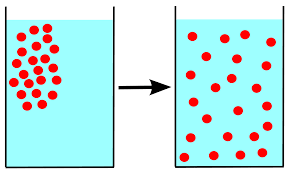
The picture below is an example of _________________.
a)
osmosis
b)
isotonic
c)
diffusion
d)
active transport
27.

The graph shows how the rate of an enzyme-controlled reaction changes with temperature. What is happening within the temperature range marked X?

a)

The enzyme is becoming denatured.

b)

The enzyme is becoming denatured.

c)

The reaction is occurring at body temperature.

d)

The reaction is occurring at the optimum temperature.

28.
What does the nucleus contain?
a)
Chromosomes 
b)
DNA
c)
Deoxyribonucleic acid 
d)
Genes
29.
What are chromosomes made from?
a)
AND
b)
DNA
c)
DAN
d)
NAD
30.
Each chromosome carries a large number of?
a)
Chromosomes
b)
DNA
c)
Genes
d)
Molecules 
31.
In body cells chromosomes are normally found in 
a)
triplets 
b)
alone
c)
strands
d)
pairs
32.
Which is not an example of a gamete? 
a)
Muscle cell
b)
Sperm cell 
c)
Pollen
d)
Egg cell
33.
Which is not an example of a gamete? 
a)
Muscle cell
b)
Sperm cell 
c)
Pollen
d)
Egg cell
34.
This is how body cells divide 
a)
Cell cycle
b)
Chromosomes 
c)
Mitosis 
d)
Meiosis
35.
An undifferentiated cell of an organism is an
a)
Sperm cell
b)
Stem cell
c)
Egg cell
d)
Gamete 
36.
Diabetes and paralysis may be treated with
a)
a vaccination
b)
stem cells
c)
antibiotics 
d)
painkillers 
37.
Meristem stem cells can be used to produce clones of plants quickly and economically.
a)
True
b)
False
38.
Stem cells can be found in the umbilical cord of newborn babies?
a)
True 
b)
False 
39.

What is the function of the cell membrane?

a)

Produces ATP

b)

Produces proteins and lipids

c)

Keep the organelles in place

d)

Control what enters and leaves the cell

40.
What is the function of the ribosomes?
a)
Transport proteins
b)
Make proteins
c)
Package and ship proteins
d)
Store water, food, and wastes
41.
What is diffusion?
a)
when molecules move 
b)
when molecules move from a high concentration to a low.
c)
no movement 
d)
molecules move everywhere
42.
Osmosis is the movement of _____ across a membrane.
a)
food
b)
energy
c)
oxygen
d)
water
43.
An organism that needs to eat other organisms to obtain energy is known as a:
a)
Autotroph
b)
Producer
c)
Consumer
d)
Mutualist
44.
Consumer that eats plants
a)
heterotroph
b)
herbivore
c)
producer
d)
community
45.
The non-living part of an ecosystem
a)
Ocean
b)
Lava Flow
c)
Birds
d)
Abiotic
46.
The study of how living things interact with one another and with their environment.
a)
Biology
b)
Lithology
c)
Ecology
d)
Farmacology
47.

What is biomass?

a)

the total dry weight of organisms in an ecosystem

b)

the total weight of organisms in an ecosystem

c)

the total dry weight of producers in an ecosystem

d)

the total weight of animals in an ecosystem

48.

If the eyepiece lens is x15 and the objective lens is x40, what is the total magnification?

a)

x600

b)

x2.5

c)

x400

d)

x750

49.

What type of microscope has the highest resolving power?

a)

light

b)

electron

c)

neither

50.

what is the name for number 12 on the diagram?

a)

adjustment knob

b)

fine focus

c)

course focus

d)

stage changer

51.

If the magnification was x600, and the image size was 40mm, what is the actual size?

a)

66 micrometres

b)

0.066 mm

c)

24000 micrometres

d)

24mm

52.

1 nm is how many metres?

a)

0.00001

b)

1000

c)

0.000000001

d)

0.000001

53.

What type of cell is this?

a)

prokaryotic

b)

eukaryotic

54.

the parts of a plant cell that an animal cell does not have

a)

cell membrane, vacuole, chloroplast

b)

vacuole, cell membrane, chlorophyll

c)

chloroplast, vacuole, cell wall

d)

chlorophyll, chloroplast, nucleus

55.

Cell walls are made from this carbohydrate

a)

glucose

b)

starch

c)

sucrose

d)

cellulose

56.

What type of specialised cell is this?

a)

nerve cell

b)

sperm cell

c)

muscle cell

d)

xylem cell

57.

how is it specialised?

a)

contains dendrons

b)

contains myelin sheath to insulate impulses

c)

contains mitochondria for active transport

d)

contains no nucleus to save space

58.

What type of specialised cell is this?

a)

phloem

b)

xylem

c)

meristem

d)

palisade

59.

How are the cells on the left specialised?

a)

contain lignin to help with strength

b)

contain lignin to make them waterproof

c)

contains end plates to slow down water flow

d)

contains pits to allow water in and out

60.

This diagram shows

a)

osmosis

b)

active transport

c)

diffusion

d)

passive transport

61.

An example of where this occurs is

a)

root hair cells taking in minerals from the soil

b)

root hair cells taking in water from the soil

c)

oxygen moving from blood to cells

d)

glucose moving from blood to cells

62.

the isotonic concentration in this experiment was

a)

0.0

b)

0.2

c)

0.4

d)

0.6

63.

The starting mass of the potato was 0.8g, the final mass was 1.1g, what is the % change?

a)

30.5%

b)

37.5%

c)

45.0%

d)

25.5%

64.

What are the three factors that can affect the rate of diffusion

a)

temperature, concentration gradient and surface area

b)

temperature, surface area and time

c)

surface area, concentration gradient and time

d)

time, temperature and concentration gradient

65.

A hypertonic solution is one that

a)

contains more water and less solute than the cell

b)

contains less water and more solute than the cell

c)

contains less water and less solute than the cell

d)

contains more water and more solute than the cell

66.

What has happened to these red blood cells?

a)

crenation

b)

plasmolysis

c)

lysis

d)

turgidity

67.

What type of solution causes this?

a)

a buffer

b)

isotonic

c)

hypotonic

d)

hypertonic

68.

it is important that the blood remains

a)

isotonic

b)

hypotonic

c)

hypertonic

d)

neutral

69.

what has happened to the plant cell on the right?

a)

lysis

b)

plasmolysis

c)

turgidity

d)

crenation

70.

What type of solution causes this?

a)

hypertonic

b)

isotonic

c)

hypotonic

d)

constant

71.

if each small square is 1cm, what is the surface area : volume ratio of this cube

a)

3:1

b)

6:1

c)

2:1

d)

4:1

72.

single celled organisms have

a)

a low surface area:volume ratio

b)

a high surface area:volume ratio

73.

The two things that multicellular organisms require and why

a)

specialised exhange surfaces, transport system because they have a high SA:V

b)

specialised exchange surfaces, specialised cells because they have a high SA:V

c)

specialised exhange surfaces, transport system because they have a low SA:V

d)

specialised exchange surfaces, specialised cells because they have a low SA:V

74.
Health is
a)
Is the state of physical and mental wellbeing
b)
Is the state of physical wellbeing
c)
Is the state of mental wellbeing
d)
Is the state of wellbeing in general
75.
What can be passed from one organism to another and is caused by a pathogen?
a)
Communicable disease
b)
Non-communicable disease
76.
What are not passed from one organism to another. They are not infectious?
a)
Communicable disease
b)
Non-communicable disease
77.
Can diet, life situations and stress affect both physical and mental health?
a)
Yes
b)
No
78.
Defects in the immune system mean that an individual is
a)
unaffected by infectious diseases
b)
less likely to suffer from infectious diseases
c)
more likely to suffer from infectious diseases
d)
already has an infectious disease
79.
Viruses do not trigger some cancers
a)
True
b)
False
80.
Allergies such as skin rashes and asthma can be triggered by
a)
Immune reactions initially caused by a pathogen
b)
Immune reactions initially caused by a bacterium only
c)
Immune reactions initially caused by viruses only
d)
Immune reactions initially caused by fungi only
81.
What displays continuous data, the area of the bar is important.
a)
Bar chart
b)
Histogram
c)
Scatter chart
d)
Pie chart
82.
On a bar chart the frequency is the
a)
height of the bar
b)
area of the bar
83.
On a histogram the frequency is the
a)
height of the bar
b)
area of the bar
84.
What is data to study and analyse the patterns, causes and effects of health and disease in defined populations called?
a)
Graphic data
b)
Epidemic data
c)
Epidemiological data
d)
Epicentre data
85.
The cost of non-communicable disease can be human and financial.
This can effect
- an individual
- a local community
- a nation
but globally it does not have an impact.

a)
True
b)
False
86.
Diet
Alcohol
Smoking
Exercise

are lifestyle factors which can effect
a)
a local level
b)
on a global scale
c)
have a national impact
d)
all three
87.
Obesity, when excess food is stored as fat, can be a risk factor for:
- Type 2 diabetes
- High blood pressure
- Heart disease
a)
True
b)
False
88.
Which is not true about type 2 diabetes:
a)
Links with obesity: It's becoming more common with younger people
b)
Body doesn't make enough insulin so blood sugar levels are difficult to control
c)
Does not lead to death.
d)
Leads to problems with:
- circulation
- kidney function
- eyesight
89.
Which is not a control for type 2 diabetes:
a)
Inject insulin
b)
Lose weight
c)
Regular exercise
d)
Eat less carbohydrates
90.
A mutation is
a)
No change in DNA
Could lead to cancer
b)
Change in DNA
Could lead to cancer
c)
Change in DNA
Does not lead to cancer
d)
No change in DNA
Does not lead to cancer
91.
Who is considered the "father" of modern genetics?
a)
Einstein
b)
Mendel
c)
Disney
d)
Trump
92.
A single cross such as flower color.
a)
mono hybrid
b)
dihybrid
c)
crossing over
d)
homozygous
93.
What type of "square" helps us solve genetic problems?
a)
carpenter square
b)
Mendel square
c)
Punnett square
d)
genetic square
94.
TT,tt,PP,pp,SS,ss are examples of alleles that are?
a)
homozygous
b)
heterozygous
c)
different
d)
homologous 
95.
"The Great White Shark was 20 feet in length.  Phenotype or Genotype?
a)
phenotype
b)
genotype
96.
Females-XX; MalesXY.  A couple has 4 girls.  What is the chance the next child will be a boy?
a)
75%
b)
100%
c)
25%
d)
50%
97.
If "T" is the allele for tall and "t" is the allele for short, then Tt would produce?
a)
tall
b)
short
c)
medium
d)
not enough info
98.
Which part of the eye opens in dark places and closes in bright places?  
a)
Cornea
b)
Retina
c)
Pupil
d)
Lens
99.
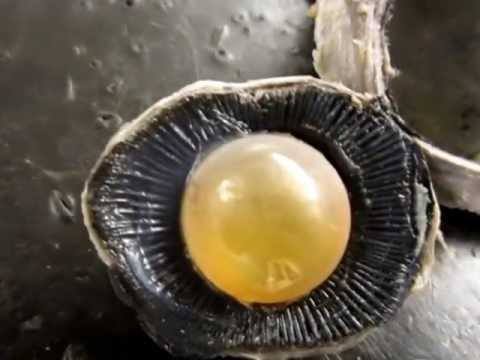
Which part of the eye is this?  
a)
Pupil
b)
Retina
c)
Optic Nerve
d)
Lens
100.
Which part of the eye is the place where images are inverted?  
a)
Retina
b)
Cornea
c)
Lens
d)
Iris
101.
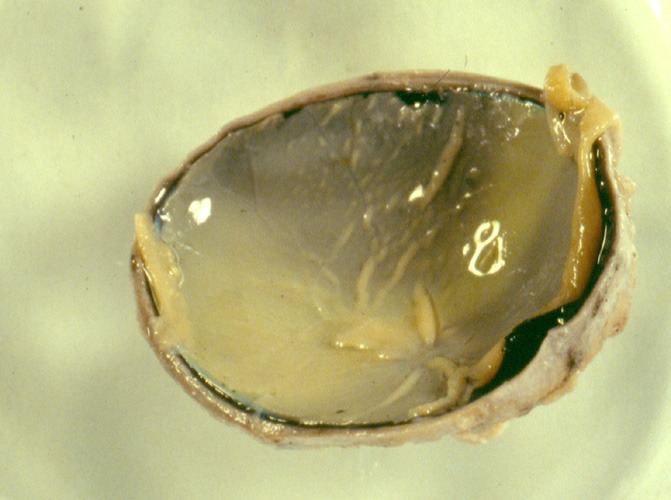
Which part of the eye is this?  
a)
Optic Nerve
b)
Retina
c)
Vitreous Humor
d)
Pupil
102.
Which part of the eye is where images are converted to nerve impulses?  
a)
Retina
b)
Cornea
c)
Optic Nerve
d)
Lens
103.
Which of the following is the correct order in which light travels through the eye?  
a)
Cornea, Lens, Retina, Pupil, Optic Nerve
b)
Pupil, Cornea, Lens, Retina, Optic Nerve
c)
Cornea, Retina, Lens, Pupil, Optic Nerve
d)
Cornea, Pupil, Lens, Retina, Optic Nerve
104.
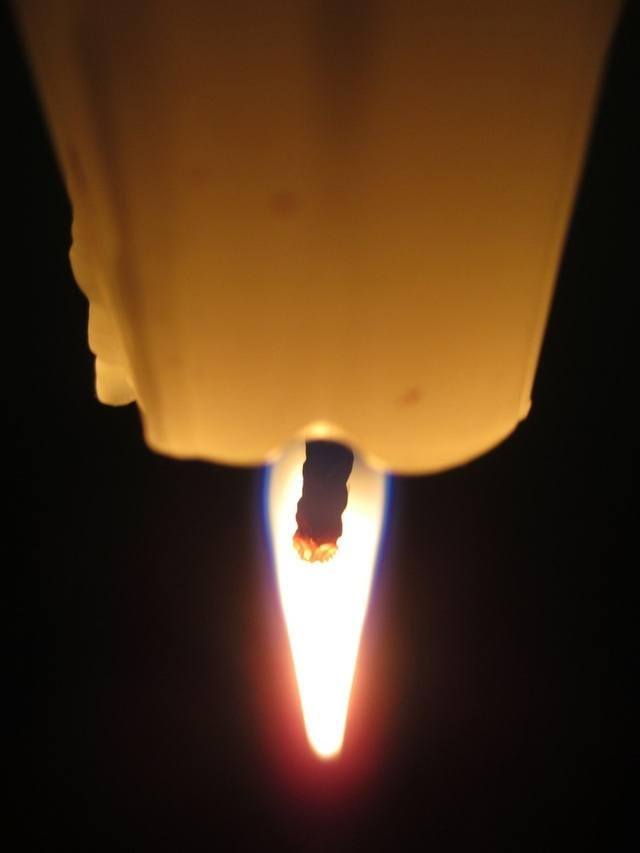
Which part of the eye is this?  
a)
Pupil
b)
Retina
c)
Cornea
d)
Lens
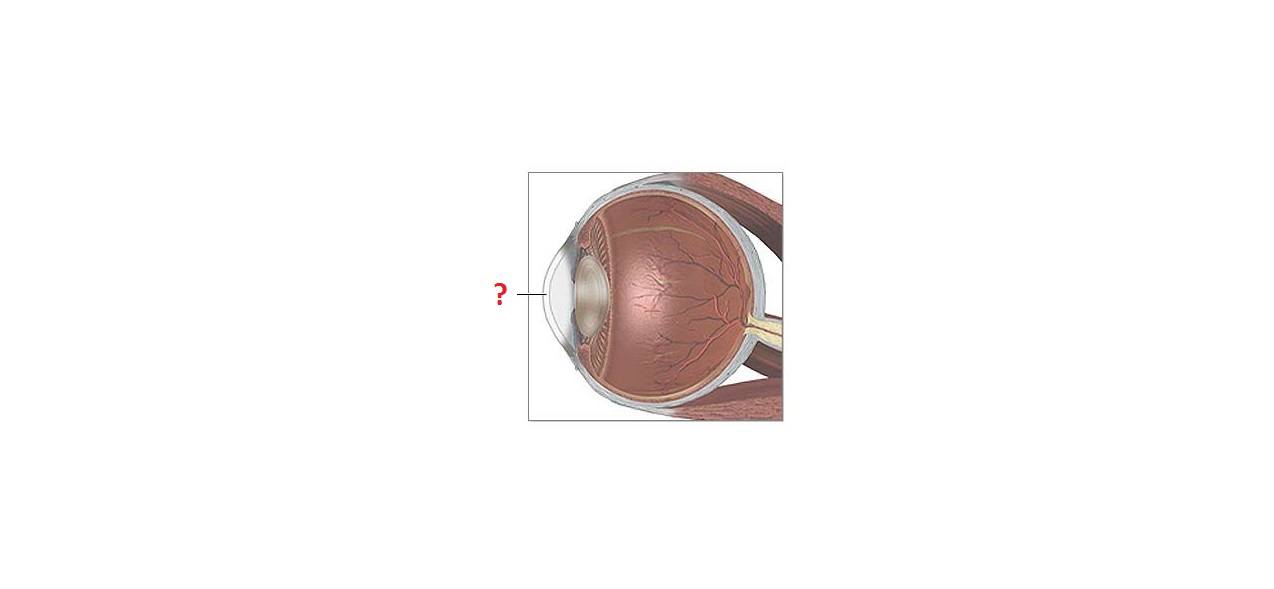
105.
Which part of the eye contains light sensitive nerves?  
a)
Cornea
b)
Lens
c)
Retina
d)
Vitreous Humor