
 Worksheets
Special Senses
Total questions: 110
Worksheet time: 1hrs 18mins
What function do the orbits, eyelashes, and lacrimal glands have in common?
Nutrition
Lubrication
Protection
Excretion
When you cry and your nose runs, what fluid comes out of your nose?
Tears
Cerebrospinal fluid
Aqueous humor
Mucus
When you look in a mirror, which part of the eye can you NOT see?
Iris
Pupil
Sclera
Retina
What are the two functions of the lens in the eye?
Refraction and accommodation
Impulse reception and transmission
Maintains the shape of the eyeball and refracts light
Color vision and night vision
Which part of the eye is a mucous membrane?
Sclera
Cornea
Choroid coat
Conjunctiva
When a person looks at an image, light rays pass through the eye and are focused on the:
Pupil
Retina
Optic nerve
Lens
Which eye condition can occur in a person with a normally shaped eyeball?
Myopia
Hyperopia
Presbyopia
Astigmatism
How is glaucoma typically treated?
Medication
Surgical removal of the lens
Corrective lenses
Radial keratotomy
Which eye condition occurs most frequently in children?
Cataract
Glaucoma
Strabismus
Presbyopia
Which disorder can often be corrected with radial keratotomy (RK)?
Myopia
Cataract
Strabismus
Amblyopia
Of the following, when a sound is heard, which structure is the first to transmit the sound wave?
Organ of Corti
Cochlea
Stapes
Tympanic membrane
Which organ of the inner ear is NOT involved in hearing?
Vestibule
Cochlea
Organ of Corti
Semicircular canals
Which statement about the sense of taste is true?
Taste is influenced by the sense of smell.
Taste buds are called lacteals.
There are no taste buds at the back of the tongue.
There are two main tastes: sweet and salty.
Olfactory receptors are found:
on the tongue
in the nose
in the ear
in the skin
Pauline has conductive hearing loss, which can be caused by:
auditory nerve damage
an infection in the semicircular canals
a ruptured tympanic membrane
damage to the cochlea
Which disorder can be treated by the surgical insertion of an artificial stapes?
Otosclerosis
Meniere's disease
Otitis media
Sensory hearing loss
Organisms in the throat can travel up the Eustachian tube and cause:
Otosclerosis
A cerumen plug
Otitis media
Meniere's disease
The tube that connects the ear to the pharynx.
esophagus
Eustachian tube
palatine
tympanic
Tubes are inserted into the tympanic membrane to relieve pressure in the middle ear.
tympanectomy
myringotomy
cerumenectomy
excision
The outermost layer of the eye is called:
conjunctiva
sclera
retina
choroid coat
The colored portion of the eye.
iris
cornea
retina
pupil
The sense of smell is made possible by:
taste receptors
nasal receptors
olfactory receptors
sense receptors
The tongue is a mass of muscle tissue with projections called:
olfactory receptors
taste buds
papillae
villi
Sensors of black and white shades
cones
conjunctiva
rods
schlera
What are the small bones in the ear called?
auricle
ossicles
cochlea
tympanic membrane

What is labeled D?
external auditory canal
cochlea
Eustachian tube
stapes

What is labeled as A?
ossicles
semicircular canals
cochlea
cochlear nerve

What is labeled as 4 in the diagram?
lens
optic disc
cornea
iris

What does number 5 represent in the diagram?
retina
cornea
iris
optic disc

Which number represents the iris?
4
3
2
6

Which number represents the pupil?
3
2
1
4

What is labeled as 1?
cornea
pupil
iris
optic disc

What carries signals from the nose to the brain for processing?
olfactory nerves
receptor cells
olfactory bulb
auditory canal
When you look in a mirror, which part of your eye can you NOT see?
iris
pupil
retina
sclera
Blurred vision caused by an abnormal curvature of the cornea.
Astigmatism
Cataract
Presbyopia
Strabismus
Double vision
diplopia
strabismus
presbyopia
astigmatism
The eyes do not move or focus together.
Astigmatism
Presbyopia
Strabismus
Diplopia
Also known as lazy eye.
amblyopia
myopia
hyperopia
glaucoma
Inflammation of the middle ear.
Otitis media
Otitis externa
Meningitis
Encephalitis
Fluid pressure within the cochlea causes vertigo and hearing loss.
Meniere's disease
glaucoma
dizziness
otitis media
Hearing loss caused by hardening of the ossicles, infection, or wax buildup.
sensory hearing loss
conductive hearing loss
Known as swimmer's ear
otitis externa
otitis media
inner ear infection
The hammer-shaped ossicle in the middle ear is:
adenoid
malleus
stapes
incus
Which diagnostic tool is used to examine the ear?
ophthalmoscope
tonometer
audiometer
otoscope
Sharpness and clarity of vision are known as
visual acuity
visual cortex
optical vision
The term for drooping of the eyelid is:
Tarsus
Chalazion
Hordeolum
Ptosis
Medical term for pink eye
conjunctivitis
periorbital
ptosis
dacryostenosis
Which of the following is NOT a tunic of the eye?
Choroid
Conjunctiva
Retina
Sclera
The following structures contain bipolar cells:
Retina
Olfactory epithelium
Vestibular nerve
Taste buds
While focusing on a distant object, the lens will be
more convex with pupils dilated
more convex with pupils constricted
flattened with pupils dilated
flattened with pupils constricted
The superior oblique muscle of the eyeball is supplied by the
Optic nerve
Oculomotor nerve
Trochlear nerve
Abducent nerve
The skull bone pierced by the olfactory nerves:
Lacrimal
Sphenoid
Ethmoid
Nasal
The organs of hearing are located here:
Cochlea
Utricle
Semicircular canals
Saccule
Which of the following is a receptor for pain?
Meissner's corpuscle
Free nerve endings
Merkel's disk
Ruffini end organ

The point of sharpest visual acuity is the
optic nerve
retina
fovea
lens
The boundary between the anterior and posterior chambers.
iris
sclera
lens
ciliary body

What is the main function of the semicircular canals?
speech recognition
balance
hearing
word recognition
Which type of receptor is responsible for gustation?
Mechanoreceptor
Chemoreceptor
Photoreceptor
Where in the body is the vestibular system located?
oval window
semicircular canal
inner ear
middle ear
The white portion of the eye.
Pupil
Sclera
Cornea
Retina
Opens and closes to adjust the total amount of light entering the eye.
Iris
Sclera
Cornea
Lens
An eye condition in which the surface of the cornea is uneven, causing blurry vision.
Myopia
Hyperopia
Cataract
Astigmatism
Emmetropia
Photoreceptors that detect gray tones in low light are called...
Rods
Cones
Iris
Choroid
Transparent, jelly-like tissue that fills the eyeball behind the lens.
Vitreous humor
Plasma
Aqueous humor
Eyeball juice
The condition of normal vision.
Myopia
Hyperopia
Cataract
Astigmatism
Emmetropia
An eye condition in which the lens becomes cloudy, causing blurry vision.
Myopia
Hyperopia
Cataract
Astigmatism
Emmetropia
The condition of nearsightedness (inability to see distant objects clearly).
Myopia
Hyperopia
Cataract
Astigmatism
Emmetropia
The condition of farsightedness (can't see near).
Myopia
Hyperopia
Cataract
Astigmatism
Emmetropia
Smell and taste work together.
True
False
Chemoreceptors are most likely to be activated by which of the following?
cold temperatures
pain
foul odors
carbon dioxide
standing on your head
What is the largest and most visible structure of the ear?
Malleus
Cochlea
Auricle
Tympanic membrane
Olfactory receptors are found:
on the tongue
in the nose
in the ear
in the skin

Senses that respond to chemicals in solution use which of the following:
Meissner's corpuscle
chemoreceptors
crista ampullaris
beta lactamase
What does the pupil do?
protects the eye
helps the eye focus
allows light to enter the eye
reflects light that enters the eye
Organisms in the throat can travel up the eustachian tube and cause:
a sore throat
swimmer's ear
otitis media (an ear infection)
vertigo
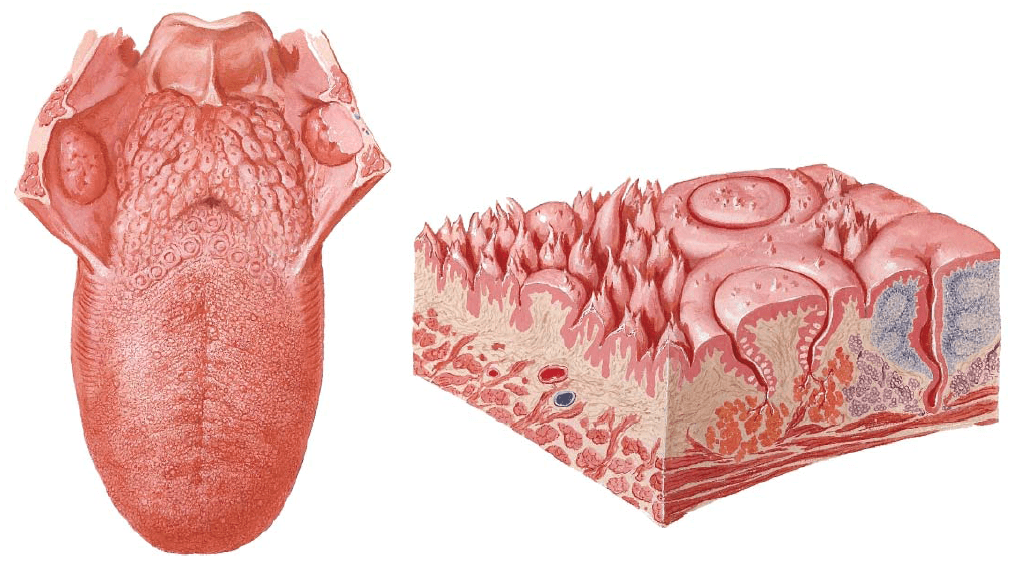
Small projections located on the surface of the tongue where taste buds are found are known as:
papillae
gustatory cells
olfactory epithelium
mucous producing glands
The thickened end of the olfactory nerve that sends sensory impulses to the brain.
Olfactory bulb
Olfactory filaments
Olfactory hairs
Vitreous Humors
Finding a cold classroom a little more comfortable after you have been in there for a while would be an example of
sensory interaction
stimulus generalization
just noticeable difference
sensory adaptation
How is our body oriented in space?
kinesthetic sense
vestibular sense
absolute sense
olfacation sense
For a molecule to be detected by olfactory neurons, it must
be present in high concentrations.
be one of the seven primary classes of odors.
be dissolved in the fluid covering the olfactory epithelium.
interact with the mechanoreceptors of the olfactory hair membrane.
Which of the following statements is false?
Olfaction influences taste.
Adaptation to taste is rapid.
Sensitivity of taste buds to sweet taste is very high.
Each taste bud is most sensitive to one of the five basic tastes.
Arrange the following in the correct sequence:
(1) Gustatory cell depolarizes
(2) Action potential is stimulated in gustatory neurons
(3) Food substance dissolves in saliva
(4) Neurotransmitter is released by gustatory cell
(5) Food substance enters the taste pore and attaches to the receptor on gustatory hair
3, 1, 4, 5, 2
3, 5, 1, 4, 2
5, 4, 1, 2, 3
5, 3, 1, 4, 2
You taste a sauce with the tip of your tongue. These taste sensations are carried via the _____ cranial nerve.
facial (VII)
vagus (X)
trigeminal (V)
glossopharyngeal (IX)
Rhodopsin is found in the __________.
rods
cones
choroid
pigmented retina
To focus on objects closer than 20 feet,
the lens must become flatter.
the cornea must move inward.
the ciliary muscles must contract.
the suspensory ligaments increase tension on the lens.
The lens
is biconcave.
focuses light on the retina.
floats in the vitreous humor.
is attached to the retina by suspensory ligaments.
What is the correct pathway for impulses leaving the retina?
photoreceptors, ganglion cells, bipolar cells, and optic nerve.
photoreceptors, bipolar cells, ganglion cells, and optic nerve.
photoreceptors, bipolar cells, optic nerve, and ganglion cells.
photoreceptors, ganglion cells, optic nerve, and bipolar cells.
A person loses all vision in their left eye. One possible cause could be damage to the
optic chiasma.
left optic tract.
optic nerve in the left eye.
right lateral geniculate nucleus.
The auditory tube
helps maintain balance.
carries sound to the eardrum.
carries sound to the inner ear.
equalizes air pressure between the middle ear and outside air.
Arrange the following structures in the order in which they would vibrate as a result of the vibration of the tympanic membrane.
(1) oval window
(2) vestibular membrane and endolymph
(3) ossicles
(4) basilar membrane
(5) perilymph
1, 2, 3, 4, 5
1, 2, 5, 3, 4
3, 1, 5, 2, 4
3, 5, 2, 4, 1
From which direction is a sound coming can be determined by the
volume of the sound.
frequency of sound waves.
amplitude of the sound waves.
differences in the time that sound waves take to reach each ear.
Cochlear neurons are stimulated by
vibrating the oval window.
vibrations of the tectorial membrane.
movement of the otoliths in the endolymph.
bending microvilli or stereocilia on the hair cells.
Arrange the following structures in the order in which they vibrate when a sound wave enters the ear:
(1) eardrum
(2) endolymph
(3) ossicles
(4) oval window
(5) perilymph
1, 3, 2, 5, 4
1, 3, 4, 5, 2
1, 3, 5, 2, 4
1, 4, 3, 5, 2
Which of the following structures is not important for the maintenance of balance and equilibrium?
Eyes
Cochlea
Vestibular apparatus
Proprioceptors from joints

While transparent, this structure (#9) within the fibrous tunic is found only in the anterior aspect of the eye. What is this structure?
Cornea
Sclera
Iris
Ciliary body
Through which structure do axons pass from the olfactory mucosa to the olfactory bulbs of the brain?
Cribriform foramina
Presphenoid foramina
Ethmoidal foramina
Nasal foramina
One of the five basic tastes; meaty or savory flavor
Olfaction
Umami
Gustation
Histamines
Threads that extend from the olfactory receptor cells into the nasal cavity.
Olfactory bulb
Olfactory filaments
Olfactory hairs
Vitreous Humors

