wayground logo

Free Printable Worksheets

Font size

S
M
L
XL
Worksheets

STAAR Review Quiz 2021

Total questions: 100

Worksheet time: 2hrs 56mins

Name
Class
Date
1.
Which of the following is an example of homeostasis?
a)
taking out the trash
b)
drinking water
c)
sweating on a hot day
d)
taking a shower
2.
Which system transports materials from the digestive system and respiratory system to the cells?
a)
circulatory
b)
respiratory
c)
digestive
d)
skeletal
3.

What is the purpose of this process?

a)

To replicate the DNA of an organism before cell division

b)

To assemble nucleotides in an mRNA chain along a DNA template

c)

To synthesize amino acids used to unzip strands of DNA and copy the genetic code

d)

To translate the genetic code into a specific sequence of amino acids

4.

What is the correct order to make a protein?

a)

Protein, DNA, RNA

b)

RNA, DNA, Protein

c)

DNA, RNA, Protein

d)

Protein, RNA, DNA

5.

The goal of transcription is to make RNA.

a)

True

b)

False

6.

Which RNA carries the message?

a)

mRNA

b)

rRNA

c)

tRNA

7.
During which part of the cell cycle does the cell divide?
a)
Interphase
b)
Mitosis
c)
S phase
8.
Which phase of mitosis is shown in the picture?
a)
Prophase
b)
Telophase
c)
Metaphase
9.
Any change in the sequence of DNA is...
a)
transgenic shift
b)
Single Genotype
c)
Monohybrid Trait
d)
Mutation
10.

The part of the plant

that is generally

under the ground

and in the soil

a)

Reproductive System

b)

Transpiration

c)

Shoot System

d)

Root System

11.

Vascular tissue (tubes) responsible for the transportation of water and minerals up from the roots and around the plant.

a)

Stomata

b)

Transpiration

c)

Phloem

d)

Xylem

12.

Pores under leaves

that allow for transpiration

and gas exchange

a)

Xylem

b)

Stomata

c)

Phloem

d)

Transpiration

13.

In gel electrophoresis a DNA sample from an unknown donor is placed in a small well at one end of a special gel-coated plate. Samples from known donors are placed in other wells on the plate. An electric current is passed through the plate, causing the DNA fragments to separate. The size and location of the separated fragments can be compared for similarities. The more similar the locations and sizes of the fragments, the more closely the donors of the samples are related. The diagram shows four samples being compared with an unknown sample.


The donor of which sample is most closely related to the donor of the unknown sample?

a)

Sample 1

b)

Sample 2

c)

Sample 3

d)

Sample 4

14.

How many pairs of chromosomes are in a human being?

a)

23

b)

44

c)

89

d)

72

15.

If we were to look inside a normal male bone cell, how many total chromosomes would we find?

a)

1

b)

2

c)

23

d)

46

16.
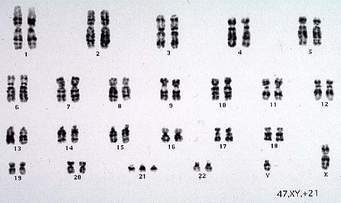
Based on the Karyotype shown, at which chromosome pair can we identify a genetic disorder? 
a)
Chromosome pair 5
b)
sex chromosomes
c)
Chromosome pair 21
d)
There are no chromosomal disorders
17.

Which diagram demonstrates how crossing-over contributes to genetic variety during meiosis?

a)
b)
c)
d)
18.
Which of the following cells is a gamete?
a)
egg
b)
bone
c)
heart
d)
muscle
19.
Which process and type of resulting cells are represented?
a)
mitosis, gametes
b)
mitosis, body cells
c)
meiosis, gametes
d)
meiosis, body cells
20.

The Himalayan rabbit’s habitat has cold, snowy winters and mild summers. The body is typically covered in white fur except for the nose, feet, tail, and ears, which are covered in black fur. A scientist shaved an area of white fur on the back of a Himalayan rabbit and placed an ice pack over the shaved area. The shaved area grew black fur.


Which of these best explains why the hair that grew back where the ice pack was placed was black and not white?

a)

The genes for black hair were activated by specific temperatures.

b)

The white hair mutated to black hair as the rabbit’s body temperature decreased.

c)

The coat color changed from white to black with the age of the rabbit.

d)

White hair only grows during certain times of the year.

21.
Stem cells are
a)
cells that grow uncontrollably.
b)
undifferentiated and can develop into many types of cells.
c)
cells that never go through cell division.
d)
only found in embryos.
22.

What is cell differentiation?

a)

The process where unspecialized cells become different in structure and function.

b)

When DNA controls the cell cycle.

c)

The ability of cells to make more cells.

d)

The ability of cells to maintain homeostasis.

23.

The human body is composed of organ systems. Which list represents a system organized from least to most complex?

a)

Heart -> cardiac muscle -> muscle tissue -> muscle cell

b)

Lung tissue -> trachea -> nostrils -> circulatory system

c)

Muscle cell -> muscle tissue -> biceps muscle -> muscular system

d)

Integumentary system -> skin cell -> hair -> sweat glands

24.
Which level of organization is the most complex?
a)
organism
b)
population
c)
community
d)
ecosystem
25.

A structure made up of different types of tissue and performs a specific job.

a)

cells

b)

tissue

c)

organ

d)

organ system

26.
Which is an example of an organism?
a)
a beetle
b)
a lake
c)
a rock
d)
a shell
27.
What is one of the reactants of cellular respiration?
a)
energy
b)
glucose
c)
carbon dioxide
d)
water
28.
What type of respiration requires oxygen?
a)
Aerobic
b)
Anaerobic
29.
The mitochondria is responsible for ...
a)
photosynthesis
b)
anaerobic respiration
c)
aerobic respiration
d)
fermentation
30.
Cellular Respiration's goal is to
a)
make water
b)
make ATP
c)
make glucose
d)
make  oxygen
31.
Enzymes will make a reaction go _______ and use ______ energy.
a)
faster, less
b)
faster, more
c)
slower, less
d)
slower, more
32.
Enzymes are composed of what organic molecule?
a)
Sugars
b)
DNA
c)
Proteins
d)
Fatty Acids
33.

Cell differentiation is critical during embryonic development. The process of cell differentiation results in the production of many types of cells, including germ, somatic, and stem cells. Cell differentiation is most directly regulated by —

a)

ATP

b)

DNA

c)

lipids

d)

sugars

34.
All our cells, except sex cells like eggs or sperm, have ___________ DNA
a)
different
b)
similar
c)
exactly the same
d)
half the amount of 
35.

Cancer is...

a)

Uncontrolled cell growth

b)

Normal cell growth

c)

A protein

d)

A cell cycle regulator

36.
Characteristics such as a widow’s peak or attached earlobes are determined by the genetic code. Which components of DNA are referred to as the genetic code?
a)
Phosphate groups
b)
Nitrogenous bases
c)
 Deoxyribose sugars
d)
Hydrogen bonds
37.
The diagram shows the base sequence of a strand of DNA.
From left to right, what is the sequence of the complementary strand of DNA in this molecule?
a)
T G A A C
b)
A C T  T G
c)
T G U U C
d)
U C T T G
38.
The haploid number of human chromosomes is
a)
11
b)
12
c)
23
d)
46
39.
Which is an example of an inherited trait?
a)
pierced ears
b)
dyed hair
c)
green eyes
d)
broken arm
40.
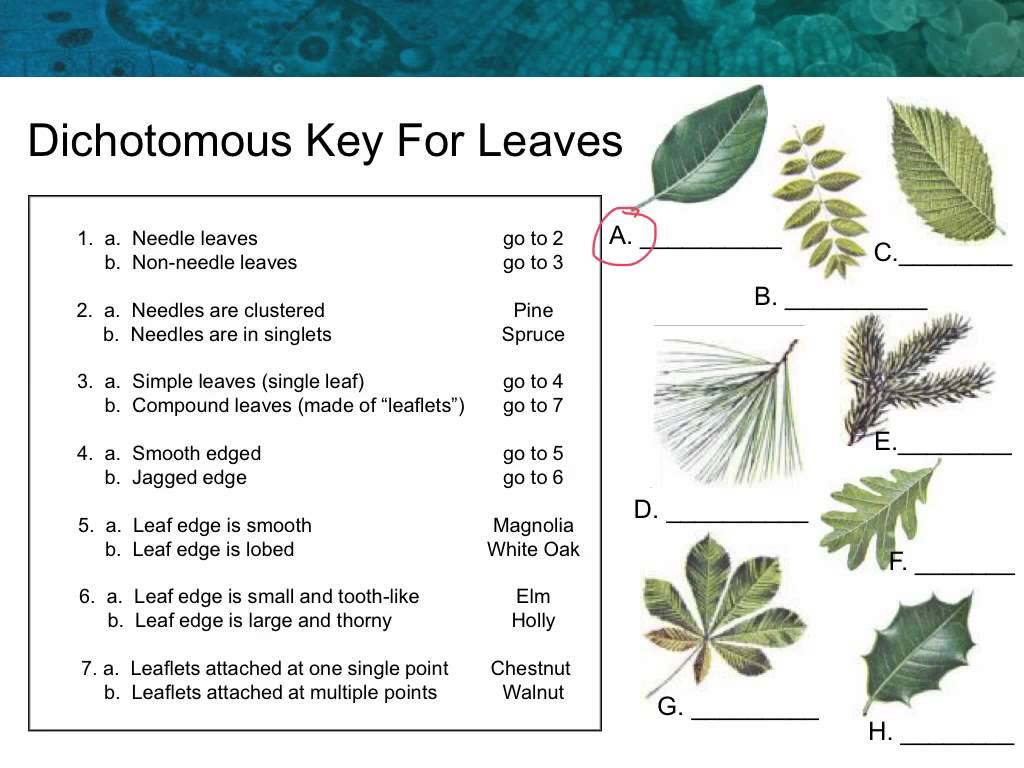
When using a dichotomous key to identify organisms, what do we look at?
a)
physical features
b)
weather patterns
c)
environment
d)
diet
41.
What step do we always start with when using dichotomous keys?
a)
1
b)
2
c)
3
d)
4
42.
The first part of a scientific name is an organism's _______________ and the second part is its ________________.
a)
species, genus
b)
phylum, order
c)
class, spices
d)
genus, species
43.
What is a dichotomous key used for in science?
a)
To organize biomes
b)
Classify organisms
c)
Identify bacteria only
d)
None of these
44.

Which of the following is a virus?

a)

A

b)

B

c)

C

d)

D

45.
Antibiotics kill viruses
a)
True
b)
False
46.
The projections on the surface of this virus allow the virus to —
a)
move inside a host cell
b)
 attach to a host cell
c)
control a host cell’s DNA
d)
signal other viruses to infect a host cell
47.

Stage D is _____________

a)

Using the host cell to synthesize viral proteins and nucleic acids

b)

Host cell breaks open and new viruses are released

c)

Injection of viral genetic material injected into the cell

d)

Assembly of new viruses for release

48.

Which of the following is the direct result of an error in the transcription of a DNA nucleotide?

a)

nuclear membrane is ruptured

b)

amino acids do not bond to tRNA

c)

A codon sequence is incorrect

d)

transportation of mRNA does not occur

49.
Why are insertion and deletion (frameshift) mutations so harmful?
a)
They change all of the codons from the mutation on down the line, which changes the amino acid sequence
b)
They insert things that an organism doesn't need.
c)
They often delete things that organisms need.
d)
Insertion and deletions are not any more harmful than substitution mutations.
50.
mRNA is read in chunks of three, called...
a)
quadralets
b)
anticodons
c)
codons
d)
capsids
51.
All bacteria are harmful to humans
a)
True
b)
False
52.

Name the Kingdoms that consist of bacteria

a)

Unicellular and multicellular

b)

Archaebacteria and Eubacteria

c)

Kingdom and Phylum

53.

Eubacteria

a)

prokaryotes

b)

eukaryotes

54.
What converts nitrogen gas into a useable form for plants and animals?
a)
bacteria
b)
fungi
c)
rain
d)
car exhaust 
55.

Cell have several mechanisms for regulating their internal environments. Which of these mechanisms involved in maintaining homeostasis requires energy?

a)

osmosis

b)

diffusion

c)

active transport

d)

passive transport

56.
The diffusion of water through a semi-permeable membrane is called?
a)
Osmosis
b)
Cell wall
c)
Diffusion
d)
Respiration
57.
Some peeled pieces of apple were placed in distilled water and some in very salty water. The cells in the apple pieces will…
a)
Lose water in both solutions
b)
Gain water in both solutions
c)
Lose water in the distilled water and gain water in the salty water
d)
Gain water in the distilled water and lose water in the salty water
58.
A cell will __________________ in a hypotonic solution.
a)
swell and perhaps burst (lyse)
b)
shrink
c)
the size of the cell will not change
d)
the size of the cell will change from large to small and from small to large
59.
Round seeds (R) are dominant over wrinkled seeds (r). What percentage of the offspring will be round from the following cross?
RR X Rr
a)
100%
b)
75%
c)
50%
d)
25%
60.
What gamete possibilities could come from this parent's genotype?
a)
AB, AB, aB, aB
b)
Ab, AB, Ab, ab
c)
Ab, Ab, Ab, Ab
d)
AB, aB, ab, aB
61.
Which of the following genotypes is heterozygous?
a)
Bb
b)
BB
c)
bb
d)
B
62.
A phenotype is the...
a)
letter combination
b)
dominant gene
c)
recessive gene
d)
physical appearance
63.
Which term refers to the process by which individuals that are better suited to the environment survive and reproduce therefore passing down their genes to their offspring? 
a)
Evolution 
b)
Variation 
c)
Adaptation
d)
Natural Selection 
64.
The number of species within a specific habitat.
a)
Conservation
b)
Sustainable development
c)
Biodiversity
d)
Preservation
65.

Food webs such as the one shown were first used in 1927 by the animal ecologist Charles Elton. The food web below represents the feeding relationships among organisms in an Alaskan ecosystem. An environmental change that removed which of these organisms from the ecosystem would cause the most instability in the ecosystem?

a)

Auklets

b)

Foxes

c)

Salmon

d)

Zooplankton

66.
The overgrowth of algae poses a major problem for coral reefs. Intensive fishing is one factor that contributes to algae overgrowth because it does which of the following?
a)
Allows more sunlight to be available to algae
b)
 Inhibits the spread of pathogens in algae colonies
c)
 Reduces the number of organisms that feed on algae
d)
Increases the competition between different algae species
67.
Different populations living and interacting with each other in the same area
a)
Biome
b)
Ecosystem
c)
Community
d)
Niche
68.
Striped fish are affected by abiotic and biotic factors in the environment.  Which of these factors is biotic?
a)
water temperature
b)
mineral nutrients
c)
algae
d)
sediment
69.
In the picture, which represents a fatty acid?
a)
F
b)
G
c)
H
d)
J
70.
Which of the following biomolecules typically contains nitrogen and phosphate?
a)
lipid
b)
protein
c)
nucleic acid
d)
carbohydrate
71.
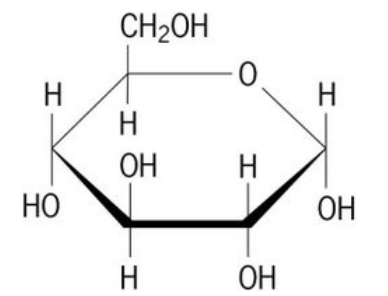
Which biomolecule is this a picture of?
a)
Protein
b)
Nucleic Acid
c)
Lipid
d)
Carbohydrate
72.
All polymers are made up of...
a)
monosaccharides
b)
monomers
c)
proteins
d)
None of these
73.

Carbohydrates are more easily metabolized than lipids. However, on a gram-for-gram basis lipids provide cells with more —

a)

nitrogen

b)

proteins

c)

structure

d)

energy

74.

The diagram shows light- and dark-colored beetles that live on a tree. Which result is most likely to occur to the beetle population due to predation over time?

a)

The number of light-colored beetles in the population will increase.

b)

There will be more dark-colored beetles than light-colored beetles.

c)

The number of light-colored beetles will decrease.

d)

The dark-colored beetles will move to a different type of tree.

75.
Which of these statements best describes natural selection?
a)
Natural selection changes the traits of individuals.
b)
Natural selection prevents changes in the members of a species.
c)
Natural selection prevents changes in the traits of individuals.
d)
Natural selection changes populations
76.
Why are advantageous traits more likely to be passed onto offspring?
a)
Because they are more likely to survive and reproduce.
b)
Because they look cooler.
c)
Because they come from recessive alleles.
d)
Because the trait is an acquired phenotype.
77.
Which type of cell?
a)
Prokaryote
b)
Eukaryote
c)
Mixed
78.
Which type of cell?
a)
Prokaryote
b)
Eukaryote
79.

Plants and animal cells are examples of ___ cells

a)

prokaryotic cells

b)

eukaryotic cells

c)

bacteria cells

d)

protists

80.
Prokaryotes are unlike all other organisms in that their cells 
a)
do not have a nucleus
b)
have organelles
c)
have cell walls
81.

Scientists around the world use a standardized taxonomic system. Why would scientists want to use a taxonomic system that is standardized?

a)

In order to avoid confusion with the identification of organisms

b)

Because Linnaeus established the system

c)

So that Latin names can be applied for a practical purpose

d)

In order to place organisms in different groups

82.

A student wants to use the Venn diagram to show the characteristics of two kingdoms of organisms. The characteristics that the two kingdoms share will be listed in the shaded area where the circles intersect. Which of these is a characteristic that the student should list in the shaded part of the diagram?

a)

heterotrophic

b)

mobile

c)

prokaryotic

d)

multicellular

83.
The standardized system for naming organism is known as binomial nomenclature.  What two pieces of information are used to name and identify organisms using this system?
a)
genus and species
b)
class and genus
c)
class and species
d)
domain and kingdom
84.
The 8 levels of classification, most broad to most specific.
a)
Domain, Genus, Family, Order, Class, Phylum, Kingdom, Species
b)
Domain, Species, Kingdom, Genus, Phylum, Family, Class, Order
c)
Domain, Kingdom, Phylum, Class, Order, Family, Genus, Species
d)
Order, Kingdom, Species, Domain, Phylum, Family, Class, Genus
85.
The limbs of several organisms are shown in the illustrations below. Scientists sometimes compare the limbs of these organisms to look for evidence of common ancestry.

These limbs provide evidence of common ancestry because they —
a)
have the same basic structure
b)
perform the same function
c)
are the same size
d)
are parts of mammals
86.
Structures that were used by ancestors, but not needed for present day organisms.
a)
Vestigial Structures
b)
Homologous Structures
c)
Analogous Structures
87.
Similar structures in organisms due to a common ancestor, but serve a different function
a)
Homologous Structure
b)
Analogous Structure
c)
Vestigial Structure
88.
a)

The primates lived in similar environments.

b)

The primates shared a common ancestor.

c)

The primates interbreed with similar organisms in a population.

d)

The primates had diets that consisted of similar types of foods.

89.
In layers of sedimentary rock, the _________ layer is usually at the bottom. Each higher layer is _________ than the layers below it.
a)
oldest, younger
b)
youngest, older
c)
youngest, younger
d)
oldest, older
90.
What is the difference between gradualism and punctuated equilibria?
a)
Gradualism is slowly but surely and P.E. are rapid changes preceeded followed by long periods of little or no change
b)
P.E. is slowly but surely and Gradualism are rapid changes preceeded followed by long periods of little or no change
c)
Gradualism had no intermediate forms of species
d)
punctuated equilibria has intermediate forms of species
91.
What is common ancestry?
a)
When a species no longer exists
b)
When organisms are descended from a single ancestor
c)
The arrangement of things in the order which they occurred
d)
Layers of rock that are successfully deposited on top of each other and are distinguishable
92.
The concept of gene flow is demonstrated when a cow is driven off from its herd, joins another herd, and reproduces. When the cow contributes to the gene pool of the new herd, which of these most likely increases?
a)
natural selection
b)
genetic variation
c)
environmental fitness
d)
reproductive mutations
93.

Natural selection causes changes with populations, not individuals.

a)

true

b)

false

94.
Two organisms that are closely related would have
a)
very similar DNA sequence
b)
exactly the same DNA sequences
c)
no proteins in common
d)
completely different DNA sequence
95.

As part of the nitrogen cycle, animals acquire some amino acids by doing which of the following?

a)

Breathing air

b)

Eating plants

c)

Drinking water

d)

Producing waste

96.
Organisms that play a role in the nitrogen cycle
a)
only plants
b)
only animals
c)
only bacteria
d)
plants, animals, & bacteria
97.

A partial meadow food web is shown.


Based on this food web, which organisms are direct sources of energy for secondary consumers?

a)

Aphid

Bird

Rabbit

b)

Ladybug

Fox

Dragonfly

c)

Frog

Butterfly

Berries

d)

Mouse

Snake

Hawk

98.

The amount of energy the producers in this energy pyramid provide the primary consumer is 54,000 joules. From this amount, 540 joules are provided to the tertiary consumers. Based on this model, how much of the energy was provided to secondary consumers?

a)

53,460 J

b)

5,400 J

c)

540 J

d)

54 J

99.
The diagram represents a food chain. The arrows in the diagram indicate the  
a)

return of chemical substances to the
environment

b)
order of importance of the various organisms.  
c)
direction of energy flow through a series of organisms
d)
direction in which organisms move in the environment. 
100.
Found at the base of a food chain (also known as autotrophs)
a)
Producers
b)
Primary Consumer
c)
Secondary Consumer
d)
Tertiary Consumer