
 Worksheets
Biology Unit 2 : Biochemistry Test Review
Total questions: 101
Worksheet time: 2hrs 39mins

The surface tension of water is much higher than other substances. Pond striders take advantage of this by seemingly having the ability to “walk/skate” on water. Which of the following best explains the properties of water that allow pond striders this ability?
This is caused by water’s cohesive property due to it being polar and hydrogen bonding.
This is caused by water’s high specific heat, so it takes more energy to heat up water and it can retain heat longer.
This is caused by water’s density as a solid being lower than as a liquid.
This is caused by water’s ability to dissolve ionic and polar compounds.
Roger is comparing a model of a sugar molecule to a model of an amino acid. Which of the following evidence statements would be supported by the two models?
Sugars and amino acids are made of exactly the same elements.
Sugars and amino acids have the same structure.
Sugars and amino acids are made of the same elements except amino acids also contain nitrogen.
Sugars and amino acids are made of the same elements except sugars also contain phosphorus.
Your friend asks you if plants and animals that live in aquatic environments die every winter when the water freezes. Which of the following is the best response to your friend?
All the plants and animals die every winter, and come back in the spring.
Because water is less dense as a solid, there is a layer of ice that forms at the top of the aquatic environments and insulates the liquid water underneath.
Because water is more dense as a solid, a layer of ice forms at the bottom of the lake and allows water to heat up from the sun.
None of the above.

The diagram shows the structure of a water molecule. Water has many special properties, such as adhesive and cohesive behavior. Which of the following best explains why water has these properties?
The atoms of a water molecule are held together by ionic bonds making it nonpolar.
Water is polar and forms hydrogen bonds.
Water is a weak acid and acts as a buffer.
Water molecules join together to form polymers

Lee and Marisol are conducting a science experiment to identify different kinds of macromolecules in food. They prepare the following table to help them remember the chemical reactions that indicate the presence of each type of macromolecule they’re studying. Suppose that one of the substances they’re testing turns bright red when they add a few drops of Sudan stain. What is the basic polymer of the substance?
Glycerol combined with long chains of fatty acids
Strings of amino acids held together with peptide bonds
Short carbon ring in which the ratio of carbon, hydrogen, and oxygen is 1:2:1
Polymer made up of many monosaccharides

The diagram shows the structure of a nucleotide. What is the function of a polymer of nucleotides?
Encode genetic information
Immune system support
Assisting biochemical reactions
Hormone regulation

You have identified a new enzyme that functions at a pH range that is similar to salivary amylase. What is the optimal pH of the new enzyme?
2
7
9
8

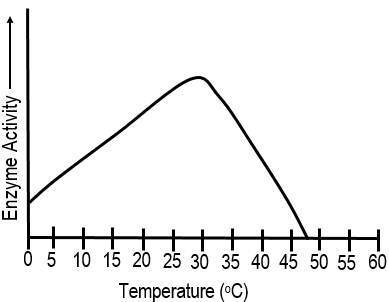
The graph shows the temperature range of an enzyme called trypsin. What is the optimal temperature of trypsin?
0 degrees Celsius
60 degrees Celsius
50 degrees Celsius
40 degrees Celsius
Some proteins catalyze biochemical reactions. If a genetic defect prevented a protein catalyst from being produced, which of the following do you predict would happen in the cell?
The cell would find a different type of nucleic acid to catalyze the reaction.
The reaction the protein catalyzes would still occur in the cell at a normal rate.
The reaction the protein catalyzes would proceed very slowly or not at all.
The reverse reaction of the one the protein catalyzes would begin to proceed.
Which of the following best describes the difference between the functions of nucleic acids and enzymes?
Nucleic acids are used as the building blocks of proteins, while enzymes are used as the building blocks of phospholipids.
Nucleic acids contain the genetic code for protein synthesis, while enzymes catalyze chemical reactions.
Nucleic acids inhibit biochemical reactions, while enzymes provide structural support in cells.
Nucleic acids transmit signals that begin biochemical processes, while enzymes convert carbohydrates into lipids and proteins.
Which of the following best compares the structures of lipids and carbohydrates?
Both are made up of monosaccharide monomers, but lipids are hydrophobic and carbohydrates are hydrophilic.
Both consist of carbon, hydrogen, and oxygen, but carbohydrates usually have repeating structural rings and lipids do not.
Both contain carbon and hydrogen, but carbohydrates also contain oxygen and lipids contain nitrogen.
Both have a carbon backbone, but lipids also have an amino group and carbohydrates have a carboxylic acid group.
Water has a much higher specific heat than most other covalent compounds. What do you predict might happen if water had a low specific heat instead?
Flooding would occur and animals would be forced to migrate.
Harmful organisms living in water would reproduce at a rapid rate.
Organisms that are sensitive to changes in temperature would die.
Plants would not have enough water to effectively carry out photosynthesis.
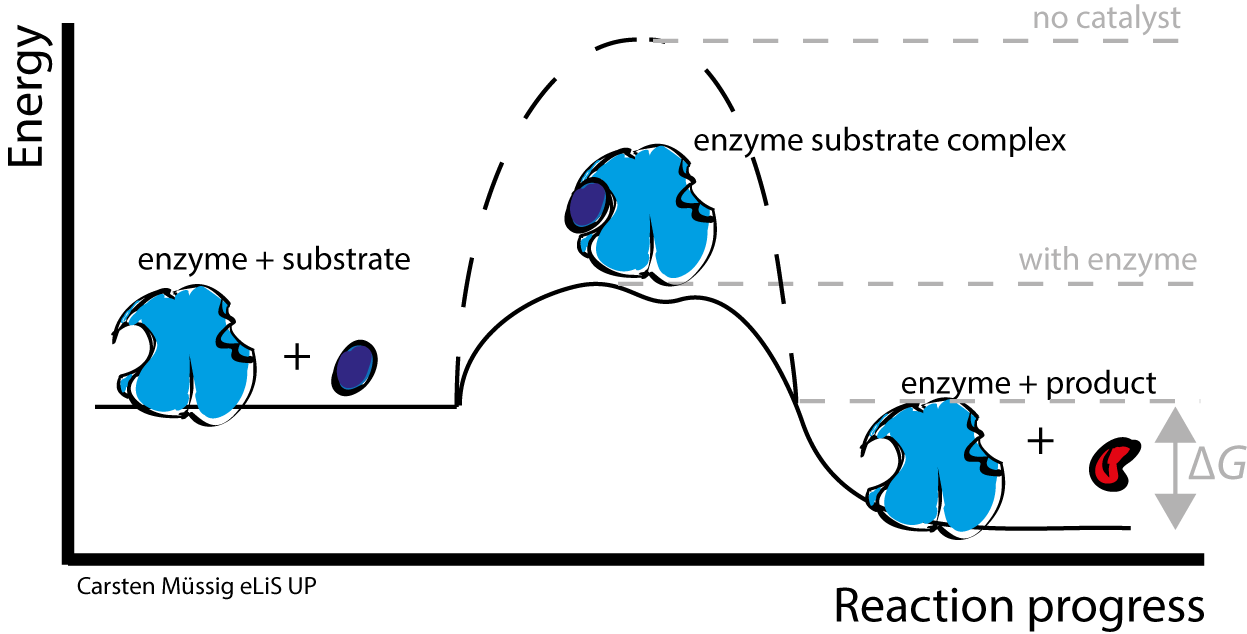
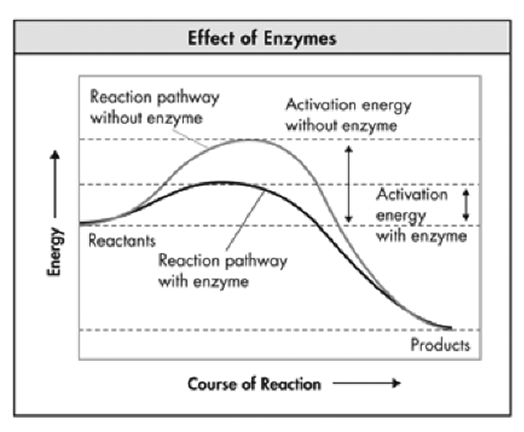
The enzyme lactase is a protein that breaks down the sugar lactose into its monomers glucose and galactose. The enzyme then releases the products and becomes available to catalyze the same reaction once again. How does lactase affect the biochemical reaction of lactose?
It increases the total energy released.
It alters the structure of the product.
It decreases the activation energy needed for the reaction.
It decreases the total mass of the system.
Which of the following best explains the polarity of lipid molecules and water molecules?
Lipid molecules are polar because they mix poorly with liquids, such as water.
Lipid molecules are polar because they adhere tightly to smooth surfaces, such as paper.
Lipid molecules are nonpolar because they repel water molecules, which also are nonpolar.
Lipid molecules are nonpolar because they repel water molecules, which are polar.
Humans and other living things use evaporative cooling, which is releasing water, to maintain homeostasis and cool down when in hot environments. Which of the following properties of water allows for humans to maintain homeostasis when too hot?
Water has a high specific heat.
Water expands when frozen.
Water bonds to itself.
Water bonds to other molecules.
Capillary action is used by plants to bring water that is absorbed in the ground at the roots to the leaves of the plant against the pull of gravity. Which of the following best explains this phenomenon?
Water uses cohesion and adhesion to pull the water molecules along through the tubes of the plants.
Water has low specific heat and allows the water molecules to evaporate quickly.
Water is more dense as a solid, and will not float as a solid.
Water has a high surface tension due to the polarity of the molecule that allows for hydrogen bonding.
Which observation directly illustrates the cohesive properties of water?
Water droplets forming beads of raindrops
Ice floating on liquid water
A body of water changing temperature slower than the surrounding air
Salt dissolves in water
A cellular enzyme is effectively deactivated by an increase in temperature of 10°C. Which is the most likely mechanism of the deactivation?
The enzyme, which is a carbohydrate, breaks apart into glucose molecules.
The enzyme, which is a carbohydrate, breaks apart into individual fatty acids.
The enzyme is denatured permanently and is no longer able to bind the substrate.
The enzyme reacts with the substrate to produce side products.

How many oxygen atoms are found in a molecule of water (H2O)?
1
2
3
4
Water is a _________ molecule.
nonpolar
polar
This is the attraction of water molecules for each other.
cohesion
adhesion
hydrogen bonding
Of all the elements, ________ is the most significant to life.
carbon
hydrogen
nitrogen
Which pair of answers correctly matches the monomer and the polymer?
Glucose- Protein
Amino Acid- Nucleic Acid
Nucleotide - Nucleic Acid
Fatty Acid- DNA
What is the function of carbohydrates?
provides quick energy
stores energy
helps with growth and repair of tissues
stores genetic information
What is the function of nucleic acid?
provides quick energy
stores energy
helps with growth and repair of tissues
stores genetic information
The most abundant organic compound to be found in nature is:
Proteins
Carbohydrates
Lipids
Water
What element forms the backbone of organic compounds?
Oxygen
Hydrogen
Carbon
Phosphorous
Which of these is NOT a major organic molecules?
Carbohydrates
Lipids
Proteins
Amino Acids
Which of these macromolecules have the sub-unit; monosaccharides?
polysaccharides
carbohydrates
lipids
proteins
Which macromolecule ends in "-ose"?
Proteins
Nucleic Acids
Carbohydrates
Lipids
Which macromolecule is comprised of fatty acid chains and glycerol?
Carbohydrates
Lipids
Nucleic Acids
Proteins
Which type of lipid is liquid at room temperature?
Saturated
Unsaturated

On the pH scale, an acid is a compound that produces a solution with a pH (a) 7.
On the pH scale, a base is a compound that produces a solution with a pH (a) 7.

What pH does a neutral substance have?
5
6
7
8

Which of the following is the weakest acid?
bananas (pH 5)
tomatoes (pH 4)
cheese (pH 6)
orange juice (pH 3)





The ability of water molecules to stick to each other, creating surface tension is called:
Cohesion
Adhesion
Insulation
Ph

A ______________ is a large molecule.
Micromolecule
Polymer
Amino Acid
Macromolecule
Which of the following elements are found in all macromolecules? (Select all that apply).


Which of the following is not one of the four major classes of macromolecules?
Lipids
Carbon
Protein
Carbohydrates
Nucleic Acid
Which macromolecule is used as our main source of energy?
Lipids/Fats
Nucleic Acids
Proteins
Carbohydrates
Which of the following are examples of carbohydrates? (Select all that apply).
Bread
Pasta
Olive Oil
Cheese
Which macromolecule stores energy?
Carbohydrates
Proteins
Lipids/Fats
Nucleic Acids
Nucleic acids make up which of the two molecules listed below?
FDA
RNA
DNA
FDR

An avocado is an example of a which macromolecule?
Carbohydrate
Lipid/Fat
Protein
Nucleic Acid
Which type of fat is considered healthier than others?
Saturated Fat
Unsaturated Fat
Monounsaturated Fats
Trans Fat

Enzymes are an example of
Lipids
Carbohydrate
Protein
Nucleic Acid
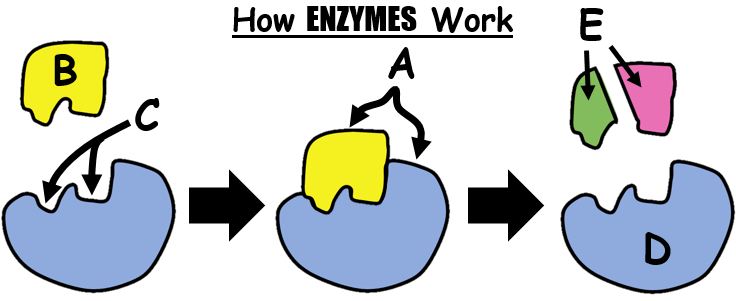
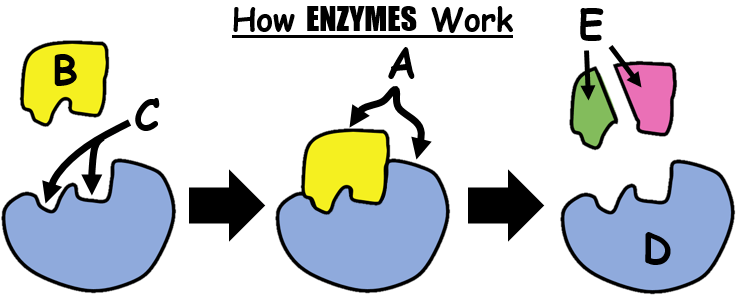
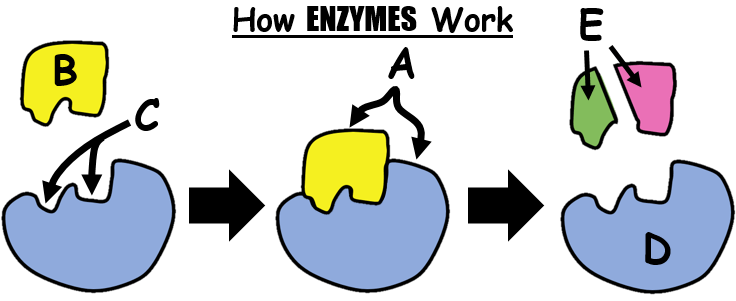
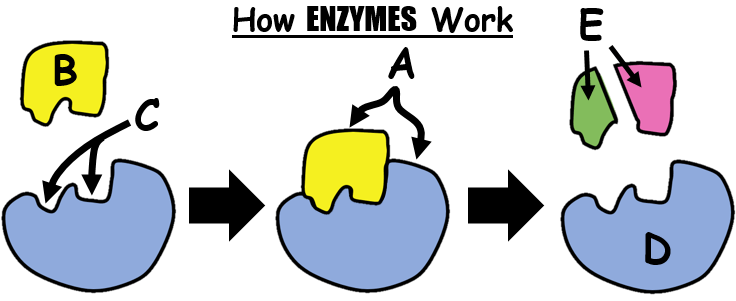
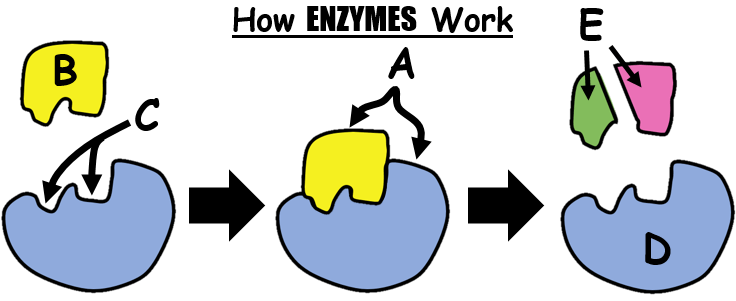
What happens when enzymes are heated to a high temperature?
The enzymes die.
The shape of the enzyme are changed and it denatures
The enzymes' amino acid sequence changes.
The enzymes remain the same
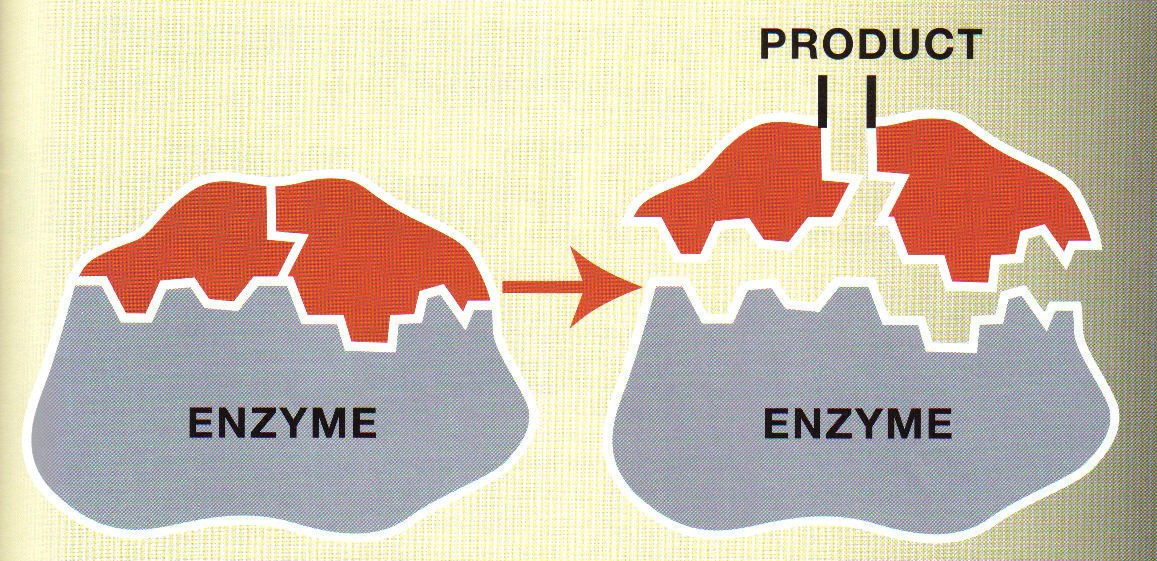
The ..................... of the active site depends on the temperature.
shape
substrate
lock
collision
Lipids/Carbohydrate provide long-term energy for cells.
Lipids
Carbohydrates
Which two biomolecules are used for energy?
Carbohydrates and Proteins
Lipids and Carbohydrates
Proteins and Lipids
Nucleic Acids and Proteins

