
 Worksheets
E.S.S. 1 FINAL EXAM PRACTICE
Total questions: 100
Worksheet time: 3hrs 20mins
A prediction about a problem that can be tested is a(n) ____.
HYPOTHESIS
DEPENDENT VARIABLE
INDEPENDENT VARIABLE
CONTROL
One benefit of the SI system is that it is ____.
not used to measure temperature
based on units of 100
based on multiples of ten
not used in the United States
The SI unit for energy is the ____.
GRAM
CALORIE
METER PER SECOND
JOULE
A camera is an example of ____.
AN EXPERIMENT
TECHNOLOGY
A ROBOT
A SCIENTIFIC METHOD
Limitations of models include ____.
THE ABILITY TO COMMUNICATE
THE ABILITY TO TEST PREDICTIONS
THE TENDENCY TO CHANGE
THE ABILITY TO SAVE TIME
A factor that is manipulated in an experiment to change the dependent variable is the ____.
INDEPENDENT VARIABLE
DEPENDENT VARIABLE
CONSTANT
CONTROL
The process of gathering information through the senses is called ____.
HYPOTHESIS
OBSERVATION
ANALYSIS
INFERENCE
Science cannot answer questions about ____.
THE NATURAL WORLD
DISTANCE
TEMPERATURE
POLITICS
An idea, event, or object can be represented by a ____ to help people better understand it.
CONSTANT
LAW
MODEL
HYPOTHESIS
The size of the gravitational force between two objects depends on their ____.
INERTIA
FRICTIONAL FORCES
MASSES AND THE DISTANCE BETWEEN THEM
SPEED AND DIRECTION
The variable plotted on the horizontal or x-axis is called the ____.
VARIABLE WITH THE LARGEST RANGE
VARIABLE WITH THE SMALLEST RANGE
INDEPENDENT VARIABLE
DEPENDENT VARIABLE
Another term for technology is ____.
APPLIED SCEINCE
MATTER
ENERGY
PURE SCIENCE
An explanation of an event that is based on repeated observations and experiments is a ____.
PROBLEM
HYPOTHESIS
THEORY
LAW
A factor that does NOT change in an experiment is the ____.
HYPOTHESIS
CONTROL
INDEPENDENT VARIABLE
CONSTANT
An engineer is responsible for:
RESEARCHING SCIENTIFIC LAWS/THEORIES
RUNNING SCIENCE EXPERIMENTS
BRINGING TECHNOLOGIES TO SOCIETY
NONE OF THE RESPONSES ARE CORRECT
The process of learning more about the natural world is ____.
A HYPOTHESIS
AN EXPERIMENT
A CONTROL
SCIENCE
It is important to ____ when drawing conclusions from scientific information.
KEEP NOTES
MAKE UP YOUR MIND
KEEP INFORMATION TO YOURSELF
KEEP AN OPEN MIND
The factor being measured in an experiment is the ____.
HYPOTHESIS
VARIABLE
CONTROL
SCIENTIFIC LAW
The three branches of science are Life , Earth, and _____.
SPACE
CHEMISTRY
PHYSICAL SCIENCE
GEOLOGY
To ____ means to draw a conclusion based on something you observe.
CONTROL
GUESS
INFER
MODEL
This type of telescope has a large dish-style antenna and several of these can be placed together to collect communication signals from outer space or to “listen” to pulsar stars:
REFLECTING TELESCOPES
X-RAY TELESCOPES
RADIO TELESCOPES
NANO TELESCOPES
The James Webb Space Telescope that has now launched (finally!) replaced:
Chandra X-Ray Telescope
Hubble Space Telescope
The VLA Telescope
Arecibo Telescope
The Sun produces energy by fusing hydrogen atoms into ____ atoms in its core.
carbon
hydrogen
helium
carbon
About 90 percent of the stars in space are ____ stars.
proto
neutron
red giant
main sequence
Prominences and flares on the Sun are related to sunspots because they are all caused by ____.
intense magnetic fields.
too much heat.
electricity.
Earth's orbit around the Sun.
The Big Bang theory of the formation and expansion of the universe is supported by the observed ____.
SHORTER WAVELENGTHS OF LIGHT
THE "BIG CRUNCH"
BUE SHIFT
RED SHIFT
The balance between fusion (inside force & gravity (outside force) in a star is called:
red shift
stellar equilibrium
parallax
cosmology
Why is it when we look up into the vast regions of the universe we are actually looking into the past when we see the stars, planets & moons?
Because it takes light time to travel in space- the further we look out- the longer it has taken the light to reach Earth.
We are not looking into the past- we would be looking into the future- light from Earth must reach those far objects to be seen.
The universe has no age- all nebulas/stars/galaxies have always existed exactly as we view them through a telescope.
None of the responses are correct.
A ____ is a region so dense that nothing, including light, can escape its gravity field:
white dwarf
supernova
black hole
supergiant
These help astronomers see through layers of atmosphere and probe for changes to make corrections for “bad” viewing conditions.
CONCAVE & CONVEX LENSES
X-RAY & INFARED RAYS
REFLECTING AND REFRACTING LENSES
ADAPTIVE AND ACTIVE OPTICS
A red shift in the spectrum of the light from an object indicates the object is moving ____ you.
away from
at right angle to
toward
None of the responses are correct.
A graph that shows the relationship of a star's temperature to its absolute magnitude:
Astrochart
HR Diagram
constellation
horoscope
What evidence do we have to support the Big Bang Theory?
Hubble Red Shift as well as Cosmic Background Radiation.
We do not have evidence to support the Big Bang Theory.
Earth orbits around the Sun.
Stellar Equilibrium and Fusion.
A sequence of star colors from hottest to coolest is ____.
red, orange, yellow, blue
blue, red, yellow, orange
blue, yellow, orange, red
yellow, blue, orange, red
The distance measurements based on the speed of light; used for objects in space
NANOMETER
ASTRONOMICAL UNIT
KILOMETER
LIGHT YEAR
The intense magnetic fields of sunspots cause archlike eruptions called ____.
photosphere
prominences
corona
solar eclipse
The number of observed sunspots, prominences, and flares increases in a cycle that occurs every ____ years.
11
15
20
31
A group of stars, gas, and dust held together by gravity is a ____.
local group
constellation
HR Diagram
galaxy
A star begins as a ____, a large cloud of gas and dust.
giant
nebula
dwarf
black hole
These types of telescopes study objects in visible light:
gamma ray
x-ray telescopes
optical telescopes
Mars is being researched for the possibility of life existing (or life once having existed) because:
It has more oxygen in it's atmosphere than Earth.
The presence of hydrocarbons (in organic substances) has been found on it's surface.
There has been liquid water present on it's surface at certain times of the year.
It may have an under ice ocean 2 times larger than all water on Earth.
A planet will travel ____ in speed as it approaches the Sun.
faster
slower
backwards
zero km/hr
This planet has no true atmosphere.
Mars
Mercury
Saturn
Jupiter
____ was the first planet studied by the Voyager space probes.
Neptune
Uranus
Saturn
Jupiter
Water is found as a solid, liquid, and gas on ____.
Pluto
Earth
Venus
Mercury
This planet has dark-colored storms and eight moons:
Neptune
Uranus
Jupiter
Venus
This planet has iron oxide in it's soil and polar ice caps:
Mars
Uranus
Pluto
Venus
This is the largest planet in our solar system- 3 Earth's could fit into it's "Giant Red Spot", 1,300 Earth's could fit into the entire planet!
Neptune
Saturn
Uranus
Jupiter
This planet has axis of rotation tilted on its side:
Earth
Uranus
Saturn
Mars
This planet has the most complex ring system (perhaps up to 1,000 total divided into 8 "major rings"):
Titan
Europa
Saturn
Neptune
Titan (a moon of Mars) is being researched for the possibility of life existing because of:
The runaway greenhouse effect warming the moon for life to occur.
The presence of hydrocarbons (in organic substances) on it's surface.
The possibility of a large under ice ocean with 2 times the water on the Earth's surface.
Liquid water being present on it's surface at certain times of the year.
This planet has a runaway greenhouse effect that causes extremely high surface temperatures:
Mars
Saturn
Mercury
Venus
Scientists know the least about the planetoid ____.
Pluto
Neptune
Ceres
Mercury
Europa (a moon of Jupiter) is being researched for the possibility of life on it's surface due to:
The fact that Europa is the closest Moon to the surface of Jupiter.
The possibility of a large under ice ocean with 2 times more water than the surface of the Earth.
The presence of hydrocarbons (in organic substances) on it's surface.
The fact that Europa is the closest Moon to the surface of Jupiter.
Ptolemy’s _____model of the Solar System (earth being the center) was later disproven by Copernicus (and others).
geocentric
heliocentric
lunacentric
None of the responses are correct.
Methane absorbs the red and yellow light on ____ & _____, while the clouds of these planets reflect the green and blue light.
Earth & Mars
Uranus & Neptune
Saturn & Jupiter
Neptune & Venus
Studying life on other worlds is the science of:
exogeology
exochemistry
exophysics
exobiology
Of the following- two of the inner planets are ____ & ____.
Venus & Saturn
Earth & Pluto
Mercury & Jupiter
Mars & Venus
Of the following- two of the outer planets are ____.
Mars & Saturn
Neptune & Uranus
Venus & Mars
Mars & Saturn
The CORRECT order of our Solar System's 8 planets (+ 1 planetoid) is:
Earth, Venus, Mars, Mercury, Jupiter, Neptune, Saturn, Pluto (planetoid) and Uranus
Mars, Earth, Mercury, Venus, Saturn, Neptune, Jupiter and Pluto (planetoid)
Jupiter, Saturn, Uranus, Neptune, Pluto (planetoid), Venus, Mercury, Earth, Mars
Mercury, Venus, Earth, Mars, Jupiter, Saturn, Uranus, Neptune and Pluto (planetoid)
How long is 1 lunar phase cycle?
365 days
29.5 days
27.3 days
14 days
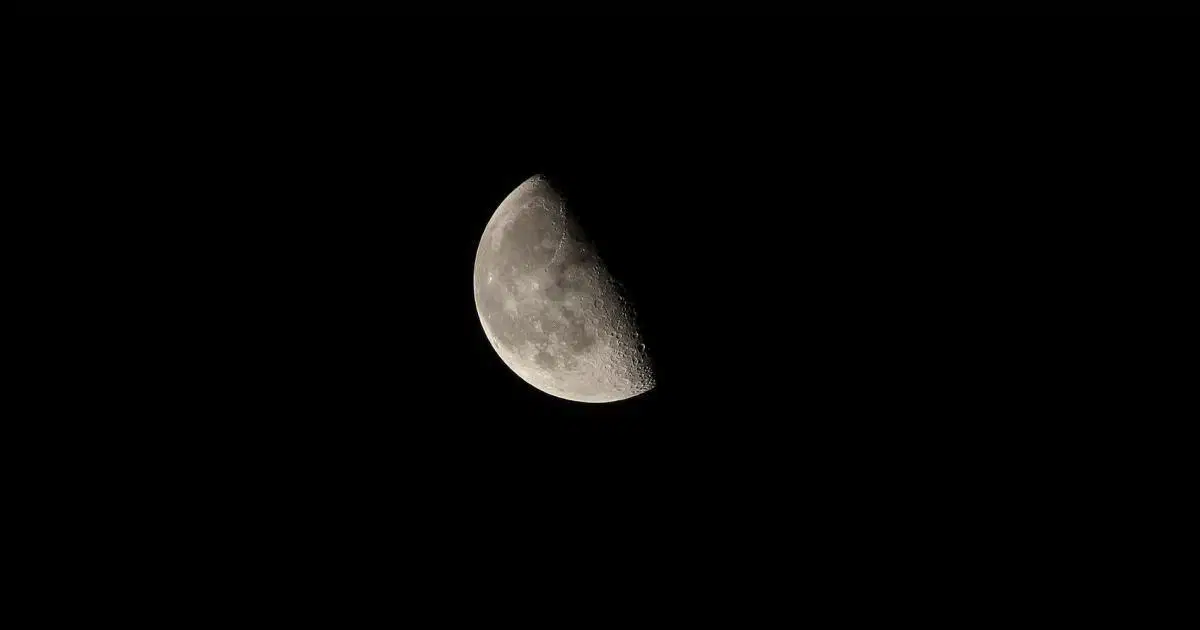
The image depicted is:
3rd quarter
1st quarter
New Moon
Waning Gibbous

The image depicted here is:
1st Quarter
Waxing Crescent
3rd Quarter
Waning Gibbous

Waning Gibbous
Waxing Gibbous
1st Quarter
Full Moon
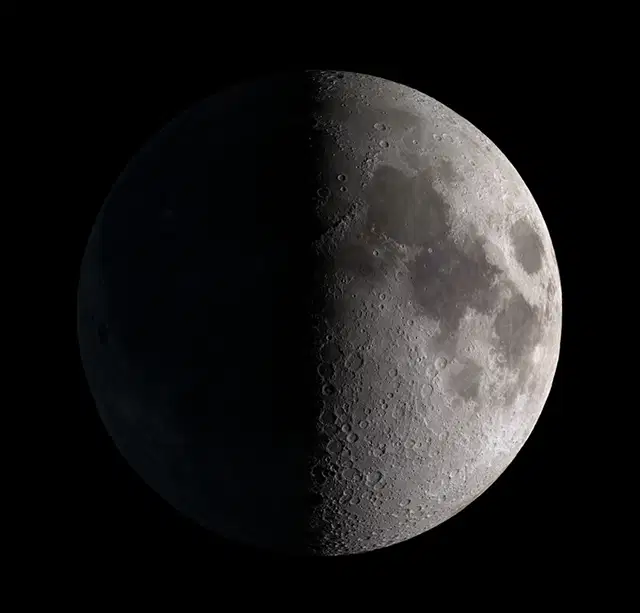
The image depicted here is:
Waxing Crescent
Waning Crescent
3rd Quarter
1st Quarter
Which forms when small meteorites crash into the moon?
Craters
Mountains
Regolith
Maria
TOTAL Solar Eclipses are rare because:
The Sun and Moon's gravitational attraction prevents this from occurring.
The Sun only blocks the Moon from our view once every 1,000 years.
The umbra area is so small few people get to observe them.
None of the responses are correct.
There are many craters on the surface on of the Moon as compared to the surface of the Earth because:
The Moon is geologically and meteorologically dead- there are no quakes/volcanic activity and no wind/rain/snow to erode away/destroy crater impacts.
Meteors are only attracted to surfaces of Moons, not planets.
Jupiter's gravity throws off objects in our Solar System- aiming them at the Moon rather than Earth.
None of the responses are ocrrect.
The presence of maria on the Moon indicates that ____.
The Moon has a dense atmosphere.
Many meteorites have hit the moon recently.
The Moon once contained magma beneath its surface.
A total solar eclipse can be seen by only people in the area of Earth within the ______.
umbra
penumbra
Southern Hemisphere
Northern Hemisphere
A ____ eclipse occurs when the Earth’s shadow falls on the Moon.
celestial
solar
lunar
new
Which of the following reasons is NOT an explanation for the shape of planet Earth?
Different stars/constellations over different hemispheres (halves of a sphere).
Documented space-based footage of a spherical Earth.
Gravity acting on early Earth (partially molten planet stage) and pulling material into a sphere.
Earth is a disc traveling through space like an intergalactic Frisbee.
Daylight hours are _____ for the hemisphere that is tilted toward the sun during the solstice.
longer
shorter
the same length
None of the responses are correct.
This occurs when the gravitational pulls of Sun & Moon that creates waves:
eclipse
solstice
equinox
tides
A ____ occurs when the Moon moves directly between the Sun and Earth and throws a shadow on Earth.
waning gibbous
lunar eclipse
solar eclipse
waxing gibbous
The Sun's rays strike Earth at their northernmost and southernmost positions during ____.
Solar eclipses
Winter & Summer Solstice
Spring & Fall Equinoxes
Lunar eclipses
This is an accumulation of debris from impacts, light-colored “soil” on the Moon:
regolith
maria
gravity
craters
How far is the Earth’s magnetic axis tilted for it’s geographic axis?
15 degrees
5 degrees
23.5 degrees
11.5 degrees
TOTAL Lunar Eclipses are more common that TOTAL solar eclipses because:
Lunar eclipses can be observed by anyone in the nighttime sky.
The Moon blocks the Sun once a month.
The Moon is closer to Earth.
None of the responses are correct.

In a graph showing temperature change of a material over time, temperature change is the:
independent variable
variable with the smallest range.
variable with the largest range.
dependent variable
Which of the following is an example of a SCIENTIFIC THEORY?
Planetary Motion
Linear Motion
Big Bang
Conservation of Energy
Models can be used to describe which of the following environments?
The floor of the ocean.
All responses are correct.
Space.
Volcanoes.
When designing an experiment, the first step is to:
State a hypothesis.
List a procedure.
Analyze the data.
State the problem.
The best type of graph to use to show how some fixed quantity is broken down into parts is the:
Bar Graph
Scatterplot Graph
Line Graph
Circle Graph ("Pie Chart")
Science cannot answer questions about:
personal political views.
the natural world.
distance.
temperature.
Which part of the experiment was the food? An experiment was designed to investigate the effect of caffeine on the heartbeat of water fleas. Two populations of water fleas were cultured. Both populations had water with the same mineral content, were supplied with identical amounts of bacteria as food, received the same amount of light, and had their temperature maintained at 20ºC. Every two hours, water fleas from both populations were selected and their heartbeats were monitored. The fleas of population one had caffeine administered five minutes before their heartbeat was checked. The fleas of population two were given nothing.
control
constant
independent variable
dependent variable
What part of the experiment was the heartbeat? An experiment was designed to investigate the effect of caffeine on the heartbeat of water fleas. Two populations of water fleas were cultured. Both populations had water with the same mineral content, were supplied with identical amounts of bacteria as food, received the same amount of light, and had their temperature maintained at 20ºC. Every two hours, water fleas from both populations were selected and their heartbeats were monitored. The fleas of population one had caffeine administered five minutes before their heartbeat was checked. The fleas of population two were given nothing.
control
constant
independent variable
dependent variable
What part of the experiment was the water temperature? An experiment was designed to investigate the effect of caffeine on the heartbeat of water fleas. Two populations of water fleas were cultured. Both populations had water with the same mineral content, were supplied with identical amounts of bacteria as food, received the same amount of light, and had their temperature maintained at 20ºC. Every two hours, water fleas from both populations were selected and their heartbeats were monitored. The fleas of population one had caffeine administered five minutes before their heartbeat was checked. The fleas of population two were given nothing.
constant
independent variable
dependent variable
control
What part of the experiment was population two? An experiment was designed to investigate the effect of caffeine on the heartbeat of water fleas. Two populations of water fleas were cultured. Both populations had water with the same mineral content, were supplied with identical amounts of bacteria as food, received the same amount of light, and had their temperature maintained at 20ºC. Every two hours, water fleas from both populations were selected and their heartbeats were monitored. The fleas of population one had caffeine administered five minutes before their heartbeat was checked. The fleas of population two were given nothing.
dependent variable
constant
control
independent variable
What part of the experiment was the caffeine? An experiment was designed to investigate the effect of caffeine on the heartbeat of water fleas. Two populations of water fleas were cultured. Both populations had water with the same mineral content, were supplied with identical amounts of bacteria as food, received the same amount of light, and had their temperature maintained at 20ºC. Every two hours, water fleas from both populations were selected and their heartbeats were monitored. The fleas of population one had caffeine administered five minutes before their heartbeat was checked. The fleas of population two were given nothing.
independent variable
constant
control
dependent variable
This is how closely measurements are to each other, and how carefully measurements are made:
theory
precision
accuracy
hypothesis
This occurs when what a scientist expects changes how the results are viewed:
bias
scientific law
scientific theory
hypothesis
The process of gathering information through the senses is called:
inference.
observation.
hypothesis.
analysis.
Technologies in DEVELOPING (parts of Africa, S. America, Asia) countries are:
"luxuries" to make lives better.
the latest/best models of a technology.
for basic needs.
None of the responses are correct.
An example of TECHNOLOGY that is a system of people an objects used to do a particular task is:
An airplane.
The conveyor belt system that luggage is placed on at an airport.
An x-ray machine used to scan for weapons in an airport.
Air traffic controllers using a satellite-based navigation system to guide air traffic safely.
An example of TECHNOLOGY that is knowledge or skills to operate a human-made object is:
running an Electric Potter's Wheel to shape high grade ceramics.
an automatic kiln for "cooking" high grade ceramics.
a ceramic ("cooked" clay) vase.
an Electric Potter's Wheel.
An example of TECHNOLOGY that is a method/technique for making an object or tool is:
A computer simulation of how a phoropter (lens chooser) would work on a patient.
an optometrist that runs a phoropter (lens chooser).
the process of making optical glass (eyeglass lenses).
eyeglasses.
An example of TECHNOLOGY as a human-made object is:
a ballpoint pen.
Engineers that design the assembly line to make ball point pens.
the process of manufacturing ball point pens.
The Internet, which explains the "history" of the ball point pen.
The unforeseen consequence of automobile technology (from the early 1900's to today) is:
cars have more safety features than cars did in the early 1900's.
cars are faster today then they were in the early 1900's.
increased CO2 levels in the atmosphere.
None of the responses are correct.
These are design restrictions for products from outside factors:
bias
restraint
constraint
prototype

