wayground logo

Free Printable Worksheets

Font size

S
M
L
XL
Worksheets

POTU - S2 Final Review - Earth Science Topics

Total questions: 105

Worksheet time: 2hrs 23mins

Name
Class
Date
1.
The huge pieces of the earth's crust are called ____________________________. 
a)
crust
b)
plates
c)
directions
d)
seismos
2.
The epicenter of an earthquake is
a)
The point below the surface where rock begins to break and the first motion occurs
b)
The seismic station closest to the earthquake
c)
The place where the greatest damage occurs
d)
The point on the surface directly above the focus
3.
This famous transform fault is located in the western United States creates significant earthquake activity for California
a)
New Madrid
b)
Denali Fault
c)
Ramapo Seismic Zone
d)
San Andreas
4.
The Richter scale measures:
a)
the amount of radon gas released
b)
the movement of plates
c)
the strength of an earthquake
d)
the weight of tectonic plates
5.
Which travels fastest, always being the first detected by seismic stations?
a)
P waves
b)
S waves
6.
An instrument that detects and measures earthquakes is a 
a)
seismogram
b)
focus seismic map
c)
focus
d)
seismograph 
7.
What is a fault?
a)
A crack in a plate.
b)
Where two plates move toward each other.
8.
Most earthquakes happen along the _________________. 
a)
coast
b)
faults
c)
desert
d)
directions
9.
Earthquakes under the water can cause _________________________________.
a)
tornadoes
b)
tsunamis
c)
lightening
d)
hailstorms
10.
A tracing of earthquake motion that is created by a seismograph. This can be on a huge sheet of paper, shows P-waves 
a)
Seimogram 
b)
Seismic wave
c)
Carrollton 
d)
Deformed 
11.
What is a convergent boundary?
a)
When two plates move away from each other.
b)
When two plates move toward each other.
12.

where quake begins below surface

a)

elastic rebounding

b)

focus

c)

epicenter

d)

fault

13.

_______________is a measure of the “size,” or amplitude, of the seismic waves generated by an earthquake source and recorded by seismographs.

a)

magnitude

b)

intensity

14.

_________________is a number (written as a Roman numeral) describing the severity of an earthquake in terms of its effects on the earth's surface and on humans and their structures.

a)

magnitude

b)

intensity

15.

Which type of wave is the first to arrive after an earthquake occurs?

a)

P Wave

b)

Rayleigh Wave

c)

S Wave

d)

Shear Wave

16.

Which body waves cause particles of rock material to move at right angles to the direction in which the waves are traveling?

a)

Body Waves

b)

P Waves

c)

S Waves

d)

Surface Waves

17.
Rock layers undergo stress when they are squeezed at convergent boundaries. This stress is called:
a)
compression
b)
combining
18.
Rock layers undergo stress when they are stretched apart at divergent boundaries. This stress is called:
a)
tightening
b)
tension
19.
A type of fault where rocks on either side move past each other sideways is called:
a)
normal fault
b)
reverse fault
c)
strike-slip fault
20.

The Richter scale is used to measure the energy released during the event of an earthquake? Since the Richter scale is exponential, each whole number increase correlates to...

a)

32 times more energy released

b)

45 times more energy released

c)

69 times more energy released

d)

100 times more energy released

21.

This scale is based on how individuals perceive the effects of an earthquake...

a)

The Mercalli scale

b)

The Richter scale

c)

The Tropics scale

d)

The NMR scale

22.

When we measure the damage of an earthquake, which scale should we use?

a)

Richter scale

b)

Earthquake scale

c)

Mercalli scale

d)

Body-wave magnitude scales

23.

In some areas of the world, like California and Japan, earthquakes are a common occurrence. How can this best be explained?

a)

The strong ocean currents are undermining both areas causing earthquakes.

b)

Both areas are located near the edge of the Pacific Ocean, the unstable sand causes earthquakes.

c)

Both areas are subjected to strong ocean wind and waves that causes earthquakes.

d)

Both areas are on the boundary of active plates, the motion of the plates causes earthquakes.

24.

Earthquakes that occur closer to the Earth's surface tend to be...

a)

of larger magnitude and high intensity which cause severe damage

b)

of larger magnitude and low intensity which cause minimal damage

c)

of smaller magnitude and low intensity which cause minimal damage

d)

of smaller magnitude and high intensity which cause severe damage

25.

Which of the following is the driving force (cause) of earthquakes?

a)

Continental drift

b)

Plate tectonics

c)

Subduction zones

d)

Gravity

26.

Where is the point at which the first movement occurs during an earthquake?

a)

Epicenter

b)

Focus

c)

Fault

d)

Plate

27.

Where is the point on the Earth’s surface directly above the focus of an earthquake?

a)

Epicenter

b)

Fault

c)

Hypocenter

d)

Tremor

28.
P Waves can move through which of the following?
a)
Gas
b)
Liquid
c)
Solid
d)
All of these
29.
S Waves can move through which of the following?
a)
Gas
b)
Liquid
c)
Solid
d)
All of these
30.
How much bigger is a magnitude 8 earthquake compared to magnitude 7 one on the Richter Scale?
a)
1 time bigger
b)
10 times bigger
c)
100 times bigger
d)
1000 times bigger
31.
Which city is closest to the epicenter?  
a)
A
b)
B
c)
C
32.
Where is the epicenter for this earthquake located based on triangulation?
a)
A
b)
B
c)
C
d)
D
33.

Which zone is larger?

a)

S wave shadow

b)

P waves shadow

c)

shadow zones are equal

34.

Around what time did the first P wave get detected?

a)

100 sec

b)

120 sec

c)

150 sec

d)

160 sec

35.

Which location is farther from the epicenter?

a)

Seismogram B (top)

b)

Seismogram C (bottom)

36.

Which location would experience a more intense earthquake?

a)

Seismogram A (top)

b)

Seismogram B (bottom)

37.

Which portion of the Earth can S waves NOT travel through?

a)

Crust

b)

Mantle

c)

Core

38.

Which letter represents surface waves?

a)

A

b)

B

c)

C

d)

All are surface waves

39.

Which station was closest to the earthquake's epicenter?

a)

Station A

b)

Station B

c)

Station C

40.

This model demonstrates a

a)

P wave shadow zone

b)

S wave shadow zone

c)

Surface wave shadow zone

d)

Convection currents

41.

This model represents a

a)

P wave shadow zone

b)

S wave shadow zone

c)

Surface wave shadow zone

d)

Convection currents

42.

This type of wave travels along Earth's crust and can be very destructive.

a)

P wave

b)

S wave

c)

Surface wave

d)

EM waves

43.

What is the minimum number of seismograph stations needed to locate an earthquake epicenter?

a)

1

b)

2

c)

3

d)

5

44.

What is the instrument used to measure earthquakes?

a)

Seismograph

b)

Seismologist

c)

Scale

d)

Seismogram

45.

In the picture, which arrow is pointing to the layer that is a liquid?

a)

1

b)

2

c)

3

d)

4

46.

How long does it take for a S wave to travel 6000 km?

a)

17 min

b)

9 min 20 sec

c)

15 min

d)

16 min 40 sec

47.
At about what time did all of the S-waves hit?
a)
20 sec
b)
45 sec
c)
50 sec
d)
10 seconds
48.
What is the lag time?  
a)
30 sec
b)
86 sec
c)
56 sec
d)
140 sec
49.

Which station was closest to the earthquake's epicenter?

a)

Station A

b)

Station B

c)

Station C

50.

A p-wave traveled for 3200 km to reach a seismic station. How long had it traveled for?

a)

00:01:60

b)

00:04:50

c)

00:10:40

d)

00:05:50

51.

The s-waves of an earthquake arrived 00:07:20 after the p-waves. How far away was the earthquakes epicenter?

a)

2000 km

b)

5600 km

c)

4200 km

d)

1400 km

52.

What was the origin time for an earthquake whose p-waves arrived at 02:54:40 pm at a seismic station in Buffalo, NY and it was determined the epicenter was 2000 km away?

a)

03:02:00 pm

b)

02:57:50

c)

02:58:50 pm

d)

02:50:30 pm

53.

How long does it take for the P wave to travel 2000 km?

a)

1900 km

b)

4 minutes

c)

7 minutes and 20 seconds

d)

4000 km

54.

What happens to the time difference between primary and secondary was as the distance traveled gets longer?

a)

time time difference remains the same

b)

the time differences increases

c)

the time difference decreases

d)

the time difference increases than decreases

55.

The difference in arrival times for the P and S wave was 4 minutes and 30 seconds. How far away is the Earthquake?

a)

8000 km

b)

2300 km

c)

1,100 km

d)

3200 km

56.

The type of plate boundary where two plates come together is a .....

a)

Convergent Boundary

b)

Divergent Boundary

c)

Transform Boundary

d)

Plate Boundary

57.
Which of the following causes Earth's tectonic plates to move?
a)
Energy from the Sun
b)
Magnetic Pole Reversal
c)
Convection currents in the mantle
d)
Faults in Mountain Ranges
58.
The Great Rift Valley in Africa and the Mid-Ocean Ridge were all created by this boundary
a)
Divergent
b)
Convergent
c)
Reform
d)
Transform
59.
Transform boundaries are most likely to produce what geological event?
a)
volcanoes
b)
deep sea trenches
c)
underwater mountain ranges
d)
earthquakes
60.
Igneous rock that forms from lava on Earth's surface
a)
Organic Rock
b)
Intrusive Rock
c)
Clastic Rock
d)
Extrusive Rock
61.
Igneous rock that forms when magma hardens beneath Earth's surface
a)
intrusive Rock
b)
compaction
c)
Chemical Rock
d)
Clastic Rock
62.

Who developed the theory of continental drift?

a)

Alfred Williams

b)

Alfred Wegner

c)

William Wagner

d)

William Alfred

63.

What type of boundary is shown by this picture?

a)

convergent

b)

divergent

c)

transform

64.

What happens to the age of the rocks as you move away from a mid-ocean ridge?

a)

gets younger

b)

gets older

c)

nothing happens

65.
What is the process in which two plates move toward each other but one sinks under the other?
a)
subduction
b)
convection
c)
divergence
d)
transformation
66.
The San Andreas Fault is an example of what type of boundary?
a)
Collision
b)
Divergent
c)
Subduction
d)
Transform
67.
Volcanoes that have recently erupted are known as:
a)
Extinct Volcano
b)
Dormant Volcano
c)
Active Volcano
d)
What's a volcano?
68.
__________ volcanoes are formed from fast flowing, lava which flows easily over the surface, forming larger volcanoes with gentle sides.
a)
Cone
b)
Composite
c)
Angel
d)
Shield
69.
This plate is involved in all of the Ring of Fire Volcanoes.
a)
The Nazca Plate
b)
The North American Plate
c)
The Pacific Plate
d)
The Indian Plate
70.

What type of volcano is this?

a)

Cinder cone

b)

Shield

c)

Composite

71.

What type of volcano is this?

a)

Shield

b)

Cinder cone

c)

Composite

72.
What type of volcano is this? It has been created with layers of cooled lava. 
a)
Shield
b)
Cinder cone
c)
Composite
73.
What is the difference between magma and lava? 
a)
Where it is found (above or below the surface)
b)
How hot the molten rock is (lava is hotter than magma)
c)
 The type of boundary where it forms
d)
The viscosity of the molten rock (lava has a lower viscosity)
74.
Which ingredient in magma determines whether an eruption is explosive or quiet?
a)
Amount of rock.
b)
Amount of magma.
c)
Amount of obsidian rock.
d)
Amount of silica.
75.
Which type of volcano can alternates between explosive and non-explosive eruptions? 
a)
Composite Volcano
b)
Shield Volcano
c)
Cinder Cone Volcano
76.
What category of igneous rock has no crystals at all?
a)
glassy
b)
aphanitic/extrusive
c)
phaneritic/intrusive
d)
porphyritic
77.
What category of igneous rock has two different sizes of crystals?
a)
glassy
b)
aphanitic/extrusive
c)
phaneritic/intrusive
d)
porphyritic
78.

How are igneous rocks classified?

a)

by color alone

b)

by mineral composition and texture

c)

by the type of cement between crystals

d)

by the size of the rock itself

79.

Describe the texture of the following igneous rock.

a)

glassy

b)

rough

c)

vesicular

d)

coarse

80.

Describe the texture of the following igneous rock (grain size 1-10 mm).

a)

vesicular

b)

glassy

c)

fine

d)

coarse

81.

Describe the texture of the following igneous rock (grain size < 1mm).

a)

glassy

b)

fine

c)

coarse

d)

vesicular

82.

Describe the rate of cooling for the following igneous rock.

a)

slow cooling

b)

rapid cooling

83.

Describe the environment of formation for the following igneous rock (grain size 1-10 mm).

a)

above ground

b)

below ground

84.

Rhyolite is a fine-grained, extrusive, igneous rock. How did it form?

a)

rapidly cooling lava

b)

slowly cooling magma

85.

Pegmatite is a coarse-grained, intrusive, igneous rock. How did it form?

a)

rapidly cooling lava

b)

slowly cooling magma

86.
Extrusive forms _________crystals
a)
small
b)
large
87.

The mid-Atlantic Ridge passes through which country?

a)

Iceland

b)

Greenland

c)

Austrailia

d)

Brazil

88.

What provides the force that causes magma to erupt to the surface?

a)

the silica in the magma

b)

gravity in the lithosphere

c)

the density of the magma

d)

dissolved gases trapped in the magma

89.

When a crater collapsed, what structure is formed?

a)

Caldera

b)

Lava plumes

c)

Summit

d)

Tephra

90.

Which of the following factors affect the viscosity of lava?

a)

Earth’s rotation

b)

Salt content

c)

Temperature

d)

Thickness of volcanic vent

91.

Which type of lava is slow moving and less dangerous as shown in the picture?

a)

High viscosity lava

b)

low viscosity lava

92.

What is the name of the hazard in the image?

a)

lahar

b)

toxic gases

c)

ash

d)

pyroclastic flow

93.

Lava and Magma

a)

are different types of volcanic rock

b)

are the same but lava is out of the ground

c)

are the same but magma is out of the ground

d)

lava is denser than magma

94.

Tectonic plates

a)

only have volcanos on the edges

b)

can have volcanos in the middle

95.

What is the name given to the one "Super continent"?

a)

Pangaea

b)

Superuno

c)

eine Welt

d)

Derosen

96.
The natural chemical or physical processes that breaks down rock on Earth's surface.
a)
weathering
b)
erosion
c)
deposition
d)
jackhammering
97.
The process by which water, ice, wind or gravity moves weathered rock and soil from one place to another.
a)
weathering
b)
erosion
c)
deposition
d)
dumptruck
98.
This type of weathering occurs when rocks weaken then break down due to chemical changes in the composition of the rock.
a)
mechanical weathering
b)
chemical weathering
c)
erosion weathering
d)
deposition
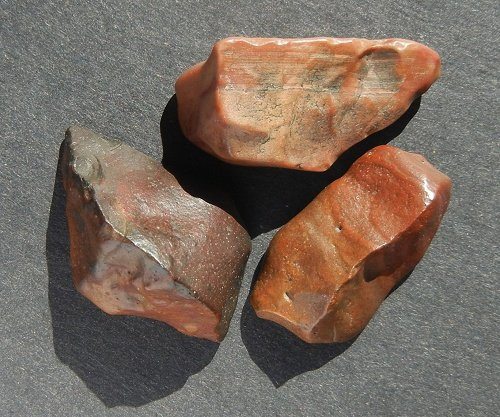
99.
These rocks were made smooth by wind blowing smaller rock particles across their surface.  This is an example of:
a)
ice wedging
b)
chemical weathering
c)
acid rain
d)
abrasion
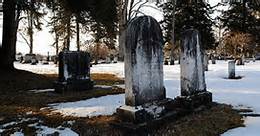
100.
These gravestones have slowly broken down and turned a blackish color due to the action of:
a)
ice wedging
b)
abrasion
c)
acid rain
d)
mechanical weathering
101.
How is mechanical weathering different from chemical weathering?
a)
Chemical weathering happens over much shorter time frame than mechanical weathering.
b)
Chemical weathering changes the chemical composition of rocks; mechanical weathering does not.
c)
Chemical weathering occurs only in tropical climates; mechanical weathering occurs only in cool climates.
d)
Chemical weathering occurs only in the mountains; mechanical weathering occurs only on flat land.
102.
Weeds growing into the cracks in a sidewalk and the sidewalk begins to crumble is an example of:
a)
mechanical weathering
b)
chemical weathering
103.
Potholes forming in the road after a cold winter is an example of:
a)
mechanical weathering
b)
chemical weathering
104.

precipitation that contains a high concentration of acids

a)

acid precipitation

b)

chemical rain

c)

chemical weathering

d)

erosion

105.

These rocks were broken apart from the continuous freeze/thaw of water in the cracks of the rocks. This is an example of:

a)

ice wedging

b)

acid rain

c)

oxidation

d)

abrasion