
 Worksheets
Physical Science CIA 4 Practice Questions
Total questions: 100
Worksheet time: 2hrs 40mins
A car travels a distance of 150 meters in 10 seconds. What is the velocity of the car?
10 m/s
15 m/s
20 m/s
25 m/s
If a force of 20 Newtons is applied to a mass of 4 kilograms, what is the acceleration?
4 m/s²
5 m/s²
6 m/s²
8 m/s²
Calculate the work done when a force of 30 Newtons is applied to move an object over a distance of 5 meters.
120 Joules
150 Joules
180 Joules
200 Joules
What is the weight of an object with a mass of 10 kilograms on Earth, where the acceleration due to gravity is approximately 9.8 m/s²?
98 Newtons
108 Newtons
118 Newtons
128 Newtons
A lever has an input arm of 4 meters and an output arm of 1 meter. What is the mechanical advantage of the lever?
2
3
4
5
Using the formula F=ma , calculate the force needed to accelerate a 7 kg mass at 3 m/s².
18 Newtons
21 Newtons
24 Newtons
27 Newtons
A cyclist increases their speed from 5 m/s to 15 m/s over a period of 5 seconds. What is the cyclist's acceleration?
1 m/s²
2 m/s²
3 m/s²
4 m/s²
A box is dragged across a floor with a force of 50 Newtons over a distance of 3 meters. How much work is done on the box?
100 Joules
150 Joules
200 Joules
250 Joules
If the mass of an object is 12 kg and the gravitational force is 9.8 m/s², calculate the weight of the object.
107.6 Newtons
117.6 Newtons
127.6 Newtons
137.6 Newtons
A pulley system has an effort force of 50 Newtons and a load of 200 Newtons. What is the mechanical advantage of the system?
2
3
4
5
A car accelerates from rest to 60 m/s in 5 seconds. What is the average acceleration of the car?
10 m/s²
12 m/s²
14 m/s²
16 m/s²
A worker applies a force of 25 Newtons to push a box along a 10-meter path. If the force is applied in the direction of the path, calculate the total work done.
200 Joules
250 Joules
300 Joules
350 Joules
Given a mass of 15 kg and a gravitational acceleration of 10 m/s², determine the weight of the object.
140 Newtons
150 Newtons
160 Newtons
170 Newtons
A simple machine has an input force of 20 Newtons and an output force of 80 Newtons. Calculate the mechanical advantage of this machine.
2
3
4
5
Using the formula F=ma , find the force exerted by a 5 kg mass accelerating at 6 m/s².
25 Newtons
30 Newtons
35 Newtons
40 Newtons
A vehicle travels 100 meters in 5 seconds. Calculate its average velocity.
15 m/s
20 m/s
25 m/s
30 m/s
If a force of 10 Newtons is applied to a mass of 2 kilograms, what is the resulting acceleration?
3 m/s²
4 m/s²
5 m/s²
6 m/s²
Calculate the work done when a force of 40 Newtons is used to move an object 8 meters.
280 Joules
320 Joules
360 Joules
400 Joules
What is the weight of an object with a mass of 20 kilograms on Earth, where the acceleration due to gravity is approximately 9.8 m/s²?
196 Newtons
206 Newtons
216 Newtons
226 Newtons
A seesaw has a fulcrum at its center, and one arm is twice as long as the other. What is the mechanical advantage of the seesaw?
1
2
3
4
Using the formula F=ma , calculate the force required to accelerate a 10 kg mass at 2 m/s².
15 Newtons
20 Newtons
25 Newtons
30 Newtons
A car increases its speed from 0 to 30 m/s in 10 seconds. What is the car's acceleration?
2 m/s²
3 m/s²
4 m/s²
5 m/s²
A person pushes a crate with a force of 60 Newtons over a distance of 4 meters. How much work is done on the crate?
220 Joules
240 Joules
260 Joules
280 Joules
If an object has a mass of 50 kg and the gravitational force is 9.8 m/s², calculate the weight of the object.
480 Newtons
490 Newtons
500 Newtons
510 Newtons
How fast an object is moving is its...
Velocity
Speed
Vector
Acceleration
Speed = _______________
Distance + time
Distance – time
Distance x time
Distance / time
If an airplane travels 500km in 5 hours, what was its speed?
100 km/hr
2,500 km/hr
0.01 km/hr
495 hm/hr
A boat travels 90km in 10 hours. What was its speed?
9 km/hr
90 km/hr
1.11 km/hr
80 km/hr
What was the bicyclist's speed if they biked 60 miles in 5 hours?
12 miles/hour
300 miles/hour
55 miles/hour
0.083 miles/hour
Another way to explain the speed and direction of a object would be to describe it’s ________
Speed
Velocity
Acceleration
The difference between speed and velocity is...
Speed has direction.
Velocity has direction.
They are the same thing.
This occurs when an object speeds up, slows down, or changes direction.
Speed
Velocity
Acceleration
Acceleration =
Time(FinalVelocity − InitialVelocity)
(FinalVelocity − InitialVelocity)
(FinalVelocity − Initial Velocity)Time
Time(InitialVelocity − FinalVelocity)
A car speeds up from 25 m/s to 45 m/s in 4 seconds. What was its acceleration?
1.8 m.s^2
11.25 m/s^2
5 m/s^s
5 m/s
Andrea is walking at 3 m/s. She sees the ice cream truck and starts running towards it. In 5 seconds, she speeds up to 7 m/s. What is her acceleration?
0.8 m/s^2
0.667 m/s^2
0.295 m/s^2
0.295 m/s
A biker speeds up from 10 m/s to 30 m/s in 10 seconds. What was their average acceleration?
20 m/s^2
2 m/s^2
20 m/s
0 m/s^2
Lulu is standing at the starting line for a race. She starts running and speeds up to 3 m/s in 30 seconds. What was her acceleration?
0.1 m/s^2
0.1 m/s
10 m/s^2
10 m/s
If you slow down on your bicycle, you accelerate.
TRUE
FALSE
You ride your bike around the block at a constant speed of 11 km/h.
Acceleration occurred because speed increased.
Acceleration occurred because speed decreased.
Acceleration occurred because you changed directions.

What is this?
"This airplane is traveling at 500 mph, West"
Speed
Velocity
Acceleration
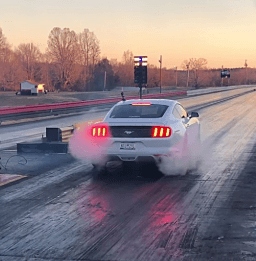
What is this?
"This car is speeding up"
Speed
Velocity
Acceleration

What is this?
"Rocky is running 8mph North"
Speed
Velocity
Acceleration

What is this?
"The car has to go from 40mph to 60mph when entering the freeway"
Speed
Velocity
Acceleration

What is this?
"The car is traveling at 150 kilometers per hour"
Speed
Velocity
Acceleration
Force is measured in.....
kg, mg or g
m/s 2
m/s
N
If you increase the mass on an object, its acceleration
decreases
stays the same
also increases
stops

How much force is needed to accelerate a 3kg skateboard at 5m/s2.
8N
1.6N
0.6N
15N

How much force is needed to accelerate a 25kg bowling ball at 2m/s2.
50N
5N
12.5N
100N

If a 2kg bird is pushed by the wind with a force of 2N, how fast does the bird accelerate?
1 m
2 m/s2
4m/s2
1 m/s2
For an object to remain at rest, which of the following must be true?
The forces on it are balanced
There is no friction
Gravity does not act on it
The object has no mass


Acceleration is measured ....
kg, mg, g
N
meter
m/s 2
Which equation expresses acceleration
a = ( Vf - Vi ) / T
Pick the other one.
When calculating motion the only time you multiply is when you are finding ......
Acceleration
Mass
Force
Speed
Calculation of acceleration
N/ kg
kg / N
N x kg
S / T
Calculation for acceleration
kg. x g
Kg / N
N/ g
g x N
Calculation for mass
kg x m/s 2
g / m/s 2
N / ms 2
kg + ms 2
Which grocery basket would have greater acceleration


Which grocery basket would have less acceleration?


Measure of energy transfer when an object is moved over a distance by a force.
distance
force
work
A push or pull on an object.
distance
force
work
How far an object moves.
distance
force
work
Units for distance.
Newtons
Joules
Meters
Units for force
Newtons
Joules
Meters
Units for work
Newtons
Joules
Meters
What formula?
F=10 N
d=5m
W=?
W=f × d
F=dW
d=FW
What formula?
F= 7 N
d= ?
W=9 J
W=f × d
F=dW
d=FW
What formula?
F= ?
d= 5
W=9 J
W=f × d
F=dW
d=FW
Solve
F= ?
d= 25m
W=100 J
F=dW
4 N
0.25 N
2500 N
Solve
F= 50 N
d= 5 m
W= ?
W=F×d
250 J
0.1 J
10 J
Solve
F= 40 N
d= ?
W= 5 J
d=FW
200 m
0.125 m
8 m
Solve
F= ?
d=10 m
W=20 J
F=dW
200 N
0.5 N
2 N
Solve
F= 0.25 N
d= 60 m
W= ?
W=F×d
0.004 J
15 J
240 J
Solve
F= 100 N
d= 10 m
W= ?
W=F×d
1000 J
0.1 J
10 J

Is this an example of work?
Yes
No
What is needed to calculate work?
time and distance
speed and distance
force and direction
acceleration and velocity
What is the unit of measurement for work?
meters
newtons
m/s
Joules

Is this an example of work?
Yes
No!
You have to push with 15 N of force to move it 10 meters. How much work do you do?
15 Joules
150 Joules
1.5 Joules
.67 Joules
500 J of work is done by a person who uses a force of 50N to move a box, how far does it go?
10 m
0.1 m
25,000 m
10 J
Newtons are the unit for _____________.
Work
Distance
Acceleration
Force
A push or a pull
Work
Force
Acceleration
Speed
The unit for energy and work is
meters
joules
newtons
watts
How do you calculate the force of an object due to gravity?
F = m/a
W = m/a
W = mg
F = ma
What is the gravitational force experienced by objects on the surface of Earth?
1.6 meters per second squared
9.8 meters per second squared
25 meters per second squared
10 meters per second squared
As the distance between two objects increases, the force of gravity
also increases
decreases
As the mass of one or both objects increases, the force of gravity
also increases
decreases
As the distance between two objects increases, the force of gravity
also increases
decreases
If a 4kg cat accelerates at 3 m/s2, what is the force applied?
7 Newtons
12 Newtons
10 Newtons
15 Newtons
A truck travels 300 meters in 20 seconds. What is its average speed?
10 m/s
15 m/s
20 m/s
25 m/s
What is the mechanical advantage of a lever with an effort arm of 2 meters and a load arm of 0.5 meters?
2
3
4
5
If a car decelerates from 100 m/s to 50 m/s over 10 seconds, what is its average acceleration?
-5 m/s²
-10 m/s²
5 m/s²
10 m/s²
What is the mechanical advantage of a lever with an effort arm of 2 meters and a load arm of 0.5 meters?
2
3
4
5

