wayground logo

Free Printable Worksheets

Font size

S
M
L
XL
Worksheets

Spring Semester Final Exam Review

Total questions: 105

Worksheet time: 2hrs 6mins

Name
Class
Date
1.

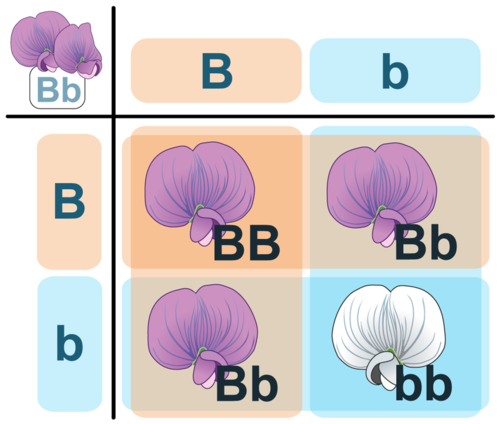
Two brown eyed parents (Bb) have a baby. What is the probability that the the baby will have blue eyes?

a)

0 %

b)

25%

c)

50%

d)

75%

2.

G = green

g = yellow

What is the genotype for a yellow plant?

a)

GG

b)

Gg

c)

gg

d)

all of the choices result in yellow

3.

Two heterozygous (Tt) tall pea plants are crossed. What will be the outcome of their offspring?

a)

50% Tall and 50% Short

b)

75% Tall and 25% Short

c)

100% Short

d)

100% Tall

4.
Which of the following genotypes would be considered heterozygous?
a)
BB
b)
gg
c)
Ff
d)
TT
5.

What is the phenotype of the heterozygous parent?

a)

Green

b)

Yellow

c)

Yellow-Green

6.

According to the monohybrid cross, what is the dominant trait?

a)

Purple Color

b)

White Color

7.

What is the genotypic ratio?

a)

TT = 25% Tt= 50% tt=25%

b)

TT = 100%

c)

TT= 50% Tt = 25% tt = 25%

d)

Tt = 100%

8.
What gamete possibilities could come from this parent's genotype?
a)
AB, AB, aB, aB
b)
Ab, AB, Ab, ab
c)
Ab, Ab, Ab, Ab
d)
AB, aB, ab, aB
9.
What gamete possibilities could come from this parent's genotype?
a)
aB, ab, AB, Ab
b)
aB, Ab, AB, AB
c)
AB, aB, AB, Ab
d)
aB, ab, aB, ab
10.
What goes in box 3
a)
Aabb
b)
AABB
c)
AAbb
d)
aaBb
11.
What goes in box 6
a)
AaBB
b)
AABB
c)
aaBB
d)
AAbb
12.

Based off this punnett square, what fraction of the offspring will have wrinkled, green seeds?

a)

9/16

b)

3/16

c)

1/16

d)

16/16

13.
Which sequence of DNA bases would pair with this partial strand
ATG TGA CAG
a)
ATG TGA CAG
b)
TAC ACT GTC
c)
GTA AGT GAC
d)
CAT TCA CTG
14.
Which of the following units are repeatedly joined together to form a strand of DNA?
a)
amino acids
b)
nucleotides
c)
fatty acids
d)
polysaccharides
15.
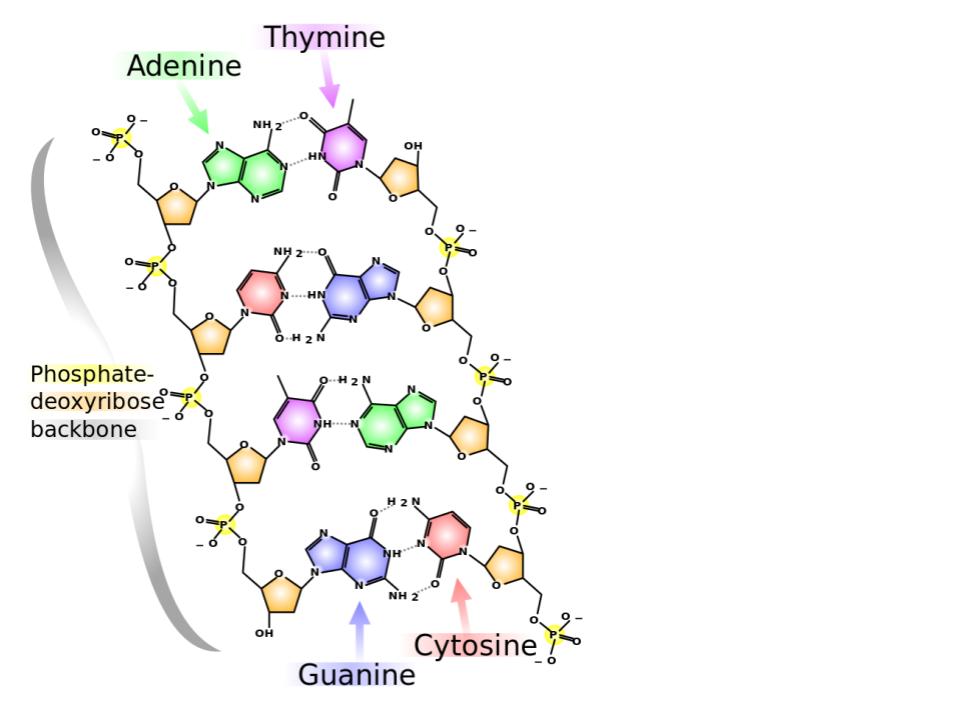
In a molecule of double-stranded DNA, the amount of Adenine present is always equal to the amount of
a)
cytosine
b)
guanine
c)
thymine
d)
uracil
16.
Why is DNA important?
a)
it is very small and very complicated
b)
it's in everything
c)
it serves as the blueprint for traits of all living things
d)
because we eat it every day for energy
17.
Which 2 molecules forms the sides (backbone) of the DNA ladder?
a)
deoxyribose and adenine
b)
deoxyribose and a hydrogen bond
c)
sugar and the nucleus
d)
deoxyribose (sugar) and phosphate
18.
Which organelle is DNA usually found in?
a)
cell membrane
b)
vacuole
c)
chloroplast
d)
nucleus
19.
Which sequence of DNA bases would pair with this partial strand
ATG TGA CAG
a)
ATG TGA CAG
b)
TAC ACT GTC
c)
GTA AGT GAC
d)
CAT TCA CTG
20.
The two strands of DNA are held together by:
a)
Hydrogen Bonds
b)
Phosphodiester Bonds
c)
Glycolsyl Bonds
d)
Glycosidic Linkages
21.
DNA is a polymer made of:
a)
Nucleotides
b)
Ribosomes
c)
Purines
d)
Pyrimidines
22.

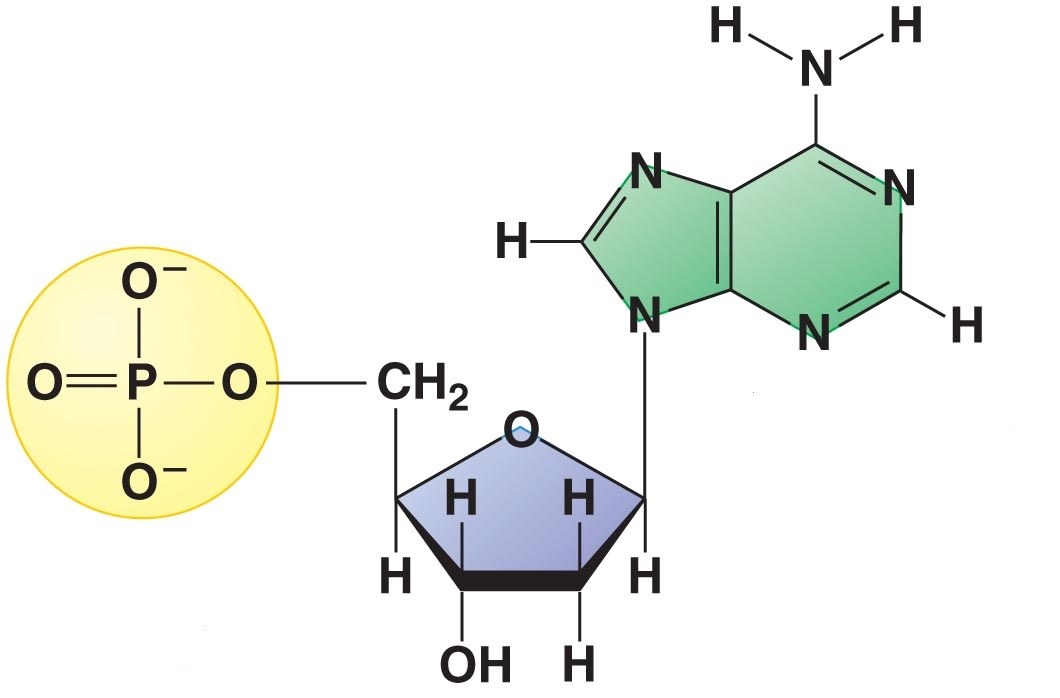
A nucleotide is made up of a deoxyribose sugar, phosphate group, and ....

a)

nitrogenous base

b)

nucleic acid

c)

cholesterol

d)

fatty acid

23.

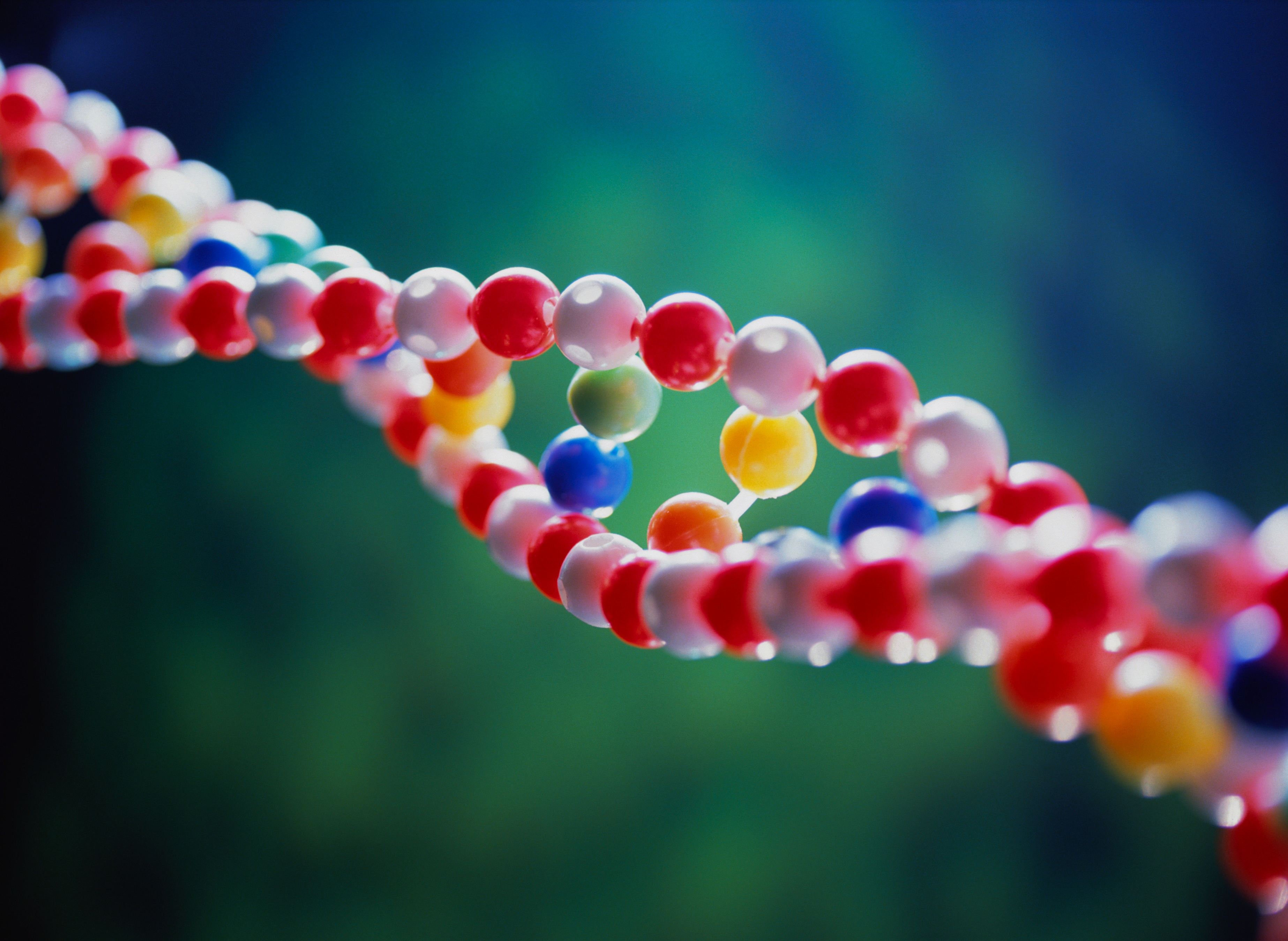
What is the name of the structure pictured above?

a)

double helix

b)

nucelotide

c)

twisted ladder

d)

hydrogen bond

24.
Which shows the correct complementary base pairing for DNA?
a)
C-A, T-G
b)
A-G, C-T
c)
C-G, U-A
d)
T-A, G-C
25.
DNA codes for...
a)
bases
b)
proteins
c)
amino acids
d)
phosphates
26.

Transcribe the following DNA strand: CTG AAT

a)

GAC TTA

b)

CTG AAT

c)

GAC UUA

d)

CUG AAU

27.
What will be the resulting mRNA from this DNA sequence:
GAT-TAC-AGA-TTA-CAT?
a)
CTA-ATG-TCT-AAT-GTA
b)
GAU-UAG-UGA-UUA-GUT
c)
CUA-AUG-UCU-AAU-GUA
d)
CAT-ACA-TAC-ATA-TAG
28.
Transcribe the following piece of DNA:
ATCGTA
a)
UAGCAU
b)
TAGCAT
c)
ATCGTA
d)
AUCGUA
29.
Which amino acid is made from the RNA codon UUA?
a)
Phenylalanine
b)
Leucine
c)
Serine
d)
Tyrosine
30.
Which amino acid is made from the RNA codon GUA?
a)
Phenylalanine
b)
Leucine
c)
Serine
d)
Valine
31.
Which amino acid is made from the RNA codon ACC?
a)
Tyrosine
b)
Isoleucine
c)
Threonine
d)
Valine
32.
Which  represents the bases of mRNA?
a)
A U C G
b)
A T U G
c)
A T C G
d)
U T C G
34.
Which statement is TRUE regarding DNA and RNA?
a)
DNA's sugar is ribose; RNA's sugar is deoxyribose
b)
DNA is single stranded; RNA is double stranded
c)
DNA contains thymine; RNA contains uracil
d)
DNA is in cytoplasm; RNA is in nucleus
34.
Which statement is TRUE regarding DNA and RNA?
a)
DNA's sugar is ribose; RNA's sugar is deoxyribose
b)
DNA is single stranded; RNA is double stranded
c)
DNA contains thymine; RNA contains uracil
d)
DNA is in cytoplasm; RNA is in nucleus
35.
What is the correct sequence?
a)
RNA --> DNA --> Protein
b)
Protein --> RNA --> DNA
c)
DNA --> RNA --> Protein
d)
DNA --> Protein --> RNA
36.
What mutation has occurred here? 
T-G-A-C-C-A
T-G-A-G-C-A
a)
Substitution
b)
Deletion
c)
Insertion
d)
Frameshift 
37.
DNA molecule segment is : TTACGCAAG
The mutated DNA segment is TTACGCAAC. This is an example of ___ mutation.
a)
Substitution
b)
Insertion
c)
Inversion
d)
Translocation
38.
DNA molecule segment is : TTACGCAAG
The mutated DNA segment is TTACGCAAC. This is an example of ___ mutation.
a)
Base Substitution
b)
Base Insertion
c)
Base Inversion
d)
Translocation
39.
DNA molecule segment is : TTACGCAAG
The mutated DNA segment is TTCGCAAG. This is an example of ___ mutation.
a)
Substitution
b)
Deletion
c)
Insertion
d)
Inversion
40.
Which RNA bases would pair with TACGAA in transcription
a)
AUGCUU
b)
ATGCTT
c)
GCATCC
d)
GCAUCC
41.
Using the codon chart here or at your table to identify the amino acid sequence:
AUG-CCA-GUA-GGG-UAA
a)
MET-HIS-ALA-GLY-STOP
b)
MET-PRO-GLY-VAL-STOP
c)
MET-PRO-VAL-GLY-STOP
d)
MET-THR-SER-ASP-STOP
42.
Since the 1800s humans have stopped burning coal, and the trees have returned to their original color. Which moth will be more successful in this environment?
a)
Dark moth
b)
Light moth
c)
Both will be equally successful
d)
Neither will be successful
43.
Which layer is the oldest?
a)
1
b)
2
c)
3
d)
4
44.
Structures with the same parts have different functions; suggests that organisms share a common ancestry
a)
vestigial structures
b)
homologous structures
c)
adaptive radiation
d)
fossil
45.
The study of the early stages of development that is one evidence of evolution is:
a)
Homologous Structures
b)
Embryology
c)
Vestigial Organs
46.
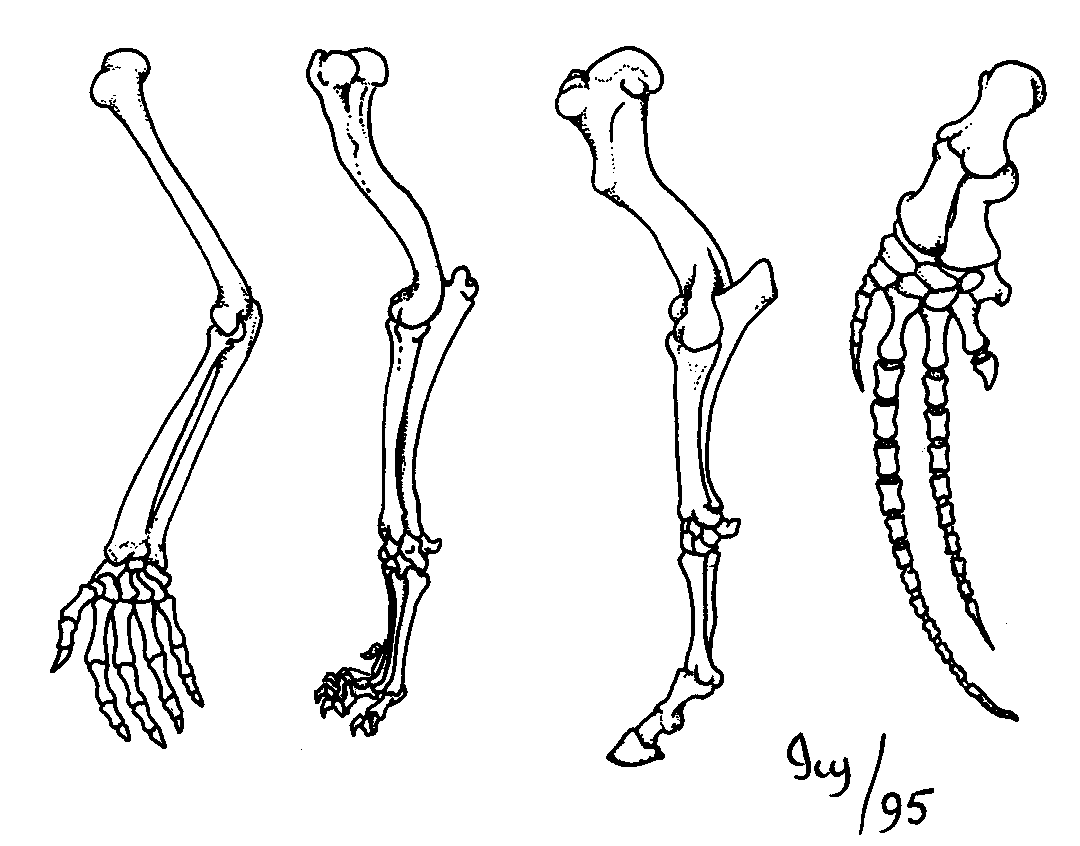
The similarities of the bones in the diagram provide evidence that---
a)
The organisms shown lived in the same natural envionrment
b)
The organisms shown may have developed from a common ancestor
c)
The organisms shown have the same genetic diseases
d)
All vertebrate species have identical forelimbs
47.
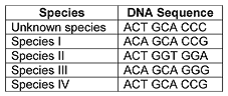
According to this data, the unknown bacterial species is most closely related to: 
a)
Species I
b)
Species II
c)
Species III
d)
Species IV
48.
Scientist sometimes compare the limbs of these organisms to look for evidence of common ancestry.
These limbs provide evidence of common ancestry because they— 
a)
have the same basic structure
b)
are the same size
c)
are parts of mammals
d)
perform the same function
49.
a)
Homologous
b)
Vestigial
c)
Analogous
50.
a)
Homologous
b)
Vestigial
c)
Analogous
51.
Which evidence of common ancestry is being studied in this visual?
a)
biogeography
b)
fossil record
c)
anatomical homology
52.
According to the diagram, which of the following pairs of insect groups likely share the most homologies?
a)
aphids and bees
b)
moths and mosquitoes
c)
bees and wasps
d)
wasps and beetles
53.
According to the diagram, which of the following pairs of insect groups likely share the least homologies?
a)
beetles and moths
b)
grasshoppers and mosquitoes
c)
mosquitoes and flies
d)
flies and moths
54.
Which two species are most closely related?
a)
1 and 2
b)
2 and 3
c)
3 and 4
d)
1 and 4
55.
Which two species have the most distant common ancestor?
a)
1 and 4
b)
1 and 2
c)
1 and 3
d)
2 and 3
56.
Which evidence of common ancestry is being studied in this visual?
a)
developmental homology
b)
molecular homology
c)
anatomical homology
57.
Which organisms are most closely related?
a)
Equus caballas (Horse) & Equus burchellii (Zebra)
b)
Cyanea artica (Jellyfish) &
Ctenodiscus crispatus (Mud Starfish)
c)
Naja naja (cobra) & Glycine max (soya bean)
d)
Ophiocomina nigra (black brittle star) & Brassica nigra (black mustard)
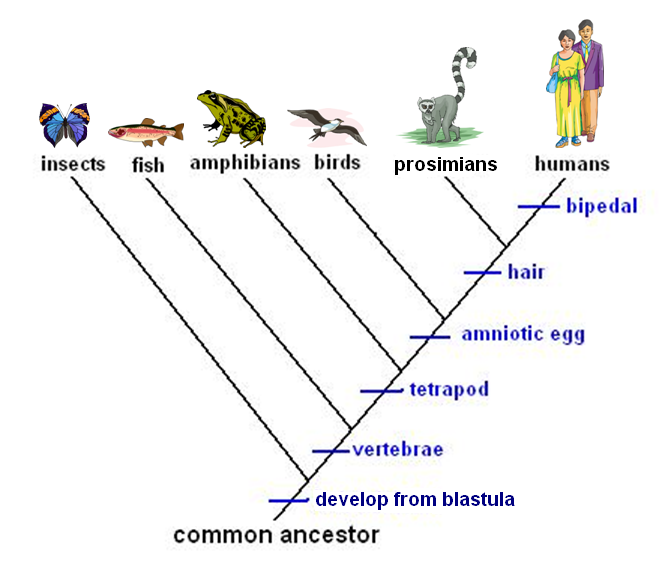
58.
Which organisms pictured on the cladogram have hair?
a)
prosimians only
b)
prosimians and humans
c)
humans only
d)
prosimians and birds
59.
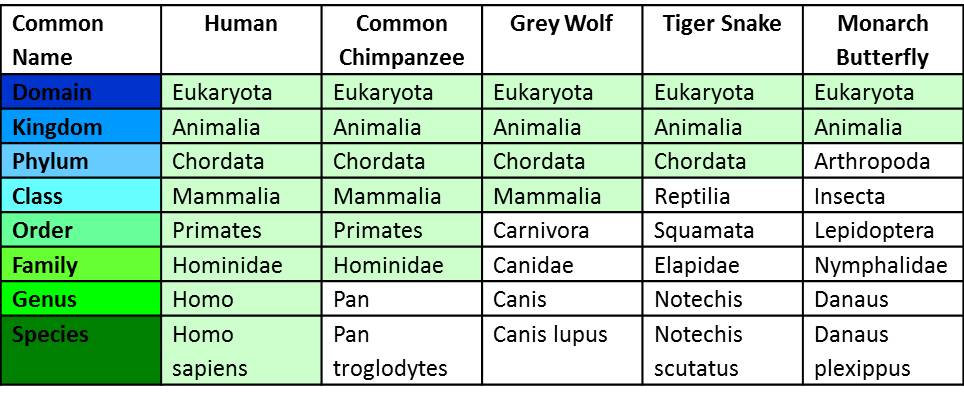
Which organism in the table is least closely related to the chimpanzee?
a)
human
b)
grey wolf
c)
tiger snake
d)
monarch butterfly
60.
Which organism in the table shown is most closely related to the common dolphin?
a)
human
b)
killer whale
c)
giant kelp
d)
bat star
61.

What would be the most correct binomial nomenclature for the grizzly bear?

a)

Carnivora ursidae

b)

Ursus Horriblis

c)

Horriblis Ursus

d)

Ursus horriblis

62.
The organisms common name is a wolf.  Its scientific name is Canis Lupus.  Which of the following is most closely related?
a)
Lupis Lupus
b)
Canis familiaris
c)
Selachimorpha
d)
Panthera leo
63.
These two systems interact to allow our bodies respond to the environment and to maintain homeostasis.  (Hint - they both send messages and one is fast, one is slow)
a)
nervous and endocrine
b)
nervous and digestive
c)
endocrine and excretory
d)
respiratory and digestive
64.
Which body systems work together to supply the body's cells with oxygen?
a)
Respiratory and immune
b)
Nervous and reproductive
c)
Circulatory and respiratory
d)
Endocrine and muscular
65.
Which two body systems work together to break down food into energy and rid the body of the waste produced during this process?
a)
Skeletal and endocrine
b)
Digestive and excretory
c)
Nervous and immune
d)
Muscular and skeletal
66.
The muscular system interacts with the ____ system because the heart is a muscle and it pumps blood to every cell in our body.
a)
excretory
b)
endocrine
c)
digestive
d)
circulatory
67.
The circulatory system interacts with the ______ system to remove waste from our blood and produce urine.  
a)
nervous
b)
endocrine
c)
excretory
d)
digestive
68.
The circulatory system interacts with the ____ system when as it surrounds the small intestine. Broken down food (nutrients) is delivered in the blood to all the cells.  
a)
digestive
b)
excretory
c)
nervous
d)
skeletal
69.
The nervous system interacts with the ____ system when it send a message to the adrenal glands to release the hormone "adrenaline" into our blood.  
a)
endocrine
b)
skeletal
c)
muscular
d)
digestive
70.
How does the Circulatory System help the Muscular System?
a)
Protects muscles
b)
Sends messages to the muscles to contract
c)
Brings oxygen into the body
d)
Delivers nutrients and oxygen to muscle tissue
71.

All of the following are characteristics of plants except:

a)

Autotrophic

b)

Prokaryotic

c)

They have chloroplasts

d)

Cell wall made of cellulose

e)

They have a large, central vacuole

72.
What is the function of a leaf?
a)
Leaves are where photosynthesis takes place
b)
Leaves absorb water from the soil
c)
Leaves help a plant reproduce
d)
Leaves absorb minerals from the soil
73.
What is the function of the roots of a plant?
a)
Absorb water and minerals
b)
Capture sunlight for energy
c)
Support the plant above ground
d)
Create food for the plant
74.

What is the reproductive organ of a plant?

a)

4

b)

3

c)

2

d)

1

75.
Which of the following responses is a plant growing toward or leaning toward touch?
a)
thigmotropism
b)
hydrotropism
c)
phototropism
d)
gravitropism
76.
Through which process do plants obtain energy?
a)
Transpiration
b)
Photosynthesis
c)
Respiration
d)
Precipitation
77.

When plants grow in towards the light, this is called:

a)

Phototropism

b)

Geotropism

c)

Germination

d)

Thigmotropism

78.
Hormone related to the growth of the plant in response to tropisms
a)
Auxin
b)
Cytokinins
c)
Ethylene
d)
Absisic acid
79.
The picture shows what type of succession?
a)
primary
b)
secondary
c)
tertiary
d)
quadanary
80.
The first organisms that appear in an ecological community
a)
ecological succession 
b)
primary succession 
c)
secondary succession
d)
pioneer speciles
81.
Starts with BARE ROCK followed by lichen
a)
primary succession 
b)
secondary succession
c)
both types of succession
82.
Succession that occurs in an area with NO SOIL
a)
ecological succession 
b)
primary succession 
c)
secondary succession
d)
pioneer speciles
83.
Barnacles create home sites by attaching themselves to whales. This relationship neither harms nor benefits the whales. 
a)
parasitism
b)
commensalism
c)
mutualism
84.
Yucca flowers are pollinated by yucca moths. The moths lay their eggs in the flowers where the larvae hatch and eat some of the developing seeds. Both species benefit. 
a)
parasitism
b)
commensalism
c)
mutualism
85.
Remoras attach themselves to a shark’s body. They then travel with the shark and feed on the leftover food scraps from the shark’s meals. The relationship neither harms nor benefits the shark. 
a)
parasitism
b)
commensalism
c)
mutualism
86.
Oxpeckers feed on the ticks found on a rhinoceros. The oxpeckers get a meal and the rhinoceros is helped by the removal of the ticks.
a)
parasitism
b)
commensalism
c)
mutualism
87.
Mistletoe extracts water and nutrients from a spruce tree. The spruce tree is harmed. 
a)
parasitism
b)
commensalism
c)
mutualism
88.
 The stork uses it saw-like bill to cut up the dead animals it eats. As a result, the dead animal carcass is accessible to some bees for food and egg laying. The relationship neither harms nor benefits the stork.
a)
parasitism
b)
commensalism
c)
mutualism
89.
In this Food Web Pyramid Which type of consumer gets only 10% of the energy stored in plants?
a)
Herbivore
b)
Carnivore
c)
Omnivore
d)
Secondary Consumer
90.
The fox in this food web would be considered a:
a)
Tertiary Consumer
b)
Producer
c)
Secondary Consumer
d)
Primary Consumer
91.
The mouse in this food web would be considered a:
a)
Primary Consumer
b)
Producer
c)
Tertiary Consumer
d)
Secondary Consumer
92.
Bacteria, fungi, and earthworms are examples of: 
a)
scavengers
b)
predators
c)
prey
d)
decomposers
93.
An animal that eats other animals is a....
a)
carnivore
b)
omnivore
c)
herbivore
d)
decomposer
94.
a)

Prophase

b)

Interphase

c)

Anaphase

d)

Telophase

95.
a)
Anaphase
b)
Cytokinesis
c)
Telophase
d)
Metaphase
96.
a)
Cytokinesis
b)
Interphase
c)
Anaphase
d)
Metaphase
97.
a)
Anaphase
b)
Cytonkinesis
c)
Interphase
d)
Prophase
98.
a)
Cytokinesis
b)
Anaphase
c)
Telophase
d)
Prophase
99.
What is cancer?
a)
The heart does not receive enough blood.
b)
Sudden disruption of blood flow to part of the brain.
c)
Blood filled weak spot.
d)
Uncontrolled growth and spread of abnormal cells.
100.
Before cells can divide, what must be copied?
a)
mitochondria
b)
cytoplasm
c)
DNA
d)
Cell Wall
101.
The cell spends most of it's life in ________________.
a)
mitosis
b)
cytokinesis
c)
Interphase
d)
None of the above
102.
Interphase has 3 stages; G1, S, and G2.  What happens during synthesis?
a)
Cells grow and carry out normal functions
b)
Cells copy organelles and prepare for a critical checkpoint
c)
The cell splits into two new daughter cells
d)
The cell makes a copy of its DNA
103.
I have cell walls
I am an autotroph
I am multicellular
What am I?
a)
Plant
b)
Animal
c)
Eubacteria
d)
Unicorn
104.
I have no cell walls
I am eukaryotic
I reproduce sexually
I am multicellular
What kingdom do I belong to?

a)
Plantae
b)
Animalia
c)
Protista
d)
Fungi
105.
My Kingdom includes mushrooms and yeast!
a)
Animalia
b)
Plantae
c)
Eubacteria
d)
Fungi