
 Worksheets
Unit #11 - Plants (NO Photosynthesis)
Total questions: 100
Worksheet time: 2hrs 40mins
Plants use the sun's energy to convert water and carbon dioxide into sugars
bryophytes
respiration
photosynthesis
rhizoids
angiosperms that have two seed leaves
dicots
monocots
bryophytes
ferns
Most bryophytes are only a few centimetres tall because they lack
vascular tissues
reproductive organs
stems
leaves
The common name for the organism in the phylum Bryophyta is
horsetail
clubmoss
mosses
fern
What characteristic do all gymnospems have in common?
They do not have a vascular system
They produce seeds that are not enclosed by fruits
They do not need water for the sperm to swim to the egg
They contain a protected seed within a flower
Which of the following characteristics can be found in all vascular plants?
Production of seeds
Dominant sporophyte generation
Dominant gametophyte generation
Double fertilization
Alternation of generations in plants refers to the alternation of
diploid and haploid stages
male and female stages
meiotic and mitotic stages
spore and seed stages
Ferns are a type of
Nonvascular Plant
Nonvascular plant
algae
Seedless vascular plant
Has parallel veins
Monocot
Dicot
Stem vascular bundles are scattered
Monocot
Dicot
Has taproots
Monocots
Dicots
Has netted veins.
Monocot
Dicot
Has fibrous roots
Monocot
Dicot


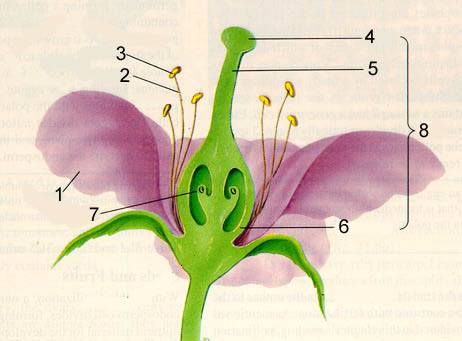
Structures #2 and #3 are the male parts of the flower and consist of the ___________ and the ___________?
ovule
filament
ovary
anther
stigma
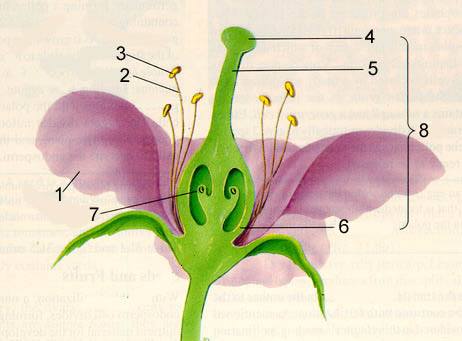
The structure labeled #4 the ____________ reproductive structure that is composed of the ____________, _____________ and ______________?
male, anther, stamen and filament
female, anther, stamen and filament
female, stigma, pistil (carpel) and ovary
male, stigma, pistil (carpel) and ovary
Which part of the flower is brightly coloured and attracts insects?
anther
stigma
petal
filament
Flowering plants whose seeds typically contain only one embryonic leaf.
Monocot
Dicot
Epicotyl
Hypocotyl

Seeds have stored energy in their
leaves
stems
roots
cotyledons

Seeds need which of the following to germinate?
water, carbon dioxide, and light
water, correct temperature, and oxygen
correct temperature, water, and carbon dioxide
oxygen, carbon dioxide, and correct temperature
After fertilization, what does the ovary become?
the fruit
a vegetable
the flower
the seed
What is a flower called if it has both male and female parts?
a happy flower
a perfect flower
an imperfect flower
an pristine flower
The ovary contains ___________ and they contain the female ____________?
pollen, gametes
ovule(s), somatic cells
ovule(s), gametes
pollen, somatic cells

Embryo is labelled with number _____.
1.
2.
3.
None.
The supply of nutrients for the pant embryo is labelled with number _____.
1.
2.
3.
None.

The fruit in the picture is adapted for...
Dispersal by wind
Dispersal by animals
Dispersal by water
Mechanical dispersal
Why plants need to disperse their seeds as far as possible?
To cover more land area.
Not to compete for resources.
To be better than other plants.
To evolve faster.
Most photosynthesis occurs in this part of the leaf:
upper epidermis
cuticle
palisade mesophyll
spongy mesophyll
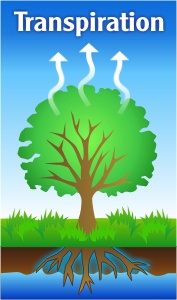
Which of the follow affect the rate of transpiration (how fast a plant loses water to evaporation from the leaves)? SELECT ALL THAT APPLY
Light
Humidity
Wind
Temperature
Sugar moves through phloem from ___ to ___.
source; sink
leaves; stems
sink; source
roots; leaves
Which of the following forces are important in moving water through a plant?
active transport
capillary action
transpiration
hydrogen bonding

This is an example of what leaf type?
Compound
Simple
Whorled
Alternate
Located at tip of stem & roots for primary growth (cell division)
lateral meristem
apical meristem
root hair
hypocotyl
Which of the following tissues has a very thick secondary walls, usually filled with an organic substance?
Collechyma tissue
Parenchyma tissue
Sclerenchyma tissue
Permanent tissue

Which tissue provides the MOST support and strength to mature plants?
parenchyma tissue
sclerenchyma tissue
xylem tissue
collenchyma tisssue

The waxy cuticle layer is shown as
1
2
3
5
The spongy mesophyll is shown as
2
3
4
5
The epidermal cell layers are shown by numbers
2
3
4
5
The stomate is located at number ___________ and the guard cells are that flank the stomate are shown by number ___________.
6, 7
7, 6
8, 9
9, 8
Which of the following is NOT a part of the plant's SHOOT system?
Flower
Leaf
Stem
Root
When a tree grows wider in trunk diameter, this is an example of which of the following?
Secondary growth
Primary growth
Photosynthesis
Xylem transport
Monocots have ___ seed leaves and dicots have ___.
2; 1
1; 2
multiples of 3; multiples of 4-5
multiples of 4-5; multiples of 3

Stem cross-section. Monocot or dicot?
monocot
dicot
could be either
Anchors plants in ground; absorbs water and nutrients.
roots
stems
leaves
In plants, primary growth means adding ___ while secondary growth means adding ___.
new leaves; height & width
height/length; width
width; height/length
height & width; new leaves

What is the area at the very bottom tip of the root?
vascular tissue
root cap
apical meristem
ground tissue
What is the function of cuticle?
Helps plant obtain nutrients.
Helps plant reduce water loss.
Helps plant reproduce.
Gives support to plant to grow upright.
Four important steps plants went through were: (IN ORDER)
seeds, vascular tissues, flowers, movement to land
movement to land, vascular tissues, seeds, flowers
flowers, movement to land, vascular tissues, seeds
vascular tissues, seeds, movement to land, flowers

The casparian strip at the endodermis blocks which pathway
Apoplast
Symplast
Transpiration
Evaporation

What is the name of the part of the root that allows water and minerals to enter?
root hairs
epidermis
phloem
phyla
Area where the cells previously produced by the root apical meristem expand in length and volume.
Zone of Differentiation
Zone of Emergence
Zone of Elongation
Zone of Initiation

Transpiration is highest when conditions are
warm, wet and calm
dry, hot and windy
dry, cool and calm
dull, windy and dry

Diagram shows the shoot of a plant grow towards light.
What is the cause of the reaction ?
The shoot needs to grow longer to avoid competition for light
The shoot needs light for photosynthesis
The cells shaded from light elongate faster
The concentration of auxins is higher in cells exposed to light

what type of tropism is occurring here?
phototropism
thigmotropism
geotropism
tropictropism

Structures represented in the illustration below are found in the lower epidermis of a plant leaf. The illustration at right shows the response to a certain environmental condition. The response represented in the illustration would most likely be caused by --
a reduced supply of oxygen
long periods of rainfall
high concentrations of glucose
little available water

Letter A represents the _____________________.
zone of fertilization
zone of division
zone of differentiation
zone of elongation
Letter B represents the _____________________.
zone of fertilization
zone of division
zone of differentiation
zone of elongation
Letter C represents the _____________________.
zone of fertilization
zone of division
zone of differentiation
zone of elongation

According to this figure, at what time in the evolutionary history of plants did vascular systems likely first evolve?
475 mya
460 mya
425 mya
360 mya
What force is responsible for the cohesiveness of water?
osmosis
hydrogen bonding between water molecules
negative pressure created by evaporation
ionic bonding
Which essential macronutrient for plants is obtained directly from the air?
nitrogen
magnesium
carbon
hydrogen
Plants grow toward light through the action of
hormones.
nerves.
phytochrome.
chloroplasts.
Grass shoots bend toward the light because, on the shadowed side, a(n)
reduction in auxin levels promotes cell elongation.
reduction in auxin levels prevents cell elongation.
increase in auxin levels promotes cell elongation.
increase in auxin levels prevents cell elongation.
Which substance might induce seeds treated with it to break dormancy?
an auxin
a cytokinin
a gibberellin
ethylene
Which hormone prevents a seed released in the fall from germinating immediately?
auxins
abscisic acid (ABA)
gibberellins
ethylene
Where might you put a green, unripe fruit to ripen it?
a dark but well-ventilated area
a sealed plastic bag with an overripe banana
a microwave, on low power, for 5 minutes
under a bright light for 24 hours
In plants, the vascular tissue made of dead cells that transport water and minerals from the roots is called
xylem.
phloem.
lignin.
meristem.
The sugar produced in the leaves is loaded into the phloem by
osmosis.
passive transport.
active transport.
receptor mediated endocytosis.
What do you miss most about classes in E7?
The mobile furniture.
Bees coming in the window during the winter.
The big _ _ _ air handler.
The flume hood.
My teacher's sense of humor
Upon examining the apical meristem of a plant, one would observe
degradation
mitosis
meiosis
bark
Consist of tightly packed columnar cells equipped with numerous chloroplasts and large surface areas
Spongy mesophyll
Guard cells
Epidermis
Palisade mesophyll
In plants, sugar is transported from __________ to __________, where it is either _________ or _____________.
source, sink, made, synthesized
sink, source, made, stored
source, sink, used, stored
none of these is correct


