wayground logo

Free Printable Worksheets

Font size

S
M
L
XL
Worksheets

5C Cell Transport and 11A Photosynth/Cell Respiration Review

Total questions: 103

Worksheet time: 1hrs 14mins

Name
Class
Date
1.
What is the pigment in chloroplasts that performs photosynthesis?
a)
Chlorosynthesis
b)
Chlorophyll
c)
ADP
d)
Electron Transport
2.
Which of the following would have affect the rate of photosynthesis?
a)
amount of water
b)
carbon dioxide concentration
c)
temperature
d)
all of these
3.

Plants need ________ to conduct photosynthesis

a)

Oxygen

b)

Soil

c)

Carbon dioxide

d)

Sugar

4.
Why do plants conduct photosynthesis?
a)
To make light
b)
To make mitochondria
c)
To make glucose
d)
To release carbon dioxide
5.
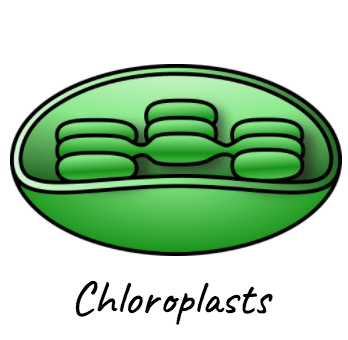
Which organelle in the plant cell performs photosynthesis?
a)
Chloroplast
b)
Mitochondria
c)
Nucleus
d)
Cytoplasm
6.
What are the products of photosynthesis (what is made)?
a)
Glucose and Chlorophyll
b)
Glucose and Oxygen
c)
Water and Light
d)
Carbon dioxide and Water
7.
Which choice correctly shows the gases that enter and exit plants during photosynthesis?
a)
Enter: Oxygen
Exit: Carbon dioxide
b)
Enter: Water vapor
Exit: Glucose
c)
Enter: Carbon dioxide
Exit: Oxygen
d)
Enter: Light
Exit: Water vapor
8.
What is one of the reactants of cellular respiration?
a)
energy
b)
glucose
c)
carbon dioxide
d)
water
9.
In which way are photosynthesis and cellular respiration different?
a)
Cellular respiration stores ATP, while photosynthesis releases ATP.
b)
Cellular respiration produces oxygen, while photosynthesis uses oxygen.
c)
Photosynthesis releases energy, while cellular respiration stores energy.
d)
Photosynthesis used carbon dioxide, while cellular respiration produces carbon dioxide.
10.
What is the correct equation for cellular respiration?
a)
6O2 + C6H12O6 -> 6CO2 + 6H2O + Energy
b)
6O2 + C6H12O6 + Energy -> 6CO2 + 6H2O
c)
6CO2 + 6H2O -> 6O2 + C6H12O6 + Energy
d)
6CO2 + 6H2O + Energy -> 6O2 + C6H12O6
11.
Cellular Respiration's goal is to
a)
make water
b)
make ATP
c)
make glucose
d)
make  oxygen
12.
What gas is released into the air during cellular respiration?
a)
oxygen
b)
carbon dioxide
c)
water 
d)
glucose
13.
What are the reactants in cellular respiration?
a)
glucose and oxygen
b)
glucose and carbon dioxide
c)
water and carbon dioxide
d)
oxygen and glucose
14.
What are the products in cellular respiration?
a)
water and carbon dioxide
b)
water and glucose
c)
carbon dioxide and oxygen
d)
glucose and oxygen
15.

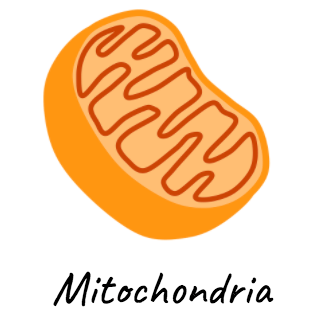
Which of the following organelles is responsible for cellular respiration?

a)

Mitochondria

b)

Nucleus

c)

Endoplasmic Reticulum

d)

Ribosome

16.

C6H12O6 is the chemical formula for

a)

Carbon Dioxide

b)

Water

c)

Oxygen

d)

Glucose

17.

O2 is the chemical formula for

a)

Oxygen

b)

Carbon Dioxide

c)

Glucose

d)

Water

18.

Where do animals get the oxygen and glucose they need for cellular respiration?

a)

Plants

b)

Mitochondria

c)

Sun

d)

other animals

19.

The reactants of photosynthesis

a)

CO2

b)

CO2, H2O

c)

CO2, H2O, Sunlight

d)

none of the above

20.

Occurs in plants

a)

photosynthesis only

b)

cellular respiration only

c)

photosynthesis and cell respiration

d)

all of the above

21.

Occurs in animals

a)

photosynthesis only

b)

cellular respiration only

c)

cellular respiration and photosynthesis

d)

all of the above

22.

The reactants of cellular respiration

a)

CO2, H2O, sunlight

b)

O2, glucose

c)

CO2, glucose

d)

H2O, sunlight

23.

The products of photosynthesis

a)

CO2, H2O, sunlight

b)

CO2, H2O, ATP

c)

O2, Glucose

d)

CO2, Glucose

24.

Location for aerobic respiration

a)

mitochondria

b)

chloroplasts

c)

cytoplasm

d)

vesicle

25.

Location for anaerobic respiration

a)

mitochondria

b)

chloroplasts

c)

cytoplasm

d)

vesicle

26.

Location for photosynthesis

a)

mitochondria

b)

chloroplasts

c)

cytoplasm

d)

vesicle

27.

What kind of cellular transport involves the enzyme ATP synthase?

a)

diffusion

b)

osmosis

c)

facilitated diffusion

d)

active transport

28.
Chloroplasts are...
a)
A type of pigment used for photosynthesis
b)
The location inside a plant cell where photosynthesis happens
c)
The location where cellular respiration happens
d)
Green beans
29.

Why are many plants green?

a)

plant cells are green

b)

plants absorb green light

c)

chlorophyll reflects green light

d)

rigid cell walls are green

30.
What do plants give off after photosynthesis?
a)
Oxygen
b)
carbon
c)
nitrogen
d)
hydrogen
31.
Plants need ________from the air for photosynthesis
a)
oxygen
b)
soil
c)
carbon dioxide
d)
sugar
32.
The products of photosynthesis are
a)
water and carbon dioxide
b)
oxygen and water
c)
sugar and cabon dioxide
d)
oxygen and sugar (glucose)
33.
The main source of energy for all life comes from ____.
a)
the Earth
b)
the moon
c)
the sun
d)
the food we eat/make
34.
In what part of the cell does photosynthesis occur?
a)
Nucleus
b)
Chloroplast
c)
Epidermis
d)
Vacuole
35.
Mitochondria are...
a)
The location in cells where photosynthesis happens
b)
Kidney beans
c)
The location in cells where cellular respiration happens
d)
A type of pigment used for cellular respiration
36.
What is the molecule called that mitochondria produce when they respire glucose?
a)
ATP
b)
ADP
c)
DNA
d)
80p
37.

The products of cellular respiration

a)

CO2

b)

CO2, H2O

c)

CO2, H2O, glucose

d)

CO2, H2O, ATP

38.
ATP is...
a)
A form of energy the cell can use that is produced by cellular respiration
b)
A kind of sugar produced in photosynthesis
c)
A battery
39.
Plants can...
a)
Only use photosynthesis
b)
Only use cellular respiration
c)
Use photosynthesis and cellular respiration
40.
During cellular respiration, what do animal cells use to produce energy from food?
a)
sunlight
b)
meat
c)
water
d)
oxygen
41.
During photosynthesis, what gas do plants release?
a)
oxygen
b)
carbon dioxide
c)
water
d)
nitrogen
42.
Gas exchange through the stems or leaves of a plant takes place through the.....
a)
stomata
b)
chloroplasts
c)
roots
d)
underside of the leaves
43.
What gas do plants take in to make food?
a)
natural gas
b)
oxygen
c)
carbon dioxide
d)
oxygen and carbon dioxide
44.
Which type of organism gets its energy from eating other organisms?
a)
heterotroph
b)
autotroph
c)
phototroph
d)
chemotroph
45.
What pigment is used by plants to capture energy from the sun?
a)
water
b)
carbon dioxide
c)
chlorophyll
d)
glucose
46.
Which molecule provides energy for cell work and chemical reactions?
a)
ADP
b)
ATP
c)
NAD+
d)
oxygen
47.
The space inside the membranes of the chloroplast is called the _________  and the membrane enclosed sacs are called the _____________.
a)
thylakoid, stroma
b)
cytoplasm, thylakoid
c)
stroma, cytoplasm
d)
stroma, thylakoid
48.
The water in photosynthesis is used in the ______________  and the carbon dioxide is used in the _________.
a)
Calvin Cycle, dark reaction
b)
light reaction, glycolysis
c)
dark reaction, light reaction
d)
light reaction, dark reaction
49.
The breakdown of glucose starts in the _________ and ends in the _______________ when oxygen is present.
a)
mitochondria, cytoplasm
b)
cytoplasm, chloroplast
c)
cytoplasm, mitochondria
d)
mitochondria, chloroplast
50.
The bubbles of gas produced by a water plant in the presence of light are
a)
carbon dioxide
b)
glucose
c)
oxygen
d)
water
51.
The glucose is used in cell respiration during the process of _________ and the oxygen is used during  ____________________.
a)
glycolysis, electron transport chain
b)
Krebs Cycle, chemiosmosis
c)
fermentation, glycolysis
d)
Electron transport chain, chemiosmosis
52.
Which process occurs in all plants and animals at all times of the day and night?
a)
photosynthesis
b)
cell respiration
c)
the dark reaction
d)
the light reaction
53.
Which step in cell respiration yields the most ATP?
a)
glycolysis
b)
fermentation
c)
Krebs Cycle
d)
chemiosmosis
54.
Energy is ____________ in photosynthesis and ___________ in cell respiration.
a)
released, released
b)
released, stored
c)
stored, released
d)
released, released
55.

When an animal exercises, ATP is _________________ and must be replaced by cell respiration. The amount of CO2 exhaled will _____________________.

a)

increased, decrease

b)

decreased, decrease

c)

increase, increase

d)

decreased, increase

56.

There are plants and fish that live in water. They undergo photosynthesis and cell respiration with the oxygen and carbon dioxide dissolved in the water. True or false?

a)

True

b)

False

57.

What happens to the food that heterotrophs eat?

a)

it is burned in photosynthesis

b)

it is used in chemosythesis

c)

it is digested into small molecules that feed into cellular respiration

d)

only the glucose from food is used in cell respiration

58.
Which gas is removed from the atmosphere during photosynthesis?
a)
hydrogen
b)
oxygen
c)
nitrogen
d)
carbon dioxide
59.
In what part of the cell does photosynthesis occur?
a)
Nucleus
b)
Chloroplast
c)
Epidermis
d)
Vacuole
60.

What is cellular respiration?

a)

the breakdown of glucose to release ATP

b)

the breakdown of glucose to release carbon

61.
What is the correct equation for cellular respiration?
a)
6O2 + C6H12O6 -> 6CO2 + 6H2O + Energy
b)
6O2 + C6H12O6 + Energy -> 6CO2 + 6H2O
c)
6CO2 + 6H2O -> 6O2 + C6H12O6 + Energy
d)
6CO2 + 6H2O + Energy -> 6O2 + C6H12O6
62.

Which statement about photosynthesis is correct?

a)

Plants get the energy they need for photosynthesis from water.

b)

Plants get the energy they need for photosynthesis from soil.

c)

Plants get the energy they need for photosynthesis from sunlight.

d)

Plants do not require energy to perform photosynthesis.

63.
What is the purpose of photosynthesis?
a)
make glucose
b)
make ATP
c)
make light
d)
release carbon dioxide
64.
In which way are photosynthesis and cellular respiration different?
a)
Cellular respiration stores ATP, while photosynthesis releases ATP.
b)
Cellular respiration produces oxygen, while photosynthesis uses oxygen.
c)
Photosynthesis releases energy, while cellular respiration stores energy.
d)
Photosynthesis used carbon dioxide, while cellular respiration produces carbon dioxide.
65.
Cellular Respiration's goal is to
a)
make water
b)
make ATP
c)
make glucose
d)
make  oxygen
66.

Particle of movement from an area of lower concentration to an area of higher concentration.

a)

Active transport

b)

Passive transport

67.

Which type of passive transport focuses on the movement of water through the membrane?

a)

Facilitated diffusion

b)

Osmosis

c)

Diffusion

68.
In which case would a cell most likely shrink?
a)
when placed in a solution containing a high salt concentration
b)
when placed in a isotonic solution
c)
when placed in a solution containing a low pH
d)
when placed in a solution containing distilled water
69.

Active transport across a cell membrane from low to high concentration, requires

a)

energy (ATP)

b)

no energy

c)

water

d)

oxygen

70.

Which type of passive transport uses proteins to help molecules pass through the membrane?

a)
Diffusion
b)
Facilitated diffusion
c)
Osmosis
d)
All of the above
71.

Cell membranes are described as selectively permeable.

Four students were asked to explain what this means. Which one is correct?

a)

Student 1: Cell membranes prevent all materials from entering the cell.

b)

Student 2: Cell membranes only provide structural support for the cell.

c)

Student 3: Cell membranes regulate which substances can enter and exit the cell.

d)

Student 4: Cell membranes allow water and water-soluble substances to enter the cell.

72.
What is diffusion?
a)
when molecules move from a low concentration to a high concentration 
b)
when molecules move from a high concentration to a low concentration.
c)
no movement 
d)
molecules move everywhere
73.

A general term for the various types of active transport that move particles into a cell by enclosing them in a vesicle made out of plasma membrane.

a)

Endocytosis

b)

Exocytosis

c)

Osmosis

d)

Diffusion

74.

A form of bulk transport in which materials are transported from the inside to the outside of the cell in membrane-bound vesicles that fuse with the plasma membrane.

a)

Endocytosis

b)

Exocytosis

c)

Osmosis

d)

Diffusion

75.
What type of transport is this?
a)
Endocytosis
b)
Exocytosis
c)
Diffusion
d)
Sodium-Potassium Pump
76.

Which one is the definition of active transport?

a)

movement of particles through the cell membrane from a region of lower concentration to a region of higher concentration using energy in the form of ATP.

b)

passage of water molecules from a region of their higher concentration to a region of their lower concentration through a partially permeable membrane

c)

net movement of molecule from a region of higher concentration to region of lower concentration. Molecule down a concentration gradient

d)

net movement of molecule from a region of lower concentration to region of higher concentration. Molecule down a concentration gradient

77.
The cell below is in a _________ solution.
a)
Hypotonic
b)
Hypertonic
c)
Isotonic
78.
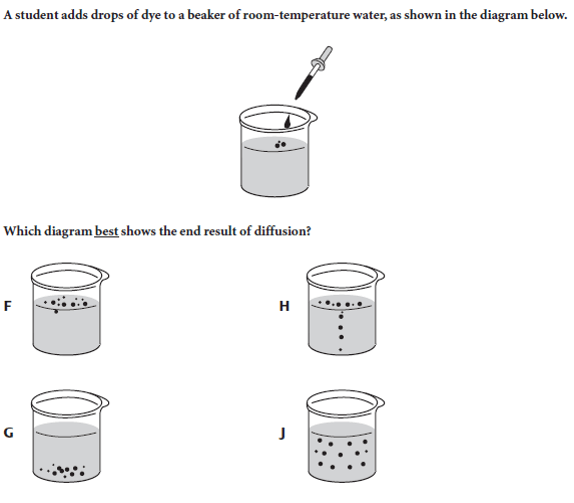
Which diagram best shows the end result of diffusion?
a)
F
b)
G
c)
H
d)
J
79.

The cell below is in a _____________ solution.

a)

Hypertonic

b)

Hypotonic

c)

Isotonic

80.

What type of solution is this healthy looking red blood cell in?

a)

Isotonic

b)

Hypertonic

c)

Hypotonic

81.
The function of the plasma membrane is....
a)
to regulate what enters and leaves the cell.
b)
fight bacteria and viruses that enter the cell.
c)
provide rigid support and protection to the cell.
d)
make sure each cell can move
82.
What is another term for "selectively permeable"?
a)
porous
b)
completely permeable
c)
permanent
d)
semipermeable
83.
Maintaining a constant internal state in a changing environment.
a)
Homeostasis
b)
Active Transport
c)
Mitosis
d)
Photosynthesis
84.
A ______________ is composed of a phosphate and glycerol head and 2 fatty acid chain tails. 
a)
phospholipid 
b)
Carbohydrate
c)
Cholesterol 
d)
Protein 
85.
How many layers thick is the lipid bilayer?
a)
1
b)
2
c)
3
d)
4
86.

What type of transport is shown in the diagram?

a)

Ion pump

b)

Facilitated diffusion

c)

Endocytosis

d)

Exocytosis

87.

What type of transport is shown in the diagram?

a)

Ion pump

b)

Facilitated diffusion

c)

Endocytosis

d)

Exocytosis

88.

What type of transport is shown in the diagram?

a)

diffusion

b)

facilitated diffusion

c)

endocytosis

d)

exocytosis

89.
How does a cell maintain homeostasis?
a)
Regulates what enters and leaves the cell
b)
Flexibility
c)
Protective barrier
d)
Structure and support
90.
The cell membrane is selectively permeable, which means...
a)
All materials can enter and leave the cell
b)
Certain things can enter while others cannot
c)
The cell manually sorts through all materials
d)
Only certain cells can interact with the cell.
91.
Controlling what goes into or out of the cell without energy is called
a)
active transport
b)
endocytosis
c)
passive transport
d)
exocytosis
92.
What is it called when molecules move across the cell membrane from an area of high concentration to an area of low concentration through a carrier protein?
a)
Diffusion
b)
Osmosis
c)
Active Transport
d)
Facilitated Diffusion
93.
The difference in the concentration of a substance from one location to another is called 
a)
diffusion
b)
osmosis
c)
concentration gradient
d)
passive transport
94.

The illustration represents a type of:

a)

Passive Transport

b)

Active Transport

c)

Ground Transport

95.
Which is NOT a form of active transport?
a)
Endocytosis
b)
Osmosis
c)
Exocytosis
d)
Pinocytosis
96.
When cells form a vesicle to release materials, which form of transport is occurring? 
a)
Endocytosis
b)
Exocytosis
c)
Facilitated Diffusion
d)
Osmosis
97.

Movement of materials from high to low concentration through a protein channel. This is an example of:

a)

Passive Transport

b)

Active Transport

98.

Solutes move against the concentration gradient, therefore energy is needed. This is an example of:

a)

Passive Transport

b)

Active Transport

99.
Molecules using simple diffusion move from 
a)
high to low concentrations 
b)
low to high concentrations 
c)
no concentrations  
d)
both concentrations  
100.
A balance that an organism maintains by regulating what goes into and out of the cell.
a)
love
b)
peace
c)
homeostasis
d)
happiness
101.
 An animal cell placed in a hypertonic (salty) solution will
a)
Stay the same
b)
Shrink- get smaller
c)
Swell- get bigger
102.
 If the volume of a cell increases when it is placed in a solution, that solution is said to be __________ to the cell
a)
 hypertonic
b)
subatomic
c)
 isotonic
d)
 hypotonic 
103.

Why are cells small as opposed to being bigger?

a)

small cells have larger surface area to volume ratios that allow them to get nutrients through the whole cell

b)

small cells are just better

c)

small cells make the rate of transport speed up

d)

cells aren't small, they are all large