wayground logo

Free Printable Worksheets

Font size

S
M
L
XL
Worksheets

Cell Division (Includes 1st Semester Review)

Total questions: 101

Worksheet time: 1hrs 6mins

Name
Class
Date
1.
The cells produced via meiosis are called:
a)
sex cells
b)
somatic cells
c)
body cells
d)
skin cells
2.
What is it called when a sperm and egg meet?
a)
meiosis
b)
fertilization
c)
cell division
d)
mitosis
3.

What phase is shown in the picture? (Hint: There is ONE cell and homologous chromosomes are being split apart.)

a)

anaphase 1

b)

anaphase 2

c)

metaphase 1

d)

telophase 1

4.
Meiosis makes sperm and egg cells. In humans, sperm and egg cells each have _____ chromosomes. Therefore a fertilized human egg cell (sperm and egg cell combined) would create a cell with _____ chromosomes.
a)
23, 46
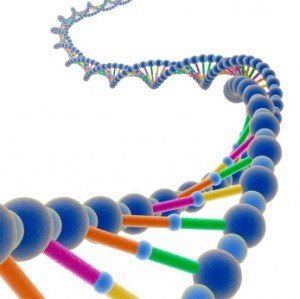
b)
46, 23
c)
2, 4
d)
50, 100
5.
What causes genetic variation in meiosis?
a)
chromosomes lining up
b)
crossing over of chromosomes
c)
separation of chromosomes
d)
chromosomes pulling apart
6.
What kind of cells are made in MEIOSIS?
a)
Haploid Gametes
b)
Diploid Somatic Cells
c)
Skin Cells
d)
Liver Cells
7.
Diploid Cells are represented by
a)
2n
b)
n
c)
4n
d)
1/2 n
8.
If the Diploid number of Carrots is 18, the haploid number is
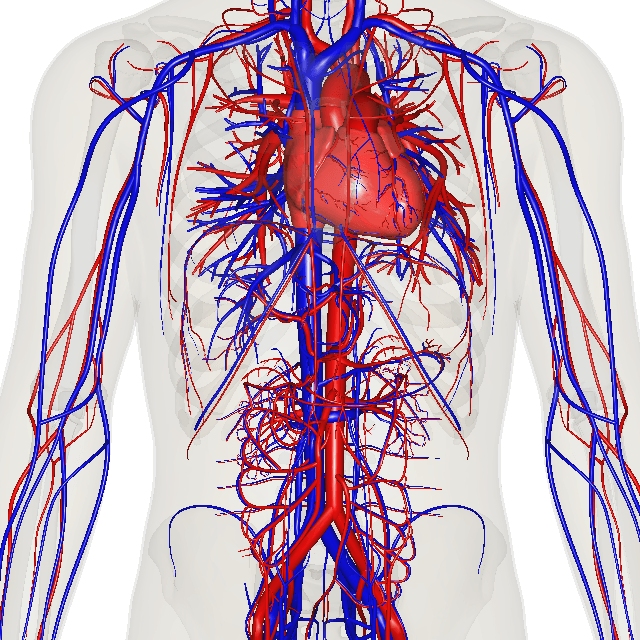
a)
18
b)
9
c)
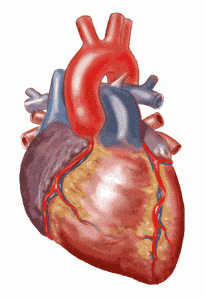
27
d)
36
9.
Goes through P.M.A.T two rounds 
a)
Mitosis
b)
Meiosis
c)
Osmosis
d)
Transcription
10.
The process of crossing over occurs in what phase of meiosis?
a)
anaphase 1
b)
prophase 1
c)
prophase 2
d)
telophase 1
11.
Which of these cells would be produced through meiosis?
a)
skin cells
b)
liver cells
c)
brain cells
d)
sperm cells
12.
Crossing over helps promote 
a)
male genotype
b)
genetic variation
c)
DNA replication
d)
mitosis
13.

What process is this picture showing and what is it making?

a)
mitosis, gametes
b)
mitosis, body cells
c)
meiosis, gametes
d)
meiosis, body cells
14.

A male shark has 40 chromosomes total. How many chromosomes will the shark have after meiosis?

a)
20
b)
40
c)
80
d)
160
15.

CROSSING OVER TAKES PLACE DURING

a)

PROPHASE II

b)

PROPHASE I

c)

INTERPHASE

d)

METAPHASE I

16.

MITOSIS

a)

INCREASES GENETIC VARIATION

b)

ALLOWS TRAITS TO BE PASSED ON TO OFFSPRING

c)

PRODUCES 2 IDENTICAL DAUGHTER CELLS

d)

ALL ARE TRUE

17.

What is the longest stage of the cell cycle?

a)

Interphase

b)

Mitosis

c)

Cytokinesis

d)

Prophase

18.
Question Image

Match the following

a)

Interphase

1.

The longest stage of a cell's life

b)

G1

2.

part of interphase where the cell is growing

c)

S phase

3.

DNA Synthesis

When the cell is making more DNA

d)

G2

4.

part of interphase where the cell prepares to divide

e)

Cell Division

5.

A small stage in the cell's life where the cell splits to make more cells

19.

Match the following

a)
1.

Prophase

b)
2.

Metaphase

c)
3.

Anaphase

d)
4.

Telophase

e)
5.

Interphase

20.

What is the end result of Mitosis?

a)

different cells

b)

half of the cells are different

c)

the exact same cells

21.
Which of the following cells is a gamete?
a)
egg
b)
bone
c)
heart
d)
muscle
22.
The fertilized egg is termed a/an _____.
a)
gamete
b)
allele
c)
homolog
d)
zygote
23.

Two chromosomes that are paired together (one comes from mom and one from dad) as a set are called what?

a)

centromeres

b)

sister chromatids

c)

homologous chromosomes

d)

daughter cells

24.

Body cells (somatic cells) are __________, meaning they have both sets of homologous chromosomes in them.

a)

haploid

b)

diploid

c)

triploid

d)

tetraploid

25.

Where do you get each of your homologous chromosomes from?

a)

You get both from your biological mother

b)

You get both from your biological father

c)

Your cells make them on their own

d)

You get 1 from your biological mother and 1 from your biological father

26.

Human body cells (somatic cells) have 46 chromosomes in them. How many chromosomes are in the sex cells (gametes) of humans?

(a)  

27.

During which phase are the chromosomes replicated?

a)

interphase

b)

Prophase I

c)

Prophase II

d)

Telophase

28.
Which letter(s) in the diagram correspond to cells that are haploid? 
a)
A
b)
B
c)
C
d)
A and B
29.
What is one of the advantages, why is it better to reproduce sexually versus asexually?
a)
survival of the fittest
b)
overproduction
c)
genetic variation
d)
cloning
30.
When chromosomes fail to separate correctly during anaphase of meiosis, what can occur?
a)
extra chromosomes are found in the sex cell
b)
chromosomes of the sex cell are doubled
c)
chromosomes of the sex cell are halved
d)
meiosis never completes
31.
The phase in mitosis where chromosomes move away and are pulled apart by spindles to opposite sides of the cell.
a)
prophase
b)
anaphase
c)
metaphase
d)
telephase
32.

Which of the following is anaphase stage

a)
b)
c)
33.
A chromosome is best described as a
a)
gene that has more than one form.
b)
green cell found in many plants.
c)
strand of DNA containing genetic information.
d)
reproductive cell found in certain kinds of bacteria
34.
DNA is inside your cells. What part of the cell is the DNA inside of?
a)
cell membrane
b)
cytoplasm
c)
nucleus
35.
Which of the following best describes a DNA molecule?
a)
double helix
b)
contains ribose
c)
made of amino acids
d)
contains Uracil
36.
There is a segment of DNA that codes for every trait that a person has. These segments of DNA are found on
chromosomes and are called ________.
a)
Deoxyribonucleic acid
b)
Genes
c)
Heredity
d)
Recessive Traits
37.
Which statement about DNA is true?
a)
Different people can have the same copy of DNA in their cells.
b)
DNA is made up of genes that carry hereditary information.
c)
DNA controls the genotype but not the phenotype of an organism.
d)
DNA controls the genotype only in the second and third generations.
Question
38.

A _________ is DNA tightly coiled around proteins.

a)

gene

b)

chromosome

c)

trait

d)

mutation

39.

Chromosomes that are organized in pairs, are the same size, and have the same genes are called _______ chromosomes.

a)

homeostasis

b)

homologous

c)

matching

d)

sister

40.
Interphase contains three stages, including the G1 and G2 stages.  Which of the following occurs during these gap stages? 
a)
separation of chromosomes
b)
cellular growth 
c)
DNA replication
d)
viral transformation 
41.
When DNA is in its less coiled, "relaxed," state, between cell divisions, it is called
a)
autosomes
b)
chromatid
c)
chromatin
d)
centromere
42.

The Koala bear scraped its leg when climbing up the tree. What is going to happen to the scrape?

a)

Nothing - the area will never heal.

b)

The body will make enough cells to fill in the area and heal the cut.

c)

The body will make too many cells and there will be a lump in that area.

43.

When the Koala bear injured its leg, it had to replace skin cells, red blood cells, and fat cells. Do all of these cells have the same DNA?

a)

Yes

b)

No

44.

In DNA, Adenine bonds with ______________.

a)

Guanine

b)

Thymine

c)

Cytosine

d)

Adenine

45.

In DNA, Guanine bonds with ______________.

a)

Adenine

b)

Guanine

c)

Cytosine

d)

Thymine

46.
Which sequence of DNA bases would pair with this partial strand
ATG TGA CAG
a)
ATG TGA CAG
b)
TAC ACT GTC
c)
GTA AGT GAC
d)
CAT TCA CTG
47.
What determines the code, or information, of a DNA molecule?
a)
the shape (structure) of the nitrogen bases
b)
the order (sequence) of the nitrogen bases
c)
the color of the nitrogen bases
d)
the frequency (number) of nitrogen bases
48.
The drawing shows the structure of what molecule?
a)
A DNA molecule
b)
A lipid molecule
c)
A carbohydrate molecule
d)
A protein molecule
49.

Why is DNA important?

a)

It teleports cookies to my locker.

b)

It carries the instructions for our cells.

c)

It allows me to be invisible.

d)

It gave us a snow day in August.

50.

Any change in the DNA is what?

a)

Cancer

b)

A mutation

c)

Mitosis

d)

A mistake in your body that is caught and removed

51.

What process occurs when the cell divides completely?

a)

Mitosis

b)

Interphase

c)

Metaphase

d)

Cytokinesis

52.

What is the purpose of the cell cycle?

a)

To create new cells for growth and repair

b)

repairs old cells

c)

makes proteins

d)

absorbs nutrients

53.

What happens during the S phase?

a)

growth

b)

chromosomes line up in the middle

c)

DNA is replicated

d)

cytoplasm splits

54.

Which is a benefit of meiosis?

a)

It increases mutations

b)

It increases genetic diversity

c)

It decrease the number of chromosomes

d)

It increases the number of chromosomes

55.

What process increases genetic diversity in organisms?

a)

mitosis

b)

asexual reproduction

c)

DNA replication

d)

meiosis

56.

What process is used to make new body cells?

a)

Meiosis

b)

sexual reproduction

c)

Mitosis

d)

crossing over

57.

What process occurs after Prophase?

a)

Anaphase

b)

Interphase

c)

Telophase

d)

Metaphase

58.

During which phase of Mitosis do Chromosomes line up along the equator of the cell?

a)

prophase

b)

metaphase

c)

anaphase

d)

telophase

59.

What is the purpose of mitosis in sexually producing organisms?

a)

make offspring

b)

growth and development

c)

genetic variation

d)

mutations

60.

If a cell were undergoing mitosis and it has 16 chromosomes, how many chromosomes would be found in the cells produced?

a)

two cells with 8 chromosomes

b)

two cells with 16 chromosomes

c)

four cells with 8 chromosomes

d)

four cells with 16 chromosomes

61.

Which describes one of the main differences between asexual and sexual reproduction?

a)

sexually reproducing organisms require one parent and asexually requires two parents

b)

sexually reproducing organisms require two parents and asexually requires one parent

c)

sexually reproducing organisms can reproduce quickly while asexually takes longer

d)

asexually reproducing organisms use more energy and sexually uses less energy

62.

The chemical colchicine disrupts cell division. Which cell process would most likely stop if colchicine were added to a culture of human liver cells?

a)

mitosis

b)

meiosis

c)

crossing over

d)

active transport

63.

When a eukaryotic cell is not dividing, its genetic material can be found in the form of very long thin fibers called

a)

chromatin

b)

chromosomes

c)

the nucleolus

d)

RNA

64.
What is cell differentiation?
a)
Process by which cells produce more cells
b)
Process by which cells become specialized
c)
Process by which cells become unspecialized
d)
Process by which cells die
65.
What is one goal of cellular differentiation/specialization?
a)
To create specialized cells to help organism maintain homeostasis.
b)
To many cells.
c)
To make stem cells
d)
to make single celled organisms
66.
Stem cells are
a)
cells that grow uncontrollably
b)
undifferentiated and can be any type of cell
c)
never go through cell division
d)
only found in embryos
67.

Name the cellular process responsible for repair, growth, and development in living organisms.

a)

meiosis

b)

mitosis

c)

transcription

d)

translation

68.
What process best explains how muscle cells and nerve cells can develop from the same fertilized egg?
a)
genetic engineering
b)
survival of the fittest
c)
differentiation
d)
selective breeding
69.
How do stem cells know what type of cells to differentiate into?
a)
The nucleus has instructions to turn some genes on and some genes off.
b)
Signals from chemicals in the organism or from the environment determine which genes will be turned on and off.
c)
Genes turn on and off randomly.
d)
The cell has unique DNA that determines what the cell will become.
70.
Which best explains why muscle cells are different from blood cells?
a)
Muscle cells are produced by the brain, but blood cells are produced by the heart. 
b)
Different genes are activated in muscle cells than in blood cells. 
c)
Muscles cells experience different environmental influences than blood cells. 
d)
A mutation occurs during the development of muscle cells but not in blood cells. 
71.
The movement of molecules across a membrane from high concentration to low concentration is called:
a)
Osmosis
b)
Diffusion
c)
Endocytosis
d)
Active Transport
72.
Active Transport typically uses ______ to transport materials across the cell membrane.
a)
ATP
b)
Glucose
c)
Na+
d)
K+
73.

Which type of solution makes a cell shrink?

a)

Hypotonic

b)

Hypertonic

c)

Isotonic

74.
What type of transport moves molecules from areas of lower concentration to areas of higher concentration?
a)
Passive
b)
Active
75.
What are the two main components of the cell membrane?
a)
Phospholipids and Carbohydrates
b)
Cholesterol and Proteins
c)
 Phospholipids and Proteins
d)
Carbohydrates and Proteins
76.
Which term refers to the movement of water?
a)
Diffusion
b)
Facilitated diffusion
c)
Active transport
d)
Osmosis
77.
In which type of solution is the concentration of solute molecules equal on both sides of the membrane?
a)
Hypotonic
b)
Hypertonic
c)
Isotonic
78.
What type of molecules can easily move through the phospholipid bilayer?
a)
Small, charged particles
b)
Small, non-polar particles
c)
Large, charged particles
d)
Large, polar particles
79.
Which type of solution causes a cell to swell?
a)
Hypotonic
b)
Hypertonic
c)
Isotonic
80.

What type of transport is shown in the diagram?

a)

Ion pump

b)

Facilitated diffusion

c)

Endocytosis

d)

Exocytosis

81.

Which system brings in oxygen (O2) and takes out carbon dioxide (CO2) ?

a)

digestive system

b)

respiratory system

c)

nervous system

d)

immune system

82.

Which system protects the body from foreign pathogens (invaders) like viruses, bacteria, and fungi?

a)

immune system

b)

endocrine system

c)

nervous system

d)

skeletal system

83.

Which system provides support for the body, protects vital organs like the brain and lungs, and is where new blood cells are made?

a)

nervous system

b)

respiratory system

c)

circulatory system

d)

skeletal system

84.

Which system is responsible for thinking, emotions, and controlling movement?

a)

reproductive system

b)

muscular system

c)

nervous system

d)

integumentary system

85.

Which system includes your skin, hair, and sweat glands?

a)

integumentary system

b)

circulatory system

c)

digestive system

d)

endocrine system

86.

Which system is blood a part of and is also responsible for pumping blood around the body?

a)

digestive system

b)

respiratory system

c)

circulatory system

d)

integumentary system

87.

Which system breaks down food and absorbs the nutrients?

a)

respiratory system

b)

endocrine system

c)

excretory system

d)

digestive system

88.

Which system connects to the bones to move them?

a)

digestive system

b)

circulatory system

c)

skeletal system

d)

muscular system

89.

Which system includes the kidneys which filter the blood of waste to make urine?

a)

excretory system

b)

reproductive system

c)

endocrine system

d)

circulatory system

90.

Which are the four levels of biological organization from smallest to largest?

a)

organ system, organ, tissue, cell

b)

cell, organ, tissue, organ system

c)

cell, tissue, organ, organ system

d)

organ system, organ, cell, tissue

91.
This is a example of ........
a)
organ
b)
organ system
c)
tissue
d)
cell
92.
In a plant cell, a stiff wall surrounds the membrane, giving the cell a rigid, boxlike shape.
a)
cell membrane
b)
cell
c)
ribosome
d)
cell wall
93.
Which of the following is an example of homeostasis in the human body?
a)
cold-blooded
b)
sweating when hot
c)
release of hormones when scared
d)
all of the above
94.
What word means "the relatively constant state maintained by the body"?
a)
homosapien
b)
homogenization
c)
homoniem
d)
homeostasis
95.
This is a example of ........
a)
cell
b)
organ system
c)
organ
d)
tissue
96.
The basic unit of structure and function in a living things.
a)
chloroplast
b)
nucleus
c)
cell
d)
cell membrane
97.
If the environment gets cold, we will often shiver in order to:
a)
keep body temperature the same as the external temperature
b)
decrease body temperature
c)
increase body temperature
d)
regulate blood pressure
98.

What is the largest organ in the human body?

a)

brain

b)

heart

c)

skin

d)

lungs

99.

The eyes receive visual signals from the environment. This information is transmitted to the brain. Which body system does this process describe?

a)

integumentary

b)

circulatory

c)

nervous

d)

digestive

100.

Something an organism does when it senses a stimulus

a)

response

b)

stimuli

c)

negative feedback

d)

positive feedback

101.

A plant is shown bending towards the light. The light is known as the

a)

stimulus

b)

response

c)

homeostasis

d)

photosynthesis